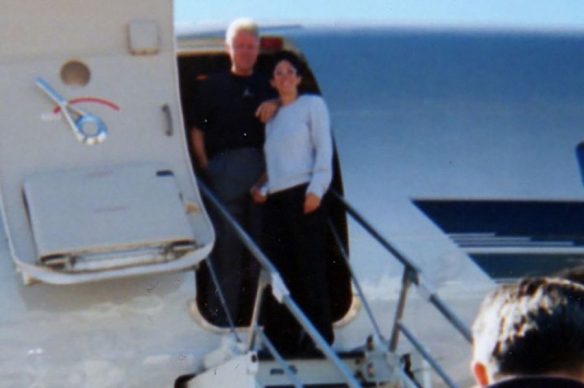
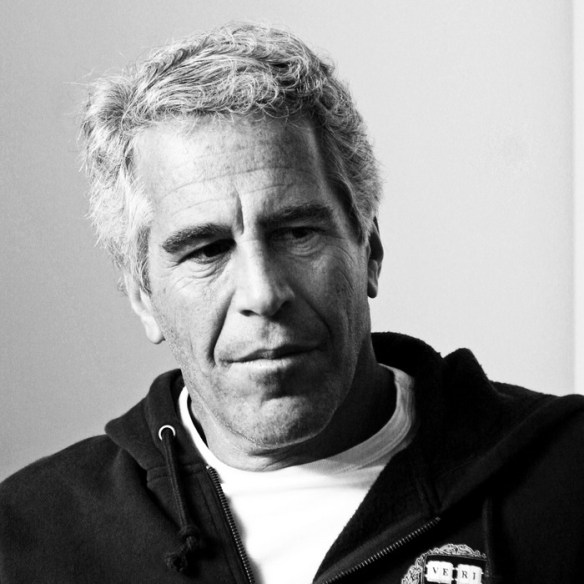
Wherefore Art Thou Ghislaine Maxwell? And who are your friends?

By Philip Giraldi

Source: The Unz Review

It is now going on a year and a half since “financier” and pedophile Jeffrey Epstein died, allegedly by hanging himself in a New York City prison. Since that time it has surfaced that there were a number of “administrative” errors in the jail, meaning that Epstein was not being observed or on suicide watch even though he had reportedly attempted to kill himself previously. The suspicion that Epstein was working for Israel’s external intelligence agency Mossad or for its military intelligence counterpart also seemed confirmed through both Israeli and American sources. A recent book Epstein: Dead Men Tell No Tales written by Ari Ben-Menashe the former Israeli intelligence officer who actually ran the Epstein operation, described inter alia how Epstein was blackmailing prominent politicians on behalf of Israeli intelligence. Epstein had been working directly for the Israeli government since the 1980’s and his operation, which was funded by Israel and also by prominent American Jews, was a classic “honey-trap” which used underage girls as bait to attract well-known politicians from around the world, a list that included Prince Andrew and Bill Clinton. The politicians would be photographed and video recorded when they were in bed with the girls. Afterwards, they would be approached and asked to do favors for Israel.

It doesn’t take much to pull what is already known together and ask the question “Who among the celebrities and top-level politicians that Epstein cultivated were actually Israeli spies?” And of course there is a subplot. Assuming that Epstein was in fact involved in recruiting and/or running high level American agents in an “influence operation” that may have involved blackmail it is possible to come to the conclusion that he was killed in prison and that the suicide story was just a convenient cover-up. The Epstein case remains “open” and under investigation though it doesn’t seem that anything is actually happening, the sure sign that someone powerful in the Establishment is making sure that nothing incriminating surfaces. Indeed, there already exists some evidence that Epstein was being protected when he was convicted in Florida of sex crimes in 2008 and was given a sentence that was little more than a slap on the wrist. After the fact, the U.S. Attorney for Miami Alexander Acosta involved in the case reported that the arrest and sentencing were above his pay grade, that he had been told that Epstein “’belonged to intelligence’, and to leave it alone” a comment that apparently has never been pursued by investigators.

That the Epstein investigation appears to be in reverse gear suggests that one or more powerful Americans are still not implicated in the case but are concerned that that might change, but there remains an accessory to what went on at the Epstein mansion in Manhattan and on his private island in the Caribbean. That would be Ghislaine Maxwell, who is currently in prison in the Metropolitan Detention Center in Brooklyn and will be tried in July. Like the Epstein story in general, she has largely dropped off the media screen and one has to wonder what “get out of jail free” card she might be holding.

It has long been assumed that Epstein video recorded the sexual encounters with the underage girls that he used in his intelligence activity to blackmail prominent politicians among others. It has been suspected that Ghislaine has at least some of those tapes hidden in a secret location and may be using them to cut a deal with investigators and prosecutors. It now appears that she briefly discussed the tapes with CBS News 60 Minutes producer Ira Rosen, also making clear that there were tapes of both Bill Clinton and Donald Trump. The conversation took place in 2016 and she reportedly told Rosen that, given Trump’s involvement in the upcoming election, she would not release any information derived from the tapes relating to Clinton until after the election and she would only do so while also exposing Trump. Up until now, she has done neither.

It has long been known that Epstein knew both the ex-and future presidents, though both have denied knowing the sex offender well for obvious reasons. Clinton, for example, flew on Epstein’s Lolita Express private 727 at least 26 times and his presence at Epstein’s island refuge has also been well documented. Trump clearly knew Epstein but has denied having any contact with him after his registration as a sex offender in 2008.

Ghislaine, for her part, was allegedly recruited young girls for Epstein to exploit and was a partner in his activity, though she has denied any guilt. Numerous victims say otherwise. Her lawyers have tried a number of ploys to free her, including claims that she had been abused by prison staff and that the jury being selected to try her will be “too white.” Her brother Ian claimed last week that she is enduring “brutal and degrading treatment” in prison with four guards watching her at all times. He added that she has lost 20 pounds and “ability to concentrate.”

Ghislaine also offered to post a $28.5 million bail or a $5 million bond for home arrest in which she would wear an ankle monitor, but the judge decided that given her extensive resources she constitutes a considerable flight risk even if she turns in her American, British and French passports. She would also be able to flee to Israel based on her father Robert’s religion and service to that country and Israel does not normally extradite.

The most interesting aspect of the arrest, imprisonment and trial of Ghislaine Maxwell is what it does not do. She basically is being tried on whether it can be confirmed that she was a “pimp” for Jeffrey Epstein. Her father was an Israeli intelligence asset and it is believed that he made the connection between Epstein and the Jewish state’s military intelligence. But no one in that New York court room in July will be asking that. Nor will there be any revelations about Epstein’s “intelligence connection” nor of the possibility that the Israelis had their hooks in both a former and a future American president. None of that will be on the table and meanwhile Ghislaine might have those possibly incriminating tapes squirreled away somewhere. That is the really important stuff that I would like to have the answers to. The fact that the answers are not forthcoming sounds a bit like a cover-up, doesn’t it?

Another Mega Group Spy Scandal? Samanage, Sabotage, and the SolarWinds Hack

By Whitney Webb

Source: The Unz Review

The devastating hack on SolarWinds was quickly pinned on Russia by US intelligence. A more likely culprit, Samanage, a company whose software was integrated into SolarWinds’ software just as the “back door” was inserted, is deeply tied to Israeli intelligence and intelligence-linked families such as the Maxwells.

In mid-December of 2020, a massive hack compromised the networks of numerous US federal agencies, major corporations, the top five accounting firms in the country, and the military, among others. Despite most US media attention now focusing on election-related chaos, the fallout from the hack continues to make headlines day after day.

The hack, which affected Texas-based software provider SolarWinds, was blamed on Russia on January 5 by the US government’s Cyber Unified Coordination Group. Their statement asserted that the attackers were “likely Russian in origin,” but they failed to provide evidence to back up that claim.

Since then, numerous developments in the official investigation have been reported, but no actual evidence pointing to Russia has yet to be released. Rather, mainstream media outlets began reporting the intelligence community’s “likely” conclusion as fact right away, with the New York Times subsequently reporting that US investigators were examining a product used by SolarWinds that was sold by a Czech Republic–based company, as the possible entry point for the “Russian hackers.” Interest in that company, however, comes from the fact that the attackers most likely had access to the systems of a contractor or subsidiary of SolarWinds. This, combined with the evidence-free report from US intelligence on “likely” Russian involvement, is said to be the reason investigators are focusing on the Czech company, though any of SolarWinds’ contractors/subsidiaries could have been the entry point.

Such narratives clearly echo those that became prominent in the wake of the 2016 election, when now-debunked claims were made that Russian hackers were responsible for leaked emails published by WikiLeaks. Parallels are obvious when one considers that SolarWinds quickly brought on the discredited firm CrowdStrike to aid them in securing their networks and investigating the hack. CrowdStrike had also been brought on by the DNC after the 2016 WikiLeaks publication, and subsequently it was central in developing the false declarations regarding the involvement of “Russian hackers” in that event.

There are also other parallels. As Russiagate played out, it became apparent that there was collusion between the Trump campaign and a foreign power, but the nation was Israel, not Russia. Indeed, many of the reports that came out of Russiagate revealed collusion with Israel, yet those instances received little coverage and generated little media outrage. This has led some to suggest that Russiagate may have been a cover for what was in fact Israelgate.

Similarly, in the case of the SolarWinds hack, there is the odd case and timing of SolarWinds’ acquisition of a company called Samanage in 2019. As this report will explore, Samanage’s deep ties to Israeli intelligence, venture-capital firms connected to both intelligence and Isabel Maxwell, as well as Samange’s integration with the Orion software at the time of the back door’s insertion warrant investigation every bit as much as SolarWinds’ Czech-based contractor.

Orion’s Fall

In the month since the hack, evidence has emerged detailing the extent of the damage, with the Justice Department quietly announcing, the same day as the Capitol riots (January 6), that their email system had been breached in the hack—a “major incident” according to the department. This terminology means that the attack “is likely to result in demonstrable harm to the national security interests, foreign relations, or the economy of the United States or to the public confidence, civil liberties, or public health and safety of the American people,” per NextGov.

The Justice Department was the fourth US government agency to publicly acknowledge a breach in connection to the hack, with the others being the Departments of Commerce and Energy and the Treasury. Yet, while only four agencies have publicly acknowledged fallout from the hack, SolarWinds software is also used by the Department of Defense, the State Department, NASA, the NSA, and the Executive Office. Given that the Cyber Unified Coordination Group stated that “fewer than ten” US government agencies had been affected, it’s likely that some of these agencies were compromised, and some press reports have asserted that the State Department and Pentagon were affected.

In addition to government agencies, SolarWinds Orion software was in use by the top ten US telecommunications corporations, the top five US accounting firms, the New York Power Authority, and numerous US government contractors such as Booz Allen Hamilton, General Dynamics, and the Federal Reserve. Other notable SolarWinds clients include the Bill & Melinda Gates Foundation, Microsoft, Credit Suisse, and several mainstream news outlets including the Economist and the New York Times.

Based on what is officially known so far, the hackers appeared to have been highly sophisticated, with FireEye, the cybersecurity company that first discovered the implanted code used to conduct the hack, stating that the hackers “routinely removed their tools, including the backdoors, once legitimate remote access was achieved—implying a high degree of technical sophistication and attention to operational security.” In addition, top security experts have noted that the hack was “very very carefully orchestrated,” leading to a consensus that the hack was state sponsored.

FireEye stated that they first identified the compromise of SolarWinds after the version of the Orion software they were using contained a back door that was used to gain access to its “red team” suite of hacking tools. Not long after the disclosure of the SolarWinds hack, on December 31, the hackers were able to partially access Microsoft’s source code, raising concerns that the act was preparation for future and equally devastating attacks.

FireEye’s account can be taken with a grain of salt, however, as the CIA is one of FireEye’s clients, and FireEye was launched with funding from the CIA’s venture capital arm In-Q-tel. It is also worth being skeptical of the “free tool” FireEye has made available in the hack’s aftermath for “spotting and keeping suspected Russians out of systems.”

In addition, Microsoft, another key source in the SolarWinds story, is a military contractor with close ties to Israel’s intelligence apparatus, especially Unit 8200, and their reports of events also deserve scrutiny. Notably, it was Unit 8200 alumnus and executive at Israeli cybersecurity firm Cycode, Ronen Slavin, who told Reuters in a widely quoted article that he “was worried by the possibility that the SolarWinds hackers were poring over Microsoft’s source code as prelude to a much more ambitious offensive.” “To me the biggest question is, ‘Was this recon for the next big operation?’” Slavin stated.

Also odd about the actors involved in the response to the hack is the decision to bring on not only the discredited firm CrowdStrike but also the new consultancy firm of Chris Krebs and Alex Stamos, former chief information security officer of Facebook and Yahoo, to investigate the hack. Chris Krebs is the former head of the Department of Homeland Security’s Cybersecurity and Infrastructure Security Agency (CISA) and was previously a top Microsoft executive. Krebs was fired by Donald Trump after repeatedly and publicly challenging Trump on the issue of election fraud in the 2020 election.

As head of CISA, Krebs gave access to networks of critical infrastructure throughout the US, with a focus on the health-care industry, to the CTI League, a suspicious outfit of anonymous volunteers working “for free” and led by a former Unit 8200 officer. “We have brought in the expertise of Chris Krebs and Alex Stamos to assist in this review and provide best-in-class guidance on our journey to evolve into an industry leading secure software development company,” a SolarWinds spokesperson said in an email cited by Reuters.

It is also worth noting that the SolarWinds hack did benefit a few actors aside from the attackers themselves. For instance, Israeli cybersecurity firms CheckPoint and CyberArk, which have close ties to Israeli intelligence Unit 8200, have seen their stocks soar in the weeks since the SolarWinds compromise was announced. Notably, in 2017, CyberArk was the company that “discovered” one of the main tactics used in an attack, a form of SAML token manipulation called GoldenSAML. CyberArk does not specify how they discovered this method of attack and, at the time they announced the tactic’s existence, released a free tool to identify systems vulnerable to GoldenSAML manipulation.

In addition, the other main mode of attack, a back door program nicknamed Sunburst, was found by Kaspersky researchers to be similar to a piece of malware called Kazuar that was also first discovered by another Unit 8200-linked company, Palo Alto Networks, also in 2017. The similarities only suggest that those who developed the Sunburst backdoor may have been inspired by Kazuar and “they may have common members between them or a shared software developer building their malware.” Kaspersky stressed that Sunburst and Kazuar are not likely to be one and the same. It is worth noting, as an aside, that Unit 8200 is known to have previously hacked Kaspersky and attempted to insert a back door into their products, per Kaspersky employees.

Crowdstrike claimed that this finding confirmed “the attribution at least to Russian intelligence,” only because an allegedly Russian hacking group is believed to have used Kazuar before. No technical evidence linking Russia to the SolarWinds hacking has yet been presented.

Samanage and Sabotage

The implanted code used to execute the hack was directly injected into the source code of SolarWinds Orion. Then, the modified and bugged version of the software was “compiled, signed and delivered through the existing software patch release management system,” per reports. This has led US investigators and observers to conclude that the perpetrators had direct access to SolarWinds code as they had “a high degree of familiarity with the software.” While the way the attackers gained access to Orion’s code base has yet to be determined, one possibility being pursued by investigators is that the attackers were working with employee(s) of a SolarWinds contractor or subsidiary.

US investigators have been focusing on offices of SolarWinds that are based abroad, suggesting that—in addition to the above—the attackers were likely working for SolarWinds or were given access by someone working for the company. That investigation has focused on offices in eastern Europe, allegedly because “Russian intelligence operatives are deeply rooted” in those countries.

It is worth pointing out, however, that Israeli intelligence is similarly “deeply rooted” in eastern European states both before and after the fall of the Soviet Union, ties well illustrated by Israeli superspy and media tycoon Robert Maxwell’s frequent and close associations with Eastern European and Russian intelligence agencies as well as the leaders of many of those countries. Israeli intelligence operatives like Maxwell also had cozy ties with Russian organized crime. For instance, Maxwell enabled the access of the Russian organized crime network headed by Semion Mogilevich into the US financial system and was also Mogilevich’s business partner. In addition, the cross-pollination between Israeli and Russian organized crime networks (networks which also share ties to their respective intelligence agencies) and such links should be considered if the cybercriminals due prove to be Russian in origin, as US intelligence has claimed.

Though some contractors and subsidiaries of SolarWinds are now being investigated, one that has yet to be investigated, but should be, is Samanage. Samanage, acquired by SolarWinds in 2019, not only gained automatic access to Orion just as the malicious code was first inserted, but it has deep ties to Israeli intelligence and a web of venture-capital firms associated with numerous Israeli espionage scandals that have targeted the US government. Israel is deemed by the NSA to be one of the top spy threats facing US government agencies and Israel’s list of espionage scandals in the US is arguably the longest, and includes the Jonathan Pollard and PROMIS software scandals of the 1980s to the Larry Franklin/AIPAC espionage scandal in 2009.

Though much reporting has since been done on the recent compromise of SolarWinds Orion software, little attention has been paid to Samanage. Samanage offers what it describes as “an IT Service Desk solution.” It was acquired by SolarWinds so Samanage’s products could be added to SolarWinds’ IT Operations Management portfolio. Though US reporting and SolarWinds press releases state that Samanage is based in Cary, North Carolina, implying that it is an American company, Samanage is actually an Israeli firm. It was founded in 2007 by Doron Gordon, who previously worked for several years at MAMRAM, the Israeli military’s central computing unit.

Samanage was SolarWinds’ first acquisition of an Israeli company, and, at the time, Israeli media reported that SolarWinds was expected to set up its first development center in Israel. It appears, however, that SolarWinds, rather than setting up a new center, merely began using Samanage’s research and development center located in Netanya, Israel.

Several months after the acquisition was announced, in November 2019, Samanage, renamed SolarWinds Service Desk, became listed as a standard feature of SolarWinds Orion software, whereas the integration of Samanage and Orion had previously been optional since the acquisition’s announcement in April of that year. This means that complete integration was likely made standard in either October or November. It has since been reported that the perpetrators of the recent hack gained access to the networks of US federal agencies and major corporations at around the same time. Samanage’s automatic integration into Orion was a major modification made to the now-compromised software during that period.

Samanage appears to have had access to Orion following the announcement of the acquisition in April 2019. Integration first began with Orion version 2019.4, the earliest version believed to contain the malicious code that enabled the hack. In addition, the integrated Samanage component of Orion was responsible for “ensuring the appropriate teams are quickly notified when critical events or performance issues [with Orion] are detected,” which was meant to allow “service agents to react faster and resolve issues before . . . employees are impacted.”

In other words, the Samanage component that was integrated into Orion at the same time the compromise took place was also responsible for Orion’s alert system for critical events or performance issues. The code that was inserted into Orion by hackers in late 2019 nevertheless went undetected by this Samanage-made component for over a year, giving the “hackers” access to millions of devices critical to both US government and corporate networks. Furthermore, it is this Samanage-produced component of the affected Orion software that advises end users to exempt the software from antivirus scans and group policy object (GPO) restrictions by providing a warning that Orion may not work properly unless those exemptions are granted.

Samanage, Salesforce, and the World Economic Forum

Around the time of Samange’s acquisition by SolarWinds, it was reported that one of Samanage’s top backers was the company Salesforce, with Salesforce being both a major investor in Samanage as well as a partner of the company.

Salesforce is run by Marc Benioff, a billionaire who got his start at the tech giant Oracle. Oracle was originally created as a CIA spin-off and has deep ties to Israel’s government and the outgoing Trump administration. Salesforce also has a large presence in Israel, with much of its global research and development based there. Salesforce also recently partnered with the Unit 8200-linked Israeli firm Diagnostic Robotics to “predictively” diagnose COVID-19 cases using Artificial Intelligence.

Aside from leading Salesforce, Benioff is a member of the Vatican’s Council for Inclusive Capitalism alongside Lynn Forester de Rothschild, a close associate of Jeffrey Epstein and the Clintons, and members of the Lauder family, who have deep ties to the Mega Group and Israeli politics.

Benioff is also a prominent member of the board of trustees of the World Economic Forum and the inaugural chair of the WEF’s Centre for the Fourth Industrial Revolution (C4IR), making him one of the most critical players in the unfolding of the WEF-backed Great Reset. Other WEF leaders, including the organization’s founder Klaus Schwab, have openly discussed how massive cyberattacks such as befell SolarWinds will soon result in “even more significant economic and social implications than COVID-19.”

Last year, the WEF’s Centre for Cybersecurity, of which Salesforce is part, simulated a “digital pandemic” cyberattack in an exercise entitled Cyber Polygon. Cyber Polygon’s speakers in 2020 included former UK Prime Minister Tony Blair, the Prime Minister of Russia Mikhail Mishustin, WEF founder Klaus Schwab, and IBM executive Wendi Whitmore, who previously held top posts at both Crowdstrike and a FireEye subsidiary. Notably, just months before the COVID-19 crisis, the WEF had held Event 201, which simulated a global coronavirus pandemic that crippled the world’s economy.

In addition to Samanage’s ties to WEF big shots such as Marc Benioff, the other main investors behind Samanage’s rise have ties to major Israeli espionage scandals, including the Jonathan Pollard affair and the PROMIS software scandal. There are also ties to one of the WEF’s founding “technology pioneers,” Isabel Maxwell (the daughter of Robert Maxwell and sister of Ghislaine), who has long-standing ties to Israel’s intelligence apparatus and the country’s hi-tech sector.

The Bronfmans, the Maxwells, and Viola Ventures

At the time of its acquisition by SolarWinds, Samanage’s top investor was Viola Ventures, a major Israeli venture-capital firm. Viola’s investment in Samanage, until its acquisition, was managed by Ronen Nir, who was also on Samanage’s board before it became part of SolarWinds.

Prior to working at Viola, Ronen Nir was a vice president at Verint, formerly Converse Infosys. Verint, whose other alumni have gone on to found Israeli intelligence-front companies such as Cybereason. Verint has a history of aggressively spying on US government facilities, including the White House, and created the backdoors into all US telecommunications systems and major tech companies, including Microsoft, Google and Facebook, on behalf of the US’ NSA.

In addition to his background at Verint, Ronen Nir is an Israeli spy, having served for thirteen years in an elite IDF intelligence unit, and he remains a lieutenant colonel on reserve duty. His biography also notes that he worked for two years at the Israeli embassy in Washington, DC, which is fitting given his background in espionage and the major role that Israeli embassy has played in several major espionage scandals.

As an aside, Nir has stated that “thought leader” Henry Kissinger is his “favorite historical character.” Notably, Kissinger was instrumental in allowing Robert Maxwell, Israeli superspy and father of Ghislaine and Isabel Maxwell, to sell software with a back door for Israeli intelligence to US national laboratories, where it was used to spy on the US nuclear program. Kissinger had told Maxwell to connect with Senator John Tower in order to gain access to US national laboratories, which directly enabled this action, part of the larger PROMIS software scandal.

In addition, Viola’s stake was managed through a firm known as Carmel Ventures, which is part of the Viola Group. At the time, Carmel Ventures was advised by Isabel Maxwell, whose father had previously been directly involved in the operation of the front company used to sell bugged software to US national laboratories. As noted in a previous article at Unlimited Hangout, Isabel “inherited” her father’s circle of Israeli government and intelligence contacts after his death and has been instrumental in building the “bridge” between Israel’s intelligence and military-linked hi-tech sector to Silicon Valley.

Isabel also has ties to the Viola Group itself through Jonathan Kolber, a general partner at Viola. Kolber previously cofounded and led the Bronfman family’s private-equity fund, Claridge Israel (based in Israel). Kolber then led Koor Industries, which he had acquired alongside the Bronfmans via Claridge. Kolber is closely associated with Stephen Bronfman, the son of Charles Bronfman who created Claridge and also cofounded the Mega Group with Leslie Wexner in the early 1990s.

Kolber, like Isabel Maxwell, is a founding director of the Peres Center for Peace and Innovation. Maxwell, who used to chair the center’s board, stepped down following the Epstein scandal, though it’s not exactly clear when. Other directors of the center include Tamir Pardo, former head of Mossad. Kolber’s area of expertise, like that of Isabel Maxwell, is “structuring complex, cross-border and cross industry business and financial transactions,” that is, arranging acquisitions and partnerships of Israeli firms by US companies. Incidentally, this is also a major focus of the Peres Center.

Other connections to Isabel Maxwell, aside from her espionage ties, are worth noting, given that she is a “technology pioneer” of the World Economic Forum. As previously mentioned, Salesforce—a major investor in Samanage—is deeply involved with the WEF and its Great Reset.

The links of Israeli intelligence and Salesforce to Samanage, and thus to SolarWinds, is particularly relevant given the WEF’s “prediction” of a coming “pandemic” of cyberattacks and the early hints from former Unit 8200 officers that the SolarWinds hack is just the beginning. It is also worth mentioning the Israeli government’s considerable ties to the WEF over the years, particularly last year when it joined the Benioff-chaired C4IR and participated in the October 2020 WEF panel entitled “The Great Reset: Harnessing the Fourth Industrial Revolution.”

Start Up Nation Central, an organization aimed at integrating Israeli start-ups with US firms set up by Netanyahu’s longtime economic adviser Eugene Kandel and American Zionist billionaire Paul Singer, have asserted that Israel will serve a “key role” globally in the 4th Industrial Revolution following the implementation of the Great Reset.

Gemini, the BIRD Foundation, and Jonathan Pollard

In addition to Viola, another of Samange’s leading investors is Gemini Israel Ventures. Gemini is one of Israel’s oldest venture-capital firms, dating back to the Israeli government’s 1993 Yozma program.

The first firm created by Yozma, Gemini was put under the control of Ed Mlavsky, who Israel’s government had chosen specifically for this position. As previously reported by Unlimited Hangout, Mlavsky was then serving as the executive director of the Israel-US Binational Industrial Research and Development (BIRD) Foundation, where “he was responsible for investments of $100 million in more than 300 joint projects between US and Israeli high-tech companies.”

A few years before Gemini was created, while Mlavsky still headed BIRD, the foundation became embroiled in one of the worst espionage scandals in US history, the Jonathan Pollard affair.

In the indictment of US citizen Pollard for espionage on Israel’s behalf, it was noted that Pollard delivered the documents he stole to agents of Israel at two locations, one of which was an apartment owned by Harold Katz, the then legal counsel of the BIRD Foundation and an adviser to Israel’s military, which oversaw Israel’s scientific intelligence-gathering agency, Lekem. US officials told the New York Times at the time that they believed Katz “has detailed knowledge about the [Pollard] spy ring and could implicate senior Israeli officials.”

Subsequent reporting by journalist Claudia Wright pointed the finger at the Mlavsky-run BIRD Foundation as one of the ways Israeli intelligence funneled money to Pollard before his capture by US authorities.

One of the first companies Gemini invested in was CommTouch (now Cyren), which was founded by ex-IDF officers and later led by Isabel Maxwell. Under Maxwell’s leadership, CommTouch developed close ties to Microsoft, partially due to Maxwell’s relationship with its cofounder Bill Gates.

A Coming “Hack” of Microsoft?

If the SolarWinds hack is as serious as has been reported, it’s difficult to understand why a company like Samanage would not be looked into as part of a legitimate investigation into the attack. The timing of Samanage employees gaining access to the Orion software and the company’s investors including Israeli spies and those with ties to past espionage scandals where Israel used back doors to spy on the US and beyond raises obvious red flags. Yet, any meaningful investigation of the incident is unlikely to take place, especially given the considerable involvement of discredited firms like CrowdStrike, CIA fronts like FireEye and a consultancy firm led by former Silicon Valley executives with their own government/intelligence ties.

There is also the added fact that both of the main methods used in the attack were analogous or bore similarities to hacking tools that were both discovered by Unit 8200-linked companies in 2017. Unit 8200-founded cybersecurity firms are among the few “winners” from the SolarWinds hack, as their stocks have skyrocketed and demand for their services has increased globally.

While some may argue that Unit 8200 alumni are not necessarily connected to the Israeli intelligence apparatus, numerous reports have pointed out the admitted fusion of Israeli military intelligence with Israel’s hi-tech sector and its tech-focused venture capital networks, with Israeli military and intelligence officials themselves noting that the line between the private cybersecurity sector and Israel’s intelligence apparatus is so blurred, it’s difficult to know where one begins and the other ends. There is also the Israeli government policy, formally launched in 2012, whereby Israel’s intelligence and military intelligence agencies began outsourcing “activities that were previously managed in-house, with a focus on software and cyber technologies.”

Samanage certainly appears to be such a company, not only because it was founded by a former IDF officer in the military’s central computing unit, but because its main investors include spies on “reserve duty” and venture capital firms linked to the Pollard scandal as well as the Bronfman and Maxwell families, both of whom have been tied to espionage and sexual blackmail scandals over the years.

Yet, as the Epstein scandal has recently indicated, major espionage scandals involving Israel receive little coverage and investigations into these events rarely lead anywhere. PROMIS was covered up largely thanks to Bill Barr during his first term as Attorney General and even the Pollard affair has all been swept under the rug with Donald Trump allowing Pollard to move to Israel and, more recently, pardoning the Israeli spy who recruited Pollard during his final day as President. Also under Trump, there was the discovery of “stingray” surveillance devices placed by Israel’s government throughout Washington DC, including next to the White House, which were quickly memory holed and oddly not investigated by authorities. Israel had previously wiretapped the White House’s phone lines during the Clinton years.

Another cover up is likely in the case of SolarWinds, particularly if the entry point was in fact Samanage. Though a cover up would certainly be more of the same, the SolarWinds case is different as major tech companies and cybersecurity firms with ties to US and Israeli intelligence now insist that Microsoft is soon to be targeted in what would clearly be a much more devastating event than SolarWinds due to the ubiquity of Microsoft’s products.

On Tuesday, CIA-linked firm FireEye, which apparently has a leadership role in investigating the hack, claimed that the perpetrators are still gathering data from US government agencies and that “the hackers are moving into Microsoft 365 cloud applications from physical, on-premises servers,” meaning that changes to fix Orion’s vulnerabilities will not necessarily deny hacker access to previously compromised systems as they allegedly maintain access to those systems via Microsoft cloud applications. In addition to Microsoft’s own claims that some of its source code was accessed by the hackers, this builds the narrative that Microsoft products are poised to be targeted in the next high-profile hack.

Microsoft’s cloud security infrastructure, set to be the next target of the SolarWinds hackers, was largely developed and later managed by Assaf Rappaport, a former Unit 8200 officer who was most recently the head of Microsoft’s Research and Development and Security teams at its massive Israel branch. Rappaport left Microsoft right before the COVID-19 crisis began last year to found a new cybersecurity company called Wiz.

Microsoft, like some of Samanage’s main backers, is part of the World Economic Forum and is an enthusiastic supporter of and participant in the Great Reset agenda, so much so that Microsoft CEO Satya Nadella wrote the foreword to Klaus Schwab’s book “Shaping the Fourth Industrial Revolution.” With the WEF simulating a cyber “pandemic” and both the WEF and Israel’s head of Israel’s National Cyber Directorate warning of an imminent “cyber winter”, SolarWinds does indeed appear to be just the beginning, though perhaps a scripted one to create the foundation for something much more severe. A cyberattack on Microsoft products globally would certainly upend most of the global economy and likely have economic effects more severe than the COVID-19 crisis, just as the WEF has been warning. Yet, if such a hack does occur, it will inevitably serve the aims of the Great Reset to “reset” and then rebuild electronic infrastructure.

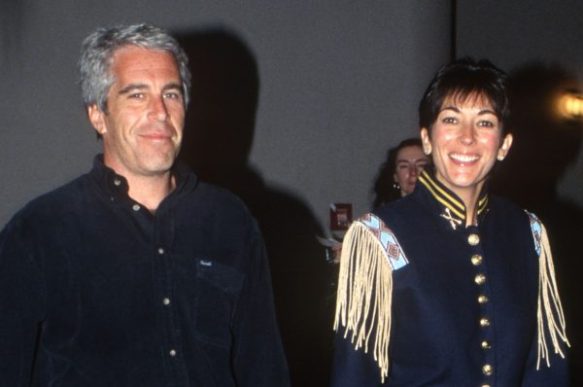
The Maxwell Family Business: Espionage

Ghislaine Maxwell is hardly the only Maxwell sibling to continue their father’s controversial work for intelligence, with other siblings carrying the torch specifically for Robert Maxwell’s sizable role in the PROMIS software scandal and subsequent yet related hi-tech espionage operations.

By Whitney Webb

Source: Unlimited Hangout

Many were surprised to learn earlier this month that the key co-conspirator in Jeffrey Epstein’s intelligence-linked sexual blackmail operation, Ghislaine Maxwell, had been in hiding in New England since Epstein’s arrest and subsequent “suicide” last summer. Her recent arrest, of course, has returned attention to the Epstein scandal and to Ghislaine’s ties to the entire operation, in which she played a central and crucial role, arguably more so than Epstein himself.

Ghislaine was first reported to be living in New England at the mansion of her alleged boyfriend Scott Borgeson on August 14th of last year. Though Maxwell is believed to have stayed there until purchasing the nearby New Hampshire home where she was arrested, attention from her presence on the East Coast was immediately and sensationally re-directed to the West Coast when, a day later on August 15ththe New York Post published a picture allegedly depicting Maxwell reading a book on “CIA operatives” at an In-N-Out Burger in Los Angeles, California. The photo was later revealed to have been photoshopped and a fake, but ultimately served its purpose in distracting from her actual location in New England.

While the media frenziedly covered the fake In-N-Out Burger photo, the appearance of an unexpected visitor nearby Borgeson’s mansion succeeded in largely slipping under the radar. On August 18th, Ghislaine’s sister Christine was spotted “packing up a number of bags” into a SUV just a few miles from Borgeson’s “secluded beachfront” home. Christine, who currently lives and works in Dallas, Texas, declined to comment on why she was visiting the exact area where Ghislaine was allegedly hiding at the time.

Out of the seven Maxwell siblings, Ghislaine Maxwell has undoubtedly received the bulk of media scrutiny both in recent years and arguably ever since the suspected homicide of the family patriarch, Robert Maxwell, in 1991. In the years since his death, Robert Maxwell’s close ties to Israeli intelligence and links to other intelligence agencies have been documented by respected journalists and investigators including Seymour Hersh and Gordon Thomas, among others.

While Ghislaine’s own ties to intelligence have since come to light in relation to her critical role in facilitating the Jeffrey Epstein sexual blackmail operation. Little, if any attention, has been paid to her siblings, particularly Christine and her twin sister Isabel, despite them having held senior roles at the Israeli intelligence front company that facilitated their father’s greatest act of espionage on Israel’s behalf, the sale of the bugged PROMIS software to the U.S. national laboratories at the heart of the country’s nuclear weapons system.

Not only that, but Christine and Isabel later became directly involved with technology-based business ventures that directly involved Ghislaine during the very period she worked with Epstein on behalf of Israeli and U.S. intelligence to ensnare powerful U.S. political and public figures in a sexual blackmail scheme involving minors. At the time, Ghislaine described her profession to a number of newspapers as “an internet operator.” Then, after this venture’s multi-million dollar sale to a competitor, Christine and Isabel became involved with successors to the PROMIS software scandal that were closely tied to U.S. intelligence and Israeli intelligence, respectively.

Ghislaine herself also became involved in these affairs, as did Jeffrey Epstein following his first arrest, as they began courting the biggest names in the U.S. tech scene, from Silicon Valley’s most powerful venture capital firms to its most well-known titans. This also dovetailed with Epstein’s investments in Israeli intelligence-linked tech firms and his claims of having troves of blackmail on prominent tech company CEOs during this same period.

With Ghislaine’s name and her ties to intelligence now inking their way back into the media sphere, detailing the decades-long course of these technology-focused espionage operations and their persistent ties to the Maxwell sisters demands the attention it deserves, as the need to air out the real Maxwell family business – espionage – is now greater than ever before.

Trap doors and Treason

One of the most brazen and successful operations conducted by Israeli intelligence on a global scale is undeniably its sale of a bugged software program to governments, corporations and major financial and scientific institutions around the world. That software program, known as the Prosecutor’s Information Management System or by its acronym PROMIS, was orginally created and marketed by Inslaw Inc., a company created by former NSA official Bill Hamilton and his wife Nancy.

In 1982, Inslaw leased its revolutionary PROMIS software to the U.S. Justice Department, then headed by arch neocon Edwin Meese III, Ronald Reagan’s most trusted advisor and who would later go on to advise Donald Trump following the 2016 election. The success of the software, which allowed integration of separate databases and information analysis on a previously unimaginable scale, eventually caught the attention of Rafi Eitan, the notorious and legendary Israeli spymaster and handler of the “most damaging spy” in American history, Jonathan Pollard. Eitan, at the time, was serving as the then-head of the now defunct Israel intelligence service known as Lekem, which focused specifically on espionage related to scientific and technical information and discoveries.

Eitan had first learned of PROMIS from Earl Brian. Brian was a long-time associate of Ronald Reagan who had previously worked for the CIA in covert operations and had been in charge of Reagan’s healthcare program when Reagan was governor of California. Brian often bragged of the nickname he had acquired in overseeing that health care initiative – “the man who walked over the dead.” In 1982, however, Brian was attempting to build a business empire, in which then-AG Ed Meese’s wife was a major investor, and he had first met Eitan while attempting to sell a healthcare system in Iran.

Brian divulged the efficacy of PROMIS, but – instead of praising its revolutionary approach to data analysis – expressed his frustration that the software enabled U.S. federal investigators to successfully track and target money laundering and other financial crimes. He also expressed frustration that he had been left out of the profits on PROMIS, the development of which he had followed closely for several years.

As their conversation wore on, Eitan and Brian hatched a plan to install a “trapdoor”, today more often referred to as a back door, into the software. They would then market PROMIS throughout the world, providing Israeli intelligence and allied elements of U.S. intelligence with a direct window into the operations of its enemies and allies while also netting Eitan and Brian massive profits for the sale of the software. Brian, of course, would also be able to use PROMIS to circumvent authorities investigating financial crimes.

According to the testimony of ex-Mossad official Ari Ben-Menashe, after a copy of PROMIS was obtained by Israeli military intelligence (via direct collusion with the U.S. Department of Justice), Ben-Menashe contacted an Israeli American programmer living in California on Eitan’s orders. That programmer then planted a “trapdoor” or back door into the software that would allow Lekem covert access to any database connected to a device on which the software was installed.

Once the back door was present, Brian attempted to use his company Hadron Inc to market the bugged PROMIS software around the world, though he first had tried to buy out Inslaw to do so. Unsuccessful, Brian turned to his close friend, then-Attorney General Ed Meese, and the Justice Department then abruptly refused to make the payments to Inslaw that had been stipulated by the contract, essentially using the software for free, which Inslaw claimed to be theft.

Meese’s actions would force Inslaw into bankruptcy and Inslaw subsequently sued the Justice Department, with a US court later finding that the Meese-led department “took, converted, stole” the software through “trickery, fraud and deceit.” With Inslaw out of the way, Brian sold the bugged software to Jordan’s and Iraq’s intelligence services, a major boon for Israel, and to a handful of companies. Despite this, Eitan was unsatisfied with Brian and Hadron and he quickly turned to the person he thought could most effectively market and sell PROMIS to governments of interest all over the world, Robert Maxwell.

First recruited as an asset of Israeli intelligence in the early 1960s, Maxwell’s standing with Israeli intelligence would strengthen considerably beginning in the early 1980s, when he purchased a web of Israeli companies, many of which were official “service providers” for the Mossad. One of these companies, a computer firm called Degem, had been used for years to provide cover to Mossad assassins that conducted kidnappings and murders in Latin America and Africa.

Through Degem and other Maxwell-owned companies based in Israel and elsewhere, Maxwell marketed PROMIS so successfully that Israeli intelligence soon had access to the innermost workings of innumerable governments, corporations, banks and intelligence services around the world. Many of Maxwell’s biggest successes came in selling PROMIS to dictators in Eastern Europe, Africa and Latin America. Following the sale and after Maxwell collected a handsome paycheck, PROMIS’ unparalleled ability to track and surveil anything – from cash flows to human movement – were used by these governments to commit financial crimes with greater finesse and used to hunt down and disappear dissidents. Israeli intelligence, of course, watched it all play out in real time.

In Latin America, for instance, Maxwell sold PROMIS to military dictatorships in Chile and Argentina, which were used to facilitate the mass murder that characterized Operation Condor as the friends and families of dissidents and so-called subversives were easily identified using PROMIS. PROMIS was so effective for this purpose that, just days after Maxwell sold the software to Guatemala, its US-backed dictatorship rounded up 20,000 “subversives” who were never heard from again. Of course, thanks to the back door in PROMIS, Israeli intelligence knew the identities of Guatemala’s disappeared before the victim’s own families. Israel was also intimately involved in the arming and training of many of the same Latin American dictatorships that had been sold the bugged PROMIS software.

Though Israeli intelligence found obvious use for the steady stream of sensitive and classified information, their biggest prize was yet to come – top secret government laboratories in the United States. Eitan tasked Maxwell with selling PROMIS to US labs in the Los Alamos complex, including Sandia National Laboratory, which was and is at the core of the US nuclear weapons system. Notably, the eventual sale of PROMIS to these laboratories by Maxwell occurred during the same period in 1984 when Eitan tasked one of Israel’s top experts in nuclear targeting with supervising Jonathan Pollard’s espionage of U.S. nuclear secrets on Israel’s behalf.

In order to plot how he would accomplish such a feat, Maxwell would meet with none other than Henry Kissinger, who told him that – in order to sell PROMIS to these sensitive laboratories – he needed to enlist the services of then-Senator for Texas John Tower, who was the head of the Senates’ Armed Services Committee at the time. Maxwell quickly struck a deal with Tower and then, using Mossad money, paid Tower $200,000 for his services, which included opening doors – not just to the Los Alamos complex, but also to the Reagan White House. Tower would arrange a trip for Maxwell to travel to Sandia National Laboratory, where he would market PROMIS. Unlike most other PROMIS sales, this one would not be handled by Degem, but a US-based company called Information on Demand.

It is worth noting that, despite Tower’s obvious and treasonous actions with respect to U.S. national security, another long-time “source” of Robert Maxwell, George H.W. Bush, would attempt to nominate Tower to serve as U.S. Secretary of Defense. When the Senate refused to confirm Tower, only then did Bush nominate Dick Cheney, who would then head the Pentagon and oversee the U.S.’ role in the First Gulf War. Not long after his failure to secure the nomination as Pentagon chief, Tower died in a suspicious plane crash soon after the equally suspicious death of Robert Maxwell.

Front Companies and FBI Cover-ups

Robert Maxwell purchased Information on Demand from its founder, Sue Rugge – a former librarian, through the Pergamon Group in 1982 – the very year plans were made by Rafi Eitan and Earl Brian to subvert PROMIS. Its offices were just a few doors down from the home of Isabel Maxwell and her first husband Dale Djerassi, son of the scientist credited with creating the birth control pill.

According to FBI files obtained by Inslaw Inc. via a FOIA request in the 1990s, San Francisco’s FBI opened an investigation into Information on Demand a year later in October 1983 and subsequently interviewed Rugge about the business and its activities. She told the FBI that the company’s sources “include over 250 computer data bases” and that company uses these to “locate single facts as well as provide answers to complex questions dealing with such areas as comprehensive marketing research, custom data summaries, sophisticated literature searching, current awareness service and global information capability.

One of these databases included Lockheed’s Dialog database and “the Defense Technical Center which is connected to the Department of Defense (DOD) which contains classified information. ” She asserted, however, that the company “has no password for access and further no need for access.” Elsewhere in the document, it notes that Information on Demand claimed not have any access to classified information “to the best of their knowledge” and “includes information concerning government and various available means of tapping government information databases.”

The FBI asked Rugge about one client of the company in particular, whose name and identifying information is redacted in its entirety, but notes that this mysterious client had worked with Information on Demand since at least 1973. Subsequent efforts by Inslaw Inc. and others to learn the identity of the redacted client have been unsuccessful since 1994.

Notably, just one month before the FBI opened an investigation into Information on Demand and interviewed Sue Rugge, another related Maxwell-owned firm, Pergamon International Information Corporation, had sent a letter to then-CIA Director Bill Casey, offering to provide the agency with access to patent databases. The only redacted portion of the letter is the identity of PIIC’s Executive Vice President, who had written the letter to Casey.

After Rugge had been interviewed, FBI interest in Information on Demand peaked soon after in June 1984, when a formal investigation was opened. This took place after two employees of Sandia National Laboratory who worked in technology transfer approached the Bureau over Information on Demand’s efforts to sell PROMIS to the laboratory. Those employees were compelled to contact the FBI after obtaining information from employees of the National Security Agency (NSA) regarding “the purchase of Information on Demand Inc. by one Robert Maxwell, the owner of Pergamon International.” The specific information on this purchase from the NSA is included in the report but redacted in its entirety. Two months later, one of the Sandia employees followed up with the Bureau, suggesting that the NSA and FBI jointly investigate Information on Demand, but was essentially stonewalled and told to take it up with FBI headquarters.

The FBI case file is coded as a foreign counter-intelligence investigation specifically, suggesting that the case was opened because the FBI was made aware of the alleged involvement of a foreign intelligence service in some aspect of Information on Demand’s activities that related specifically to the “dissemination, marketing or sale of computer software systems, including but not limited to the PROMIS computer software product.” It also noted that Maxwell himself had previously been the subject of a “security investigation” conducted by the FBI from 1953 until 1961, the year Maxwell was formally recruited as an Israeli intelligence asset.

In early August 1984, FBI headquarters and other higher-ups in the Ed Meese-led Department of Justice, which itself was complicit in the whole sordid PROMIS affair, ordered the New Mexico office to halt its investigation into Information on Demand, Maxwell and PROMIS. The cover-up, oddly enough, continues today, with the FBI still refusing to release documents pertaining to Robert Maxwell and his role in the PROMIS scandal.

Several months following the shuttering of the FBI investigation into Information on Demand, Robert Maxwell again returned to Sandia National Laboratories in February 1985, signing the contract for the sale of PROMIS and listing himself as President and CEO of Information on Demand. A few months later, he passed that role on to his daughter Christine, who served as the company’s president and CEO up until her father’s death in 1991, according to her résumé. Upon the collapse of his business empire shortly after his demise, which also resulted in the closure of Information on Demand, Christine created a company called Research on Demand that offered similar services and specialized “in Internet- and Big Data analytics-related market studies for companies in the Telecoms.”

In addition, Isabel Maxwell, who lived in close proximity to the company’s offices in Berkely, CA, told Haaretz that she had also worked for Information on Demand, which she refers to as “her sister’s company,” following her 1989 divorce from Dale Djerassi.

Recreating their Father’s Legacy

After the death of Robert Maxwell, in what most of his family and many of his biographers regard as a murder conducted by Israeli intelligence, his children began to pick up the pieces and sought to rebuild their father’s empire. Of his seven children, five took on different aspects of their father’s vast portfolio.

Kevin and Ian Maxwell took over much of his businesses (and the associated fall-out) and his murky network of interlocking companies, trusts and foundations spread throughout the world. Ghislaine, having already positioned herself in New York at her father’s behest to anchor his efforts to expand his empire and operations into Manhattan, began a sexual blackmail operation on behalf of Israeli intelligence alongside Jeffrey Epstein. Christine and Isabel, however, would take off where Maxwell’s intelligence-linked work with PROMIS and in technology had left off by cashing in on a new revolutionary technology, the Internet.

“We literally were trying to think about how to restart this whole business” that had collapsed after their father’s death, Christine Maxwell would later say of her decision to found, along with her husband Roger Malina, Isabel and Isabel’s then-husband David Hayden, their internet services company – the McKinley Group – in January 1992. Isabel would remember the decision similarly, telling Wired in 1999, that she and her sister had “wanted to circle the wagons and rebuild,” seeing McKinley as “a chance to recreate a bit of their father’s legacy.” In 2000, Isabel would tell The Guardian that her father would “love it [the internet] if he was still here.” “He was very prescient….He’d be in his element, he’d be having a blast, I’m sure he’d be thrilled to know what I’m doing now,” she told the UK-based publication while “throwing back her head and laughing loudly.” Notably, at that time, Isabel was leading Israeli software company with ties to Israeli military intelligence and powerful Israeli political players, including some who had previously worked directly under her father.

It’s not hard to see why Christine and Isabel saw the internet as their chance to expand upon and rebuild upon Robert Maxwell’s “legacy.” As previously mentioned, Christine, right up until her father’s death, had been president and CEO of the Robert Maxwell-owned Israeli intelligence front company, Information on Demand, where Isabel had also worked. Upon his death, Christine had founded a related company called Research on Demand, which specialized in “internet and big data analytics” for telecommunications firms, and would later overlap with the McKinley Group’s work. McKinley began as a directory with a rating system for websites, later transitioning into the Magellan search engine, all of which Isabel Maxwell told Cnet in 1997 were all Christine’s idea.

McKinley created what became known as the Magellan online directory, remembered as “the first site to publish lengthy reviews and ratings of websites.” Magellan’s “value-added content” approach attracted several large corporations, resulting in “major alliances” with AT&T, Time Warner, IBM, Netcom and the Microsoft Network [MSN] that were negotiated by Isabel Maxwell. Microsoft’s major alliance with McKinley came in late 1995, when Microsoft announced that Magellan would power the search option for the company’s MSN service. Time Warner first chose Magellan for its early web portal called Pathfinder and Magellan was on the homepage of the internet browser Netscape for much of the 1990s.

However, McKinley’s fortunes were troubled as its efforts to be the first search engine to go public fell through, igniting a stand-off between Christine Maxwell and Isabel’s husband that also resulted in the company’s essentially falling behind other market leaders both missing the window for a second IPO attempt and lagging behind in adding ad revenue to their business model. Excite, which was later acquired by AskJeeves, ultimately bought the McKinley Group and Magellan for 1.2 million shares of Excite stock in 1996, which was then valued at $18 million. It was allegedly Isabel Maxwell who made the deal possible, with Excite’s CEO at the time, George Bell, claiming she alone salvaged their purchase of McKinley.

Despite the company’s lackluster end, the Maxwell sisters and other stakeholders in the company, Ghislaine Maxwell among them, not only obtained a multi-million dollar payout from the deal, but also forged close connections with Silicon Valley high-rollers. Upon McKinley/Magellan’s sale, the overt ties of Christine and Isabel Maxwell to intelligence in both the U.S. and Israel would grow considerably.

A Family Affair

While the company is often framed as being a venture between Christine and Isabel Maxwell, McKinley Group and Magellan were much more than just the twin sisters’ business. For instance, a November 2003 article in The Evening Standard notes that Christine and Isabel launched the company with considerable help from their brother, Kevin Maxwell who the article described as being “consumed by an overwhelming desire to be his ‘dad reincorporated’” according to confidants. Another Evening Standard article from March 2001 cited report that “Kevin played a major role” in the company’s affairs.

In addition, at the time, The Sunday Times noted in November 2000 that Ghislaine Maxwell “had a substantial interest in Magellan” and netted a considerable sum following its sale to Excite in 1996. It also noted that Ghislaine, throughout the 1990s, had “been discreetly building up a business empire as opaque as her father’s” and that “she is secretive to the point of paranoia and her business affairs are deeply mysterious.” However, she would nonetheless describe “herself as an ‘internet operator’” even though “her office in Manhattan refuses to confirm even the name or the nature of her business.” A separate article in The Scotsman from 2001 also notes that Ghislaine “is extremely secretive about her affairs and describes herself as an internet operator.”

Exactly how involved Ghislaine Maxwell was involved in the McKinley Group and Magellan is unclear, though her decision to describe herself as an “internet operator” and her documented “substantial interest” in the company suggest that it was more than superficial. What is notable, however, is that Ghislaine’s time as an “internet operator” and her business interests in Magellan overlap directly with her time working alongside Jeffrey Epstein in an Israeli intelligence-linked sexual blackmail operation.

During this period of time, Ghislaine Maxwell and Jeffrey Epstein frequently had considerable overlap in their finances, with press reports from the time often asking whether Ghislaine’s expenses were paid by Epstein or through her access to the “lost Maxwell millions” that had been hidden in a web of murky, untraceable financial entities and allegedly “disappeared” following his 1991 death.

The latter is certainly a possibility as it was Ghislaine who was the first to walk into her late father’s office on the Lady Ghislaine following his death, where she “shredded all incriminating documents onboard,” according to journalist John Jackson who witnessed the scene. This would likely mean that she was quickly able to distinguish which documents were “incriminating” and was intimately aware of his more unsavory business activities. In addition, prior to his death, Robert Maxwell had provided Ghislaine with a “tailor-made” New York corporation called Maxwell Corporate Gifts, of which little is known. The corporation was reportedly intended to aid her in establishing a foothold in New York’s power base for Robert Maxwell’s planned expansion into New York society, a plan first set into motion following his purchase of the New York Daily News.

Notably, an article from The Evening Standard in 2001 makes an odd comment about a major source of income from Epstein during the 1990s, stating that “has made many millions out of his business links with the likes of Bill Gates, Donald Trump and Ohio billionaire Leslie Wexner, whose trust he runs.”  In addition, Epstein victim Maria Farmer noted in an interview that she overheard Ghislaine and Epstein discuss Bill Gates as though they knew him well in 1995. However, these mentions of Bill Gates here defies the official narrative about the Epstein-Gates relationship, which claims they first met in 2011.Given the “major alliance” between McKinley/Magellan and Microsoft that was forged in 1995-1996, it is certainly possible that Epstein’s pre-2001 “business links” with Bill Gates were, in fact, related to Ghislaine’s involvement and stake in Magellan. This is also supported by the fact that, as will be shown in Part 2 of this report, Magellan co-founder Isabel Maxwell had a personal relationship with Bill Gates and that he put her subsequent company, Israel-based CommTouch, “on the map” after a major investment that had been brokered between Gates and Isabel personally. Part 2 will also show how both Isabel and Christine’s overt involvement, with Israeli and U.S. intelligence, respectively, deepened after Magellan was sold to Excite in 1996.

Alleged Salas Family Assailant Previously Worked for US/Israeli Intelligence-Linked Firm

The alleged gunmen who killed the son of Esther Salas, the judge recently assigned to the Epstein-Deutsche Bank case, worked for a company of corporate spies and mercenaries with ties to intelligence and also to Deutsche Bank.

By Whitney Webb

Source: Unlimited Hangout

The news of the shooting of the husband and son of Esther Salas, the judge recently assigned to oversee the Jeffrey Epstein – Deutsche Bank case, caused shock and confusion while also bringing renewed scrutiny to the Epstein scandal just a week after Epstein’s main co-conspirator, Ghislaine Maxwell, was denied bail in a separate case.

The case Salas is set to oversee is a class action lawsuit brought by Deutsche Bank investors who allege that Deutsche Bank “failed to properly monitor customers that the Bank itself deemed to be high risk, including, among others, the convicted sex offender Jeffrey Epstein.” The case came after the New York state Department of Financial Services had settled with Deutsche Bank over the bank’s failure to cut ties with Epstein-linked accounts, resulting in Deutsche Bank paying a $150 million fine. Deutsche Bank, unlike other financial institutions, failed to close all of its accounts linked to Epstein until less than a month prior to his arrest last year, even though the bank had identified him as “high risk” years before.

Beyond the tragedy of Sunday’s shooting, which claimed the life of Salas’ only child, the quick discovery of the death of the main suspect, Roy Den Hollander, of a “self-inflicted” gunshot to the head before he could be arrested or questioned by authorities has led to speculation that there is more to the official narrative of the crime than meets the eye.

With law enforcement sources now claiming that Esther Salas was not the intended target of the attack and some media reports now suggesting that Den Hollander’s motive was related to his dislike of feminism, it appears there are efforts underway to distance Sunday’s tragic shooting from Salas’ recent assignment to the Epstein case, which occurred just four days before the tragic shooting.

The most likely reason for any such “damage control” effort lies in the fact that both U.S. law enforcement investigations and mainstream media reports have consistently downplayed the connections of Jeffrey Epstein’s sexual trafficking and financial crimes to intelligence agencies in the U.S. and Israel. Similarly, Roy Den Hollander previously worked for a New York firm has been described as a “private CIA” with ties to those countries’ intelligence agencies and, also, ties to Deutsche Bank.

A Private CIA

According to his website, Den Hollander once worked for Kroll Associates Moscow Office, where he “managed and upgraded Kroll’s delivery of intelligence and security in the former Soviet Union” from 1999 to 2000. A few years prior, Kroll had won a considerable bid from the Russian government to locate money allegedly “spirited out of the country by the directors of state enterprises when they realized that privatization was inevitable.” The Kroll executives in charge of the Russian portfolio prior to Den Hollander were E. Norbett Garrett, a former CIA station chief in Cairo and Kuwait, and Joseph Rosetti, former chief of security for IBM. During that period and prior to his hiring at Kroll, Den Hollender worked as a lawyer in Russia regarding “legal and business issues, including international financing and marketing” and married a Russian woman he met during his time there that he subsequently claimed was part of the “Russian mafia.”

Founded by Jules Kroll in 1972, Kroll Associates would later become known as the “CIA of Wall Street” and “Wall Street’s Private Eye” and was alleged to be an actual front for the CIA by French intelligence agencies, according to theWashington Post. Part of the reason for this nickname, which was once a boasting point for top Kroll executives, owes to the fact that the firm frequently hired former CIA and FBI officers, as well as former members of MI6 and Mossad. K2 Intelligence, the successor to Kroll Associates founded by Jules Kroll and his son Jeremy in 2009, has similar hiring practices, counting former FBI and NSA officials among its ranks alongside former high-ranking members of the Israel Defense Forces (IDF) and Shin Bet, Israel’s domestic intelligence agency. Kroll also boasted ties to the Bush family, with Jonathan Bush (George Bush Sr.’s brother) serving on its corporate advisory board, and Kroll was also employed by Bill Clinton’s first presidential campaign.

Though it is mainly involved in corporate security and investigations, Kroll has also frequently investigated targets of Washington foreign policy, including Saddam Hussein, and was also the company tapped to “reorganize” Enron in 2002. Kroll Associates also has long been a subject of scrutiny for those that question the official narrative on the attacks of September 11, 2001, given that the company was put in charge of security for the World Trade Center complex from 1993 bombing up through the 2001 attacks and has no shortage of ties to companies and individuals that profited from the attacks. Kroll itself experienced a “surge in business” following the events of 9/11, a day when its top executives all avoided going to work despite ostensibly providing security for the complex.

A similar “surge in business” for Kroll followed the 2003 U.S. invasion of Iraq after the company’s investigations into Saddam Hussein’s and the Bath Party’s finances had been used as partial justification for the military incursion. Kroll became a major provider of mercenaries along with companies like Blackwater and DynCorp to the U.S. invasion and subsequent occupation through its subsidiary Kroll Security International. Its clients included the United States Agency for International Development (USAID), which has long fronted for the CIA, and also provided mercenaries for the war in Afghanistan.

Kroll executives over the years have commented to the press on their reputation as a “private CIA” and have also noted the advantages of being a “private” as opposed to “public” intelligence agency. For instance, E. Norbett Garrett, the former CIA official turned Kroll executive, told The New Yorker in 2009 the following:

“Garrett explained the disparity between what Kroll could do and what the C.I.A. could in a place like Sudan. “They have to rely on public and covert sources,” he said. “But we can go straight to Salah Idris. He’s our client, after all. We can go straight to his friends. We can be manipulated, of course, shown incomplete information, and sometimes we have to walk away from a case if we don’t trust somebody. But we definitely have some advantages.”

Kroll Associates and the Epstein Network

Aside from Kroll Associates’ own role as a private intelligence firm, it is also worth pointing out that Jules Kroll had an odd meeting with Robert Maxwell, Ghislaine Maxwell’s father, shortly before his death, alleged by most Maxwell biographers and his family to have been a homicide. Roughly two weeks before his death, Kroll met with Maxwell at New York’s Helmsley Palace Hotel. According to a 1992 article in Vanity Fair, “Maxwell had ushered Kroll and two other men out onto the patio so that their conversation could not be overheard or bugged,” with Maxwell allegedly seeking to hire Kroll to uncover “people out to get him, to destroy his empire, to cripple him financially, and to destroy his life and business in any way they could.”

The article further notes that “the meeting broke up with Maxwell’s promising that he would send Kroll what he called “a memorandum of suspicions and unexplained events.” “Maxwell was working on this compendium,” said the  [anonymous] participant [in the meeting], “when he met his death.” Kroll Associates was never formally hired.”

Much more recently Kroll came under scrutiny after being hired by disgraced media mogul Harvey Weinstein alongside the “private Mossad for hire” firm Black Cube. Weinstein had been instructed to hire Black Cube by Ehud Barak, the former Israeli military intelligence head and Israeli Prime Minister with close ties to Jeffrey Epstein and a frequent visitor of Epstein’s residences. Weinstein hired Kroll to harass and cyberstalk women who had accused him of sexual assault. Weinstein was a one-time business partner of Jeffrey Epstein’s and the testimony of Epstein victim Maria Farmer strongly implies that Ghislaine Maxwell and Epstein “shared” women, and potentially underage girls, with the film producer. The Daily Beast later reported that Epstein had used his ties to Weinstein to impress and recruit potential victims and at least one of those victims landed a role in a film produced by a Weinstein-owned company due to Epstein’s ties to Weinstein.

In addition, Kroll’s long-time executive Vice President for Operations, James Bucknam, was previously chief adviser to former FBI director Louis Freeh and is now CEO of the Freeh Group. Freeh has since become notorious for having been hired by Epstein associate, lawyer Alan Dershowitz, to “investigate” the Epstein scandal, and was also involved in the cover-up of the Penn State child molestation and abuse scandal. Freeh was also director of the FBI when the Bureau declined to investigate accusations regarding Leslie Wexner, Ghislaine Maxwell and Jeffrey Epstein and their involvement in the sex trafficking of minors, first reported to the FBI in 1996 by Maria Farmer.

The Kroll – Deutsche Bank “Revolving Door”

After “retiring” from Kroll associates, Jules Kroll created a credit-rating agency, a field he had called just years earlier “a heck of a racket.” Named the Kroll Bond Rating Agency (KBRA), the firm was envisioned by Kroll as a “credit-rating agency on steroids,” but has failed to make a dent in the market shares of the so-called “Big Three” credit-rating agencies: Standard & Poor’s, Moody’s Investors Service, and Fitch Ratings.

Though it hasn’t managed to become a dominant force in credit ratings, KBRA has managed to be profitable and to have produced something of a “revolving door” between its senior management and Deutsche Bank executives. For instance, KBRA’s top executive in Europe, Mauricio Noé, had previously been a Managing Director of Deutsche Bank’s London branch. In another example, Vice President for Credit Structuring at Deutsche Bank in New York, Ian Ross, was previously employed by KBRA and Yee Cent Wong, managing director of KBRA for CMBS, was previously Vice President of the Credit Solutions Group at Deutsche Bank Securities. Another managing director of KBRA, Bill Baneky, had previously served as Deutsche Bank’s Vice President and National Relationship Manager. One of KBRA’s senior managing directors, Rosemary Kelley, is also a former Deutsche Bank Vice President, while another, Ken Kockenmeister, was Deutsche Bank’s Director for Large Loan Securitization and Underwriting.

While they may not be the “biggest” credit-rating agency, KBRA analysts and executives frequently speak to media outlets where they comment on the state of various businesses, Deutsche Bank among them. Given the amount of overlap between Deutsche Bank and KBRA, it is unsurprising that KBRA has lobbied in the press on Deutsche’s behalf. For instance, KBRA analyst Christopher Whalen told Business Insider in 2016 that “The problem with Deutsche Bank may be the end of Merkel’s career,” adding that “The question is does she want to be remembered for doing the right thing — which is to provide support for the bank and diffuse the situation — or does she want to be remembered for standing by when one of the largest banks in Europe failed?”

Jeffrey Epstein’s ties to Deutsche Bank go back decades, and potentially earlier. After working for Bear Stearns earlier in his career and then as a so-called “financial bounty hunter” with ties to intelligence-linked arms dealers and Wall Street, Epstein set up a Ponzi scheme with Steve Hoffenberg called Tower Financial, which collapsed in 1993 and subsequently landed Hoffenberg 20 years in prison. Epstein’s name, despite being a clear co-conspiractor, was suspiciously dropped from the case during the trial. Hoffenberg subsequently alleged that Epstein used his ill-gotten gains from Tower Financial alongside a series of suspect loans from Deutsche Bank to create his investment company.

Hoffenberg subsequently told The Observer the following:

“His lead bank is Deutsche Bank, Germany, that runs the lead on his financial trust company. They run the platform in the trading of the currencies for Epstein and with Epstein. He’s never disclosed to the investors that provide the money to Deutsche Bank his true legacy, that’s securities fraud.”

Following that point, Epstein’s financial activities, aside from his Deutsche Bank-enabled investment vehicle, were publicly conducted through Bear Stearns (until its 2008 collapse) and J.P. Morgan. When J.P. Morgan dropped Epstein as a client, he again turned to Deutsche Bank in 2013, becoming a client of the bank’s private wealth division in New York. Anti-money laundering compliance officers at the bank’s branches in New York and Florida subsequently flaggedEpstein’s accounts in 2015, in 2016 and again in 2019, creating suspicious activity reports regarding the movements of large amounts of funds tied to Epstein-linked accounts outside of the U.S.

However, the bank did not fully terminate their relationship with Epstein until June 2019, just a few weeks prior to his arrest last year. Epstein was believed to have dozens of accounts with the bank at one point and those accounts were shut down slowly over a period of several months beginning in late 2018.

Ties that Bind

The narrative emerging that Den Hollander was motivated to kill Esther Salas’ husband and sons due to his hatred of feminism is a rapid attempt to explain away a story that clearly warrants further investigation, albeit into avenues that mainstream media and powerful individuals in the public and private sectors prefer remain untouched.

As the heinous act targeting the Salas family has shown, individuals with a lot to lose are willing to go to the farthest extremes to keep the ties of Epstein to the financial sector and to intelligence out of sight and out of mind. Indeed, just last December, Epstein’s personal banker at Deutsche Bank, Thomas Bowers, the chief of Deutsche Bank’s Private Wealth Management division in New York from 2012 to 2015, was found dead in his home. His death was quickly ruled a suicide by hanging. Bowers had also signed off on “unorthodox” loans, not just for Epstein, but Donald Trump, who has his own ties to the Epstein scandal.

While some have been quick to point out that Trump (as well as his son-in-law Jared Kushner) could stand to lose from potential revelations in the Epstein-Deutsche Bank trial, there are other key power-brokers tied to both Epstein and Deutsche Bank who could also be feeling the heat. For instance, Lynn Forester de Rothschild, who became close to Epstein in the early 1990s and subsequently connected him to the Clinton White House and later to Alan Dershowitz, is intimately involved in the Deutsche Bank Microfinance Consortium.

Aside from Epstein’s use of the money, Deutsche Bank has been notorious for years as a cesspool of money launderingfor organized crime networks, paying $14.5 billion in fines in just seven years for official action taken against the bank by several governments. It is highly likely that the brutality of what happened outside the Salas family home on Sunday is more related to Deutsche Bank than Epstein, as numerous powerful individuals have ties to the embattled bank.

Even the recent move by Attorney General William Barr to remove SDNY District Attorney Geoffrey Berman from his post appears to be more related to Berman’s efforts to investigate Deutsche Bank than the Epstein scandal, as some have alleged. This is because Barr’s new pick for Berman’s old job counts Deutsche Bank among his former clients and notably defended the bank in a recent anti-money laundering probe, whereas Berman was investigating the bank (albeit for political reasons that took aim at the bank’s dealings with Trump).

While Epstein’s egregious and criminal actions targeting minors have now become public knowledge, in role in facilitating white collar crime, money laundering and financial frauds on behalf of corporations, governments and oligarchs remains sorely under-covered, despite his role in such activities preceding and continuing after his involvement in an intelligence-linked sexual blackmail operation.

It arguably remains one of the key components of the Epstein scandal, yet the most poorly understood and most under-investigated. If anything, the tragic events at the Salas family home on Sunday, and what appears to be a rapid yet shoddy cover-up of the shooter’s ties to Kroll Associates and actual motives, reveal that Epstein’s financial ties are more frightening to certain powerful individuals and institutions than his trove of sexual blackmail.

Where’s Ghislaine?

By Kurt Nimmo

Source: Another Day in the Empire

It now looks like that photo of Ghislaine Maxwell at a burger bar in California is a fake. It was allegedly taken by her close friend and lawyer, Leah Saffian. Metadata on the image file is tagged with “Meadowgate,” the media investment corporation where Saffian is president. At least one photo shows Ghislaine with Dexter, Saffian’s dog.

What is the point of this photo, which was at first assumed to be legitimate? The answer is quite simple: Maxwell, Jeffrey Epstein’s collaborator in serial rape of 14-year-old girls, is laughing at the so-called justice system.

Here’s Maxwell’s subtext—she is protected, she will never see the inside of a prison cell for the unpardonable crime of making an unknown number of children sex slaves. The civil cases against her and the Epstein estate will fizzle out and go nowhere. She is thumbing her nose at the victims. She once referred to them as “nothing” and trailer park “trash.”   

From USA Today.

Legal experts say it will likely be difficult for prosecutors and Epstein victims to win criminal cases and civil lawsuits against the financier’s former associates… If prosecutors have strong cases against the peripheral players, they would have charged them already.

Ghislaine, the daughter of the late Mossad operative Robert Maxwell, is not a peripheral player. She recruited pervert Epstein’s girls, taught them how to perform oral sex, and loaned them out to his rich and elite friends,. None will go to prison, or even face serious investigation. London police refuse to investigate Prince Andrew. A system of law designed for commoners doesn’t apply to royalty.

After the news cycle leaves Epstein behind, Ghislaine Maxwell will resume her life as a British socialite. She’s a protected intelligence asset like her father—or he was until he stepped on the toes of the wrong people and ended up mysteriously dead. He swindled his employees out of their pension funds. After his death, Maxwell was celebrated in Israel as a national hero.

According to Gordon Thomas, author of Gideon’s Spies: The Secret History of the Mossad, Robert Maxwell was owned by Israeli intelligence.

“We never had any accountability for 9/11. We never had any accountability for the Kennedy assassination,” Kevin Barrett told Press TV. “We never had any accountability for Operation Gladio, which the Pentagon used to murder thousands of innocent people in Europe in false flag operations during the Cold War. We never had accountability in MKUltra when Americans were tortured to death by the CIA in mind control experiments.”

Ditto the Epstein case. It will fade into the sunset and those of us who know the truth—the elite corporate and financial class are responsible for murder, mayhem, and the rape of children and will never be held to account. Those who insist otherwise will be denounced as dangerous conspiracy theorists.

Why the Epstein-Mossad Honey Trap Story Has Disappeared

By Kurt Nimmo

Source: Another Day in the Empire

If you search the news, you will find very little to nothing in the corporate media about pedo Jeffrey Epstein’s connection to Israeli intelligence. This connection is obvious—from Epstein’s connection to the Zionist Les Wexner and especially his Mossad handler, Ghislaine Maxwell, the daughter of documented Mossad operative and double agent Robert Maxwell. 

It’s said Ghislaine had a romantic relationship with Epstein in 1992. This is likely a cover story. Maxwell was Epstein’s Mossad liaison. She also procured and trained teenage girls to work as honey traps. 

The story in the corporate media following Epstein’s arrest is that Ghislaine recruited girls for Epstein and his associates, many rich and influential. It is described as simply a pedophile sex ring when it is obviously much more—a blackmail operation designed to compromise politicians and others when and if they deviated from the Zionist agenda.

This has already swirled and descended into the memory hole. Headlines focus instead on the appeal of Epstein’s bail denial, the red flags raised about his jail records and work release, his close ties to Wall Street and Barclays, and the taint on the money he gave to Harvard and other institutions over the years. Much attention dwells on the salacious nature of Epstein’s pedophilia. 

Meanwhile, disgraced former Labor Secretary Alex Acosta’s remark on Epstein’s intelligence connections (which Acosta has since denied) fade as corporate media sensationalism and miasma dominate and shape the story. 

Leslie Wexner is described as the “most prominent client” of Epstein’s alleged money management firm. However, it appears Wexner was the only client—and he wasn’t so much a client as a conduit for money poured into a Zionist blackmail operation. 

A Twitter account under the handle “Quantian” theorized that Epstein’s main purpose was to blackmail politicians and wealthy perverts. 

“You don’t need to charge up front, just get them to have underage sex, and then blackmail them afterwards for hush money. Better ROI, but you’re still a liability, and producing and receiving big bribe money raises big questions… This scheme works just as well if the billionaires are in on it from the getgo as a way to buy sex; I assumed that was obvious but I guess not… There’s no need to invoke the Mafia/Russia/Mossad/CIA/etc, that’s just needlessly overfitting.”

Except it is not “overfitting.” It is the only explanation that makes sense. Undoubtedly, Epstein bribed these people to “invest” in his offshore “fund,” however it is unlikely a criminal scheme like this would have lasted decades. The wealthy and influential have the money and resources to deal with blackmailers. However, as Robert Maxwell discovered, it would be supremely foolish to expose or double-cross the Mossad (or the CIA and Russian intelligence) unless you want to be found floating dead off the Canary Islands or hanging in your mother’s backyard like the so-called DC Madam.  

Even if a few names are put out there for the sake of a corporate media feeding frenzy, the real story will never be fully revealed. Israel will not suffer any consequence beyond speculation that will be dismissed as the antisemitic ravings of conspiracy theorists. 

People Think Epstein Was a Spy for an Intelligence Agency — and They Might Be Right

Untangling the web that connects Jeffrey Epstein, the mafia, and intelligence agencies reveals a rabbit hole.

By Derrick Broze

Source: The Mind Unleashed

In the days following the arrest of high-profile financier and convicted sex offender Jeffrey Epstein, mainstream media pundits began asking questions about Epstein’s history and which of his high-profile friends might have known about his habit of coercing teenage girls into performing sexual acts.

The  late-to-the-party corporate media is finally asking questions that independent and alternative media journalists have been asking all along: Where did Jeffrey Epstein’s money come from? Is it true he was an intelligence agent of the U.S. or Israeli government? Did any of his famous friends know about his alleged sex rings and trafficking of young girls from his mansions to his island? 

I plan to answer these questions in a series of articles about Epstein, his history, and his friends. Let’s start with the claim that Jeffrey Epstein may either be an intelligence asset or work for someone else under the direction of an intelligence agency. A recent report from The Daily Beast has reignited the conversation around the possibility that Epstein is working for intelligence. The report mentions that during his confirmation hearings, recently resigned Labor Secretary Alexander Acosta stated that he was told Epstein was above his pay grade. “I was told Epstein ‘belonged to intelligence’ and to leave it alone,” Acosta said at that time.  Is there any truth to this rumor? Is there any credible evidence to suspect the involvement of intelligence agencies? I believe so.

Here are the pieces of the puzzle that I believe illustrate Epstein’s connections to an intelligence agency:

Robert Maxwell, Ghislaine Maxwell and The Mossad

It has been widely-reported that Jeffrey Epstein’s former girlfriend and secretary, Ghislaine Maxwell, was also his personal procurer of girls to satiate his daily need for masturbating in front of young girls. Maxwell is currently in the spotlight as a result of Epstein’s July 8 arrest. What we know for certain is that numerous witnesses describe Maxwell as being integral to Epstein’s sex ring operation. It is without a doubt that she is one of the unnamed co-conspirators who were allowed to go free under the 2008 “sweetheart deal” which allowed Epstein to serve a short 13 months in jail, with the freedom to leave for 16 hours a day for “work release.” The deal allowed all of the unnamed criminals to go free.

Ghislaine Maxwell’s involvement with Epstein is important because her father, Robert Maxwell, has long been suspected of being an undercover agent working for the Israeli Mossad, the national intelligence agency of Israel also known as HaMossad leModiʿin uleTafkidim Meyuḥadim. Robert Maxwell was a British media mogul, owning a majority share in Israel’s second biggest newspaper, Ma’ariv, and invested heavily in Israeli publishing, pharmaceutical and computer firms. It was reported that Maxwell had “become close with Israeli leaders, particularly in the ruling Likud Party, and helped facilitate the immigration of Jews from the Soviet Union”.

In 1991, veteran investigative journalist Seymour Hersh released the book The Samson Option which reported on Maxwell’s close connections to Israeli intelligence. Hersh also claimed that Nicholas Davies, foreign editor of the Daily Mirror at that time, was involved in selling Israeli weapons to Iran and kidnapping a nuclear technician. Maxwell adamantly denied having any connection to the Mossad and sued Hersh and his publisher for libel. Hersh counter-sued and a court battle began. Maxwell would die shortly afterwards in a yacht accident that some researchers still suspect was a hit job from an unknown party in response to Maxwell’s newfound publicity. After Maxwell’s death, Hersh said that he knew “much more about him than I wrote”.

By August 1994, the NY Times reported that Seymour Hersh and his publisher won substantial damages and an apology as a result of the libel suit filed by Robert Maxwell before his death. “In yesterday’s proceedings, a lawyer for the Mirror Group, which was controlled by Mr. Maxwell before his death in November 1991, said it acknowledged that Mr. Hersh ‘is an author of excellent reputation and of the highest integrity who would never write anything which he did not believe to be true and that he was in this instance fully justified in writing what he did,’” the Times wrote.

In 2002, the book Robert Maxwell: Israel’s Superspy was released by researchers Gordon Thomas and Martin Dillon. The book claimed that Maxwell worked as a double agent for the Israeli Mossad and Britain’s MI6, and also had connections to organized crime in Eastern Europe. The authors also wrote that Maxwell had been murdered by the Israeli Mossad because he was apparently threatening to expose Israeli secrets.

Now, to be clear, just because it appears Robert Maxwell was involved in clandestine intelligence activities does not automatically indicate that his daughter, Ghislaine, was or is involved in similar action. However, based on what we know from the testimony of Epstein’s victims, Ghislaine was in fact a part of the sex ring operation which reportedly involved filming sexual encounters between young girls and Epstein’s high-profile circle. In court documents the victims describe being “debriefed” by Epstein after performing sexual acts. The victims claim that Epstein wanted to know everything he could about the fetishes and desires of the men. This is reminiscent of the concept of a “honeypot” where a law enforcement or intelligence agency will set a trap for would-be criminals. If Epstein is working for an intelligence agency under the direction of Ghislaine, the reports of sex rings, rape, and trafficking could be an effort to blackmail powerful people in all sectors and industries.

Leslie Wexner, The Limited, Victoria’s Secret, and the Mafia

What is the source of Jeffrey Epstein’s wealth and is his financial relationship with entrepreneur, philanthropist, and owner of the Limited Brands, Leslie Wexner significant? Over the years some reporters have examined the Wexner-Epstein connection and found that Wexner may have been Epstein’s only financial client and that they had an intriguing relationship that no one could quite figure out. What we do know for certain is that the two men were close associates at one point in the not-too-distant-past and understanding Leslie Wexner can help explain the potential intelligence connections to the Israeli Mossad.

Wexner was born in Dayton, Ohio in 1937. After graduating from Ohio State University, he borrowed $5,000 and opened his first The Limited Store in Columbus, Ohio in 1963. Wexner’s wealth has been estimated at over $2 billion. He is involved in a number of charitable causes and has even founded his own organizations, The Wexner Foundation and the Wexner Heritage Foundation. By the 1980’s Epstein had joined investment firm Bear Sterns after a stint as a school teacher and was quickly making connections in the New York finance world. Around this time Leslie Wexner and Jeffrey Epstein became acquainted. By 1995, Wexner gave Epstein his 45,000-square-foot eight-story mansion on East 71st Street in New York City.

Wexner was considered to be one of the most prominent Jewish philanthropists for his role in rallying support for Jewish philanthropic efforts. One of these efforts includes organizing what was sometimes known as the “Study Group”, but more commonly known as the “Mega Group.” The Wall Street Journal reported in 1998 that the Mega Group was a “group of elite Jewish philanthropists” that was “formed in 1991 and developed as an effort to conduct a high-minded philanthropic discussion about the pressing issues of the Jewish people. The group motivated a number of individual and collaborative philanthropic initiatives that, arguably, would not have otherwise occurred, including the Partnership for Excellence in Jewish Education, Birthright Israel, the upgrading of national Hillel, and more.”

The group was founded by Wexner and Charles Bronfman of the Seagram company. Other prominent members and attendees included director Steven Spielberg, former hedge-fund manager Michael Steinhardt and Seagram Chairman Edgar Bronfman Sr. The Mega Group met twice a year for two day seminars to talk about philanthropy and “Jewishness.” (Coincidentally, members of the Bronfman family have recently been found guilty of participating in the NXIVM sex cult.) The group has been described as “a loosely organized club of 20 of the nation’s wealthiest and most influential Jewish businessmen.” While the Mega Group no longer exists, many of the original members have gone on to create new groups and have continued to work on the same causes they once planned in the group.

Wexner’s ties to Israel and Mossad were further exposed in 2003 after a document entitled “Wexner Analysis: Israeli Communication Priorities 2003” was leaked. The document outlined a public relations campaign promoting the Iraq war invasion, demonizing Saddam Hussein, and encouraging an alignment of U.S. foreign policy interests with the foreign policy interests of Israel. The document was funded by the Wexner Foundation and produced by the public relations firm The Luntz Research Companies and The Israel Project. The “Essential Conclusion” section of the report offers 10 recommendations, including “you should be invoking the name of Saddam Hussein and how Israel was always behind American efforts to rid the world of this ruthless dictator and liberate their people.”

Columbus Free Press previously reported that “lobbying groups like the Mega Group and government insiders like Wolfowitz and Richard Pearle are engaged in a systematic campaign to identify Israeli national security interests with U.S. military and security interests. The Wexner Analysis merely documents this extensive, often covert campaign, that deserves public debate and democratic discourse, not secret PR campaigns. “

Wexner’s support for Israeli causes was so great that President George W. Bush invited him to Israel in 2008 to celebrate the 60th anniversary of the nation.

In addition to the suspected intelligence connections, Jeffrey Epstein’s only client was also suspected of ties to mafia crime families in Ohio. The allegations of ties to the mob revolve around the death of a well-known Columbus, Ohio attorney named Arthur Shapiro who was reportedly killed in a “mob-style murder” in 1995. Shapiro was shot multiple times, including two bullets in the head. The attorney had served with the Columbus law firm Schwartz, Shapiro, Kelm, and Warren and represented corporations like Leslie Wexner’s The Limited Brands. Shapiro reportedly managed the Limited Brands account.

Following Shapiro’s death, an investigation was ordered and a report was produced. The report, Shapiro Homicide Investigation: Analysis and Hypothesis, was apparently hidden from the public and destroyed by former Columbus Chief of Police James G. Jackson. The Columbus Free Press reports that the Columbus Police Department’s Organized Crime Bureau began researching and writing the report in early 1991. By June 1991, Chief James Jackson ordered the public record of the report to be destroyed. Chief Jackson stated that he destroyed the report because it contained “half-baked theories” that implicated prominent people and could expose the city to “possibly billions of dollars in damages if the document ever became public.” However, a copy of the report was saved and shared with the local media at the time.

The report alleges that Leslie Wexner was connected “with associates reputed to be organized crime figures.” The so-called “Shapiro report” relied on information from Columbus Police Intelligence summaries, reports from the Organized Crime Bureau, information from the Pennsylvania Crime Commission and the New Jersey Crime Commission, news reports, and intelligence data from MAGLOCLEN—a law-enforcement database that gathers reports on organized crime. The report also discovered “unusual interactive relations between the following business organizations,” including the Major Chord Jazz Club, The Limited; Walsh Trucking Company; the re-named Schwartz, Kelm, Warren and Rubenstein law firm; Omni Oil Company; the Edward DeBartolo Company of Youngstown, Ohio; and local developer John W. Kessler. According to the Shapiro report, DeBartolo and Walsh had previously been identified as associates of the Genovese-LaRocca crime family in Pittsburgh.

The report states:

“From the predicate facts presented, it appears that Les Wexner had established contact with associates reputed to be organized crime figures, one of whom was a major investment partner and another was using The Limited headquarters as a mailing address.

It is not known whether there are other such figures among Wexner’s associates, but it can be hypothesized that the Genovese/LaRocca crime families might consider Wexner a friend.”

Before Shapiro was executed, he was involved in an investigation by the Internal Revenue Service (IRS) after failing to file income tax returns for seven years. His murder took place one day before he was scheduled to appear in front of a Grand Jury for the IRS investigation. There were allegations that Shapiro was killed because he may have revealed information about certain parties and one of those parties may have been Leslie Wexner and/or his mafia partners.

This piece only skims the surface of the web of connections surrounding Jeffrey Epstein. Stay tuned for part two in this series as we look deeper into the sources of Jeffrey Epstein’s wealth.


Related Video: