Sweat Shops, GMOs and Neoliberal Fundamentalism: The Agroecological Alternative to Global Capitalism

By Colin Todhunter

Source: Global Research

Much of the argument in favour of GM agriculture involves little more than misrepresentations and un scrupulous attacks on those who express concerns about the technology and its impacts. These attacks are in part designed to whip up populist sentiment and denigrate critics so that corporate interests can secure further control over agriculture. They also serve to divert attention from the underlying issues pertaining to hunger and poverty and genuine solutions, as well as the self-interest of the pro-GMO lobby itself.

The very foundation of the GMO agritech sector is based on a fraud. The sector and the wider transnational agribusiness cartel to which it belongs have also successfully captured for their own interests many international and national bodies and policies, including the WTO, various trade deals, governments institutions and regulators. From fraud to duplicity, little wonder then the sector is ridden with fear and paranoia.

“They are scared to death,” says Marion Nestle, professor of nutrition, food studies, and public health at New York University and author of several books on food policy. She adds: “They have an industry to defend and are attacking in the hope that they’ll neutralize critics … It’s a paranoid industry and has been from the beginning.”

War against reason

Global corporations like Monsanto are waging an ideological war against not only critics but the public too. For instance, consider that the majority of the British public and the Canadian public have valid concerns about GM food and do not want them. However, the British government was found to have been secretly colluding with the industry and the Canadian government is attempting to soften up the public to try to get people to change their opinions.

Instead of respecting public opinion and serving the public interest by holding powerful corporations to account, officials seem more inclined to serve the interests of the sector, regardless of genuine concerns about GM that, despite what the industry would like to have believe, are grounded in facts and involve rational discourse.

Whether via the roll-out of GMOs or an associated chemical-intensive industrialised monocrop system of agriculture, the agritech/agribusiness sector wants to further expand its influence throughout the globe. Beneath the superficial façade of working in the interest of humanity, however, the sector is driven by a neoliberal fundamentalism which demands the entrenchment of capitalist agriculture via deregulation and the corporate control of seeds, land, fertilisers, water, pesticides and food processing.

If anything matters to the corporate agribusiness/agritech industry, contrary to the public image it tries to convey, it clearly has little to do with ‘choice’, ‘democracy’ or objective science. It has more to do with undermining and debasing these concepts and displacing existing systems of production: economies are “opened up through the concurrent displacement of a pre-existing productive system. Small and medium-sized enterprises are pushed into bankruptcy or obliged to produce for a global distributor, state enterprises are privatised or closed down, independent agricultural producers are impoverished” (Michel Chossudovsky in The Globalization of Poverty, p16).

Critics are highlighting not only how the industry has subverted and debased science and has infiltrated key public institutions and regulatory bodies, but they are also showing how trade and aid is used to subjugate regions and the most productive components of global agriculture – the small/peasant farmer – to the needs of powerful commercial entities.

Critics stab at the heart of neoliberalism

By doing this, critics stab hard at the heart such corporate interests and their neoliberal agenda.

According to Eric Holt-Giménez:

“The World Bank, the World Trade Organization, the World Food Program, the Millennium Challenge, The Alliance for a Green Revolution in Africa, the U.S. Department of Agriculture, and industrial giants like Yara Fertilizer, Cargill, Archer Daniels Midland, Syngenta, DuPont, and Monsanto, carefully avoid addressing the root causes of the food crisis. The ‘solutions’ they prescribe are rooted in the same policies and technologies that created the problem in the first place: increased food aid, de-regulated global trade in agricultural commodities, and more technological and genetic fixes. These measures only strengthen the corporate status quo controlling the world’s food… The future of our food-and fuel-systems are being decided de facto by unregulated global markets, financial speculators, and global monopolies.”

The geopolitics of food and agriculture has played a significant role in creating food-deficit regions. For instance, African agriculture has been reshaped on behalf of the interests described in the above extract. The Gates Foundation is currently spearheading the ambitions of corporate America and the scramble for Africa by global agribusiness. And in India, there has been an ongoing attempt to do the same: a project that is now reaching a critical phase as the motives of the state acting on behalf of private (foreign) capital are laid bare and the devastating effects on health, environment and social conditions are clear for all to see.

Any serious commitment to feeding the world sustainably and equitably must work to challenge a globalised system of capitalism that has produced structural inequality and poverty; a system which fuels the marginalisation of small-scale farms and their vitally important cropping systems and is responsible for the devastating impacts of food commodity speculationland takeoversrigged trade and an industrial system of agriculture.

And embedded within the system is a certain mentality. Whether it is the likes of Monsanto’s High GrantRobb Fraley or Bill Gates, highly paid (multi-millionaire) white men with an ideological commitment to corporate power are trying to force a profitable but bogus model of food production on the world.

They do so while conveniently ignoring the effects of a system of capitalism that they so clearly promote and have financially profited from.

It is a capitalism and a system of agriculture propped up by the blood money of militarism (Ukraine and Iraq), ‘structural adjustment’ and strings-attached loans (Africa) or slanted trade deals (India) whereby transnational agribusiness drives a global agenda to suit its interests and eradicate impediments to profit. And it doesn’t matter how much devastation ensues or how unsustainable their model is, ‘crisis management’ and ‘innovation’ fuel the corporate-controlled treadmill they seek to impose.

Genuine solutions: agroecology, decentralisation and localism

However, what really irks the corporate interests which fuel the current GMO/chemical-intensive industrialised model of agriculture is that critics are offering genuine alternatives and solutions. They advocate a shift towards more organic-based systems of agriculture, which includes providing support to small farms and an agroecology movement that is empowering to people politically, socially and economically.

This represents a challenge to all good neoliberal evangelists (and outright hypocrites) with a stake in corporate agriculture who rely on smears to attack those who advocate for such things.

To understand what agroecology involves, let us turn to Raj Patel:

“To understand what agro-ecology is, it helps first to understand why today’s agriculture is called “industrial.” Modern farming turns fields into factories. Inorganic fertilizer adds nitrogen, potassium, and phosphorous to the soil; pesticides kill anything that crawls; herbicides nuke anything green and unwanted—all to create an assembly line that spits out a single crop… Agro-ecology uses nature’s far more complex systems to do the same thing more efficiently and without the chemistry set. Nitrogen-fixing beans are grown instead of inorganic fertilizer; flowers are used to attract beneficial insects to manage pests; weeds are crowded out with more intensive planting. The result is a sophisticated polyculture—that is, it produces many crops simultaneously, instead of just one.”

And it works. Look no further than what Cuba has achieved and the successes outlined in this article. Indeed, much has been written about agroecology and its potential for radical social change, its successes and the challenges it faces (see thisthis and this). And now there a major new book from Food First and Groundswell International: Fertile Ground: Scaling agroecology from the ground up.

Executive Director of Food First Eric Holtz-Gimenez argues that agroecology offers concrete, practical solutions to many of the world’s problems that move beyond (but which are linked to) agriculture. In doing so, it challenges – and offers alternatives to – the prevailing moribund doctrinaire economics of a neoliberalism that drives a failing system (also see this and this) of GM/chemical-intensive industrial agriculture.

He adds that the scaling up of agroecology can tackle hunger, malnutrition, environmental degradation and climate change. By creating securely paid labour-intensive agricultural work, it can also address the interrelated links between labour offshoring by rich countries and the removal of rural populations elsewhere who end up in sweat shops to carry out the outsourced jobs: the two-pronged process of neoliberal globalisation that has devastated the economies of the US and UK and which is displacing existing indigenous food production systems and undermining the rural infrastructure in places like India to produce a reserve army of cheap labour.

When you fail to understand capitalism and the central importance of agriculture, you fail to grasp many of the issues currently affecting humanity. At the same time, when you are part of the problem and fuel and benefit from it, you will do your best to attack and denigrate anything or anyone that challenges your interests.

The Globalisation of Bad Food and Poor Health: Sustainable Development or Sustainable Profits?

gmo_crops_genfood_735_350-400x190

By Colin Todhunter

Source: RINF

The proportion of deaths due to cancer around the world increased from 12 percent in 1990 to 15 percent in 2013. Globally, cancer is already the second-leading cause of death after cardiovascular diseases.

In India, government data indicates that cancer showed a 5 percent increase in prevalence between 2012 and 2014 with the number of new cases doubling between 1990 and 2013. The incidence of cancer for some major organs in India is the highest in the world. Reports have also drawn attention to rising rates of breast cancer in urban areas, and, in 2009, there was a reported increase in cancer rates in Tamil Nadu’s textile belt, possibly due to chemically contaminated water.

The increase in prevalence of diabetes is also worrying. By 2030, the number of diabetes patients in India is likely to rise to 101 million (World Health Organisation estimate). The number doubled to 63 million in 2013 from 32 million in 2000. Almost 8.2 percent of the adult male population in India has diabetes. The figure is 6.8 percent for women.

In India, almost 76,000 men and 52,000 women in the 30-69 age group died due to diabetes in 2015, according to the WHO. The organisation reports South-East Asia had a diabetic population of around 47 million, which is expected to reach 119 million by 2030.

new study in The Lancet has found that India and China continue to have the largest number of underweight people in the world; however, both countries have broken into the top five in terms of obesity.

India leads the world in terms of underweight people. Some 102 million men and 101 million women are underweight, which makes the country home to over 40 percent of the global underweight population.

Contrast this with India’s surge in obesity. In 1975, the country had 0.4 million obese men or 1.3 percent of the global obese men’s population. In 2014, it was in fifth position globally with 9.8 million obese men or 3.7 percent of the global obese men’s population. Among women, India is globally ranked third, with 20 million obese women or 5.3 percent of global population.

Although almost half the nation’s under-5s are underweight, the prevalence of underweight children in India is among the highest in the world; at the same time, the country is fast becoming the diabetes and heart disease capital of the world.

Many social and economic factors, including environmental pollution, poor working and living conditions, tobacco smoking, lack of income and economic distress, lack of access to healthcare and poverty, contribute to ill health and disease. However, conditions like cardiovascular disease and obesity have among other things been linked to sedentary lifestyles and/or certain types of diet, not least modern Western-style convenience food (discussed later).

Western junk food aside, it will be shown that even when we have access to sufficient calorific intake or seemingly nutritious and wholesome traditional diets, there is little doubt that due to the processes involved in growing and processing the food we eat, diet can be a (major) contributory factor in causing certain conditions and illnesses.

The junk food revolution, ‘free’ trade and poor health

The impact of the North American Free Trade Agreement on Mexico and the subsequent flood of cheap US processed food into the country has adversely affected the health of ordinary people. Western ‘convenience’ (junk) food has displaced more traditional-based diets and is now readily available in every neighbourhood. Increasing rates of diabetes, obesity and other health issues have followed. This report by GRAIN describes how US agribusiness and retailers have captured the market south of the border and outlines the subsequent impact on the health of Mexican people.

In Europe, due to the ‘harmonisation’ of food regulatory standards, the Transatlantic Trade and Investment Partnership (TTIP) could seriously impact the health of Europeans. Washington wants Europe to eliminate all restrictions on imports of food from the US and to adopt a US-style food supply regulatory regime, stripped of the precautionary principle. US corporations want to make it difficult for European consumers to identify whether what they’re eating is food that was produced using health-damaging practices that EU consumers are against, like GMOs, chlorine-washed chicken and meat from animals treated with growth hormone.

These types of trade agreements represent little more than economic plunder by transnational corporations. They use their massive political clout to author the texts of these agreements with the aim of eradicating all restrictions and regulations that would impede greater profits.

Western agribusiness, food processing companies and retail concerns are gaining wider entry into India and through various strategic trade deals are looking to gain a more significant footprint within the country. The Knowledge Initiative on Agriculture and the ongoing India-EU free trade agreement (like TTIP, both are secretive and largely authored by powerful corporations above the heads of ordinary people) talks have raised serious concerns about the stranglehold that transnational corporations could have on the agriculture and food sectors, including the subsequent impact on the livelihoods of hundreds of millions and not least the health of the public.

Western style fast-food outlets have already been soaring in number throughout the country. Pizza Hut now operates in 46 Indian cities with 181 restaurants and 132 home delivery locations, a 67 percent increase in the last five years). KFC is now in 73 cities with 296 restaurants, a 770 percent increase. McDonalds is in 61 Indian cities with 242 restaurants as compared to 126 restaurants five years back, a 92 percent increase). According to a study published in the Indian Journal of Applied Research, the Indian fast food market is growing at the rate of 30-35 percent per annum (see this).

Heart disease, liver damage, stroke, obesity and diabetes are just some of the diseases linked to diets revolving around fast-food. Frequent consumption of fast food has been associated with increased body mass index as well as higher intakes of fat, sodium, added sugars and sugar-sweetened beverages and lower intakes of fruits, vegetables, fibre and milk in children, adolescents and adults. Fast food also tends to have higher energy densities and poorer nutritional quality than foods prepared at home and in comparison with dietary recommendations (see this).

To further appreciate just how unhealthy even seemingly healthy food can be in well-stocked supermarkets, this report in The Guardian reveals the cocktails of additives, colourants and preservatives that the modern food industry adds to our food.

Moreover, in many regions across the globe industrialised factory farming has replaced traditional livestock agriculture. Animals are thrown together in cramped conditions to scale up production and maximise output at minimum cost. For example, just 40 years ago the Philippines’ entire population was fed on native eggs and chickens produced by family farmers. Now, most of those farmers are out of business. And because world trade rules encourage nations from imposing tariffs on subsidised imported products, they are forced to allow cheap, factory-farmed US meat into the country. These products are then sold at lower prices than domestic meat. There is therefore pressure for local producers to scale up and industrialise to compete.

Factory farms increase the risk of pathogens like E coli and salmonella that cause food-borne illness in people. Overuse of antibiotics can fuel the growth of antibiotic-resistant bacteria, the use of arsenic and growth hormones can increase the risk of cancer in people and crowded conditions can be a breeding ground for disease. And genetically modified animal feed is also a serious issue, leading to concerns about the impact on both animal and human health.

The green revolution, micronutrient deficient soil and human health

We often hear unsubstantiated claims about the green revolution having saved hundreds of millions of lives, but any short-term gains have been offset. This high-input petro-chemical paradigm helped the drive towards greater monocropping and has resulted in less diverse diets and less nutritious foods. Its long-term impact has led to soil degradation and mineral imbalances, which in turn have adversely affected human health (see this report on India by botanist Stuart Newton – p 9 onward).

Adding weight to this argument, the authors of this paper from the International Journal of Environmental and Rural Development state:

“Cropping systems promoted by the green revolution have increased the food production but also resulted in reduced food-crop diversity and decreased availability of micronutrients (Welch, 2002; Stein et al., 2007). Micronutrient malnutrition is causing increased rates of chronic diseases (cancer, heart diseases, stroke, diabetes and osteoporosis) in many developing nations; more than 3 billion people are directly affected by the micronutrient deficiencies (Cakmak et al., 1999; Welch, 2002; WHO, 2002; Welch and Graham, 2004). Unbalanced use of mineral fertilizers and a decrease in the use of organic manure are the main causes of the nutrient deficiency in the regions where the cropping intensity is high (Prasad, 1984; Welch, 1993, 2005).”

The authors imply that the link between micronutrient deficiency in soil and human nutrition is now regarded as crucial:

“Moreover, agricultural intensification requires an increased nutrient flow towards and greater uptake of nutrients by crops. Until now, micronutrient deficiency has mostly been addressed as a soil and, to a smaller extent, plant problem. Currently, it is being addressed as a human nutrition problem as well. Increasingly, soils and food systems are affected by micronutrients disorders, leading to reduced crop production and malnutrition and diseases in humans and plants (Welch et al., 1982; Welch and Graham, 2004). Conventionally, agriculture is taken as a food-production discipline and was considered a source of human nutrition; hence, in recent years many efforts (Rengel and Graham, 1995a, b; Cakmak et al., 1999; Frossard et al., 2000; Welch and Graham, 2005; Stein et al., 2007) have been made to improve the quality of food for the growing world population, particularly in the developing nations.”

Pesticides, the environment, food and health

Hand in hand with the practices outlined above has been the growth of the intensive use of chemical pesticides. There are currently 34,000 pesticides registered for use in the US. Drinking water is often contaminated by pesticides and more babies are being born with preventable birth defects due to pesticide exposure. Illnesses are on the rise too, including asthma, autism and learning disabilities, birth defects and reproductive dysfunction, diabetes, Parkinson’s and Alzheimer’s diseases and several types of cancer. The association with pesticide exposure is becoming stronger with each new study.

In Punjab, pesticide run-offs into water sources have turned the state into a ‘cancer epicentre‘, and Indian soils are being depleted as a result of the application of green revolution ideology and chemical inputs. India is losing 5,334 million tonnes of soil every year due to soil erosion because of the indiscreet and excessive use of fertilisers, insecticides and pesticides. The Indian Council of Agricultural Research reports that soil is become deficient in nutrients and fertility.

India is one of the world’s largest users of pesticides and a profitable market for the corporations that manufacture them. Ladyfinger, cabbage, tomato and cauliflower in particular may contain dangerously high levels because farmers tend to harvest them almost immediately after spraying. Fruit and vegetables are sprayed and tampered with to make them more colourful, and harmful fungicides are sprayed on fruit to ripen them in order to rush them off to market.

Consider that if you live in India, the next time you serve up a good old ‘wholesome’ meal of rice and various vegetables, you could be taking in half a milligram of pesticide also. That would be much more than what an average North American person would consume.

Research by the School of Natural Sciences and Engineering (SNSE) at the National Institute of Advanced Studies in Bangalore has indicated disturbing trends in the increased use of pesticide. In 2008, it reported that many crops for export had been rejected internationally due to high pesticide residues. Moreover, India is one of the largest users of World Health Organization (WHO) class 1A pesticides, including phorate, phosphorus, phosphamidon and fenthion that are extremely hazardous.

Kasargod in Kerala is notorious for the indiscriminate spraying of endosulfan. The government-owned Plantation Corporation of Kerala aerially sprayed the harmful pesticide on cashews for a period of over 20 years. Consequently, it got into rivers, streams and drinking water. Families and their children have been living with physical deformities, cancers and disorders of the central nervous system ever since.

Officials and the pesticide companies benefited from the spraying. At the time, cashew was grown without pesticides throughout Kerala, but the government-run plantation invested millions of rupees of public money in spraying the deadly pesticide. Endosulfen poisoning cases also emerged elsewhere, including Karnataka.

The SNSE notes that pesticide use across India has greatly increased over the years. This not only impacts the health of consumers but also the health of agricultural workers who are subject to pesticide drift and spaying, especially as they tend to wear little or no protection. Research by SNSE shows farmers use a cocktail of pesticides and often use three to four times the recommended amounts (see this).

Forced-fed development: who benefits?

If there are any beneficiaries in all of this, it is the pesticide manufacturers, the healthcare sector, especially private clinics and drug companies, and the transnational food and agribusiness companies, which now see their main growth markets in Asia, Africa and South America, where traditionally people have tended to eat food from their own farms or markets that sell locally-produced foods.

Of course, the commodification and privatisation of seeds by corporate entities, the manufacturing and selling of more and more chemicals to spray on them, the opening up fast food outlets and the selling of pharmaceuticals or the expansion of private hospitals to address the health impacts of the modern junk food system (in India, the healthcare sector is projected to grow by 16 percent a year) all amounts to the holy grail of neoliberal capitalism, GDP growth; which increasingly means a system defined by jobless growth, greater personal and public debt and massive profits for large corporations and banks.

While there are calls for taxes on unhealthy food and emphasis is placed on encouraging individual ‘lifestyle changes’ and ‘healthy eating’, it would be better to call to account the corporations which profit from the growing and production of health-damaging food in the first place and to get agriculture off the chemical treadmill.

Part of the solution entails restoring degraded soils. It also includes moving towards healthier and more nutritious organic agriculture, encouraging localised rural and urban food economies that are shielded from the effects of rigged trade and international markets and shying away from the need for unhealthy food-processing practices, unnatural preservatives and harmful additives.

In India, it also involves calling a halt to the programmed dismantling of local rural economies and indigenous agriculture under the guise of ‘globalisation’ for the benefit of transnational agribusiness and food retail corporations. And it entails placing less emphasis on a headlong rush towards urbanisation (and the subsequent distortion of agricultural production), while putting greater emphasis on localisation.


Related Article:

8 Critical Factors Behind Every Food Crisis


68 Monsanto-Owned Companies To Boycott

9hamburg_germany

(Editor’s Note:  Tomorrow marks the 4th annual international March Against Monsanto. Whether or not you participate, you can take action in solidarity all year round by refusing to buy products from the companies listed below.)

Monsanto Company Inc. is a well-known, American-owned, multinational agrochemical and agricultural biotechnology corporation. It has been a leading force behind the widespread use of genetically modified seeds, the production of GM food products, and the development and application of associated chemicals.

Specifically, Monsanto’s infamous contribution has been Roundup, a glyphosate-based herbicide that is promoted as safe and harmless to humans, but is believed by a multitude of experts to be quite the opposite. While the company’s GMO seeds are advertised as requiring a reduced use of pesticides, this has been exposed as a false claim. The company also previously produced such evils as the insecticide DDT, PCBs, Agent Orange, aspartame and bovine growth hormone.

All of these chemicals are considered by many to be a threat to global ecosystems, water safety and biodiversity. The residues of Roundup, which remain in genetically modified foods, are believed to cause many dangerous effects to human health, including the death of embryonic cells and extreme damage to the intestinal microbiome.

These foods are ubiquitous, with soy, maize, corn, sorghum, canola, alfalfa and cotton being largely contaminated with Roundup. In a world of modern processed foods, a surprising majority of ingredient lists contain at least one of these items. Many forward-thinking companies and restaurants are now excluding GMOs from their product offerings.

Even more upsetting is that the processed foods containing GMOs are often targeted toward children. Check out this link for a video of Daniel Bissonnette, a nine-year-old Canadian boy who asks why children in particular are subjected to the most toxic food by our society.

Tami Monroe Canal, founder of the worldwide March Against Monsanto movement, sums up the issue by saying, “Monsanto’s predatory business and corporate agricultural practices threatens [this] generation’s health, fertility and longevity.”

Here is the list of companies and brands that are either owned by Monsanto, or are known to use genetically modified seeds sold by Monsanto:

  • Aunt Jemima
  • Aurora Foods
  • Banquet
  • Best Foods
  • Betty Crocker
  • Bisquick
  • Cadbury
  • Campbell’s
  • Capri Sun
  • Carnation
  • Chef Boyardee
  • Coca-Cola
  • ConAgra Foods
  • Delicious Brands cookies
  • Duncan Hines
  • Famous Amos
  • Flowers Industries
  • Frito Lay
  • General Mills
  • Green Giant
  • Healthy Choice
  • Heinz
  • Hellmann’s
  • Hershey
  • Holsum
  • Hormel
  • Hungry Jack
  • Hunt’s
  • Interstate Bakeries
  • Jiffy
  • KC Masterpiece
  • Keebler
  • Kellogg’s
  • Kid Cuisine
  • Knorr
  • Kool-Aid
  • Kraft
  • Lean Cuisine
  • Lipton
  • Loma Linda Foods
  • Marie Callender’s
  • Minute Maid
  • MorningStar Farms
  • Mrs. Butterworth’s
  • Nabisco
  • Nature Valley
  • Nestlé
  • Ocean Spray
  • Ore-Ida
  • Orville Redenbacher’s
  • Pepperidge Farm
  • Pepsi
  • Philip Morris
  • Pillsbury
  • Pop Secret
  • Post cereals
  • PowerBar brand
  • Prego
  • Pringles
  • Procter & Gamble
  • Quaker
  • Ragú
  • Rice-A-Roni & Pasta Roni
  • Schweppes
  • Weight Watchers Smart Ones
  • Stouffer’s
  • Tombstone frozen pizza
  • Totino’s
  • Uncle Ben’s
  • Unilever
  • V8

So what is a concerned consumer to do? We recommend getting on the organic train, and staying there. Certified USDA organic products do not contain GMOs and are therefore safe for consumption. However, certain processed organic foods may still be owned by Monsanto. That’s why it’s even more important to buy local, seasonal organic produce and free-range, pastured animal products from small brands that you know and trust. Anything that comes in a box, bag, can or package is better left alone.

If you do choose to buy packaged foods, try using an app such as Buycott, which is able to determine the “family tree” of a company and let you know if it is associated with Monsanto. Then you can pop that product back on the shelf and choose a different one. Boycotting these companies and brands will strengthen the force against the dangerous agricultural practices they are promoting.

We encourage you to join the movement against Monsanto and say “NO!” to everything it represents by boycotting these products. Learn more about anti-GMO efforts here.

Mark Ruffalo: ‘Monsanto Chief is Horrible’

mark-ruffalo-the-hulk

By Mark Ruffalo

Source: EcoWatch

Monsanto chief is horrible … And I got to tell him that to his face after his interview on CBS This Morning.

Approaching someone like this isn’t really my thing. But being so well behaved all the time doesn’t seem to be helping people. It made me really uncomfortable to do it. But that’s how we change. We must become uncomfortable. We must act out of our comfort zones for things to change. We must call out the people who are doing horrible things when they do them.

Hugh Grant (Monsanto CEO not the actor) must be made to feel uncomfortable for what he allows his company to do in the world. That is why I told him what I did and why I am sharing it with you.

Before a segment I was doing for the movie Spotlight with Mike Rezendes on Dec. 2, I was waiting in the green room watching Grant worm his way through the strong questions he was getting from the CBS team. His handlers clearly have been working very hard with him to give him every slippery non-answer to every question he was asked. I was beside myself watching this guy who is responsible for so much misery and sickness throughout the world slime his way through his interview. I could not hold my tongue. He came through the Green Room door ready to do high fives with his press agent and I simply told him this:

“You are wrong. You are engaged in monopolizing food. You are poisoning people. You are killing small farms. You are killing bees. What you are doing is dead wrong.”

A bead of sweat broke out on his head. “Well, what I think we are doing is good,” Grant replied.

“I am sure you do,” I told him.

When people get paid the kind of money he gets paid their thinking becomes incredibly clouded and the first thing to go is their morality.

He says Monsanto needs to do a better job with their messaging.

Hugh, it’s not your messaging that makes you and your company horrible. It’s the horrible stuff you guys do that makes you and your company horrible. People don’t walk around making horrible stories up about good companies because they got nothing else better to do with their time. People like you and your company are horrible because … you are horrible. No matter how much jumping around you do on morning shows (where no one can really nail you down for the horrible stuff you do), you will still always be horrible and people will always greet you the way I did, when you go around trying to cover up the fact that you are horrible.

Want to know more about the real Monsanto and Hugh Grant? Watch this:

There is a lot more horrible stuff to look at here:

Monsanto’s greatest hit jobs.

In 2003, Monsanto settled a lawsuit for $700 million with 20,000 Anniston, Alabama residents who claimed that a Monsanto plant contaminated local rivers, lakes, soil and air with polychlorinated biphenyls (PCBs). Plaintiffs reported a range of health issues including cancer, birth defects and neurological disorders.

New York Times: $700 Million Settlement in Alabama PCB Lawsuit

CBS News: Toxic Secret: Alabama Town Never Warned of Contamination

In 2012, Monsanto settled a lawsuit with tens of thousands of plaintiffs in West Virginia for $93 million. Residents of Nitro, West Virginia claimed they had been poisoned by decades of contamination from cancer-causing chemicals used in the manufacturing of Agent Orange produced in a Monsanto plant.

The Guardian: Monsanto Settles ‘Agent Orange’ Case with US Victims

In March 2015, the International Agency for Research on Cancer (IARC), an arm of the World Health Organization, concluded in a study that glyphosate, the active ingredient in Monsanto’s widely used weedkilling product Roundup, was “probably carcinogenic to humans.”

Shortly after the IARC’s study was made public, France took steps to limit the sale of Roundup. France has also banned the cultivation of genetically modified crops.

Reuters: Frances Bolsters Ban on Genetically Modified Crops

Newsweek: Frances Bans Sale of Monsanto’s Roundup in Garden Centers After UN Names it Probable Carcinogen

In September 2015, a French appeals court in Lyon upheld a decision that held Monsanto liable for poisoning a French farmer. The grain farmer, Paul Francois, developed neurological damage after inhaling Monsanto’s weedkilling product Lasso.

Reuters: French Court Confirms Monsanto Liable in Chemical Poisoning Case

Le Monde: Monsanto Condamné pour L’Intoxicite d’un Agriculteur Francais

In September 2015, two U.S. farm workers filed suit against Monsanto claiming that exposure to Roundup caused them to develop cancer.

Reuters: U.S. Workers Sue Monsanto Claiming Herbicide Caused Cancer

You can find reports of Monsanto products being linked to cancer and other health issues all over the world, for example:

Argentina is the world’s third largest soy-producing country.

According to Mother Jones, nearly 100 percent of the soy crop is genetically altered and Monsanto’s Roundup is very widely used. As the use of pesticides and herbicides in Argentina has increased, cancer clusters have begun to develop around farming communities. A 2010 study at the University of Buenos Aires also found that injecting glyphosate (the active ingredient in Roundup) into chicken and frog embryos caused the same sort of spinal defects that doctors have found to be increasingly prevalent in communities where farm chemicals are used.

Mother Jones: Argentina is Using More Pesticides than Ever. And Now It Has Cancer Clusters

On Monsanto suing small farmers:

The Guardian: Monsanto Sued Small Farmers to Protect Seed Patents

Vanity Fair: Monsanto’s Harvest of Fear


Related Article: Global Citizens Tribunal to Put Monsanto on Trial at the International People’s Court in The Hague


Capture, Smear, Contaminate: The Politics Of GMOs

gmo_crops_genfood_735_350-400x190

By Colin Todhunter

Source: RINF

When rich companies with politically-connected lobbyists and seats on public bodies bend policies for their own ends, we are in serious trouble. It is then that public institutions become hijacked and our choices, freedoms and rights are destroyed. Corporate interests have too often used their dubious ‘science’, lobbyists, political connections and presence within the heart of governments to subvert institutions set up to supposedly protect the public interest for their own commercial benefit. Once their power has been established, anyone who questions them or who stands in their way can expect a very bumpy ride.

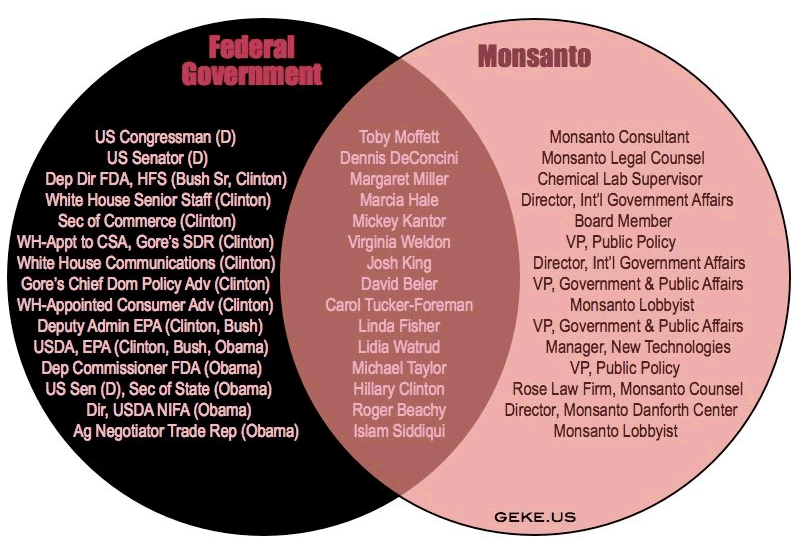
The revolving door between the private sector and government bodies has been well established. In the US, many senior figures from the Genetically Modified Organisms (GMOs) industry, especially Monsanto, have moved with ease to take up positions with the Food and Drug Administration and Evironmental Protection Agency and within the government. Writer and researcher William F Engdahl writes about a similar influence in Europe, noting the links between the GMO sector within the European Food Safety Authority. He states that over half of the scientists involved in the GMO panel which positively reviewed the Monsanto’s study for GMO maize in 2009, leading to its EU-wide authorisation, had links with the biotech industry.

“Monsanto should not have to vouchsafe the safety of biotech food. Our interest is in selling as much of it as possible. Assuring its safety is the FDA’s job” – Phil Angell, Monsanto’s director of corporate communications. “Playing God in the Garden” New York Times Magazine,October 25, 1998.

Phil Angell’s statement begs the question: then who should vouchsafe for it, especially when the public bodies have been severely comprised? Monsanto has all angles covered.

When corporate interests are able to gain access to such positions of power, little wonder they have some heavy-duty tools at their disposal to try to fend off criticism by all means necessary.

A well-worn tactic of the pro-GMO lobby is to slur and attack figures that have challenged the ‘science’ and claims of the industry. With threats of lawsuits and UK government pressure, some years ago top research scientist Dr Arpad Pusztai was effectively silenced over his research concerning the dangers of GM food. A campaign was set in motion to destroy his reputation. Professor Seralini and his team’s research was also met with intense industry pressure, with Monsanto effectively targeting the heart of science to secure its commercial interests. There are numerous examples of scientists being targeted like this. A WikiLeaks cable highlighted how GMOs were being forced into European nations by the US ambassador to France who plotted with other US officials to create a ‘retaliatory target list’ of anyone who tried to regulate GMOs. That clearly indicates the power of the industry.

What the GMO sector fails to grasp is that the onus is on it to prove that its products are safe. And it has patently failed to do this. No independent testing was done before Bush senior allowed GMOs onto the US market. The onus should not be on others to prove they are safe (or unsafe) after they are on the market, especially as public attorney Steven Druker‘s book ‘Altered Genes, Twisted Truth’ shows that GMOs are on the US market due to fraudulent practices and the bypassing of scientific evidence pointing to potential health hazards.

We therefore have the right to ask whether we should trust studies carried out by the sector itself that claims GM crops are safe? Let us turn to Tiruvadi Jagadisan for an answer.

He worked with Monsanto for nearly two decades, including eight years as the managing director of India operations. A few years ago, he stated that Monsanto “used to fake scientific data” submitted to government regulatory agencies to get commercial approvals for its products in India. The former Monsanto boss said government regulatory agencies with which the company used to deal with in the 1980s simply depended on data supplied by the company while giving approvals to herbicides. As reported in India Today, he is on record as saying that India’s Central Insecticide Board simply accepted foreign data supplied by Monsanto and did not even have a test tube to validate the data which at times was faked.

Now that scientists such as Professor Seralini are in a sense playing catch-up by testing previously independently untested GMOs, he is attacked. However, the attacks on Seralini and his study have been found to be based on little more than unscientific polemics and industry pressure. In fact, in new study, Seralini highlights the serious flaws of industry-backed studies that were apparently slanted to distort results. It remains to be seen whether he and his team are in for another bout of smears and attacks.

But this is symptomatic of the industry: it says a product is safe, therefore it is – regardless that science is being used as little more than an ideological smokescreen. We are expected to take its claims at face value. The revolving door between top figures at Monsanto and positions at the FDA makes it difficult to see where the line between lobbying and regulation is actually drawn. People are rightly suspicious of the links between the FDA and GMO industry in the US and the links between it and the regulatory body within the EU.

GM represents the so-called “Green Revolution’s” second coming. Agriculture has changed more over the last two generations than it did in the previous 12,000 years. Environmentalist Vandana Shiva notes that, after 1945, chemical manufacturers who had been involved in the weapons industry turned their attention to applying their chemical know-how to farming. As a result ‘dwarf seeds’ were purposively created to specifically respond to their chemicals. Agriculture became transformed into a chemical-dependent industry that has destroyed much biodiversity. What we are left with is crop monocultures, which negatively impact food security and nutrition. In effect, modern agriculture is part of the paradigm of control based on mass standardization and a dependency on corporate products.

The implications have been vast. Chemical-industrial agriculture has proved extremely lucrative for the oil and chemicals industry, courtesy of oil-rich Rockefeller interests which were instrumental in pushing for the green revolution throughout the world, and has served to maintain and promote Western hegemony, not least via ‘structural adjustment’ and the consequent uprooting of traditional farming practices in favour of single-crop export-oriented policies, dam building to cater for what became a highly water intensive industry, loans and indebtedness, boosting demand for the US dollar, etc.

Agriculture has been a major tool of US foreign policy since 1945 and has helped to secure its global hegemony. One must look no further than current events in Ukraine, where the strings attached to financial loans are resulting in the opening up of (GM) agriculture to Monsanto. From Africa to India and across Asia, the hijack of indigenous agriculture and food production by big corporations is a major political issue as farmers struggle for their rights to remain on the land, retain ownership of seeds, grow healthy food and protect their livelihoods.

Apart from tying poorer countries into an unequal system of global trade and reinforcing global inequalities, the corporate hijacking of food and agriculture has had many other implications, not least where health is concerned.

Dr Meryl Hammond, founder of the Campaign for Alternatives to Pesticides, told a Canadian parliament committee in 2009 that a raft of studies published in prestigious peer-reviewed journals point to strong associations between chemical pesticides and a vast range of serious life-threatening health consequences. Shiv Chopra, a top food advisor to the Canadian government, has documented how all kinds of food products that were known to be dangerous were passed by the regulatory authority and put on the market there due to the power of the food industry.

Severe anemia, permanent brain damage, Alzheimer’s, dementia, neurological disorders, reproductive problems, diminished intelligence, impaired immune system, behavioural disorders, cancers, hyperactivity and learning disability are just some of the diseases that numerous studies have linked to our food.

Of course, just like cigarettes and the tobacco industry before, trying to ‘prove’ the glaringly obvious link will take decades as deceit is passed off as ‘science’ or becomes institutionalized due to the hijacking of government bodies by the corporations involved in food production.

But anyone who questions the need for GMOs in the first place and the risks they bring and devastating impacts they have is painted as clueless and indulging in scare mongering and falsehoods, while standing in the way of human progress. But can we expect much better from an industry that has a record of smearing and attempting to ruin people who criticise it? Are those of us who question the political links of big agritech and the nature of its products ready to take lessons on ethics and high-minded notions of ‘human progress’ from anyone involved with it?

This is an industry that has contaminated crops and bullied farmers with lawsuits in North America, an industry whose companies have been charged with and most often found guilty of contaminating the environment and seriously damaging health with PCBs and dioxins, an industry complicit in concealing the deadly impact of GM corn on animals, an industry where bribery seems to be second nature (Monsanto in Indonesia), an industry associated with human rights violations in Brazil and an industry that will not label its foods in the US.

A great myth forwarded by the pro-GMO lobby is that governments are freely choosing to adopt GMOs. Any brief analysis of the politics of GM highlights that this is nonsense. Various pressures are applied and agritech companies have captured policy bodies and have a strategic hold over the WTO and trade deals like the TTIP.

For instance, take the 2005 US-India nuclear deal (allowing India to develop its nuclear sector despite it not being a signatory of the Non-Proliferation Treaty and allegedly pushed through with a cash for votes tactic in the Indian parliament). It was linked to the Knowledge Initiative on Agriculture, which was aimed at widening access to India’s agricultural and retail sectors. This initiative was drawn up with the full and direct participation of representatives from various companies, including Monsanto, Cargill and Walmart.

When the most powerful country comes knocking at your door seeking to gain access to your markets, there’s good chance that once its corporate-tipped jackboot is in, you won’t be able to get it out.

And it seems you can’t. So far, Bt cotton has been the only GM crop allowed in India, but the open field trials of many GM crops are now taking place around the country despite an overwhelming consensus of official reports warning against this. The work of numerous public bodies and research institutes is now compromised as a result of Monsanto’s strategic influence within India (see this and this).

If global victory cannot be achieved by the GMO biotech sector via the hijack of public bodies and trade deals or intimidation, then the politics of another form of contamination may eventually suffice:

“The hope of the industry is that over time the market is so flooded [with GMOs] that there’s nothing you can do about it. You just sort of surrender” – Don Westfall, biotech industry consultant and vice-president of Promar International, in the Toronto Star,January 9 2001.

Open field planting is but one way of achieving what Westfall states. Of course, there are numerous other ways too (see this).

As powerful agribusiness concerns seek to ‘consolidate the entire food chain’ with their seeds, patents and GMOs, it is clear that it’s not just the health of the nation (any nation) that is at stake but the global control of food and by implication nations.

“What you are seeing is not just a consolidation of seed companies, it’s really a consolidation of the entire food chain” – Robert Fraley, co-president of Monsanto’s agricultural sector 1996, in the Farm Journal. Quoted in: Flint J. (1998) Agricultural industry giants moving towards genetic monopolism. Telepolis, Heise.

Colin Todhunter is an independent writer: colintodhunter.com

Hawaii Sees 10 Fold Increase in Birth Defects After Becoming GM Corn Testing Ground

hawaiians_against_gmo_720_375

By Jay Syrmopoulos

Source: The Free Thought Project

Waimea, HI – Doctors are sounding the alarm after noticing a disturbing trend happening in Waimea, on the island of Kauai, Hawaii. Over the past five years, the number of severe heart malformations has risen to more than ten times the national rate, according to an analysis by local physicians.

Pediatrician Carla Nelson, after seeing four of these defects in three years, is extremely concerned with the severe health anomalies manifesting in the local population.

Nelson, as well as a number of other local doctors, find themselves at the center of a growing controversy about whether the substantial increase in severe illness and birth defects in Waimea stem from the main cash crop on four of the six islands, genetically modified corn, which has been altered to resist pesticide.

Hawaii has historically been used as a testing ground for almost all GMO corn grown in the United States. Over 90% of GMO corn grown in the mainland U.S. was first developed in Hawaii, with the island of Kauai having the largest area used.

According to a report in The Guardian:

In Kauai, chemical companies Dow, BASF, Syngenta and DuPont spray 17 times more pesticide per acre (mostly herbicides, along with insecticides and fungicides) than on ordinary cornfields in the US mainland, according to the most detailed study of the sector, by the Center for Food Safety.

That’s because they are precisely testing the strain’s resistance to herbicides that kill other plants. About a fourth of the total are called Restricted Use Pesticides because of their harmfulness. Just in Kauai, 18 tons – mostly atrazine, paraquat (both banned in Europe) and chlorpyrifos – were applied in 2012. The World Health Organization this year announced that glyphosate, sold as Roundup, the most common of the non-restricted herbicides, is “probably carcinogenic in humans”.

Waimea is a small town that lies directly downhill from the 12,000 acres of GMO test fields leased mainly from the state. Spraying takes place often, sometimes every couple of days. Residents have complained that when the wind blows downhill from the fields, the chemicals have caused headaches, vomiting, and stinging eyes.

“Your eyes and lungs hurt, you feel dizzy and nauseous. It’s awful,” local middle school special education teacher Howard Hurst told the Guardian. “Here, 10% of the students get special-ed services, but the state average is 6.3%,” he says. “It’s hard to think the pesticides don’t play a role.”

To add insult to injury, Dow AgraSciences’ main lobbyist in Honolulu, until recently, actually ran the main hospital in town. Although only 1,700ft away from a Syngenta field, the hospital has never done any research into the effects of pesticides on its patients.

Hawaiians have attempted to reign in the industrial chemical/farming machine on four separate occasions over the past two years. On August 9 an estimated 10,000 people marched through Honolulu’s main tourist district to protest the collusion of big business and state putting profits over citizens’ health.

“The turnout and the number of groups marching showed how many people are very frustrated with the situation,” native Hawaiian activist Walter Ritte said.

Hawaiians have also attempted to use a ballot initiative to force a moratorium on the planting of GMO crops, according to The Guardian:

In Maui County, which includes the islands of Maui and Molokai, both with large GMO corn fields, a group of residents calling themselves the Shaka Movement sidestepped the company-friendly council and launched a ballot initiative that called for a moratorium on all GMO farming until a full environmental impact statement is completed there.

The companies, primarily Monsanto, spent $7.2m on the campaign ($327.95 per “no” vote, reported to be the most expensive political campaign in Hawaii history) and still lost.

Again, they sued in federal court, and, a judge found that the Maui County initiative was preempted by federal law. Those rulings are also being appealed.

Even amidst strong public pressure, the chemical companies that grow the GMO corn have continued to refuse to disclose the chemicals they are using, as well as the specific amounts of each chemical being used. The industry and its political cronies have continually insisted that pesticides are safe.

“We have not seen any credible source of statistical health information to support the claims,” said Bennette Misalucha, executive director of Hawaii Crop Improvement Association in a written statement distributed by a publicist.

Nelson pointed out that American Academy of Pediatrics’ report, Pesticide Exposure in Children, found “an association between pesticides and adverse birth outcomes, including physical birth defects,” going on to note that local schools have twice been evacuated and kids sent to the hospital due to pesticide drift. “It’s hard to treat a child when you don’t know which chemical he’s been exposed to.”

Sidney Johnson, a pediatric surgeon at the Kapiolani Medical Center for Women and Children who oversees all children born in Hawaii with major birth defects says he’s noticed that the number of babies born here with their abdominal organs outside. This is a rare condition known as gastroschisis and has grown from three a year in the 1980s to about a dozen now, according to The Guardian.

Johnson and a team of medical students have been studying hospital records to determine if any of the parents of the infants with gastroschisis were residing near fields that were undergoing spraying during conception and early pregnancy.

“We have cleanest water and air in the world,” Johnson said. “You kind of wonder why this wasn’t done before,” he says. “Data from other states show there might be a link, and Hawaii might be the best place to prove it.”

It was recently revealed that these chemical companies, unlike farmers, are allowed to operate under an antiquated decades-old Environmental Protection Agency permit. This permit was grandfathered in from the days of sugar plantations when the amounts and toxicities were significantly lower, and which allowed for toxic chemicals to be discharged into water. Tellingly the state of Hawaii has asked for a federal exemption to allow these companies to continue to not comply with modern standards.

The ominous reality of collusion between these mega-corporations and the political class in Hawaii has seemingly left the citizens of the state with virtually no ability to safeguard their children’s health. We tread dangerously close to corporate fascism when profits are put above the health of the people.


Jay Syrmopoulos is an investigative journalist, free thinker, researcher, and ardent opponent of authoritarianism. He is currently a graduate student at University of Denver pursuing a masters in Global Affairs. Jay’s work has been published on BenSwann’s Truth in Media, Chris Hedges’s Truth-Out, AlterNet, InfoWars, MintPress News and many other sites. You can follow him on Twitter @sirmetropolis, on Facebook at Sir Metropolis and now on tsu.

Columbians Tired of US Planes Dumping Tons of Monsanto’s Roundup on Them to Fight the Drug War

monsanto-columbian-drug-war

By Matt Agorist

Source: Free Thought Project

For over two decades now, US planes have been dumping tons of pesticides over Columbian coca fields. America’s immoral and asinine policy of the War on Drugs has perpetuated the aerial spraying of Monsanto’s Roundup over rural areas of Columbia since 1994.

Originally the Columbian government wholeheartedly supported the ridiculous notion of mass killing all vegetation in attempt to cull the drug trade. However, it is no longer a secret that the health effects of long-term exposure to glyphosate are less than desirable.

Just last month, the World Health Organization was forced to admit that glyphosate is “probably carcinogenic to humans.”

The recent acceptance by the mainstream that Monsanto’s Roundup causes a slew of negative health effects has sparked fear and infighting among the Columbian government.

According to the AFP,

Health Minister Alejandro Gaviria said last week that Colombia should “immediately suspend” spraying — a move vehemently opposed by Defense Minister Juan Carlos Pinzon, who said it would “give criminals the upper hand.”

The row erupted just as US Deputy Secretary of State Antony Blinken paid a visit to Colombia, which the United States sees as one of its closest allies in the region.

The politicians who are fear-mongering about stopping the program are likely scared of losing the hundreds of millions in funds received annually from the US to combat the cultivation of this plant.

Daniel Mejia, the head of Colombia’s Center for Research on Security and Drugs explained why they are worried about the program. “We carried out a study that showed fumigating caused dermatological and respiratory problems and provoked miscarriages,” he said.

Even if dumping massive amount of carcinogenic pesticides from airplanes was a good idea, it’s not effective. According to the United Nations Office on Drugs and Crime, this program has aided Colombia in reducing its coca fields from more than 140,000 hectares (346,000 acres) in 2001 to 48,000 hectares in 2013. However, they conveniently left out the increase seen last year. The amount of land under coca cultivation in Colombia jumped 39 percent in 2014 to 112,000 hectares (about 27,000 acres), according to the Office of National Drug Control Policy.

Cocaine trafficking in Latin American region has caused a slew violence and turmoil, including the Columbian civil war. However, this turmoil is a direct result of prohibition spearheaded by the United States.

Columbia never had a cocaine trafficking problem until the US-funded war on drugs began its destructive path across South America.

During the 1980s, Peru, Bolivia and Colombia were responsible for 65%, 25% and 10% of the world’s coca production respectively. By 2000, however, the US “war on drugs” in neighboring Andean countries had turned Colombia into the world’s largest cocaine producer by far, representing 90% of the total, according to a report from the from the Woodrow Wilson International Center for Scholars.

The coca plant is one of the most beneficial and astonishingly resilient plants in the world. Resistant to drought and disease, coca needs no irrigation and the alkaloids it contains provide a myriad of medicinal uses. From its analgesic effects to digestive aid, coca’s positive influence in medicine is vast.

The plant has played an important role in history dating back to the Pre-Inca period.

According to a study published by Harvard University in 1975, (Nutritional Value of Coca Leaf (Duke, Aulick, Plowman 1975)) chewing 100 grams of coca is enough to satisfy the nutritional needs of an adult for 24 hours. Thanks to the calcium, proteins, vitamins A and E, and other nutrients it contains, the plant offers even better possibilities to the field of human nutrition than it does to that of medicine, where it is commonly used today.

However, the state cares not about the benefit of such a plant, only that it can be turned into a white powdery substance and snorted to stimulate long and often nonsensical conversations. Instead of cultivating the plant for its benefits, the immoral war on drugs drops carcinogens from airplanes to stop its growth.

The president of Columbia, Juan Manuel Santos, is avoiding any stance on the aerial spraying program whatsoever. According to the AFP, his staff said the final authority on the matter is the National Narcotics Council, which falls under the Justice Ministry. In the meantime, however, the spraying continues.