
Rest in Peace and Rise in Power Dick Gregory

As many of you may have heard over the weekend, pioneering comedian and activist Dick Gregory died of heart failure on August 19th at age 84. For those not familiar to him, it’s difficult to encapsulate the scope of his work, but the following excellent synopsis is provided from his own website, Global Watch:

Gregory, Richard Claxton “Dick” (Born, October 12, 1932, St. Louis, Mo.), African American comedian and civil rights activist whose social satire changed the way white Americans perceived African American comedians since he first performed in public.

Dick Gregory entered the national comedy scene in 1961 when Chicago’s Playboy Club (as a direct request from publisher Hugh Hefner) booked him as a replacement for white comedian, “Professor” Irwin Corey. Until then Gregory had worked mostly at small clubs with predominantly black audiences (he met his wife, Lillian Smith, at one such club). Such clubs paid comedians an average of five dollars per night; thus Gregory also held a day job as a postal employee. His tenure as a replacement for Corey was so successful — at one performance he won over an audience that included southern white convention goers — that the Playboy Club offered him a contract extension from several weeks to three years. By 1962 Gregory had become a nationally known headline performer, selling out nightclubs, making numerous national television appearances, and recording popular comedy albums.

It’s important to note that no biography of Gregory would be complete without mentioning that he and his beloved wife, Lil, had ten kids who have become highly respected members of the national community in a variety of fields. They are: Michele, Lynne, Pamela, Paula, Stephanie (aka Xenobia), Gregory, Christian, Miss, Ayanna and Yohance. The Gregory’s had one child who died at birth but they have shared 49 years of historic moments, selfless dedication and tremendous personal love.

Gregory began performing comedy in the mid-1950s while serving in the army.
(See Black sin the Military). Drafted in 1954 while attending Southern Illinois University at Carbondale on a track scholarship, Gregory briefly returned to the university after his discharge in 1956, but left without a degree because he felt that the university “didn’t want me to study, they wanted me to run.” In the hopes of performing comedy professionally, he moved to Chicago, where he became part of a new generation of black comedians that included Nipsey Russell, Bill Cosby, and Godfrey Cambridge. These comedians broke with the minstrel tradition, which presented stereotypical black characters. Gregory, whose style was detached, ironic, and satirical, came to be called the “Black Mort Sahl” after the popular white social satirist. Friends of Gregory have always referred to Mort Sahl as the “White Dick Gregory.” Gregory drew on current events, especially the racial issues, for much of his material: “Segregation is not all bad. Have you ever heard of a collision where the people in the back of the bus got hurt?”

From an early age, Gregory demonstrated a strong sense of social justice. While a student at Sumner High School in St. Louis he led a March protesting Segregated schools. Later, inspired by the work of leaders such as Dr. Martin Luther King Jr., and organizations such as the Student Nonviolent Coordinating Committee (SNCC), Gregory took part in the Civil Rights Movement and used his celebrity status to draw attention to such issues as segregation and disfranchisement. When local Mississippi governments stopped distributing Federal food surpluses to poor blacks in areas where SNCC was encouraging voter registration, Gregory chartered a plane to bring in several tons of food. He participated in SNCC’s voter registration drives and in sit-ins to protest segregation, most notably at a restaurant franchise in downtown Atlanta, Georgia. Only later did Gregory disclose that he held stock in the chain.

Gregory’s autobiography, Nigger, was published in 1963 prior to The assassination of President Kennedy, and became the number one best-selling book in America. Over the decades it has sold in excess of seven million copies. His choice for the title was explained in the forward, where Dick Gregory wrote a note to his mother. “Whenever you hear the word ‘Nigger’,” he said, “you’ll know their advertising my book.”

Through the 1960s, Gregory spent more time on social issues and less time on performing. He participated in marches and parades to support a range of causes, including opposition to the Vietnam War, world hunger, and drug abuse. In addition, Gregory fasted in protest more than 60 times, once in Iran, where he fasted and prayed in an effort to urge the Ayatollah Khomeini to release American embassy staff who had been taken hostage. The Iranian refusal to release the hostages did not decrease the depth of Gregory’s commitment; he weighed only 97 lbs when he left Iran.

Gregory demonstrated his commitment to confronting the entrenched political powers by opposing Richard J. Daley in Chicago’s 1966 mayoral election. He ran for president in 1968 as a write-in candidate for the Freedom and Peace Party, a splinter group of the Peace and Freedom Party and received 1.5 million votes. Democratic candidate Hubert Humphrey lost the election to Republican Richard Nixon by 510,000 votes, and many believe Humphrey would have won had Gregory not run. After the assassinations of King, President John F. Kennedy, and Robert Kennedy, Gregory became increasingly convinced of the existence of political conspiracies. Gregory wrote books such as Code Name Zorro: The Murder of Martin Luther King Jr. (1971) with Mark Lane, world famous author, attorney and documentary filmmaker, whose findings published in the best-selling 1966 book Rush To Judgment Gregory credited with reversing the nation’s opinion on who assassinated the president and the facts which contradicted the official government version contained in the Warren Report. Lane’s book contained answers and facts, which Gregory has espoused in Numerous lectures from then until now. Lane and Gregory have been best friends, co-authors and have lectured together for over 40 years and both livein Washington D.C. Gregory and Lane’s book on the assassination of Dr. King was recently released under another title, Murder In Memphis, as a trade paperback.

Gregory’s activism continued into the 1990s. In response to published allegations that the Central Intelligence Agency (CIA) had supplied cocaine to predominantly African American areas in Los Angeles, thus spurring the crack epidemic, Gregory protested at CIA headquarters and was arrested. In 1992 he began a program called Campaign for Human Dignity to fight crime in St. Louis neighborhoods.

In 1973, the year he released his comedy album Caught in the Act, Gregory moved with his family to Plymouth, Massachusetts, where he developed an interest in vegetarianism and became a nutritional consultant. In 1984 he founded Health Enterprises, Inc., a company that distributed weight loss products. In 1987 Gregory introduced the Slim-Safe Bahamian Diet, a powdered diet mix, which was immensely profitable. Economic losses caused in part by conflicts with his business partners led to his eviction from his home in 1992. Gregory remained active, however, and in 1996 returned to the stage in his critically acclaimed one-man show, Dick Gregory Live! The reviews of Gregory’s show compared him to the greatest stand-ups in the history of Broadway.

In 1998 Gregory spoke at the celebration of the birthday of Dr. Martin Luther King, Jr. and President Clinton were in attendance. Not long after that, the President told Gregory’s long-time friend and PR. Consultant, Steve Jaffe, “I love Dick Gregory, he is one of the funniest people on the planet.” They spoke of how Gregory had made a comment on Dr. King’s birthday that broke everyone into laughter, when he noted that the President made Speaker Newt Gingrich ride “in the back of the plane,” on an Air Force One trip overseas. In 2001, Gregory announced to the world that he had been diagnosed with a rare form of Cancer. He refused traditional medical treatment – chemotherapy –and with the assistance of some of the finest minds in alternative medicine, put together a regimen of a variety of diet, vitamins, exercise, and modern devices not even known to the public, which ultimately resulted in his reversing the trend of the Cancer to the point where today he is 100% Cancer free.

Gregory’s going public with his diagnosis has helped millions of his fans around the world to understand what Cancer specialists have been trying to explain for decades, which is that “Cancer is curable.” Gregory was honored recently at the Kennedy Center in Washington D.C., by a sold out house and a tribute hosted by Bill Cosby, with special tributes by Mrs. Martin Luther King Jr., Stevie Wonder, Isaac Hayes, Cicely Tyson, Mark Lane, Marion Barry and many more.

His most recent book, Callus On My Soul, (Longstreet Press, Atlanta, Ga.) which became a best-seller within weeks of publication, is an autobiography that updates his earlier autobiography (Nigger), because as Dick says, “I’ve lived long enough to need two autobiographies which is fine with me. I’m looking forward to writing the third and fourth volumes as well.”

In 2001, Gregory escaped death once again when a massive tree fell on his car in a storm in Washington D.C. crushing it completely, causing him to have to be extricated from the car by emergency crews. One witness said, “I knew the driver and his passengers had died when I saw the tree fall.” Gregory said, “I knew that God had more work for me to do when I saw the tree falling. ” He saved his own life by driving into the oncoming lanes of traffic. The word of the accident circulated the globe immediately in the media, underscoring the power, influence, and support that Gregory has earned from people of all nations.

Doctor’s at George Washington Hospital refused to release Gregory for a few days causing his first-ever “State of the Union Address” to African Americans to be delayed by a month. Gregory gave the first “State of The Union” address live on the Internet from Los Angeles on April 21st.



Kick Open the Doorway to Liberty: What Are We Waiting For?

0823e935c920bdf2c31447b67612bfc6

By John W. Whitehead

Source: The Rutherford Institute

“The greatness of America lies in the right to protest for right.”—Martin Luther King Jr.

Everything this nation once stood for is being turned on its head.

Free speech, religious expression, privacy, due process, bodily integrity, the sanctity of human life, the sovereignty of the family, individuality, the right to self-defense, protection against police abuses, representative government, private property, human rights—the very ideals that once made this nation great—have become casualties of a politically correct, misguided, materialistic, amoral, militaristic culture.

Indeed, I’m having a hard time reconciling the America I know and love with the America being depicted in the daily news headlines, where corruption, cronyism and abuse have taken precedence over the rights of the citizenry and the rule of law.

What kind of country do we live in where it’s acceptable for police to shoot unarmed citizens, for homeowners to be jailed for having overgrown lawns (a Texas homeowner was actually sentenced to 17 days in jail and fined $1700 for having an overgrown lawn), for kids to be tasered and pepper sprayed for acting like kids at school (many are left with health problems ranging from comas and asthma to cardiac arrest), and for local governments to rake in hefty profits under the guise of traffic safety (NPR reports that police departments across the country continue to require quotas for arrests and tickets, a practice that is illegal but in effect)?

Why should we Americans have to put up with the government listening in on our phone calls, spying on our emails, subjecting us to roadside strip searches, and generally holding our freedoms hostage in exchange for some phantom promises of security?

As I document in my new book Battlefield America: The War on the American People, it doesn’t matter where you live—big city or small town—it’s the same scenario being played out over and over again in which government agents ride roughshod over the rights of the citizenry.

In such an environment, it’s not just our Fourth Amendment rights—which protect us against police abuses—that are being trampled. It’s also our First Amendment rights to even voice concern over these practices that are being muzzled. Just consider some of the First Amendment battles that have taken place in recent years, and you too will find yourself wondering what country you’re living in:

  • Harold Hodge was arrested for standing silently in front of the U.S. Supreme Court building, holding a sign in protest of police tactics.
  • Marine Brandon Raub was arrested for criticizing the government on Facebook.
  • Pastor Michael Salman was arrested for holding Bible studies in his home.
  • Steven Howards was arrested for being too close to a government official when he voiced his disapproval of the war in Iraq.
  • Kenneth Webber was fired from his job as a schoolbus driver for displaying a Confederate flag on the truck he uses to drive from home to school and back.
  • Fred Marlow was arrested for filming a SWAT team raid that took place across from his apartment.

And then there were the three California high school public school students who were ordered to turn their American flag t-shirts inside out on May 5 (Cinco de Mayo) because school officials were afraid it might cause a disruption and/or offend Hispanic students. Incredibly, the U.S. Supreme Court actually sided with the school and the Ninth Circuit Court of Appeals, affirming that it might be disruptive for American students to wear the American flag to an American public school.

While there are all kinds of labels being put on so-called “unacceptable” speech today, from calling it politically incorrect and hate speech to offensive and dangerous speech, the real message being conveyed is that Americans don’t have a right to express themselves if what they are saying is unpopular, controversial or at odds with what the government determines to be acceptable.

Whether it’s through the use of so-called “free speech zones,” the requirement of speech permits, the policing of online forums, or a litany of laws and policies that criminalize expressive activities, what we’re seeing is the caging of free speech and the asphyxiation of the First Amendment.

Long before the menace of the police state, with its roadside strip searches, surveillance drones, and SWAT team raids, it was our First Amendment rights that were being battered by political correctness, hate crime legislation, the war on terror and every other thinly veiled rationale used to justify censoring our free speech rights.

By suppressing free speech, the government is contributing to a growing underclass of Americans who are being told that they can’t take part in American public life unless they “fit in.” Mind you, it won’t be long before anyone who believes in holding the government accountable to respecting our rights and abiding by the rule of law is labeled an “extremist” and is relegated to an underclass that doesn’t fit in and must be watched all the time.

It doesn’t matter how much money you make, what politics you subscribe to, or what God you worship: we are all potential suspects, terrorists and lawbreakers in the eyes of the government.

In other words, if and when this nation falls to tyranny, we will all suffer the same fate: we will fall together. However, if it is possible to avert such an outcome, it will rest in us remembering that we are also all descendants of those early American revolutionaries who pushed back against the abuses of the British government. These people were neither career politicians nor government bureaucrats. Instead, they were mechanics, merchants, artisans and the like—ordinary people groaning under the weight of Britain’s oppressive rule—who, having reached a breaking point, had decided that enough was enough.

The colonists’ treatment at the hands of the British was not much different from the abuses meted out to the American people today: they too were taxed on everything from food to labor without any real say in the matter, in addition to which they had their homes invaded by armed government agents, their property seized and searched, their families terrorized, their communications, associations and activities monitored, and their attempts to defend themselves and challenge the government’s abuses dismissed as belligerence, treachery, and sedition.

Unlike most Americans today, who remain ignorant of the government’s abuses, cheerfully distracted by the entertainment spectacles trotted out before them by a complicit media, readily persuaded that the government has their best interests at heart, and easily cowed by the slightest show of force, the colonists responded to the government’s abuses with outrage, activism and rebellion. They staged boycotts of British goods and organized public protests, mass meetings, parades, bonfires and other demonstrations, culminating with their most famous act of resistance, the Boston Tea Party.

On the night of December 16, 1773, a group of men dressed as Indians boarded three ships that were carrying tea. Cheered on by a crowd along the shore, they threw 342 chests of tea overboard in protest of a tax on the tea. Many American merchants were aghast at the wanton destruction of property. A town meeting in Bristol, Massachusetts, condemned the action. Ben Franklin even called on his native city to pay for the tea and apologize. But as historian Pauline Maier notes, the Boston Tea Party was a last resort for a group of people who had stated their peaceful demands but were rebuffed by the British: “The tea resistance constituted a model of justified forceful resistance upon traditional criteria.”

The rest, as they say, is history. Yet it’s a history we cannot afford to forget or allow to be rewritten.

The colonists suffered under the weight of countless tyrannies before they finally were emboldened to stand their ground. They attempted to reason with the British crown, to plea their cause, even to negotiate. It was only when these means proved futile that they resorted to outright resistance, civil disobedience and eventually rebellion.

More than 200 years later, we are once again suffering under a long train of abuses and usurpations. What Americans today must decide is how committed they are to the cause of freedom and how far they’re willing to go to restore what has been lost.

Nat Hentoff, one of my dearest friends and a formidable champion of the Constitution, has long advocated for the resurgence of grassroots activism. As Nat noted:

This resistance to arrant tyranny first became part of our heritage when Samuel Adams and the Sons of Liberty formed the original Committees of Correspondence, a unifying source of news of British tyranny throughout the colonies that became a precipitating cause of the American Revolution. Where are the Sons of Liberty, the Committees of Correspondence and the insistently courageous city councils now, when they are crucially needed to bring back the Bill of Rights that protect every American against government tyranny worse than King George III’s? Where are the citizens demanding that these doorways to liberty be opened … What are we waiting for?

What are we waiting for, indeed?

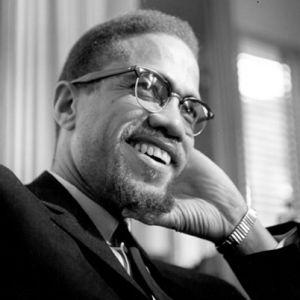
Malcolm X Was Right About America

MalcolmX

(Editors note: Tomorrow marks the 50th anniversary of the passing of Malcolm X. The venerated activist would surely have approved of Hedges’ radical appraisal of his philosophy and principles.)

By Chris Hedges

Source: Axis of Logic

Malcolm X, unlike Martin Luther King Jr., did not believe America had a conscience. For him there was no great tension between the lofty ideals of the nation—which he said were a sham—and the failure to deliver justice to blacks. He, perhaps better than King, understood the inner workings of empire. He had no hope that those who managed empire would ever get in touch with their better selves to build a country free of exploitation and injustice. He argued that from the arrival of the first slave ship to the appearance of our vast archipelago of prisons and our squalid, urban internal colonies where the poor are trapped and abused, the American empire was unrelentingly hostile to those Frantz Fanon called “the wretched of the earth.” This, Malcolm knew, would not change until the empire was destroyed.

“It is impossible for capitalism to survive, primarily because the system of capitalism needs some blood to suck,” Malcolm said. “Capitalism used to be like an eagle, but now it’s more like a vulture. It used to be strong enough to go and suck anybody’s blood whether they were strong or not. But now it has become more cowardly, like the vulture, and it can only suck the blood of the helpless. As the nations of the world free themselves, then capitalism has less victims, less to suck, and it becomes weaker and weaker. It’s only a matter of time in my opinion before it will collapse completely.”

King was able to achieve a legal victory through the civil rights movement, portrayed in the new film “Selma.” But he failed to bring about economic justice and thwart the rapacious appetite of the war machine that he was acutely aware was responsible for empire’s abuse of the oppressed at home and abroad. And 50 years after Malcolm X was assassinated in the Audubon Ballroom in Harlem by hit men from the Nation of Islam, it is clear that he, not King, was right. We are the nation Malcolm knew us to be. Human beings can be redeemed. Empires cannot. Our refusal to face the truth about empire, our refusal to defy the multitudinous crimes and atrocities of empire, has brought about the nightmare Malcolm predicted. And as the Digital Age and our post-literate society implant a terrifying historical amnesia, these crimes are erased as swiftly as they are committed.

“Sometimes, I have dared to dream … that one day, history may even say that my voice—which disturbed the white man’s smugness, and his arrogance, and his complacency—that my voice helped to save America from a grave, possibly even fatal catastrophe,” Malcolm wrote.

The integration of elites of color, including Barack Obama, into the upper echelons of institutional and political structures has done nothing to blunt the predatory nature of empire. Identity and gender politics—we are about to be sold a woman president in the form of Hillary Clinton—have fostered, as Malcolm understood, fraud and theft by Wall Street, the evisceration of our civil liberties, the misery of an underclass in which half of all public school children live in poverty, the expansion of our imperial wars and the deep and perhaps fatal exploitation of the ecosystem. And until we heed Malcolm X, until we grapple with the truth about the self-destruction that lies at the heart of empire, the victims, at home and abroad, will mount. Malcolm, like James Baldwin, understood that only by facing the truth about who we are as members of an imperial power can people of color, along with whites, be liberated. This truth is bitter and painful. It requires an acknowledgment of our capacity for evil, injustice and exploitation, and it demands repentance. But we cling like giddy children to the lies we tell ourselves about ourselves. We refuse to grow up. And because of these lies, perpetrated across the cultural and political spectrum, liberation has not taken place. Empire devours us all.

“We’re anti-evil, anti-oppression, anti-lynching,” Malcolm said. “You can’t be anti- those things unless you’re also anti- the oppressor and the lyncher. You can’t be anti-slavery and pro-slavemaster; you can’t be anti-crime and pro-criminal. In fact, Mr. Muhammad teaches that if the present generation of whites would study their own race in the light of true history, they would be anti-white themselves.”

Malcolm once said that, had he been a middle-class black who was encouraged to go to law school, rather than a poor child in a detention home who dropped out of school at 15, “I would today probably be among some city’s professional black bourgeoisie, sipping cocktails and palming myself off as a community spokesman for and leader of the suffering black masses, while my primary concern would be to grab a few more crumbs from the groaning board of the two-faced whites with whom they’re begging to ‘integrate.’ ”

Malcolm’s family, struggling and poor, was callously ripped apart by state agencies in a pattern that remains unchanged. The courts, substandard schooling, roach-filled apartments, fear, humiliation, despair, poverty, greedy bankers, abusive employers, police, jails and probation officers did their work then as they do it now. Malcolm saw racial integration as a politically sterile game, one played by a black middle class anxious to sell its soul as an enabler of empire and capitalism. “The man who tosses worms in the river,” Malcolm said, “isn’t necessarily a friend of the fish. All the fish who take him for a friend, who think the worm’s got no hook on it, usually end up in the frying pan.” He related to the apocalyptic battles in the Book of Revelation where the persecuted rise up in revolt against the wicked.

“Martin [Luther King Jr.] doesn’t have the revolutionary fire that Malcolm had until the very end of his life,” Cornel West says in his book with Christa Buschendorf, “Black Prophetic Fire.” “And by revolutionary fire I mean understanding the system under which we live, the capitalist system, the imperial tentacles, the American empire, the disregard for life, the willingness to violate law, be it international law or domestic law. Malcolm understood that from very early on, and it hit Martin so hard that he does become a revolutionary in his own moral way later in his short life, whereas Malcolm had the revolutionary fire so early in his life.”

There are three great books on Malcolm X: “The Autobiography of Malcolm X: As Told to Alex Haley,” “The Death and Life of Malcolm X” by Peter Goldman and “Martin & Malcolm & America: A Dream or a Nightmare” by James H. Cone.

On Friday I met Goldman—who as a reporter for a St. Louis newspaper and later for Newsweek knew and covered Malcolm—in a New York City cafe. Goldman was part of a tiny circle of white reporters Malcolm respected, including Charles Silberman of Fortune and M.S. “Mike” Handler of The New York Times, who Malcolm once said had “none of the usual prejudices or sentimentalities about black people.”

Goldman and his wife, Helen Dudar, who also was a reporter, first met Malcolm in 1962 at the Shabazz Frosti Kreem, a Black Muslim luncheonette in St. Louis’ north-side ghetto. At that meeting Malcolm poured some cream into his coffee. “Coffee is the only thing I liked integrated,” he commented. He went on: “The average Negro doesn’t even let another Negro know what he thinks, he’s so mistrusting. He’s an acrobat. He had to be to survive in this civilization. But by me being a Muslim, I’m black first—my sympathies are black, my allegiance is black, my whole objectives are black. By me being a Muslim, I’m not interested in being American, because America has never been interested in me.”

He told Goldman and Dudar: “We don’t hate. The white man has a guilt complex—he knows he’s done wrong. He knows that if he had undergone at our hands what we have undergone at his, he would hate us.” When Goldman told Malcolm he believed in a single society in which race did not matter Malcolm said sharply: “You’re dealing in fantasy. You’ve got to deal in facts.”

Goldman remembered, “He was the messenger who brought us the bad news, and nobody wanted to hear it.” Despite the “bad news” at that first meeting, Goldman would go on to have several more interviews with him, interviews that often lasted two or three hours. The writer now credits Malcolm for his “re-education.”

Goldman was struck from the beginning by Malcolm’s unfailing courtesy, his dazzling smile, his moral probity, his courage and, surprisingly, his gentleness. Goldman mentions the day that psychologist and writer Kenneth B. Clark and his wife escorted a group of high school students, most of them white, to meet Malcolm. They arrived to find him surrounded by reporters. Mrs. Clark, feeling that meeting with reporters was probably more important, told Malcolm the teenagers would wait. “The important thing is these kids,” Malcolm said to the Clarks as he called the students forward. “He didn’t see a difference between white kids and kids,” Kenneth Clark is quoted as saying in Goldman’s book.

James Baldwin too wrote of Malcolm’s deep sensitivity. He and Malcolm were on a radio program in 1961 with a young civil rights activist who had just returned from the South. “If you are an American citizen,” Baldwin remembered Malcolm asking the young man, “why have you got to fight for your rights as a citizen? To be a citizen means that you have the rights of a citizen. If you haven’t got the rights of a citizen, then you’re not a citizen.” “It’s not as simple as that,” the young man answered. “Why not?” Malcolm asked.

During the exchange, Baldwin wrote, “Malcolm understood that child and talked to him as though he was talking to a younger brother, and with that same watchful attention. What most struck me was that he was not at all trying to proselytize the child: he was trying to make him think. … I will never forget Malcolm and that child facing each other, and Malcolm’s extraordinary gentleness. And that’s the truth about Malcolm: he was one of the gentlest people I have ever met.”

“One of Malcolm’s many lines that I liked was ‘I am the man you think you are,’ ” Goldman said. “What he meant by that was if you hit me I would hit you back. But over the period of my acquaintance with him I came to believe it also meant if you respect me I will respect you back.”

Cone amplifies this point in “Martin & Malcolm & America”:

Malcolm X is the best medicine against genocide. He showed us by example and prophetic preaching that one does not have to stay in the mud. We can wake up; we can stand up; and we can take that long walk toward freedom. Freedom is first and foremost an inner recognition of self-respect, a knowledge that one was not put on this earth to be a nobody. Using drugs and killing each other are the worst forms of nobodyness. Our forefathers fought against great odds (slavery, lynching, and segregation), but they did not self-destruct. Some died fighting, and others, inspired by their example, kept moving toward the promised land of freedom, singing ‘we ain’t gonna let nobody turn us around.’ African-Americans can do the same today. We can fight for our dignity and self-respect. To be proud to be black does not mean being against white people, unless whites are against respecting the humanity of blacks. Malcolm was not against whites; he was for blacks and against their exploitation.

Goldman lamented the loss of voices such as Malcolm’s, voices steeped in an understanding of our historical and cultural truths and endowed with the courage to speak these truths in public.

“We don’t read anymore,” Goldman said. “We don’t learn anymore. History is disappearing. People talk about living in the moment as if it is a virtue. It is a horrible vice. Between the twitterverse and the 24-hour cable news cycle our history keeps disappearing. History is something boring that you had to endure in high school and then you are rid of it. Then you go to college and study finance, accounting, business management or computer science. There are damn few liberal arts majors left. And this has erased our history. The larger figure in the ’60s was, of course, King. But what the huge majority of Americans know about King is [only] that he made a speech where he said ‘I have a dream’ and that his name is attached to a day off.”

Malcolm, like King, understood the cost of being a prophet. The two men daily faced down this cost.

Malcolm, as Goldman writes, met with the reporter Claude Lewis not long before his Feb. 21, 1965, murder. He had already experienced several attempts on his life.

“This is an era of hypocrisy,” he told Lewis. “When white folks pretend that they want Negroes to be free, and Negroes pretend to white folks that they really believe that white folks want ’em to be free, it’s an era of hypocrisy, brother. You fool me and I fool you. You pretend that you’re my brother, and I pretend that I really believe you believe you’re my brother.”

He told Lewis he would never reach old age. “If you read, you’ll find that very few people who think like I think live long enough to get old. When I say by any means necessary, I mean it with all my heart, my mind and my soul. A black man should give his life to be free, and he should also be able, be willing to take the life of those who want to take his. When you really think like that, you don’t live long.”

Lewis asked him how he wanted to be remembered. “Sincere,” Malcolm said. “In whatever I did or do. Even if I made mistakes, they were made in sincerity. If I’m wrong, I’m wrong in sincerity. I think that the best thing that a person can be is sincere.”

“The price of freedom,” Malcolm said shortly before he was killed, “is death.”

Marcus Garvey (17 August 1887 – 10 June 1940)

200px-Marcus_Garvey_1924-08-05

Many are familiar with Marcus Garvey through numerous references to him in Reggae music since he’s a prophet in the Rastafarian religion. However, those of us in the US who value civil rights should be particularly thankful for Garvey’s legacy, for his life and the ideas he promoted were an influence on Malcolm X and Martin Luther King Jr. among many others and the organization he founded, the Universal Negro Improvement Association and African Communities League, continues his work to this day. This biography is from the Marcus Garvey Foundation:

The Honorable Marcus Mosiah Garvey was born in St. Ann Bay in the parish of St. Ann on the north coast of the island of Jamaica on 17 August 1887. He described it like this, “I was born in the beautiful Parish of St. Ann, near the falls of the Roaring River. I grew up with nature and drank much of her inspiration.” He developed an interest in playing cricket early in life. Apprenticed to his godfather who was a printer, young Marcus early evinced an interest in the printed word. He read widely and was always anxious to discuss current events as well as history. At the age of eighteen he was already a foreman at P.J. Benjamin’s Printing Shop in Jamaica’s capital city of Kingston. He could be seen grounding with his brethren at Victoria Pier on Sunday nights. Garvey joined the printer’s trade union and gained a reputation as courageous, dedicated and highly concerned young leader. At the age of twenty-three he embarked upon a most significant journey that carried him to both Latin America and Europe. He found employment on the docks of London, Liverpool and Cardiff like many West Indians and Africans at the time.

Meeting Duse Mohammed Ali, an Egyptian editor and publisher of the African Times and Orient Review, made a lasting impression on Marcus Garvey. Duse Ali later became active in the UNIA and later a newspaper publisher in Nigeria. Five days after he returned to Kingston, Jamaica, Marcus Garvey founded the Universal Negro Improvement Association, a mass based organization designed to unite people of African ascent around the world. Those who joined Garvey in founding the UNIA shared with him an interest in working hard to overcome conditions of oppression. The organization’s motto is “One God, One Aim, One Destiny.” Seeking the advice and assistance of Booker T. Washington, a well-known leader in the Black world community and at the helm of Tuskegee Institute, Marcus Garvey arrived in the U.S.A. several months after Washington’s death. He traveled from city to city spreading the word of Pan African unity. On May 10, l916, he kicked off the lecture tour at St. Mark’s Roman Catholic Church Hall on 138th Street and reportedly visited 38 states in a year. The cities Garvey visited later were to become major sites of UNIA activity. From those formative years at Liberty Hall on West 138th Street, this mass movement engulfed the African world, increasing from a few to millions worldwide. It wasn’t long before the establishment of the Negro World, Negro Factories Corporation, grocery stores, markets, steamships, and steam laundry companies occurred. The launching of the Black Star Line in 1919 and the successful First International Convention of the Negro Peoples of the World in 1920 catapulted this organization on to the world stage. Between World Wars I and II the UNIA rose and declined, never to be rivaled by another black mass movement.

Currently, the UNIA lives not only in its present form, but also in the memories of so many around the world. It is clear that the Universal Negro Improvement Association and African Communities League served as the model and foundation for 20th century Pan African movements.

Exploiting the Dream

Video

Black Agenda Report recently posted two excellent commentaries on the 50th anniversary of Martin Luther King Jr.’s “I Have a Dream” speech. More specifically, the hypocrisy of the corporate media’s treatment of King and his ideas after his death, and the Obama administration’s desecration of the commemoration on the eve of another war.

From “Dr King was a Man, ‘The Dreamer’ is a Zombie”:

The week spent commemorating :”the Dream” is a great way to forget the real past, ignore the real present and avoid responsibility for the future. It’s a great excuse to assemble stars and celebrities and politicians, to pretend that the rise and prominence of the black political class was the foreordained outcome of the historic Freedom Movement in which the real Dr. King lived, worked and died. It’s a great distraction from the fact that apart from their own careers, the black political class, right up to and including President Obama, have achieved very little in the way of substantive victories for our people in the last four decades.

For me, one of the lessons of Dr. King’s career and that of “the Dreamer”, who was born after the flesh and blood man was murdered, is the willingness of establishment media to rewrite history even as it’s being made, to blunt popular consciousness, to erase past sins, to stunt and limit our vision of the better world we know is possible. The Dreamer is a zombie, immortalized in a monumnet paid for by Wal-Mart, Boeing, Bank of America, British Petroleum and other corporate criminals. The folks I ran with four decades ago, and run with today disagreed with Dr. King, but we admire him. We never had much use though, for “The Dreamer.”

Read the full commentary here: http://www.blackagendareport.com/content/dr-king-was-man-%E2%80%9C-dreamer%E2%80%9D-zombie

From “The Dreamer With a Kill List”:

Just before launching yet another unprovoked war to preserve the empire, Barack Obama stopped by the Lincoln Memorial to star in the commemoration of the 1963 March on Washington. He was joined by former presidents Jimmy Carter and Bill Clinton, the men most responsible for pulling the Democratic Party deep enough into the corporate camp to afford the billion dollar elections that brought Obama to power. The pretense was that the presidents were there to show solemn respect for the Movement that defeated official American apartheid. The truth is, they came to take possession of the occasion – a gift from their minions in the Black Misleadership Class, who believe nothing has value until it is blessed and possessed by Power.

…It is inconceivable that Dr. King would share the stage with a president who was at that moment preparing a savage and illegal attack on a sovereign country. Dr. King’s voice has been censored and his dream vandalized, repackaged and presented as a gift to a corporate agent with a Kill List.

Read the full commentary here: http://www.blackagendareport.com/content/dreamer-kill-list

Black Agenda Report also just posted this episode of Black Agenda TV, an example of a independent journalism far superior to corporate cable TV in terms of substance and professionalism. One of the highlights is an in-depth interview with Dr. Cornel West.