
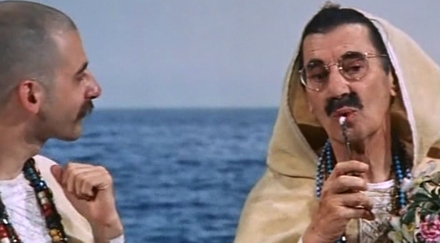
Skidoo: the LSD-fuelled Alcatraz movie with Groucho, Jackie Gleason, Carol Channing, Lurch, and everyone else
By Cory Doctorow
Source: BoingBoing
On our family holiday this summer, we had the great good fortune to be shown around Alcatraz Island by Ranger Craig Glassner — among other things, the Ranger responsible for the excellent documentary about the Occupation by Indians of All Tribes that is screened in the visitor center there. Craig let slip that his favorite Alcatraz movie is Skidoo, the 1968 Otto Preminger wacky stoner comedy with Groucho Marx, Jackie Gleason, Carol Channing, Burgess Meredith, Ted “Lurch” Cassidy, and just about every character actor you’ve ever enjoyed.
It’s an LSD-fuelled romp about a retired hit-man (Jackie Gleason) who voluntarily sends himself to Alcatraz to kill his best friend, who has betrayed the mob-boss of all bosses (played by Groucho Marx, who appears to either be stoned or simply method acting in many of his scenes). Meanwhile, the mobster’s daughter has fallen in with a wandering tribe of hippies who get taken in by her mother, Carol Channing, and end up involved in a jail-break that coincides with a mass dosing of Owsley’s finest LSD for everyone on the prison island.
It’s got trippy dance numbers, silly comedy, hippies, and, well, everything. It’s out on DVD after a long purgatory on the trashheap of history. I just watched it. It is something. It is something else.

 After the Crash