
Cyberwar: #RussiaGate Is US

By Rob Williams

Source: Project Censored

The following is a critical book review of Kathleen Hall Jamieson’s Cyberwar: How Russian Hackers and Trolls Helped Elect A President – What We Don’t, Can’t, And Do Know (Oxford: Oxford University Press, 2018).

“Russia hacked the 2016 US election!”

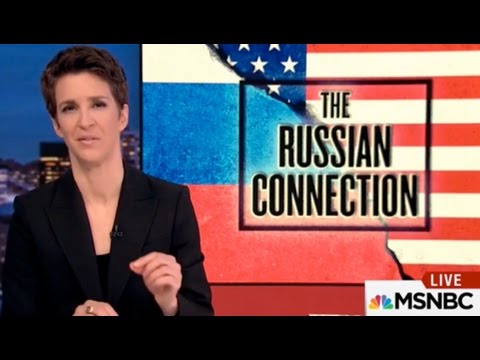
Since November 2016, the US “news” chatterati – pundits and poets, priests, prognosticators and politicians – have repeated this statement ad nauseum. The #RussiaGate story has become a commonly-accepted article of faith amongst the US neoliberal faithful – disgruntled Clintonistas, bereaved “Bernie Bros,” US news flaks, and anyone else who dislikes the current occupant of the White House. If the “Russia hacked the 2016 US election” meme warriors had a high-viz US standard bearer, it would probably be popular MSNBC performance artist Rachel “All Russia, All The Time” Maddow, who serves up the #RussiaGate sauce with reckless abandon to high TeeVee viewer ratings, earning somewhere between $30 and $40 K daily in salary. (LINK to RM mashup here).

And now, we have a scholarly book published by Oxford University Press with an epic title – Cyberwar: How Russian Hackers and Trolls Helped Elect A President – What We Don’t, Can’t, And Do Know – that purports to prove that Russia’s cyber-meddling helped sabotage the HRC campaign, swinging the 2016 US presidential election in favor of DJT.

To approach Cyberwar, first consider everything on the table re: the 2016 US presidential election.

Here‘s just a short list.

Witness the two most unpopular presidential candidates in US political history (one of whom confidently encouraged the other to run, convinced she could beat him); massive and well-documented bipartisan digital vote count manipulation (“electile dysfunction”) courtesy the 2002 “Help America Vote Act” (Orwell would be impressed); the grotesque (human) nature of Donald J Trump and Republicans’ comical attempts to first displace and then eventually come to terms with his 2016 candidacy; the complete corruption of the national Democratic Party leadership, which did everything it could to crown HRC the Dem standard bearer, from systematically undermining insurgent Vermont “progressive” Bernie Sanders’ presidential bid (read the 110 page report “Democracy Lost” for detailed descriptions of how the DNC manipulated 2016 Democratic primary outcomes in 11 swing states) to diverting DNC fundraising – millions of dollars collected from the pockets of ordinary Americans – away from so-called “down ballot” local office races and into HRC presidential campaign coffers during the heated months of 2016.

There’s so much more, but I’ll simply stop there.

Rather than looking in the 2016 mirror, however, US blames…Russians?

To be clear, I approached Cyberwar with an open mind. I am a big fan of the book’s author, distinguished US media scholar Kathleen Hall Jamieson (KHJ), longtime badass in the world of political communications scholarship, and current Elizabeth Ware Packard Professor at the Annenberg School for Communication at the University of Pennsylvania and the Director of the Annenberg Public Policy Center. Jamieson’s got street cred. However, after a close read and re-read of KHJ’s new book, including all the footnotes, Cyberwar left me unconvinced by its “more or less” central conclusion – “Russia trolled and hacked the 2016 US election, sorta!” In fact, I’d suggest that Cyberwar is a deeply problematic book, a fascinating scholarly study in “manufacturing consent” – the term Edward Herman and Noam Chomsky borrowed from Walter Lippman to title their 1988 book of the same name – describing how US elites “massage” US news channels like the New York Times, “filtering” into public view the “news” stories most beneficial to their strategic goals, while downplaying or censoring other worthy “news” stories of significance.

To fully understand my critique of Cyberwar, start with Jamieson’s credulous acceptance of “facts” provided by the US “intelligence community” (my new favorite Orwellian trope) re: the Russian government’s “interference” to advance her Cyberwar case. More on that in a moment. In the meantime, here is KHJ’s central Cyberwar claim, summarized in a single long sentence, slightly paraphrased for brevity, from her book’s conclusion: “In the run up to the 2016 US presidential election, Russian trolls and hackers carried out a strategically systematic and ultimately successful communications campaign to discredit Democratic presidential candidate Hillary Rodham Clinton and support Republican presidential candidate Donald J. Trump through sufficiently widespread messaging that focused on issues compatible with Trump’s strategic needs, addressing constituencies he had to mobilize and demobilize, by employing persuasive, visually evocative and well-targeted content that was amplified in swing states through sharing, liking, and commenting.” (p. 203).

It’s a mouthful, I know, and when you read it over a few times, removing both Clinton and Trump’s names, you quickly realize that this is what ANY strategic political campaign using digital tools –Cyberspace’s unique power and reach – would set out to do to try and win any election, anywhere. Russian president Vladimir Putin himself concedes that Russia wages “campaigns of political influence” wherever and whenever they can, just as the US and other powerful countries do and have done for decades, using as many communications tools as they can leverage.

So – how does Jamieson set out to prove Russian Cyberwar? She divides her book into four parts.

Part One of Jamieson’s book explores “who did it, why, and what research says about it might matter.” Here, KHJ flags the Internet Research Agency (IRA), a Russian troll farm, and introduces the reader to her previous ground-breaking work on communications effects research – how techniques like agenda-setting, framing, priming and “contagion creation” have worked over time to influence US voter decisions, and thus, perhaps, election outcomes. Big caveat here, that KHJ leaves unacknowledged. To wit – presumably, Russian “trolls” share the same primary goal as ALL trolls on the Internet, namely, maximizing audience engagement (and thus profit) through the creation and deployment of relevant content, with their chief “currency” being click-throughs, likes, shares, retweets, etc.

In Part Two of Cyberwar, Jamieson looks at what she calls “the prerequisites of [Russian] troll influence.” “Were the extent and virality of Russian social media content and the nature, coverage, and exposure of Russian-hacked Democratic materials,” she asks, “sufficient and sufficiently persuasive to plausibly affect the outcome of an election decided in three states by about 78,000 votes?” (p. 65). Hint – her final answer is a circumspectly strong “maybe.”

Part Three of Cyberwar finds KHJ considering “how the Russians affected the news and debate agendas in the last month of the presidential campaign.” Here, Jamieson looks at how “Russian hacked content” (her words) transformed the nature of US news coverage surrounding HRC in the month before the 2016 election, with a particular focus on the “drip drip drip” impact of “WikiLeak’d” emails illegally obtained from Democratic National Committee (DNC) servers, as well as FBI director James Comey’s role, during October 2016, in reopening the investigation into “newly-found” HRC emails, which KHJ argues helped shape public impressions around HRC for undecided US voters in the days just before the election.

Jamieson uses Cyberwar Part Four to provide a brief summary of “what we don’t, can’t, and do know about how Russian hackers and trolls helped elect Donald Trump.” “My case that the uses of Russian-hacked (emphasis added) Democratic materials influenced voters is built on scholars’ understandings of the effects of linguistic priming, media agenda setting, and framing the susceptibilities of late deciders, the dispositions of those who view both candidates unfavorably, the effects of imbalances in the amount of negative information available about alternative candidates, and scholarship on how debates affect voter attitudes,” Jamieson concludes. “It is scaffolded on evidence that the hacked content not only altered the media and debate agendas but also increased the negative press about Clinton. And it is bolstered by the possibility that Russian access and anticipated use of illegally gotten or fabricated Democratic content shaped a key decision by FBI director Comey.” (210)

To be fair, Cyberwar is an engaging read. Jamieson is a fine scholarly writer, and she has a field day digging into the aesthetics of individual Russian troll farm memes – complete with pictures. (The “Army Of Jesus” Facebook page, purportedly created by Russian trolls, features a boxing glove clad HRC sporting devil horns engaged in a fierce arm-wrestling match with Aryan Jesus himself. Hilarious.) KHJ also does a credible job tracing the evolution of the US news narrative around HRC in the weeks leading up to the 2016 election, showing how pivotal moments may have influenced voter perceptions about both HRC and DJT.

However! Individual Russian troll farm memes and evolving US “news” media coverage negatively impacting HRC do NOT a strategic Kremlin-led messaging campaign make.

Cyberwar continually flirts with a central question (which has become a story routinely told by US “news” media outlets)  – “Was Russian troll farming some sort of Kremlin-staged strategic cyber-op?” – without ever really answering it. The result is a book-length begging of this very important question, and here we come to the primary problem with Cyberwar– and it’s a whopper. Jamieson build her case for the Russian “tanking” of HRC’s candidacy on two central assumptions, both unproven.

Assumption #1: Jamieson implicitly asserts in Cyberwar that the Russians “hacked” into the Democratic National Committee (DNC) computer servers (as well as other hacks) and obtained digital copies of thousands of what became publicly damning emails from members of the DNC leadership team – Clinton campaign advisor John Podesta, HRC herself, and others – and then (by extension) tried to leverage the contents of these stolen documents for months in US social media spaces (and, by extension, influenced the shaping of US news narratives about HRC.) Interestingly, KHJ sneaks in “Russia hacked” and “Russian-stolen Democratic content” language into the last third of her book, without directly addressing this BIG rhetorical move or providing any proof that the Russians did so. Instead, she appears to implicitly draw on “evidence” for Russian hacking provided by the US “intelligence community” – former FBI director turned Trump special prosecutor Bob Mueller, former director of national intelligence James Clapper, and former National Security Agency director Michael Hayden chief among them. (Mueller, Clapper, Hayden – three US government officials who have all been less than honest with the American people, and I’m being generous.)

The counternarrative to the “Russia hacked into the DNC computers” story? Information was “leaked” from inside the DNC, not hacked from the outside. How might we know? Former NSA cryptographer Bill Binney, former CIA official Ray McGovern, and many other members of the 2003-founded Veteran Intelligence Professionals for Sanity (VIPS) argue that, based on their review of computer bit rate information, the stolen DNC content traveled at bandwidth rates too high to have been an external “hack,” but rather an internal “leak.” The reality? We’ll never know for sure, because the DNC refused to hand over their compromised computer servers to the FBI, instead contracting with Crowd Strike, a private US cybersecurity firm, to ascertain affirmative Russian hacking involvement (#Surprise!). For interested readers, NSA whistleblower Bill Binney discusses his “leak versus hack” conclusions on this recent episode of Brass Check TV between 1:27 – 1:37 here.

Assumption #2: In Cyberwar, Jamieson implies that WikiLeaks closely collaborated with the Russian government, or at the very least (it’s a bit hard to tell from her lack of analysis here), Putin used WikiLeaks as its public relations machine to destroy HRC’s reputation and elevate DJT as a presidential candidate. In other words, from his Ecuadorian embassy prison, Assange was in close cahoots with Putin, Cyberwar implies, or at the very least, Assange served as a “useful idiot” for the Kremlin. Here again, KHJ offers no proof, other than continually flagging the usual suspects, Russian troll farmers and hackers, as well as other sources such as the popular RT (formerly Russia Today) news channel for alleged disinformation shenanigans, such as broadcasting an exclusive in-depth interview between independent British journalist John Pilger and WikiLeaks’ co-founder Julian Assange on November 6, 2016, two days before the election.

Side note – this interview, entitled “Secret World of US Election,” is fascinating (see here).

RT/Russia Today now carries a variety of US news shows  hosted by US news journalists now unable to find access to the US airwaves, individuals like former MSNBC journalist Ed Schultz (now deceased), former US talk show host Larry King, and Pulitzer Prize winning former New York Times foreign correspondent Chris Hedges. Ironically, RT’s news content is often much more in-depth than any stories provided by the US corporate commercial TeeVee channels – watch any episode of Chris Hedges’ “On Contact,” for example, to hear perspectives on US politics you’ll rarely find on any other US news channel. On December 31, 2018, RT aired an episode of Larry King’s program talking with longtime Russia expert and War With Russia? author Stephen Cohen, and the show begins with King parroting the “Russia interfered in the US election” meme, a claim Cohen respectfully disputes before launching into a cogent and thoughtful analysis of the importance of a 21st century US-Russia “partnership” (not “friendship”) instead of more US/NATO aggression on Russia’s borders,  and how DJT’s overtures to Russia have been continually hamstrung by US political and media elites. Here’s a link for further listening. It bears repeating, and King and Cohen discuss this at some length, that Cohen’s point of view re: Russia is now considered “radical” in US policy-making circles, despite the Cold War between the US and Russia having been officially over for thirty years.

Back to WikiLeaks and the organization’s alleged conspiring with the Kremlin. Suffice to say, as the world’s first truly “stateless” news organization, WikiLeaks’ role as a powerful platform for publishing information provided by corporate and state insiders-turned-whistleblowers has been consistently credible and accurate, as well as proving a colossal PITA for US political and economic elites on all sides of the aisle. And yes, Assange and WikiLeaks have reserved special ire for the Clintons, and indeed, Assange admitted to actively working with the DJT campaign in the months leading up to the 2016 US presidential election. To implicitly blame the Russians for WikiLeaks’ behavior, however, as KHJ does in Cyberwar, is disingenuous at best.

Here’s a single example of this troublesome conflation based on faulty assumptions from page 149 pf KHJ’s Cyberwaranalysis: In early October 2016, Jamieson asserts, “a DHS-ODNI intelligence report confirmed that the Russians were behind the hacking of the DNC…and a first tranche of Russian-hacked Podesta emails was WikiLeak’d.” She then goes on to detail (rightly in my estimation) the damning impact of these documents on US news coverage of HRC’s campaign. But read her sentence above again to understand the broad leaps she is making, which go well beyond Russian troll farmers.

And here is the rub. At day’s end, Jamieson’s case for Russian Cyberwar squarely rests on these two assumptions, both unproven. The result? KHJ makes mountains out of molehills – amateurish Russian troll farming on Facebook and Twitter, and (maybe?) a “campaign of influence targeting HRC” is transmogrified, in her implicit final analysis AND by uncritical coverage of her Cyberwar book in the popular US news media, into Putin’s Russian government strategically penetrating to the very heart of the US electoral process, “gaming” the outcome against HRC and in favor of DJT. In this tense geopolitical moment, when corporate for-profit and “deep state” US “news” media mouthpieces supporting the Empire’s “full-spectrum dominance” of planet Earth on the Pentagon’s behalf are blindly thrashing about looking for someone (or some country) to blame, Cyberwar only adds fuel to the fires of the #RussiaGate hysteria.

Bigger picture? Even more troublesome for any American who still believes in the transformative power of free, open, and democratic discourse are the ways in which the two-year-old #RussiaGate tale is now being leveraged by US elites here in the “Homeland.” “Behavioral microtargeting,” a digital communications strategy pioneered in 2016 by UK-based Cambridge Analytica CEO Alexander Nix, Trump chief strategist Steve Bannon, and Facebook (unwittingly?) through “data breaches” of 50 million (with an M) Facebook user accounts, is now being used in state and local political races around the US as a viable political strategy. Social media censorship, meanwhile, is emerging as a strategic US synergistic state/corporate response to so-called “fake news” – witness neoliberal think tank Atlantic Council’s recent collaboration with Facebook to “purge” more than 800 “suspect” Facebook accounts, or Google’s “algorithmic censorship,” gaming its algorithm to marginalize US news outlets – TruthDig, Alternet, TruthOut, WWSA – critical of the US imperial status quo, or the complete purging of controversial independent analyst and so-called “conspiracy theorist” Alex Jones from pretty much ALL mainstream (read corporate) US digital platforms – all happened within the past year. And, as US comedienne Michelle Wolf pointed out at the annual Washington Press Club banquet last spring, MOUNDS of money are being made by US neoliberal “news” outlets – clicks, ratings, book sales – through this sort of Trump-bashing and fear-mongering, while pressing issues impacting the lives of ordinary Americans – “still no clean water in Flint, Michigan!” – are completely ignored. #RussiaGate, in sum, is now a rationale for demonizing, marginalizing, and censoring any US individual or organization that does not tow the #RussiaGate party line.

Despite the US news-induced hysteria surrounding the #RussiaGate tale, voices of reason persist. Most prominent include Rolling Stone investigative journalist Matt Taibbi, LA-based nightclub comedian Jimmy Dore (who regularly covers the excesses of the #RussiaGate story with his comedic colleagues on is popular YouTube channel “The Jimmy Dore Show”), and Nation reporter Aaron Maté, whose December 28, 2018 article calls BS on the #Russiagate nonsense. The complete title of Maté’s article? “New Studies Show Pundits Are Wrong About Russian Social-Media Involvement in US Politics – Far from being a sophisticated propaganda campaign, it was small, amateurish, and mostly unrelated to the 2016 election.” (read Maté’s piece here). Maté, who has covered the #RussiaGate story extensively since 2016, provides in-depth analysis of two new reports alleging Russian cyber meddling – one produced by the University of Oxford’s Computational Propaganda Research Project and the other by the US consulting corporation with deep ties to the national security state, New Knowledge. I encourage interested readers to take the time to read his story.

Maté’s conclusion, meanwhile, is worth quoting here at length:

Based on all of this data, we can draw this picture of Russian social-media activity: It was mostly unrelated to the 2016 election; microscopic in reach, engagement, and spending; and juvenile or absurd in its content. This leads to the inescapable conclusion, as the New Knowledge study acknowledges, that “the operation’s focus on elections was merely a small subset” of its activity. They qualify that “accurate” narrative by saying it “misses nuance and deserves more contextualization.” Alternatively, perhaps it deserves some minimal reflection that a juvenile social-media operation with such a small focus on elections is being widely portrayed as a seismic threat that may well have decided the 2016 contest.

Indeed.

Would that Kathleen Hall Jamieson was not a bit more “nuanced” in “contextualizing” her Cyberwar analysis.

What to do? The best answer is critical media literacy education – moving beyond partisan politics and moral panics to more thoughtfully engage these important political questions in open dialogue and debate.

Until we do so, we will continue to be enthralled by the #RussiaGate tale, with potentially deleterious geopolitical consequences. (Again, Cohen’s interview with Larry King is a good starting place).

To wit, in Pogo’s famous phrase – “we have met the enemy and he is US.”

A Monster Eating the Nation

By James Howard Kunstler

Source: Kunstler.com

Is there any question now that the Deep State is preparing to expel President Donald Trump from the body politic like a necrotic organ? The Golden Golem of Greatness has floundered pretty badly on the job, it’s true, but his mighty adversaries in the highly politicized federal agencies want him to fail spectacularly, and fast, they have a lot of help from the NY Times / WashPo / CNN axis of hysteria, as well as such slippery swamp creatures as Lindsey Graham.

There are more problematic layers in this matter than in a Moldavian wedding cake. America has been functionally ungovernable for quite a while, well before Trump arrived on the scene. His predecessor managed to misdirect the nation’s attention from the cumulative dysfunction with sheer charm and supernatural placidity — NoDrama Obama. But there were a few important things he could have accomplished as chief exec, such as directing his attorney general to prosecute Wall Street crime (or fire the attorney general and replace him with someone willing to do the job). He could have broken up the giant TBTF banks. He could have aggressively sponsored legislation to overcome the Citizens United SOTUS decision (unlimited corporate money in politics) by redefining corporate “citizenship.” Stuff like that. But he let it slide, and the nation slid with him down a greasy chute of political collapse.

Which we find embodied in Trump, a sort of tragicomic figure who manages to compound all of his weaknesses of character with a childish impulsiveness that scares folks. It is debatable whether he has simply been rendered incompetent by the afflictions heaped on by his adversaries, or if he is just plain incompetent in, say, the 25th Amendment way. I think we’ll find out soon enough, because impeachment is a very long and arduous path out of this dark place.

The most curious feature of the current crisis, of course, is the idiotic Russia story that has been the fulcrum for levering Trump out of the White House. This was especially funny the past week with the episode involving Russian Foreign Minister Lavrov and Ambassador Kislyak conferring with Trump in the White House about aviation security around the Middle East. The media and the Lindsey Graham wing of the Deep State acted as if Trump had entertained Focalor and Vepar, the Dukes of Hell, in the oval office.

Why do you suppose nations employ foreign ministers and ambassadors, if not to conduct conversations at the highest level with other national leaders? And might these conversations include matters of great sensitivity, that is, classified information? If you doubt that then you have no understanding of geopolitics or history.

The General Mike Flynn story is especially a crack-up. Did he accept a twenty thousand dollar speaking fee from the Russian news outlet RT in his interlude as a private citizen? How does that compare to the millions sucked in by the Clinton Foundation in pay-to-play deal when Madame was secretary of state? Or her six-figure speeches to Goldman Sachs and their ilk. Are private citizens forbidden to accept speaking fees or consulting fees from countries that we are not at war with? I’d like to know how many other alumni of the Bill Clinton, Bush-II and Obama admins have hired themselves out on this basis. Scores and scores, I would bet.

Trump’s adversaries might not get any traction on the Russia story, but they may enrage the rogue elephant Trump enough in the process that he will appear sufficiently incompetent to run him over with the 25th Amendment, and I think that is the plan for now. Of course, there are some jokers in the deck. A really striking one is the story of murdered DNC staffer Seth Rich last July. He was shot in the back on the street outside his apartment one night by persons as yet unknown, and twelve days later over 40,000 DNC emails landed at Wikileaks. His laptop is reportedly in the possession of the DC cops — if it hasn’t been dumped in the Potomac. I’m generally allergic to conspiracy theories, but this looks like an especially ugly story, which might ultimately be clarified if-or-when Julian Assange of Wikileaks ever divulges the source of that data dump. Anyway, the new Special Counsel at the DOJ, former FBI Director Robert Mueller, may have to venture down that dark trail.

One way or another, though, the Deep State is determined to drive Trump from office. In the final rounds of this struggle, Trump might conceivably undertake a sudden swamp-draining operation: the firing of a great many politicized Intelligence Community officers, especially the ones legally culpable for leaking classified information to media — another area that Mr. Mueller could also shine a light on. The colossal security apparatus of this country — especially the fairly new giant NSA — has become a monster eating America. Somebody needs to literally cut it down to size. Perhaps that’s the Deep State’s main motive in moving heaven and earth to dump Trump.

When they do, of course, they are libel to foment an insurrection every bit as ugly as the dust-up that followed the shelling of Fort Sumter. Trump, whatever you think of him — and I’ve never been a fan, to put it mildly — was elected for a reason: the ongoing economic collapse of the nation, and the suffering of a public without incomes or purposeful employment. That part of the common weal is liable to completely whirl down the drain later this year in something like a currency crisis or a depressionary market meltdown engineered by yet another Deep State player, the Federal Reserve. That and the ejection of Trump could coincide with disastrous results.

The Odor of Desperation

screen-shot-2016-10-18-at-8-59-54-pm

By James Howard Kunstler

Source: Kunstler.com

It must be obvious even to nine-year-old casual observers of the scene that the US national election is hacking itself. It doesn’t require hacking assistance from any other entity. The two major parties could not have found worse candidates for president, and the struggle between them has turned into the most sordid public spectacle in US electoral history.

Of course, the Russian hacking blame-game story emanates from the security apparatus controlled by a Democratic Party executive establishment desperate to preserve its perks and privileges . (I write as a still-registered-but-disaffected Democrat). The reams of released emails from Clinton campaign chairman John Podesta, and other figures in HRC’s employ, depict a record of tactical mendacity, a gleeful eagerness to lie to the public, and a disregard for the world’s opinion that are plenty bad enough on their own. And Trump’s own fantastic gift for blunder could hardly be improved on by a meddling foreign power. The US political system is blowing itself to pieces.

I say this with the understanding that political systems are emergent phenomena with the primary goal of maintaining their control on the agencies of power at all costs. That is, it’s natural for a polity to fight for its own survival. But the fact that the US polity now so desperately has to fight for survival shows how frail its legitimacy is. It wouldn’t take much to shove it off a precipice into a new kind of civil war much more confusing and irresolvable than the one we went through in the 1860s.

Events and circumstances are driving the US insane literally. We can’t construct a coherent consensus about what is happening to us and therefore we can’t form a set of coherent plans for doing anything about it. The main event is that our debt has far exceeded our ability to produce enough new wealth to service the debt, and our attempts to work around it with Federal Reserve accounting fraud only makes the problem worse day by day and hour by hour. All of it tends to undermine both national morale and living standards, while it shoves us into the crisis I call the long emergency.

It’s hard to see how Russia benefits from America becoming the Mad Bull of a floundering global economy. Rather, the Evil Russia meme seems a projection of our country’s own insecurities and contradictions. For instance, we seem to think that keeping Syria viciously destabilized is preferable to allowing its legitimate government to restore some kind of order there. Russia has been on the scene attempting to prop up the Assad government while we are on the scene there doing everything possible to keep a variety of contestants in a state of incessant war. US policy in Syria has been both incoherent and tragically damaging to the Syrians.

The Russians stood aside while the US smashed up Iraq, Afghanistan, and Libya. We demonstrated adequately that shoving sovereign nations into civic failure is not the best way to resolve geopolitical tensions. Why would it be such a bad thing for the US to stand aside in Syria and see if the Russians can rescue that country from failure? Because they might keep a naval base there on the Mediterranean? We have scores of military bases around the region.

It’s actually pretty easy to understand why the Russians might be paranoid about America’s intentions. We use NATO to run threatening military maneuvers near Russia’s borders. We provoked Ukraine — formerly a province of the Soviet state — to become a nearly failed state, and then we complained foolishly about the Russian annexation of Crimea — also a former territory of the Soviet state and of imperial Russia going back centuries. We slapped sanctions on Russia, making it difficult for them to participate in international banking and commerce.

What’s really comical is the idea that Russia is using the Internet to mess with our affairs — as if the USA has no cyber-warfare ambitions or ongoing operations against them (and others, such as hacking Angela Merkel’s personal phone). News flash: every country with access to the Internet is in full hacking mode around the clock against every other country so engaged. Everybody’s doing it. It is perhaps a projection of America’s ongoing rape hysteria that we think we’re special victims of this universal activity.


Related Article:

Update from Craig Murray: “I can tell you with 100% certainty that it is not any Russian state actor or proxy that gave the Democratic National Committee and Podesta material to WikiLeaks.”

Roaming Charges: a Wikileak is a Terrible Thing to Waste

img_0135

By Jeffrey St. Clair

Source: CounterPunch

+ I’ve spent the week greedily consuming the treats offered up by Wikileaks’s excavation of John Podesta’s inbox. Each day presents juicy new revelations of the venality of the Clinton campaign. In total, the Podesta files provide the most intimate and unadulterated look at how politics really works in late-capitalist America since the release of the Nixon tapes.

+ There’s a big difference, though. With Nixon, the stakes seemed greater, the banter more Machiavellian, the plots and counter-plots darker and more cynical.

+ The Podesta email tranches show the inner mechanics of a much more mundane, petty and banal political machine. Instead of shaping a campaign around an ideological movement, the Clinton operation resembles the packaging of a political mutual fund, a balanced, low-risk portfolio of financial interests, captive NGOs and dependent demographic sectors.

+ The red meat in the emails can be found in the disclosures of the internal rivalries, self-aggrandizement and sycophancy of hired guns and consultants, especially as they gravitate toward Podesta, whose chilly presence looms behind the scenes like the ghost of Thomas Cromwell.

+ The three prevailing obsessions of the Podesta emails: raising money, containing the contamination of the Clinton Foundation and screwing Bernie Sanders. There’s barely any hint of anxiety over Trump. In fact, they relish his every false move, almost as if each faltering step had been pre-visualized, if not orchestrated.

+ If possible, the press corps comes off worse than Team Clinton. Almost every reporter is revealed as pliable, servile and so lazy that they basically beg the Clinton PR shop to write their stories for them.

+ The press has reiterated this obsequiousness over the course of the last seven days with what can only be described as an orgy of coverage of the Trump sex tapes and assorted scandals. By all accounts, the Trump campaign is dead and has been for weeks. The 24/7 obsession now amounts to a kind of political corpse abuse. Forsaken in this feeding frenzy has been any serious attention at all to the Wikileaks email dump, except to echo Clinton camp assertions that they were the victims of a Russian plot to tilt the election to Trump. If so, the Russians have proved even more incompetent than we thought them to be.

+ Of course, the Russian diversion is a convenient excuse for the lapdog press having missed one major scandal after another that has been staring them in the face for months, if not years.

+ Significantly, the email dump also proves what many of us have long suspected: that there are no walls separating the Clinton campaign, its foundation and Super Pacs and the DNC itself. Those supposedly distinct entities are, in fact, all part of one vast, interconnected organization–a syndicate, if you will, that has deftly evaded campaign finance laws (created by Democrats) and rigged its own primary process to ensure a pre-ordained winner.

+ The key thing to remember about the DNC is that it has been under the complete control of the Clintons and their operatives since the 1990s. Obama never cleaned house and installed his own people, a lapse that proved fatal to his own political and legislative agenda. The Clintons’ loyalty to Obama was always paper-thin and conditioned on whether it would advance their own interests: Hillary’s pursuit of the presidency and Bill’s maniacal quest for lucrative speaking fees.

+ It was no surprise that Bill unloaded on ObamaCare a few days ago, calling it the “craziest thing in the world.” The Clintons want to efface Obama’s legacy and replace it with their own, the same way the Pharaohs of ancient Egypt smashed the images of the previous ruler and replaced it with their own visage.

+ So what follows are a few of my favorite revelations from Podesta’s inbox, starting with an email where Podesta is joking about a fundraiser on Martha’s Vineyard. John Podesta: “I didn’t think wet works meant pool parties at the Vineyard.” Another Clinton murder? Check the drain for trace evidence?

+ I can picture the invitation: “HRC Pool Party: Donate or Drown!”

+ Rightwing websites, of course, are taking this as proof, HRC, murdered Scalia.

+ Peter Berlios reminded me of the global outrage when Trump’s special friend, Vladimir Putin, used a similar expression in regard to the Chechens: “We will wet them even in the shit house.”

+ By the way, John Podesta owned 75,000 shares in Leonidio LLC, a firm linked to who? Yes, Vladimir Putin.

+ Podesta’s correspondent in this exchange is Steve Elmendorf, a longtime Democratic powerbroker who was Dick Gephardt’s chief of staff. Over the years, Elmendorf has perfected the art, crucial to any Democratic candidate, of seducing progressive sectors of the party to dutifully line up behind a neoliberal candidate. A few years ago, he explained his strategic thinking this way:

“The bloggers and online donors represent an important resource for the party, but they are not representative of the majority you need to win elections. The trick will be to harness their energy and their money without looking like you are a captive of the activist left.”

+ Bill Richardson is the famously irascible former Governor of New Mexico, who served as Energy Secretary and UN ambassador during Bill Clinton’s second term. The relationship soured when the governor broke ranks and endorsed Barack Obama in 2008. Richardson and the Clintons have been feuding ever since. Indeed, Bill once described the antagonism as a “permanent” state of hostilities.

In August of 2015, Podesta took it on his own initiative to negotiate a detente between the two men. Apparently, Hillary was furious at Podesta’s impertinence. She doesn’t forgive. Podesta writes back urging her to consider the political consequences, especially with Hispanics in must-win western states like Colorado and New Mexico, where Richardson still has pull.

“I had heard that you were upset that I encouraged a call between [Bill Clinton] and Richardson to bury the hatchet. I did that at the request of Jose Villarreal who pushed me and made the point that Richardson is still on TV a lot, especially on Univision and Telemundo and not withstanding the fact that he can be a dick, it was worth getting him in a good place. Probably worth a quick call to ask him to stay stout and publicly endorse, but if it’s too galling, don’t bother.”

+ Even someone as close to the Clintons as Podesta keeps running into the couple’s aversion to apologizing for anything. After issuing a non-apology apology on her email server scandal, Podesta gripes to his number two, Neera Tanden: “No good deed goes unpunished. Press takeaway was the whine of but ‘she really didn’t apologize to the American people. I am beginning to think Trump is on to something.”

Tanden notes: “Everyone wants her to apologize. And she should. Apologies are like her Achilles heel…This apology thing has become like a pathology. I can only imagine what’s happening in the campaign. Is there some way I can be helpful here? I know if I just email her she will dismiss it out of hand.”

Podesta replies tersely: “You should email her. She can say she’s sorry without apologizing to the American people. Tell her to say it and move on, why get hung on this.”

+ Few figures in the Podesta emails come off as more appalling than Neera Tanden, whose primary mission, perhaps the only thing she is really competent at, is detecting even minor deviations from obedience to Clintonian orthodoxy. No one agitates her more than Bernie and his Sandernistas, who she seems ready to dial up a drone strike against at a moment’s notice. She’s the Lee Atwater of neoliberalism, without Atwater’s malign intelligence and sense of humor.

+ Here’s Neera in panic mode over a Wall Street Journal piece on Hillary’s email server quoting an anonymous White House as saying Clinton may have “screwed up” on the matter. Tanden gets so worked up that she seems ready to target Obama: “WH crapping on her is going to send this into orbit.”

+ During one of her speeches-for-hire, Hillary promised Wall Street tycoons that she would block marijuana legalization (don’t want to cut into those tobacco stocks). Here’s her archly worded back and forth with Xerox’s CEO, Ursula Burns, following March 2014 speech. Clinton used Wall Street lingo to express her opposition to ending pot prohibition “in all senses of the word.” Who says she doesn’t have a sense of humor?

URSULA BURNS: So long means thumbs up, short means thumbs down; or long means I support, short means I don’t. I’m going to start with — I’m going to give you about ten long-shorts.

SECRETARY CLINTON: Even if you could make money on a short, you can’t answer short.

URSULA BURNS: You can answer short, but you got to be careful about letting anybody else know that. They will bet against you. So legalization of pot?

SECRETARY CLINTON: Short in all senses of the word.

+ When served with subpoena for records on Benghazi, a seriously agitated Robbie Mook asks, “We’re not releasing EVERYTHING, right?”

+ Among the things the Clinton damage control team must deal with: “Tony Rodham hustling gold mining deals in Haiti.”

+ I wonder if they considered setting up a special squad to deal with Clinton Hustler Eruptions?

+ Mark Siegel, the former executive director of the DNC, emailed Podesta on the eve of the Convention outlining strategies to entice the “self-righteous (Bernie) ideologues” to “work their asses off for Hillary.”

+ “Let’s throw Bernie a bone,” Siegel recommends, in the form of reducing the number of super delegates in 2020 primary campaign. Perhaps “Bernie Bones” could be come a new treat at Ben & Jerry’s?

+ Hillary’s closest advisor and most intimate confident is Huma Abedin. No one more aggressively enforces Hillary’s own wishes or guards her privacy. Abedin, who we must assume is speaking directly for Hillary, is adamant that Hillary continue with her strategy of avoiding press conferences. Each time Hillary answers a few questions at one of her events, the message gets lost, Huma frets. “Can we survive not answering questions from press at message events?”

Podesta swats down this notion emphatically.

“If she thinks we can get to Labor Day without taking press questions, I think that’s suicidal. We have to find some mechanism to let the stream [sic] out of the pressure cooker.”

Not a huge deal, Huma. If HRC is compelled to answer, she can just lie the way she usually does. Hillary’s a natural.

+ One email to Podesta from Hillary’s account in August of 2014 provides confirmation for what we’ve long suspected: Clinton was well aware that Qatar and Saudi Arabia are the principle funders of ISIS in Iraq and Syria:

“While this military/para-military operation is moving forward, we need to use our diplomatic and more traditional intelligence assets to bring pressure on the governments of Qatar and Saudi Arabia, which are providing clandestine financial and logistic support to [ISIS] and other radical Sunni groups in the region.”

+ There’s a reason I started calling MSNBC MSDNC. Here we have an email from a producer of “All In with Chris Hayes” slobbering all over Hillary Clinton in an attempt to secure an appearance on Hayes’ tendentious show:

“Hey Adrienne,

Thanks for your help in getting Karen on with Chris the other night. I have a question for you. As you guys have probably seen, we’ve been airing a ‘Hillary Clinton for Millennials’ segment on our program every night this past week.”

“The point of the segment is basically to inform young people about all of the crap and nonsense that Sec. Clinton and President Clinton (but mostly Sec. Clinton) had to face back in the 90s when President Clinton was running for office…everything from cookie-gate to stand-by-your-man-gate to Hillarycare.”

“The point isn’t to dwell on the past but the point is to talk about this amazing, intelligent woman who probably faced more nonsense back in the day because she is a woman…and she continues to have to face it. She is smarter than most men and more qualified than most men to be president.”

This kind of shameless groveling makes Sean Hannity seem like an objective reporter.

+ How to deal with the Sanders phenomenon haunted even veteran political operators on Team Clinton. Here’s an exchange from January 6, 2016 between Mandy Grunwald and Jennifer Palmieri:

Palmieri: “I liked messing with Bernie on wall street at a staff level for the purposes of muddying the waters and throwing them off their game a bit. But don’t know that it is most effective contrast for her. Seems like we are picking the fight he wants to have.”

Grunwald: “Bernie wants a fight on Wall Street. We should not give him one.”

+ Here’s an excerpt from the Clinton campaing’s press policy, cautioning against allowing coverage of the anemic turnouts at Hillary rallies: “‘Less than a 100 people at a rally? No cell phones! No press!”

+ The emails in 2015 show increasing fear that Elizabeth Warren’s freelance attacks on the big banks and investment houses will alienate the tycoons and moguls who fund the DNC. Nancy Pelosi (Net Worth: $58 million) & Co. scurry to reassure Wall Street: “Elizabeth Warren doesn’t speak for Dem Party!”

+ HRC HQ knew she needed to run against a candidate like Trump. It was her only hope of winning the election & they went to work to make it so. It unnerved some her allies, one of whom wrote Podesta: “Right now I am petrified that Hillary is almost totally dependent on Republicans nominating Trump.”

As the World Burns

+ When there’s no opposition to a war, it will go on forever. See Afghanistan, 15 years and counting. Barbara Lee was the lone vote against it then and one of the few who remember it now. The Authorization for Unilateral Military Force, which launched the Afghan War, has been involved 30 times now for other interventions. Lee should get some kind of peace prize, though not the one awarded to Kissinger, Peres and Obama.

+ Russian meddling in US elections? Yet to be proven. US role in trying to overthrow more than 50 governments worldwide in last 65 years? Fact.

+ Twelve Bush officials sign letter denouncing Trump. Get ready for the Fourth Bush Term!

+ Obama announced this week that Russia will pay a price for hacking into the DNC’s computers, implying that some kind of cyber-attack will be launched on the Kremlin. What’s Obama going to do to the person who leaked the Trump tape or Trump’s tax return? Drone them?

+ Chris Christie, now a wanted man, calls Trump’s comments on kissing and grouping unsuspecting women “completely indefensible “. This is rich coming from a man who publicly humiliates women at his press conferences and then mocked, demonized and locked up a nurse named Kaci Hickox, who had shown the humanity to actually treat Ebola victims.

+ Instead of being subjected to condescending Western philanthropy, Haiti desperately needs to be allowed to chart the course of their own reconstruction. Be sure to read Mark Schuller’s important piece in this week’s CounterPunch.

+ Where’s the feminist outrage over the noxious Jeffrey Goldberg being tapped as the new editor-in-chief of The Atlantic? Judy Miller got run out of the reporting biz for her yellow journalism. Goldberg gets promoted for his! Sexism?

+ With Jeffrey Goldberg helming the Atlantic and Hillary heading for White House, everything is aligning for next big bang war. Good morning, Teheran!

+ Glenn Beck is tortured by a simple question: should he or shouldn’t he vote for Hillary Clinton? When he comes to a resolution perhaps can make his announcement live on Rachel Maddow Show? All together now, follow the bouncing bombs…

+ It took Nixon to go to China, and Donald J. Trump to destroy the GOP from the inside-out. Credit where credit is due. The Donald is fragging the entire GOP establishment, from Paul Ryan to John McCain, as his campaign goes down in flames.

+ Those freaking out over Trump’s joke about jailing Hillary have never shown the slightest angst about her policy of assassinating people, including American citizens, by drone without trial, hearing or indictment.

+ Trump didn’t rise from the swamps of the GOP. He is a monster created, promoted and advertised by the media. Even now they feast on him.

+ Of course, if Trump didn’t exist, the Clintons would have had to invent him. In a way, they did, elevating Trump as the “pied-piper candidate.”

+ Here’s the revolting Curt Schilling, another Pervert for Jesus.

+ Bernie Sanders took off enough time this week from campaigning for Hillary to broadcast this platitude: “When the Founding Fathers were writing the Constitution, I’m pretty sure they weren’t thinking ‘Let’s make sure billionaires can buy elections.’”

But Bernie your old buddy Howard Zinn would have told you that is exactly what the Founding “Fathers” were thinking, which is why they only permitted white land-owning men to enjoy the franchise and doubled down by allowing the southern land barons to keep, breed and sell their slaves to buy elections.

+ The Democrats’ decision to reduce the entire closing chapter of the campaign to a rather prudish emphasis on sexual politics represents a retreat from the party’s frail commitment to tolerance and sexual liberation. Of course, it also protects Hillary from having to grapple with her entangled record on trade, economics, criminal justice and militarism. Just wait for the renewed attacks on rap music, heavy metal, and “Game of Thrones.” Will Tipper Gore be named Culture Czar?

+ Few people know where more of the Clintons’ skeletons are buried than Ken Silverstein, the founder of CounterPunch and one of the best investigative journalists around. As pre-Halloween treat, he unearths a few here regarding the Clinton foundation’s deplorable escapades in Colombia. Silverstein quotes a Colombian union organizer as saying:

“They are doing nothing for workers. I don’t even know what they are doing in this country other than exploiting poverty and extracting money.”

+ Every President needs an Axis of Evil to justify their existence (and those all important defense contracts). Here’s Hillary’s. Read it and bleed.

+ Still, people see through her. Latest WSJ/NBC poll from Ohio, taken after the Trump sex tape and the St. Louis debate, shows HRC still below 50%…with WOMEN voters!

+ Someone sent me a link to a story claiming nervously that while Russia Prepares for War, the US Sleeps. Sleeps? Making Russia prepare for war (and sink billions it doesn’t have into a weapons production that will never come close to rivaling the Pentagon’s armory of mass destruction) has been the point of US foreign policy toward Russia for the last 60 years. Putin is walking blindly into same quagmire that doomed the Soviet Union. (See Andrew Cockburn’s indispensable The Threat. The book may be out of print, but it’s central thesis isn’t.)

+ When Human Rights Watch isn’t clamoring for a humanitarian cruise missile intervention or sabotaging the peace deal in Colombia, it can actually produce some compelling documents, such as this important report on the human toll of the war on drugs. The gist of the report is that every 25 seconds someone is the United States is arrested on simple possession of drugs for their own personal use, totaling more than 1.5 million arrests every year. Each day, there are more than 137,000 people in the US in prison or jail on possession charges, with tens of thousands of others under detention, house arrest or some form of probation.

+ The truly deplorable Joy Behar slimes Bill Clinton’s accusers as “tramps.” I guess that means they should feel grateful that Bill mauled them.

+ Perhaps Trump was just besotted with too much Fitzgerald. After all, he does live in a penthouse as big as the Ritz: “Hard to sit here and be close to you and not kiss you.” (Tender is the Night). Nah…

+ The Washington Post frantically conspired to kill off Nate Parker’s incandescent new film on the Nat Turner slave revolt, Birth of a Nation. After weeks of unrelenting negative publicity, the box office results were meager. The Post couldn’t help but gloat, publishing a stupid little piece by Caitlin Gibson titled: “The Big Debate Over ‘Birth of a Nation’ is Over: Audiences Just weren’t that Interested.”

+ Imagine the Post’s verdict on the greatest American novel: “The big debate over Moby-Dick is over. Only sold 500 copies upon release. Likely never hear from that author again…”

+ The concerted effort to destroy Parker and his film reminds me of the sabotaging of Welles’ Magnificent Ambersons (where a third of the footage was actually dumped in the Pacific Ocean) and John Huston’s fiercely anti-war film of Crane’s Red Badge of Courage, which MGM studios mutilated, cutting the film from its original 2-hour length and adding maudlin voice over narration (See Lillian Ross’s Picture for the gory details.)

+ The announcement that Bob Dylan has won the Nobel Prize for Literature induced much carping from uptight academics about the alleged degeneration of the award. How dare they honor a rock singer? My question is what took them so long? The crusty Nobel committee should have recognized the role of popular music at least 35 years ago and given the prize to Bob Marley. Even Dylan would probably admit that Smokey Robinson should have been in line ahead of him.

+ Still Dylan deserves the recognition. He’s the greatest white blues singer and probably the best songwriter of the rock era. My favorites from across the decades: Masters of War, Highway 61 Revisited, Just Like Tom Thumb Blues, Stuck Inside of Mobile With the Memphis Blues Again, I Want You, All Along the Watchtower, The Man in Me, Forever Young, I Shall be Released, If You See Her Say Hello, This Wheel’s on Fire, Tears of Rage, Hurricane, Precious Angel, Blind Willie McTell, Julius & Ethyl, Heart of Mine, Don’t Fall Apart on Me Tonight, Dark Eyes, Everything is Broken, Love Sick, Not Dark Yet.

+ But I hope he tells the committee to shove it, as did Jean-Paul Sartre. If not, I trust he will stay in character and mumble Dylanesque obscurities to a mystified audience.

+ Wikileaks reports that Keith Richards was on the short list for Nobel Prize in Chemistry. Robbed!

The Problem With Progressives Defending What Clinton Said In Hacked Audio

DEM_2016_Clinton.JPEG-19e1f_c0-266-3500-2306_s885x516

By Kevin Gosztola

Source: ShadowProof

Early in the Democratic presidential primary, Hillary Clinton’s campaign, including her network of super political action committees, spread dishonest attacks about Bernie Sanders and his supporters routinely. Which is part of what makes the progressive response to the hacked audio of Clinton at a private fundraiser in February remarkable.

The fundraiser, as The Intercept reported, was hosted by “Beatrice Welters, the former U.S. ambassador to Trinidad and Tobago, and her husband Anthony Welters, the executive chairman of an investment consulting firm founded by former Clinton aide Cheryl Mills.” Clinton offered donors her thoughts on what made a “political revolution” appealing to millennials.

“Some are new to politics completely. They’re children of the Great Recession. And they are living in their parents’ basement. They feel they got their education and the jobs that are available to them are not at all what they envisioned for themselves,” Clinton suggested. “And they don’t see much of a future.”

Clinton maintained it was not a good idea to tell idealistic people, particularly young people, that they bought into a “false promise.” So, it was up to politicians like her to say there is another way to make progress that can actually produce achievements because Sanders doesn’t know how to achieve the plans he promoted.

What she said sparked a backlash on social media, particularly from supporters of Sanders who have not forgiven Clinton and the Democratic National Committee for how they conspired to rig the primary process against Sanders. But the campaign’s response to this backlash was swift.

Clinton spokesperson Glen Caplin told The Washington Post, “As Hillary Clinton said in those remarks, she wants young people to be idealistic and set big goals. She is fighting for exactly what the millennial generation cares most about – a fairer more equal, just world. She’s working to create new pathways to jobs and career opportunities, to build more inclusivity and community, and to ensure everyone gets a fair shot.”

“She believes that the most diverse, open-minded generation in history wants their voice heard in this election and that’s why she worked with Senator Sanders on a plan to provide students with debt-free college, and it’s why she’s traveling the country listening to their concerns and talking about not only what’s at stake in this election, but her plan for the generation.”

Sanders admitted he was “bothered” by Clinton’s remarks but stated on CNN, “I agree with her,” and, “There are young people who went deeply into debt, worked very hard to get a good education, and yet they are getting out of school, and they can’t find decent-paying jobs. And that’s a major problem. They are living in their parents’ basements.”

“We’re in the middle of a campaign. And I—trust me. If you go to some of the statements that I made about Hillary Clinton, you can see real differences. So we have differences. There’s nothing to be surprised about. That’s what a campaign is all about.”

Liberal pundit and Vox.com editor-in-chief Ezra Klein praised the comments as an example of the “audacity” of Clinton’s “political realism.”

“Her persistent theme is the danger of overpromising, and the difficult work of persuading voters — particularly young ones — to stick around for the slow, grinding work of change. Her rallying cry is that modest victories can add up, over time, to something much grander,” Klein argued.

One of the more obnoxious efforts to defend Clinton came from Michael Tomasky over at The Daily Beast. He was upset that he had to stop watching golf and football and write about this latest uproar among the “far left.”

“Of all the arrant bullshit I’ve seen on Twitter this election, this is easily the bullshittiest. She insulted no one,” Tomasky proclaimed. “In fact, quite the opposite—for someone speaking behind closed doors to ardent supporters, she was not only restrained, but she openly and directly asked her supporters to be patient with the impatient; that is, to understand the views and motivations of the younger people who wanted more radical change.”

According to Tomasky, people should celebrate Clinton for being “restrained” because the political class usually is less guarded when expressing contempt for the left. Except, it is not like Clinton made this statement because she is some kind of scholar interested in anthropology or social sciences. She wasn’t didactically exploring the finer points of what drives cultures or demographics to protest certain conditions in communities. She was speaking to a room full of rich people, probably from the top 15 percent, who were reasonably terrified at the time that Clinton would not be a strong enough candidate to survive an upswell of left-wing populist anger.

In February, when Clinton made these remarks to her donors, Sanders had raised more money than Clinton and the polls going into the Nevada caucus were close. The media’s major takeaway from that month’s debate was that Clinton painted  Sanders’ plans as unrealistic.

It simply is not true that she was not insulting anyone. If one listens to the recording, it is clear Clinton was working the room. “I mean, I’m still trying to understand the revolution part. Because here’s how I think about it,” she said. Donors giggled and chuckled. She played to them.

Clinton played to her rich donors again when she said:

…[T]here’s just a deep desire to believe that we can have free college, free healthcare, that what we’ve done hasn’t gone far enough, and that we just need to, you know, go as far as, you know, Scandinavia, whatever that means, and half the people don’t know what that means, but it’s something that they deeply feel.

A transcript does not communicate the sarcasm or derisiveness of Clinton’s comment, but when she said “whatever that means,” it was not an example of empathy and understanding. She wholly rejected the idea that the government should move toward social programs like Medicare For All and free public college tuition. She was engaged in a kind of humor that would go over well at the annual Conservative Political Action Conference or CPAC.

The same month Clinton made the recorded comments, her campaign recruited a black congressman, South Carolina Representative Jim Clyburn, to be the face of opposition to Sanders’ college plan and gin up controversy by suggesting it would doom historically black colleges.

Clyburn said, “[If] you start handing out two years of free college at public institutions are you ready for all the black, private HBCUs to close down? That’s what’s going to happen.”

The Democratic presidential nominee only worked with Sanders on a plan for “debt-free college” when her campaign and the Democratic National Committee were terrified Sanders supporters would not fall in line at the national convention in Philadelphia. Clinton’s campaign needed to support a few aspects of the “political revolution” to make it appear it was worthwhile to vote for her (even if she never meaningfully pursues these agenda items as president because she doesn’t really believe in them).

Is it really audacious to stand tall and insist the status quo is unalterable? Or to cast doubt whether Sanders and young people really have all the answers on how to transform the system to work for the 99 percent instead of only the top one percent?

Clinton wants people to be idealistic but not too idealistic. Her message is that older generations, who are part of the political class, need to determine what change is and is not achievable. Set the goals. Then, convince millennials these goals are achievable unlike their idealistic vision for revitalizing the country, which Sanders inspired them to support.

It makes little sense for Sanders or any of his supporters to say they agree with Clinton. Her assessment is not born out of a genuine interest in making the “political revolution” possible. It is born out of an interest in managing anger, co-opting energy, and steering action into policy plans that the Democrats are comfortable advancing for the purposes of pure politics—for touting during campaigns against Republicans.

That does not bode well for the Sanders agenda if she is elected president, but the bigger question is whether the coalition that made up the backbone of the “political revolution” will show enough solidarity and have the courage to make clear demands of Clinton as president.

It is one thing to encourage others to hold their nose and vote for Hillary Clinton because she is the lesser of two evils and Donald Trump is one massive evil that this country must not elect. It is quite another thing to downplay, misrepresent, justify, and ignore the truth of what Clinton stood for or pretend the fact Sanders and her are “collaborating” means she’s had some change of heart.

Clinton is still the same politician, who will not support a ban on fracking and who hawkishly supported bombing Libya. She is the same politician, who fervently opposed Medicare For All and still does not support a $15 federal minimum wage. Yet, it seems no matter how often corporate Democrats undermine progressive action or populist reforms, there are always enough progressives willing to excuse this action and even praise the calculated way in which Democrats play politics and punch down at the left.