Biden and the Democrats will Sow Chaos in Latin America

By Timothy Alexander Guzman

Source: Silent Crow News

Election Interference, Regime Change and a Possible Humanitarian Intervention is on Washington’s Agenda 

US President Joseph Biden, a relic from Washington’s old political establishment will continue the same imperialist policies in Latin America as did his predecessors including that of Donald Trump.  There is a clear indication that Washington’s hostilities towards Venezuela’s President Nicolas Maduro will continue under a Biden administration.  The day before Biden’s inauguration, Reuters’ had published a report on what we can expect from the new administration when it comes to Venezuela, ‘Biden will recognize Guaido as Venezuela’s leader, top diplomat says.’ which means that Washington will continue to support the opposition leader, Juan Guaido as Venezuela’s “legitimate” president.  According to the report, Anthony Blinken said “U.S. President-elect Joe Biden’s administration will continue to recognize Venezuelan opposition leader Juan Guaido as the South American country’s president.” Not only Washington would recognize a political figure who was selected by Washington, it would continue to use targeted sanctions on the Latin American country coinciding with humanitarian aid:

Blinken told members of the U.S. Senate that Biden would seek to “more effectively target” sanctions on the country, which aim to oust President Nicolas Maduro – who retains control of the country. Blinken said the new administration would look at more humanitarian assistance to the country

US hostilities towards Venezuela did not start with Trump, there were tensions between Washington and Caracas with the Obama and Bush regimes.  An article from the Associated Press (AP) in 2015 ‘Venezuela’s President Accuses Vice President Biden of Plotting to Overthrow Him’ said that Washington had imposed “new visa restrictions on Venezuelan officials and their families.”  The former White House Communications Director under Obama, Jen Psaki who is now on Biden’s team as the White House Press Secretary said that “the U.S. was showing clearly that human rights violators and their families “are not welcome in the United States.” Washington’s actions earned condemnation from Maduro who said that “he would write a letter to Obama over what he called an attempt to violate Venezuela’s national sovereignty” and that Washington’s long-time policies which are basically strong-arm tactics used on Venezuela and its close allies in the region will lead to failure “U.S. policy toward Venezuela has been kidnapped by “irresponsible, imperial forces that are putting the United States on a dead-end.”  Maduro’s response towards Washington’s sanctions at the time was on a televised national address which he criticized Obama’s Vice-President, Joe Biden:

In a televised address over the weekend, Maduro claimed that Biden sought to foment the overthrow of his socialist government during a Caribbean energy summit Biden hosted last month in Washington. According to Maduro, Biden told Caribbean heads of state that the Venezuelan government’s days were numbered and it was time they abandon their support.  “What Vice President Jose Biden did is unspeakable,” Maduro said

And of course, Washington dismissed Maduro’s claims as “ludicrous.”  With Joe Biden in charge, expect more of the same bi-partisanship actions including more sanctions, regime change operations and even the possibility of an assassination attempt on  Maduro’s life.  With a number of war hawks appointed under this new administration including humanitarian interventionist, Samantha Power who will lead the United States Agency for International Development (USAID) tweeted “What’s happening in Venezuela is flying under the radar in the US, but it is incredibly serious” shows what direction Washington will move towards.  “In the past week, the opposition banned from competing in April presidential elections, UNICEF warns of child malnutrition crisis, IMF predicts 13,000% inflation in 2018” meaning that Power will push for a humanitarian intervention in some form or another.  Power has supported military interventions in Syria and was a cheerleader for the war in Afghanistan and Libya.  There will be bi-partisan support from both the democrats and republicans for regime change in Venezuela.  But a war against Venezuela under Biden is also quite possible since they have the world’s largest oil reserves on the planet.  Tensions between Washington and Caracas will only escalate in the upcoming months.

Nicaragua will be also on Washington’s radar as they are scheduled to have Presidential elections in November.  Expect some sort of election interference to oust long-time enemy of Washington, Nicaraguan President, Daniel Ortega.  In a September 5th tweet, Biden said “Nicaraguan asylum seekers fleeing oppression deserve to have their cases heard.  Instead, they’re being deported back into the tyrannical grip of Daniel Ortega without a chance to pursue their claims.  President Trump’s cruelty truly knows no bounds.”  Venezuela and Nicaragua will experience hostilities from the Biden team, a continuation of policies from previous US regimes is assured.

Obama’s 2009 Coup in Honduras is a Warning to Anti-Imperialists in Latin America 

Joe Biden’s history with Latin America as vice-President to Obama should be considered a warning sign of things to come.  As soon as Obama was selected for office, they went to work on their backyard with a shovel in hand and set their sights on the small nation of Honduras.  Before, the US approved the coup against its Democratic leader, Manuel Zelaya because he wanted to rewrite the constitution. Zelaya administered an opinion poll for a referendum so that a constitutional assembly can legally reform the constitution that would allow Honduran citizens to have a legitimate voice in the political process.  Honduran officials, members of the Supreme Court and even members of his own party who are under Washington’s control declared Zelaya’s plans as unconstitutional.  Officials from the Obama regime including Hillary Clinton who was the Secretary of State at the time, all agreed Zelaya had to be removed from power.  Zelaya was also too friendly with Washington’s enemies in the region including Bolivia, Ecuador, Nicaragua and Venezuela.  Zelaya had also helped people in need as he raised the hourly minimum-wage, funded scholarships for students, authorized the distribution of milk and basic food necessities for children and even helped distribute energy-saving light bulbs among others for the Honduran people. Washington also considered Zelaya a threat to its interests concerning the Central American Free Trade Agreement (CAFTA) and its US troops stationed at the Palmerola military base if Zelaya decided to cancel the CAFTA deal or stop US troops from entering Honduras.  For decades, Washington has trained soldiers and officers in the Honduran military through the former U.S. Army School of the Americas (SOA) which is now called the Western Hemisphere Institute for Security Cooperation (WHINSEC).

On June 28th, 2009, with permission from the Supreme Court of Honduras issued an order for the military to arrest and detain President Zelaya  who was taken to the Hernan Acosta Mejia Air Base located in Tegucigalpa, Honduras and was exiled to Costa Rica.  The aftermath of the coup resulted in Honduras becoming one of the most dangerous countries on the planet with one of the highest murder-rates in Central America. Roberto Micheletti became the interim-president following the coup.  Under his leadership, the Honduras government became a repressive force that lead to an increase of Hondurans deciding to immigrate to the US.  Human rights groups and activists lives were threatened.  In 2016, one of the death threats became a reality for a well-known Indigenous rights and environmental activist by the name of Bertha Caceres who was assassinated in her home.  Caceres was known for preventing one of the world’s largest corporations that builds dams from completing the Agua Zarca Dam at the Río Gualcarque.  Life in Honduras became worst after Washington’s intervention to oust a democratically elected leader who wanted to make things a little better for his people which constitutes a criminal act under Washington’s political establishment.

What Does An Imperialist Power Under Joseph Biden Mean for Latin America?

The gloves will come off.  Joe Biden wants to get the job done for the Military-Industrial Complex.  The Biden regime will be more aggressive and dangerous to left-wing Latin American leaders who have disobeyed Washington’s political establishment.  That’s why they are all on the hit-list to be removed from power so that Washington’s preferred candidates can regain control to benefit their corporate and military interests that has plunged Latin America into a cycle of civil wars, debt and poverty since the end of the Spanish-American war.  Biden and the Democrats will try to prove to the Republicans who can be more “tough” on Latin American leaders and others around the world who defy Washington’s policies.  Biden’s presidency might prove that his administration will be more hawkish than the Republicans on Venezuela and the rest of Latin America’s anti-imperialist governments.

Resignation of Bolivia’s Evo Morales was no victory for democracy, but a US-sponsored coup

By Eva Bartlett

Source: RT.com

Evo Morales, an indigenous leader who bucked the IMF and condemned US imperialism, has been pressured by the military to resign after winning an election. Yet Washington calls this blatant coup in Bolivia a victory for democracy?

Morales was re-elected as Bolivia’s president on October 20. The coup-backing Organization of American States (OAS) wasn’t pleased and went ahead interfering in a sovereign nation – as the US itself does so well – issuing a report that the vote result wasn’t satisfactory to their desires.The heavy funding from the US surely has no influence on OAS policies…

In any case, on November 10, President Morales first announced a new election. Later that day, he announced his resignation, naming as reason the recent brutality of Bolivia’s right-wing opposition, including “kidnapping and mistreating” families of indigenous leaders and burning down the homes of public officials.

I resign from my position as president so that (Carlos) Mesa and (Luis Fernando) Camacho do not continue to persecute socialist leaders.

Morales was clear that his move was solely due to the violence incited opposition leaders. However, it soon became clear that this was a coup, not a resignation.

Former Brazilian president Dilma Rousseff tweeted her solidarity with the “legitimate president of Bolivia [Evo Morales] who was deposed by a military coup, had his house raided by the police and suffered an illegal arrest warrant. A very serious attack on democracy in Latin America and violence against the Bolivian people.” 

Another Brazilian ex-president, Lula, likewise declared the “stepping down” a coup. And even before the events of November 10, Argentina’s Cristina Kirchner foresaw there would be pressure to force Morales out of office, as did Venezuela’s President Nicolás Maduro.

As most readers know, this is not the first US-backed coup in Latin America. Washington’s history of meddling in sovereign nations stretching back many decades. But let’s look at how Bolivia changed under Morales’ leadership.

Poverty, unemployment and illiteracy all decreased significantly under Morales. In fact, according to a report by the Center for Economic and Policy Research (CEPR), Bolivia’s was the “fastest-growing” economy in South America, having “basically been stagnant for a quarter century prior to Morales becoming president in 2006.”

To do so, however, “the Bolivian government ended 20 years of IMF agreements in 2006,” the same CEPR report notes. Furthermore, expelling US military bases, threatening to close the US embassy in Bolivia, and nationalizing the oil and gas industries haven’t done much to put him in the good graces of ‘democracy-bringers’.

https://twitter.com/camilateleSUR/status/1193718218705264641

After all, with America’s lust to ‘democratize’ the world and steal precious resources in the process, nationalizing a country’s goods really mucks up Washington’s dirty plans. It doesn’t help that Bolivia has $2.3 billion worth of contracts to develop its lithium deposits with China, not the US.

Who benefits from Bolivia losing Morales as president? Not the Bolivian people, that’s for certain. In fact, some predict Bolivia’s future could be very dire under the rule of a US puppet.

https://twitter.com/O_Rich_/status/1193641286433161219

“My sin is being a union leader, indigenous. We are giving up so that my brothers do not continue to be kicked,” Morales said, when submitting his forced resignation.

This statement poignantly demonstrates the racism and utter lack of concern by the US for the people of Bolivia. Concerned citizens around the world are holding rallies in solidarity with Bolivia’s elected President and against yet another US-backed coup of a sovereign nation.

“He is now in hiding with his Indigenous Nation, and the death squads have issued an arrest warrant for him,” analyst Laith Marouf noted. “Know now that if they kill him claiming he resisted arrest, or that he committed suicide; that it was an assassination in the land that saw the assassination of Che Guevara.”

As events unfold in Bolivia, it’s important to keep in mind the possible frightening outcomes. Anything is possible when US imperial interests are at stake.

Who knows? Who cares? If the Media Claim 50 Countries Reject Venezuela’s Elected President and Repeat It Enough It Must Be True

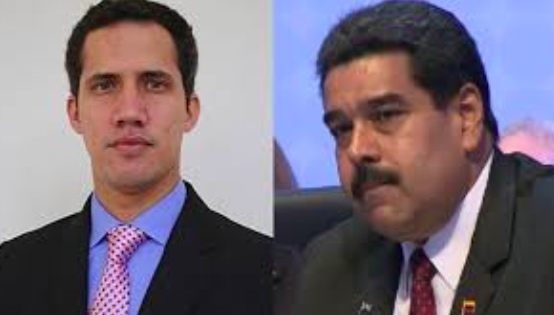
Wno’s the president of Venezuela? The elected Nicolas Maduro or the self-proclaimed unelected Juan Guaido?

By Dave Lindorff

Source: This Can’t Be Happening

American media still refer to Juan Guaidó, America’s hand-picked “legitimate leader” or “legitimate president” of Venezuela, as having an “administration.”

The truth is that his “administration” — consisting of advisors and other opposition leaders — are all either arrested and being held by the government, hiding, seeking asylum in various foreign embassies (Spanish, Italian, Brazilian and Argentinian) in the capital of Caracas, or have fled to other countries like Brazil and Colombia.

Guaidó, apparently a government of one, has so far avoided arrest probably because the elected Venezuelan President Maduro doesn’t want to give the US an excuse to try and rescue him, or to launch military actions of some kind against Venezuela as the White House keeps threatening to do.

Clearly, in calling for US military intervention, Guaidó has both demonstrated almost his total lack of backing among the masses of Venezuelan people, as well as his desperation, given Latin American’s visceral resentment of US interventions in their country, all of which have been designed to put autocrats or even military juntas in power, and many of which have openly overthrown popularly elected governments, as in Guatemala, Chile, Brazil, Nicaragua, Haiti, Dominican Republic, and elsewhere.

None of this gets reported in the US. Only recently has the New York Times, always a reliable backer of US imperial policy in Latin America, at least hinted at the possibility that the reason Maduro remains president and that Guaidó’s efforts to oust him are failing  so abysmally could be that the Venezuelan people want him to stay president, and do not want a US-backed coup or a US military intervention to replace him.

At this point the huffing and puffing coming from Secretary of State Mike Pompeo and especially from the White House National Security Advisor and chief militarist blowhard John Bolton, are looking pretty pathetic, with Bolton trying to sow dissension and distrust by hinting that Maduro “better not trust” his own generals’ loyalty, and by offering rewards to those generals willing to abandon Maduro.

It is an indication of the United States’s declining power and influence in Latin America that few outside the US with its insular mass media believe that the US would or even could successfully invade Venezuela and impose a government on that country of 32 million (a number that keeps declining as the upper middle class and rich flee).

If anything, US sabotage and threats and US backing for a government of the wealthy are probably galvanizing support for Maduro. While people in the US, if they are paying any attention at all to events in Venezuela, may believe that Maduro is a corrupt thug, people in Venezuela itself, and in most of Latin America know full well that the main problems in that oil-rich country have to do with the collapse in oil prices since the heady days of Hugo Chavez when it was going for $100 a barrel, to American efforts to block Venezuela from exporting its oil now, and to freeze or even seize Venezuelan assets and oil receipts from the oil it does manage to export, and to other forms of economic warfare engaged in by the United States. As in Cuba, this kind of strategy by the US only works to build support for the country’s existing government.

At some point Guaidó is going to go. He will either be written off by the US media — his main backer — or will be arrested. Probably the latter will follow the former since once he’s recognized as an impotent charlatan, his arrest will not make him a martyr for the opposition. Already he has lost what public support he had as Venezuela’s wealthy abandon the country for Florida. As well, the “50 countries” that we in the US keep hearing about which supposedly back Guaidó as Venezuela’s “legitimate leader” are realizing that they were hoodwinked by the US. The are now mostly calling for a calmer response to the crisis in Venezuela, and are refusing to buy into US military threats against the Maduro government. Meanwhile nobody in the US media mentions that over 140 countries in the world support Maduro as the leader of Venezuela. 

In truth it’s impossible to find that list of “more than 50 countries” backing a self-proclaimed and unelected Guaidó as Venezuela’s president. The closest I could come by running google searches was a map produced by Bloomberg News listing 13 countries besides the US as supporting Guaidó. These included Canada, the UK, Guatemala, Honduras, Costa Rica, Panama, Ecuador, Colombia, Peru, Chile, Argentina, Paraguay and Brazil. That is 13 plus the United States. Listed as supporting Maduro as elected President are Russia, China, Turkey, Bolivia, and Cuba, though I believe Bloomberg neglected to mention Nicaragua, a strong Maduro backer, which would make it six. All of Africa and much of Asia was left as “no opinion,” though in fact that means they are continuing to recognize the current Maduro government. 

For a time, most of the countries of Europe were lining up behind Guaidó, particularly after Germany announced that it was recognizing him as the new interim leader of Venezuela in late January, and after it ousted the country’s ambassador, but then by late March Germany was having second thoughts, and rejected the person sent there by Guaidó to assume the position of Venezuelan ambassador. At this point, except for the UK, the countries of Europe, along with Mexico and Uruguay, are simply calling for a dialogue and a negotiated solution to the Venezuela political crisis, and in addition to opposing any talk of military action or a coup, are seeking nothing more than a new election (which Maduro would probably win, given the alternative of the return of a government of the rich). The Europeans are no longer really backing Guaidó.

The reporters who continue to refer to “more than 50 countries” calling for Maduro’s ouster all must be using the same wrong or outdated news clip or some exaggerated and dated State Department press release.  (I asked the State Department for an updated list today but so far none has been forthcoming, though it would appear such a list shouldn’t take long to compile given how short it must be.)

The Triumph of Evil

(Museum of the Revolution, León, Nicaragua)

By Paul Craig Roberts

Source: PaulCraigRoberts.org

Today (April 17) I heard a NPR “news” report that described the democratically elected president of Venezuela as “the Venezuelan dictator Maduro.” By repeating over and over that a democratically elected president is a dictator, the presstitutes create that image of Maduro in the minds of vast numbers of peoples who know nothing about Venezuela and had never heard of Maduro until he is dropped on them as “dictator.”

Nicolas Maduro Moros was elected president of Venezuela in 2013 and again in 2018. Previously he served as vice president and foreign minister, and he was elected to the National Assembly in 2000. Despite Washington’s propaganda campaign against him and Washington’s attempt to instigate violent street protests and Maduro’s overthrow by the Venezuelan military, whose leaders have been offered large sums of money, Maduro has the overwhelming support of the people, and the military has not moved against him.

What is going on is that American oil companies want to recover their control over the revenue streams from Venezuela’s vast oil reserves. Under the Bolivarian Revolution of Chavez, continued by Maduro, the oil revenues instead of departing the country have been used to reduce poverty and raise literacy inside Venezuela.

The opposition to Maduro inside Venezuela comes from the elites who have been traditionally allied with Washington in the looting of the country. These corrupt elites, with the CIA’s help, temporarily overthrew Chavez, but the people and the Venezuelan military secured his release and return to the presidency.

Washington has a long record of refusing to accept any reformist governments in Latin America. Reformers get in the way of North America’s exploitation of Latin American countries and are overthrown.

With the exceptions of Venezuela, Bolivia, Cuba, and Nicaragua, Latin America consists of Washington’s vassal states. In recent years Washington destroyed reform governments in Honduras, Argentina and Brazil and put gangsters in charge.

According to US national security adviser John Bolton, a neoconservative war monger, the governments in Venezuela, Cuba, and Nicaragua will soon be overthrown. New sanctions have now been placed on the three countries. Washington in the typical display of its pettiness targeted sanctions against the son of the Nicaraguan president Daniel Ortega. https://www.rt.com/news/456841-bolton-russia-venezuela-threat/

Ortega has been the leader of Nicaragua since for 40 years. He was president 1985-1990 and has been elected and reelected as president since 2006.

Ortega was the opponent of Somoza, Washington’s dictator in Nicaragua. Consequently he and his movement were attacked by the neoconservative operation known as Iran-Contra during the Reagan years. Ortega was a reformer. His government focused on literacy, land reform, and nationalization, which was at the expense of the wealthy ruling class. He was labeled a “Marxist-Leninist,” and Washington attempted to discredit his reforms as controversial leftist policies.

Somehow Castro and Ortega survived Washington’s plots against them. By the skin of his teeth so did Chavez unless you believe it was the CIA that gave him cancer. Castro and Chavez are dead. Ortega is 74. Maduro is in trouble, because Washington has stolen Venezuela’s bank deposits and cut Venezuela off the international financial system, and the British have stolen Venezuela’s gold. This makes it hard for Venezuela to pay its debts.

The Trump regime has branded the democratically twice-elected Maduro an “illegitimate” president. Washington has found a willing puppet, Juan Guaido, to take Maduro’s place and has announced that the puppet is now the president of Venezuela. No one among the Western presstitutes or among the vassals of Washington’s empire finds it strange that an elected president is illegitimate but one picked by Washington is not.

Russia and China have given Maduro diplomatic support. Both have substantial investments in Venezuela that would be lost if Washington seizes the country. Russia’s support for Maduro was declared by Bolton today to be a provocation that is a threat to international peace and security. Bolton said his sanctions should be seen by Russia as a warning against providing any help for the Venezuelan government.

Secretary of state Mike Pompeo and vice president Pence have added their big mouths to the propaganda against the few independent governments in Latin America. Where is the shame when the highest American government officials stand up in front of the world and openly proclaim that it is official US government policy to overthrow democratically elected governments simply because those governments don’t let Americans plunder their countries?

How is it possible that Pompeo can announce that the “days are numbered” of the elected president of Nicaragua, who has been elected president 3 or 4 times, and the world not see the US as a rogue state that must be isolated and shunned? How can Pompeo describe Washington’s overthrow of an elected government as “setting the Nicaraguan people free?”

The top officials of the US government have announced that they intend to overthrow the governments of 3 countries and this is not seen as “a threat to international peace and security?”

How much peace and security did Washington’s overthrow of governments in Iraq, Libya, Ukraine, and the attempted overthrow of Syria bring?

Washington is once again openly violating international law and the rest of the world has nothing to say?

There is only one way to describe this: The Triumph of Evil.

“The blood-dimmed tide is loosed, and everywhere the ceremony of innocence is drowned; the best lack all conviction, while the worst are full of passionate intensity.” — William Butler Yeats

Can Venezuela and its neighbours survive the coming war?

Venezuela’s President Nicolas Maduro (C), speaks to a crowd of supporters to announce his is breaking off diplomatic ties with the United States, during a gathering in Caracas on January 23, 2019.  (Photo by Luis ROBAYO / AFP)

The crisis which is destabilising Venezuela, like those which are beginning in Nicaragua and Haïti, needs to be analysed in order to enable us to address it. Thierry Meyssan reminds us of three interpretative hypotheses and argues in favour of one of them. He evokes the US strategy and the ways in which it may be countered.

By Thierry Meyssan

Source: Voltairenet.org

Today, Venezuela is divided between two legitimacies – that of Constitutional President Nicolas Maduro and that of the President of the National Assembly, Juan Guaidó.

Guaido nominated himself as interim President, allegedly by virtue of articles 223 and 233 of the Constitution. We only need to read these articles to see that they in no way apply to his case, and that he can not claim from them any legitimacy for the post he seeks to usurp. Despite that, he has been accredited by the United States, the Lima Group and part of the European Union.

Some of Nicolas Maduro’s supporters claim that Washington is reproducing the overthrow of a leftist government, just as it did against Salvadore Allende in 1973, during the mandate of President Richard Nixon.

Others, reacting to the revelations of Max Blumenthal and Dan Cohen about the career path of Juan Guaidó [1], believe on the contrary that this is a colour revolution similar to those we saw under the presidency of George W. Bush.

Facing an aggression by an enemy who is far stronger than oneself, it is crucial to identify its objectives and understand its methods. Only those who are capable of anticipating the attacks they are about to suffer will have any chance of surviving.

Three dominant hypotheses

It is perfectly logical for Latin-Americans to compare what they are presently experiencing to what they have already known, like the Chilean coup d’etat of 1973. But it would be risky for Washington to reproduce the same scenario 46 years later – it would be an error, because today, everyone is familiar with the details of this deception.

Furthermore, the revelation concerning Juan Guaidó’s connections to the National Endowment for Democracy and Gene Sharp’s team reminds us even more of a colour revolution, since Venezuela has already experienced such an event, which failed in 2007. Specifically, it would be dangerous for Washington, 12 years later, to attempt to reprise a plan which has already backfired.

In order to understand Washington’s intentions, we must first familiarise ourselves with its battle plan.

On 29 October 2001, just one and a half months after the attacks on New York and the Pentagon, US Secretary for Defense Donald Rumsfeld created the Office of Force Transformation, whose mission was to revolutionise the US armed forces, to change their mentality in order to respond to the radically new objective of confirming US supremacy world-wide. He handed this job to Admiral Arthur Cebrowski, who had already accomplished the networking of US military units, and had participated, in the 1990’s, with the elaboration of a doctrine of digital warfare (Network-centric warfare) [2].

Cebrowski arrived with a pre-planned strategy which he presented not only to the Pentagon, but to military academies all over the place. Although it was very important, his work within the armed forces was not covered by the media until the publication of an article in Vanity Fair. Thereafter, his explanations were published by his assistant Thomas Barnett [3]. It goes without saying that these documents were not necessarily faithful to the Pentagon’s ideas, which they make no attempt to explain, but to justify. Nonetheless, the main idea is that the United States seize control of the natural resources of half of the world, not to use them for themselves, but to decide who would be allowed to use them. In order to do so, they would have to deprive these areas of any political power other than their own, and therefore destroy all the state structures present in the region.

Officially, this strategy has never been implemented. Nonetheless, what we have been witnessing for the last twenty years corresponds exactly to Barnett’s book. First of all, in the 1980’s and 1990’s, there was the destruction of the region of the « African Great Lakes ». We mostly remember the Rwandan genocide and its 900,000 dead, but the entire region was devastated by a long series of wars which caused the death of six million people. What is truly astonishing is that twenty years later, many states have not recovered sovereignty over all their territory. This episode pre-dates the Rumsfeld-Cebrowski doctrine. We do not know if the Pentagon had planned what happened, or if it was while they were destroying these states that they conceived of their plan. Later on, in the years between 2000 and 2010, we witnessed the destruction of the « Greater Middle East », this time according to the Rumsfeld-Cebrowski doctrine. Of course, we may choose to believe that all this was just a succession of « democratic » interventions, civil wars and revolutions. But apart from the fact that the populations concerned contest the dominant narrative of these events, we note that in these cases also, the state structures were destroyed and peace did not return with the end of military operations. As of now, the Pentagon is evacuating the « Greater Middle East » and is preparing its deployment in the « Caribbean Basin ».

Many elements indicate that our previous understanding of the wars of George W. Bush and Barack Obama was mistaken, while they corresponded perfectly to the Rumsfeld-Cebrowski doctrine. This reading of the events is therefore not the fruit of a coincidence with Barnett’s thesis, and forces us to rethink what we witnessed.

If we adopt this method of thought, we have to consider that the process of destruction of the Caribbean Basin began with the decree by President Barack Obama, on 9 March 2015, according to which Venezuela is a threat to the national security of the United States of America [4]. This may seem rather old, but in reality it is not. For example, President George W. Bush signed the Syrian Accountability Act in 2003, but military operations in Syria only began eight years later, in 2011. This interval was necessary for Washington to create the conditions for the troubles.

The attacks against the left before 2015

If this analysis is accurate, we have to consider that the events prior to 2015 (the coup d’etat against President Hugo Chávez in 2002, the attempt at a colour revolution in 2007, Operation Jericho in February 2015, and the first demonstrations by the guarimbas) corresponded to a different logic, while those that occurred afterwards (guarimbas terrorism in 2017) are part of the plan.

My logic is based also on my understanding of these elements.

Thus, in 2002, I published an analysis of the coup d’etat which revealed the role of the United States behind the Fedecamaras (Venezuelan company management) [5]. President Hugo Chávez wanted to check my information, and sent two emissaries to Paris. One of them has since become a General, and the other is currently one of the most senior personalities in the country. My work was used by prosecutor Danilo Anderson for his investigation. He was assassinated by the CIA in 2004.

In 2007, a number of Trotskyite students began a movement to protest the non-renewal of the licence of the Caracas radio-television company RCTV. We know today, thanks to Blumenthal and Cohen, that Juan Guaidó was already implicated, and that he had received training by disciples of the non-violence theorist, Gene Sharp. Rather than repressing the excesses of the movement, President Hugo Chávez, on the occasion of the ceremony of the signature of the ALBA agreement (Bolivarian Alliance for the Peoples of Our America) on 3 June, read for twenty minutes from an old article that I had written about Gene Sharp and his conception of non-violence in the service of NATO and the CIA [6]. Realising the manipulation to which they had been submitted, a large number of demonstrators withdrew from the combat. Clumsily denying the facts, Sharp wrote to the President and then to myself. This initiative created confusion amongst the US left wing, for whom Sharp was a respectable personality with no links to the US government. Professor Stephen Zunes took his defence, but when faced with proof, Sharp closed his institute, leaving his place to Otpor (Resistance) and Canvas (Centre for Applied Non-Violent Action and Strategies). [7].

Let’s return to the present period. Of course, the recent attempt to assassinate President Nicolas Maduro reminds us of the way in which President Salvadore Allende was pushed to suicide. Of course, the demonstrations convened by the President of the National Assembly, Juan Guaidó, reminds us of a colour revolution. But this is not at all contradictory to my analysis. Let’s note that an attempt to assassinate Mouamar Kadhafi closely preceded military operations against Libya. And when the disciples of Gene Sharp supervised the first demonstrations against President Hosni Moubarak in Egypt, they even distributed an Arab version of their booklet, which had already been used in other countries [8]. But as further events were to show, it was neither a coup d’etat or a colour revolution.

Preparing for war

If my analysis is correct – and for the moment, everything seems to confirm it – we have to prepare for a war not only in Venezuela, but throughout the Caribbean Basin. Nicaragua and Haïti are already destabilised.

This war will be imposed from the exterior. Its aim will no longer be to overthrow leftist governments for the profit of right wing parties, even if appearances will at first be confusing. The logic of events will make no distinction between one side or another. Little by little, the whole society will be threatened, without the distinction of ideology or social class. Identically, it will become impossible for other states in the region to shelter from the storm. Even those who believe that they can protect themselves by serving as a rear base for military operations will be partially destroyed. For example, even though the Press hardly ever mentioned it, entire cities were wiped out in the region of Qatif, in Saudi Arabia, even though this country was Washington’s main ally in the « Greater Middle East ».

Based on the conflicts of the African Great Lakes and the Greater Middle East, this war should unfold by stages.

- First of all, the destruction of symbols of the modern state, by attacking the statues and museums dedicated to Hugo Chávez. This should not cause any victims, but would destabilise the mental representations of the population. Then the supply of arms and remuneration for the combatants in order to organise demonstrations which will degenerate.
- The Press will supply – after the fact – unverifiable explanations of the crimes blamed on the government and against which allegedly peaceful demonstrators had allegedly revolted. It is important that the police believe that they had been the targets of shots fired from the crowd, and that the crowd believe that they had been the targets of shots fired by the police, because the aim of the operation is to sow division.
- The third stage will be to organise bloody attacks all over the country. Very few men will be necessary to implement this stage, it will suffice that two or three teams move around the region.
- It will only be at this point that it will become useful to send in foreign mercenaries. During the last war, the United States sent at least 130,000 foreigners to Iraq and Syria, to which were added 120,000 local combatants. These armies were numerous, but poorly taught and trained.

It is, however, possible to defend oneself, since Syria managed to do so. Several initiatives will have to be taken urgently :

- Already, on the initiative of General Jacinto Perez Arcay and the President of the Constituent Assembly, Diosdado Cabello, the senior officers of the Venezuelan armies are studying new forms of combat (4th generation warfare). But military delegations will have to visit Syria to see for themselves how the events occurred. This is very important, since these wars are unlike any previous conflicts. For example, in Damascus, the major part of the city is intact, as if nothing had happened, but several neighbourhoods are totally devastated, like Stalingrad after the Nazi invasion. This supposes the use of particular combat techniques.
- It is essential to establish the national union of all patriots. The President must become the ally of his opposition, and include certain of its leaders in his government. The problem is not to know whether or not we appreciate President Maduro – it is essential to fight under his command to save the country.
- The army must form a popular militia. There is already such a force in Venezuela, numbering close to two million men, but they are mostly untrained. On principle, military men do not like to hand guns to civilians, but only civilians are capable of defending their own neighbourhood, since they know the area and everyone who lives there.
- Major work must be done to secure state, army and hospital buildings.

All this must be done as quickly as possible. These measures take a long time to implement, and the enemy is almost ready.


Translation: Pete Kimberley

THE NEOCON PLAYBOOK IS A RECIPE FOR DISASTER IN VENEZUELA

Neocon Nosferatu: Making South America Great Again. Photo credit: DonkeyHotey / WhoWhatWhy (CC BY-SA 2.0)

By Klaus Marre and Donkeyhotey

Source: Who.What.Why.

When Donald Trump promised that he would only hire the “best people,” maybe he should have been pressed on what, exactly, they would be good at. Because it’s clearly not running the US government. Over the past two years, it has become clear that liars, grifters, conmen, opportunists, and crooks seem to be drawn to the president like flies to … well, you know.

Now, however, a situation is arising for which one of Trump’s “best people” seems ideally suited for forcing regime change somewhere in the Americas.

At a time when the president seems intent on getting the US out of Syria and Afghanistan, he appears to be equally determined to plunge headfirst into the chaos in Venezuela.

His point person for this adventure is Elliott Abrams, who has a long history of mucking around in the US’s backyard — often with dubious methods. In other words, he’ll fit right in.

To those unfamiliar with Abrams, here are the CliffsNotes: In the early 1980s, Abrams served as assistant secretary of state for human rights, which, in retrospect, seems like some kind of cruel joke. In that position, Abrams once stated that former Guatemalan leader General Efraín Ríos Montt “brought considerable progress” to human rights in his country. In case you are not familiar with Ríos Montt, he was convicted of genocide and crimes against humanity in 2013.

Abrams’s motives back then seemed to be consistent with the goals of the military-industrial complex: He wanted an embargo on military aid to Guatemala to be lifted. Just as an aside, and unrelated to Abrams but possibly relevant to Venezuela, the CIA-engineered coup in Guatemala in 1954 did nothing to stabilize the country and led to a brutal and lengthy civil war.

Around the same time, Abrams sought to downplay reports of a massacre in El Salvador and testified before the Senate that the incident was being used for guerilla propaganda. A decade later, however, the UN-approved Salvadoran Truth Commission found that more than 500 civilians were “deliberately and systematically” murdered during that massacre. At the time, the Reagan administration was worried about El Salvador becoming a communist country and falling under the influence of the Soviet Union and spent billions to provide weapons to El Salvador’s military. Oh, and there was a brutal and lengthy civil war.

But Abrams truly left his mark when trying to solicit funding for the Nicaraguan Contras from the Sultan of Brunei. He later tried to cover up what happened and ended up pleading guilty to two counts of withholding information from Congress. He was pardoned by George H.W. Bush. All of this, of course, had to do with the US government supporting far-right “rebels” in Nicaragua and it involves a lengthy civil war that took a terrible toll on the country.

You may be detecting a pattern here.

We were certainly skeptical when it was announced that Abrams would be the special envoy for Venezuela. Throw in John Bolton and you have all of the ingredients you need for another neocon clusterfuck.

While Venezuela seems in urgent need of assistance, history has shown time and again that when the US “helps” in the Americas, almost everybody ends up worse than before — apart from the new US-backed right-wing regime and the people who supply the weapons. Just ask Abrams, who has had a front-row seat for some of the worst examples.

Based on his track record, he will make a terrible situation much worse. But maybe that’s the plan. And then he would certainly be the right man for the job.

A Nonviolent Strategy to Defeat a US Military Invasion of Venezuela

By Robert J. Burrowes

To the People of Venezuela

Recently I wrote an article explaining how you could defeat, using nonviolent strategy, the US coup attempt that is taking place in your country. See ‘A Nonviolent Strategy to Defeat the US Coup Attempt in Venezuela’.

I would like to complement that article by now briefly explaining how you can also defeat a military invasion by the United States and any collaborating invaders by using a strategy of nonviolent defense as well.

In making this suggestion, I acknowledge the extraordinary difficulties inflicted on Venezuela by the US sanctions imposed over many years as part of its ‘undeclared war against Venezuela’ (partly designed to destroy its progressive social banking model), explained straightforwardly by Ellen Brown in her article ‘The Venezuela Myth Keeping Us From Transforming Our Economy’ as well as alternative proposals to resolve the crisis, ranging from that by several governments to facilitate dialogue between the Venezuelan government and the opposition – see, for example, ‘Russia Proposes Venezuelan “Peaceful Measures” Initiative to UN’ – to Stephen Lendman’s suggestion that a peacekeeping force be deployed to Venezuela by such countries as Russia, China and non-aligned nations. See ‘Save Venezuelan Sovereignty: Oil Economy Destabilized. Peace-keeping Role by Russia, China, Non-alligned Nations?’

I understand that your first reaction to the idea of a strategy of nonviolent defense might be one of scepticism or even outright disbelief. However, if you are willing to consider what I write below, I will briefly explain why a strategy of nonviolent defense is theoretically and empirically sound, has often been successful in a wide range of contexts in the past, and why I believe it is important and how it can be done.

Of course, I am well aware that this history of successful nonviolent defense is little known because it has been, and still is, suppressed. And yet the history of nonviolent resistance in many diverse contexts clearly demonstrates that a strategy of nonviolent defense has the best chance of defending your country while minimizing the death and destruction in doing so (which does not mean that it would be without cost).

Moreover, if you want to read many carefully documented historical accounts of nonviolent struggles that were successful against military opponents, including those that were ruthlessly violent, you can do so in The Strategy of Nonviolent Defense: A Gandhian Approach. The book also carefully explains why these successes occurred without incurring heavy casualties on the defense, particularly in comparison to military campaigns and guerrilla struggles.

In my view then, the idea of implementing a strategy of nonviolent defense is important to consider for two essential reasons.

First, you are dealing with an opponent that is insane – see ‘The Global Elite is Insane Revisited’ with a more detailed explanation in ‘Why Violence?’ and ‘Fearless Psychology and Fearful Psychology: Principles and Practice’incredibly ignorant – see this interview of US Secretary of State, Mike Pompeo ‘Venezuelan military will realize Maduro’s time is up: Mike Pompeo’ which is critiqued in these articles ‘Pompeo: America “obligated” to fight “Hezbollah” in Venezuela to save “duly elected” Guaido’ and ‘Pompeo Attempts to Link Iran, Hezbollah to Crisis in Venezuela’ – and grotesquely violent – see ‘The History – and Hypocrisy – of US Meddling in Venezuela’ and Killing Hope: US Military and CIA Interventions Since World War II – that, history teaches us, is highly likely to destroy your country to gain the geostrategic advantage and natural resources that control of your country offers, as the people of Iraq and Libya, for example, can testify.

And second: no matter how committed and courageous are the (loyal) members of your military forces and civilian militia (the National Bolivarian Militia of Venezuela), and the military forces of any allies who will stand with you in the defense of Venezuela, even a ‘successful’ outcome, such as that which Syria may be on the verge of ‘celebrating’, will only come at enormous cost in terms of human lives, infrastructure (including national heritage), ecological impact and time, all of which can be far more gainfully employed to continue building Venezuela, including overcoming outstanding problems, as you decide.

The Background

As I know that you are well aware, given the declared interest of the US elite in stealing your natural resources, including oil – see, for example, ‘“Good for business”: Trump adviser Bolton admits US interest in Venezuela’s “oil capabilities”’ and ‘Regime Change for Profit: Chevron, Halliburton Cheer On US Venezuela Coup’ – the US elite has long interfered with – see, for example, ‘US Influence in Venezuela Is Part of a Two Centuries-old Imperial Plan’ – and threatened military invasion of Venezuela to seize control of these resources in clear violation of international law. For recent examples only, see ‘Trump pressed aides on Venezuela invasion, US official says’ and ‘Time for talks “long passed”: US weaponizes aid amid push for regime change in Venezuela’.

Consequently, the US administration has finally used the pretext of an unfair election result in 2018 to call for the overthrow of your government despite the widely accepted result, verified by independent sources, and even the testimony of a former US president that your electoral system is without peer. See ‘Former US President Carter: Venezuelan Electoral System “Best in the World”’.

Moreover, the US puppet Juan Guaidó, anointed by the US to replace your elected President, has effectively indicated his support for US intervention, which clearly reveals where his loyalties lie, his willingness to now provide a pretext for a US invasion, and his complete disregard for the well-being of those Venezuelans who will inevitably be killed, injured and/or dispossessed during an invasion to support the ‘neocon regime-changers’ in Washington. See ‘Venezuela’s self-proclaimed “president” Guaido isn’t ruling out “authorizing” US intervention’ and ‘The Cynicism of Empire: Sen. Rubio Tells Venezuelans to Overthrow Their Government… or Starve!’

This threat of military intervention, as the historical record clearly demonstrates, has every prospect of being carried out. See ‘Before Venezuela: The long history of U.S. intervention in Latin America’ and ‘Overthrowing other people’s governments: The Master List’.

Despite this threat, as you are aware, President Nicolás Maduro has persisted in offering to discuss the issues arising from this conflict while also calling on the international community to ‘“Stop Trump’s insane actions!” Venezuela’s Maduro talks to RT about avoiding war’ and even writing an appeal to the people of the United States which, of course, was ignored by the corporate media so that it does not even reach a wide audience. See ‘An Open Letter to the People of the United States from President Nicolas Maduro’.

While I applaud your President for his persistent calls for dialogue to resolve this issue – for a recent example, see ‘Maduro Asks International Community to End US’s Threats of War’there are simply three realities that make it highly unlikely that his call will be heeded, whether by the US administration that has already rejected such a call – see ‘Time for talks “long passed”: US weaponizes aid amid push for regime change in Venezuela’ – or by the international community, a substantial section of which has already declared their support for the US puppet Juan Guaidó, who has been carefully groomed for a decade for the role he is now playing. See ‘The Making of Juan Guaidó: How the US Regime Change Laboratory Created Venezuela’s Coup Leader’.

These three realities are those I mentioned above: You are dealing with an insane, incredibly ignorant and grotesquely violent opponent: an elite that seeks geopolitical control and endless resources for profit no matter what the cost to fellow human beings and the biosphere, as the record demonstrates.

Moreover, in seeking to secure its objectives, the US elite will endeavour to control the narrative in relation to Venezuela. Hence, as you have noticed, the corporate media is lying prodigiously about Venezuela as it ‘beats the drums of war’. See, for example, ‘Dissecting the jingoistic media coverage of the Venezuela crisis’, ‘Venezuela Blitz – Part 1: Tyrants Don’t Have Free Elections’, ‘Venezuela Blitz – Part 2: Press Freedom, Sanctions And Oil’ and ‘The BBC and Venezuela: bias and lies’.

For you and those of us outside Venezuela who have some knowledge of your country’s history, we are well aware of the enormous gains made by the Bolivarian movement, despite the enormously damaged country that the movement inherited. See, for example, ‘Venezuela: From Oil Proxy to the Bolivarian Movement and Sabotage’.

This progress, of course, does not mean that all problems have been resolved, most of which have been exacerbated by the sanctions imposed in recent years by the United States government. See, for example, the report by Alfred de Zayas on behalf of the United Nations Human Rights Council – ‘Report of the Independent Expert on the promotion of a democratic and equitable international order on his mission to the Bolivarian Republic of Venezuela and Ecuador’ – which identified the crisis the US ‘economic warfare’ was precipitating. See ‘Former UN Rapporteur: US Sanctions Against Venezuela Causing Economic and Humanitarian Crisis’.

Defending Against a US Military Invasion of Venezuela

So, while your effort to defeat the coup attempt continues, even if the United States military invades Venezuela before or after this issue is resolved, you have the powerful option of resisting any invasion effectively by employing a strategy of nonviolent defense.

I have explained the essential points of this strategy on the website Nonviolent Defense/Liberation Strategy. The pages of this website provide clear guidance on how to easily plan and then implement the twelve components of this strategy.

If you like, you can see a diagrammatic representation of this strategy by looking at the Nonviolent Strategy Wheel.

And on the Strategic Aims page you can see the basic list of 30 strategic goals necessary to defeat a military invasion. These strategic goals can easily be adopted, modified and/or added to if necessary, in accordance with your precise circumstances as you decide.

If you want to read a straightforward account of how to plan and conduct a nonviolent tactic so that it has strategic impact, you can do so here: ‘Nonviolent Action: Why and How it Works’.

This will require awareness of the difference between ‘The Political Objective and Strategic Goal of Nonviolent Actions’.

And, to ensure that the military violence directed against you is made as difficult as possible to perpetrate and, in many cases, does not eventuate, you are welcome to consider the 20 points designed to ensure that you are ‘Minimizing the Risk of Violent Repression’ whenever you take nonviolent action to defend yourselves when repression is a risk. This information is useful for both neutralizing violent provocateurs but also to ensure that invading military forces are compelled to deal with complex emotional and moral issues that do not arise against a violent opponent who is threatening them, and which will lead some, and perhaps very many, to desist as the historical record clearly documents. Again, for many examples, see The Strategy of Nonviolent Defense: A Gandhian Approach.

Conclusion

The US government and its sycophantic allies might not invade Venezuela. It may transpire that the diplomatic and other efforts of your government to defeat the coup and avert a US-led military invasion of Venezuela will be successful. There is also a fracturing of the opposition forces within Venezuela, in several ways, which works against the success of ongoing efforts to remove your government. See ‘Venezuela Regime Change “Made in the USA”’.

However, the extensive historical evidence of US interventions in violation of international law, the geostrategic and natural resource advantages that will accrue to the US elite from an invasion that removes your elected government, the anointment of a puppet president of Venezuela, the recent posturing and declarations by key members of the US administration and many US-allied governments, and the manufacture of public acquiescence by the corporate media all point heavily in the direction of invasion. And, as you are well aware, it is wise to treat this possibility seriously.

The elite conducting these preparatory moves is insane and, if it attacks Venezuela, there is a serious risk it will destroy your country as it has destroyed Iraq and Libya, especially if it meets significant military resistance. Their insanity precludes them caring about you, the people of Venezuela (even as they present any intervention as ‘humanitarian’). See ‘Love Denied: The Psychology of Materialism, Violence and War’. They care about nothing more than geostrategic advantage, eliminating progressive elements of your society’s development, and seizing your natural resources from which they can profit enormously.

Nevertheless, a strategy of nonviolent defense would enable you to defend yourselves and enable every last member of your population, irrespective of age and ability, to be strategically involved, as well as any solidarity activists overseas. It would also minimize the loss of life and destruction inflicted on your country.

Importantly, even if you suffer setbacks, unless and until you accept outright defeat, your strategy of nonviolent defense, ongoingly refined to maintain effective strategic coordination and to retain the initiative, will ultimately prevail.

As always, however, whether or not you decide to consider/adopt my suggestion, you have my solidarity.


Biodata: Robert J. Burrowes has a lifetime commitment to understanding and ending human violence. He has done extensive research since 1966 in an effort to understand why human beings are violent and has been a nonviolent activist since 1981. He is the author of ‘Why Violence?’ His email address is flametree@riseup.net and his website is here.

Saker interview with Michael Hudson on Venezuela, February 7, 2019

By The Saker and Michael Hudson

Source: The Saker

Introduction: There is a great deal of controversy about the true shape of the Venezuelan economy and whether Hugo Chavez’ and Nicholas Maduro’s reform and policies were crucial for the people of Venezuela or whether they were completely misguided and precipitated the current crises.  Anybody and everybody seems to have very strong held views about this.  But I don’t simply because I lack the expertise to have any such opinions.  So I decided to ask one of the most respected independent economists out there, Michael Hudson, for whom I have immense respect and whose analyses (including those he co-authored with Paul Craig Roberts) seem to be the most credible and honest ones you can find.  In fact, Paul Craig Roberts considers Hudson the “best economist in the world“!
I am deeply grateful to Michael for his replies which, I hope, will contribute to a honest and objective understanding of what really is taking place in Venezuela.
The Saker

The Saker: Could you summarize the state of Venezuela’s economy when Chavez came to power?

Michael Hudson: Venezuela was an oil monoculture. Its export revenue was spent largely on importing food and other necessities that it could have produced at home. Its trade was largely with the United States. So despite its oil wealth, it ran up foreign debt.

From the outset, U.S. oil companies have feared that Venezuela might someday use its oil revenues to benefit its overall population instead of letting the U.S. oil industry and its local comprador aristocracy siphon off its wealth. So the oil industry – backed by U.S. diplomacy – held Venezuela hostage in two ways.

First of all, oil refineries were not built in Venezuela, but in Trinidad and in the southern U.S. Gulf Coast states. This enabled U.S. oil companies – or the U.S. Government – to leave Venezuela without a means of “going it alone” and pursuing an independent policy with its oil, as it needed to have this oil refined. It doesn’t help to have oil reserves if you are unable to get this oil refined so as to be usable.
Second, Venezuela’s central bankers were persuaded to pledge their oil reserves and all assets of the state oil sector (including Citgo) as collateral for its foreign debt. This meant that if Venezuela defaulted (or was forced into default by U.S. banks refusing to make timely payment on its foreign debt), bondholders and U.S. oil majors would be in a legal position to take possession of Venezuelan oil assets.

These pro-U.S. policies made Venezuela a typically polarized Latin American oligarchy. Despite being nominally rich in oil revenue, its wealth was concentrated in the hands of a pro-U.S. oligarchy that let its domestic development be steered by the World Bank and IMF. The indigenous population, especially its rural racial minority as well as the urban underclass, was excluded from sharing in the country’s oil wealth. The oligarchy’s arrogant refusal to share the wealth, or even to make Venezuela self-sufficient in essentials, made the election of Hugo Chavez a natural outcome.

The Saker: Could you outline the various reforms and changes introduced by Hugo Chavez? What did he do right, and what did he do wrong?

Michael Hudson: Chavez sought to restore a mixed economy to Venezuela, using its government revenue – mainly from oil, of course – to develop infrastructure and domestic spending on health care, education, employment to raise living standards and productivity for his electoral constituency.

What he was unable to do was to clean up the embezzlement and built-in rake-off of income from the oil sector. And he was unable to stem the capital flight of the oligarchy, taking its wealth and moving it abroad – while running away themselves.

This was not “wrong”. It merely takes a long time to change an economy’s disruption – while the U.S. is using sanctions and “dirty tricks” to stop that process.

The Saker: What are, in your opinion, the causes of the current economic crisis in Venezuela – is it primarily due to mistakes by Chavez and Maduro or is the main cause US sabotage, subversion and sanctions?

Michael Hudson: There is no way that’s Chavez and Maduro could have pursued a pro-Venezuelan policy aimed at achieving economic independence without inciting fury, subversion and sanctions from the United States. American foreign policy remains as focused on oil as it was when it invaded Iraq under Dick Cheney’s regime. U.S. policy is to treat Venezuela as an extension of the U.S. economy, running a trade surplus in oil to spend in the United States or transfer its savings to U.S. banks.

By imposing sanctions that prevent Venezuela from gaining access to its U.S. bank deposits and the assets of its state-owned Citco, the United States is making it impossible for Venezuela to pay its foreign debt. This is forcing it into default, which U.S. diplomats hope to use as an excuse to foreclose on Venezuela’s oil resources and seize its foreign assets much as Paul Singer hedge fund sought to do with Argentina’s foreign assets.

Just as U.S. policy under Kissinger was to make Chile’s “economy scream,” so the U.S. is following the same path against Venezuela. It is using that country as a “demonstration effect” to warn other countries not to act in their self-interest in any way that prevents their economic surplus from being siphoned off by U.S. investors.

The Saker: What in your opinion should Maduro do next (assuming he stays in power and the USA does not overthrow him) to rescue the Venezuelan economy?

Michael Hudson: I cannot think of anything that President Maduro can do that he is not doing. At best, he can seek foreign support – and demonstrate to the world the need for an alternative international financial and economic system.

He already has begun to do this by trying to withdraw Venezuela’s gold from the Bank of England and Federal Reserve. This is turning into “asymmetrical warfare,” threatening what to de-sanctify the dollar standard in international finance. The refusal of England and the United States to grant an elected government control of its foreign assets demonstrates to the entire world that U.S. diplomats and courts alone can and will control foreign countries as an extension of U.S. nationalism.

The price of the U.S. economic attack on Venezuela is thus to fracture the global monetary system. Maduro’s defensive move is showing other countries the need to protect themselves from becoming “another Venezuela” by finding a new safe haven and paying agent for their gold, foreign exchange reserves and foreign debt financing, away from the dollar, sterling and euro areas.

The only way that Maduro can fight successfully is on the institutional level, upping the ante to move “outside the box.” His plan – and of course it is a longer-term plan – is to help catalyze a new international economic order independent of the U.S. dollar standard. It will work in the short run only if the United States believes that it can emerge from this fight as an honest financial broker, honest banking system and supporter of democratically elected regimes. The Trump administration is destroying illusion more thoroughly than any anti-imperialist critic or economic rival could do!

Over the longer run, Maduro also must develop Venezuelan agriculture, along much the same lines that the United States protected and developed its agriculture under the New Deal legislation of the 1930s – rural extension services, rural credit, seed advice, state marketing organizations for crop purchase and supply of mechanization, and the same kind of price supports that the United States has long used to subsidize domestic farm investment to increase productivity.

The Saker: What about the plan to introduce a oil-based crypto currency? Will that be an effective alternative to the dying Venezuelan Bolivar?

Michael Hudson: Only a national government can issue a currency. A “crypto” currency tied to the price of oil would become a hedging vehicle, prone to manipulation and price swings by forward sellers and buyers. A national currency must be based on the ability to tax, and Venezuela’s main tax source is oil revenue, which is being blocked from the United States. So Venezuela’s position is like that of the German mark coming out of its hyperinflation of the early 1920s. The only solution involves balance-of-payments support. It looks like the only such support will come from outside the dollar sphere.

The solution to any hyperinflation must be negotiated diplomatically and be supported by other governments. My history of international trade and financial theory, Trade, Development and Foreign Debt, describes the German reparations problem and how its hyperinflation was solved by the Rentenmark.

Venezuela’s economic-rent tax would fall on oil, and luxury real estate sites, as well as monopoly prices, and on high incomes (mainly financial and monopoly income). This requires a logic to frame such tax and monetary policy. I have tried to explain how to achieve monetary and hence political independence for the past half-century. China is applying such policy most effectively. It is able to do so because it is a large and self-sufficient economy in essentials, running a large enough export surplus to pay for its food imports. Venezuela is in no such position. That is why it is looking to China for support at this time.

The Saker: How much assistance do China, Russia and Iran provide and how much can they do to help? Do you think that these three countries together can help counter-act US sabotage, subversion and sanctions?

Michael Hudson: None of these countries have a current capacity to refine Venezuelan oil. This makes it difficult for them to take payment in Venezuelan oil. Only a long-term supply contract (paid for in advance) would be workable. And even in that case, what would China and Russia do if the United States simply grabbed their property in Venezuela, or refused to let Russia’s oil company take possession of Citco? In that case, the only response would be to seize U.S. investments in their own country as compensation.

At least China and Russia can provide an alternative bank clearing mechanism to SWIFT, so that Venezuela can by pass the U.S. financial system and keep its assets from being grabbed at will by U.S. authorities or bondholders. And of course, they can provide safe-keeping for however much of Venezuela’s gold it can get back from New York and London.

Looking ahead, therefore, China, Russia, Iran and other countries need to set up a new international court to adjudicate the coming diplomatic crisis and its financial and military consequences. Such a court – and its associated international bank as an alternative to the U.S.-controlled IMF and World Bank – needs a clear ideology to frame a set of principles of nationhood and international rights with power to implement and enforce its judgments.

This would confront U.S. financial strategists with a choice: if they continue to treat the IMF, World Bank, ITO and NATO as extensions of increasingly aggressive U.S. foreign policy, they will risk isolating the United States. Europe will have to choose whether to remain a U.S. economic and military satellite, or to throw in its lot with Eurasia.

However, Daniel Yergin reports in the Wall Street Journal (Feb. 7) that China is trying to hedge its bets by opening a back-door negotiation with Guaido’s group, apparently to get the same deal that it has negotiated with Maduro’s government. But any such deal seems unlikely to be honored in practice, given U.S. animosity toward China and Guaido’s total reliance on U.S. covert support.

The Saker: Venezuela kept a lot of its gold in the UK and money in the USA. How could Chavez and Maduro trust these countries or did they not have another choice? Are there viable alternatives to New York and London or are they still the “only game in town” for the world’s central banks?

Michael Hudson: There was never real trust in the Bank of England or Federal Reserve, but it seemed unthinkable that they would refuse to permit an official depositor from withdrawing its own gold. The usual motto is “Trust but verify.” But the unwillingness (or inability) of the Bank of England to verify means that the formerly unthinkable has now arrived: Have these central banks sold this gold forward in the post-London Gold Pool and its successor commodity markets in their attempt to keep down the price so as to maintain the appearance of a solvent U.S. dollar standard.

Paul Craig Roberts has described how this system works. There are forward markets for currencies, stocks and bonds. The Federal Reserve can offer to buy a stock in three months at, say, 10% over the current price. Speculators will by the stock, bidding up the price, so as to take advantage of “the market’s” promise to buy the stock. So by the time three months have passed, the price will have risen. That is largely how the U.S. “Plunge Protection Team” has supported the U.S. stock market.

The system works in reverse to hold down gold prices. The central banks holding gold can get together and offer to sell gold at a low price in three months. “The market” will realize that with low-priced gold being sold, there’s no point in buying more gold and bidding its price up. So the forward-settlement market shapes today’s market.

The question is, have gold buyers (such as the Russian and Chinese government) bought so much gold that the U.S. Fed and the Bank of England have actually had to “make good” on their forward sales, and steadily depleted their gold? In this case, they would have been “living for the moment,” keeping down gold prices for as long as they could, knowing that once the world returns to the pre-1971 gold-exchange standard for intergovernmental balance-of-payments deficits, the U.S. will run out of gold and be unable to maintain its overseas military spending (not to mention its trade deficit and foreign disinvestment in the U.S. stock and bond markets). My book on Super-Imperialism explains why running out of gold forced the Vietnam War to an end. The same logic would apply today to America’s vast network of military bases throughout the world.

Refusal of England and the U.S. to pay Venezuela means that other countries means that foreign official gold reserves can be held hostage to U.S. foreign policy, and even to judgments by U.S. courts to award this gold to foreign creditors or to whoever might bring a lawsuit under U.S. law against these countries.

This hostage-taking now makes it urgent for other countries to develop a viable alternative, especially as the world de-dedollarizes and a gold-exchange standard remains the only way of constraining the military-induced balance of payments deficit of the United States or any other country mounting a military attack. A military empire is very expensive – and gold is a “peaceful” constraint on military-induced payments deficits. (I spell out the details in my Super Imperialism: The Economic Strategy of American Empire (1972), updated in German as Finanzimperium(2017).

The U.S. has overplayed its hand in destroying the foundation of the dollar-centered global financial order. That order has enabled the United States to be “the exceptional nation” able to run balance-of-payments deficits and foreign debt that it has no intention (or ability) to pay, claiming that the dollars thrown off by its foreign military spending “supply” other countries with their central bank reserves (held in the form of loans to the U.S. Treasury – Treasury bonds and bills – to finance the U.S. budget deficit and its military spending, as well as the largely military U.S. balance-of-payments deficit.

Given the fact that the EU is acting as a branch of NATO and the U.S. banking system, that alternative would have to be associated with the Shanghai Cooperation Organization, and the gold would have to be kept in Russia and/or China.

The Saker:  What can other Latin American countries such as Bolivia, Nicaragua, Cuba and, maybe, Uruguay and Mexico do to help Venezuela?

Michael Hudson: The best thing neighboring Latin American countries can do is to join in creating a vehicle to promote de-dollarization and, with it, an international institution to oversee the writedown of debts that are beyond the ability of countries to pay without imposing austerity and thereby destroying their economies.

An alternative also is needed to the World Bank that would make loans in domestic currency, above all to subsidize investment in domestic food production so as to protect the economy against foreign food-sanctions – the equivalent of a military siege to force surrender by imposing famine conditions. This World Bank for Economic Acceleration would put the development of self-reliance for its members first, instead of promoting export competition while loading borrowers down with foreign debt that would make them prone to the kind of financial blackmail that Venezuela is experiencing.

Being a Roman Catholic country, Venezuela might ask for papal support for a debt write-down and an international institution to oversee the ability to pay by debtor countries without imposing austerity, emigration, depopulation and forced privatization of the public domain.

Two international principles are needed. First, no country should be obliged to pay foreign debt in a currency (such as the dollar or its satellites) whose banking system acts to prevents payment.

Second, no country should be obliged to pay foreign debt at the price of losing its domestic autonomy as a state: the right to determine its own foreign policy, to tax and to create its own money, and to be free of having to privatize its public assets to pay foreign creditors. Any such debt is a “bad loan” reflecting the creditor’s own irresponsibility or, even worse, pernicious asset grab in a foreclosure that was the whole point of the loan.

The Saker:  Thank you very much for taking the time to reply to my questions!