Saturday Matinee: The Swordsman

By Fumiko

Source: Geek Culture

Finally, a Korean period drama that is all action, and more importantly, devoid of mindless zombies. If you’re looking for a gritty action film filled with spectacular sword-wielding stunt work, Joseon era drama and good ol’ warriors’ code, The Swordsman will definitely deliver enough to whet the appetite of any action fan. 

Directed and written by Choi Jae-Hoon, the film is designed with meticulous care to costume and makeup while incorporating a whole trove of weaponry for satisfying fight sequences, showcasing a winning formula of mixing a period drama with martial arts. If the “Die Hard on a…” trope defined action cinema in the 90s, audiences are now in the realm of hyper-violent action films as defined by the likes of The Raid and John Wick franchises.

While the nature of The Swordsman leans it more towards a martial arts film with action taking precedence over an admittedly predictable plot, we can’t deny that the story moves along at a well-timed pace packed with amazing action sequences. It wastes no time on unnecessary romances or over-glorified gratuitous fight scenes, and we are thrown right into the heart of an intense chase scene right off the bat. 

The prologue sees the protagonist, Tae-Yul (Jang Hyuk) desperately protecting the emperor against a coup led by Tae-Yul’s mentor Seung-Ho (Jeong Man-Sik). After the doomed battle and fall of Gwanghaegun of Joseon, Tae-Yul retires his sword and leaves for a peaceful life in the mountains. We find out that he does so for his daughter, Tae-Ok (Kim Hyun-Soo).      

The movie takes place during the tumultuous transition times of the Ming-Qing dynasty, so peace for the retired swordsman is unfortunately broken. Like how most Hero’s journeys are written, Tae-Yul receives a call to adventure when he first encounters the thugs from Qing and led by Gurutai (Joe Taslimin the market. However, like any hero’s journey goes, he refuses the call in favour of maintaining his hermit days to protect Tae-Ok. 

However, we see that Tae-Yul now suffers from deteriorating eyesight and this spurs Tae-Ok to venture down the mountain alone. Tae-Yul’s world is soon shattered when his daughter is taken from him and he is forced to cross the threshold and return to the world of the swordsmen.

Despite its gentle start, featuring sunny days in the mountains for the father-daughter duo, violence and swordplay soon permeate the plot. The swelling score that rolls through the film propels the momentum of the action as Tae-Yul slashes down enemy after enemy. 

The wall-to-wall action hits its climax when Tae-Yul makes his way to Lee Mok-Yo’s (a minor unscrupulous noble played by Choi Jin-Ho) residence to face endless waves of Gurutai’s men. The scene is made all the more climatic by Tae-Yul’s quiet entry as compared to the carnage onscreen seconds before when the men, armed with guns, shot down Lee’s entire platoon of guards.

Cue wild barrage of gunfire and some Matrix-like slow-mo bullet-dodging action, Tae-Yul’s onslaught against the men is relentless. With only a sword, he is able to slice through the first wave of gunmen and power through a group of ninja-like masked assassins. Coupled with smooth continuous shots of the action, the entire scene was bloody with a capital B. But, the blood at some points did tend to look obviously digital and could have worked better with more realistic spurts. 

Amidst all the action in The Swordsman, we see a build-up to the final boss fight with Gurutai via the menacing hold he has over both the Joseon officials and the three barbaric thugs. Being the cream of the crop in terms of sword skills, the final fight is an escalating intensive sword slashing sequence. The only issue we had with the scene was that it felt as though the final fight ended too soon and we’d love to have seen more of the two characters pitted directly against each other.

So yes, this leads to the few gripes we have with the film. Seung-ho’s first battle against Tae-Yul implies that he is a much better swordsman than our protagonist, but in the film, he ends up doing very little swordwork. Maybe, it could have been related to the aged warrior’s philosophical outlook on swordsmanship changing due to the regressive state the nation was in after he led the coup. Most of his action is only ever mentioned in passing or through small fights that seem ornamental compared to his opening battle in the prologue.

Similarly for Gurutai, who is played by martial-arts expert Joe Taslim (of The Raid fame). As a fierce swordsman with his own albeit twisted code of honour, he struts around with an air of superiority as the Joseon warriors are unable to touch him in fear of retaliation from the powerful Qing kingdom. Gurutai is first introduced in a scene with a suaveness in contrast with the flittering Joseon nobles and doesn’t hesitate to expose his menacing aura. One would expect more action from the character throughout the movie, considering that the actor playing him is known for his spectacular long take fight sequences, though we can understand that they may have curbed this due to the want for a more intense foreshadowing and build-up of mystery surrounding the “final boss” of this action film. 

Yet, aside from these small action woes, the film hits the nail on the head characterisation wise. 

Jang Hyuk was able to express so much with so little said as Tae-Yul is a man of few words but with a strong code of honour. He spends the first half taking down enemies with a cane, thwarting villains without unsheathing his sword and just glaring them down, attesting to his skills as a warrior and morals (and ramping up his coolness points). He would rather avoid fights when possible, even lowering himself on his knees at one point for his daughter’s safety. 

However, despite being a silent warrior with a puppy-dog face portrayed by Jang Hyuk, the swordsman doesn’t hesitate to switch back to killing with actual weapons when he realises that submission is no longer a way to maintain his peace. 

K-pop fans will also be pleasantly surprised to see BTOB’s Minhyuk transform into a rugged swordsman as he portrays the younger version of Tae-Yul. The Swordsman marks his big-screen debut, and here, the singer shows off his acting chops with strong facial expressions, swift movements and intense gazes.

Tae-Yul shares a close bond with his bubbly daughter who adds a breath of fresh air to his quiet life. We appreciate how the film doesn’t go with the overused trope of a warrior retiring his blade due to a painful past and instead see that Tae-Yul did so in order to protect Tae-Ok with a peaceful sheltered life away from the brewing chaos. When Tae-Yul drops the line, “My daughter my nation,” it can be taken figuratively. But, there is another explanation behind that line which viewers will have to watch to find out. 

Kim Hyun-Soo plays the daughter who is bold, yes; and acts with a will well ahead of her time but not in a brash manner. She cares deeply for her father and respects him, only showing defiance out of concern for his ailing eyesight which he refuses to tend to. How the film was trying to portray Tae-Yul’s onset of blindness could discombobulate audiences though, as the weird ringing and wooziness made it seem that he had some bad head trauma and was not simply going blind. The film itself doesn’t elaborate on the illness either so everything is based on speculation. 

Through Tae-Ok, the film takes a break from the action at times and opens up towards the period drama aspect with her adventure down the mountain and frolicking through the colourful market streets. It’s too bad that she didn’t get more screen time to show off her character and demonstrate more of her spunk. But perhaps, it wouldn’t have fit into the narrative or may have taken up too much time.

Unlike Tae-Yul, Gurutai is a man of many words and has a lot to say about the Joseon people and their nobles. It is pretty impressive with how well Taslim, an actor from Indonesia, is able to pronounce and delivers each line without faltering and even manages to infuse the right amount of menace in each syllable. He even executes the older historical accent that some Korean period dramas will use, with a natural lilt which is a huge achievement even for native Korean speakers. What’s more, this is also his first time doing action with a sword, yet he executed the moves flawlessly, showing his true martial art prowess.

Leading a trio of ruthless thugs and a band of bandits they terrorise the Joseon villages with slave debts which the Joseon guards have no choice but to close both eyes too. And for all his code of honour dictates, it becomes his weakness as he is quickly blindsided by it when Tae-Yul makes an unexpected move in the final confrontation. 

The trio of thugs burst into the scene in a flurry of hoofbeats and over-the-top hairdos. Their brutality is established with their merciless beatings of a defenceless villager and savage choice of weaponry. Yet, despite all their bullying, they are easily overwhelmed by our protagonist. Though the fact that they could sense that Tae-Yul was skilled with a sword, without being fooled by his meek demeanour as others were, could attest to their experience in fighting and swordplay.

And as with how most period dramas are fashioned to match the ways of that time period, the women are treated more as mere decorative figures or transactional goods. Thankfully, the film does not have drawn out gratuitous scenes with regards to their low treatment. Moreover, we do have some girls inside who attempt to subvert the norms such as the trading port lady and Tae-Ok herself.

Furthermore, aside from the epic choreographed fight scenes, the film pays diligent attention to detail too. The costume designs for the main characters are simple but effective in portraying their personalities and statuses. Even the makeup is top-notch and consistent throughout, paying special care to the cuts and old injuries that the characters bear. 

The sound design is nothing to ignore too and if anything has to be lauded for its ability to feed to the action. Every draw and swing of the sword is accompanied by an answering ring and the thuds and thumps help every blow feel more weighted and real. Even the simple sounds such as the clicks and clacks of the nobles’ accessories and the crunching of gravel beneath the guard’s boots helped to develop the look of the character beyond what can be seen visually (ASMR anyone?). These small sound effects help build the intensity of blood-pumping scenes due to its contrast with the escalation of noises brought about by the chaos. 

The Swordsman is a wonderful blend of meticulously choreographed swordplay and enough drama to make us invested in the characters despite its simple plot. The film’s ruminative tone is interspersed with well-paced action and gentle moments and even ends on a bittersweet heartwarming note. It truly is up to scratch with what a good action film should look like and is a huge accomplishment as a directorial debut for Choi.

Summary

The Swordsman is an impressive Korean period action film filled with meticulously choreographed swordplay and complex characters which will satisfy any die-hard fans of this genre.

Saturday Matinee: The Suspect

An utterly ridiculous and over-the-top action movie from director Won Shin-yeon (Seven Days, A Bloody Aria), but at least it knows what it is…

By Andrew Heskins

Source: Eastern Kicks

The suspect in question is Dong-cheol (Gong Yoo, Silenced, Finding Mr. Destiny, Coffee Prince), a North Korean defector accused of murdering Chairman Park, a businessman with connections with Pyongyang for whom he worked as a chauffeur. He didn’t do it, of course; framed by high-ranking NIS bureaucrat Kim Seok-Ho (Cho Seong-Ha, PlutoHelplessThe Yellow Sea, Spider Forest), who is in fact playing both sides for his own personal gain. In his dying breath, Park gives Dong-cheol a pair of glasses with instructions to ‘bury them’. But Dong-cheol had his own agenda for defecting to the South: to seek revenge on the murder of his family.

Holding a personal grudge against Dong-cheol, Colonel Min Se-hoon (Park Hee-soon, Behind the Camera, Hansel and Gretel, Seven Days, Three: ‘Memories’) is called back from training cadets to chase him down, as the authorities use surveillance across Seoul in what could easily be a nod to Tony Scott’s a Enemy Of a The State. There with old friend Captain Jo (Jo Jae-Yun, Miracle in Cell No.7, The Man From Nowhere, Romance Joe), they begin to cotton on to there being more going than a manhunt for a defector gone wild. Meanwhile, Dong-cheol discovers his daughter could still be alive. Turning to his only ally, reporter Choi Gyung-Hee (You Da-In, The Client, Re-encounter) – allegedly working on a documentary about former defectors, but actually working on something more significant, hidden away in a Sympathy For Mr. Vengeance DVD case – they begin to unravel the truth.

As is typical in such roles, Gong Yoo makes for a rather anodyne hero. Part Won Bin in The Man From Nowhere, part Yoon Kye-sang in Poongsan (who was originally cast in the role before he backed out), with maybe a smidgen of Ha Jung-woo in The Berlin File, there’s little character to get behind. Instead, it falls on Park Hee-soon to bring some flavour to the film. Established as a hard arse in his first scene in an utterly outrageous (and actually completely unnecessary) sequence where he is shown jumping out of a plane to save a cadet who’s parachute has malfunctioned. The on screen ribbing between Park and his more ambitious friend Jo Jae-Yun crackles believably.

But it’s the character of Kim Seok-Ho who gets the films best lines, with actor Cho Seong-Ha relishing every moment. ‘Go kill Dong-cheol. Have a duel like you proper commies do!’ he smirks in one scene. Later declaring, ‘Money trumps everything in this country.’ He’s proved wrong, naturally.

It all leads to an ending not unlike Ryoo Seung-wan‘s The Berlin File, with some fantastical salvation thrown in for the famine in North Korea (it’s better you don’t ask). There’s little question that this film tries to follow Ryoo’s model, but thankfully takes itself less seriously. Far less seriously, also circumnavigating the stabbing satire of the Kim Ki-duk scripted Poongsan, or any motivation beyond the desire to make a cracking action film. And largely it succeeds.

The action is well handled by director Won Shin-yeon (Seven Days, The Wig, A Bloody Aria), with chases through malls, shootouts, and close shot hand-to-hand combat. It might not be as inventive as, say, Ryoo might direct, but it’s well choreographed nonetheless, with lead Gong having specially learned Russian martial art Systema for the role. It’s in the car scenes that The Suspect displays the bigger budget of a Showbox production, with a crash tally that might do The Blues Brothers‘ John Landis proud. As well as head on impacts, there’s a lot of high speed driving in reverse down busy roads or even narrow, steep stairways. (Though I have to say from my visit to Korea, random reversing is hardly uncommon!)

Taken at face value, The Suspect is a surprisingly enjoyable once it gets in gear. (The first half hour seems sluggish, and the film is easily some 20 minutes too long.) A daft action film with sparkling dialogue in Lim Sang-Yoon’s (A Company Man) script; it knows exactly what it is. Perhaps you shouldn’t end up rooting for the bad guy quite as much, but it’s hardly the first action that is true of…

Watch The Suspect for free on Pluto TV here: https://pluto.tv/en/on-demand/movies/the-suspect-2014-1-1?utm_medium=textsearch&utm_source=google

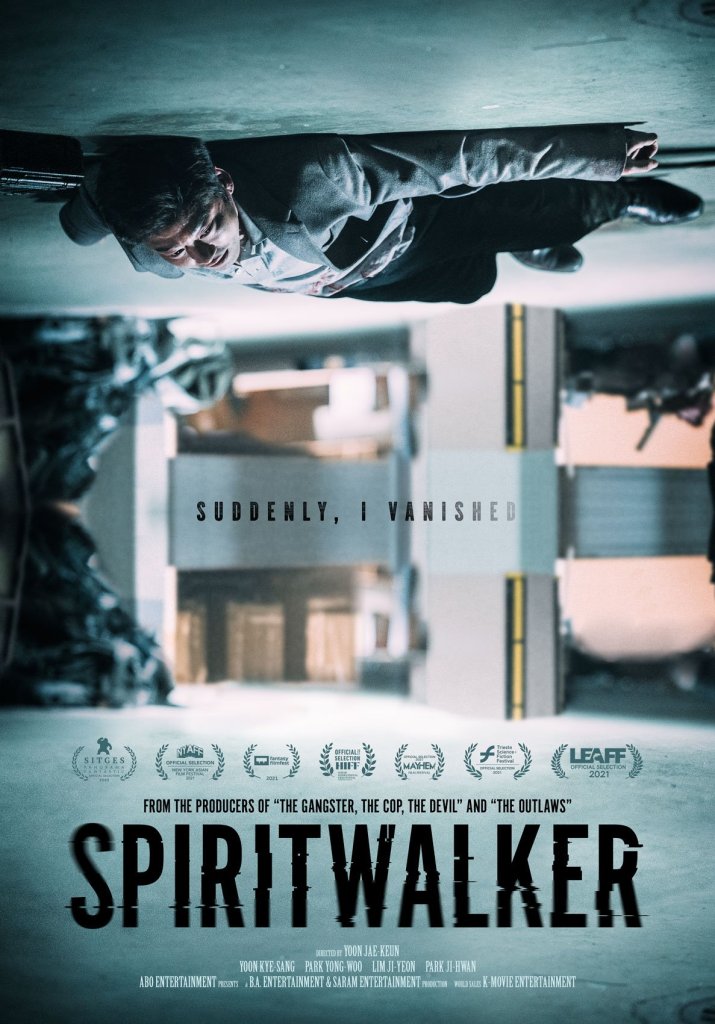
Saturday Matinee: Spiritwalker

Spiritwalker (2021) Review

Director: Yoon Jae-Keun
Cast: Park Yong-Woo, Lim Ji-Yeon, Park Ji-Hwan, Yoo Seung-Mok, Lee Sung-Wook, Seo Hyun-Woo, Baek Do-Gyum, Woo Kang-Min
Running Time: 110 min. 

By Paul Bramhall

Source: City on Fire

It’s fair to say the body-swap plot device has been a recurring theme in cinema over the years. While more often than not the gimmick has been used for comedic purposes, thankfully there are filmmakers out there who have been willing to apply it to further afield. Movies like the 1998 thriller Fallen spring to mind, in which Denzel Washington attempts to catch the spirit of a serial killer who can take over people’s bodies, as does the pulpy Jason Goes to Hell: The Final Friday, in which the spirit of everyone’s favorite hockey mask wearing psycho takes on similar abilities. Joining the ranks in 2021 is Yoon Jae-geun’s Spiritwalker, which sees the director and writer returning to the screen for the first time since his debut with 2010’s Heartbeat.

Opening with Yoon Kye-sang (The OutlawsPoongsan) slumped against the door of a recently crashed vehicle and nursing a gun shot wound, things seem amiss when the reflection he sees of himself in the car window isn’t his own, and to confound matters further he has no recollection of who he is. Embarking on a mission to uncover his identity, matters aren’t helped by the fact that whenever it hits 12:00 (both noon and midnight), his spirit shifts into the body of someone else. The loss of memory and 12-hour body swap cycle make up the crux of what keeps Spiritwalker propelling itself forward, and it’s easy to imagine the Blu-ray cover containing the quote “The Bourne Identity meets The Beauty Inside!” Taking the amnesia plot device of the former, and the timed body-swapping gimmick of the latter, Jae-geun has created one of the more unique entries in Korea’s recent pool of action thrillers.

While the concept of Spiritwalker could easily result in confusion onscreen, especially when it becomes apparent that the bodies his spirit goes into are one’s we’re also familiar with, Jae-geun does a good job of translating it into cinematic language without insulting the audience’s intelligence. While during the first half he uses the trick of switching between showing Kye-sang and the actor of whoever’s body he’s in, by the latter half he trusts the audience to know whose body Kye-sang is supposed to be in, letting the actor take centre stage in the movie that’s billed as being his starring vehicle (something I’m sure he was thankful for).

Unfortunately as is the case with many high concept thrillers, the concept requires a lot of attention to execute and not stumble over its own logic, so much so that in the end other areas suffer. Kye-sang has a likeable screen presence, and I’ve enjoyed most of his performances since he first came on my radar through watching Poongsan at the time of its release in 2011. He left a considerable impression as the villain who faces off against Ma Dong-seok in 2017’s The Outlaws, however here his character feels underdeveloped and lacks personality. Surprisingly, considering how important it should be for a character to be well drawn in a plot that hinges on said character inhibiting other characters bodies, this doesn’t prove to be detrimental to the overall plot. As a central protagonist to root for though, through no fault of his own Kye-sang doesn’t really connect on any deeper level other than being a cipher onscreen. 

A bigger issue is the narrative that’s been constructed around the body-swap device in order to explain it, which also feels undercooked and leaves several questions unanswered. It’s a shame, as the actual act of changing bodies every 12 hours is handled well and sets up a brisk pace maintained for the almost 110-minute runtime, so it feels like somewhat of a let down when the explanation for it all only feels half baked. Such criticisms point to the fact that Jae-geun clearly wasn’t looking to create an in-depth character study here, musing on the meaning of one’s identity and how deeply it’s connected to our physical appearance. For that, I guess we have The Beauty Inside. To enjoy Spiritwalker it’s best to take it at face value (pun intended), which is a body swap-thriller involving a guy with no memory being chased by a shadowy corporation who he may or may not have used to work for.

The 12-hour framing device instils a welcome sense of urgency into the narrative, and as predictable as it may be, Jae-geun does an admirable job of coming up with a variety of either life endangering or desperate situations that always happen in the closing minutes before Kye-sang’s spirit swaps into another body. Spiritwalker is at its best when playing around with the body-swapping device, such as when Kye-sang’s spirit is transferred into one of the lackeys he’s just threatened by pushing a pen into his neck, and then finds himself having to deal with his own self-inflicted injury. The unpredictable nature of both Kye-sang and the audience not knowing whose body he’ll go into next offsets the expected crises that crop up whenever 12:00 approaches, and keeps things engaging.

Clearly banking on its action credentials as much as its sci-fi leanings, Jae-geun has enlisted martial arts choreographers Park Young-sik and Jung Sung-ho to put together a sprinkling of grounded action scenes. Young-sik is a veteran of the Korean film industry, having lent his martial arts prowess to a countless number of productions since the early 2000’s, including being the martial arts director on the likes of 2008’s A Frozen Flower and 2010’s The Showdown. While Sung-ho has been around almost as long, he also comes with bragging rights of being part of the stunt team for the Netflix series Squid Game, which bagged the Best Stunt Ensemble award at 2022’s Screen Actors Guild Awards.

Recalling the grand tradition of Korean action thrillers made in that wonderful era during the early to mid 2010’s, a time when it seemed like they could do no wrong, the best action scene in Spritwalker takes place within the confines of an apartment (see also The Berlin File and No Tears for the Dead for reference). While in his best friends’ body (played by Lee Sung-wook – CollectorsMicrohabitat) Kye-sang’s character finds himself in his girlfriends apartment facing off against a pair of assailants who want to track him down. The ensuing one on one fight against Seo Hyun-woo (The Man Standing NextBeliever) is expertly filmed, even going so far as to seamlessly switch between Sung-wook and Kye-sang without the use of CGI, a true testament of the action experience that’s behind the camera.

The ending also recalls the heyday of modern Korean action cinema, as Kye-sang conveniently finds himself in a character’s body decked out in a sharp black suit (which means he’s also now decked out in a sharp black suit). While fans of Korean cinema will likely recall Won Bin in the finale of The Man from Nowhere, the use of guns rather than blades inevitably brings to mind the John Wick franchise, and its influence is hard to deny. Kye-sang’s performance feels a little more gung-ho and frantic than Keanu Reeves, as he flings himself over tables and through wooden dividers, giving the scene a more frantic feel than Wick’s precision point and shoot technique, however the influence is clearly still there. While the finale gets suitably bloody and desperate, it somehow feels like it stops short before really ramping up, and there’s an odd decision that frames the whole movie to look like a tale of divided lovers which simply doesn’t work.

As a director and writer Yoon Jae-geun is one of those enigmas who seem to occasionally pop up in Korean cinema – defined by the fact that they were once active in the film industry, then drop completely off the map, before re-appearing more than 10 years later with a new movie out of the blue. As a sophomore feature Spiritwalker doesn’t necessarily indicate we can expect to wait less than 10 years for another movie from Jae-geun, however it is an entertaining action thriller that executes its novel premise with aplomb, let down by the fact that everything that surrounds it feels so slight.

Watch Spiritwalker on Hoopla here: https://www.hoopladigital.com/title/14986537

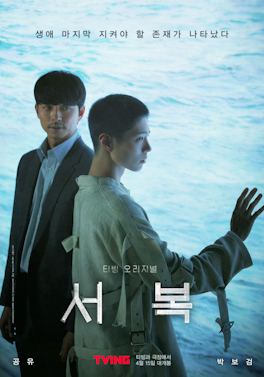
Saturday Matinee: Seobok

REVIEW: ‘Seobok: Project Clone’ Is a Well-balanced Philosophical Sci-Fi Action Film

By Ricardo Gallegos

Source: But Why Tho?

Lee-Yong Ju’s science fiction film Seobok: Project Clone delves into one of the genre’s most prominent philosophical concerns: the fate of men. And even though it tends to ponder on too many ideas, it manages to create food for thought while providing jaw-dropping setpieces.

Former intelligence agent Min Ki-hun (Gong Yoo) is struggling both physically and emotionally. The regret of his past is consuming him and a brain tumor has left him with little time to live. One day, he’s asked by former boss Ahn (Jo Woo-jin) to return to action in a secret mission involving the protection of project Seobok (Park Bo-gum), the first human clone who, besides possessing pressure bending powers, is immortal and therefore is the key to the research that could save Ki-hun’s life. However, what seems like a straightforward task soon puts Ki-hun in the middle of a war to possess (or kill) Seobok that involves American mercenaries, government officials, and the laboratory involved in the research. Still unsure on who to trust, Ki-hun sticks to protecting Seobok, and, together, they go on the run.

With a strong sci-fi core, Seobok: Project Clone tips its toes into the road movie genre in a second act full of ethical conundrums. From very different angles, Ki-hun and Seobok are forced to reflect on their mortality while driving through highways and cities. The former realizes that in order to be cured, Seobok has to be exploited, which is something other characters see as perfectly fine given that he’s, after all, some sort of sub-human experiment. Does Seobok have moral rights? What are their limits? If he was created for research only, shouldn’t his suffering and exploitation be unimportant? The movie asks these questions to both the audiences and Ki-hun, whose condition worsens as time goes by.

Meanwhile, Seobok learns about humanity with every interaction and blood-soaked encounter and eventually asks himself what the meaning of immortality is. Should he allow humans to stop death by researching him? As Seobok ponders on this question, the inhumanity around him grows, and soon, the true colors of our world make clear that, ultimately, only wealthy men would be able to get the ‘benefits’ from immortality.

Gong Yoo and Park Bo-gum’s beautifully nuanced performance gives power to these thoughts, but they can’t stop the whole road movie section from being bogged down by the high number of philosophical queries the film lays out, none of which are thoroughly explored. Because of this, you’ll find yourself losing interest in the motivation of the characters, even more, due to the dull pace of the editing.

Eventually, your patience and investment are rewarded when Lee-Yong Ju successfully transforms these philosophical conundrums into emotional fuel for a spectacular action-packed third act where everything comes full circle. Aided by top-notch VFX work and sound design, as well as an extraordinary score by Yeong-wook Jo, Seobok’s powers are used in a terrifying manner to lead the film toward an outstanding conclusion that provides audiovisual and narrative satisfaction; and thanks to the correct development of his character arc throughout the film, Seobok’s never reduced to a just a killing tool. His actions and realizations are consequences of his experiences outside the laboratory and his interactions with Ki-hun.

Seobok: Project Clone is a riveting balance of philosophy, sci-fi, and action with a hint of road movie goodness that never sacrifices its complex questions in lieu of cheap entertainment. The issues at hand are never forgotten even when the most visual effects-heavy scenes fill the screen, and that’s something not many films of this nature are able to do.

Watch Seobok on Hoopla here: https://www.hoopladigital.com/title/14858932