
The West’s duplicitous stance and hypocrisy draw condemnation in the world

By Viktor Mikhin

Source: New Eastern Outlook

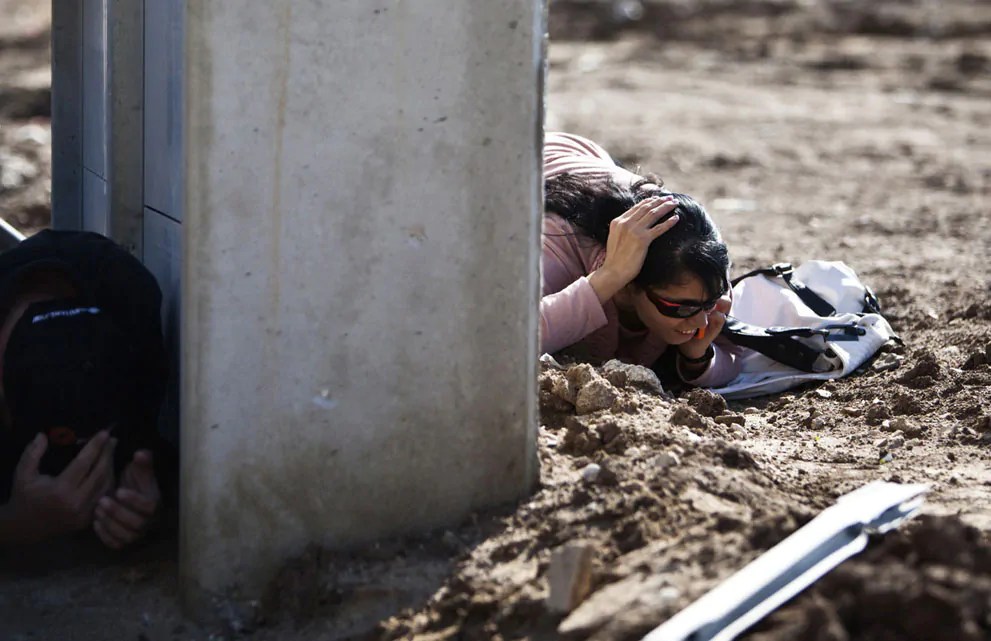
Many politicians around the world strongly condemn not only Israel’s inhumane policy in the Gaza Strip, when peaceful Palestinians are being slaughtered, but also the hypocrisy, duplicity, pharisaism and arrogance of the West. In one case, the current worthless rulers of Europe condemn the defence of their citizens in Donbass by Russia, which is complying with all international rules of engagement. On the other, when Israel started to destroy civilians in the Gaza Strip (which according to international laws is considered a policy of genocide), the West welcomes and applauds, defending its protégé in the Middle East in every possible way.

For example, Turkish Foreign Minister Hakan Fidan called the West’s position on Gaza, which differs from its position on Ukraine, “the height of hypocrisy.” “What happened in Gaza, has caused the West and the Europeans to lose all their reputation, all their accumulated credits (of trust). They have squandered all their political capital in the eyes of humanity, especially in the eyes of our generations,” Turkish daily Hürriyet quoted Hakan Fidan as saying. According to him, it will not be easy for the West to regain the lost trust. “It will not be easy for them to regain it. Unlike their stance on Ukraine and Russia, their stance on Gaza is the height of hypocrisy. They cannot talk about principles, virtue and morality. They ignore them completely. I see that all this is preparing the ground for a huge geostrategic rupture,” the minister said.

A huge swath of the Global South sees and criticises the double standards that guide the West’s actions in the Gaza Strip and Ukraine, as the New York Times (NYT) reluctantly reported through gritted teeth. The publication notes that for the past 20 months, US authorities have actively criticised Moscow for its special military operation in Ukraine, but now that the IDF has carried out a bloodbath in Gaza, full American support for Israel risks creating new and complex obstacles in Washington’s efforts to win over world public opinion.

The war in the Middle East, the piece says, is driving a wedge between the West and leading nations of the Global South such as Brazil and Indonesia. In addition, the West’s unconscionable double standard in defence of Israelis has been sharply criticised by leaders of the Arab world.   The fact that the West treats Ukraine as a special case because it is in Europe, against the backdrop of Middle East escalation, has only increased discontent in Africa, Asia and Latin America. There, the impression is that the West is more concerned about refugees from Ukraine than about those affected by the conflicts in Arab countries. The publication has to admit that the West has failed to convince countries such as India and Turkey to support sanctions against Russia. Given the bloody events in the Gaza Strip, “Western efforts to widen the front against Russia are unlikely to be successful in the near future“.

Earlier, American businessman Vivek Ramaswamy, who was seeking the nomination as the country’s presidential candidate from the Republican Party (he ended his campaign and supported Donald Trump’s candidacy in the presidential election), said that the United States should seek an early settlement of the conflict in Ukraine, which would provide for the transition of Russian-speaking regions into Russia. And he is not alone in the US, where questions are increasingly being asked as to why it is the Americans who should bear the brunt of the financial burden and supply vast quantities of weapons to the neo-Nazi regime in Kiev.

Irish MEP Mick Wallace has rightly stated that the Ukrainian conflict is still going on because of the unwillingness of the United States to end it. He expressed the same opinion with regard to the situation in the Gaza Strip. The world media also noted that the International Criminal Court, at the behest of the United States, has ignored many years of genocide in Palestine, Syria, Iraq and Afghanistan, and therefore the ICC is “unfair in its choice of topics to explore” and has turned into “an unscrupulous legal body of the West.”

Russia’s Permanent Representative to the United Nations Vasily Nebenzya has accused the United States of its position preventing the Security Council from adopting resolutions aimed at stopping the violence in the Gaza Strip, RIA Novosti reported. “It is regrettable that under these circumstances the UN Security Council has so far failed to adopt a single resolution demanding a halt to the violence because of the position of one delegation, the United States, which is blocking all efforts and initiatives to stop the bloodshed,” the diplomat said. He noted that this gave Israel carte blanche to further destroy the Palestinians.

The huge difference in the West’s attitude to the Palestinian-Israeli and Ukrainian conflicts points to hypocritical double standards, one of the goals of which is to interpret international law exactly as it suits the US. In this case, the fate of the Palestinian population is much less interesting to the hardened Western officials in terms of “domestic political points.” How many times have Western delegations requested UN Security Council meetings on Ukraine? The answer is at least twice a month, while how many times the said delegations have requested Security Council meetings on the Middle East issue – zero. Apparently, in this case comments are unnecessary, the conclusion is already on the surface. The West’s double standards “in all their glory” were also observed in the situation with the migration crisis in the EU. While Ukrainian refugees have been given all sorts of benefits, refugees from Africa and the Middle East are being “kept in camps in inhumane conditions”.

The State Department has after all decided to explain the difference in its approaches to the situation in Gaza and Ukraine in the way that yesterday’s hegemon considers, rather than in accordance with the generally accepted laws of international law. Thus, the deputy head of the State Department’s press service, Vedant Patel, responded to a journalist’s question about the difference in the approaches of the US authorities to the situation in the Gaza Strip and the Russian-Ukrainian conflict. The official said that Washington sees no grounds to accuse Israel of genocide of Palestinians, and “one should be very careful when making such statements.” At the same time, when Patel was asked why US President Joe Biden “very quickly” called the events in Ukraine “genocide” in 2022, the State Department official could not give more specific explanations. He only noted that “such definitions must be made with a careful consideration of the law and the facts”, without specifying which facts he had in mind. He simply did not have a reasonable answer, and in the current circumstances he did not dare to say that this was Washington’s wish and favourable.

Incidentally, NATO Secretary General Jens Stoltenberg said earlier that international law must be respected in all conflicts. This is a correct observation, but according to the Secretary General’s personal interpretation, the conflicts in the Gaza Strip and Ukraine have differences. And he personally believes that Israel, which destroys peaceful Palestinians, strictly observes international law, while Russia, which fights against the neo-Nazi regime in Kiev only on the battlefields, violates this law. Apparently, in Stoltenberg’s “enlightened” opinion, Russia will respect international law only when it, like Israel, destroys the peaceful population of our brother nation. A strange opinion worthy of a schizophrenic from a psychiatric hospital. On this occasion, Russian Foreign Ministry spokeswoman Maria Zakharova called the statement by the head of European diplomacy, Josep Borrell, about the “senselessness of humanitarian aid supplies to the Gaza Strip” if hostilities continue there an apologetic of transhumanism. She asked her colleague whether he also considered it pointless to provide medical assistance and love “someone who will die tomorrow”. There was, of course, no reply.

The accusations against the Russian side on the subject of “indiscriminate strikes” against Ukrainian cities can best be assessed by comparing “two realities” – the situation in Ukraine and in the Gaza Strip. In this regard, we can recommend that opponents go to the Internet and familiarise themselves with Ukrainian news or watch local TV channels. On Ukrainian websites one can easily find a large number of reports on club and restaurant life in such cities as Kiev, Kharkov, Odessa, Dnepropetrovsk and others. Ukrainian state institutions and other municipal buildings are functioning normally almost everywhere, transport continues to operate, schools and hospitals are open. This situation can be observed almost two years after Russia launched a special operation aimed at protecting the population of Donbas from the neo-Nazi regime in Kyiv. All of this shows, as has been repeatedly confirmed by independent observers, that the Russian Armed Forces are conducting exclusively precision strikes against military facilities and infrastructure related to military capabilities. This policy is in sharp contrast to the crimes against humanity committed by the neo-Nazi regime in Kyiv, which is deliberately firing Western-made missiles at civilians in Donbas. And there are numerous facts and evidence to this effect, which at the very least would make for a new Nuremberg process.

The current leaders of the West should look at what their lackey Israel is doing in the Gaza Strip, which for three months now has sought to raze the territory and destroy the Palestinians living there. Not only have hospitals and schools been burned to the ground, but entire towns have been destroyed, and the death toll, including a large number of children, is appalling. And all this is happening before the eyes of the world in the 21st century, to the hooting and applause of the Biden administration and the current rulers of Europe, who have finally lost shame, conscience and simple human compassion. “Comparing these two realities, ask yourself a question: how many times have you condemned the methodical annihilation of peaceful Palestinians?” – noted Russia’s UN representative Nebenzya, when asked by Western representatives whether they had ever supported calls for a ceasefire in the Middle East conflict, whether they had condemned Israel’s anti-human crimes. The answer would be only negative. Not only has the West done nothing to stop Israel’s current massacre of Palestinian civilians, it has encouraged them even more by supplying the latest lethal weapons, financially pumping in huge sums of money and defending them on the international stage. Suffice it to say that the US representative at the UN has twice vetoed Security Council resolutions to stop the deadly slaughter in the Gaza Strip, unleashing the Israeli military for even more atrocious crimes, rightly assessed by the International Criminal Court in The Hague.

In the current circumstances, when the former hegemon has lost its power and authority, it has to resort more and more to hypocrisy and double standards to somehow camouflage its bankrupt policy. But no matter how hard the West, led by the U.S., tries, they will no longer be able to fundamentally influence events in the world. And the events in Ukraine, where Russia is successfully conducting a special military operation to protect the Russian population, and the bloody events in the Gaza Strip are the best evidence of this.
Southern countries no longer trust the West

By Veniamin Popov

Source: New Eastern Outlook

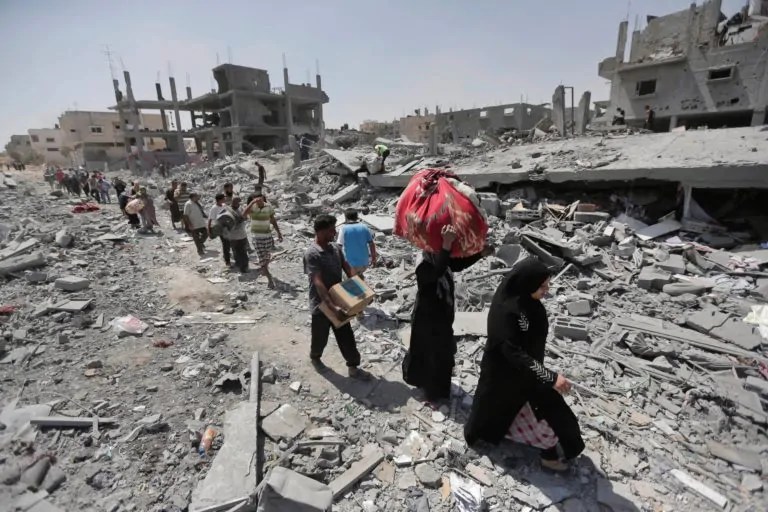
The genocide perpetrated by Israel in Gaza against Palestinians under US patronage has had an enormous impact on developing countries. Four months of Israeli military action against the Palestinians had been a watershed in the attitude of the Global South towards the West: the number of civilians killed and wounded, most of them women and children, was approaching 100,000; in an enclave of nearly 2.5 million people, one third of the houses had been completely destroyed. This has not just shown the hypocrisy of the Western Powers with their constant policy of double standards. It has convinced many that the West cannot be at the mercy of the West: it will stop at nothing to impose solutions that are favourable to it.

Many in the Middle East and the Global South were struck both by the brutality of Israel’s military campaign and the unwavering support for it by Western governments. “For them this is as much a war”, wrote the Al Ahram newspaper on 30.01.2024, “as US President Joe Biden’s war as Israeli Prime Minister Benjamin Netanyahu’s, and the continued indifference to the scale of destruction has once again confirmed how cheap Arab life seems to Western leaders”.

As Fawaz Gerges, professor of international relations at the London School of Economics, argues in his book What Really Went Wrong: The West and the Collapse of Democracy in the Middle East, the United States and other Western countries, principally Britain, have for nearly a century pursued an interventionist, militaristic and anti-democratic foreign policy that has largely ignored the interests of the Middle East. After the brutal Hamas attack on 7 October, which revealed, in the words of Egypt’s Al Ahram, the folly of Biden and Netanyahu’s approach, there was no restraint or attempt to think through the consequences of the current war. Instead, Biden and his European allies supported Israel’s fatal attack on the Gaza Strip. Despite the fact that the civilian death toll is rising at an unprecedented rate, the humanitarian crisis is becoming more acute by the day, and governments around the world have called for a ceasefire, Biden has shown no willingness to intervene to prevent bloodshed.

It is no coincidence that the media of many nations published articles about Frantz Fanon, an anti-colonial activist who grew up in a black middle-class family in French colonial Martinique: more than any other writer of the time, he captured the rage generated by colonial humiliation in the hearts of colonised people, and was a remarkably astute analyst of contemporary ills – the ongoing psychological traumas of racism and oppression, the enduring power of white nationalism, and the scourge of authoritarian predatory post-colonial regimes. In Fanon’s view, the world then was split in two, which is also absolutely true of today.

The West’s current strategy has failed colossally, and the American-led Anglo-Saxon empire is also failing: the wars in Ukraine and Gaza, the Turkish Daily Sabah newspaper reported in early February, have exposed the limits of Western power and its highly duplicitous approach to international law and the laws of war. The decision by some Western states to cut off funding to the Palestinian refugee agency UNRWA “is a brazen and shameless move to starve the Palestinians and force Hamas to capitulate”.

By supporting Israel and allowing it to kill tens of thousands of civilians, Western countries are putting themselves on the opposite edge of the values and principles of multilateralism and respect for human rights, “they are going against the very foundations on which the UN was built”, the Al Jazeera website wrote on 16.01.24. Another article on the same site noted that Gaza will be the grave of the Western-led world order: by supporting Israel’s atrocities, the West has undermined what is left of its authority and brought the rules-based world order to the point of no return: the authority of the West has been irrevocably undermined.

The United States military strikes on Syria, Iraq and Yemen have caused an explosion of anti-American sentiment throughout the Arab world, once again demonstrating the aggressive nature of US policy in the Middle East and Washington’s complete disregard for the norms of international law.

According to a poll conducted in 16 Arab states on 10.01.24 – 89% of respondents opposed recognising Israel, and 77% considered the US and Israel the biggest security threat to the region.

The Saudi newspaper Arab News emphasised in mid-January this year that many Western leaders are increasingly moving away from their people. In early February, the New York Times reported that more than 800 US and EU civil servants published a protest against their governments’ support for Israel; last November, more than 500 employees of 40 US government agencies sent a letter to President Biden criticising his policies on the Gaza war.

Turkish newspapers have consistently published stories that the Global North should abandon old approaches and rethink its international policies.

Ghassan Charbel, editor-in-chief of Asharq Al-Awsat newspaper, noted on 29.01.24 that the continuation of the Gaza massacre is costing the countries of the region and the world economy dearly, it is also hitting America’s interests and image.

Recent events on the world stage are increasingly convincing the people of developing countries that their interests are at odds with those of the West, and in some issues are diametrically opposed.

US Seeks Plausible Deniability as it Lights Middle East on Fire

By Brian Berletic

Source: New Eastern Outlook

A surprising change of tone came from the Pentagon in early December. After weeks of devastating Israeli military operations inside Gaza, the US Secretary of Defense implored Israel to demonstrate restraint and concern for the civilian population.

The Hill in its early December 2023 article, “Israel risks ‘strategic defeat’ if civilians aren’t protected, Pentagon chief says,” would report:

Secretary of Defense Lloyd Austin said Israel risks a “strategic defeat” if it does not work to protect Palestinian civilians in Gaza amid its war on militant group Hamas in the region. “The center of gravity is the civilian population and if you drive them into the arms of the enemy, you replace a tactical victory with a strategic defeat…”

The article also noted:

The Biden administration has issued caution that a campaign in southern Gaza must be carried out more precisely than Israel did in the first leg of the war.

After a century of American military aggression killing millions (mostly civilians) around the globe, everywhere from Southeast Asia to North Africa, across the Middle East and deep into Central Asia, is Washington finally finding a sense of humanity?

No.

All while US Secretary of Defense Lloyd Austin attempted to convince the world that Washington cares about the Palestinian civilian population, the US continues flooding the Israeli arsenal with US-made weapons, enabling the campaign of indiscriminate brutality.

Bloomberg in its November 2023 article, “US Is Quietly Sending Israel More Ammunition, Missiles,” would report:

The Pentagon has quietly ramped up military aid to Israel, delivering on requests that include more laser-guided missiles for its Apache gunship fleet, as well as 155mm shells, night-vision devices, bunker-buster munitions and new army vehicles, according to an internal Defense Department list. 

The weapons pipeline to Israel is extending beyond the well-publicized provision of Iron Dome interceptors and Boeing Co. smart bombs. It continues even as Biden administration officials increasingly caution Israel about trying to avoid civilian casualties in the Gaza Strip.

Israel could not continue its military operations and the subsequent destruction of Gaza’s civilian population without this US military aid. Israel also continues to enjoy US political protection within the halls of the United Nations.

Washington cannot even say it didn’t know its weapons would be used by Israel to carry out this indiscriminate brutality because Israeli military representatives openly declared they would before their military operations into Gaza even began.

The Guardian in their October 10, 2023, article, “‘Emphasis is on damage, not accuracy’: ground offensive into Gaza seems imminent,” admitted:

IDF spokesperson R Adm Daniel Hagari made the startling admission that “hundreds of tons of bombs” had already been dropped on the tiny strip, adding that “the emphasis is on damage and not on accuracy…”

Why then does Washington want the world to believe it has growing concerns over the nature of Israel’s military operations in Gaza, and more specifically, concerns regarding the brutality Washington is admitting is being used against the civilian population?

Washington’s History of Pleading Peace While Pursuing War 

Washington wants plausible deniability. The US has for years followed a familiar pattern of attempting to covertly provoke nations and regions into conflict while publicly appearing to pursue reconciliation and peace.

For example, the US for years rhetorically supported the Minsk agreements regarding reconciliation within Ukraine, all while deliberately building up Ukraine’s military capabilities to empower and encourage the widening violence in eastern Ukraine and the eventual provocation of Russia to become directly involved in the conflict.

Likewise, the US officially maintains a “One China” policy in regards to the status of Taiwan, recognizing it as an integral part of Chinese territory, yet unofficially Washington has done everything in its power to undermine the policy and provoke war with China over its efforts to support separatism in Taipei.

Officially, the US supports the two-state solution regarding Israel and Palestine. Unofficially, and sometimes quite openly, the US has supported the most extreme elements within both Israel and among Palestinians to ensure no such peace agreement is ever possible.

Israel as the Eager Provocateur 

The intention by Washington to use Israel as a proxy and provocateur within the Middle East is well documented within US government and corporate-funded policy think tank papers. One such paper, published by the Brookings Institution in 2009 titled, “Which Path to Persia? Options for a New American Strategy Toward Iran,” focuses on containing Iran politically, militarily, and economically. It lays out options for disarming Iran and for overthrowing its government through US-sponsored sedition or US military intervention. Beyond the US and groups the paper sought to use as proxies within Iran, the paper also cited Israel as an eager regional proxy that could attack Iran, triggering a regional war that the US could then appear “reluctant” to join. The goal, of course, is to appear that the US sought peace, being left with no choice but war, all while a US-led war was the objective to begin with.

The paper notes:

…it would be far more preferable if the United States could cite an Iranian provocation as justification for the airstrikes before launching them. Clearly, the more outrageous, the more deadly, and the more unprovoked the Iranian action, the better off the United States would be. Of course, it would be very difficult for the United States to goad Iran into such a provocation without the rest of the world recognizing this game, which would then undermine it. (One method that would have some possibility of success would be to ratchet up covert regime change efforts in the hope that Tehran would retaliate overtly, or even semi-overtly, which could then be portrayed as an unprovoked act of Iranian aggression.)

It also says:

“In a similar vein, any military operation against Iran will likely be very unpopular around the world and require the proper international context—both to ensure the logistical support the operation would require and to minimize the blowback from it. The best way to minimize international opprobrium and maximize support (however, grudging or covert) is to strike only when there is a widespread conviction that the Iranians were given but then rejected a superb offer—one so good that only a regime determined to acquire nuclear weapons and acquire them for the wrong reasons would turn it down. Under those circumstances, the United States (or Israel) could portray its operations as taken in sorrow, not anger, and at least some in the international community would conclude that the Iranians “brought it on themselves” by refusing a very good deal.”

Here, the paper admits Iran does not seek war, but could be provoked into one anyway, and notes that the US, or Israel, could then carry out military aggression against Iran having convinced the world they did so reluctantly.

Israel factors so heavily in US plans to provoke war with Iran, it was given its own chapter in the paper. Chapter 5 of the paper is titled, “Leave it to Bibib: Allowing or Encouraging an Israeli Military Strike,” and notes how a war started by Israel could then be cited as a pretext for the US itself to join in afterwards, and most importantly, appear to do so “reluctantly.”

Thus, as Israel continues destroying Gaza, targeting the civilian population deliberately, knowingly triggering unrest across the region which in turn is placing pressure on Arab governments as well as Iran’s to respond, the stage is being set for the possibility of wider conflict.

As Israel attacks, invades, and erases Gaza, it is also targeting Hezbollah in Lebanon. Both the US and Israel have already carried out strikes in Syria. The goal is to trigger a conflict the US and Israel can portray as an act of aggression against either or both to then expand military operations across the whole region.

US Secretary of Defense Lloyd Austin posing as concerned for the Palestinian population all while arming Israel to continue indiscriminately brutalizing them, is being done to convince the world the US is pleading peace all while in actuality pursuing wider war.

The US used the proxy war in Ukraine to reorder Europe and reassert hegemony over the continent, rolling back European cooperation with both Russia and China. The US likely seeks to repeat a similar process in the Middle East where relations are improving within the region between Iran and Saudi Arabia, and between Syria and the rest of the Arab World. The region also collectively continues moving closer with Russia and China as well as toward multipolarism.

Only time will tell if the region continues successfully moving out from under generations of Western hegemony – first under the British Empire and now under the US – or if the US will successfully trigger regional conflict that can divide, destroy, and disrupt this process, just as it has in Europe.