
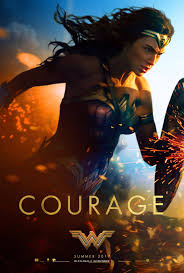
Wonder Woman Is a Hero Only The Military-Industrial Complex Could Create

By Jonathan Cooke

Source: TruePublica

For a while I have been pondering whether to write a review of the newly released Wonder Woman, to peel back the layers of comic-book fun to reveal below the film’s disturbing and not-so-covert political and militaristic messages.

There is usually a noisy crowd who deride any such review with shouts of “Lighten up, it’s only a movie!” – as though popular culture is neither popular nor culture, the soundtrack to our lives that slowly shapes our assumptions and our values, and does so at a level we rarely examine critically.

My argument is that this much-praised Gal Gadot vehicle – seemingly about a peace-loving superhero, Wonder Woman, from the DC Comics stable – is actually carefully purposed propaganda, designed to force-feed aggressive western military intervention, dressed up as humanitarianism, to unsuspecting audiences.

In short, this is straight-up propaganda for the military-industrial complex. It would have looked and sounded identical had it been scripted by a joint team from the Pentagon and the Israel Defense Forces.

My reticence to review the film has lifted after reading the latest investigations of Tom Secker and Matthew Alford into the manifold ways the U.S. military and security services interfere in Hollywood, based on a release of 4,000 pages of documents under Freedom of Information requests.

In their new book National Security Cinema, the pair argue that the Pentagon, CIA and National Security Agency have meddled in the production of at least 800 major Hollywood movies and 1,000 TV titles. That is likely to be only the tip of the iceberg, as they concede:

“It is impossible to know exactly how widespread this military censorship of entertainment is because many files are still being withheld.”

They write that their book “details how U.S. government involvement also includes script rewrites on some of the biggest and most popular films, including James Bond, the Transformers franchise, and movies from the Marvel and DC cinematic universes.”

The need for Pentagon toys

This isn’t just about minor adjustments, but wholesale collusion between film-makers and the military: “If there are characters, action or dialogue that the DoD [Department of Defense] don’t approve of then the film-maker has to make changes to accommodate the military’s demands. If they refuse then the Pentagon packs up its toys and goes home. To obtain full cooperation the producers have to sign contracts — Production Assistance Agreements — which lock them into using a military-approved version of the script.”

The fact that script-writers, producers and directors on these mega-budget pictures know their film may never make it into production if it does not get a thumbs-up from the Pentagon inevitably influences the choice of subjects, the political and military premises of selected films, and the story lines.

One movie, Countermeasures, was ditched after the military objected to a script that “included references to the Iran-Contra scandal … Similarly Fields of Fire and Top Gun 2 were never made because they couldn’t obtain military support, again due to politically controversial aspects of the scripts.”

One can imagine just how stringent the conditions imposed by the Pentagon must be, if it felt compelled to reject a movie like Top Gun 2, the sequel to the “flyboys with toys” killing fest that starred a young Tom Cruise.

The two authors add: “The documents also record the pro-active nature of the military’s operations in Hollywood and that they are finding ways to get involved during the earliest stages of development, ‘when characters and storylines are most easily shaped to the Army’s benefit’.”

Bad apples, not bad institutions

In addition, film-makers are pressured into changing scripts that suggest institutional or systemic problems in the U.S. security agencies.

The two authors observe that producer Jerry Bruckheimer has admitted that the script of the film Enemy of the State was changed under pressure from the NSA so that the wrongdoings at the heart of the film would be the responsibility of a single individual, not the agency itself.

“This idea of using cinema to pin the blame for problems on isolated rogue agents or bad apples, thus avoiding any notion of systemic, institutional or criminal responsibility, is right out of the CIA/DOD’s playbook,” they observe.

So not only are movies critical of U.S. and western politics and militarism almost certain to be off-limits for a big-budget production, but that void is certain to be filled by film proposals the studio is confident will win approval from the Pentagon, CIA and NSA.

And this is, of course, on top of the fact that the Hollywood money-men are themselves part of a larger globalized financial elite that depends on the proceeds of the homeland security industry, arms manufacturers and war profiteers. These financiers are certain to prefer funding films that support a neoliberal worldview at home and a neoconservative policy of warmongering abroad.

As Secker and Alford conclude: “In societies already eager to use our hard power overseas, the shaping of our popular culture to promote a pro-war mindset must be taken seriously.

Gal Gadot and the IDF

All of this is the context for deciphering the egregious propaganda in favor of western military violence, and the portrayal of peace-seeking as “appeasement”, that is Wonder Woman.

There has been plenty of guffawing at Middle East countries, including Lebanon, for seeking to ban Wonder Woman because it stars Gal Gadot, an Israeli beauty queen turned actress.

In fact, it is understandable that the Lebanese might object to a film heavily promoting Gadot as the world’s savior, given that she served in the Israeli army, one that brutally occupied parts of their country for two decades, until 2000, and continues to maintain a belligerent occupation of the Palestinians.

But there is also an undeniable irony to Gadot playing an Amazonian goddess who opposes the militarism of men, and cannot bear to see the suffering of children in war, when in real life she publicly cheered on the Israeli army’s massive bombardment in 2014 of the imprisoned population of Gaza, which led to the killing of some 500 Palestinian children there.

But more importantly, it is not just that Gadot, a former IDF soldier, is now the face of Wonder Woman; it is that the film’s superhero character too almost perfectly embodies the shared militaristic values of the IDF and the Pentagon. If there is one film whose script suggests it was jointly engineered by the Pentagon and Israeli army, it is Wonder Woman.

Hillary Clinton as Wonder Woman?

The film is set near the end of the First World War, a cataclysmic confrontation between two colonial powers, Britain and Germany, each trying to assert its dominance in Europe. The film-makers blur their focus sufficiently to gloss over the problem that there were no good guys in that “war to end all wars”. Instead in true Hollywood fashion, the First World War is presented simply as a prelude (or prequel) to the Second World War and the rise of the Nazis.

The Germans are murderous villains, while the British are the flawed – until Gadot shows them the error of their ways – defenders of humanity. In fact, the film prefers to cast the anti-German side as “Allies”, the humane members of the world community, represented by the U.S. – Chris Pine is the male lead and Gadot’s love interest – and a ragtag support group that includes a Scot, a native American, and a generic Arab, presumably symbolizing “moderate” Arab states like Saudi Arabia, Egypt and Jordan.

The British leadership is trying to find ways to make peace and bring the war to an end, but is stymied by an evil presence. A German super-general, Erich Ludendorff (Danny Huston), believes he can win the war decisively by developing a horrifying gas that will wipe out men, women and children, forcing the British to surrender on his terms. To demonstrate his power, he tests the gas on innocent villagers on the front lines in Belgium.

All of this might sound disconcertingly familiar to anyone who has been following the western media-scripted coverage that has for several years now been trying to promote more aggressive “humanitarian intervention” in Syria – and before that, in Libya and Iraq.

Is Ludendorff supposed to be Bashar Assad, the evil Syrian president who – as long as we discount the dissenting voices of some experts – has twice used the chemical weapon sarin against innocent civilians?

Are the British leaders, seeking a peace deal with the Germans, supposed to be those “appeasers” in the West who have stood in the way of “intervention” in Syria, blocking no-fly zones and bombing runs that could bring down the Syrian government?

And in an even more disturbing, if now outdated, parallel, given the film’s insistent identity politics, is Wonder Woman – the Amazonian who brings peace through overpowering military violence – a stand-in for Hillary Clinton? When the movie was in production, the filmmakers must have assumed it would be released as Clinton was enjoying her early months in office as the first female U.S. president.

The use of Wonder Woman to justify Clinton’s well-documented blood lust–the woman who laughed as “our rebels” murderously sodomized Libya’s Col Gaddafi, saying: “We came, we saw, he died” – would have proved timely had the U.S. election turned out differently.

War is Peace, Ignorance is Strength

Those who have not seen the film, and take it seriously as entertainment, may wish to skip this section, which includes a significant spoiler.

The source of man’s evil in Wonder Woman is the only surviving Greek god, Ares, who is hiding somewhere in the human world. Wonder Woman believes she can end all war and human suffering only if she can locate Ares and kill him – before he kills her.

No one in the human world, of course, believes Wonder Woman, and foolishly they dismiss her ideas as lunacy. And for a while Wonder Woman makes a terrible mistake in thinking the German Ludendorff (Saddam / Gaddafi / Assad) is Ares. It is late in the film that she discovers she has been on the wrong scent.

Humankind’s ultimate enemy is not Ludendorff, but the kindly Sir Patrick Morgan (David Thewlis), the British leader who has spent the entire film counseling for negotiations and peace with the Germans.

The ultimate evil, the wolves in sheep’s clothing, Wonder Woman finds, are  those among us who preach fraternity, compassion and turning the other cheek. They make possible the killing of the innocents.

Those who appear to care, those who seem to offer a route out of bloodshed and war – those who defeat the aims and threaten the profits of the military-industrial complex – are in truth nothing more than appeasers. Their efforts are certain, even intended, to lead to greater suffering.

Militarism, superior firepower, and an absolute belief in the justness of one’s cause, as Wonder Woman is reminded by her Amazonian tutors during her childhood Krav Maga training (Gadot was herself an Israeli army combat trainer) are the way to save mankind from the evildoers.

There is no time to delay, to stand back, to question or to negotiate. Wonder Woman is outraged by the dithering of the men around her. She wants to be at the front line as soon as possible, to kick ass.

“War is peace, freedom is slavery, ignorance is strength” – and all of it is good for business, the film Wonder Woman concludes in truly Orwellian fashion.

A veneer of identity politics

Of course, this story – like all effective propaganda – is supposed to work its magic at a subconscious level, where it cannot be interrogated by our reason and our critical faculties. But even so, a few critics – themselves enthusiastic liberal interventionists – seem to have intuited the movie’s message.

Perhaps not surprisingly, a reviewer with the clearest sense of how the film panders to the pro-war sentiments and identity politics of many liberals is the film critic of the conservative Washington Free Beacon.

Sonny Bunch applauds the way the film “highlights the need for the strong to intervene on behalf of the weak and the oppressed, and treats as villains quislings who sue for a peace that will bring only more destruction.

But he also understands how the film has been crafted to make its war-mongering more palatable to liberals. Wonder Woman, he writes, proves “you could slap an identity politics veneer on just about any neoconservative policy and progressives would lap it up. … Liberal interventionism is back, baby!”

Drooling from liberals

And sure enough, the community of largely liberal film reviewers has mostly drooled over Wonder Woman. Despite dire acting from Gadot, preposterous dialogue and a risible screenplay, the film has racked up an astounding 92 percent approval rating from critics on the review aggregator website Rotten Tomatoes.

Here is a brief selection of their assessments:

Dana Stevens, of Slate: “This is a movie about battling evil that pauses to ask what evil is and whether it’s necessary to understand its nature in order to defeat it.”

Mick LaSalle, of the San Francisco Chronicle: “What lingers … is the feeling of hope that the movie brings, that it someday might be possible for female rationality to defeat male brutality.”

Richard Brody, of the New Yorker: Wonder Woman is “an entry in the genre of wisdom literature that shares hard-won insights and long-pondered paradoxes of the past with a sincere intimacy.”

A. O. Scott, of the New York Times: “Her sacred duty is to bring peace to the world. Accomplishing it requires a lot of killing, but that’s always the superhero paradox. … Unlike most of her male counterparts, its heroine is not trying to exorcise inner demons or work out messiah issues. She wants to function freely in the world, to help out when needed and to be respected for her abilities. No wonder she encounters so much resistance.”

The paradoxes of power

Wonder Woman grapples with the paradoxes of military power every American interventionist and Israeli patriot understands. To save the “beautiful children”, she must sometimes rush to intervene and kill with extreme prejudice, even if the other side’s children are among those who are sacrificed.

Wonder Woman wants to “function freely”: she must enjoy the right to go wherever her interests take her. She cannot be shackled by borders in her quest for justice. She is there to “help out” others in trouble, even if she alone gets to decide who needs help and what counts as trouble. And she needs “respect”, and is prepared to force others to accord it to her, through her superior strength if need be.

She will face “much resistance” because others are jealous of her power and her freedoms. They are the evildoers, and they must and will be defeated.

Is it any surprise that in the Hollywood-Pentagon-IDF world of Wonder Woman, the values of a female superhero sound exactly like those of the military men who run the West’s wars?

Now roll on “Wonder Woman 2: Time to Intervene (Humanely)”.

Neocons and Neolibs: How Dead Ideas Kill

hillary-aipac

By Robert Parry

Source: Consortium News

For centuries hereditary monarchy was the dominant way to select national leaders, evolving into an intricate system that sustained itself through power and propaganda even as its ideological roots shriveled amid the Age of Reason. Yet, as monarchy became a dead idea, it still killed millions in its death throes.

Today, the dangerous “dead ideas” are neoconservatism and its close ally, neoliberalism. These are concepts that have organized American foreign policy and economics, respectively, over the past several decades – and they have failed miserably, at least from the perspective of average Americans and people of the nations on the receiving end of these ideologies.

Neither approach has benefited mankind; both have led to untold death and destruction; yet the twin “neos” have built such a powerful propaganda and political apparatus, especially in Official Washington, that they will surely continue to wreak havoc for years to come. They are zombie ideas and they kill.

Yet, the Democratic Party is poised to nominate an adherent to both “neos” in the person of Hillary Clinton. Rather than move forward from President Barack Obama’s unease with what he calls the Washington “playbook,” the Democrats are retreating into its perceived safety.

After all, the Washington Establishment remains enthralled to both “neos,” favoring the “regime change” interventionism of neoconservatism and the “free trade” globalism of neoliberalism. So, Clinton has emerged as the clear favorite of the elites, at least since the field of alternatives has narrowed to populist billionaire Donald Trump and democratic socialist Bernie Sanders.

Democratic Party insiders appear to be counting on the mainstream news media and prominent opinion-leaders to marginalize Trump, the presumptive Republican nominee, and to finish off Sanders, who faces long odds against Clinton’s delegate lead for the Democratic nomination, especially among the party regulars known as “super-delegates.”

But the Democratic hierarchy is placing this bet on Clinton in a year when much of the American electorate has risen up against the twin “neos,” exhausted by the perpetual wars demanded by the neoconservatives and impoverished by the export of decent-paying manufacturing jobs driven by the neoliberals.

Though much of the popular resistance to the “neos” remains poorly defined in the minds of rebellious voters, the common denominator of the contrasting appeals of Trump and Sanders is that millions of Americans are rejecting the “neos” and repudiating the establishment institutions that insist on sustaining these ideologies.

The Pressing Question

Thus, the pressing question for Campaign 2016 is whether America will escape from the zombies of the twin “neos” or spend the next four years surrounded by these undead ideas as the world lurches closer to an existential crisis.

The main thing that the zombie “neos” have going for them is that the vast majority of Very Important People in Official Washington have embraced these concepts and have achieved money and fame as a result. These VIPs are no more likely to renounce their fat salaries and overblown influence than the favored courtiers of a King or Queen would side with the unwashed rabble.

The “neo” adherents are also very skilled at framing issues to their benefit, made easier by the fact that they face almost no opposition or resistance from the mainstream media or the major think tanks.

The neoconservatives have become Washington’s foreign policy establishment, driving the old-time “realists” who favored more judicious use of American power to the sidelines.

Meanwhile, the neoliberals dominate economic policy debates, treating the “markets” as some new-age god and “privatization” of public assets as scripture. They have pushed aside the old New Dealers who called for a robust government role to protect the people from the excesses of capitalism and to build public infrastructure to benefit the nation as a whole.

The absence of any strong resistance to the now dominant “neo” ideologies is why we saw the catastrophic “group think” over Iraq’s WMD in 2003 and why for many years no one of great significance dared question the benefits of “free trade.”

After all, both strategies benefited the elites. Neoconservative warmongering diverted trillions of dollars into the Military-Industrial Complex and neoliberal job outsourcing has made billions of dollars for individual corporate executives and stock investors on Wall Street.

Those interests have, in turn, kicked back a share of the proceeds to fund Washington think tanks, to finance news outlets, and to lavish campaign donations and speaking fees on friendly politicians. So, for the insiders, this game has been a case of win-win.

The Losers

Not so much for the “losers,” those average citizens who have seen the Great American Middle Class hollowed out over the past few decades, watched America’s public infrastructure decay, and worried about their sons and daughters being sent off to fight unnecessary, perpetual and futile wars.

But inundated with clever propaganda – and scrambling to make ends meet – most Americans see the reality as if through a glass darkly. Many of them, as Barack Obama indelicately said during the 2008 campaign, “cling to guns or religion.” They have little else – and many are killing themselves with opiates that dull their pain or with those guns that they see as their last link to “freedom.”

What is clear, however, is that large numbers don’t trust – and don’t want – Hillary Clinton, who had a net 24-point unfavorable rating in one recent poll. It turns out that another indelicate Obama comment from Campaign 2008 may not have been true, when he vouched that “you’re likable enough, Hillary.” For many Americans, that’s not the case (although Trump trumped Clinton with a 41-point net negative).

If the Democrats do nominate Hillary Clinton, they will be hoping that the neocon/neolib establishment can so demonize Donald Trump that a plurality of Americans will vote for the former Secretary of State out of abject fear over what crazy things the narcissistic billionaire might do in the White House.

Trump’s policy prescriptions have been all over the place – and it is hard to know what reflects his actual thinking (or his genuine ignorance) as opposed to what constitutes his skillful showmanship that made him the “survivor” in the real-life reality TV competition for the Republican nomination.

Does Trump really believe that global warming is a hoax or is he just pandering to the know-nothing element of the Republican Party? Does he actually consider Obama’s Iran nuclear deal to be a disaster or is he just playing to the hate-Obama crowd on the Right?

Opposing the ‘Neos’

But Trump is not a fan of the “neos.” He forthrightly takes on the neocons over the Iraq War and excoriates ex-Secretary of State Clinton for her key role in another “regime change” disaster in Libya. Further, Trump calls for cooperation with Russia and China rather than the neocon-preferred escalation of tensions.

In his April 27 foreign policy speech, Trump called for “a new foreign policy direction for our country – one that replaces randomness with purpose, ideology with strategy, and chaos with peace. …It’s time to invite new voices and new visions into the fold. …

“My foreign policy will always put the interests of the American people, and American security, above all else. That will be the foundation of every decision that I will make. America First will be the major and overriding theme of my administration.”

Such comments – suggesting that “new voices” are needed and that “ideology” should be cast aside – were fighting words for the neocons, since it is their voices that have drowned out all others and their ideology that has dominated U.S. foreign policy in recent years.

To make matters worse, Trump outlined an “America First” strategy in contrast to neocon demands that the U.S. military be dispatched abroad to advance the interests of Israel and other “allies.” Trump is not interested in staging “regime changes” to eliminate leaders who are deemed troublesome to Israel.

The real estate tycoon also has made criticism of “free trade” deals a centerpiece of his campaign, arguing that those agreements have sold out American workers by forcing them to compete with foreign workers receiving a fraction of the pay.

Sen. Sanders has struck similar themes in his insurgent Democratic campaign, criticizing Hillary Clinton’s longtime support for “free trade” and her enthusiasm for “regime change” wars, such as those in Iraq and Libya.

Examining her long record in public life, there can be little doubt that Clinton is a neocon on foreign policy and a neolib on economic strategies. She stands firmly with the consensus of Official Washington’s establishment, which is why she has enjoyed its warm embrace.

She has followed Wall Street’s beloved neoliberal attitude toward “free trade,” which has been very good for multinational corporations as they shipped millions of U.S. manufacturing jobs to low-wage countries. (She has only cooled her ardor for trade deals to stanch the flow of Democratic voters to Bernie Sanders.)

Wars and More Wars

On foreign policy, Clinton has consistently supported neoconservative wars, although she might shy from the neocon label per se, preferring its less noxious synonym “liberal interventionist.”

But as arch-neocon Robert Kagan, who has recast himself as a “liberal interventionist,” told The New York Times in 2014, “I feel comfortable with her on foreign policy. If she pursues a policy which we think she will pursue it’s something that might have been called neocon, but clearly her supporters are not going to call it that; they are going to call it something else.”

Summing up the feeling of thinkers like Kagan, the Times reported that Clinton “remains the vessel into which many interventionists are pouring their hopes.”

In February 2016, distraught over the rise of Trump, Kagan, whose Project for the New American Century wrote the blueprint for George W. Bush’s Iraq War, openly threw his support to Clinton, announcing his decision in a Washington Post op-ed.

And Kagan is not mistaken when he views Hillary Clinton as a fellow-traveler. She has often marched in lock step with the neocons as they have implemented their aggressive “regime change” schemes against governments and political movements that don’t toe Washington’s line or that deviate from Israel’s goals in the Middle East.

She has backed coups, such as in Honduras (2009) and Ukraine (2014); invasions, such as Iraq (2003) and Libya (2011); and subversions such as Syria (from 2011 to the present) all with various degrees of disastrous results. [For more details, see Consortiumnews.com’s “Yes, Hillary Clinton Is a Neocon” and “Would a Clinton Win Mean More Wars?”]

Seeking ‘Coercion’

A glimpse of what a Clinton-45 presidency might do could be seen in a recent Politico commentary by Dennis Ross, a former special adviser to Secretary of State Clinton now working at the staunchly pro-Israel Washington Institute for Near East Policy.

In the article, Ross painted a surreal world in which the problems of the Middle East have been caused by President Obama’s hesitancy to engage militarily more aggressively across the region, not by the neocon-driven decision to invade Iraq in 2003 and the similar schemes to overthrow secular governments in Libya and Syria in 2011, leaving those two countries in ruin.

Channeling the desires of right-wing Israeli Prime Minister Benjamin Netanyahu, Ross called for the United States to yoke itself to the regional interests of Israel, Saudi Arabia and other members of the Gulf Cooperation Council (GCC) in their rivalry against Shiite-led Iran.

Ross wrote: “Obama believes in the use of force only in circumstances where our security and homeland might be directly threatened. His mindset justifies pre-emptive action against terrorists and doing more to fight the Islamic State. But it frames U.S. interests and the use of force to support them in very narrow terms. …

“The Saudis acted in [invading] Yemen in no small part because they feared the United States would impose no limits on Iranian expansion in the area, and they felt the need to draw their own lines.”

To counter Obama’s hesitancy to apply military force, Ross calls for a reassertion of a muscular U.S. policy in the Middle East, much along the lines that the neocon establishment and Hillary Clinton also favor, including:

–Threatening Iran with “blunt, explicit language on employing force, not sanctions” if Iran deviates from the Obama-negotiated agreement to constrain its nuclear program (the bomb-bomb-bomb-Iran zombie lives!);

–“Contingency planning with GCC states and Israel … to generate specific options for countering Iran’s growing use of Shiite militias to undermine regimes in the region”;

–A readiness to arm Sunni tribes in Iraq if Iraq’s prime minister doesn’t;

–Establish “safe havens with no-fly zones” inside Syria if Russian President Vladimir Putin does not force Syrian President Bashar al-Assad to step down.

Employing the classic tough talk of the neocons, Ross concludes, “Putin and Middle Eastern leaders understand the logic of coercion. It is time for us to reapply it.”

One might note the many logical inconsistencies of Ross’s arguments, including his failure to note that much of Iran’s supposed meddling in the Middle East has involved aiding the Syrian and Iraqi governments in their battle against the Islamic State and Al Qaeda. Or that Russia’s intervention in Syria also has been to support the internationally recognized government in its fight against Sunni extremists and terrorists.

But the significance of Ross’s prescription to “reapply” U.S. “coercion” across the region is that he is outlining what the world can expect from a Clinton-45 presidency.

Clinton made many of the same points in her speech before the American Israel Public Affairs Committee and in debates with Bernie Sanders. If she stays on that track as president, there would be at least a partial U.S. military invasion of Syria, a very strong likelihood of war with Iran, and an escalation of tensions (and possible war) with nuclear-armed Russia.

The logic of how all that is supposed to improve matters is lost amid the classic neocon growling about showing toughness or reapplying “coercion.”

So, the Democratic Party seems to be betting that Hillary Clinton’s flood of ugly TV ads against Trump can frighten the American people enough to give the neocons and the neolibs one more lease on the White House – and four more years to wreak their zombie havoc on the world.


Investigative reporter Robert Parry broke many of the Iran-Contra stories for The Associated Press and Newsweek in the 1980s. You can buy his latest book, America’s Stolen Narrative, either in print here or as an e-book (from Amazon and barnesandnoble.com).