
Corporate Power: Who Owns the World?

By Dr. Joseph Mercola

Source: The Herland Report

Who Owns the World? A handful of mega corporations — private investment companies — dominate every aspect of our lives; everything we eat, drink, wear or use in one way or another.

These investment firms are so enormous, they control the money flow worldwide.

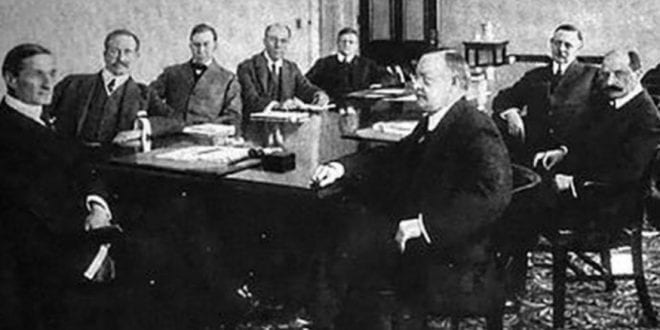
While there appear to be hundreds of competing brands on the market, like Russian nesting dolls, larger parent companies own multiple smaller brands. In reality, all packaged food brands, for example, are owned by a dozen or so larger parent companies. (Feature photo: A rare photo of The Federal Reserve Board of Governors)

These parent companies, in turn, are owned by shareholders, and the largest shareholders are the same in all of them: Vanguard and Blackrock, writes Dr. Joseph Mercola, osteopathic physician, best-selling author and recipient of multiple awards in the field of natural health.

No matter what industry you look at, the top shareholders, and therefore decision makers, are the same: Vanguard, Blackrock, State Street and/or Berkshire Hathaway. In virtually every major company, you find these names among the top 10 institutional investors.

These major investment firms are in turn owned by their own set of shareholders. One of the most amazing things about this scheme is that the institutional investors also own each other.

They’re all shareholders in each other’s companies. At the very top are Vanguard and Blackrock. Blackrock’s largest shareholder is Vanguard, which does not disclose the identity of its shareholders due to its unique structure.

To understand what’s really going on, watch Tim Gielen’s hour-long documentary, “MONOPOLY: Who Owns the World?”

Who Owns the World? Until recently, it appeared economic competition had been driving the rise and fall of small and large companies across the U.S. Supposedly, PepsiCo is Coca Cola’s competitor, Apple and Android vie for your loyalty and drug companies battle for your health care dollars. However, all of that turns out to be an illusion.

Since the mid-1970s, two corporations — Vanguard and Blackrock — have gobbled up most companies in the world, effectively destroying the competitive market on which America’s strength has rested, leaving only false appearances behind.

Indeed, the global economy may be the greatest illusionary trick ever pulled over the eyes of people around the world. To understand what’s really going on, watch Tim Gielen’s hour-long documentary, “MONOPOLY: Who Owns the World?” above.

Corporate Domination

Who Owns the World? As noted by Gielen, who narrates the film, a handful of mega corporations — private investment companies — dominate every aspect of our lives; everything we eat, drink, wear or use in one way or another. These investment firms are so enormous, they control the money flow worldwide. So, how does this scheme work?

While there appear to be hundreds of competing brands on the market, like Russian nesting dolls, larger parent companies own multiple smaller brands. In reality, all packaged food brands, for example, are owned by a dozen or so larger parent companies.

Pepsi Co. owns a long list of food, beverage and snack brands, as does Coca-Cola, Nestle, General Mills, Kellogg’s, Unilever, Mars, Kraft Heinz, Mondelez, Danone and Associated British Foods. Together, these parent companies monopolize the packaged food industry, as virtually every food brand available belongs to one of them.

These companies are publicly traded and are run by boards, where the largest shareholders have power over the decision making. This is where it gets interesting, because when you look up who the largest shareholders are, you find yet another monopoly.

While the topmost shareholders can change from time to time, based on shares bought and sold, two companies are consistently listed among the top institutional holders of these parent companies: The Vanguard Group Inc. and Blackrock Inc.

Pepsi and Coca-Cola — An Example

Who Owns the World? For example, while there are more than 3,000 shareholders in Pepsi Co., Vanguard and Blackrock’s holdings account for nearly one-third of all shares. Of the top 10 shareholders in Pepsi Co., the top three, Vanguard, Blackrock and State Street Corporation, own more shares than the remaining seven.

Now, let’s look at Coca-Cola Co., Pepsi’s top competitor. Who owns Coke? As with Pepsi, the majority of the company shares are held by institutional investors, which number 3,155 (as of the making of the documentary).

As shown in the film, three of the top four institutional shareholders of Coca-Cola are identical with that of Pepsi: Vanguard, Blackrock and State Street Corporation. The No. 1 shareholder of Coca-Cola is Berkshire Hathaway Inc.

These four — Vanguard, Blackrock, State Street and Berkshire Hathaway — are the four largest investment firms on the planet. “So, Pepsi and Coca-Cola are anything but competitors,” Gielen says. And the same goes for the other packaged food companies. All are owned by the same small group of institutional shareholders.

Big Tech Monopoly

Who Owns the World? The monopoly of these investment firms isn’t relegated to the packaged food industry. You find them dominating virtually all other industries as well. Take Big Tech, for example. Among the top 10 largest tech companies we find Apple, Samsung, Alphabet (parent company of Google), Microsoft, Huawei, Dell, IBM and Sony.

Here, we find the same Russian nesting doll setup. For example, Facebook owns Whatsapp and Instagram. Alphabet owns Google and all Google-related businesses, including YouTube and Gmail.

It’s also the biggest developer of Android, the main competitor to Apple. Microsoft owns Windows and Xbox. In all, four parent companies produce the software used by virtually all computers, tablets and smartphones in the world. Who, then, owns them? Here’s a sampling:

  • Facebook — More than 80% of Facebook shares are held by institutional investors, and the top institutional holders are the same as those found in the food industry: Vanguard and Blackrock being the top two, as of the end of March 2021. State Street Corporation is the fifth biggest shareholder
  • Apple — The top four institutional investors are Vanguard, Blackrock, Berkshire Hathaway and State Street Corporation
  • Microsoft — The top three institutional shareholders are Vanguard, Blackrock and State Street Corporation

You can continue going through the list of tech brands — companies that build computers, smart phones, electronics and household appliances — and you’ll repeatedly find Vanguard, Blackrock, Berkshire Hathaway and State Street Corporation among the top shareholders.
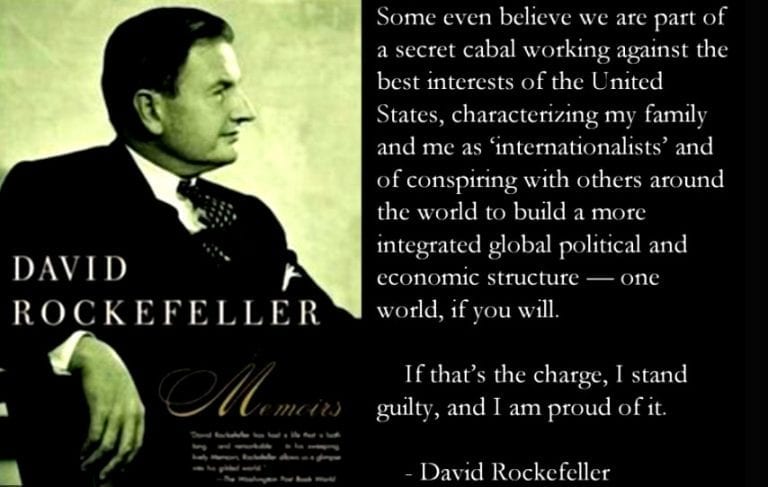
Who Owns the World? A famous David Rockefeller quote, the dream of a global political and economic structure – one world.

Same Small Group Owns Everything Else Too

Who Owns the World? The same ownership trend exists in all other industries. Gielen offers yet another example to prove this statement is not an exaggeration:

“Let’s say we want to plan a vacation. On our computer or smart phone, we look for a cheap flight to the sun through websites like Skyscanner and Expedia, both of which are owned by the same group of institutional investors [Vanguard, Blackrock and State Street Corporation].

We fly with one of the many airlines [American Airlines, Air France, KLM, United Airlines, Delta and Transavia] of which the majority of the shares are often owned by the same investors …

The airline we fly [on] is in most cases a Boeing or an Airbus. Again, we see the same [institutional shareholders]. We look for a hotel or an apartment through Bookings.com or AirBnB.com. Once we arrive at our destination, we go out to dinner and we write a review on Trip Advisor. The same investors are at the basis of every aspect of our journey.

And their power goes even much further, because even the kerosene that fuels the plane comes from one of their many oil companies and refineries. Just like the steel that the plane is made of comes from one of their many mining companies.

This small club of investment companies, banks and mutual funds, are also the largest shareholders in the primary industries, where our raw materials come from.”

The same goes for the agricultural industry that the global food industry depends on, and any other major industry. These institutional investors own Bayer, the world’s largest seed producer; they own the largest textile manufacturers and many of the largest clothing companies.

They own the oil refineries, the largest solar panel producers and the automobile, aircraft and arms industries. They own all the major tobacco companies, and all the major drug companies and scientific institutes too. They also own the big department stores and the online marketplaces like eBay, Amazon and AliExpress.

They even own the payment methods we use, from credit card companies to digital payment platforms, as well as insurance companies, banks, construction companies, telephone companies, restaurant chains, personal care brands and cosmetic brands.

No matter what industry you look at, the top shareholders, and therefore decision makers, are the same: Vanguard, Blackrock, State Street and/or Berkshire Hathaway. In virtually every major company, you find these names among the top 10 institutional investors.

Who Owns the Investment Firms of the World?

Who Owns the World? Diving deeper, we find that these major investment firms are in turn owned by their own set of shareholders. One of the most amazing things about this scheme is that the institutional investors — and there are many more than the primary four we’ve focused on here — also own each other. They’re all shareholders in each other’s companies.At the top of the pyramid — the largest Russian doll of all — we find Vanguard and Blackrock.

“Together, they form an immense network that we can compare to a pyramid,” Gielen says. Smaller institutional investors, such as Citibank, ING and T. Rowe Price, are owned by larger investment firms such as Northern Trust, Capital Group, 3G Capital and KKR.

Those investors in turn are owned by even larger investment firms, like Goldman Sachs and Wellington Market, which are owned by larger firms yet, such as Berkshire Hathaway and State Street. At the top of the pyramid — the largest Russian doll of all — we find Vanguard and Blackrock.

“The power of these two companies is something we can barely imagine,” Gielen says. “Not only are they the largest institutional investors of every major company on earth, they also own the other institutional investors of those companies, giving them a complete monopoly.”

Gielen cites data from Bloomberg, showing that by 2028, Vanguard and BlackRock are expected to collectively manage $20 trillion-worth of investments. In the process, they will own almost everything on planet Earth.

BlackRock — The Fourth Branch of Government

Who Owns the World? Bloomberg has also referred to BlackRock as the “fourth branch of government,” due to its close relationship with the central banks. BlackRock actually lends money to the central bank, the federal reserve, and is their principal adviser.

Dozens of BlackRock employees have held senior positions in the White House under the Bush, Obama and Biden administrations. BlackRock also developed the computer system that the central banks use.

While Larry Fink is the figurehead of BlackRock, being its founder, chairman and chief executive officer, he’s not the sole decision maker, as BlackRock too is owned by shareholders. Here we find yet another curiosity, as the largest shareholder of BlackRock is Vanguard.

Who Owns the World? “This is where it gets dark,” Gielen says. Vanguard has a unique structure that blocks us from seeing who the actual shareholders are. “The elite who own Vanguard don’t want anyone to know they are the owners of the most powerful company on earth.” Still, if you dig deep enough, you can find clues as to who these owners are.

The owners of the wealthiest, most powerful company on Earth can be expected to be among the wealthiest individuals on earth. In 2016, Oxfam reported that the combined wealth of the richest 1% in the world was equal to the wealth of the remaining 99%. In 2018, it was reported that the world’s richest people get 82% of all the money earned around the world in 2017.

In reality, we can assume that the owners of Vanguard are among the 0.001% richest people on the planet. According to Forbes, there were 2,075 billionaires in the world as of March 2020. Gielen cites Oxfam data showing that two-thirds of billionaires obtained their fortunes via inheritance, monopoly and/or cronyism.

“This means that Vanguard is in the hands of the richest families on earth,” Gielen says. Among them we find the Rothschilds, the DuPont family, the Rockefellers, the Bush family and the Morgan family, just to name a few.

Many belong to royal bloodlines and are the founders of our central banking system, the United Nations and just about every industry on the planet.

Gielen goes even further in his documentary, so I highly recommend watching it in its entirety. I’ve only summarized a small piece of the whole film here.

A Financial Coup D’etat

Speaking of the central bankers, I recently interviewed finance guru Catherine Austin Fitts, and she believes it’s the central bankers that are at the heart of the global takeover we’re currently seeing. She also believes they are the ones pressuring private companies to implement the clearly illegal COVID jab mandates. Their control is so great, few companies have the ability to take a stand against them.

“I think [the central bankers] are really depending on the smart grid and creepy technology to help them go to the last steps of financial control, which is what I think they’re pushing for,” she said.

“What we’ve seen is a tremendous effort to bankrupt the population and the governments so that it’s much easier for the central bankers to take control. That’s what I’ve been writing about since 1998, that this is a financial coup d’etat.

Now the financial coup d’etat is being consolidated, where the central bankers just serve jurisdiction over the treasury and the tax money. And if they can get the [vaccine] passports in with the CBDC [central bank digital currency], then it will be able to take taxes out of our accounts and take our assets. So, this is a real coup d’etat.”


The political logic of the junk food revolution

By Jonathan Cook

Source: TruePublica

Here is an article on food whose political implications are really worth considering. We already know that people in western societies, particularly the US and UK, are eating far too much junk food, and that this leads to an epidemic of obesity, heart disease and cancer.

But the latest research not only reveals the extent that “ultra-processed” foods have come to dominate our diets in Europe – now comprising more than half of what Britons eat, for example – but raises the question of what effects the consumption of this much junk food will have on our behaviours.

The nutritionists here are reluctant to offer even well-informed speculation, which always seems to be the case with publicly funded scientists until things have moved beyond a critical point. Think of smoking and climate change: we usually learn much later that the corporations’ own pet-scientists had done the research decades earlier proving or predicting exactly what was coming.

But there are hints from the nutritionists to the Guardian of what might be going on:

“People are missing out not only on vitamins and minerals but also bioactive compounds found in natural foods such as phytoestrogens and fibre.

And then you get salt and starch and sugar and fat and all these additives. We are consuming every day an amount of new substances that are these flavours and colours and emulsifiers and we don’t have any idea as to what will be the problem of these items,” [Professor Carlos Monteiro from the University of Sao Paulo in Brazil, who led the research team] said. …

Other cumulative effects of eating these industrially-made substances are not yet known. “The honest answer is we don’t know what is going on,” said Monteiro.’

Here is an educated guess, based in part on experience and in part on the economic and political logic of our current junk food revolution. (Those of us who eat these industrial substances rarely enough that they do not dominate our diets still have a sense of what happens to us on the occasions we do.)

These lab-created, nutritionally empty substances that our bodies have not evolved to digest not only make us physically sick, but emotionally and mentally sick too: addicted, depressed, lazy, sluggish, docile and anxious.

In fact, a mess of emotions that transforms us into the perfect consumers, buying more of this cheap, harmful “food”. That boosts both the profits of food and other corporations and the electoral fortunes of crowd-pleasing, money-grubbing, vacuous politicians who wish to serve those corporations.

That is how an advanced capitalist system – premised on a psychopathic drive by the strongest to maximise profits by exploiting the weakest – will naturally evolve. It needs to make us as dependent, as passive and docile, as possible.

Soylent Burgers and Cockroach Milk

wICCXTa

Source: The Hipcrime Vocab

“The profitability of production cannot expand indefinitely. Any increase in the quantity of soil, water, minerals, or plants put into a particular production process per unit of time constitutes intensification. It has been the burden of this book to show that intensification inevitably leads to declining efficiencies. That declining efficiencies have adverse effects upon the average standard of living cannot be doubted.’
-MARVIN HARRIS, ‘Cannibals and Kings’

This comment made me chuckle: “The futurology future is starting to look worse than the collapse future.” This was on Reddit in response to an article about cockroaches providing the “milk of the future”:

Scientists think cockroach milk could be the superfood of the future (Science Alert)

This really does seem like The Onion at this point. Someone suggested that Reddit’s collapse and futurology boards should merge at some point. Believe it or not, they aren’t all that far apart.

We’ve already been treated to an endless litany of articles about how insect ranching will provide the protein of the future. Then there’s the meat grown in a petri-dish, and the nutrition shake cheekily named Soylent scarfed down by the Silicon Valley crowd so they can cram in a few more hours of work after popping their Ritalin. Now people are questioning whether the government should step in and force us to eat less meat.

And yet we are still simultaneously told that overpopulation and resource depletion are not a problem, and that more growth is good.

This is progress???

One of the things I’ve written about over the years is this idea that technological innovations are inherently good. But it’s clear what’s really going on: desperately trying to maintain the status quo in the face of increasing population pressure and declining resources. There’s a technical term for this: intensification.

Marvin Harris, whose works serve as a guidepost for this blog, warned us that intensification always leads to lower living standards for the majority of people in the long run, while only benefiting a tiny handful. This is a law of history. Over the years, I’ve tried to point out the difference between true innovation which solves problems or allows us to do things we could not do before, and intensification, which is essentially squeezing blood from a stone. In the former category are things like antibiotics and radio, which solve problems (killer infections) or allow us to do new things (communicate globally). In the latter category are things like electric cars (attempting to keep the unsustainable automobile infrastructure alive) and aquaculture (to make up for stripping the oceans bare of wild fish).

For the majority of people, there is no difference, since both are “growth” and growth is always good, full stop. GDP, the yardstick by which we measure progress in the modern world (which even its creator warned us against) is agnostic as to the source of growth, whether it is producing more food to feed hungry people or asthma inhalers to deal with the lung irritants from air pollution.

People tend to forget we’ve been here before.

Back during the Ice Age (late Pleistocene), we H. sapiens lived primarily off of herds of large fauna, especially reindeer, mammoth and bison. This was supplemented with wild salmon in season. The fattiest parts of the animal were the most prized and sought after. Bones were cracked and boiled to extract the grease. Most calories came from nutrient-dense meat and fat, while plants were consumed for their beneficial vitamins and minerals (plants are less calorie dense).

Then the large fauna started to die off. They died off due to a double-blow of a changing climate and increasing human predation. Scientists debate about which was the primary cause, but it’s pretty clear that whenever humans showed up in a pristine environment, the large animals went extinct shortly thereafter. Many of these animals had survived previous climatic changes, so it’s doubtful that climate change alone was responsible. Skeletons riddled with spear points provide more damning evidence for our species.

In response, we launched a broad spectrum revolution – using our omnivorous diet to exploit a wider variety of foodstuffs, particularly plant foods. This began with acorns and pistachios, but soon moved to grass seeds, sedges and pulses. Meanwhile, the prey animals got smaller and smaller, from reindeer and bison, to gazelles and fallow deer, to hares and waterfowl. Instead of the nutritious and diverse food sources of their ancestors, we became more and more dependent upon eating pulverized grass seeds, obtained at the cost of backbreaking labor for harvesting, threshing and grinding.

The human population became mostly vegetarian by necessity, and remained so for roughly the next 8,000 or so years. The problem is, a vegetarian diet doesn’t provide a lot of necessary vitamins, minerals and nutrients for optimal health. Today’s vegetarians can choose from a plethora of foods year round that simply weren’t available to ancient people. They don’t have to worry about what is in season and have the entire world as their larder. In the past, however, the vast majority of people ended up subsisting on a diet of weak beer and gruel. Regular meat consumption became a privilege restricted to the wealthy upper classes, while everyone else went begging. Hunting, an activity once done by all humans everywhere since time immemorial, became the exclusive provenance of kings and princes – society’s rulers. While it is true that too much meat can be detrimental to health, too little is perhaps even more damaging. Humans are meat-eaters, and a certain level of fat and protein is required for optimal health. The protein in grains and legumes is incomplete (the body needs 22 different types of amino acids to function properly; adults can synthesize 13 of those internally, but the other 9 must be obtained from food), and there are no fats (the human brain is over 60 percent fat). Grains produce an over-abundance of omega-6 fatty acids, poisonous lectins to prevent their consumption, have low nutrient density, and high acidity. They are actually a terrible thing to base a primate diet around. But we had no other choice, thanks to intensification.

And this is dramatically reflected by the skeletons of ancient peoples, who show major signs of malnutrition, disease, and stunted growth. At the same time, arthritis and other signs of wear and tear make their appearance on the bones of people who now have to spend hours a day grinding grain in a saddle quern rather than fishing and chasing after wild animals. This gruel also breaks down into simple sugars in the mouth during digestion, meaning that cavities and premature tooth decay became endemic as well.

As population pressure grew, grains, pulses and sedges, once “unpalatable” dietary supplements cultivated by hunter-gatherers for times of extreme scarcity or fermentation into medicinal beverages, became the chief dietary staple for most people. At the same time, humans found themselves preyed upon by a new class of predator: their own kind, which continues unabated to this day.

In order to keep large herbivores from going totally extinct, we embarked upon what Harris called “the greatest conservation project in history”: animal domestication. Meanwhile, cheap carbohydrates from grain are what kept most of the human population alive from day-to-day for thousands of years, such that “bread” is synonymous in all ancient cultures with “food.”

All this came from attempting to exploit resources more intensively from our environment in the face of increasing population pressure.

This sad tale, memorably spun by Jared Diamond some years ago, reflects Harris’ principle: intensification inevitably leads to benefits for the few; misery and oppression for the many.

During periods of deintensifcation, we actually recovered some of the losses. This was due to either 1.) a reduced population or 2.) new lands and resources opened up for exploitation. For example, signs of health improve after the Black Death in Europe for the survivors, due to the reduced population pressure. There were more resources to go around per head. Also, the opening up of the new lands due to colonization (and the dieoff of the native peoples), brought vast new areas of virgin land under cultivation. This led to more wealth, as well as political freedoms. Serfdom waned after the black death, and the American Revolution put Enlightenment principles of representative democracy and justice into practice. Perhaps the most dramatic result came from the harnessing of millions of years of stored sunlight in fossil fuels, combined with the scientific method. This allowed many more people a higher standard of living, even in the face of increasing population and intensifying resource use. It was during this period that “economics” became the guiding principle of our civilization, and it chalked up all benefits to “institutions”–typically capitalist market institutions–rather than a temporary superabundance of energy and resources.

Thomas Jefferson once noted that the Americans in the room were all a head taller than their European counterparts. That’s what happens when you have plenty for everybody. The first Europeans in North America also noted how much taller the Native Americans were. As this article notes, in the past, Americans ate more meat than today, and were healthier as well:

How Americans Used to Eat (The Atlantic)

Eventually, the Malthusian cycle kicked in again. Population grew, the empty spaces filled up, and the frontier was closed. Increasing competition caused wages and purchasing power to drop. People gradually lost what self-sufficiency they had, allowing the elites to consolidate power. People once again began working longer, harder, for less. Sound familiar?

We intensified again – in order to keep up with the demand for meat, we crowded animals together into feedlots in unsanitary conditions and fed them cheap corn (maize), which they are not adapted to eat. To cope with the inevitable sickness which resulted, we pumped the animals full of antibiotics (which has a side effect of increasing growth). It is these miserable and tortured animals which most of us are forced to eat now, thanks to intensification.

However, domesticated meat is less nutritious than the wild variety. The Omega-3/Omega-6 profile is altered, and there are less antioxidants. Omega-6 fatty acids reduce inflammation, which is increasingly being pinpointed as the root cause of just about every disease you care to name, from autoimmune diseases, to Alzheimer’s, to arthritis, to chronic pain, depression, and cancer. At the same time, it’s been shown that grains actually increase inflammation, and are implicated in a host of metabolic diseases:

This Is Your Brain on Gluten (The Atlantic)

While grass-fed, hormone-free beef is still available, it costs more, meaning it is restricted to those with high incomes, just like in the past. And hunting is still primarily an elite sport for the rich in many places (especially outside North America). Just like in the past, the poor people trapped in “food deserts” feed themselves with cheap carbohydrates, now in the form of processed corn and sugar products made by the industrial food system, while the wealthy can purchase boutique ‘lifestyle” products at Whole Paycheck Foods.Malnutrition now takes the form of obesity as well as starvation, although much of the non-industrialized world still deals with empty bellies, stunted growth and vitamin deficiencies, including many of those who produce export crops for the West. That’s on top of poverty and pollution.

When we scraped the oceans clean of fish and poisoned our air and waterways due to industrial pollutants (e.g. mercury ash is a side effect of coal power generation) we turned to fish farming, (aquaculture) – one of the favorite high-tech “innovations” of the futurist crowd. But farmed fish are nutritionally inferior to wild ones. Wild fish travel widely and get their food from a great variety of sources. This means that they have a much better Omega-3 fatty acid profile (which prevents inflammation and helps brain growth). But farmed fish have to be fed. This means their diet is far more restricted, and hence their meat less nutritious (more Omega-6’s). In fact, salmon needs to be fed a pill in order to turn them pink so that consumers will buy them since their meat does not develop its natural color from their diet. As Spencer Wells notes in Pandora’s Seed, were now doing for fish what we did for ungulates some 8000 years ago: a desperate attempt to preserve what remains. Farmed fish is replacing wild fish in supermarkets. As with grass-fed meat, the wild variety is now sold at a premium affordable only to those with high incomes (sound familiar)?

In each and every case, intensification had led to far more work for ultimately inferior products. This is always the result of intensification in the long run.

We are constantly told we can’t go back to hunting and gathering (even if we wanted to). Why is that? What’s left unsaid is the reason: too many people and too much environmental degradation as the result of 6-8,000 years of intensification, which also brought about disease, governments, wars, taxes, poverty, inequality, and so on. Now we’re told we’ve got to eat less meat (which means more grains), live in small, tightly sealed houses, use less water, take shorter showers, and so forth. In essence, that we will “innovate” our way to success. But all of these are signs of lower living standards. And no wonder: seven billion-plus people, all quarters of the earth occupied and brought under the plow, rain forests being chopped down, the most easily accessible fossil fuels plateauing, toxic pollution of the air, land and water, overpumping of ground water, and the stable climate of the Holocene threatened by carbon levels. Intensification caused all of these things; it is not the solution. The next phase of intensification isn’t going to lead to better living standards any more than the last few rounds. Yet we’ve been tricked into thinking it will, because we don’t realize that fossil fuels are what are ultimately responsible for our current living standards (us Westerners, that is), not intensification. And even then, given the levels of stress, overwork, social dysfunction, health maladies and mental disease in industrialized societies, we might be tempted to wonder if even our living standards are all that great to begin with.

Furthermore, we are told that a healthy diet centered around pastured meat, plants and nuts is just not possible because it’s too damaging to the environment, or too “expensive.” That is, “we” need to “feed the world!” But according to the elites (the ones who benefit from intensification, remember) the answer isn’t less people, or curtailing economic growth. No, instead it’s new “innovations” that are profitable to the parasitical corporate owners of this planet: lab-grown meat, hydroponics, vertical gardens, meal-replacement shakes, protein powder from ground-up crickets, steel-and-glass human anthills. “The futurology future is starting to look worse than the collapse future.” Maybe that’s because the collapse future has more room to grow actual real food, live in a house you built yourself with your friends and family, spend time in nature, work less, play more, and get in touch with what we really are, deep down, instead of what industrial society wants to mold us to be.

Now, for the record, I have no problem with eating bugs. The Permaculturist in me says we should exploit all sources for sustenance in our environment such that they work together in a sustainable, harmonious way in line with the earth’s natural ecosystems. Raising insects, as we now do with bees, makes sense. And, yes, the overconsumption of Americans is grotesque and makes us unhappy, and we’d be better off ditching it (which I already do voluntarily). So to be clear: what I am criticizing is not eating insects or deriving milk from cockroaches per se. Nor am I defending the overconsumption produced by status-driven consumer capitalism. Rather, I am critiquing the idea that these futurology trends are signs of progress rather than collapse. Which is why r/collpase and r/futurology increasingly appear to be turning into the same thing.

P.S This comment nails it.


68 Monsanto-Owned Companies To Boycott

9hamburg_germany

(Editor’s Note:  Tomorrow marks the 4th annual international March Against Monsanto. Whether or not you participate, you can take action in solidarity all year round by refusing to buy products from the companies listed below.)

Monsanto Company Inc. is a well-known, American-owned, multinational agrochemical and agricultural biotechnology corporation. It has been a leading force behind the widespread use of genetically modified seeds, the production of GM food products, and the development and application of associated chemicals.

Specifically, Monsanto’s infamous contribution has been Roundup, a glyphosate-based herbicide that is promoted as safe and harmless to humans, but is believed by a multitude of experts to be quite the opposite. While the company’s GMO seeds are advertised as requiring a reduced use of pesticides, this has been exposed as a false claim. The company also previously produced such evils as the insecticide DDT, PCBs, Agent Orange, aspartame and bovine growth hormone.

All of these chemicals are considered by many to be a threat to global ecosystems, water safety and biodiversity. The residues of Roundup, which remain in genetically modified foods, are believed to cause many dangerous effects to human health, including the death of embryonic cells and extreme damage to the intestinal microbiome.

These foods are ubiquitous, with soy, maize, corn, sorghum, canola, alfalfa and cotton being largely contaminated with Roundup. In a world of modern processed foods, a surprising majority of ingredient lists contain at least one of these items. Many forward-thinking companies and restaurants are now excluding GMOs from their product offerings.

Even more upsetting is that the processed foods containing GMOs are often targeted toward children. Check out this link for a video of Daniel Bissonnette, a nine-year-old Canadian boy who asks why children in particular are subjected to the most toxic food by our society.

Tami Monroe Canal, founder of the worldwide March Against Monsanto movement, sums up the issue by saying, “Monsanto’s predatory business and corporate agricultural practices threatens [this] generation’s health, fertility and longevity.”

Here is the list of companies and brands that are either owned by Monsanto, or are known to use genetically modified seeds sold by Monsanto:

  • Aunt Jemima
  • Aurora Foods
  • Banquet
  • Best Foods
  • Betty Crocker
  • Bisquick
  • Cadbury
  • Campbell’s
  • Capri Sun
  • Carnation
  • Chef Boyardee
  • Coca-Cola
  • ConAgra Foods
  • Delicious Brands cookies
  • Duncan Hines
  • Famous Amos
  • Flowers Industries
  • Frito Lay
  • General Mills
  • Green Giant
  • Healthy Choice
  • Heinz
  • Hellmann’s
  • Hershey
  • Holsum
  • Hormel
  • Hungry Jack
  • Hunt’s
  • Interstate Bakeries
  • Jiffy
  • KC Masterpiece
  • Keebler
  • Kellogg’s
  • Kid Cuisine
  • Knorr
  • Kool-Aid
  • Kraft
  • Lean Cuisine
  • Lipton
  • Loma Linda Foods
  • Marie Callender’s
  • Minute Maid
  • MorningStar Farms
  • Mrs. Butterworth’s
  • Nabisco
  • Nature Valley
  • Nestlé
  • Ocean Spray
  • Ore-Ida
  • Orville Redenbacher’s
  • Pepperidge Farm
  • Pepsi
  • Philip Morris
  • Pillsbury
  • Pop Secret
  • Post cereals
  • PowerBar brand
  • Prego
  • Pringles
  • Procter & Gamble
  • Quaker
  • Ragú
  • Rice-A-Roni & Pasta Roni
  • Schweppes
  • Weight Watchers Smart Ones
  • Stouffer’s
  • Tombstone frozen pizza
  • Totino’s
  • Uncle Ben’s
  • Unilever
  • V8

So what is a concerned consumer to do? We recommend getting on the organic train, and staying there. Certified USDA organic products do not contain GMOs and are therefore safe for consumption. However, certain processed organic foods may still be owned by Monsanto. That’s why it’s even more important to buy local, seasonal organic produce and free-range, pastured animal products from small brands that you know and trust. Anything that comes in a box, bag, can or package is better left alone.

If you do choose to buy packaged foods, try using an app such as Buycott, which is able to determine the “family tree” of a company and let you know if it is associated with Monsanto. Then you can pop that product back on the shelf and choose a different one. Boycotting these companies and brands will strengthen the force against the dangerous agricultural practices they are promoting.

We encourage you to join the movement against Monsanto and say “NO!” to everything it represents by boycotting these products. Learn more about anti-GMO efforts here.