This article will certainly contain spoilers. You have been warned.
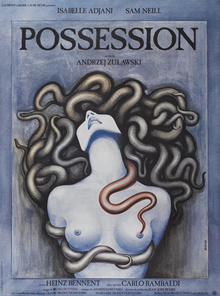
There is so much to say about Possession (1981). It was written and directed by Polish filmmaker Andrzej Zulawski. First of all, this film is difficult (but not impossible) to find. It’s worth the effort though. It’s currently showing at Metrograph theaters, and may be available on their streaming platform. I have not seen it on a big screen but I think that would be the ideal way to see it, if you aren’t susceptible to panic attacks.
Possession doesn’t fit cleanly into any specific genre. It’s equal parts drama, thriller and horror…maybe with a sprinkle of sci-fi. If you haven’t seen this movie, it starts out with a husband and wife who are dealing with infidelity and separation. But it devolves into something nightmarish, feverish and horrifying.
Right off the bat, we have to discuss Isabelle Adjani’s performance. It’s intense and exhausting and a performance that will stick with me for a while. Adjani has many memorable scenes, but one that comes to mind is when her character, Anna, enters a subway. Her continuous panting and heavy breathing (reminiscent of Midsommer), slowly erupt into screaming, laughter and blood and…so much more. The physical toll that this roll must have taken on Adjani is immense. There is no reprieve for the actors.
Everything about Possession is exaggerated, which makes some of the scenes hard to watch. But at its core, the allegory is quite clear. The monster which we are introduced to about halfway through the film represents the resentment and growing agony of divoce. Zulawski turns this common experience into grotesque body horror and upsetting desire. Though, I am sure you could watch this film over and over again and find new meanings and layers.
The film also stars Sam Neill in the role of the husband. Adjani plays her own doppelganger, as does Neill. The doppelganger element creates a circular, never ending pattern. A fairly unfavorable take on romantic relationships. Essentially, as one attraction wanes, another waxes. Side note: Zulawski did go through a divorce before he made Possession. Not very surprising.
It’s a film that’s meant to invoke a very specific emotional reaction from the audience. In a lot of ways it reminded me of how I felt watching Aronofsky’s Mother!. Both Mother! and Possession are films that I like and respect, but do not necessarily enjoy watching. But these films aren’t meant to be entertaining, they’re meant to take you on a very specific, guided emotional journey.
Beyond the plot and acting, the filmmaking is stunning. The cinematography is dizzying, in a good way. Often the camera moves freely around the actors, bringing additional elements to the drama that’s unfolding, One of the final scenes is filmed in dramatic vignette. Other shots are stark and clinical, until they are blood soaked. The filmmakers use sound here in a unique way. The actors breathing or moans or over the top noises add another layer to the soundtrack and rhythm of Possession.
In one of the final moments of the film, the husband and wife’s bloody pre-death kiss, was one of the hardest to watch for me. Not to mention the way Anna bends her arms backwards to try to end them both. A tragically horrifying yet somehow fitting end.
From a filmmaking perspective, Possession (1981) should be on everyone’s must-watch list. But it will soon also be on your what-the-fuck-did-I-just-watch list. Possession is like being in a bad dream. From the start, the way the actors move is slightly off. They always seem to be wearing the same outfits day to day, or very similar colors. The way the plot unfolds is familiar but surprising. It lures us in under the false-pretense of a drama and whacks us over the head with body horror and tentacle fueled sex scenes. Only to leave us with a cynical feeling about love and modern relationships.
Possession was nominated for the Palme d’Or at Cannes in 1981. Though it didn’t win, Isabelle Adjani won best actress that year at Cannes for her role. Andrzej Zulawski has said that he makes films about “what is torturing” him. I think Possession is an excellent example of a highly successful exploration of one’s person torture. So be warned, what you’re feeling at the time you watch this film will undoubtedly impact how you perceive it.
Possession begs us to ask the question, who really is the bad guy?
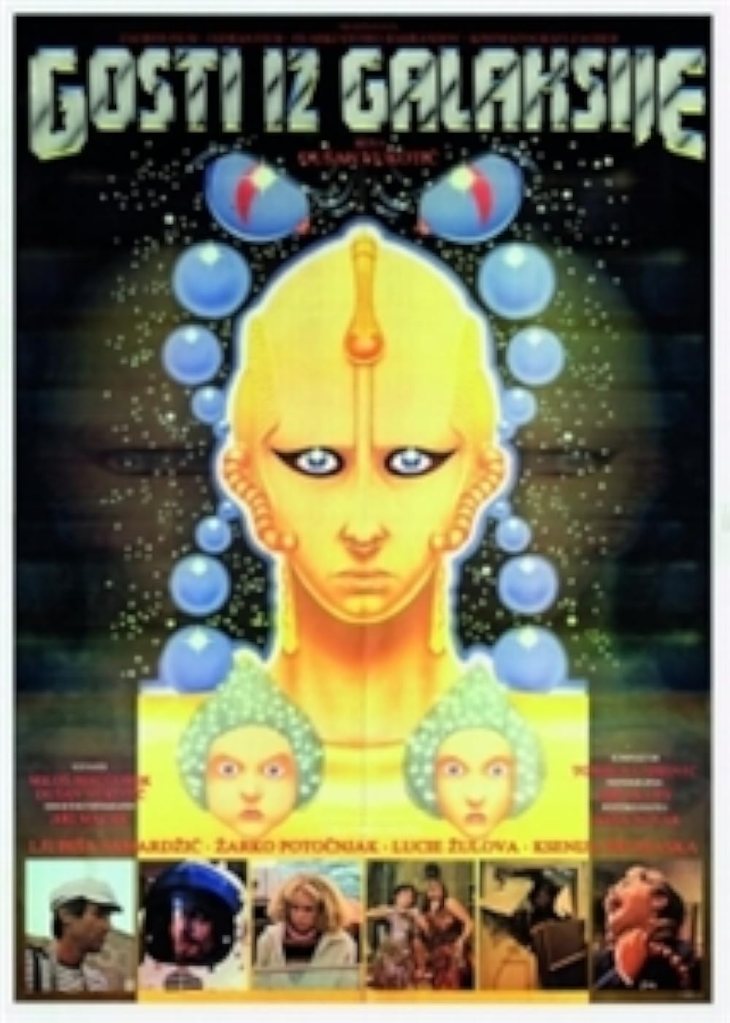
Stumbling into something new while seeking out material for this site is always an exciting experience—and nothing demands my attention like the phrase “weird Yugoslav-Czechoslovak Science Fiction movie from the early eighties.” Visitors From the Arkana Galaxy (sometimes referred to by the more nondescript title Visitors from the Galaxy) is definitely a weird one, and has only found wide distribution in English-speaking countries in the last year thanks to Deaf Crocodile Films—its combination of unvarnished eighties European settings and borderline surrealist storytelling makes for the kind of cult-ready object that modern boutique film distributors regularly gift to us. Shifting between exaggerated reality and extreme fantasy, Visitors has something of a satirical edge, and combined with its bizarre visuals, you can really tell that director Dušan Vukotić comes from an animation background (the movie was partially produced by prominent Croatian animation studio Zagreb Film.) To further invite attention—my attention in particular—there is a prominent monster element that was designed and partially animated by stop motion animation master Jan Svankmajer before he gave us such classics as Alice and Little Otik.
Opening with a blur of space age imagery and an enrapturing wash of seventies Sci-Fi synth by Tomislav Simović, the kind of music that embodies the style’s simultaneously unnerving and soothing qualities, the dreamy sensory experience shifts to the earthbound, where we meet aspiring Sci-Fi writer Robert Novak (Žarko Potočnjak), who can evidently only begin to craft his literary opus by putting on a space helmet and speaking passages into his voice recorder. In what turns out to be a story about the struggle of seeking one’s artistic dreams, Robert’s writing is interrupted by his neighbours—which includes a fellow artist, the aspiring journalistic photographer Toni (Ljubiša Samardžić), and his mother—and his girlfriend Biba (Lucié Žulova), who thinks he’s spending too much time with his fictional characters and not enough with the real people in his vicinity. There’s a bit of nuance to this depiction of an artist’s life: Robert’s need for escape is established not just through the people hectoring him while he writes (although he’s clearly also suffering from writer’s block as well), but from the scenes where we see his unfulfilling job at the front desk of a hotel, badgered by his boss and swarmed by the tourists that flock to his city. At the same time, Biba does have a point about his growing disconnect, and she is also shown to have her own issues (living in an apartment with her own set of annoying neighbours and an overprotective older sister), providing enough depth of detail to prevent her from just being a hectoring girlfriend. I do think she is allowed some hectoring, though, when his android creations from the planet Tugador in the Arkana galaxy—Andra (Ksenija Prohaska) and the child-like Ulu (Jasminka Alic) and Targo (Rene Bitorajac)—appear in the real world and, among other things, briefly transform her into a small cube.
Robert’s creations first contact him through his recorder, bringing him to a small island off the coast near his hotel job to find them. That first encounter is so disturbing to him that afterwards he visits a psychiatrist, and in conversation reveals that he possibly possesses the mental power of tellurgy, creating physical objects with his mind. This explanation ends up being as weird as the aliens: Robert tells a story of how, as an infant, he materialized working breasts on his single father in order to be fed. That establishes the way in which the aliens could become real, and soon Robert returns to the island with Biba just to have proof that he is not going insane, and both witness Andra experimenting on the island’s lone security guard by removing his heart, followed by all the business with the cube.
You can probably tell that there would need to be a very careful handling of tone to keep this series of baffling events from going off the rails, and to its benefit, Visitors finds that balance, mostly by varying the comedy. Sometimes, the humour comes from normal people somewhat realistically reacting to unbelievable events, while other times both the “normal” people and the Sci-Fi elements are equally absurd. The latter is frequently deployed with every human character other than Robert and Biba, who are regularly portrayed as cartoonish buffoons who react to the alien presence with numerous bizarre assumptions—for example, when all the tourists at the hotel decide to track down the extraterrestrial trio on the island, one woman convinces the rest that only way to show the aliens that they “have nothing to hide” is to take off their clothes, leading to moments of very European comedy where it’s just a crowd of stark naked people walking around a cave.
For the most part, Andra just wants to hang around with Robert in order to learn about human emotions—eventually she shows up in his apartment and begins vacuuming the floor with her arm (one of the more whimsical moments of Svankmajer stop motion)—and that inevitably causes problems for Biba, especially after she walks in on them touching each other, making the background erupt into orgasmic green static. From the beginning, it’s not hard to figure out why Robert thought up Andra in the first place, and any concern he has with his creations mucking up his real life is pretty quickly put aside when the benefits make themselves clear. Robert and Biba fight over this, but neither is truly made out to be totally in the wrong.
If anyone comes close to being an antagonist in this story, it’s Targo, an aryan-looking little cretin who apparently took exception to Robert’s decision earlier in the movie to remove him from his novel and replace him with a monster named Mumu, at the behest of his book seller friend who tells him that readers want scary stuff (the author they keep bringing up as a point of comparison has the amusing name “Hover Decklerd”, who I don’t think is real?) So, for the rest of the movie, when he isn’t chasing after people in his spherical blue space vehicle, Targo is finding opportunities to summon his monstrous replacement to terrorize people—it starts out in the form of a small toy, because Robert had the idea that the monster should be “some insane toy” (an idea dismissed by his friend for being too cutesy I guess), and then grows into a person wearing perhaps the most indescribable monster costume you’ll likely see. It is abstract art come to life, like a fusion of HR Giger and the expressionist movie posters from Europe that you see posted online from time to time, unique and disgusting in such a way that the fact that it’s an old school person in a monster costume simply doesn’t register. While this obviously means that Mumu is not purely a creature of Svankmajer’s nightmarish animation like Little Otik, he does provide suitably horrific flourishes for certain shots, like a pair of eyeballs that pop out of its pectorals. For something that is obviously not a big budget affair, its combination of somewhat tongue-in-cheek cheesy Sci-Fi visual effects and genuinely imaginative ones matches the tone of the movie, and can even be held up as something that feels genuinely otherworldly at times.
The monster makes only fleeting appearances throughout the movie, giving us a chance to look at its bizarre design but never long enough to see it actually do anything, but it gets to be front-and-centre in the climax, where Targo’s machinations lead it to break into a wedding party in Biba’s apartment. This is a very long sequence of escalating destruction and borderline horror moments that are intentionally undercut with gags—a man has his head torn off, and another’s head is flattened into a rubber dummy, but both treat it more like an inconvenience. The implication throughout this extended monster rampage sequence is that Mumu is not actually violent in nature—at first, it seems more interested in using its fleshy proboscis to sniff flowers—and that is probably the way Robert himself imagined it. However, as it is attacked by the terrified onlookers, it either defensively or even accidentally maims and kills them in response, the result of its strange alien anatomy (it burns down a room with flamethrower breath just so it can dislodge a fork in its throat.) The guests at the party argue over whether to shoot the creature or try to make peaceful contact with it, neither approach getting them anywhere—in attempting to make friendly gesture, the psychiatrist from earlier in the movie has his hand chomped off by a toothy stomach-mouth in a moment that presages a certain famous horror effect in John Carpenter’s The Thing, released not long after this. The whole sequence, while offering the exact kind of violence and thrills that Robert was encouraged to put into his novel, is actually more a comedy of errors.
The shifting, borderline contradictory nature of those moments brings us back to the way this movie handles Robert’s creativity. What little we hear of his novel seems mightily cliched—aliens coming to Earth to learn deeper truths from our primitive civilization (that beings like Targo view with disdain) is certainly not award-winning material, and even the idea that a man disappointed by life would imagine a beautiful robot woman that dutifully loves him shows Robert to be pretty basic. But even though he willingly tries to change his story to match the tastes of mainstream readers, there’s a naive purity to his imagination, a desire to explore a universe full of interesting and well-meaning beings. In his vision of reality, it makes sense that the monster would not be as nasty as it appears, and that there would be hyper-convenient time-rewinding power that allows them to undo all the horrific damage his tellurgy might have accidentally caused. Robert is someone who uses his imagination to make something that is nicer than what he has, and it’s no surprise that the movie ends with him going back to the Arkana galaxy with his alien creations—giving halfhearted promises to Biba that he might come back at some point—finally finding a place where he can live out the fantasies he’s been crafting. Abandoning everything and everyone to live out his fantasy is not a choice that necessarily reflects well on him, but in that way it accurately reflects both the positive and negative aspects of spending so much time in your own head.
Part of the appeal of Masters of Horror has been the chance to see things on this Showtime series that you won’t see anywhere else on television. So far, that has mostly meant explicit gore, nudity and sexuality, which is all fine and well. But Joe Dante’s Homecoming, premiering December 2, treats us to sights that are not only unique in the TV horror genre, but have been off-limits anywhere else on the tube as well. Like, f’rinstance, rows of flag-draped coffins bearing the bodies of dead soldiers killed in a Mideast war.
Yes, Dante is back in horror-satire mode, and this time he and screenwriter Sam Hamm (adapting the short story “Death and Suffrage” by Dale Bailey) are directly taking on a target that the rest of TV-drama-land and mainstream Hollywood has heretofore largely danced around. The result is as pointed, clever and blackly amusing as anything the genre has seen in ages, a perfect example of horror’s ability to address subjects too touchy to deal with in other genres. It also takes the political subtext of George A. Romero’s Dead series and puts it right up in the forefront, without becoming preachy with its message. Dante and Hamm manage the tricky balancing act of shining a harsh light on current events without losing sight of the fact that they’re telling a horror story first and foremost.
Hamm’s script takes place in the near future, specifically 2008, when a certain Republican president is running for re-election and a war he duped the nation into fighting still rages on. The central characters are campaign consultant David Murch (Jon Tenney) and right-wing author Jane Cleaver (Thea Gill), who has written a popular book attacking the “radical left”—any resemblance to Ann Coulter is, uh, purely coincidental. After meeting on a dead-on parody of an issues-oriented talk show (Terry David Mulligan is perfect as the host), the two find themselves politically and romantically attracted—but their world is shaken up when the dead begin returning to life. Not all the deceased, mind you, just those who were killed in that particular overseas combat, and they’ve got a particular—pardon the pun—ax to grind. It’s an extrapolation of the Vietnam-era ghoul film Deathdream to the nth degree—the image of the first revived corpse pushing its way out from under the Stars and Stripes that cover its casket is the most pointed and arresting image the genre has recently offered.
No more should be said about the plot particulars of Homecoming, which is packed with wonderful details and images; given a document to read, a zombie missing an eye puts on a pair of glasses with a shot-out lens. The way in which Dante and Hamm keep the story twists coming, never losing steam or running in place thematically or dramatically, is kind of breathtaking; every scene has a revelation or line of dialogue that adds new dimension to either the story or the satire. The actors (also including Dante regular Robert Picardo as a political advisor with a secret of his own) adopt just the right tone of straight-faced earnestness, selling every line and never winking at the camera. The behind-the-scenes craftspeople do a good job of substituting Vancouver locations for the D.C. area (this is also the most expansive-looking Masters yet), and Greg Nicotero and Howard Berger contribute undead makeups that get the points across (like that eyeless ghoul) without being showy.
As the film goes on and we learn more about the characters (particularly Murch), Homecoming’s antiwar message gains new levels of resonance, and it comes to a stirring and completely apt conclusion that perfectly ties up the assorted story threads. And even though horror fans are the species of television viewer least likely to be conservative, you don’t get a sense of preaching to the converted here; the writing and filmmaking are so sharp, even some red-staters might respond to the material. For the second year in a row, a satirical zombie project stacks up as the year’s best horror production; here’s hoping someone in Hollywood notices, and gives Dante a shot at a feature that will show off the skills that, on this evidence, are only becoming sharper with time.
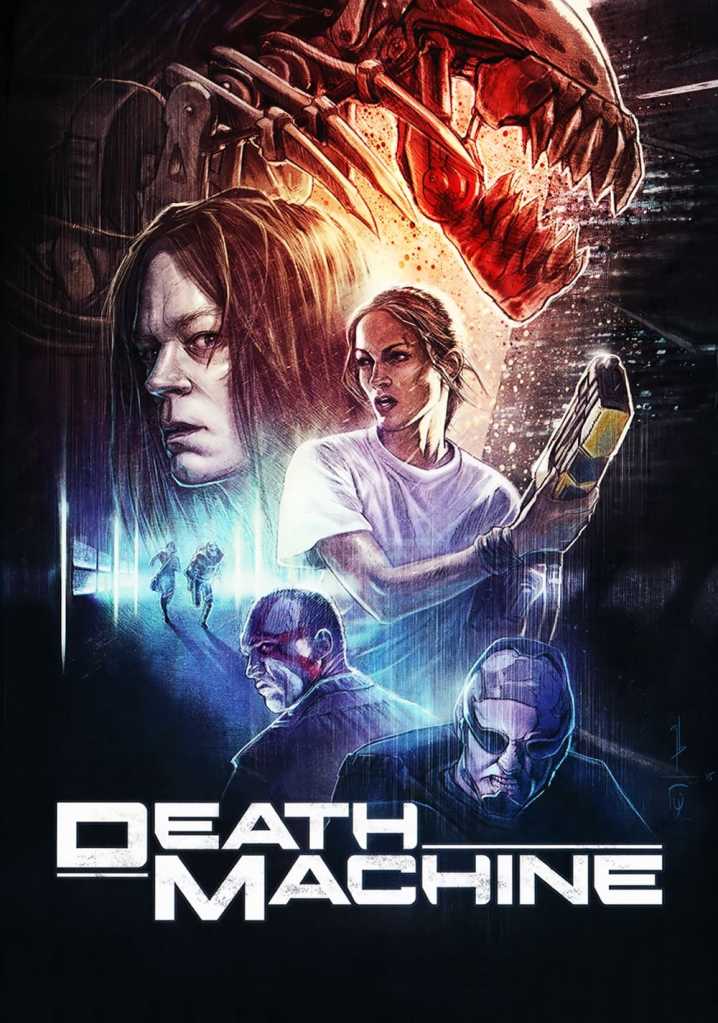
A weapons manufacturer tries to cover up its mistakes with a super soldier program while a morally sound executive does her best to uncover their evil plot and the scientist behind it all plots to maim and destroy it all. Let’s dig into 1994’s “Death Machine”, directed by Stephen Norrington!
AS I SEE IT
The directorial debut from Stephen Norrington, and reportedly the effort that landed him the director’s chair for Blade, Death Machine is a good movie with an arsenal of flaws.
Set in the future, which is now past, 2003, we follow the company Chaank that provides military weapons. Their failed Robocop-like super-soldier suit has malfunctioned and caused a slaughter of civilians. Now they’re back to the drawing board, so to speak, though the bottom line is always more important. In steps Scott Ridley who instructs the board they will just be pivoting.
The mad scientist behind the creation, Jack Dante, secretly creates a psycho-death bot named Warbeast. And once the fun starts, this metal death force shreds everyone in its path.
The story has interesting points, such as the evil corporation, the righteous humanist alliance, and the mad genius hellbent on domination. But the acting and script fall off a cliff a little more than halfway through the film. The sets are great, and the animation on the Warbeast is chaotic and amazing, which makes sense because the Director used to cut his teeth in creature effects on films like Aliens and Alien 3.
The homages are off the charts.
Some of the examples I picked up on were sound effects from Doom, Masters of the Universe toys that decorate Dante’s office, a Daffy Duck impression from Brad Dourif, a battle cry from Street Fighter, as well as the Warbeast resembling a Mouser from Teenage Mutant Ninja Turtles. The names of the characters as well are tributary. Some are identical: John Carpenter, Scott Ridley (Ridley Scott), Jack Dante (Joe Dante), Weyland, Yutani (Alien).
There was too much whimsy and cheeky humor inserted for the tone of the film and could have used some fine-tuning. But I feel it was just on the cusp of being a classic sci-fi/horror.
FAMOUS FACES
Brad Dourif (Dante): you know him, you love him, he’s everyone’s favorite good guy. He always brings the same quality of maniacal energy and really excels as the bad guy, but no role was as iconic and great as that of our friend Chuck in Child’s Play.
He has since become a Rob Zombie regular (31 and Three from Hell), but Richard Brake (Ridley) showed he has the propensity for villainy in what I felt was an underappreciated role. He really stood out, and it was a shame he was killed off so early as he seemed to have an insurmountable level of maddening bravado.
William Hootkins (John Carpenter) is probably most famous as Porkins (Red Six) in Star Wars. He also played Eckhart in Tim Burton’s Batman.
Rachel Weisz has a brief cameo in this her first feature, and would later go on to star in The Mummy series and marry James Bond.
OF GRATUITOUS NATURE
The inclusion of the heartbreaking and gut-wrenching story of Cale’s daughter getting her arm flayed in a garbage disposal does nothing for the greater good of the story. It affords Pouget an opportunity to display another emotion in her repertoire. At this point, however, the script already jumped the shark.
HEARTTHROB
Ely Pouget (Hayden Cale) is a great leading lady for this genre, and her skills are emphasized in the first half of the film. She’s got Ripley’s bad-ass woman card in my opinion, and she’s beautiful to boot. She seems to have hardly aged since 1994 in most recent photographs as well.
RIPE FOR A REMAKE
This is one of those odd, hardly heard of, 90’s films that deserved better. I know it’s been given numerous cuts and a so-called definitive cut, but it could really stand to use some sound editing and unbiased clipping. It’s not sacred ground, but I would rather it see a clean pass rather than a clean slate.
SPAWNS
No progeny to report.
WHERE TO WATCH
An uncut Blu-ray was released in Germany (the version I watched). If you don’t feel like paying up for it, you can stream on Amazon Prime, Roku, Vudu, or Plex.
In just his second feature, Brandon Cronenberg, son of David, has delivered the first great sci-fi horror movie of the decade with Possessor. In the future, corporations use internal agents to inhabit innocent people’s bodies to carry out high-profile assassinations for strategic gains. Tanya Vos (Andrea Riseborough) is one such agent. In fact, she’s the star player at her secretive killing firm. But when the brain implant process takes its toll during an assignment, she begins to lose a grip on her own identity. Exploring self and identity, Cronenberg deftly explores heady material in a sci-fi horror candy coating, delivering a challenging ferocious film.
The action and concept are presented straight away with a bloody assassination in a nightclub. Miles away, Tanya lays on a white leather chaise with her head in a contraption guiding the host body from afar. After the assassination, she is to kill the host body with a shot to the head. Yet with this latest contract, her boss, Girder (Jennifer Jason Leigh), notices that Tanya is losing her grip on her true identity. Hesitant, Tanya accepts one last job in the form of Colin (Christopher Abbott), a coked-out rich boy with access to the CEO of a major tech company. The goal is to inhabit Colin’s body and have it murder Colin’s soon-to-be father in law John Parse (Sean Bean).
After going home to visit her estranged husband and 7-year-old son, Tanya returns to the facility to complete her final assassination. After the transfer, trouble ensues as various glitches in the technology are creating artifacts, hallucinations, and unpredictable behavior. Worse still, Colin’s hijacked personality begins fighting its way back to the surface. Will Tanya get the job done? Will Colin take over and trap Tanya in his body forever?
Cronenberg’s script for Possessor deftly convinces the audience that its world is real. It sprinkles random details of the technology in context rather than laboriously over-explaining all of it. We watch the process and hear just enough technobabble to believe it, and then we are off and running. To this end, Leigh’s understated performance as the calm puppetmaster at the firm is grounded and unsettling.
After kidnapping Colin and implanting the device in his brain, Tanya transfers into Colin’s body and assumes his life. In a brilliant pair of performances, Abbot and Riseborough make us believe that Tanya is inhabiting a very alien male body. Standing before a mirror just after the transfer, Abbot portrays Tanya exploring her new host, lightly feeling the skin, looking at the odd genitalia in the front, and trying to act as normal. The two create a seamless illusion of a single personality.
Possessorexplores all of the existential dilemmas this idea can afford to a frightening degree while telling an absorbing tale of corporate espionage. Cronenberg has created a mind-bending trip of a movie with more to say than your average actioner and is supported by spectacular performances and make-up and practical effects that seal the deal. Brace yourself. The film is brilliant.
One of John Carpenter’s more endearing traits is his aversion to self-effacing clowning. This is not at all to suggest that Carpenter’s films aren’t funny — rather, it’s that the living genre legend often opts to play familiar B-movie scenarios completely straight, whether it be a terse gangland standoff rendered as a modern-day Western showdown (Assault On Precinct 13, one of the most influential films of the 20th century) or a masked killer, bereft of any overwrought psychological motive, terrorizing the inhabitants of a sleepy all-American suburb (Halloween, of course). While Carpenter has dabbled in satire (They Live) and high-concept fantasy (Big Trouble In Little China) over the course of his now decades-spanning career, the grounded nature of his approach is often its own reward. The Escape From New York director has all but perfected an economical, tough-minded creative ethos that has gone on to influence an entire generation of filmmakers dabbling in sci-fi, horror, and beyond.
Going Meta Before It Was Cool
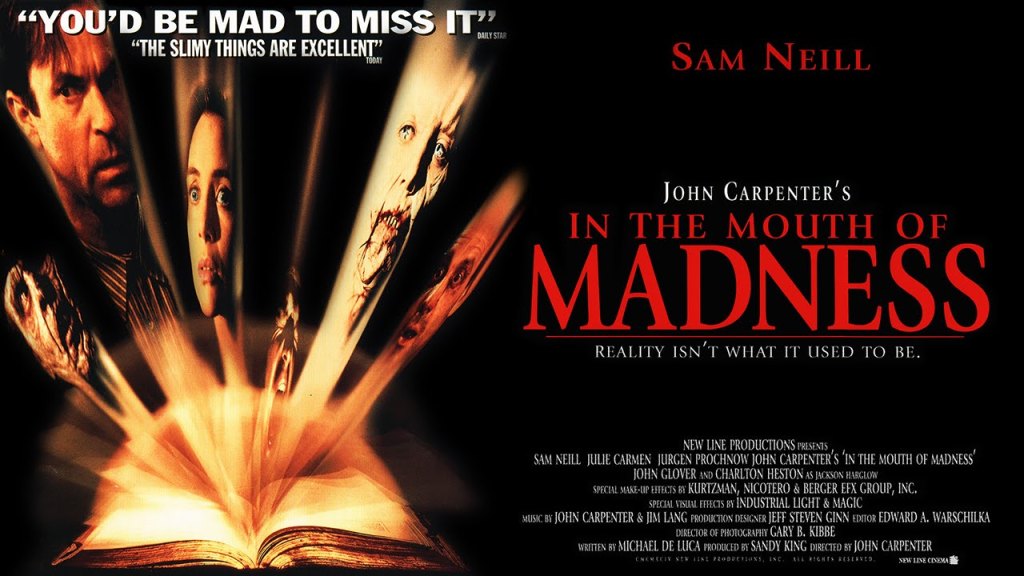
In the Mouth of Madness, Carpenter’s glorious 1994 cult masterpiece, might be the most conspicuous exception to this rule. The story of an insurance investigator who begins losing his grip on reality while probing the mysterious disappearance of a lucratively popular horror author named Sutter Cane, In the Mouth of Madness is an unabashedly meta exploration of the creative act as a form of hypnosis. It is not only a film whose central plot conceit is unique to the moral panic that defined so much of the decade in which it was released (the idea that exposure to certain “corrupt” media could warp one’s brain and possibly even compel one to commit violent acts, etc.), it’s also a cutting cautionary tale about surrendering to artifice and fantasy, and a clever-but-never-obnoxious social lampoon about what it means to be considered the master of a low trade.
Of course, John Carpenter knows a thing or two about being unfairly labeled as the master of a low trade. Carpenter, who is known for his tell-it-like-it-is demeanor, once quipped: “In England, I’m a horror director. In Germany, I’m a filmmaker. In the U.S., I’m a bum.” Films like the Jeff Bridges-starring Starman and the memorably nasty high school bloodbath Christine might be considered totemic cult items today, but many of Carpenter’s more beloved works were initially decried as trash in their time. As such, Carpenter and screenwriter Michael De Luca (yes, that Michael De Luca) turn In the Mouth of Madness’ most important character, Sutter Cane, into the Ernest Hemingway of airport novels. Clearly, the obvious allusion with Cane is Stephen King (or perhaps, to a lesser extent, Clive Barker), right down to the fact that Mouth of Madness eventually makes a narrative detour to Hobb’s End: a kind of bastardized stand-in for King’s own sleepy, creepy fictional borough, Castle Rock.
Third Film of the Apocalypse Trilogy
In The Mouth Of Madness opens with Sam Neil’s John Trent being admitted to a psychiatric hospital. He appears to have gone stark-raving mad, as evidenced by the demented look in his eyes, and the vaguely occult-looking marks he’s scrawled onto his face. In a gesture that feels borrowed from a tale by H.P. Lovecraft (Carpenter’s reverence for Lovecraft is well-documented at this point), Trent begins to recall the tale of how exactly he went mad. We learn that when Trent worked in insurance, his employer (Charlton Heston) tasked him with looking into the matter of Sutter Cane. For all intents and purposes, Cane appears to have vanished off the face of the earth. After its ghoulish prologue, Mouth of Madness settles into a more deliberately routine rhythm, only to disappear further and further down the proverbial rabbit hole as Trent and a colleague, Cane’s editor (memorably played by Julie Carmen), find themselves lost among the otherworldly horrors of Hobb’s End.
In The Mouth Of Madness is the third and final film in John Carpenter’s “Apocalypse Trilogy,” which also includes The Thing and the criminally underappreciated Prince of Darkness. In all three films, evil manifests as a primarily unseen, invisible force, often contorting familiar things like dogs, books, and human bodies into horrifying and hitherto-unseen new shapes. In The Thing, Kurt Russell and his motley crew of researchers hole up in icy Arctic seclusion, fending off the malevolent energy of a shapeshifting, violently hostile alien parasite. In Prince Of Darkness, a group of college students occupy an incredibly menacing old church, where they proceed to unearth a tube of neon-green liquid that, if mishandled, could unleash the very literal fury of the devil. Both movies are steeped in Lovecraftian imagery and primordial terror, and both amplify the built-in claustrophobia of their settings to phantasmagoric degrees.
In The Mouth Of Madness is a funnier, sillier, more stylistically gonzo effort than its two predecessors in the trilogy, mostly because it purports to stand outside the nuts and bolts of its superficial narrative, to some degree, and actually comment on the art of what it means to scare people for a living. There is something wickedly ingenious about the idea of a popular novel whose contents are so unholy that reading it would cause one to spiral into a kind of monstrous abyss. If that idea alone were all the movie were interested in, In the Mouth of Madness would still rank as one of Carpenter’s more enjoyable late-career works. And yet, as always, the director is keen to dig deeper into the subtextual resonance of his story, turning what might otherwise be a spooky ’90s chiller — the type of thing you might have caught a rerun of on TBS sometime back in the 2000s — into a cheeky, compelling commentary on the horror pantheon itself, and Carpenter’s place in it.
We live in an era where people willingly and enthusiastically sign themselves over to fictional “universes.” Whether it’s Marvel, Star Wars, Game of Thrones, or perhaps something more obscure, we now inhabit an epoch in which individuals willingly give themselves up to elaborate forms of corporate mythology. In some cases, this sort of fanboy devotion can swallow you whole. In the Mouth of Madness is concerned with this very subject. It is no wonder the film was greeted with such indifferent critical notices upon its release: as always, Carpenter was light years ahead of his time. The scariest thing about In the Mouth of Madness is that, in the world Carpenter hath created, Sutter Cane himself isn’t even seen as a mere writer of trash books — when he’s finally revealed, he is tellingly and literally depicted as a prophet.
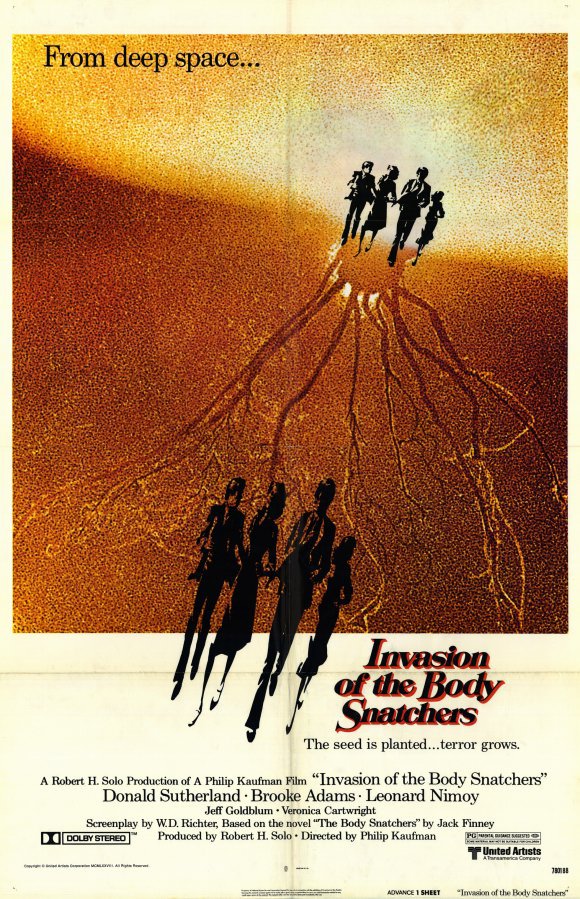
“Invasion of the Body Snatchers” (1978) is a science fiction horror film directed by Philip Kaufman (The Wanderers), with a screenplay by W.D. Richter (dir. Buckaroo Banzai) and starring Donald Sutherland, Brooke Adams, Veronica Cartwright, Jeff Goldblum and Leonard Nimoy. It is a remake of the 1956 film of the same name, also based on the 1955 novel “The Body Snatchers” by Jack Finney. The plot involves a San Francisco health inspector and his colleague who discover that humans are being replaced by physically identical alien clones devoid of emotion.
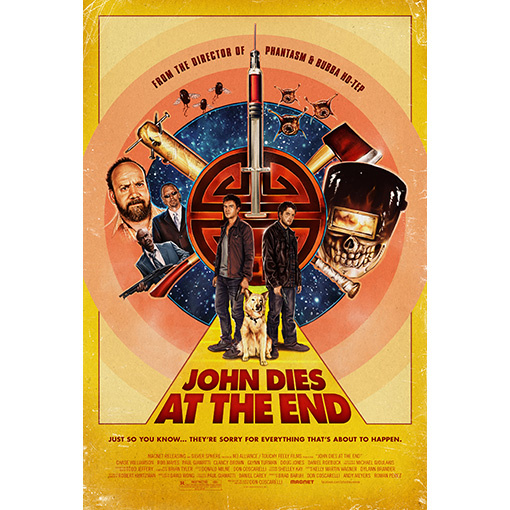
“John Dies at the End” (2012) is a sci-fi/horror/comedy written and directed by Don Coscarelli and based on David Wong’s novel of the same name. Like Phantasm, it’s a cross-genre cult film involving an inter-dimensional invasion by body-snatching aliens, but this time with the added complication of hallucinogenic drugs and time travel. It also features relatively unknown actors Chase Williamson and Rob Mayes as the two main protagonists with strong supporting performances by Paul Giamatti (who was also executive producer), Clancy Brown and Doug Jones.


 After the Crash