

By Thierry Meyssan
Source: VoltaireNet.org
The cause of Western recession
International relations experienced a profound change with the paralysis of the Soviet Union in 1986, when the State was unable to control the civilian nuclear incident in Tchernobyl [1], then with the revocation of the Warsaw Pact in 1989, when the East German Communist Party [2] destroyed the Berlin Wall, and finally, with the dissolution of the USSR in 1991.
At that time, the President of the United States, George Bush Sr., decided to demobilise one million soldiers and devote the efforts of his country to its own prosperity. He wanted to transform US hegemony within its zone of influence, and expand it into that of the leader of the world, the guarantor of world stability. With that, he laid the foundations for a « New World Order », first of all in the speech he gave side by side with British Prime Minister Margaret Thatcher, at the Aspen Institute (2 August 1990), then during his speech to Congress (11 September 1990), announcing operation « Desert Storm » [3].
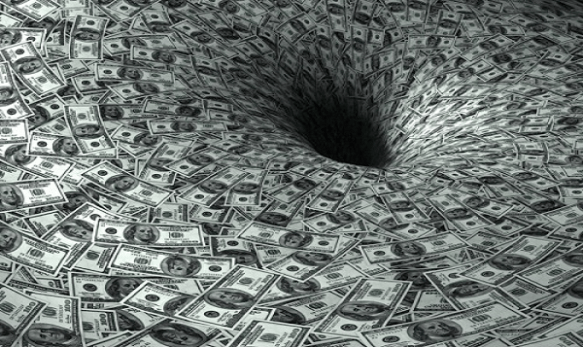
The world of the après-Soviet Union is one of free circulation, not only of merchandise, but also world capital, under the unique control of the United States. In other words, the passage from capitalism to financialisation – not the triumphant culmination of free exchange, but an exacerbated form of colonial exploitation of the whole world, including the West. Within the space of a quarter of a century, the major US fortunes have multiplied many times, and the global wealth of the world has increased considerably.
By allowing capitalism to run wild, President Bush Sr. hoped to extend prosperity to the world. But capitalism is not a political project, it is simply a system of logic designed for creating profit. The logic of the US multinationals was to increase their profits by delocalising production to China, where it is now possible, and where workers are the lowest paid in the world.
Those who were prepared to measure the cost of this advance for the West were few and far between. New middle classes began to appear in the third world, and although they were, of course, far less wealthy than those in the West, they enabled new, mainly Asian states, to play a rôle on the world stage. But simultaneously, Western middle classes began to disappear [4], meaning that it became impossible for the democratic institutions they built to survive. Above all, the populations of entire regions were to be entirely crushed, starting with those of the African Great Lakes. This first regional war caused 6 million deaths, in Angola, Burundi, Namibia, Uganda, the Democratic Republic of Congo, Rwanda and Zimbabwe, and was met with general incomprehension and indifference. The aim was to continue to seize the natural resources of these countries, but to pay less and less for them, which meant dealing with gangs rather than with the States who had to feed their populations.
The sociological transformation of the world is happening very fast and is clearly without precedent, although we do not have the statistical tools available today to evaluate it with precision. However, everyone can witness the increase in power of Eurasia, (not in the Gaullist sense of « Brest to Vladivostok », but that of Russia and Asia without Western and Central Europe), which seeks liberty and prosperity, while the Western powers, including the United States, are slowly and progressively declining, limiting individual freedom and ejecting half of their population into zones of poverty.
Today, the percentage of imprisonment in China is four times inferior to that of the United States,while their purchasing power is slightly higher. Objectively therefore, with all its faults, Chine has become a freer and more prosperous country than the United States.
This process was predictable from the beginning. Its application was studied for a long time. So, on 1 September 1987, a US forty-year-old published a page of counter-current publicity in the New York Times, the Washington Post and the Boston Globe. He warned his compatriots about the rôle that President Bush Sr. was planning to allocate to the United States – to assume and finance out of their own pockets the responsibility for the developing « New World Order ». People read it and laughed. The author of these texts was real estate promoter, Donald Trump.
The application of the economic model to international relations
One month after the attacks of 11 September 2001, US Secretary of Defense Donald Rumsfeld nominated his friend Admiral Arthur Cebrowski as Director of the new Office of Force Transformation. He was tasked with changing the culture of the entire US military in order to enable it to respond to a complete change in its mission
There was no longer question of using US armies to defend principles or interests, but to use them for a reorganisation of the world by dividing it into two parts – one one side the states integrated into the globalised economy, and on the other, the others [5]. The Pentagon would no longer fight wars in order to steal natural resources, but to control access to those resources by the globalised nations. A division directly inspired by the process of globalisation which had already trashed half of the Western populations. This time, it was half of the world’s population which was to be excluded [6].
The reorganisation of the world began in the political zone known as the « Greater Middle East », that is to say stretching from Afghanistan to Morocco, with the exception of Israël, Lebanon and Jordan. This brought about the alleged epidemic of civil wars in Afghanistan, Iraq, Sudan, Libya, Syria and Yemen, which has already caused several million deaths.
Like a monster eating its own children, the global financial system based in the United States faced its first crisis in 2008, when the subprime bubble burst. Contrary to a commonly-held belief, this was absolutely not a global crisis, but a Western problem. For the first time, the NATO states experienced the first consequences of the policy they were supporting. Yet the upper Western classes changed nothing in their behaviour, as they witnessed with compassion the wreck of the middle classes. The only notable modification was the adoption of the « Volcker rule » [7], which forbade banks from profiting from information obtained from their clients in order to speculate against their interests. But while conflicts of interest enabled a number of crooks to get rich fast, they are not the root of the problem, which is far more wide-reaching.
The revolt of the Western populations
The revolt of the Western middle and working classes against the globalised upper class began two years ago.
Aware of the Western recession as compared with Asia, the people of the United Kingdom were the first to attempt to save its life-style by leaving the European Union and turning to China and the Commonwealth (referendum of 23 June 2016) [8]. Unfortunately, the leaders of the United Kingdom were unable to conclude the agreement they hoped for with China and experienced great difficulty in reactivating their links with the Commonwealth.
Then, witnessing the collapse of their civil industries, a part of the United States voted, on 8 November 2016, for the only Presidential candidate who was opposed to the New World Order, Donald Trump. He spoke of a return to the « American dream ». Unfortunately for his voters, although Donald Trump began to question the rules of globalised commerce, he had no team with him apart from his family, and was only able to modify, but not change, the military strategy of his country. Almost all of the general officers had adopted the Rumsfeld-Cebrowski ideology, and could no longer imagine themselves in any other role than defenders of financial globalisation.
Aware of the collapse of their national industry, and certain that they would be betrayed by their upper class, the Italians voted, on 4 March 2018, for an anti-system party composed of the Ligue and the 5-star Movement. These parties built an alliance in order to implement social policies. Unfortunately, they were rejected by the European Union [9]. In France, tens of thousands of SME’s (small and medium-sized enterprises), subcontractors of industry, had gone bankrupt over the last ten years, but their compulsory tax deductions, already among the highest in the world, increased by 30 % over the same period.
Several hundreds of thousands of French people suddenly took to the streets to demonstrate against abusive financial measures. Unfortunately for them, the French upper classes have been contaminated by the very idea that was rejected by the United States, and therefore did their best to adapt their policies to the popular revolt, but not to change its basic causes.
If we look at each of these four countries separately, we will find four different explanations for what is happening there. But if we analyse the situation as a single phenomenon affecting different cultures, we will discover the same mechanisms across the board. In these four countries, consecutive with the end of capitalism, the middle classes disappeared more or less rapidly, and with them the political system that they incarnated – Democracy.
So either the Western leaders abandon the financial system they have developed and return to the productive capitalism of the Cold War, or they will have to invent a different organisation that no-one has so far been able imagine. Failing that, the West, which has directed the world for five centuries, will sink into a long period of internal chaos.
The Syrians were the first non-globalised People capable of surviving and resisting the destruction of Rumsfeld-Cebrowski’s infra-world. The French were the first globalised people to rise up against the destruction of the West, even if they are not aware that they are fighting the same unique enemy of all of humanity. President Emmanuel Macron is not the man for the situation, not because he has any responsibility for the system that preceded him, but because he is pure product of that system. In response to the riots in his country, he spoke from the G20 in Buenos-Aires, declaring that the meeting was a success in his eyes, (which it was not), and that he intended to advance more efficiently than his predecessors – in the wrong direction.
How to save privilege
It appears that the British ruling class has its solution – if London in particular and the Western nations in general are no longer capable of ruling the world, it will be necessary to cut one’s losses and divide the world into two distinct zones. This is the policy implemented by Obama in the final months of his presidency [10], then by Theresa May, and now by Donald Trump, with their refusal to cooperate and their ready-made accusations, first of all against Russia and now against China.
It also seems that Russia and China, despite their historical rivalry, are aware that they will never be able to ally themselves with these Westerners who have never ceased trying to carve them up. This is the source of their project, the « Eurasian Economic Union » – if the world must be split in two, each participant will have to organise its own. In concrete terms, for Beijing, this means abandoning half of its « Silk Road » project and its redeployment with Moscow only in Greater Eurasia.
How to determine the line of demarcation
For the West and Greater Eurasia, it will be necessary to determine the split line as fast as possible. For example, what side will Ukraine choose? The construction by Russia of the Kertch bridge was aimed at separating the country, absorbing the Donbass and the Azov Sea basin, then Odessa and Transnistria. On the contrary, the incident at Kertch, organised by the Western powers, is aimed at enrolling all of Ukraine into NATO before the country fractures.
Since the ship of financial globalisation is sinking, many people are beginning to save their personal interests without any care for others. For example this is the source of the tension between the European Union and the United States. As far as this game is concerned, the Zionist movement has always had a length’s lead, which explains the mutation of Israëli strategy, which has abandoned Syria to Russia, and turned to both the Gulf States and East Africa.
Perspectives
Taking into account what is at play here, it is obvious that the insurrection in France is only the beginning of a much wider process which is going to spread to other Western countries.
It would be absurd to believe that at a time of financial globalisation, a government, whatever it might be, could resolve the problems of its country without first of all questioning international relations and at the same time regaining its capacity for action. But precisely, foreign policy has been kept on the sidelines of the democratic field since the dissolution of the Soviet Union. It is both necessary and urgent to resign from almost all of the treaties and engagements of the last thirty years. Only the states which are able to re-affirm their sovereignty can hope to recover.
Translation
Pete Kimberley
[1] According to Michaïl Gorbatchev, this was the event that made possible the dissolution of the Warsaw Pact and the Soviet Union in so far as it delegitimised the State.
[2] Contrary to a commonly-held belief in the West, it was the nationalists from the East-German Communist Party (and the Lutheran churches), and not the anti-Communists (and pro-US movements), who broke down the symbol of Soviet domination, the Wall.
[3] The main purpose of the invasion of Iraq was not to liberate Kuwaït, but to use this affair to build the strongest coalition possible under US command, including the USSR.
[4] Global Inequality. A New Approach for the Age of Globalization, Branko Milanovic, Harvard University Press, 2016.
[5] “The US military project for the world”, by Thierry Meyssan, Translation Pete Kimberley, Voltaire Network, 22 August 2017.
[6] It is obvious that the wars of Bush Jr. and Obama were never intended to expand the Empire. First of all because by definition, democracy can only come from the People, not imposed by bombs. And then because the United States was already a plutocracy.
[7] The ex-president of the US Federal Reserve, Paul Volcker, is on the other hand, one of the architects of global financialisation. It is Volcker who took legal action on behalf of the UNO against the people and entities who had helped Iraq to bypass the UN embargo (the « oil for food » affair). Volcker is one of the principal personalities of the Pilgrim’s Society, the trans-Atlantic club presided by Queen Elizabeth II. As such, he became the main economic advisor to President Barack Obama, and organised part of his cabinet.
[8] “The new British Foreign Policy”, by Thierry Meyssan, Translation Pete Kimberley, Voltaire Network, 4 July 2016.
[9] Replacing the European Common Market, which was originally a system for cooperation between states, the European Union, as defined by the Treaty of Maastricht, is a supranational
[10] “Two separate worlds”, by Thierry Meyssan, Translation Pete Kimberley, Al-Watan (Syria) , Voltaire Network, 8 November 2016.
 After the Crash