The fundamental crisis of the West

By Veniamin Popov

Source: New Eastern Outlook

A growing number of media outlets in America and in Europe have recently reached the conclusion that “rules-based international order” long espoused by the West has failed.

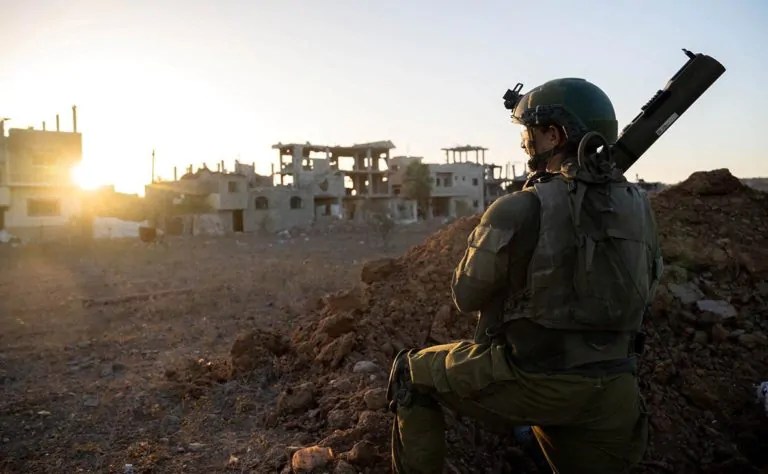
In essence, this means that the position of the Western powers in the world has weakened: they have failed to destroy the Russian economy by imposing sanctions, and the war in Gaza has demonstrated that the US and the Western European countries are far from all-powerful.

The media frequently claim that Russia’s special military operation in Ukraine has changed the international situation, in that it has made clear the limited capabilities of the West and deepened the rift between the West and the Global South.

The Ukrainian conflict and the war in Gaza have demonstrated to the whole world, and above all to ordinary people in the West, that their ruling elites are unable to grasp this reality, lack strategic vision and are generally guided by their own personal interests.

The ruling elites in the West have demonized Russia in every possible way and have come to believe the myth that Russia can be strategically defeated. This is a huge miscalculation and this conclusion will become obvious to all in the very near future. The present author is reminded of the junker Grushnitsky, in Lermontov’s “A Hero of Our Time,” a fantasist who plays the role of an unworldly romantic for so long that he begins to believe it himself.

As Vladimir Putin has aptly put it, “Russophobia, like any other ideology based on racism, national superiority and exclusivity, blinds the person who subscribes to it and deprives them of reason.”

The state of the “rules-based international order” is becoming increasingly alarming for many Western powers. According to an article published in the weekly journal the Economist on February 15, so-called national conservatives, who “suspect free markets of being rigged by the elites,” are gaining in influence in the US and Europe. They are also hostile to migration, despise pluralism, especially multiculturalism, and are obsessed with dismantling institutions they see as tainted by globalism.

Despite their differences, these national conservatives are united by their hostility to shared enemies, including migrants, especially Muslims, globalists and all their perceived enablers. Donald Trump is leading in the polls in America. The far right is expected to make gains in the European Parliament elections in June. In Germany last December, support for the far-right Alternative for Germany party (AFD) reached a record high of 23 percent, according to polls. Anticipating Rishi Sunak’s loss in the elections, the right wing of Britain’s Conservative Party are hoping to grab power in the party. In 2027, Marine Le Pen may well become president of France.

According to the Economist, the current authorities need to take people’s legitimate concerns seriously: the public in many Western countries see illegal migration as a source of unrest and a drain on the public purse. They worry that their children will grow up poorer than they are. They are concerned about losing their jobs to new technologies. They believe that institutions such as universities and the press have been hijacked by hostile, illiberal, left-wing elites. They view the globalists who have flourished over the last few decades as members of a self-serving, arrogant caste.

These complaints have real merit and mocking them only confirms how detached from reality the elites have become.

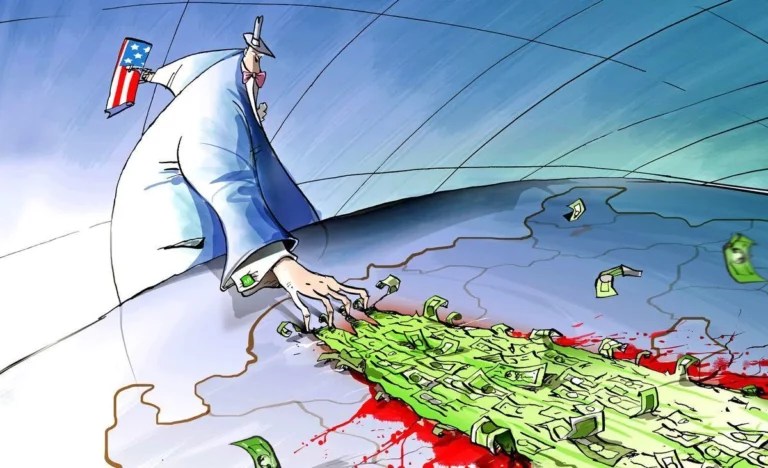
The position of Washington and its hangers-on in Europe in relation to Israel’s war crimes against the Palestinians in Gaza has added significantly to the public’s distrust of the West’s ruling elites. By openly supporting the actions of the Netanyahu government, the governments of the Western powers are convincing everyone, including their own populations, of their own policy of double standards: only the lives of Israelis are valued and massacres of Arabs are allowed.

As the Saudi newspaper Arab News reports, Arab and Muslim Americans, and 60 percent of all other Americans, have for months wanted President Joe Biden to pressure Israel into agreeing to an immediate ceasefire in Gaza. The White House has, in effect, ignored these pleas.

In response to this stance, Muslim Americans in nine potentially wavering states met in Dearborn, Michigan, in December 2023 under the slogan “Abandon Biden, Truce Now.” They have vowed not to vote for Biden in the presidential election unless he changes the policies that are enabling Israel’s genocide in the Gaza Strip possible.

The US journal Foreign Affairs, in an article entitled “Gaza and the End of the Rules-Based Order” quotes one G7 diplomat: “We have definitely lost the battle in the Global South. All the work we did with the Global South (around Ukraine) was lost. … Forget the rules, forget the world order. They will never listen to us again.”

The economic recession, which has become a permanent situation for many European states, also provides little room for optimism. In the US, the high inflation and huge government debt are expected to worsen this spring and summer, according to some analysts. The most closely watched indicator of opinions about the economy, a monthly poll conducted by the University of Michigan, has reported that public confidence is at an exceptionally low ebb, about the same level as during the 2007-2009 global financial crisis.

With the presidential election just nine months away, this gloomy mood has become a serious problem for the Democrats. President Joe Biden is already facing a host of challenges to his bid for a second term, starting with concerns about his fitness for office as an 80-year-old man. Another major obstacle to his election bid is the opinion polls that give him low marks for his management of the economy.

The current economic problems are exacerbated by growing inequality, the worsening drug crisis and the proliferation of firearms. The promotion of non-traditional sexual orientation and the encouragement of same-sex couples have cause legitimate outrage to many conservative religious people.

In the European Union between June 6 and 9, more than 400 million voters in 27 countries will elect 720 MEPs to represent them for the next five years. Observers predict an increase in the influence of right-wing conservative parties. One major reason for the heightened interest in the upcoming election is the unprecedented corruption scandal that erupted in the European Parliament in December 2022, when the vice president and several other officials, including three MEPs, were accused of taking bribes. The investigation is ongoing, but it has already revealed instances of illegal activities and immoral behavior on the part of MEPs. Conservatives accuse the EU of being an opaque bureaucracy with vastly overpaid staff, which is disconnected from the reality experienced by ordinary residents of the EU member states, and which spends its vast budgets – totaling hundreds of trillions of euros – not for the common good but for the personal whims and fantasies of its leaders. Inflation and the cost of living are still rising in many European nations, while many blame EU bureaucrats in Brussels for policies such as the Green Deal that have made life more expensive for Europeans by raising the prices of fuel, food and most other essentials. In addition, anti-Russian sanctions, which have led to the rejection of cheap energy from Russia by a number of European countries, have had a negative impact on the well-being of ordinary citizens.

Over the past few weeks, thousands of farmers from across Europe, particularly from Germany, France, Poland, Spain, and Belgium, have taken to the streets to protest against additional spending on Ukraine and against new EU environmental policies that make farming unviable.

The short-sighted policy of the Western elites with regard to the crises in Ukraine and the Gaza Strip is leading to a loss of confidence in the ruling authorities on the part of ordinary citizens. It is easy to imagine their reaction in the event of any further military setbacks by Ukraine or any worsening of the situation within the country.

The position taken by many developing nations with regard to the current international processes is highly symptomatic. In an editorial for the Arabic international newspaper Asharq Al-Awsat, Editor-in-Chief Grhassan Charbel writes: “Zelensky’s position reminded me of remarks by the late Egyptian President Hosni Mubarak to former Iraqi Foreign Minister Hoshyar Zebari, that ‘the one who is covered by the Americans is naked.’ The same phrase could be said by Putin to Zelensky.

Putin has the right to be sarcastic. The leaders of the West did not accept that he could not lose… That he went to Ukraine to punish the entire West and to launch a major coup against a world that was born from the collapse of the (Berlin) Wall and the disappearance of the Soviet Union.”

It is no coincidence that the ruling circles of Western Europe are currently not hiding their anxiety about what they refer to as the “threat posed by Trump and Russia.”

In fact, everything we see happening testifies to the inadequacy of the current ruling elites in the West, who are unable to reasonably and rationally assess the emerging situation, guided as they are solely by short-term personal interests.

It is very possible that they will be swept away by a wave of new unexpected events, and new leaders will come to power.

It is therefore highly likely that 2024 will be a turning point in many respects.
Southern countries no longer trust the West

By Veniamin Popov

Source: New Eastern Outlook

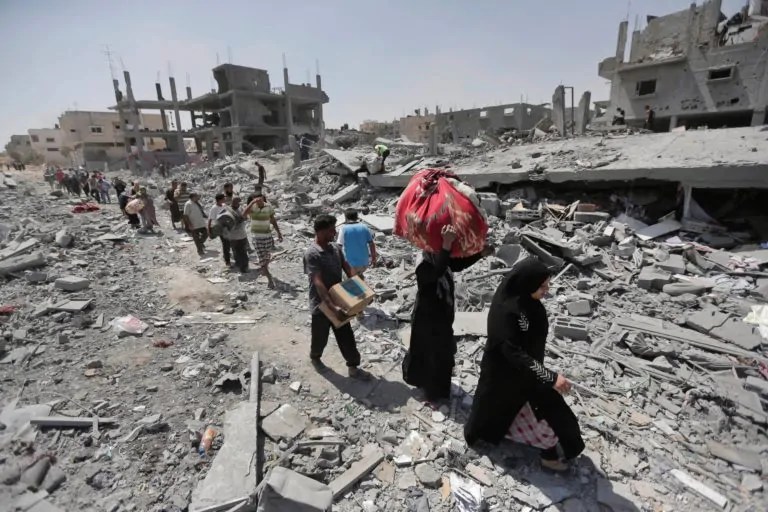
The genocide perpetrated by Israel in Gaza against Palestinians under US patronage has had an enormous impact on developing countries. Four months of Israeli military action against the Palestinians had been a watershed in the attitude of the Global South towards the West: the number of civilians killed and wounded, most of them women and children, was approaching 100,000; in an enclave of nearly 2.5 million people, one third of the houses had been completely destroyed. This has not just shown the hypocrisy of the Western Powers with their constant policy of double standards. It has convinced many that the West cannot be at the mercy of the West: it will stop at nothing to impose solutions that are favourable to it.

Many in the Middle East and the Global South were struck both by the brutality of Israel’s military campaign and the unwavering support for it by Western governments. “For them this is as much a war”, wrote the Al Ahram newspaper on 30.01.2024, “as US President Joe Biden’s war as Israeli Prime Minister Benjamin Netanyahu’s, and the continued indifference to the scale of destruction has once again confirmed how cheap Arab life seems to Western leaders”.

As Fawaz Gerges, professor of international relations at the London School of Economics, argues in his book What Really Went Wrong: The West and the Collapse of Democracy in the Middle East, the United States and other Western countries, principally Britain, have for nearly a century pursued an interventionist, militaristic and anti-democratic foreign policy that has largely ignored the interests of the Middle East. After the brutal Hamas attack on 7 October, which revealed, in the words of Egypt’s Al Ahram, the folly of Biden and Netanyahu’s approach, there was no restraint or attempt to think through the consequences of the current war. Instead, Biden and his European allies supported Israel’s fatal attack on the Gaza Strip. Despite the fact that the civilian death toll is rising at an unprecedented rate, the humanitarian crisis is becoming more acute by the day, and governments around the world have called for a ceasefire, Biden has shown no willingness to intervene to prevent bloodshed.

It is no coincidence that the media of many nations published articles about Frantz Fanon, an anti-colonial activist who grew up in a black middle-class family in French colonial Martinique: more than any other writer of the time, he captured the rage generated by colonial humiliation in the hearts of colonised people, and was a remarkably astute analyst of contemporary ills – the ongoing psychological traumas of racism and oppression, the enduring power of white nationalism, and the scourge of authoritarian predatory post-colonial regimes. In Fanon’s view, the world then was split in two, which is also absolutely true of today.

The West’s current strategy has failed colossally, and the American-led Anglo-Saxon empire is also failing: the wars in Ukraine and Gaza, the Turkish Daily Sabah newspaper reported in early February, have exposed the limits of Western power and its highly duplicitous approach to international law and the laws of war. The decision by some Western states to cut off funding to the Palestinian refugee agency UNRWA “is a brazen and shameless move to starve the Palestinians and force Hamas to capitulate”.

By supporting Israel and allowing it to kill tens of thousands of civilians, Western countries are putting themselves on the opposite edge of the values and principles of multilateralism and respect for human rights, “they are going against the very foundations on which the UN was built”, the Al Jazeera website wrote on 16.01.24. Another article on the same site noted that Gaza will be the grave of the Western-led world order: by supporting Israel’s atrocities, the West has undermined what is left of its authority and brought the rules-based world order to the point of no return: the authority of the West has been irrevocably undermined.

The United States military strikes on Syria, Iraq and Yemen have caused an explosion of anti-American sentiment throughout the Arab world, once again demonstrating the aggressive nature of US policy in the Middle East and Washington’s complete disregard for the norms of international law.

According to a poll conducted in 16 Arab states on 10.01.24 – 89% of respondents opposed recognising Israel, and 77% considered the US and Israel the biggest security threat to the region.

The Saudi newspaper Arab News emphasised in mid-January this year that many Western leaders are increasingly moving away from their people. In early February, the New York Times reported that more than 800 US and EU civil servants published a protest against their governments’ support for Israel; last November, more than 500 employees of 40 US government agencies sent a letter to President Biden criticising his policies on the Gaza war.

Turkish newspapers have consistently published stories that the Global North should abandon old approaches and rethink its international policies.

Ghassan Charbel, editor-in-chief of Asharq Al-Awsat newspaper, noted on 29.01.24 that the continuation of the Gaza massacre is costing the countries of the region and the world economy dearly, it is also hitting America’s interests and image.

Recent events on the world stage are increasingly convincing the people of developing countries that their interests are at odds with those of the West, and in some issues are diametrically opposed.

US Seeks Plausible Deniability as it Lights Middle East on Fire

By Brian Berletic

Source: New Eastern Outlook

A surprising change of tone came from the Pentagon in early December. After weeks of devastating Israeli military operations inside Gaza, the US Secretary of Defense implored Israel to demonstrate restraint and concern for the civilian population.

The Hill in its early December 2023 article, “Israel risks ‘strategic defeat’ if civilians aren’t protected, Pentagon chief says,” would report:

Secretary of Defense Lloyd Austin said Israel risks a “strategic defeat” if it does not work to protect Palestinian civilians in Gaza amid its war on militant group Hamas in the region. “The center of gravity is the civilian population and if you drive them into the arms of the enemy, you replace a tactical victory with a strategic defeat…”

The article also noted:

The Biden administration has issued caution that a campaign in southern Gaza must be carried out more precisely than Israel did in the first leg of the war.

After a century of American military aggression killing millions (mostly civilians) around the globe, everywhere from Southeast Asia to North Africa, across the Middle East and deep into Central Asia, is Washington finally finding a sense of humanity?

No.

All while US Secretary of Defense Lloyd Austin attempted to convince the world that Washington cares about the Palestinian civilian population, the US continues flooding the Israeli arsenal with US-made weapons, enabling the campaign of indiscriminate brutality.

Bloomberg in its November 2023 article, “US Is Quietly Sending Israel More Ammunition, Missiles,” would report:

The Pentagon has quietly ramped up military aid to Israel, delivering on requests that include more laser-guided missiles for its Apache gunship fleet, as well as 155mm shells, night-vision devices, bunker-buster munitions and new army vehicles, according to an internal Defense Department list. 

The weapons pipeline to Israel is extending beyond the well-publicized provision of Iron Dome interceptors and Boeing Co. smart bombs. It continues even as Biden administration officials increasingly caution Israel about trying to avoid civilian casualties in the Gaza Strip.

Israel could not continue its military operations and the subsequent destruction of Gaza’s civilian population without this US military aid. Israel also continues to enjoy US political protection within the halls of the United Nations.

Washington cannot even say it didn’t know its weapons would be used by Israel to carry out this indiscriminate brutality because Israeli military representatives openly declared they would before their military operations into Gaza even began.

The Guardian in their October 10, 2023, article, “‘Emphasis is on damage, not accuracy’: ground offensive into Gaza seems imminent,” admitted:

IDF spokesperson R Adm Daniel Hagari made the startling admission that “hundreds of tons of bombs” had already been dropped on the tiny strip, adding that “the emphasis is on damage and not on accuracy…”

Why then does Washington want the world to believe it has growing concerns over the nature of Israel’s military operations in Gaza, and more specifically, concerns regarding the brutality Washington is admitting is being used against the civilian population?

Washington’s History of Pleading Peace While Pursuing War 

Washington wants plausible deniability. The US has for years followed a familiar pattern of attempting to covertly provoke nations and regions into conflict while publicly appearing to pursue reconciliation and peace.

For example, the US for years rhetorically supported the Minsk agreements regarding reconciliation within Ukraine, all while deliberately building up Ukraine’s military capabilities to empower and encourage the widening violence in eastern Ukraine and the eventual provocation of Russia to become directly involved in the conflict.

Likewise, the US officially maintains a “One China” policy in regards to the status of Taiwan, recognizing it as an integral part of Chinese territory, yet unofficially Washington has done everything in its power to undermine the policy and provoke war with China over its efforts to support separatism in Taipei.

Officially, the US supports the two-state solution regarding Israel and Palestine. Unofficially, and sometimes quite openly, the US has supported the most extreme elements within both Israel and among Palestinians to ensure no such peace agreement is ever possible.

Israel as the Eager Provocateur 

The intention by Washington to use Israel as a proxy and provocateur within the Middle East is well documented within US government and corporate-funded policy think tank papers. One such paper, published by the Brookings Institution in 2009 titled, “Which Path to Persia? Options for a New American Strategy Toward Iran,” focuses on containing Iran politically, militarily, and economically. It lays out options for disarming Iran and for overthrowing its government through US-sponsored sedition or US military intervention. Beyond the US and groups the paper sought to use as proxies within Iran, the paper also cited Israel as an eager regional proxy that could attack Iran, triggering a regional war that the US could then appear “reluctant” to join. The goal, of course, is to appear that the US sought peace, being left with no choice but war, all while a US-led war was the objective to begin with.

The paper notes:

…it would be far more preferable if the United States could cite an Iranian provocation as justification for the airstrikes before launching them. Clearly, the more outrageous, the more deadly, and the more unprovoked the Iranian action, the better off the United States would be. Of course, it would be very difficult for the United States to goad Iran into such a provocation without the rest of the world recognizing this game, which would then undermine it. (One method that would have some possibility of success would be to ratchet up covert regime change efforts in the hope that Tehran would retaliate overtly, or even semi-overtly, which could then be portrayed as an unprovoked act of Iranian aggression.)

It also says:

“In a similar vein, any military operation against Iran will likely be very unpopular around the world and require the proper international context—both to ensure the logistical support the operation would require and to minimize the blowback from it. The best way to minimize international opprobrium and maximize support (however, grudging or covert) is to strike only when there is a widespread conviction that the Iranians were given but then rejected a superb offer—one so good that only a regime determined to acquire nuclear weapons and acquire them for the wrong reasons would turn it down. Under those circumstances, the United States (or Israel) could portray its operations as taken in sorrow, not anger, and at least some in the international community would conclude that the Iranians “brought it on themselves” by refusing a very good deal.”

Here, the paper admits Iran does not seek war, but could be provoked into one anyway, and notes that the US, or Israel, could then carry out military aggression against Iran having convinced the world they did so reluctantly.

Israel factors so heavily in US plans to provoke war with Iran, it was given its own chapter in the paper. Chapter 5 of the paper is titled, “Leave it to Bibib: Allowing or Encouraging an Israeli Military Strike,” and notes how a war started by Israel could then be cited as a pretext for the US itself to join in afterwards, and most importantly, appear to do so “reluctantly.”

Thus, as Israel continues destroying Gaza, targeting the civilian population deliberately, knowingly triggering unrest across the region which in turn is placing pressure on Arab governments as well as Iran’s to respond, the stage is being set for the possibility of wider conflict.

As Israel attacks, invades, and erases Gaza, it is also targeting Hezbollah in Lebanon. Both the US and Israel have already carried out strikes in Syria. The goal is to trigger a conflict the US and Israel can portray as an act of aggression against either or both to then expand military operations across the whole region.

US Secretary of Defense Lloyd Austin posing as concerned for the Palestinian population all while arming Israel to continue indiscriminately brutalizing them, is being done to convince the world the US is pleading peace all while in actuality pursuing wider war.

The US used the proxy war in Ukraine to reorder Europe and reassert hegemony over the continent, rolling back European cooperation with both Russia and China. The US likely seeks to repeat a similar process in the Middle East where relations are improving within the region between Iran and Saudi Arabia, and between Syria and the rest of the Arab World. The region also collectively continues moving closer with Russia and China as well as toward multipolarism.

Only time will tell if the region continues successfully moving out from under generations of Western hegemony – first under the British Empire and now under the US – or if the US will successfully trigger regional conflict that can divide, destroy, and disrupt this process, just as it has in Europe.