
Net Zero, the Digital Panopticon and the Future of Food 

By Colin Todhunter

Source: Off-Guardian

The food transition, the energy transition, net-zero ideology, programmable central bank digital currencies, the censorship of free speech and clampdowns on protest. What’s it all about? To understand these processes, we need to first locate what is essentially a social and economic reset within the context of a collapsing financial system.

Writer Ted Reece notes that the general rate of profit has trended downwards from an estimated 43% in the 1870s to 17% in the 2000s. By late 2019, many companies could not generate enough profit. Falling turnover, squeezed margins, limited cashflows and highly leveraged balance sheets were prevalent.

Professor Fabio Vighi of Cardiff University has described how closing down the global economy in early 2020 under the guise of fighting a supposedly new and novel pathogen allowed the US Federal Reserve to flood collapsing financial markets (COVID relief) with freshly printed money without causing hyperinflation. Lockdowns curtailed economic activity, thereby removing demand for the newly printed money (credit) in the physical economy and preventing ‘contagion’.

According to investigative journalist Michael Byrant, €1.5 trillion was needed to deal with the crisis in Europe alone. The financial collapse staring European central bankers in the face came to a head in 2019. The appearance of a ‘novel virus’ provided a convenient cover story.

The European Central Bank agreed to a €1.31 trillion bailout of banks followed by the EU agreeing to a €750 billion recovery fund for European states and corporations. This package of long-term, ultra-cheap credit to hundreds of banks was sold to the public as a necessary programme to cushion the impact of the pandemic on businesses and workers.

In response to a collapsing neoliberalism, we are now seeing the rollout of an authoritarian great reset — an agenda that intends to reshape the economy and change how we live.

SHIFT TO AUTHORITARIANISM

The new economy is to be dominated by a handful of tech giants, global conglomerates and e-commerce platforms, and new markets will also be created through the financialisation of nature, which is to be colonised, commodified and traded under the notion of protecting the environment.

In recent years, we have witnessed an overaccumulation of capital, and the creation of such markets will provide fresh investment opportunities (including dodgy carbon offsetting Ponzi schemes)  for the super-rich to park their wealth and prosper.

This great reset envisages a transformation of Western societies, resulting in permanent restrictions on fundamental liberties and mass surveillance. Being rolled out under the benign term of a ‘Fourth Industrial Revolution’, the World Economic Forum (WEF) says the public will eventually ‘rent’ everything they require (remember the WEF video ‘you will own nothing and be happy’?): stripping the right of ownership under the guise of a ‘green economy’ and underpinned by the rhetoric of ‘sustainable consumption’ and ‘climate emergency’.

Climate alarmism and the mantra of sustainability are about promoting money-making schemes. But they also serve another purpose: social control.

Neoliberalism has run its course, resulting in the impoverishment of large sections of the population. But to dampen dissent and lower expectations, the levels of personal freedom we have been used to will not be tolerated. This means that the wider population will be subjected to the discipline of an emerging surveillance state.

To push back against any dissent, ordinary people are being told that they must sacrifice personal liberty in order to protect public health, societal security (those terrible Russians, Islamic extremists or that Sunak-designated bogeyman George Galloway) or the climate. Unlike in the old normal of neoliberalism, an ideological shift is occurring whereby personal freedoms are increasingly depicted as being dangerous because they run counter to the collective good.

The real reason for this ideological shift is to ensure that the masses get used to lower living standards and accept them. Consider, for instance, the Bank of England’s chief economist Huw Pill saying that people should ‘accept’ being poorer. And then there is Rob Kapito of the world’s biggest asset management firm BlackRock, who says that a “very entitled” generation must deal with scarcity for the first time in their lives.

At the same time, to muddy the waters, the message is that lower living standards are the result of the conflict in Ukraine and supply shocks that both the war and ‘the virus’ have caused.

The net-zero carbon emissions agenda will help legitimise lower living standards (reducing your carbon footprint) while reinforcing the notion that our rights must be sacrificed for the greater good. You will own nothing, not because the rich and their neoliberal agenda made you poor but because you will be instructed to stop being irresponsible and must act to protect the planet.

NET-ZERO AGENDA

But what of this shift towards net-zero greenhouse gas emissions and the plan to slash our carbon footprints? Is it even feasible or necessary?

Gordon Hughes, a former World Bank economist and current professor of economics at the University of Edinburgh, says in a new report that current UK and European net-zero policies will likely lead to further economic ruin.

Apparently, the only viable way to raise the cash for sufficient new capital expenditure (on wind and solar infrastructure) would be a two decades-long reduction in private consumption of up to 10 per cent. Such a shock has never occurred in the last century outside war; even then, never for more than a decade.

But this agenda will also cause serious environmental degradation. So says Andrew Nikiforuk in the article The Rising Chorus of Renewable Energy Skeptics, which outlines how the green techno-dream is vastly destructive.

He lists the devastating environmental impacts of an even more mineral-intensive system based on renewables and warns:

“The whole process of replacing a declining system with a more complex mining-based enterprise is now supposed to take place with a fragile banking system, dysfunctional democracies, broken supply chains, critical mineral shortages and hostile geopolitics.”

All of this assumes that global warming is real and anthropogenic. Not everyone agrees. In the article Global warming and the confrontation between the West and the rest of the world, journalist Thierry Meyssan argues that net zero is based on political ideology rather than science. But to state such things has become heresy in the Western countries and shouted down with accusations of ‘climate science denial’.

Regardless of such concerns, the march towards net zero continues, and key to this is the United Nations Agenda 2030 for Sustainable Development Goals.

Today, almost every business or corporate report, website or brochure includes a multitude of references to ‘carbon footprints’, ‘sustainability’, ‘net zero’ or ‘climate neutrality’ and how a company or organisation intends to achieve its sustainability targets. Green profiling, green bonds and green investments go hand in hand with displaying ‘green’ credentials and ambitions wherever and whenever possible.

It seems anyone and everyone in business is planting their corporate flag on the summit of sustainability. Take Sainsbury’s, for instance. It is one of the ‘big six’ food retail supermarkets in the UK and has a vision for the future of food that it published in 2019.

Here’s a quote from it:

“Personalised Optimisation is a trend that could see people chipped and connected like never before. A significant step on from wearable tech used today, the advent of personal microchips and neural laces has the potential to see all of our genetic, health and situational data recorded, stored and analysed by algorithms which could work out exactly what we need to support us at a particular time in our life. Retailers, such as Sainsbury’s could play a critical role to support this, arranging delivery of the needed food within thirty minutes — perhaps by drone.”

Tracked, traced and chipped — for your own benefit. Corporations accessing all of our personal data, right down to our DNA. The report is littered with references to sustainability and the climate or environment, and it is difficult not to get the impression that it is written so as to leave the reader awestruck by the technological possibilities.

However, the promotion of a brave new world of technological innovation that has nothing to say about power — who determines policies that have led to massive inequalities, poverty, malnutrition, food insecurity and hunger and who is responsible for the degradation of the environment in the first place — is nothing new.

The essence of power is conveniently glossed over, not least because those behind the prevailing food regime are also shaping the techno-utopian fairytale where everyone lives happily ever after eating bugs and synthetic food while living in a digital panopticon.

FAKE GREEN

The type of ‘green’ agenda being pushed is a multi-trillion market opportunity for lining the pockets of rich investors and subsidy-sucking green infrastructure firms and also part of a strategy required to secure compliance required for the ‘new normal’.

It is, furthermore, a type of green that plans to cover much of the countryside with wind farms and solar panels with most farmers no longer farming. A recipe for food insecurity.

Those investing in the ‘green’ agenda care first and foremost about profit. The supremely influential BlackRock invests in the current food system that is responsible for polluted waterways, degraded soils, the displacement of smallholder farmers, a spiralling public health crisis, malnutrition and much more.

It also invests in healthcare — an industry that thrives on the illnesses and conditions created by eating the substandard food that the current system produces. Did Larry Fink, the top man at BlackRock, suddenly develop a conscience and become an environmentalist who cares about the planet and ordinary people? Of course not.

Any serious deliberations on the future of food would surely consider issues like food sovereignty, the role of agroecology and the strengthening of family farms — the backbone of current global food production.

The aforementioned article by Andrew Nikiforuk concludes that, if we are really serious about our impacts on the environment, we must scale back our needs and simplify society.

In terms of food, the solution rests on a low-input approach that strengthens rural communities and local markets and prioritises smallholder farms and small independent enterprises and retailers, localised democratic food systems and a concept of food sovereignty based on self-sufficiency, agroecological principles and regenerative agriculture.

It would involve facilitating the right to culturally appropriate food that is nutritionally dense due to diverse cropping patterns and free from toxic chemicals while ensuring local ownership and stewardship of common resources like land, water, soil and seeds.

That’s where genuine environmentalism and the future of food begins.
Toxic Contagion – Funds, Food and Pharma

By Colin Todhunter

Source: Off-Guardian

In 2014, the organisation GRAIN revealed that small farms produce most of the world’s food in its report Hungry for land: small farmers feed the world with less than a quarter of all farmland.

The report Small-scale Farmers and Peasants Still Feed the World (ETC Group, 2022) confirmed this.

Small farmers produce up to 80% of the food in the non-industrialised countries. However, they are currently squeezed onto less than a quarter of the world’s farmland. The period 1974-2014 saw 140 million hectares – more than all the farmland in China – being taken over for soybean, oil palm, rapeseed and sugar cane plantations.

GRAIN noted that the concentration of fertile agricultural land in fewer and fewer hands is directly related to the increasing number of people going hungry every day. While industrial farms have enormous power, influence and resources, GRAIN’s data showed that small farms almost everywhere outperform big farms in terms of productivity.

In the same year, policy think tank the Oakland Institute released a report stating that the first years of the 21 century will be remembered for a global land rush of nearly unprecedented scale. An estimated 500 million acres, an area eight times the size of Britain, were reported bought or leased across the developing world between 2000 and 2011, often at the expense of local food security and land rights.

Institutional investors, including hedge funds, private equity, pension funds and university endowments, were eager to capitalise on global farmland as a new and highly desirable asset class.

This trend was not confined to buying up agricultural land in low-income countries. Oakland Institute’s Anuradha Mittal argued that there was a new rush for US farmland. One industry leader estimated that $10 billion in institutional capital was looking for access to this land in the US.

Although investors believed that there is roughly $1.8 trillion worth of farmland across the US, of this between $300 billion and $500 billion (2014 figures) is considered to be of “institutional quality” – a combination of factors relating to size, water access, soil quality and location that determine the investment appeal of a property.

In 2014, Mittal said that if action is not taken, then a perfect storm of global and national trends could converge to permanently shift farm ownership from family businesses to institutional investors and other consolidated corporate operations.

WHY THIS MATTERS

Peasant/smallholder agriculture prioritises food production for local and national markets as well as for farmers’ own families, whereas corporations take over fertile land and prioritise commodities or export crops for profit and markets far away that tend to cater for the needs of more affluent sections of the global population.

In 2013, a UN report stated that farming in rich and poor nations alike should shift from monocultures towards greater varieties of crops, reduced use of fertilisers and other inputs, increased support for small-scale farmers and more locally focused production and consumption of food. The report stated that monoculture and industrial farming methods were not providing sufficient affordable food where it is needed.

In September 2020, however, GRAIN showed an acceleration of the trend that it had warned of six years earlier: institutional investments via private equity funds being used to lease or buy up farms on the cheap and aggregate them into industrial-scale concerns. One of the firms spearheading this is the investment asset management firm BlackRock, which exists to put its funds to work to make money for its clients.

BlackRock holds shares in a number of the world’s largest food companies, including Nestlé, Coca-Cola, PepsiCo, Walmart, Danone and Kraft Heinz and also has significant shares in most of the top publicly traded food and agriculture firms: those which focus on providing inputs (seeds, chemicals, fertilisers) and farm equipment as well as agricultural trading companies, such as Deere, Bunge, ADM and Tyson (based on BlackRock’s own data from 2018).

Together, the world’s top five asset managers – BlackRock, Vanguard, State Street, Fidelity and Capital Group – own around 10–30% of the shares of the top firms in the agrifood sector.

The article Who is Driving the Destructive Industrial Agriculture Model? (2022) by Frederic Mousseau of the Oakland Institute showed that BlackRock and Vanguard are by far the biggest shareholders in eight of the largest pesticides and fertiliser companies: Yara, CF Industries Holdings K+S Aktiengesellschaft, Nutrien, The Mosaic Company, Corteva and Bayer.

These companies’ profits were projected to double, from US$19 billion in 2021 to $38 billion in 2022, and will continue to grow as long as the industrial agriculture production model on which they rely keeps expanding. Other major shareholders include investment firms, banks and pension funds from Europe and North America.

Through their capital injections, BlackRock et al fuel and make huge profits from a globalised food system that has been responsible for eradicating indigenous systems of production, expropriating seeds, land and knowledge, impoverishing, displacing or proletarianizing farmers and destroying rural communities and cultures. This has resulted in poor-quality food and illness, human rights abuses and ecological destruction.

SYSTEMIC COMPULSION

Post-1945, the Rockefeller Chase Manhattan bank with the World Bank helped roll out what has become the prevailing modern-day agrifood system under the guise of a supposedly ‘miraculous’ corporate-controlled, chemical-intensive Green Revolution (its much-heralded but seldom challenged ‘miracles’ of increased food production are nothing of the sort; for instance, see the What the Green Revolution Did for India and New Histories of the Green Revolution).

Ever since, the IMF, the World Bank and the WTO have helped consolidate an export-oriented industrial agriculture based on Green Revolution thinking and practices. A model that uses loan conditionalities to compel nations to ‘structurally adjust’ their economies and sacrifice food self-sufficiency.

Countries are placed on commodity crop production treadmills to earn foreign currency (US dollars) to buy oil and food on the global market (benefitting global commodity traders like Cargill, which helped write the WTO trade regime – the Agreement on Agriculture), entrenching the need to increase cash crop cultivation for exports.

Today, investment financing is helping to drive and further embed this system of corporate dependency worldwide. BlackRock is ideally positioned to create the political and legislative framework to maintain this system and increase the returns from its investments in the agrifood sector.

The firm has around $10 trillion in assets under its management and has, according to William Engdahl, positioned itself to effectively control the US Federal Reserve, many Wall Street mega-banks and the Biden administration: a number of former top people at BlackRock are in key government positions, shaping economic policy.

So, it is no surprise that we are seeing an intensification of the lop-sided battle being waged against local markets, local communities and indigenous systems of production for the benefit of global private equity and big agribusiness.

For example, while ordinary Ukrainians are currently defending their land, financial institutions are supporting the consolidation of farmland by rich individuals and Western financial interests. It is similar in India (see the article The Kisans Are Right: Their Land Is at Stake) where a land market is being prepared and global investors are no doubt poised to swoop.

In both countries, debt and loan conditionalities on the back of economic crises are helping to push such policies through. For instance, there has been a 30+ year plan to restructure India’s economy and agriculture. This stems from the country’s 1991 foreign exchange crisis, which was used to impose IMF-World Bank debt-related ‘structural adjustment’ conditionalities. The Mumbai-based Research Unit for Political Economy locates agricultural ‘reforms’ within a broader process of Western imperialism’s increasing capture of the Indian economy.

Yet ‘imperialism’ is a dirty word never to be used in ‘polite’ circles. Such a notion is to be brushed aside as ideological by the corporations that benefit from it. Instead, what we constantly hear from these conglomerates is that countries are choosing to embrace their entry and proprietary inputs into the domestic market as well as ‘neoliberal reforms’ because these are essential if we are to feed a growing global population. The reality is that these firms and their investors are attempting to deliver a knockout blow to smallholder farmers and local enterprises in places like India.

But the claim that these corporations, their inputs and their model of agriculture is vital for ensuring global food security is a proven falsehood. However, in an age of censorship and doublespeak, truth has become the lie and the lie is truth. Dispossession is growth, dependency is market integration, population displacement is land mobility, serving the needs of agrifood corporations is modern agriculture and the availability of adulterated, toxic food as part of a monoculture diet is feeding the world.

And when a ‘pandemic’ was announced and those who appeared to be dying in greater numbers were the elderly and people with obesity, diabetes and cardio-vascular disease, few were willing to point the finger at the food system and its powerful corporations,   practices and products that are responsible for the increasing prevalence of these conditions (see campaigner Rosemary Mason’s numerous papers documenting this on Academia.edu). Because this is the real public health crisis that has been building for decades.

But who cares? BlackRock, Vanguard and other institutional investors? Highly debatable because if we turn to the pharmaceuticals industry, we see similar patterns of ownership involving the same players.

A December 2020 paper on ownership of the major pharmaceuticals companies, by researchers Albert Banal-Estanol, Melissa Newham and Jo Seldeslachts, found the following (reported on the website of TRT World, a Turkish news media outlet):

Public companies are increasingly owned by a handful of large institutional investors, so we expected to see many ownership links between companies — what was more surprising was the magnitude of common ownership… We frequently find that more than 50 per cent of a company is owned by ‘common’ shareholders who also own stakes in rival pharma companies.”

The three largest shareholders of Pfizer, J&J and Merck are Vanguard, SSGA and BlackRock.

In 2019, the Centre for Research on Multinational Corporations reported that payouts to shareholders had increased by almost 400 per cent — from $30 billion in 2000 to $146 billion in 2018. Shareholders made $1.54 trillion in profits over that 18-year period.

So, for institutional investors, the link between poor food and bad health is good for profit. While investing in the food system rakes in enormous returns, you can perhaps double your gains if you invest in pharma too.

These findings predate the 2021 documentary Monopoly: An Overview of the Great Reset, which also shows that the stock of the world’s largest corporations are owned by the same institutional investors. ‘Competing’ brands, like Coke and Pepsi, are not really competitors, since their stock is owned by the same investment companies, investment funds, insurance companies and banks.

Smaller investors are owned by larger investors. Those are owned by even bigger investors. The visible top of this pyramid shows only Vanguard and Black Rock.

A 2017 Bloomberg report states that both these companies in the year 2028 together will have investments amounting to $20 trillion.

While individual corporations – like Pfizer and Monsanto/Bayer, for instance – should be (and at times have been) held to account for some of their many wrongdoings, their actions are symptomatic of a system that increasingly leads back to the boardrooms of the likes of BlackRock and Vanguard.

Prof Fabio Vighi of Cardiff University says:

Today, capitalist power can be summed up with the names of the three biggest investment funds in the world: BlackRock, Vanguard and State Street Global Advisor. These giants, sitting at the centre of a huge galaxy of financial entities, manage a mass of value close to half the global GDP, and are major shareholders in around 90% of listed companies.”

These firms help shape and fuel the dynamics of the economic system and the globalised food regime, ably assisted by the World Bank, the IMF, the WTO and other supranational institutions. A system that leverages debt, uses coercion and employs militarism to secure continued expansion.

Strategic Resistance to the World Economic Forum’s “Great Reset” Gathers Pace

By Robert J. Burrowes and Anita McKone

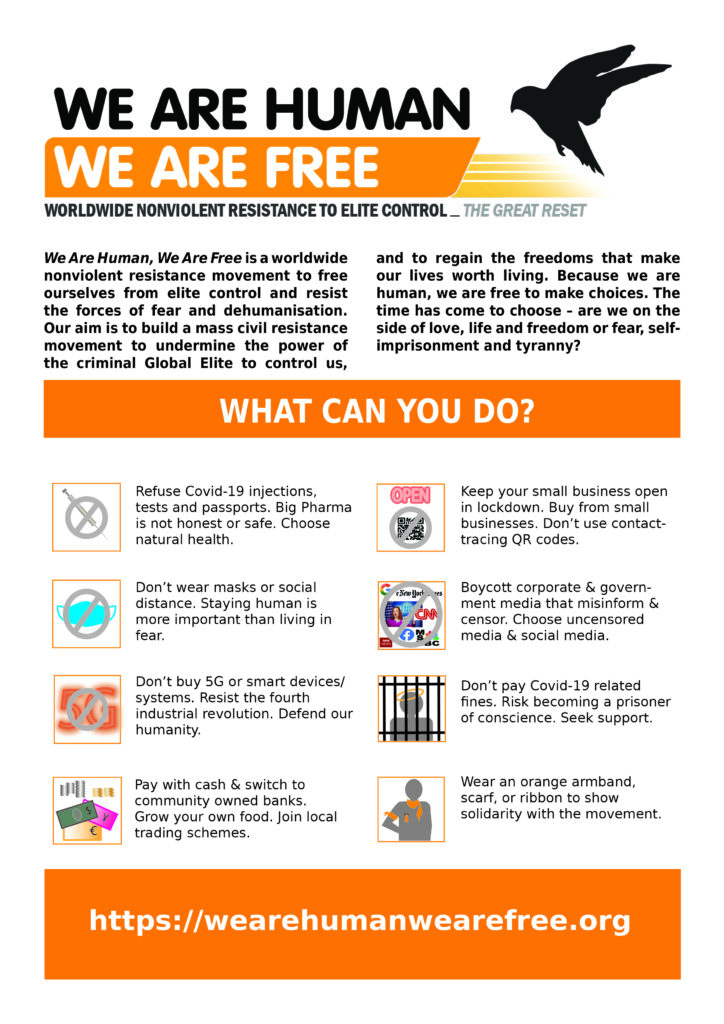
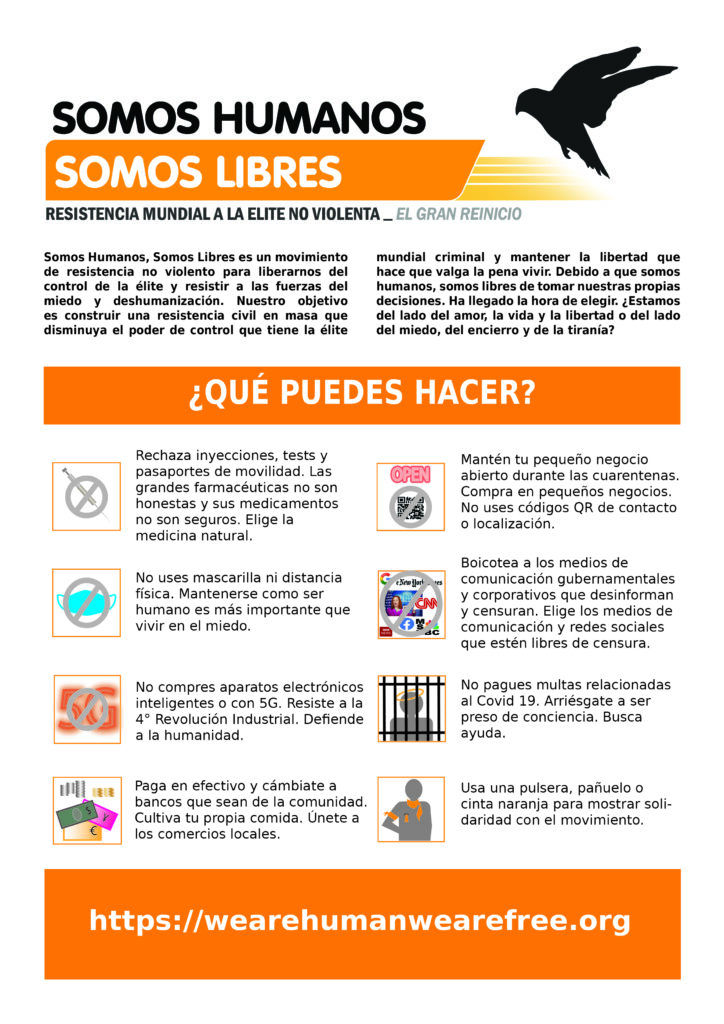
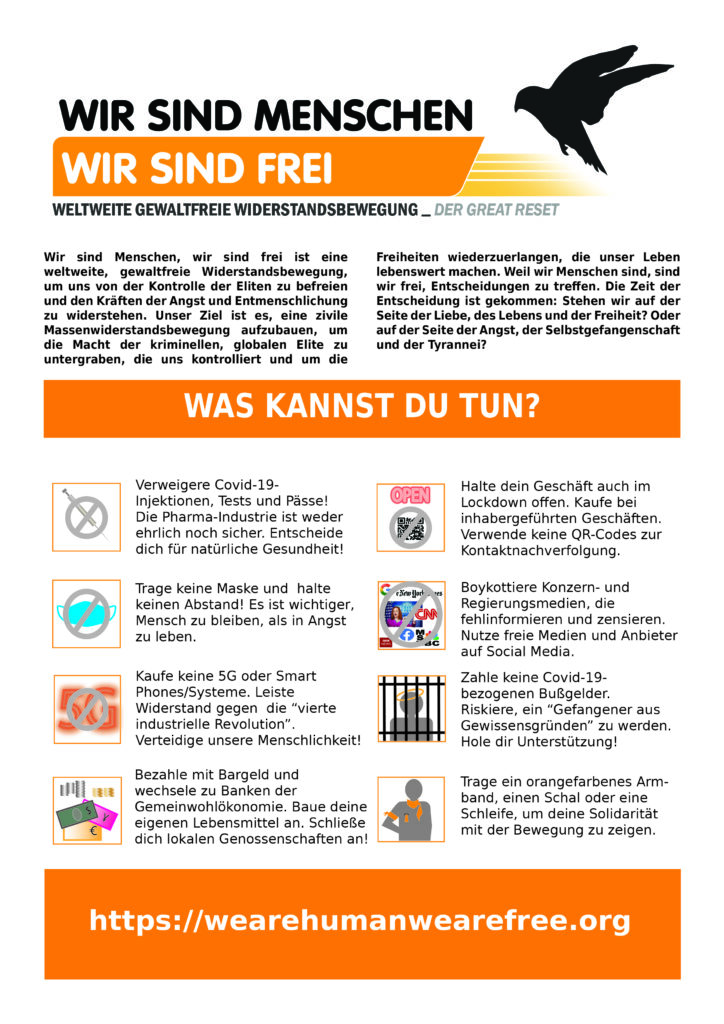
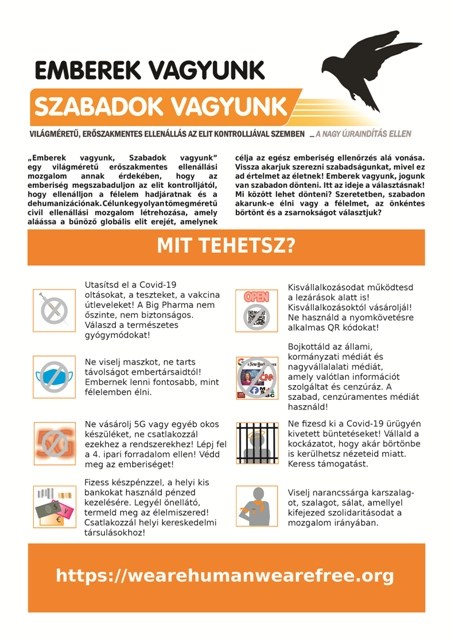
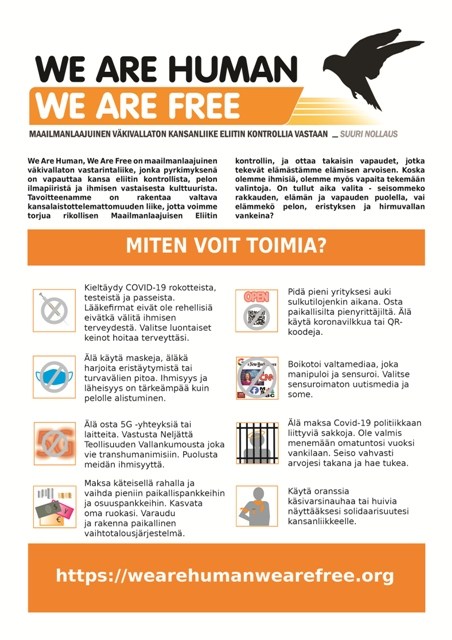
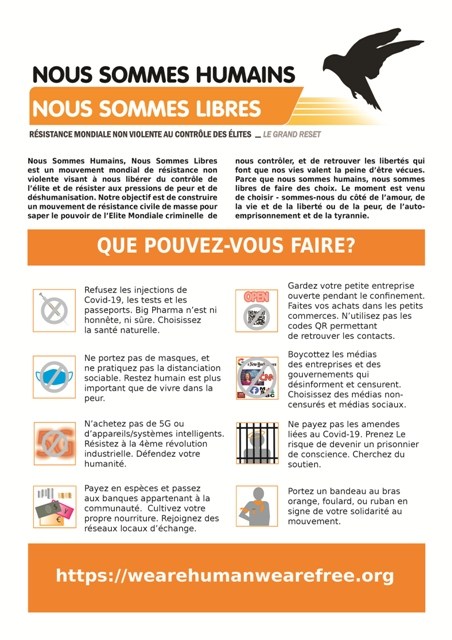
The ‘We Are Human, We Are Free’ campaign was launched earlier this year. It is designed to enable people to participate in a grassroots nonviolent campaign to strategically resist the World Economic Forum’s ‘Great Reset’ and related initiatives of the Global Elite including the transhumanist, eugenics and Cyber Polygon agendas.

Since being launched, people have been joining from all over the world.

A key initiative of the campaign was to prepare and design a one-page flyer so that people could be given, by various means, a short list of nonviolent actions that offered a series of simple but powerfully effective ways in which anyone could participate in the strategy to defeat the elite agenda.

With the invaluable assistance of members of the campaign from around the world, translations of this one-page flyer are now available in English, Finnish, French, German, Greek, Hungarian, Italian and Spanish with other languages imminent or in the pipeline.

If this campaign interests you, the website is above and our Telegram group is here.

Each of the posters is available on the website or below.

You are welcome to join us!

Biodata:

Robert Burrowes, Ph.D. is a member of the TRANSCEND Network for Peace Development Environment and has a lifetime commitment to understanding and ending human violence. He has done extensive research since 1966 in an effort to understand why human beings are violent and has been a nonviolent activist since 1981. He is the author of Why Violence? Websites: (We Are Human, We Are Free) (Charter)  (Flame Tree Project)  (Songs of Nonviolence) (Nonviolent Campaign Strategy) (Nonviolent Defense/Liberation Strategy(Robert J. Burrowes) (Feelings First) Email: flametree@riseup.net

Anita McKone is a member of the TRANSCEND Network for Peace Development Environment and has been a nonviolent activist since 1993. She has been arrested and imprisoned on a number of occasions for her activism. Anita has written many articles on different aspects of nonviolent activism, psychology and philosophy including Fearless Psychology and Fearful Psychology: Principles and Practice. She has also written and recorded eight ‘Songs of Nonviolence’.

Toxic Agriculture and the Gates Foundation

By Colin Todhunter

Source: Dissident Voice

The Bill and Melinda Gates Foundation was launched in 2000 and has $46.8 billion in assets (December 2018). It is the largest charitable foundation in the world and distributes more aid for global health than any government. One of the foundation’s stated goals is to globally enhance healthcare and reduce extreme poverty.

The Gates Foundation is a major funder of the CGIAR system (formerly the Consultative Group for International Agricultural Research) — a global partnership whose stated aim is to strive for a food-secured future. Its research is aimed at reducing rural poverty, increasing food security, improving human health and nutrition and ensuring sustainable management of natural resources.

In 2016, the Gates Foundation was accused of dangerously and unaccountably distorting the direction of international development. The charges were laid out in a report by Global Justice Now: ‘Gated Development – Is the Gates Foundation always a force for good?‘ According to the report, the foundation’s strategy is based on deepening the role of multinational companies in the Global South.

On release of the report, Polly Jones, the head of campaigns and policy at Global Justice Now, said:

The Gates Foundation has rapidly become the most influential actor in the world of global health and agricultural policies, but there’s no oversight or accountability in how that influence is managed.

She added that this concentration of power and influence is even more problematic when you consider that the philanthropic vision of the Gates Foundation seems to be largely based on the values of ‘corporate America’:

The foundation is relentlessly promoting big business-based initiatives such as industrial agriculture, private health care and education. But these are all potentially exacerbating the problems of poverty and lack of access to basic resources that the foundation is supposed to be alleviating.

The report’s author, Mark Curtis, outlines the foundation’s promotion of industrial agriculture across Africa, which would undermine existing sustainable, small-scale farming that is providing the vast majority of food across the continent.

Curtis describes how the foundation is working with US agri-commodity trader Cargill in an $8 million project to “develop the soya value chain” in southern Africa. Cargill is the biggest global player in the production of and trade in soya with heavy investments in South America where GM soya monocrops (and associated agrochemicals) have displaced rural populations and caused health problems and environmental damage.

According to Curtis, the Gates-funded project will likely enable Cargill to capture a hitherto untapped African soya market and eventually introduce GM soya onto the continent. The Gates foundation is also supporting projects involving other chemical and seed corporations, including DuPont, Syngenta and Bayer. It is effectively promoting a model of industrial agriculture, the increasing use of agrochemicals and patented seeds, the privatisation of extension services and a very large focus on genetically modified crops.

What the Gates Foundation is doing is part of the Alliance for a Green Revolution in Africa (AGRA) initiative, which is based on the premise that hunger and malnutrition in Africa are mainly the result of a lack of technology and functioning markets. Curtis says AGRA has been intervening directly in the formulation of African governments’ agricultural policies on issues like seeds and land, opening up African markets to US agribusiness.

More than 80% of Africa’s seed supply comes from millions of small-scale farmers recycling and exchanging seed from year to year. But AGRA is promoting the commercial production of seed and is thus supporting the introduction of commercial (chemical-dependent) seed systems, which risk enabling a few large companies to control seed research and development, production and distribution.

The report notes that over the past two decades a long and slow process of national seed law reviews, sponsored by USAID and the G8 along with Bill Gates and others, has opened the door to multinational corporations’ involvement in seed production, including the acquisition of every sizeable seed enterprise on the African continent.

Gates, pesticides and global health

The Gates Foundation is also very active in the area of health, which is ironic given its promotion of industrial agriculture and its reliance on health-damaging agrochemicals. This is something that has not been lost on environmentalist Dr Rosemary Mason.

Mason notes that the Gates Foundation is a heavy pusher of agrochemicals and patented seeds. She adds that the Gates Foundation is also reported to be collaborating in Bayer’s promotion of “new chemical approaches” and “biological crop protection” (i.e. encouraging agrochemical sales and GM crops) in the Global South.

After having read the recent ‘A Future for the World’s Children? A WHO-UNICEF-Lancet Commission’, Mason noticed that pesticides were conspicuous by their absence and therefore decided to write to Professor Anthony Costello, director of the UCL Institute for Global Health, who is the lead author of the report.

In her open 19-page letter, ‘Why Don’t Pesticides Feature in the WHO-UNICEF-Lancet Commission?’, she notes in the Costello-led report that there is much talk about greater regulation of marketing of tobacco, alcohol, formula milk and sugar-sweetened beverages but no mention of pesticides.

But perhaps this should come as little surprise: some 42 authors’ names are attached to the report and Mason says that in one way or another via the organisations they belong to, many (if not most) have received funding from the Bill and Melinda Gates Foundation. The Gates Foundation is a prominent funder of the World Health Organization and UNICEF. Gates has been the largest or second largest contributor to the WHO’s budget in recent years. His foundation provided 11% of the WHO’s entire budget in 2015, which is 14 times greater than the UK government’s contribution.

Perhaps this sheds some light on to why a major report on child health would omit the effects of pesticides. Mason implies this is a serious omission given what the UN expert on toxics  Baskut Tuncak said in a November 2017 article in the Guardian:

Our children are growing up exposed to a toxic cocktail of weedkillers, insecticides, and fungicides. It’s on their food and in their water, and it’s even doused over their parks and playgrounds. Many governments insist that our standards of protection from these pesticides are strong enough. But as a scientist and a lawyer who specialises in chemicals and their potential impact on people’s fundamental rights, I beg to differ. Last month it was revealed that in recommending that glyphosate – the world’s most widely-used pesticide – was safe, the EU’s food safety watchdog copied and pasted pages of a report directly from Monsanto, the pesticide’s manufacturer. Revelations like these are simply shocking.

Mason notes that in February 2020, Tuncak rejected the idea that the risks posed by highly hazardous pesticides could be managed safely. He told Unearthed (GreenPeace UK’s journalism website) that there is nothing sustainable about the widespread use of highly hazardous pesticides for agriculture. Whether they poison workers, extinguish biodiversity, persist in the environment or accumulate in a mother’s breast milk, Tuncak argued that these are unsustainable, cannot be used safely and should have been phased out of use long ago.

In his 2017 article, he stated:

The UN Convention on the Rights of the Child, the most ratified international human rights treaty in the world (only the US is not a party), makes it clear that states have an explicit obligation to protect children from exposure to toxic chemicals, from contaminated food and polluted water, and to ensure that every child can realise their right to the highest attainable standard of health. These and many other rights of the child are abused by the current pesticide regime. These chemicals are everywhere and they are invisible.

Tuncak added that paediatricians have referred to childhood exposure to pesticides as creating a “silent pandemic” of disease and disability. He noted that exposure in pregnancy and childhood is linked to birth defects, diabetes, and cancer and stated that children are particularly vulnerable to these toxic chemicals: increasing evidence shows that even at ‘low’ doses of childhood exposure, irreversible health impacts can result.

He concluded that the overwhelming reliance of regulators on industry-funded studies, the exclusion of independent science from assessments and the confidentiality of studies relied upon by authorities must change.

However, it seems that the profits of agrochemical manufacturers trump the rights of  children and the public at large: a joint investigation by Unearthed and the NGO Public Eye has found the world’s five biggest pesticide manufacturers are making more than a third of their income from leading products, chemicals that pose serious hazards to human health and the environment.

Mason refers to an analysis of a huge database of 2018’s top-selling ‘crop protection products’ which revealed the world’s leading agrochemical companies made more than 35% of their sales from pesticides classed as “highly hazardous” to people, animals or ecosystems. The investigation identified billions of dollars of income for agrochemical giants BASF, Bayer, Corteva, FMC and Syngenta from chemicals found by regulatory authorities to pose health hazards like cancer or reproductive failure.

This investigation is based on an analysis of a huge dataset of pesticide sales from the agribusiness intelligence company Phillips McDougall. This firm conducts detailed market research all over the world and sells databases and intelligence to pesticide companies. The data covers around 40% of the $57.6bn global market for agricultural pesticides in 2018. It focuses on 43 countries, which between them represent more than 90% of the global pesticide market by value.

While Bill Gates promotes a chemical-intensive model of agriculture that dovetails with the needs and value chains of agri-food conglomerates, Mason outlines the spiraling rates of disease in the UK and the US and lays the blame at the door of the agrochemical corporations that Gates has opted to get into bed with. She focuses on the impact of glyphosate-based herbicides as well as the cocktail of chemicals sprayed on crops.

Mason has discussed the health-related impacts of glyphosate in numerous previous reports and in her open letter to Costello again refers to peer-reviewed studies and official statistics which indicate that glyphosate affects the gut microbiome and is responsible for a global metabolic health crisis provoked by an obesity epidemic. Moreover, she presents evidence that glyphosate causes epigenetic changes in humans and animals – diseases skip a generation then appear.

However, the mainstream narrative is to blame individuals for their ailments and conditions which are said to result from ‘lifestyle choices’. Yet Monsanto’s German owner Bayer has confirmed that more than 42,700 people have filed suits against Monsanto alleging that exposure to Roundup herbicide caused them or their loved ones to develop non-Hodgkin lymphoma and that Monsanto covered up the risks.

Mason says that each year there are steady increases in the numbers of new cancers and increases in deaths from the same cancers, with no treatments making any difference to the numbers; at the same time, she argues, these treatments maximise the bottom line of the drug companies while the impacts of agrochemicals remains conspicuously absent from the disease narrative.

She states that we are exposed to a lifetime’s exposure to thousands of synthetic chemicals that contaminate the blood and urine of nearly every person tested – “a global mass poisoning.”

Gates Foundation in perspective

As part of its hegemonic strategy, the Gates Foundation says it wants to ensure global food security and optimise health and nutrition.

However, Rosemary Mason alludes to the fact that the Gates Foundation seems happy to ignore the deleterious health impacts of agrochemicals while promoting the interests of the firms that produce them, but it facilitates many health programmes that help boost the bottom line of drug companies.  Health and health programmes seem only to be defined with certain parameters which facilitate the selling of the products of the major pharmaceutical companies which the foundation partners with. Indeed, researcher Jacob Levich argues that the Gates Foundation not merely facilitates unethical low-cost clinical trials (with often devastating effects for participants) in the Global South but also assists in the creating new markets for the “dubious” products of pharmaceuticals corporations.

As for food security, the foundation would do better by supporting agroecological  (agrochemical-free) approaches to agriculture, which various high-level UN reports have advocated for ensuring equitable global food security. But this would leave smallholder agriculture both intact and independent from Western agro-capital, something which runs counter to the underlying aims of the corporations that the foundation supports – dispossession and market dependency.

And these aims have been part of a decades-long strategy where we have seen the strengthening of an emerging global food regime based on agro-export mono-cropping linked to sovereign debt repayment and World Bank/IMF ‘structural adjustment’ directives. The outcomes have included a displacement of a food-producing peasantry, the consolidation of Western agri-food oligopolies and the transformation of many countries from food self-sufficiency into food deficit areas.

While Bill Gates is busy supporting the consolidation of Western agro-capital in Africa under the guise of ensuring ‘food security’, it is very convenient for him to ignore the fact that at the time of decolonisation in the 1960s Africa was not just self-sufficient in food but was actually a net food exporter with exports averaging 1.3 million tons a year between 1966-70. The continent now imports 25% of its food, with almost every country being a net food importer. More generally, developing countries produced a billion-dollar yearly surplus in the 1970s but by 2004 were importing US$ 11 billion a year.

The Gates Foundation promotes a (heavily subsidised and inefficient – certainly when the externalised health, social and environment costs are factored in) corporate-industrial farming system and the strengthening of a global neoliberal, fossil-fuel-dependent food regime that by its very nature fuels and thrives on, among other things, unjust trade policies, population displacement and land dispossession (something which the Gates Foundation once called for but euphemistically termed “land mobility”), commodity monocropping, soil and environmental degradation, illness, nutrient-deficient diets, a narrowing of the range of food crops, water shortages, pollution and the eradication of biodiversity.

At the same time, the foundation is helping powerful corporate interests to appropriate and commodify knowledge. For instance, since 2003, CGIAR (mentioned at the start of this article) and its 15 centres have received more than $720 million from the Gates Foundation. In a June 2016 article in The Asian Age, Vandana Shiva says the centres are accelerating the transfer of research and seeds to corporations, facilitating intellectual property piracy and seed monopolies created through IP laws and seed regulations.

Besides taking control of the seeds of farmers in CGIAR seed banks, Shiva adds that the Gates Foundation (along with the Rockefeller Foundation) is investing heavily in collecting seeds from across the world and storing them in a facility in Svalbard in the Arctic — the ‘doomsday vault’.

The foundation is also funding Diversity Seek (DivSeek), a global initiative to take patents on the seed collections through genomic mapping. Seven million crop accessions are in public seed banks.

Shiva says that DivSeek could allow five corporations to own this diversity and argues:

Today, biopiracy is carried out through the convergence of information technology and biotechnology. It is done by taking patents by ‘mapping’ genomes and genome sequences… DivSeek is a global project launched in 2015 to map the genetic data of the peasant diversity of seeds held in gene banks. It robs the peasants of their seeds and knowledge, it robs the seed of its integrity and diversity, its evolutionary history, its link to the soil and reduces it to ‘code’. It is an extractive project to ‘mine’ the data in the seed to ‘censor’ out the commons.

She notes that the peasants who evolved this diversity have no place in DivSeek — their knowledge is being mined and not recognised, honoured or conserved: an enclosure of the genetic commons.

This process is the very foundation of capitalism – appropriation of the commons (seeds, water, knowledge, land, etc.), which are then made artificially scarce and transformed into marketable commodities.

The Gates Foundation talks about health but facilitates the roll-out of a toxic form of agriculture whose agrochemicals cause immense damage. It talks of alleviating poverty and malnutrition and tackling food insecurity but it bolsters an inherently unjust global food regime which is responsible for perpetuating food insecurity, population displacement, land dispossession, privatisation of the commons and neoliberal policies that remove support from the vulnerable and marginalised, while providing lavish subsidies to corporations.

The Gates Foundation is part of the problem, not the solution. To more fully appreciate this, let us turn to a February 2020 article in the journal Globalizations. Its author, Ashok Kumbamu, argues that the ultimate aim of promoting new technologies – whether GM seeds, agrochemicals or commodified knowledge — on a colossal scale is to make agricultural inputs and outputs essential commodities, create dependency and bring all farming operations into the capitalist fold.

To properly understand Bill Gates’s ‘philanthropy’ is not to take stated goals and objectives at face value but to regard his ideology as an attempt to manufacture consent and prevent and marginalise more radical agrarian change that would challenge prevailing power structures and act as impediments to capitalist interests. The foundation’s activities must be located within the hegemonic and dispossessive strategies of imperialism: displacement of the peasantry and subjugating those who remain in agriculture to the needs of global distribution and supply chains dominated by the Western agri-food conglomerates whose interests the Gates Foundation facilitates and legitimises.


The full text of Rosemary Mason’s 19-page document (with relevant references) — ‘Why Don’t Pesticides Feature in the WHO-UNICEF-Lancet Commission?’ — can be accessed via the academia.edu website)