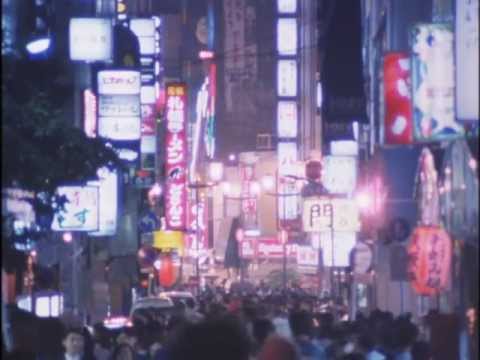
Saturday Matinee: Din of Celestial Birds

By Jason Hoffman

Source: The Third Eye

Din of Celestial Birds (2006) A film by E. Elias Merhige. Black and white, sound, 16mm, 14 mins.

American filmmaker E. Elias Merhige’s experimental film Din of Celestial Birds (2006) is the second part of an as yet unfinished trilogy of films, the first part being his bold and visionary debut feature Begotten. Most people coming to Din of Celestial Birds will have watched Begotten and are presumably expecting more of the gruesome and haunting imagery that distinguished the style of that feature, however as the movie begins, we are reassured to “Not be afraid … Be comforted … Remember … Our origin…”.

“A transcendental meditation on creation and consciousness”

I came away from the film thinking of it as Begotten enacted on a microscopic scale: a depiction of the divine mystery of creation through an exploration of processes prior to it, but where Begotten did so as a metaphorical psychodrama, Din of Celestial Birds does this as if a nature documentary of life, in a style reminiscent of Man Ray and other Surrealists.

The opening credits actually attribute the film to Q6, a collective consisting of a visual philosopher (whatever that is), a computational visual neuroscientist, a multi-media performance artist, a composer, and a sculptor; all of whom Merhige collected around him to produce the movie in a hands-on fashion employing techniques used by the work of cinema pioneers like the Lumiere brothersFritz Lang, and Jean Cocteau, in addition to software and technology created specifically for the film.

Though Din of Celestial Birds arguably ploughs the same furrow as its conceptual predecessor, the film is nevertheless testament to a unique artistic vision, exploring representations of the fringes of consciousness by challenging the limits of cinema.

Saturday Matinee: Koyaanisqatsi

Source: Koyaanisqatsi.org

KOYAANISQATSI, Reggio’s debut as a film director and producer, is the first film of the QATSI trilogy. The title is a Hopi Indian word meaning “life out of balance.” Created between 1975 and 1982, the film is an apocalyptic vision of the collision of two different worlds — urban life and technology versus the environment. The musical score was composed by Philip Glass.

KOYAANISQATSI attempts to reveal the beauty of the beast! We usually perceive our world, our way of living, as beautiful because there is nothing else to perceive. If one lives in this world, the globalized world of high technology, all one can see is one layer of commodity piled upon another. In our world the “original” is the proliferation of the standardized. Copies are copies of copies. There seems to be no ability to see beyond, to see that we have encased ourselves in an artificial environment that has remarkably replaced the original, nature itself. We do not live with nature any longer; we live above it, off of it as it were. Nature has become the resource to keep this artificial or new nature alive.

That being said, my intention in-other-words, let me describe the bigger picture. KOYAANISQATSI is not so much about something, nor does it have a specific meaning or value. KOYAANISQATSI is, after all, an animated object, an object in moving time, the meaning of which is up to the viewer. Art has no intrinsic meaning. This is its power, its mystery, and hence, its attraction. Art is free. It stimulates the viewer to insert their own meaning, their own value. So while I might have this or that intention in creating this film, I realize fully that any meaning or value KOYAANISQATSI might have comes exclusively from the beholder. The film’s role is to provoke, to raise questions that only the audience can answer. This is the highest value of any work of art, not predetermined meaning, but meaning gleaned from the experience of the encounter. The encounter is my interest, not the meaning. If meaning is the point, then propaganda and advertising is the form. So in the sense of art, the meaning of KOYAANISQATSI is whatever you wish to make of it.

This is its power.

Watch Koyaanisqatsi on Kanopy here: https://www.kanopy.com/product/koyaanisqatsi-0

Saturday Matinee: Zerograd (aka Zero City, City of Zero)

Review by Movies Unchained

Absurdity can take many different forms, particularly when it comes to artistic expression, with many individuals over the past century making their living from subverting the central tenets of reality. One such artist was Karen Shakhnazarov, whose ambition film Zerograd (Russian: Gorod Zero) holds the distinction of being one of the most bizarre works of cinema produced in the last few decades. A strange, hypnotic voyage into a darker version of the world, this film feels like the perverted offspring of David Lynch and Andrei Tarkovsky (especially if they collaborated on a twisted version of Alice in Wonderland), and I don’t think there is a single moment in this film that I was in complete awe of. Cinema is supposed to be challenging, and it doesn’t get more impenetrable than this, where Shakhnazarov takes us on a voyage that is somehow both hilarious and utterly terrifying, showing us a side of society that isn’t familiar to anything the best of us have experienced ourselves, but still manages to be as captivating as anything else. A deliriously work of experimental dark comedy, Zerograd is quite an achievement – and kudos has to go to Shakhnazarov for managing to construct something so bewildering, yet so deeply brilliant in both how it provokes certain ideas while remaining quite stable and consistent in its message (at least after we actually figure out what this film is attempting to convey), which creates a sensational piece of filmmaking that tests the boundaries of reality and presents the viewer with something so singularly unique, one would be forgiven for believing that Zerograd isn’t actually a film, but a fever-induced bout of delusions – and for all these reasons and more, we can easily proclaim this film as something of a hidden masterpiece, an outrageous, disconcerting surrealist odyssey that is as entertaining as it is wholly disruptive, both to the art form in which it was made and in terms of the broader socio-cultural implications embedded within it.

The film centres on Alexey Varakin (Leonid Filatov), a regular civil engineer who is sent to a small town in the middle of nowhere to meet with the owner of a factory to discuss some of the products they have been supplying. What was supposed to be a brief day-trip turns into what appears to be an eternity, especially when it becomes clear that everything isn’t what it seems in this mysterious countryside hamlet. His visit takes a horrifying turn when Alexey witnesses the suicide of a chef, which not only traumatizes him, but also places him at the centre of a conspiracy that points to him as the chief suspect, especially when the perspective of the event changes from suicide to a murder. What Alexey doesn’t realize is that he is stuck here – it is physically impossible for him to move beyond the borders of the town, since there are certain metaphysical forces keeping him there. This is made clear when he visits a museum, where the crotchety curator (Yevgeny Yevstigneyev) gives him a tour, taking him to subterranean levels and relaying the history of the town, which stretches all the way back to the formative years of the USSR and the rise of communism across the Soviet Union. Despite being a mild-mannered working-class man, Alexey is seen as something of an anomaly in this town, a stranger sent there by some celestial being to disrupt the lives of the residents – but it soon becomes clear that he’s not the one to fear, since a looming sense of foreboding lingers over the town, and causes the protagonist to reevaluate not only his own life, but the entire concept of reality in general, as everything around him is starting to point to the fact that everything Alexey knew to be true is quite possibly false information, and he himself is at risk of losing his identity as a whole if he doesn’t solve the problem before its too late.

Zerograd is a very different kind of film in every conceivable way. It positions itself as something of a mystery film, but one that dares to ask what happens when someone is investigating something and searching for the truth when every clue not only distances him further from the answer, but proves the incredulity of reality as a whole. This is a mystery film that struggles to even ask a coherent question – if anything, the answers are there, if only we knew where to start looking for them. Shakhnazarov masterfully constructs one of the most fascinating films of its era, a hauntingly dark comedy that eviscerates the very idea of plausibility, going beyond the confines of surrealism and becoming something else entirely, a kind of cold-blooded psychological horror that is more terrifying the more we realize how the sense of danger isn’t just constructed for dramatic purposes, but rather a fundamental aspect of the story. Modern audiences tend to equate the concept of surrealism with the idea of weird works that are artistically transgressive and show a lack of logic – and while this is often very true, its a baseline assessment that can’t apply particularly well to a work like Zerograd, which thrives on its ability to deconstruct nearly every sacrosanct truth while still retaining a coherent, concise narrative that goes to some bizarre narrative territory, but only for the sake of supporting its own ambitious ideas. There are many aspects of Zerograd that positively yearn to be discussed – and I’d expect some background knowledge of Soviet-era politics, while not essential in any way, would only enrich the experience, and help add context to a work of unhinged socio-cultural satire that masters the fine art of amusing the audience while gradually dismantling their deep-seated beliefs, to the point where we too get lost in this world, and begin to question our own individual realities.

We never quite know where this film is heading, and like any work of great surrealism, a clear sense of direction is entirely inconsequential. A brief roadmap of ideas is presented at the outset of Zerograd, but for the most part, it functions as a stream-of-consciousness odyssey that launches us into an uncanny world that feels familiar, but where the smallest inconsistencies prevent us from ever being at ease. The character of Alexey is our surrogate, an ordinary man thrown into these strange circumstances, and forced to navigate a side of the world he isn’t only unfamiliar with, but struggles to understand in any meaningful way. There is certainly some strange occurrences that take place throughout this film, with these events ranging from mildly amusing in how offbeat they are, to fully terrifying, especially when they hint at something far more sinister lurking beneath the surface. There’s quite a bit to digest when it comes to this film, where each individual idea can be unpacked – but as should be familiar to any devotee to the school of surrealism, the more you provoke a theme, the less effective it is. Zerograd works most effectively when each individual concept is taken as part of some larger whole, and while the details make for a fascinating film, the brilliance comes in the cumulative power, the gradually-compounding unearthliness that indicates that the eccentricities embedded within this story are not there merely for the sake of perplexing the audience, but rather to manipulate the entire concept of reality and everything it stands for, which is precisely what makes this such a remarkable film. It only makes the actual filmmaking more effective – Shakhnazarov constructs such a magnificent odyssey, where each frame is stunningly detailed, detached from reality in a way that doesn’t confuse us, but still points towards a more haunting alternative. There are some unforgettable images in this film, such as when the main character is served a cake that is modelled after his own head, or the striking final shot where he is finally able to makes his escape – and when taken alongside the brilliant story, we have a truly memorable work of speculative fiction.

Zerograd is a film in which the plot doesn’t revolve around the fact that nothing seems real – this is a film where we know for a fact that absolutely nothing we are seeing makes sense, but yet it is so grounded in some fundamentally realistic ideas, it never feels too far-fetched. There is an eerie sense of foreboding that intermingles with the darkly comic underpinnings to create quite a memorable piece that delves deeply into looking at the themes of identity and freedom, two concepts that are often explored in Soviet-era literature, albeit not in quite as bizarre a way as here. Shakhnazarov is a masterful filmmaker who produced something truly incredible with Zerograd, crafting a surreal odyssey that feels so compelling, even when it is clear that it is not afraid to venture beyond the confines of all known logic. This is the kind of film that people should be referring to when they’re describing the concept of a Kafka-esque story, since everything about Zerograd feels like something the esteemed but troubled author would write – a mysterious setting, a protagonist thrown into a world he doesn’t understand, eccentric characters that are so familiar yet so deeply unsettling, and a general sense of danger that never quite abates, constantly following the protagonist (and by extension, the audience) the further we journey through this strange world. This is a film that should be seen and discussed, even if the most insightful academics would have trouble coming to terms with the ideas Shakhnazarov uses throughout the film. In short, Zerograd is an astounding achievement, a bewildering but truly worthwhile absurdist masterpiece of Russian cinema that traverses reality and comes out of it stranger and more profoundly fascinating than ever before.

Saturday Matinee: Sans Soliel

“Sans Soliel” (1983) is an experimental film by acclaimed French director Chris Marker which compiles footage recorded in various countries around the world and presents it in collage-like form. The movie features no synchronized sound, but instead ties the various segments together with music and voice-over narration pondering such topics as memory, technology and society. As the scenes shift, locations range from Japan to Iceland to Africa, creating a truly international work.

Watch the film on Kanopy here: https://www.kanopy.com/wayf/product/sans-soleil

Saturday Matinee: Night Tide

By Steve Johnson

Source: Bright Lights

The first shot proper in Curtis Harrington’s 1961 feature film debut, Night Tide, situates main character Johnny Drake leaning over a pier in his sailor gear, slightly off-angle, so we understand that there’s something unresolved in his character, something at un-rest. The setting is Venice, California, a long way off from the Poe-like submerged city it’s named for, as are many of the film’s characters from their similar sources. A clairvoyant later calls Johnny innocent and searching, and everything about the moody composition reinforces this notion as he gazes into the reflective waters. There at the brink between land and sea, consciousness and dream, he’s Narcissus regarding himself in the pool, much like the protagonist of Harrington’s attention-getting 1946 short Fragment of Seeking.

In that earlier, experimental film, Harrington’s character — played by the director himself — pursues a robed figure after the fashion of Maya Deren’s “Meshes of the Afternoon,” only to discover that what he had taken to be a woman is instead himself, in drag. (The scenario is a gloss on such Poe tales as “William Wilson” and “The Assignation”; Harrington’s first short was an adaptation of “The Fall of the House of Usher,” a new version of which was also his final film work.) This motif of inquiring into gender and the self is revisited in film after film of Harrington’s no matter how personal or indifferent, from the exploration of the twin-gendered Venus and Mars of his next feature, Queen of Blood, through the various pursuits of his ’70s TV movies The Dead Don’t Die and How Awful About Allan, the latter climaxing in the reverse-unmasking of the lead’s veiled malefactor — whom he had assumed was a male boarder — as in fact his own sister.

This lunar pull toward some split-off aspect of the self is part allegorical, part autobiographical. In Night Tide, the division in Johnny’s object of fascination, the sideshow mermaid named Mora who believes she’s the real thing, represents our peculiarly human nature, being not entirely animal yet not entirely separate, either. In both evolutionary and individually developmental terms, she recalls the amniotic origins Johnny contemplates from his privileged perspective at the start of the picture, which viewpoint the film reiterates at other key points and in other key locations. That tension between our innocent beginnings and present “fallen” state reflects the director’s own attitude toward his ambitions and the course his career would take in the baroque and carnivalesque Hollywood where he found himself working for the next 25 years after this self-written and -financed calling card of a film.

Though Harrington’s character, and indeed the tone of his feature, is naïve, Harrington himself was not. True to the Hollywood Babylon of friend and early co-conspirator Kenneth Anger’s series of infamous industry exposés, the portrait of that town in such later Harringtons as What’s the Matter with Helen? maintains the grime on the city’s underbelly. For the novice filmmaker, Tinseltown was the Mora-like Lorelei whose song lured many a hapless romantic to his ruin. As his career lost its way from the wide-eyed optimism on display here, it bent itself to an increasing sordidness, the decadence that underlay his scenarios become less and less berobed with the illusion of glamor. By the time of his penultimate theatrical feature, the Exorcist knockoff Ruby, the putative Golden Age apostrophized throughout his work in the casting of mostly played-out Hollywood luminaries was at last seen as a nest of gangsters reduced to working for the title singer at her drive-in theater, her daughter the innocent supernatural woman of Night Tide become the actual agent of the violent deaths of which Mora, in her film, is falsely accused.

In conversation with David Del Valle on the latter’s cable interview program, The Sinister Image, Harrington described his first studio film, Games, as concerning the seeping of “European decadence” into innocent America. In that film, Night Tide‘s boardwalk attractions are literally internalized in the pinball-filled apartment and juvenile, prank-prone relationship of its socialite couple — based on Night Tide star Dennis Hopper and his Hollywood-royalty wife, Brooke Hayward — all of which turn malevolent under the influence of a French mystic played by Simone Signoret. In Night Tide this figure appears in the form of the Greek-speaking Mystery Woman (played by Marjorie Cameron, a consort of reputed Black Arts practitioner Aleister Crowley) and in Queen of Blood the vampiric cod-European extraterrestrial; in later tele-films The Dead Don’t Die it’s the zombie leader Varek, Killer Bees‘ queen-bee Madame von Bohlen, and the witchy Martine Beswick character of Devil Dog: Hound of Hell, as well as the soigné Nazi psychologist of theatrical career-closer Mata Hari.

Which is not to say that this influence need necessarily be European. The director just as easily gave it a domestic face in the form of Helen‘s radio evangelist played by Agnes Moorehead and her disturbed disciple Shelley Winters, and The Killing Kind‘s mother, Ann Sothern — symbols of Golden Age Hollywood, all, as was Bees‘ Gloria Swanson. The decadence, if any, is organic to its milieu; if it hails from any Old World to speak of, it’s a world within.

Harrington has said that all of his films are tragedies. Night Tide, at least, ends hopefully. When Ellen Sands, the land girl who vies for his affections, sees Johnny off, the implication is that she’ll be a soft place for him to land when he comes down from his guilty obsession over Mora; her offer of coffee on his way out is as Ariadne’s gift to Theseus of the thread of consciousness that would lead him out of the minotaur maze. With the more exotic love of Mora suggesting the primitive, deep and unfathomable artistic nature (she being first encountered in a subterranean jazz club and later doing an improvisational dance to a bongo beat) that Harrington would leave behind in the pursuit of bigger budgets, greater technical resources, and a wider audience, Ellen’s boardwalk merry-go-round suggests the simple, commercial (if mechanical) pleasures of an “innocent,” old-fashioned entertainment, and Night Tide the chronicle of a passage from avant-garde mother to the feature-length mainstream cinema Harrington would spend a quarter of a century courting with varying degrees of success.

We take solace in Johnny’s being escorted out by the Shore Patrol, suggesting that the questing sailor has found his feet and will one day return to the merry-go-round girl. It’s an odd early endorsement of heterosexual love and normality for a director the overwhelming bulk of whose later work describes such relations and their familial expression in grotesque terms — the undead marathon dancers of The Dead Don’t Die, the forced rape-participation of The Killing Kind, the suburban kennel that is Devil Dog‘s home and family (with its figurative “breeders”), as the ancestral-home hive of Bees. It’s no surprise, then, that the further Harrington came from the hopes of establishing the kind of career he may have envisioned, the harsher the satire became, until the disaster of the attempted Sylvia Kristel vehicle Mata Hari crumbled under the weight of its disinterest in the softcore couplings that were its generic reason for being. Afterward, it was series television for him, the likes of which — Dynasty, primarily — offered a more comfortable haven for his outright cynical — no longer conflicted — attitudes. It was as if Johnny had returned to find Ellen had given up the wait for him and gone. All that was left now was to join the amusements.

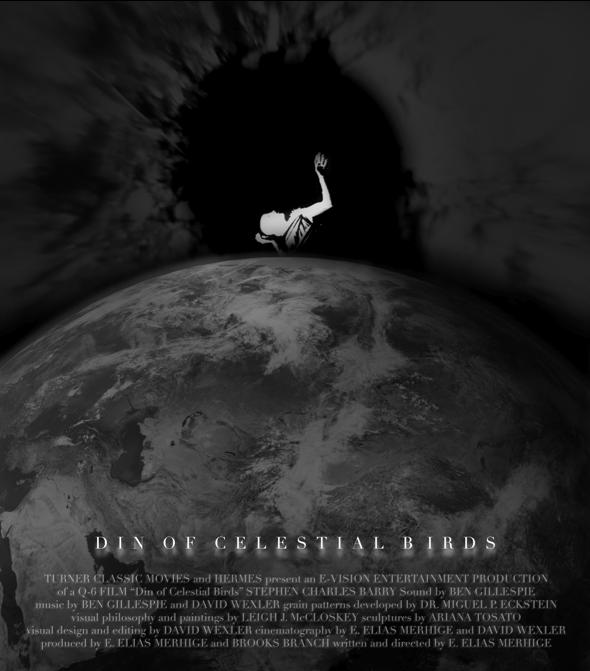
Saturday Matinee: Tokyo Blood

“Tokyo Blood” (1993) is an anthology film consisting of four experimental shorts directed by Gakuryû Ishii (formerly known as Sogo Ishii) thematically connected by the theme of entrapment in Tokyo’s urban landscape and desire to escape. The opening film, “Street Noise” is an impressionistic audio/visual collage depicting an anonymous salaryman’s state of mind as he breaks down from sensory overload. The second vignette, “Bicycle” follows the journey of two young strangers bonded by alienation who aimlessly explore the city by bike after a chance encounter. The third chapter begins as a parody of structuralist film theory (not unlike early works by Peter Greenaway) but soon descends into the hyper-kinetic chaos reminiscent of films by fellow Japanese avant-garde director Shinya Tsukamoto (The Tetsuo Trilogy). The concluding film, “Heart of Stone” is seemingly a transmission from a post-human feature combining the styles of Chris Marker’s essay films and Craig Baldwin’s found-footage narratives.

https://www.youtube.com/watch?v=NG4rqe0amGA