
Ukraine: Somewhere between Afghanization and Syrianization

Ukraine is finished as a nation – neither side will rest in this war. The only question is whether it will be an Afghan or Syrian style finale.
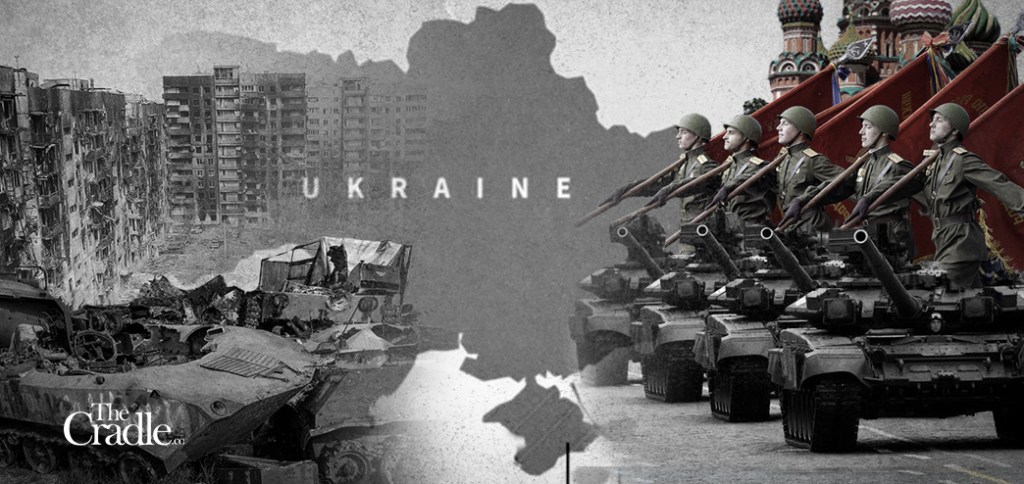
Photo Credit: The Cradle

By Pepe Escobar

Source: The Cradle

One year after the astounding US humiliation in Kabul – and on the verge of another serious comeuppance in Donbass – there is reason to believe Moscow is wary of Washington seeking vengeance: in the form of the ‘Afghanization’ of Ukraine.

With no end in sight to western weapons and finance flowing into Kiev, it must be recognized that the Ukrainian battle is likely to disintegrate into yet another endless war. Like the Afghan jihad in the 1980s which employed US-armed and funded guerrillas to drag Russia into its depths, Ukraine’s backers will employ those war-tested methods to run a protracted battle that can spill into bordering Russian lands.

Yet this US attempt at crypto-Afghanization will at best accelerate the completion of what Russia’s Defense Minister Sergei Shoigu describes as the “tasks” of its Special Military Operation (SMO) in Ukraine. For Moscow right now, that road leads all the way to Odessa.

It didn’t have to be this way. Until the recent assassination of Darya Dugina at Moscow’s gates, the battlefield in Ukraine was in fact under a ‘Syrianization’ process.

Like the foreign proxy war in Syria this past decade, frontlines around significant Ukrainian cities had roughly stabilized. Losing on the larger battlefields, Kiev had increasingly moved to employ terrorist tactics. Neither side could completely master the immense war theater at hand. So the Russian military opted to keep minimal forces in battle – contrary to the strategy it employed in 1980s Afghanistan.

Let’s remind ourselves of a few Syrian facts: Palmyra was liberated in March 2016, then lost and retaken in 2017. Aleppo was liberated only in December 2016. Deir Ezzor in September 2017. A slice of northern Hama in December and January 2018. The outskirts of Damascus in the Spring of 2018. Idlib – and significantly, over 25 percent of Syrian territory – are still not liberated. That tells a lot about rhythm in a war theater.

The Russian military never made a conscious decision to interrupt the multi-channel flow of western weapons to Kiev. Methodically destroying those weapons once they’re in Ukrainian territory – with plenty of success – is another matter. The same applies to smashing mercenary networks.

Moscow is well aware that any negotiation with those pulling the strings in Washington – and dictating all terms to puppets in Brussels and Kiev – is futile. The fight in Donbass and beyond is a do or die affair.

So the battle will go on, destroying what’s left of Ukraine, just as it destroyed much of Syria. The difference is that economically, much more than in Syria, what’s left of Ukraine will plunge into a black void. Only territory under Russian control will be rebuilt, and that includes, significantly, the bulk of Ukraine’s industrial infrastructure.

What’s left – rump Ukraine – has already been plundered anyway, as Monsanto, Cargill and Dupont have already bagged 17 million hectares of prime, fertile arable land – over half of what Ukraine still possesses. That translates de facto as BlackRock, Blackstone and Vanguard, top agro-business shareholders, owning whatever lands that really matter in non-sovereign Ukraine.

Going forward, by next year the Russians will be applying themselves to cutting off Kiev from NATO weapons supplies. As that unfolds, the Anglo-Americans will eventually move whatever puppet regime remains to Lviv. And Kiev terrorism – conducted by Bandera worshippers – will continue to be the new normal in the capital.

The Kazakh double game

By now it’s abundantly clear this is not a mere war of territorial conquest. It’s certainly part of a War of Economic Corridors – as the US spares no effort to sabotage and smash the multiple connectivity channels of Eurasia’s integration projects, be they Chinese-led (Belt and Road Initiative, BRI) or Russian-led (Eurasian Economic Union, EAEU).

Just like the proxy war in Syria remade large swathes of West Asia (witness, for instance, Erdogan about to meet Assad), the fight in Ukraine, in a microcosm, is a war for the reconfiguration of the current world order, where Europe is a mere self-inflicted victim in a minor subplot. The Big Picture is the emergence of multipolarity.

The proxy war in Syria lasted a decade, and it’s not over yet. The same may happen to the proxy war in Ukraine. As it stands, Russia has taken an area that is roughly equivalent to Hungary and Slovakia combined. That’s still far from “task” fulfillment – and it’s bound to go on until Russia has taken all the land right up to the Dnieper as well as Odessa, connecting it to the breakaway Republic of Transnistria.

It’s enlightening to see how important Eurasian actors are reacting to such geopolitical turbulence. And that brings us to the cases of Kazakhstan and Turkey.

The Telegram channel Rybar (with over 640k followers) and hacker group Beregini revealed in an investigation that Kazakhstan was selling weapons to Ukraine, which translates as de facto treason against their own Russian allies in the Collective Security Treaty Organization (CSTO). Consider too that Kazakhstan is also part of the Shanghai Cooperation Organization (SCO) and the EAEU, the two hubs of the Eurasian-led multipolar order.

As a consequence of the scandal, Kazakhstan was forced to officially announce the suspension of all weapons exports until the end of 2023.

It began with hackers unveiling how Technoexport – a Kazakh company – was selling armed personnel carriers, anti-tank systems and munitions to Kiev via Jordanian intermediaries, under the orders of the United Kingdom. The deal itself was supervised by the British military attaché in Nur-Sultan, the Kazakh capital.

Nur-Sultan predictably tried to dismiss the allegations, arguing that Technoexport had not asked for export licenses. That was essentially false: the Rybar team discovered that Technoexport instead used Blue Water Supplies, a Jordanian firm, for those. And the story gets even juicier. All the contract documents ended up being found in the computers of Ukrainian intel.

Moreover, the hackers found out about another deal involving Kazspetsexport, via a Bulgarian buyer, for the sale of Kazakh Su-27s, airplane turbines and Mi-24 helicopters. These would have been delivered to the US, but their final destination was Ukraine.

The icing on this Central Asian cake is that Kazakhstan also sells significant amounts of Russian – not Kazakh – oil to Kiev.

So it seems that Nur-Sultan, perhaps unofficially, somehow contributes to the ‘Afghanization’ in the war in Ukraine. No diplomatic leaks confirm it, of course, but bets can be made Putin had a few things to say about that to President Kassym-Jomart Tokayev in their recent – cordial – meeting.

The Sultan’s balancing act

Turkey is a way more complex case. Ankara is not a member of the SCO, the CSTO or the EAEU. It is still hedging its bets, calculating on which terms it will join the high-speed rail of Eurasian integration. And yet, via several schemes, Ankara allows Moscow to evade the avalanche of western sanctions and embargoes.

Turkish businesses – literally all of them with close connections to President Recep Tayyip Erdogan and his Justice and Development Party (AKP) – are making a killing, and relishing their new role as crossroads warehouse between Russia and the west. It’s an open boast in Istanbul that what Russia cannot buy from Germany or France they buy “from us.” And in fact several EU companies are in on it.

Ankara’s balancing act is as sweet as a good baklava. It gathers    economic support from a very important partner right in the middle of the endless, very serious Turkish economic debacle. They agree on nearly everything: Russian gas, S-400 missile systems, the building of the Russian nuclear power plant, tourism – Istanbul is crammed with Russians – Turkish fruits and vegetables.

Ankara-Moscow employ sound textbook geopolitics. They play it openly, in full transparence. That does not mean they are allies. It’s just pragmatic business between states. For instance, an economic response may alleviate a geopolitical problem, and vice-versa.

Obviously the collective west has completely forgotten how that normal state-to-state behavior works. It’s pathetic. Turkey gets “denounced” by the west as traitorous – as much as China.

Of course Erdogan also needs to play to the galleries, so every once in a while he says that Crimea should be retaken by Kiev. After all, his companies also do business with Ukraine – Bayraktar drones and otherwise.

And then there’s proselytizing: Crimea remains theoretically ripe for Turkish influence, where Ankara may exploit the notions of pan-Islamism and mostly pan-Turkism, capitalizing on the historical relations between the peninsula and the Ottoman Empire.

Is Moscow worried? Not really. As for those Bayraktar TB2s sold to Kiev, they will continue to be relentlessly reduced to ashes. Nothing personal. Just business.

US Sanctions Symptomatic of a Failing Empire

By James ONeill
Source:  New Eastern Outlook

On 26 July 2017 the US Congress overwhelmingly approved a Bill providing for fresh sanctions against North Korea, Russia and Iran. The passage of this Bill , and its level of support in the US Congress, is instructive on a number of levels.

The first point is that the US, or more accurately factions within the US establishment, are prepared to pursue policies irrespective of the lack of an evidential foundation; run counter to the interests of its supposed friends and allies, and completely lacks any knowledge of or reference to historical realities. The net result of the latest sanctions is to create a singularly dangerous situation that could very easily lead to a nuclear war. Contrary to the bizarre beliefs of some US policy makers, there would be no winners in such an outcome.

These points may be illustrated by reference to the sanctions applied to Iran. For years, the rhetoric from the US and its close ally Israel was that Iran was on “the verge of developing a nuclear bomb”. For more than a decade, the Israel government was saying that Iran was “only months away” from such a development. That the deadlines came and went without incident did not deter the repetition of what were manifest falsehoods.

Israel’s Prime Minister Netanyahu appeared before the UN General Assembly brandishing a cartoon depiction of the alleged “imminent threat”. The western media largely omitted to mention the fact that it was Israel that was the Middle East’s sole nuclear power; that Israel was not a signatory to the nuclear Non-Proliferation Treaty; and that it was Israel that consistently refused to allow inspections by the IAEA of its nuclear facilities.

Not only was there no evidence that Iran had or wished to develop a nuclear weapons capability, it was the unanimous view of all 17 US intelligence agencies on two separate occasions that Iran was not developing a nuclear weapons program.

To head off the prospect of the constant anti-Iran propaganda escalating to an attack by the US and its allies upon Iran, the Russian government was instrumental in achieving an agreement in 2015 that prevented an alleged non-existent nuclear weapons program becoming a justification for war. The recent historical example of Iraq was illustrative of how constant demonization, undermining by sanctions, and overblown false allegations of nuclear and other weapons of mass destruction could quickly lead to the utter devastation of a previously prosperous nation.

The lessons that should have been learned from Iraq, Libya and Syria are determinedly ignored by the western media that is currently beating the drums of war over North Korea, again ignoring history, logic and military realities.

The Joint Comprehensive Plan of Action (JCPOA) negotiated in 2015 and agreed by the participating parties, including the United States, provided an instrument through which it became virtually impossible for Iran to become a nuclear-armed power. The mechanisms for ensuring compliance included regular IAEA inspections, and six-monthly reports certifying Iran’s compliance. Those reports went to the US Congress.

For the Americans and their allies however, it was not enough. Although the JCPOA deprived them of an immediate casus belli for war, the anti-Iran rhetoric continued non-stop. One example of the false propaganda was the constant claim that Iran was a supporter of Shia groups, intent on fostering terrorism and destabilization across the Middle East and elsewhere.

This allegation bore no resemblance to the facts. The US Carnegie Foundation, for example, in a report entitled “Iran’s Small Hand in Yemen” criticized the depiction of Iran as supporting “Shia rebels” against the forces supporting the deposed President Hadi. The reality is that Hadi was a dictator, elected in an election where he was the only candidate, and whom popular opposition forced him to flee to Saudi Arabia.

The Houthis, who are the main opposition to Hadi, are Zaidi Muslims, much closer theologically to the Sunni branch of Islam than they are to predominantly Shia Iran. The brutal war currently being waged on Yemen is led by Sunni Saudi
Arabia, supported by the UK, US and a heavy involvement of mercenaries, including Australians, about which the Australian government is silent. The reality has more to do with Yemen’s strategic location overlooking the narrow outlet from the Red Sea to the Arabian Sea and its massive oil reserves coveted by the Saudis than it does with any alleged Iranian support. Djibouti, across the strait from Yemen, has similarly attracted US and Chinese strategic involvement, without as yet being ravaged by war.

Iran also offers political and moral support for Hamas in Palestine, Muslims in Kashmir and the Rohingya in Myanmar, all of whom are overwhelmingly Sunni. The feature they all have in common is that they are repressed and subject to genocidal policies by other political and religious groupings.

The Trump administration is demonstrating the truth of President Putin’s observation about the previous Obama administration, that they “are not agreement capable.”

Trump told the Wall Street Journal “if it was up to me I would have found (the Iranians) non-compliant 180 days ago” (when he was sworn in). According to an article in the US Journal Foreign Policy Trump threw a tantrum in the Oval Office and berated his three senior foreign policy advisers (Tillerson, Mattis and McMaster) for not having found a way to claim that Iran was in breach of the provisions of the JCPOA. The New York Times ran a similar story.

In fact it is the United States that is in violation of the JCPOA, both the letter and the spirit of the agreement, and also of UN Security Council Resolution 2231 (2015) that approved the agreement. Article 29 of the JCPOA commits the US to refrain from any policy intended to affect the normalization of trade and economic relations with Iran.

The latest round of sanctions, and the bellicose rhetoric accompanying them are manifestly not in compliance with Article 29.

Among the many falsehoods asserted against Iran is the claim that Iran’s missile tests are a violation of the JCPOA. There is nothing in the agreement that inhibits Iran from developing a self-defence capability, including the use of anti-aircraft and anti-missile technology. That is also a right enshrined in the UN Charter.

Iran took delivery of the Russian made S300 anti-missile system in 2016, also in pursuance of its right to self-defence. Given the bellicose threats made against Iran on an almost constant basis; the two recent incidents of “warning shots” being fired at Iranian vessels by US Navy ships operating close to Iran’s territorial waters; and the recent history of American actions in Iran’s neighborhood, self defence measures are at the very least a prudent course of action.

Iran’s compliance with the terms of the JCPOA has enabled action in another area arguably more important than military self-defence measures. Rapid progress has been made by Iran in strengthening its economic ties to China, India and Russia. Memoranda of Understanding worth $40 billion have been signed with Russia or Russian companies. The Russian company Gazprom has signed a multi-billion dollar deal to develop Iran’s Farzad B gas field. Gazprom is also helping to develop the Azar and Ghanguleh oil fields in Lurestan province where there is an estimated 3.5 billion barrels of oil reserves.

Iran similarly has $7 trillion in natural gas reserves. The $200 billion needed to develop those reserves will come from Russia, China and other non-western sources. Iran has announced that it will give preference in infrastructure and other development deals to those nations who were supportive through the years of sanctions and other forms of warfare.

China, that is currently building a high-speed rail link between Mashad and Tehran (to link with other Central Asian lines) sees Iran as a key player in its massive Belt and Road Initiative (BRI) that is transforming the Eurasian economic and geopolitical landscape.

Iran is similarly a key player in the North South Transportation Corridor that links India via Iran and Azerbaijan with Russia, transporting goods at a fraction of the cost and time of existing conventional routes that are vulnerable to US Navy interference.

Also of major significance is Iran’s associate membership of the Shanghai Cooperation Organisation, with full membership highly likely in 2018. The SCO is a central component of the BRI with ever growing trade and security links with the Russian initiated Eurasian Economic Union (EEU). Russia is the common denominator of BRICS, the SCO, the EEU, the SCO and the NSTC. The countries in these four groups, as well as other nations (now more than 60) who have joined the BRI, are increasingly trading in other than dollar denominated arrangements. The days of the US dollar’s dominance are clearly numbered.

It is this combination of major economic and geopolitical shifts in the balance of power away from US dominance that has prevailed for the past seven decades that is the key to understanding why the Americans are reacting in the desperate, dangerous and irrational manner that they are. It is the classic end of empire syndrome. One hopes that the adults in the room will constrain the US from traveling further down a path that could spell the end of humanity.

Why I Wept at the Russian Parade

00023783_medium

By William F. Engdah

Source: New Eastern Outlook

Something extraordinary just took place in Russia and it may have moved our disturbed world one major step nearer to peace and away from a looming new world war. Of all unlikely things, what took place was a nationwide remembrance by Russians of the estimated 27 to perhaps 30 million Soviet citizens who never returned alive from World War II. Yet in what can only be described in a spiritual manner, the events of May 9, Victory Day over Nazism, that took place across all Russia, transcended the specific day of memory on the 70th anniversary of the end of World War II in 1945. It was possible to see a spirit emerge from the moving events unlike anything this author has ever witnessed in his life.

The event was extraordinary in every respect. There was a sense in all participants that they were shaping history in some ineffable way. It was no usual May 9 annual show of Russia’s military force. Yes, it featured a parade of Russia’s most advanced military hardware, including the awesome new T-14 Armata tanks, S-400 anti-missile systems and advanced Sukhoi Su-35 fighter jets. It was indeed impressive to watch.

The military part of the events also featured for the first time ever elite soldiers from China’s Peoples’ Liberation Army marching in formation along with Russian soldiers. That in itself should shivers down the spines of the neoconservative warhawks in the EU and Washington, had they any spines to shiver. The alliance between the two great Eurasian powers—Russia and China—is evolving with stunning speed into a new that will change the economic dynamic of our world from one of debt, depression, and wars to one of rising general prosperity and development if we are good enough to help make it happen.

During his visit, China’s President Xi, in addition to his quite visible honoring of the Russian Victory event and its significance for China, met separately with Vladimir Putin and agreed that China’s emerging New Silk Road high-speed railway infrastructure great project will be integrated in planning and other respects with Russia’s Eurasian Economic Union which now consists of Russia, Belarus, Kazakhstan and Armenia with several prospective candidates waiting to join. While it may seem an obvious step, it was not at all certain until now.

The two great Eurasian countries have now cemented the huge oil and gas deals between them, the trade deals and the military cooperation agreements with a commitment to fully integrate their economic infrastructure. Following his meeting with Xi, Putin told the press, “The integration of the Eurasian Economic Union and Silk Road projects means reaching a new level of partnership and actually implies a common economic space on the continent.”

It’s Zbigniew Brzezinski’s worst geopolitical nightmare come to fruition. And that, thanks to the stupid, short-sighted geopolitical strategy of Brzezinski and the Washington war faction that made it clear to Beijing and to Moscow their only hope for sovereign development and to be free of the dictates of a Washington-Wall Street Sole Superpower was to build an entire monetary and economic space independent of the dollar world.

The Parade of the Good

Yet the most extraordinary part of the day-long events was not the show of military hardware at a time when NATO is not only rattling sabres at Russia, but even intervening militarily in Ukraine to provoke Russia into some form of war.

What was extraordinary about the May 9 Victory Day Parade was the citizens’ remembrance march, a symbolic parade known as the March of the Immortal Regiment, a procession through the streets of Moscow into the famous and quite beautiful Red Square. The square, contrary to belief of many in the West was not named so by the “Red” Bolsheviks. It took its name from Czar Alexei Mikhailovich in the mid-17th Century from a Russian word which now means red. Similar Immortal Regiment parades involving an estimated twelve million Russians took place all over Russia at the same time, from Vladivostock to St. Petersburg to Stevastopol in what is now Russian Crimea.

In an atmosphere of reverence and quiet, some three hundred thousand Russians, most carrying photos or portraits of family members who never returned from the war, walked on the beautiful, sunny spring day through downtown Moscow into Red Square where the President’s residence, the famous Kremlin, is also located.

To see the faces of thousands and thousands of ordinary Russians walking, optimism about their future beaming from their faces, young and the very old, including surviving veterans of the Great Patriotic War as it is known to Russians, moved this writer to quietly weep. What was conveyed in the smiles and eyes of the thousands of marchers was not a looking back in the sense of sorrow at the horrors of that war. Rather what came across so clearly was that the parade was a gesture of loving respect and gratitude to those who gave their lives that today’s Russia might be born, a new, future-looking Russia that is at the heart of building the only viable alternative to a one-world dictatorship under a Pentagon Full Spectrum Dominance and a dollar system choking on debt and fraud. The entire Russian nation exuded a feeling of being good and of being victorious. Few peoples have that in today’s world.

When the television cameras zoomed in on President Vladimir Putin who was also marching, he was walking freely and open amid the thousands of citizens, holding a picture of his deceased father who had served in the war and was severely wounded in 1942. Putin was surrounded not by bulletproof limousines that any US President since the assassination of Kennedy in 1963 would have, were he even to dare to get close to a crowd. There were three or four presidential security people near Putin, but there were thousands of ordinary Russians within arm’s length of one of the most influential world leaders of the present time. There was no climate of fear visible anywhere.

My tears

My tears at seeing the silent marchers and at seeing Putin amid them was an unconscious reaction to what, on reflection, I realized was my very personal sense of recognition how remote from anything comparable in my own country, the United States of America, such a memorial march in peace and serenity would be today. There were no “victory” marches after US troops destroyed Iraq; no victory marches after Afghanistan; no victory marches after Libya. Americans today have nothing other than wars of death and destruction to commemorate and veterans coming home with traumas and radiation poisonings that are ignored by their own government.

That transformation in America has come about in those same 7o years since the end of the war, a war when we–Americans and Russians, then the Soviet Union of course—had fought side-by-side to defeat Hitler and the Third Reich. Today the Government of the United States is siding with and backing neo-nazis in Ukraine to provoke Russia.

I reflected how much my countrymen have changed over those few decades. From the world’s most prosperous nation, the center of invention, innovation, technology, prosperity, in the space of seven decades we have managed to let our country be ruined by a gaggle of stupid and very rich oligarchs with names like Rockefeller, Gates, Buffett and their acolytes in the Bush dynasty. Those narcissistic oligarchs cared not a whit for the greatness of the American people, but saw us as a mere platform to realize their sick dream of world dominion.

We let that happen.

I’ll let you in on a secret that I recently discovered. The American oligarchs ain’t all-powerful; they ain’t some new Illuminati or gods as some try to convince us. They ain’t omniscient. They get away with murder because we allow them. We are hypnotized by their aura of power.

Yet were we to stand tall and clear in the open and say, “These silly would-be Emperors have no clothes!,” their power would evaporate like cotton candy in hot water.

That’s what they’re terrified of. That’s why they are deploying the US Armed Forces into Texas to stage war games aimed at US citizens; that’s why they have torn up the Constitution and Bill of Rights after 911. That’s why the Created a Department of Homeland Security. It’s why they try to terrify our citizens to vaccinate with untested Ebola or other vaccines. It’s why they are desperate to control free expression of political ideas in the Internet.

Now, when I reflect on the true state of America today compared with Russia, it brings tears. Today the economy of the USA is in ruins. It has been “globalized” by its Fortune 500 global companies and the banks of Wall Street. Its industrial jobs have been outsourced to China, Mexico, even Russia over the past 25 or so years. Investment in the education of our youth has become a politically-correct sick joke. College students must go deep into debt to private banks, some $1 trillion worth today, to get a piece of paper called a degree in order to look for non-existent jobs.

Our Washington government has become serial liars who have lied to us about the true state of the economy ever since Lyndon Johnson during the Vietnam War ordered the Commerce and Labor departments to find ways to fake the numbers to hide the developing internal economic rot. The consequence, followed by every president since, is that we live in a fairy tale world where the mainstream media tells us we are in the “sixth year of economic recovery” and have a mere 5.4% unemployment. The reality is that more than 23% of Americans today are unemployed but through clever tricks have been defined out of the statistics. Some 93 million Americans are unable to get full time work. It isn’t the fault of Obama or Bush before him or Clinton, Bush, Reagan or Jimmy Carter. It’s our own fault because we were passive; we gave them the power because we did not believe in ourselves enough. We let billionaires decide for us who will be our President and Congress because we no longer believed that we were good.

By the same token, Russians today, amid brutal Western economic and financial warfare sanctions; amid a NATO war in Ukraine that has led more than one million Russian-speaking Ukrainians to flee to Russia for safety, despite the demonization in the western media of their country, exude a new optimism about their future. What makes Vladimir Putin so extraordinarily popular, with over 83% approval, is that he acts out that growing sense of representing that Russian soul, the people who are good, being just, being right, the sense that the vast majority of Russians today have.

That was overwhelmingly visible in the faces of the May 9 marchers. You could feel that Putin on the speaker’s podium felt it when he looked into the vast crowd. It was clear when Defense Minister Shoigu, a Russian-Mongolian Tuvan-born Buddhist, respectfully and humbly made the Orthodox sign of the cross with bowed head as he passed through the Kremlin’s Saviour Tower to take his place aside Putin. As Victor Baranets, a noted Russian journalist put it: ”At that moment I felt that with his simple gesture Shoigu brought all of Russia to his feet. There was so much kindness, so much hope, so much of our Russian sense of the sacred in this gesture.“  The legendary Russian Soul was manifest on May 9 and its alive and very well, thank you.

And that’s why I shed the tears on May 9, watching hundreds of thousands of peaceful Russians walk through their capital city, the city that saw the defeat of Napoleon’s army and of Hitler’s. I was moved deeply watching them slowly and deliberately walking into the Red Square next to their President’s residence at a time when Washington’s White House is surrounded by concrete barriers, barbed wire and armed guards.

You could see it in the eyes of the Russians on the street: they knew that they were good. They were good not because their fathers or grandfathers had died defeating Nazism. They were god because they could be proud Russians, proud of their country after all the ravages of recent decades, most recently the US-backed looting during the 1990’s Harvard Shock Therapy in the Yeltsin era.

I shed tears being deeply moved by what I saw in those ordinary Russians and tears for what I felt had been destroyed in my country. We Americans have lost our sense that we are good or even perhaps again could be. We have accepted that we are bad, that we kill all around the world, that we hate ourselves and our neighbors, that we fear, that we live in a climate of race war, that we are despised for all this around the world.

We feel ourselves to be anything but good because we are in a kind of hypnosis induced by those narcissistic oligarchs to be so. Hypnosis, however, can be broken under the right circumstances. We only have to will it so.

Postscript:

The last time I wept at a public event was in November 1989 when the Berlin Wall came down and Germans—east and west—danced together on the symbol of the Cold War division between East and West, Beethoven’s Ode to Joy rang out. The German Chancellor made a speech to the Bundestag proposing the vision of a high-speed rail linking Berlin to Moscow. Then, Germany was not strong enough, not free enough from guilt feelings from the war, to reject the pressure that came from Washington. The architect of that vision, Alfred Herrhausen, was assassinated by the ‘Red Army Fraction’ of Langley, Virginia. Russia was deliberately thrown into chaos by IMF shock therapy and the criminal Yeltsin family. Today the world has a new, far more beautiful possibility to realize Herrhausen’s dream—this time with Russia, China and all Eurasia. This is what was so beautiful about the May 9 parade.

F. William Engdahl is strategic risk consultant and lecturer, he holds a degree in politics from Princeton University and is a best-selling author on oil and geopolitics, exclusively for the online magazine “New Eastern Outlook”.