 This is a concluding post for an excellent 7 part long-form series featured on the Hipcrime Vocab blog. While this serves as an adequate synopsis of what was covered, I highly recommend the series for it’s depth and scope starting with the introduction.
Source: Hipcrime Vocab
The first thing I learned is that I bit off more than I could chew, lol. I was intending a simple book review, and it turned into a lot more than I intended to write. I also learned how difficult and thankless a task blogging can be. I’m glad at least a few of you chimed in to let me know you enjoyed it.
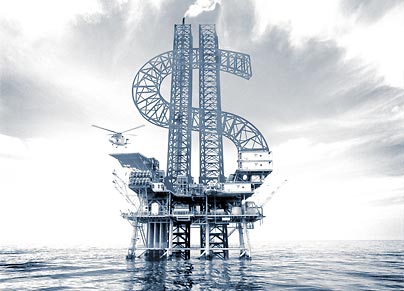
One major thing I learned (which I already sort-of knew) is how much real resources have to do with the economy, and economic history, despite economists’ insistence that land, labor and capital are all that matter. In fact, real resources appear to be the MAJOR driver of our economic fortunes. Even Forbes magazine had to admit: The Recessions of 1973,1980,1991,2001,2008 Were Caused By High Oil Prices. Energy doesn’t matter, huh?
I was really taken aback at how recent this all is. I was somewhat aware the historic problem with oil was that there was too much of the stuff. Eric Roston, in The Carbon Age, writes, “Gasoline was a throwaway by product of kerosene refining until the early 1900s, used sometimes in solvents or as fuel for stoves. In 1892, two cents a gallon was a decent price. For another thirty years, apothecaries were the makeshift filling stations.”
But I had no idea just how much of a glut there was and how people thought it would last forever. That it was so cheap we needed the Texas Railroad Commission to hold back production so that the prices would be high enough. I mean, this substance contains the equivalent of ten to eleven years of human labor (1750 Kilowatt hours of human labor), for crying out loud! And it is a non-renewable resource! I was amazed at how far we went in coming up with new uses for the stuff, to the point destroying perfectly good and workable infrastructure just so we could use more of it. Can anything be more insane?
The long boom was driven by the exploitation of oil as a resource. This led to the dominance of the ICE (Internal Combustion Engine). All of the knock-on effects of the ICE were behind the post-war boom. I mean, you could write a book about all the economic development caused by cars and trucks. In fact, truck driver/delivery is still the most common job in most states to this day! The ability to deliver goods cheaply anywhere had so many knock-on effects, from the creation of whole new cities to the rise of big-box retailers. Let’s not forget that everything in that big-box retailer is made from plastic which is made from petroleum feedstocks. Kunstler calls the suburbs the greatest misallocation of resources in human history. It’s easy to see how that’s true.
I didn’t know that it was only as late as 1959 that petroleum overtook coal to be more than 50 percent of our energy use. I didn’t know that coal only became the world’s predominant energy source after 1900. Before that, we were still essentially in a wood/biofuel economy. As I wrote before, that’s pretty recent – less than three generations.
We think of the 19th century as the era of coal, but as the distinguished Canadian energy economist Vaclav Smil has pointed out, coal only reached 5% of world energy supply in 1840, and it didn’t get to 50% until about 1900.
The modern oil industry began in 1859, but it took more than a century for oil to eclipse coal as the world’s No. 1 source. “The most important historical lesson,” Dr. Smil says, is that “energy resources require extended periods of development.”
The Power Revolutions (WSJ)
Peak oil ideas made it sound like oil (specifically petroleum) was the only resource that matters to the economy, so that once oil production stops growing, the economy will collapse. That’s clearly not the case (oil is 36 percent of the world’s energy). There are lots of other fuels in the mix. However, things like fracking, tar sands, and offshore drilling clearly mean that cheap, easy-to-get oil is on the wane. Oil is cheap now because of fracking – not the tight oil itself, but rather because the fear of it is keeping prices low by the Saudis. That will change. I’m always amazed at the people who run out and buy SUVs the minute the oil price goes down. Do they expect it to be cheap forever or do they expect to drive their car for only a year? It’s also cheap because our economy is in the crapper.
Forget who the candidates are and all the campaigning and the billions of dollars spent– If oil prices are high, the economy is in recession, and the incumbent party will lose power. You can pretty much predict any presidential election by this fact alone. Two-thousand is the only one that sort-of breaks the mold, and that was such a bizarre election between the hanging chads, the voting fraud and the Supreme Court. In other words, it’s not just the economy driven by energy prices – it’s the political world too. Everything else is just meaningless fluff.
At the end of the day, whether a president presides over a good economy or a bad economy is almost entirely down to oil prices.
The other thing that strikes you is the “Groundhog Day” nature of the situation. Oil prices get high, we get worried about the environment, and there’s a great boom in alternative energy, energy efficiency, environmental impacts, worries about the economy and supply chains, and so forth. Then oil prices go down and we forget all about alternative energy and all the inherent problems with relying on a finite resource. All the progress toward getting off of oil stagnates, and people assume oil will be cheap forever. Then they get high again, and suddenly it all becomes important again, and we have to go back to square one (compare the EV-1 to Tesla, for example. Heck, Edison built an electric car!). Charles Mann had a great line along the lines of “The human propensity to see flukes of good fortune as never coming to an end,” or something like that.
Given the manipulation of oil prices, it’s hard to see natural economic factors as ever being able to do the right thing when it comes to energy. When prices get high, new supply comes online and alternatives are pursued. But then oil prices crush the economy, demand falls more in line with supply, the price falls, and the initiatives are halted. It feels like the invisible hand is attached to an idiot. Maybe this time we’ll finally get serious.
Prices are temporary conditions. Peak oil is permanent.
The drug dealer analogy of us being addicted to oil is shopworn, but it is just so accurate. It was only once we were addicted to the product that they could jack up the price, and then we HAD to pay what they demanded. But like a drug that devastates the lives of its users, when you hit rock-bottom you try to get on the twelve-step program and get your life back. Then, the dealers will lower the price to keep you addicted, and the cycle begins again. Plus, every dealer wants to be your dealer, so they need to be just a little bit cheaper than the next guy. Barring that, they will bind together with the other dealers to keep the price high and protect their “turf.” The economics of drug dealing and oil are eerily similar. I wonder if anyone’s formally studied this.
In the past each new energy source was added on to the previous ones. Now we are talking about substitution – a totally different ballgame. That is, new energy sources will replace old. That’s substitution, not expansion.
Cheap oil combined with the opening up of China drove globalization. There is no way we could build the largest moving structures ever built to transport goods if we didn’t have a fuel source cheap enough to make it worthwhile. A single ship can move 19,000 containers, enough to move 300 million tablet computers.
That oil played a role in foreign policy shouldn’t be a surprise, but looking at exactly how it led to the invasions of Afghanistan and Iraq, the civil war in Syria, the removal of Qaddafi, the propping up or removing of dictators, and the positioning of armies around the globe was still eye-opening. So much foreign policy is dictated by access to oil. So much…
I was actually unaware of the Eurodollar and how I caused the fall of Bretton Woods. As Smith illustrates, going back to the gold standard is practically impossible (sorry libertarians). I was unaware of the role that Petrodollar recycling played in the Latin American debt crisis. I was aware of how the Petrodollars funded terrorism. I’m sure readers of Dmitry Orlov were familiar with the role oil and grain prices played in the fall of the Soviet Union. Again, this made Reagan look like a genius.
What I really wanted to describe is how the oil price crisis came about and how it led directly to the rise of Neoliberalism. I also wanted to show how Jimmy Carter’s “failure” and Ronald Reagan’s “success” was based mostly on oil prices. Some people would take issue with that, but it’s hard to separate one from the other. Is it 100 percent? Maybe not, but what percentage was oil prices? Seventy? Fifty? Twenty-five? Surely it played a role.
The problem is that it made Neoliberalism look like a success. People came to believe that unions were evil, and tax cuts for the rich and corporations, deregulation, and speculation were the magic keys to prosperity. But throughout the Neoliberal reign, oil prices were either stable or crashing. When that wasn’t the case, as in 2007-2008, the system came apart. The rise of China also made Neoliberalism appear to work. But it was smoke and mirrors – cheap uneducated labor, overinvestment, state-controlled enterprises, artificially cheap currencies, entire cities built with no people in them, etc. It was a Potemkin’s village on the scale of a nation. Globalization is a Ponzi scheme.
But now Neoliberalism is literally tearing the world apart. Some major reasons:
1.) Turning the speculators loose. The oil price rise and the food price rise seem to be mainly problems of market speculations (i.e. greed and fear, always the real movers of markets, not supply and demand). This has, in turn, led to political turmoil as we saw in the Arab Spring. If speculation continues to cause price rises for essentials like food, fuel and water to pad the fortunes of speculators, expect more chaos and collapse. Even in the U.S., the actions of Enron and “Kenny-boy” lay caused serious harm to economies, not expansion. And we spent enough on the bailouts to give every unemployed person a job and every homeless person a home, with billions left over. Is this how economies should be run?
2.) The suppression of worker wages has caused massive hardship around the world. The abandonment of full employment as a policy goal has led to a worldwide unemployment crisis that is destabilizing the world. Unemployed people have nothing to lose. People with nothing to lose tend to revolt (see above). The gutting of social services and welfare safety nets has also led to poverty and desperation all around the world. It calls into question the ability of capitalism to deliver broad increases in living standards everywhere. We are clearly not seeing that. We’ve been in reverse for some time. Shouldn’t an economic system make us ALL richer, rather than provide winners and losers? If it can’t, what kind of system is it?
3.) Globalism spreads not only the wealth around, but the poverty too. Some countries, notably Western Europe, have attempted to defend their citizens, while others like the United States, did nothing to insulate its workers from third-world wages and working conditions (and even encouraged them). Rising living standards in China and India are one thing, but falling living standards in formerly wealthy countries make the rich capitalists richer, but cause anger and consternation which is easily exploited by the unscrupulous and power-hungry. This is also destabilizing. Just look at all the anger in the U.S. today searching for a scapegoat.
4.) Austerity and the straitjacketing of governments has led to wealthy, industrialized countries “undeveloping.” The United States is a nation of private affluence and public squalor, with one-third of its children living in poverty, entire cities abandoned and crumbling, urban areas too expensive for median income workers, the infrastructure of a banana republic, poor access to education and healthcare, pockets of poverty, ghettoes, etc. Greece is being gutted as an example to the West. This is leading to rise of right-wing parties in Europe, again redolent of the run-up to the Second World War.
5.) The faith in Markets to solve all problems is especially disastrous with an ongoing environmental crisis. Instead of rationing or capping, instead we get easily gamed “cap and trade” markets to reduce emissions. Nature is just “natural capital,” and every drop of water, tree leaf, and grain of sand must be assigned an owner and a price. In other words, all of nature must be subsumed into the market, because markets are the only way we can solve our problems! This is a Neoliberal idea. Look at how the United States responded to the crisis in the seventies by contrast.
6.) Debt crises have caused massive hardship around the world. As I learned, Mexico’s reputation as a haven for poverty, prostitution, drug gangs, etc. was only after the Latin American debt crisis of 1982. That, in turn, led the massive influx of Latin American refugees into the United States turning America into a Latin country overnight. Prior to 1979, places like Afghanistan, Iran, Lebanon, Egypt, Iraq, Algeria, Syria and Libya were stable, secular, relatively prosperous places (See this. And this). Now look at them. Yes, they had dictators and human rights violations. But compare it to today. Latin America has fared somewhat better, largely by finding a way to reject or bypass Neoliberalism. Africa has not fared well, either. Note that you only heard about collapse and famine after the 1980’s (remember Ethiopia?). Yes, Africa was poor before then, but it seemed to be heading in the right direction. Not any more.
7.) People from these wrecked countries are heading to the Western industrialized countries in massive waves of migration–Latin America for the United States and Canada, and the Middle East and Africa for the European Union. This has driven down wages and caused the rise of nativist parties. Everyone is heading for the lifeboats as more and more countries become failed states. There is simply not enough room for all. But rebuilding these countries would mean abandoning the Neoliberal paradigm, forgoing debt and putting into place quasi-socialist policies. Then again, the rich can always retreat to floating offshore islands (and eventually space colonies).
It’s clear that much of the money that has not been collected by governments has gone not only into speculation as opposed to productive activity, but in purchasing political representation. This has led to democracies devolving into oligarchies and a mistrust of democracy in general. The buying of politicians and the media blocks any attempts to deal with collapsing systems. We’ve seen ever greater instability and ever greater bubbles under Neoliberalism now that government has been “contained” and workers have been “disciplined.”
The answer to our problems should be clear: abandon Neoliberalism and return to the mixed economy. Stop hamstringing governments. End speculation. Tax the rich. Close offshore tax shelters. Raise tariffs. Defend domestic industries. Write down the debts. Pursue full employment policies such as a job guarantee, reduced working hours and an basic income guarantee. Distribute essential social services through the government, and let the market handle non-necessities. Regulate to deal with externalities. Impose limits on natural resource extraction. Decarbonize energy.
All of this used to be common-sense. Now it beyond the pale.
The problem is, it’s a ratchet effect. We cannot go back, because TPTB will not allow it. And since the 1970s, they learned they had to not only control the government, but the information we imbibe day after day, otherwise we would instruct our government to do something the powerful may not want. Instead, we had to be convinced that Neoliberalism is the only valid economy – hence the think tanks, talk radio, publishing mills, Fox news, etc. Any sense of common purpose or solidarity is evil “socialism.” As we learned, even “liberal” news sources are fully dedicated to defending this paradigm at all costs, even at the cost of credibility. And the funding of the political classes by the wealthy will ensure that anything that threatens the fortunes of the oligarchs will be a non-starter, even if people do see past the media rhetoric.
The change in economics swallowed the hope of the sixties. How much does it have to do with Neoliberalism, and how much with oil prices? A lot of commenters say, “Hey, the oil is gone, we just need to learn to be peasants.” They point out that American wages stopped growing in 1973, around the time domestic oil production peaked in the U.S. But I think that’s simplistic. American wages stopped growing, not everyone else’s–not what we’d expect in an energy descent scenario. Rather, I think it was the wealth transfer of the seventies, and the politics it engendered, that was the primary culprit. The oil shock opened the door for globalized Neoliberalism, and that is the primary cause of our misfortune. By using oil as an excuse to be politically passive, we remove any chance at creating an economy that works better for all and play into the hands of the powerful.
I think old economy Steve puts it best. Or shall we say, “mixed economy” Steve:




 After the Crash