
From Wikipedia:
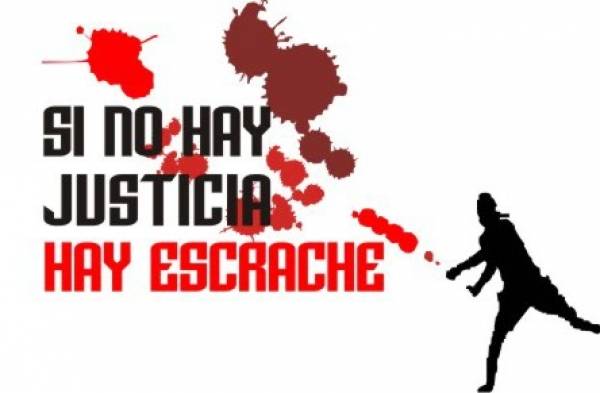
Escrache is the name given in Argentina, Paraguay, Uruguay and Spain to a type of demonstration in which a group of activists go to the homes or workplaces of those whom they want to condemn and publicly humiliate in order to influence decision makers and governments into a certain course of action. This term was born in Argentina in 1995 and has since spread to other Spanish-speaking countries.
In Chile these actions are known as funa. In Peru they are known as roche and are often signed “El roche”.
The word was coined for political usage in 1995 by the human rights group HIJOS, to condemn the genocides committed by members of the PROCESO who were pardoned by Carlos Menem.
By 2013, the term was in wide use in Spain, to define the direct action protests of the Plataforma de Afectados por la Hipoteca.
Origin of the term
The lunfardo term “escracho” has been used for some time in Río de la Plata. It was mentioned by Benigno B. Lugones in 1879 referring to a scam in which a lottery ticket supposedly naming the victim is presented to them and they are asked to pay to receive it, for an amount which is inferior to the amount they have “won” in the lottery. Escrache might also have come from the Genoese synonym for a photo “scraccé”, “scraccé” also passed to mean make a portrait, or more recently to smash someone’s face in. Another proposed origin is the English to scratch (the tickets used in the lottery scam were scratched to modify the number) or the Italian scaracio meaning spit.
The term came into wider use in 1995 by the human rights group HIJOS, when Carlos Menem pardoned members of the Proceso de Reorganización Nacional who were accused of human rights violations and genocide. Using chants, music, graffiti, banners, throwing eggs, street theater, etc., they inform neighbors of the presence of criminals in the neighborhood.
From NewTactics.org:
What we can learn from this tactic:
When perpetrators of abuse are granted impunity, whether by law or de facto, they may go on to lead relatively anonymous lives — sometimes in the same communities as their victims. A group in Argentina decided that, even if perpetrators cannot be prosecuted through the courts, they can be revealed — or “unmasked” — to the general public.
Even though amnesty laws have made it difficult to prosecute some perpetrators, H.I.J.O.S. bypasses political and legal systems to encourage a kind of social ostracism, while making use of humor, theater and other creative demonstrations.
This tactic has some serious risks. People adopting this tactic must be certain that they are targeting the right people and that the demonstrations are not used for other political purposes. Organizers of large demonstrations around emotional subjects must have mechanisms in place to prevent the events from degenerating into violence.

 After the Crash