With lines scripted for him to recite via teleprompter, crib notes, and an earpiece for instructions, the fake Biden mumbled and bumbled through the regime’s Tuesday state of the union (SOTU) address for 72 painful-to-hear minutes.
It came at a time when undemocratic Dems are waging war at home on Americans targeted for elimination by kill shots and abroad against militarily, morally and ethically superior Russia — what risks humanity-destroying nuclear war if push things too far.
The fake Biden is an embarrassment to what leadership is supposed to be, what’s absent with undemocratic Dems in charge — especially with an imposter, a detached from reality buffoon in the White House.
This year’s SOTU came at a time of hegemon USA’s war against invented enemy Russia, a must-win conflict it’s losing to a superior foe.
Throughout the post-WW II period, the empire of lies and mass-deception always picked fights with militarily inferior nations free from its control — until overstepping by challenging Russia belligerently in support of Nazi-infested Ukraine, a major strategic blunder for which it’s paying dearly.
Separately in response to international community calls for the Biden regime to aid rescue work in earthquake-devastated northern Syria by lifting illegally imposed sanctions, interventionist Blinken’s so-called spokesman, Price, showed contempt for its people in need by the following perversion of reality remarks, saying:
“It would be…counterproductive for us to reach out to a government” on the US target list for regime change for not subordinating its sovereignty and rights of its people to a higher power in Washington.
And this perversion of reality from Price, falsely claiming that the empire of lies and forever wars on invented enemies provided “more humanitarian assistance to the people of Syria than any other country (sic)” — a bald-faced Big Lie by a regime waging all-out war on nations free from its diabolical control.
Following Obama/Biden regime aggression against Syria in 2011, the empire of lies continued waging war on the country and its people by hot and other means.
At this time, hegemon USA illegally controls about one-third of Syrian territory, including its oil-rich areas and most fertile agricultural land.
Hegemon USA’s so-called 2020 Caesar Act is all about wanting 17 million Syrians starved into submission for failure of Damascus to bend to the will of the empire of lies and forever wars.
At the time of its enactment into US law, Syrian envoy to Russia, Riyad Haddad, explained that threatened US sanctions under the measure “not only target Syria, they directly or indirectly jeopardize all its allies and are also aimed against Persian Gulf countries, so that none of these countries dares to invest in” the Syrian Arab Republic.
“And each party that will say it wants to invest, must get permission from the US.”
The measure is similar to US state terror and illegal sanctions war on Russia, China, Iran, North Korea, Venezuela, Cuba, and other countries free from its control, what aims to inflict enormous harm on their people.
At this time, US hostility toward sovereign independent nations is a sideshow compared to its aggression against Russia, what poses an ominous risk of humanity-destroying nuclear war.
As in virtually all his public remarks, the fake Biden’s SOTU trampled on truth by a litany of pre-scripted bald-faced Big Lies.
It’s how the empire of lies operates on the world stage, treating truth and full disclosure of major issues as mortal enemies.
On March 11, 2022, the fake Biden called tanks to Nazi-infested Ukraine “WW III.”
Launched preemptively by the empire of lies against nonthreatening Russia, it’s been raging long before the fake Biden “announc(ed) that (hegemon USA) will be sending ‘Abram’ tanks to Ukrain(ian)” Nazis days earlier.
Will F-16 or other US warplanes follow — for Russia to target and destroy in flight?
The Russian Federation controls Ukrainian airspace and offshore waters.
Its high-precision hypersonic missiles can target and destroy anything threatening its security.
Sounding detached from reality and delusional, the fake Biden ignored reality about more monster than nation-state USA.
He ignored how Russia is outgunning, outmaneuvering, outwitting and defeating Nazi-infested Ukraine and the empire of lies at the same time.
And at a time of perpetual wars by hot and/or other means on invented enemies, soaring inflation and deepening economic weakness, the fake Biden pretended that Americans never had things better than since undemocratic Dems usurped power in 2020 by brazen election rigging.
And once again he ignored that what’s called covid is seasonal flu renamed, that kill shots are designed to destroy health, that democracy in the US/West exists in fantasy form alone — the real thing not tolerated at home or abroad.
What he called “the great American story” is a humanity-destroying monster.
Tucker Carlson is an exception to dominant fourth estate rubbish.
Commenting on the fake Biden’s Tuesday night SOTU before delivered, he said:
“(I)t would take a lot of brass to stand up on live television and claim that the (empire of lies and forever wars) is better off than it was when you took over” when reality is worlds apart different.
As long as undemocratic Dems run things, the ominous risk of nuclear war will threaten humanity’s survival.
Carlson correctly expected not “a single honest word” from the White House imposter in his SOTU address.
Instead of truth and full disclosure, he recited a litany of bald-faced Big Lies about all things domestic and geopolitical.
He didn’t run for president.
He was installed unelected to serve wealth, power and privileged interests exclusively at the expense of peace and beneficial social change.
At the same time, the regime he represents is waging war on Russia and losing badly to its military and tactical superiority.
On the home front, real inflation as calculated pre-1990 is 16.2%.
Most jobs created are rotten part-time ones paying poverty or sub-poverty wages with few or no benefits.
What the fake Biden called “near record low unemployment for Black and Hispanic workers” is pure fiction.
At a time when the nation’s industrial base operates in low-wage countries, he lied claiming that the empire of lies “created 800,000 good-paying manufacturing jobs, the fastest growth in 40 years (sic).”
He compounded his Big Lie by falsely claiming that “we’re exporting American products and creating American jobs (sic).”
He turned truth on its head and trampled on it by falsely blaming Russia for made-in-the-USA inflation, a fake pandemic and perpetual war-making on invented enemies.
Virtually every positive claim he made was a bald-faced Big Lie — reflecting his detachment from reality.
The empire of lies and perpetual wars on invented enemies is declining because of its imperial arrogance, its endless wars against invented enemies, and unwillingness to change its wicked ways.
The fake Biden is symbolic of hegemon USA’s nonexistent exceptionalism, its illusory moral superiority and fantasy military supremacy.
It’s the same dynamic that doomed other empires in world history.
The long ago founded US republic no longer exists, replaced by the imperial state and ruinous military Keynesianism while vital homeland needs go begging.
China, Russia and other independent nations are rising in preeminence on the world stage at a time of hegemon USA’s fall from grace with no prospect of turning things around.
The nation I grew up in long ago no longer exists.
A humanity-destroying monster replaced it.
If not effectively challenged and changed, US-launched nuclear war may kill us all.
A Final Comment
The fake Biden lied and mass-deceived by pretending to represent “all Americans.”
He was installed unelected to wage perpetual wars by hot and/or other means on invented enemies to serve wealth, power and privileged interests exclusively.
The regime he represents is an unparalleled menace to humanity at home and worldwide.
As long as it’s empowered, we’re more greatly endangered than ever before in world history because of its contempt for peace in favor of perpetual war-making on invented enemies.
The U.S. Navy’s Diving and Salvage Center can be found in a location as obscure as its name—down what was once a country lane in rural Panama City, a now-booming resort city in the southwestern panhandle of Florida, 70 miles south of the Alabama border. The center’s complex is as nondescript as its location—a drab concrete post-World War II structure that has the look of a vocational high school on the west side of Chicago. A coin-operated laundromat and a dance school are across what is now a four-lane road.
The center has been training highly skilled deep-water divers for decades who, once assigned to American military units worldwide, are capable of technical diving to do the good—using C4 explosives to clear harbors and beaches of debris and unexploded ordinance—as well as the bad, like blowing up foreign oil rigs, fouling intake valves for undersea power plants, destroying locks on crucial shipping canals. The Panama City center, which boasts the second largest indoor pool in America, was the perfect place to recruit the best, and most taciturn, graduates of the diving school who successfully did last summer what they had been authorized to do 260 feet under the surface of the Baltic Sea.
Last June, the Navy divers, operating under the cover of a widely publicized mid-summer NATO exercise known as BALTOPS 22, planted the remotely triggered explosives that, three months later, destroyed three of the four Nord Stream pipelines, according to a source with direct knowledge of the operational planning.
Two of the pipelines, which were known collectively as Nord Stream 1, had been providing Germany and much of Western Europe with cheap Russian natural gas for more than a decade. A second pair of pipelines, called Nord Stream 2, had been built but were not yet operational. Now, with Russian troops massing on the Ukrainian border and the bloodiest war in Europe since 1945 looming, President Joseph Biden saw the pipelines as a vehicle for Vladimir Putin to weaponize natural gas for his political and territorial ambitions.
Asked for comment, Adrienne Watson, a White House spokesperson, said in an email, “This is false and complete fiction.” Tammy Thorp, a spokesperson for the Central Intelligence Agency, similarly wrote: “This claim is completely and utterly false.”
Biden’s decision to sabotage the pipelines came after more than nine months of highly secret back and forth debate inside Washington’s national security community about how to best achieve that goal. For much of that time, the issue was not whether to do the mission, but how to get it done with no overt clue as to who was responsible.
There was a vital bureaucratic reason for relying on the graduates of the center’s hardcore diving school in Panama City. The divers were Navy only, and not members of America’s Special Operations Command, whose covert operations must be reported to Congress and briefed in advance to the Senate and House leadership—the so-called Gang of Eight. The Biden Administration was doing everything possible to avoid leaks as the planning took place late in 2021 and into the first months of 2022.
President Biden and his foreign policy team—National Security Adviser Jake Sullivan, Secretary of State Tony Blinken, and Victoria Nuland, the Undersecretary of State for Policy—had been vocal and consistent in their hostility to the two pipelines, which ran side by side for 750 miles under the Baltic Sea from two different ports in northeastern Russia near the Estonian border, passing close to the Danish island of Bornholm before ending in northern Germany.
The direct route, which bypassed any need to transit Ukraine, had been a boon for the German economy, which enjoyed an abundance of cheap Russian natural gas—enough to run its factories and heat its homes while enabling German distributors to sell excess gas, at a profit, throughout Western Europe. Action that could be traced to the administration would violate US promises to minimize direct conflict with Russia. Secrecy was essential.
From its earliest days, Nord Stream 1 was seen by Washington and its anti-Russian NATO partners as a threat to western dominance. The holding company behind it, Nord Stream AG, was incorporated in Switzerland in 2005 in partnership with Gazprom, a publicly traded Russian company producing enormous profits for shareholders which is dominated by oligarchs known to be in the thrall of Putin. Gazprom controlled 51 percent of the company, with four European energy firms—one in France, one in the Netherlands and two in Germany—sharing the remaining 49 percent of stock, and having the right to control downstream sales of the inexpensive natural gas to local distributors in Germany and Western Europe. Gazprom’s profits were shared with the Russian government, and state gas and oil revenues were estimated in some years to amount to as much as 45 percent of Russia’s annual budget.
America’s political fears were real: Putin would now have an additional and much-needed major source of income, and Germany and the rest of Western Europe would become addicted to low-cost natural gas supplied by Russia—while diminishing European reliance on America. In fact, that’s exactly what happened. Many Germans saw Nord Stream 1 as part of the deliverance of former Chancellor Willy Brandt’s famed Ostpolitik theory, which would enable postwar Germany to rehabilitate itself and other European nations destroyed in World War II by, among other initiatives, utilizing cheap Russian gas to fuel a prosperous Western European market and trading economy.
Nord Stream 1 was dangerous enough, in the view of NATO and Washington, but Nord Stream 2, whose construction was completed in September of 2021, would, if approved by German regulators, double the amount of cheap gas that would be available to Germany and Western Europe. The second pipeline also would provide enough gas for more than 50 percent of Germany’s annual consumption. Tensions were constantly escalating between Russia and NATO, backed by the aggressive foreign policy of the Biden Administration.
Opposition to Nord Stream 2 flared on the eve of the Biden inauguration in January 2021, when Senate Republicans, led by Ted Cruz of Texas, repeatedly raised the political threat of cheap Russian natural gas during the confirmation hearing of Blinken as Secretary of State. By then a unified Senate had successfully passed a law that, as Cruz told Blinken, “halted [the pipeline] in its tracks.” There would be enormous political and economic pressure from the German government, then headed by Angela Merkel, to get the second pipeline online.
Would Biden stand up to the Germans? Blinken said yes, but added that he had not discussed the specifics of the incoming President’s views. “I know his strong conviction that this is a bad idea, the Nord Stream 2,” he said. “I know that he would have us use every persuasive tool that we have to convince our friends and partners, including Germany, not to move forward with it.”
A few months later, as the construction of the second pipeline neared completion, Biden blinked. That May, in a stunning turnaround, the administration waived sanctions against Nord Stream AG, with a State Department official conceding that trying to stop the pipeline through sanctions and diplomacy had “always been a long shot.” Behind the scenes, administration officials reportedly urged Ukrainian President Volodymyr Zelensky, by then facing a threat of Russian invasion, not to criticize the move.
There were immediate consequences. Senate Republicans, led by Cruz, announced an immediate blockade of all of Biden’s foreign policy nominees and delayed passage of the annual defense bill for months, deep into the fall. Politico later depicted Biden’s turnabout on the second Russian pipeline as “the one decision, arguably more than the chaotic military withdrawal from Afghanistan, that has imperiled Biden’s agenda.”
The administration was floundering, despite getting a reprieve on the crisis in mid-November, when Germany’s energy regulators suspended approval of the second Nord Stream pipeline. Natural gas prices surged 8% within days, amid growing fears in Germany and Europe that the pipeline suspension and the growing possibility of a war between Russia and Ukraine would lead to a very much unwanted cold winter. It was not clear to Washington just where Olaf Scholz, Germany’s newly appointed chancellor, stood. Months earlier, after the fall of Afghanistan, Scholtz had publicly endorsed French President Emmanuel Macron’s call for a more autonomous European foreign policy in a speech in Prague—clearly suggesting less reliance on Washington and its mercurial actions.
Throughout all of this, Russian troops had been steadily and ominously building up on the borders of Ukraine, and by the end of December more than 100,000 soldiers were in position to strike from Belarus and Crimea. Alarm was growing in Washington, including an assessment from Blinken that those troop numbers could be “doubled in short order.”
The administration’s attention once again was focused on Nord Stream. As long as Europe remained dependent on the pipelines for cheap natural gas, Washington was afraid that countries like Germany would be reluctant to supply Ukraine with the money and weapons it needed to defeat Russia.
It was at this unsettled moment that Biden authorized Jake Sullivan to bring together an interagency group to come up with a plan.
All options were to be on the table. But only one would emerge.
PLANNING
In December of 2021, two months before the first Russian tanks rolled into Ukraine, Jake Sullivan convened a meeting of a newly formed task force—men and women from the Joint Chiefs of Staff, the CIA, and the State and Treasury Departments—and asked for recommendations about how to respond to Putin’s impending invasion.
It would be the first of a series of top-secret meetings, in a secure room on a top floor of the Old Executive Office Building, adjacent to the White House, that was also the home of the President’s Foreign Intelligence Advisory Board (PFIAB). There was the usual back and forth chatter that eventually led to a crucial preliminary question: Would the recommendation forwarded by the group to the President be reversible—such as another layer of sanctions and currency restrictions—or irreversible—that is, kinetic actions, which could not be undone?
What became clear to participants, according to the source with direct knowledge of the process, is that Sullivan intended for the group to come up with a plan for the destruction of the two Nord Stream pipelines—and that he was delivering on the desires of the President.
THE PLAYERS Left to right: Victoria Nuland, Anthony Blinken, and Jake Sullivan.
Over the next several meetings, the participants debated options for an attack. The Navy proposed using a newly commissioned submarine to assault the pipeline directly. The Air Force discussed dropping bombs with delayed fuses that could be set off remotely. The CIA argued that whatever was done, it would have to be covert. Everyone involved understood the stakes. “This is not kiddie stuff,” the source said. If the attack were traceable to the United States, “It’s an act of war.”
At the time, the CIA was directed by William Burns, a mild-mannered former ambassador to Russia who had served as deputy secretary of state in the Obama Administration. Burns quickly authorized an Agency working group whose ad hoc members included—by chance—someone who was familiar with the capabilities of the Navy’s deep-sea divers in Panama City. Over the next few weeks, members of the CIA’s working group began to craft a plan for a covert operation that would use deep-sea divers to trigger an explosion along the pipeline.
Something like this had been done before. In 1971, the American intelligence community learned from still undisclosed sources that two important units of the Russian Navy were communicating via an undersea cable buried in the Sea of Okhotsk, on Russia’s Far East Coast. The cable linked a regional Navy command to the mainland headquarters at Vladivostok.
A hand-picked team of Central Intelligence Agency and National Security Agency operatives was assembled somewhere in the Washington area, under deep cover, and worked out a plan, using Navy divers, modified submarines and a deep-submarine rescue vehicle, that succeeded, after much trial and error, in locating the Russian cable. The divers planted a sophisticated listening device on the cable that successfully intercepted the Russian traffic and recorded it on a taping system.
The NSA learned that senior Russian navy officers, convinced of the security of their communication link, chatted away with their peers without encryption. The recording device and its tape had to be replaced monthly and the project rolled on merrily for a decade until it was compromised by a forty-four-year-old civilian NSA technician named Ronald Pelton who was fluent in Russian. Pelton was betrayed by a Russian defector in 1985 and sentenced to prison. He was paid just $5,000 by the Russians for his revelations about the operation, along with $35,000 for other Russian operational data he provided that was never made public.
That underwater success, codenamed Ivy Bells, was innovative and risky, and produced invaluable intelligence about the Russian Navy’s intentions and planning.
Still, the interagency group was initially skeptical of the CIA’s enthusiasm for a covert deep-sea attack. There were too many unanswered questions. The waters of the Baltic Sea were heavily patrolled by the Russian navy, and there were no oil rigs that could be used as cover for a diving operation. Would the divers have to go to Estonia, right across the border from Russia’s natural gas loading docks, to train for the mission? “It would be a goat fuck,” the Agency was told.
Throughout “all of this scheming,” the source said, “some working guys in the CIA and the State Department were saying, ‘Don’t do this. It’s stupid and will be a political nightmare if it comes out.’”
Nevertheless, in early 2022, the CIA working group reported back to Sullivan’s interagency group: “We have a way to blow up the pipelines.”
What came next was stunning. On February 7, less than three weeks before the seemingly inevitable Russian invasion of Ukraine, Biden met in his White House office with German Chancellor Olaf Scholz, who, after some wobbling, was now firmly on the American team. At the press briefing that followed, Biden defiantly said, “If Russia invades . . . there will be no longer a Nord Stream 2. We will bring an end to it.”
Twenty days earlier, Undersecretary Nuland had delivered essentially the same message at a State Department briefing, with little press coverage. “I want to be very clear to you today,” she said in response to a question. “If Russia invades Ukraine, one way or another Nord Stream 2 will not move forward.”
Several of those involved in planning the pipeline mission were dismayed by what they viewed as indirect references to the attack.
“It was like putting an atomic bomb on the ground in Tokyo and telling the Japanese that we are going to detonate it,” the source said. “The plan was for the options to be executed post invasion and not advertised publicly. Biden simply didn’t get it or ignored it.”
Biden’s and Nuland’s indiscretion, if that is what it was, might have frustrated some of the planners. But it also created an opportunity. According to the source, some of the senior officials of the CIA determined that blowing up the pipeline “no longer could be considered a covert option because the President just announced that we knew how to do it.”
The plan to blow up Nord Stream 1 and 2 was suddenly downgraded from a covert operation requiring that Congress be informed to one that was deemed as a highly classified intelligence operation with U.S. military support. Under the law, the source explained, “There was no longer a legal requirement to report the operation to Congress. All they had to do now is just do it—but it still had to be secret. The Russians have superlative surveillance of the Baltic Sea.”
The Agency working group members had no direct contact with the White House, and were eager to find out if the President meant what he’d said—that is, if the mission was now a go. The source recalled, “Bill Burns comes back and says, ‘Do it.’”
THE OPERATION
Norway was the perfect place to base the mission.
In the past few years of East-West crisis, the U.S. military has vastly expanded its presence inside Norway, whose western border runs 1,400 miles along the north Atlantic Ocean and merges above the Arctic Circle with Russia. The Pentagon has created high paying jobs and contracts, amid some local controversy, by investing hundreds of millions of dollars to upgrade and expand American Navy and Air Force facilities in Norway. The new works included, most importantly, an advanced synthetic aperture radar far up north that was capable of penetrating deep into Russia and came online just as the American intelligence community lost access to a series of long-range listening sites inside China.
In return, the Norwegian government angered liberals and some moderates in its parliament last November by passing the Supplementary Defense Cooperation Agreement (SDCA). Under the new deal, the U.S. legal system would have jurisdiction in certain “agreed areas” in the North over American soldiers accused of crimes off base, as well as over those Norwegian citizens accused or suspected of interfering with the work at the base.
Norway was one of the original signatories of the NATO Treaty in 1949, in the early days of the Cold War. Today, the supreme commander of NATO is Jens Stoltenberg, a committed anti-communist, who served as Norway’s prime minister for eight years before moving to his high NATO post, with American backing, in 2014. He was a hardliner on all things Putin and Russia who had cooperated with the American intelligence community since the Vietnam War. He has been trusted completely since. “He is the glove that fits the American hand,” the source said.
Back in Washington, planners knew they had to go to Norway. “They hated the Russians, and the Norwegian navy was full of superb sailors and divers who had generations of experience in highly profitable deep-sea oil and gas exploration,” the source said. They also could be trusted to keep the mission secret. (The Norwegians may have had other interests as well. The destruction of Nord Stream—if the Americans could pull it off—would allow Norway to sell vastly more of its own natural gas to Europe.)
Sometime in March, a few members of the team flew to Norway to meet with the Norwegian Secret Service and Navy. One of the key questions was where exactly in the Baltic Sea was the best place to plant the explosives. Nord Stream 1 and 2, each with two sets of pipelines, were separated much of the way by little more than a mile as they made their run to the port of Greifswald in the far northeast of Germany.
The Norwegian navy was quick to find the right spot, in the shallow waters of the Baltic sea a few miles off Denmark’s Bornholm Island. The pipelines ran more than a mile apart along a seafloor that was only 260 feet deep. That would be well within the range of the divers, who, operating from a Norwegian Alta class mine hunter, would dive with a mixture of oxygen, nitrogen and helium streaming from their tanks, and plant shaped C4 charges on the four pipelines with concrete protective covers. It would be tedious, time consuming and dangerous work, but the waters off Bornholm had another advantage: there were no major tidal currents, which would have made the task of diving much more difficult.
After a bit of research, the Americans were all in.
At this point, the Navy’s obscure deep-diving group in Panama City once again came into play. The deep-sea schools at Panama City, whose trainees participated in Ivy Bells, are seen as an unwanted backwater by the elite graduates of the Naval Academy in Annapolis, who typically seek the glory of being assigned as a Seal, fighter pilot, or submariner. If one must become a “Black Shoe”—that is, a member of the less desirable surface ship command—there is always at least duty on a destroyer, cruiser or amphibious ship. The least glamorous of all is mine warfare. Its divers never appear in Hollywood movies, or on the cover of popular magazines.
“The best divers with deep diving qualifications are a tight community, and only the very best are recruited for the operation and told to be prepared to be summoned to the CIA in Washington,” the source said.
The Norwegians and Americans had a location and the operatives, but there was another concern: any unusual underwater activity in the waters off Bornholm might draw the attention of the Swedish or Danish navies, which could report it.
Denmark had also been one of the original NATO signatories and was known in the intelligence community for its special ties to the United Kingdom. Sweden had applied for membership into NATO, and had demonstrated its great skill in managing its underwater sound and magnetic sensor systems that successfully tracked Russian submarines that would occasionally show up in remote waters of the Swedish archipelago and be forced to the surface.
The Norwegians joined the Americans in insisting that some senior officials in Denmark and Sweden had to be briefed in general terms about possible diving activity in the area. In that way, someone higher up could intervene and keep a report out of the chain of command, thus insulating the pipeline operation. “What they were told and what they knew were purposely different,” the source told me. (The Norwegian embassy, asked to comment on this story, did not respond.)
The Norwegians were key to solving other hurdles. The Russian navy was known to possess surveillance technology capable of spotting, and triggering, underwater mines. The American explosive devices needed to be camouflaged in a way that would make them appear to the Russian system as part of the natural background—something that required adapting to the specific salinity of the water. The Norwegians had a fix.
The Norwegians also had a solution to the crucial question of when the operation should take place. Every June, for the past 21 years, the American Sixth Fleet, whose flagship is based in Gaeta, Italy, south of Rome, has sponsored a major NATO exercise in the Baltic Sea involving scores of allied ships throughout the region. The current exercise, held in June, would be known as Baltic Operations 22, or BALTOPS 22. The Norwegians proposed this would be the ideal cover to plant the mines.
The Americans provided one vital element: they convinced the Sixth Fleet planners to add a research and development exercise to the program. The exercise, as made public by the Navy, involved the Sixth Fleet in collaboration with the Navy’s “research and warfare centers.” The at-sea event would be held off the coast of Bornholm Island and involve NATO teams of divers planting mines, with competing teams using the latest underwater technology to find and destroy them.
It was both a useful exercise and ingenious cover. The Panama City boys would do their thing and the C4 explosives would be in place by the end of BALTOPS22, with a 48-hour timer attached. All of the Americans and Norwegians would be long gone by the first explosion.
The days were counting down. “The clock was ticking, and we were nearing mission accomplished,” the source said.
And then: Washington had second thoughts. The bombs would still be planted during BALTOPS, but the White House worried that a two-day window for their detonation would be too close to the end of the exercise, and it would be obvious that America had been involved.
Instead, the White House had a new request: “Can the guys in the field come up with some way to blow the pipelines later on command?”
Some members of the planning team were angered and frustrated by the President’s seeming indecision. The Panama City divers had repeatedly practiced planting the C4 on pipelines, as they would during BALTOPS, but now the team in Norway had to come up with a way to give Biden what he wanted—the ability to issue a successful execution order at a time of his choosing.
Being tasked with an arbitrary, last-minute change was something the CIA was accustomed to managing. But it also renewed the concerns some shared over the necessity, and legality, of the entire operation.
The President’s secret orders also evoked the CIA’s dilemma in the Vietnam War days, when President Johnson, confronted by growing anti-Vietnam War sentiment, ordered the Agency to violate its charter—which specifically barred it from operating inside America—by spying on antiwar leaders to determine whether they were being controlled by Communist Russia.
The agency ultimately acquiesced, and throughout the 1970s it became clear just how far it had been willing to go. There were subsequent newspaper revelations in the aftermath of the Watergate scandals about the Agency’s spying on American citizens, its involvement in the assassination of foreign leaders and its undermining of the socialist government of Salvador Allende.
Those revelations led to a dramatic series of hearings in the mid-1970s in the Senate, led by Frank Church of Idaho, that made it clear that Richard Helms, the Agency director at the time, accepted that he had an obligation to do what the President wanted, even if it meant violating the law.
In unpublished, closed-door testimony, Helms ruefully explained that “you almost have an Immaculate Conception when you do something” under secret orders from a President. “Whether it’s right that you should have it, or wrong that you shall have it, [the CIA] works under different rules and ground rules than any other part of the government.” He was essentially telling the Senators that he, as head of the CIA, understood that he had been working for the Crown, and not the Constitution.
The Americans at work in Norway operated under the same dynamic, and dutifully began working on the new problem—how to remotely detonate the C4 explosives on Biden’s order. It was a much more demanding assignment than those in Washington understood. There was no way for the team in Norway to know when the President might push the button. Would it be in a few weeks, in many months or in half a year or longer?
The C4 attached to the pipelines would be triggered by a sonar buoy dropped by a plane on short notice, but the procedure involved the most advanced signal processing technology. Once in place, the delayed timing devices attached to any of the four pipelines could be accidentally triggered by the complex mix of ocean background noises throughout the heavily trafficked Baltic Sea—from near and distant ships, underwater drilling, seismic events, waves and even sea creatures. To avoid this, the sonar buoy, once in place, would emit a sequence of unique low frequency tonal sounds—much like those emitted by a flute or a piano—that would be recognized by the timing device and, after a pre-set hours of delay, trigger the explosives. (“You want a signal that is robust enough so that no other signal could accidentally send a pulse that detonated the explosives,” I was told by Dr. Theodore Postol, professor emeritus of science, technology and national security policy at MIT. Postol, who has served as the science adviser to the Pentagon’s Chief of Naval Operations, said the issue facing the group in Norway because of Biden’s delay was one of chance: “The longer the explosives are in the water the greater risk there would be of a random signal that would launch the bombs.”)
On September 26, 2022, a Norwegian Navy P8 surveillance plane made a seemingly routine flight and dropped a sonar buoy. The signal spread underwater, initially to Nord Stream 2 and then on to Nord Stream 1. A few hours later, the high-powered C4 explosives were triggered and three of the four pipelines were put out of commission. Within a few minutes, pools of methane gas that remained in the shuttered pipelines could be seen spreading on the water’s surface and the world learned that something irreversible had taken place.
FALLOUT
In the immediate aftermath of the pipeline bombing, the American media treated it like an unsolved mystery. Russia was repeatedly cited as a likely culprit, spurred on by calculated leaks from the White House—but without ever establishing a clear motive for such an act of self-sabotage, beyond simple retribution. A few months later, when it emerged that Russian authorities had been quietly getting estimates for the cost to repair the pipelines, the New York Times described the news as “complicating theories about who was behind” the attack. No major American newspaper dug into the earlier threats to the pipelines made by Biden and Undersecretary of State Nuland.
While it was never clear why Russia would seek to destroy its own lucrative pipeline, a more telling rationale for the President’s action came from Secretary of State Blinken.
Asked at a press conference last September about the consequences of the worsening energy crisis in Western Europe, Blinken described the moment as a potentially good one:
“It’s a tremendous opportunity to once and for all remove the dependence on Russian energy and thus to take away from Vladimir Putin the weaponization of energy as a means of advancing his imperial designs. That’s very significant and that offers tremendous strategic opportunity for the years to come, but meanwhile we’re determined to do everything we possibly can to make sure the consequences of all of this are not borne by citizens in our countries or, for that matter, around the world.”
More recently, Victoria Nuland expressed satisfaction at the demise of the newest of the pipelines. Testifying at a Senate Foreign Relations Committee hearing in late January she told Senator Ted Cruz, “Like you, I am, and I think the Administration is, very gratified to know that Nord Stream 2 is now, as you like to say, a hunk of metal at the bottom of the sea.”
The source had a much more streetwise view of Biden’s decision to sabotage more than 1500 miles of Gazprom pipeline as winter approached. “Well,” he said, speaking of the President, “I gotta admit the guy has a pair of balls. He said he was going to do it, and he did.”
Asked why he thought the Russians failed to respond, he said cynically, “Maybe they want the capability to do the same things the U.S. did.
“It was a beautiful cover story,” he went on. “Behind it was a covert operation that placed experts in the field and equipment that operated on a covert signal.
On January 20th, the great American military and geostrategic analyst Brian Berletic, who has had a stunningly high percentage of his predictions turning out to have been 100% accurate, did a youtube at his “The New Atlas” Website, headlining “US, Allies Send More Weapons to Ukraine in Absence of Real Solution”, and it had been sparked by Berletic’s advance knowledge that America and its allies would probably decide to send to Ukraine some of the German-manufactured Leopard tanks and some of the U.S.-manufactured Abrams tanks. Near the end of his video, at 25:24 in it, he summarized what the prior portion had already documented to be the case: that these tanks will be useless to turning the tide of this war away from a Russian victory, and into a U.S.-and-allied victory.
Then, on January 25th, came the announcements that America, Germany, and Poland, had, in fact, decided to do this (send those tanks to Ukraine), and the BBC reported that, “Germans endured months of political debate about concerns that sending tanks would escalate the conflict and make Nato a direct party to the war with Russia.” The reason why Germany’s leaders ultimately decided to go along with these supplies to Ukraine isn’t that they had concluded that doing so wouldn’t “escalate the conflict and make Nato a direct party to the war with Russia” (and that’s oblique terminology for “globalize the war in Ukraine and turn it into a very hot WW III between NATO (the U.S.) and Russia”) but was instead that “The US and Germany had resisted internal and external pressure to send their tanks to Ukraine for some time.” The BBC, being an extension of Britain’s own military contractors — such as the world’s 7th-largest weapons-manufacturer, BAE Systems — many of which had been lobbying heavily for this decision, refused to define, or to say anything about, what stood behind that amorphous phrase “external pressure”; and, so, as usual, what was causing what was happening here was being ignored; only the result was being reported. Its cause (source) was banned from being even discussed in the ‘news’-media. However, on Tuesday, January 24th, Politico bannered “U.S. closer to approving ‘significant number’ of Abrams tanks to Ukraine”, and reported that, “On Tuesday, shortly after news broke of the possible U.S. move, POLITICO reported that German Chancellor Olaf Scholz also plans to announce that German Leopards are heading to Ukraine. Last week, Scholz told U.S. lawmakers [in Switzerland, at the pro-imperialist WEF in Davos, where many billionaires and U.S.-and-allied Governments meet privately each year and which has increasingly come to replace the United Nations that the anti-imperialist FDR had initiated to serve as the basis for international laws, and for these imperialists to come to replace those international laws, by imposing America’s “rules-based international order”] that Berlin would approve the transfer only if the U.S. donated its own tanks first.” But, still, the key individuals who stood behind this supposedly crucial international agreement, to possibly start what could quickly become a nuclear World War Three, wasn’t, at all, being indicated; it was, instead, hidden, and that question wasn’t mentioned, at all — as-if it didn’t ‘really’ matter who, or how, and why, this decision to “escalate the conflict and make Nato a direct party to the war with Russia” had been made — what had caused it to be made.
Sending these additional armaments to Ukraine runs exactly opposite to public opinion in at least the imperial country itself.
As Russia’s war against Ukraine approaches its one-year mark, 33 percent of Americans think the United States is doing too much to help Ukraine, 21 percent think the U.S. is doing too little, and 38 percent think the U.S. is doing about the right amount to help Ukraine. This compares to a Quinnipiac University poll on February 28, 2022 after the war started, when 7 percent of Americans thought the U.S. was doing too much to help Ukraine, 45 percent thought the U.S. was doing too little, and 37 percent thought the U.S. was doing about the right amount to help Ukraine.
So: Why is America’s NATO driving its members to shovel yet more weaponry into Ukraine? Is it because these countries are “democracies”? Brian Berletic has a different answer — and, unlike the propagandized one, it recognizes that that is a pure scam excuse (like the invasion and occupation of Iraq used in 2003). The “MIC” Military-Industrial Complex (and that’s controlled by the leading stockholders in the top-100 ‘Defense’ firms) is behind it. NATO is the trade-organization for those international corporations, and it (especially in the U.S. and UK) runs their Governments. That’s why this is being done.
Now that Ukraine’s government will be receiving those tanks, Ukraine is expecting ultimately to receive American jet fighters and missiles that will enable Ukraine to invade Russia at least as far as Moscow — which is only 300 miles away from Ukraine. On the afternoon of January 25th, Reuters headlined “Ukraine sets sights on fighter jets after securing tank supplies”, and reported that Yuriy Sak, who advises Ukraine’s Defence Minister Oleksiy Reznikov, told Reuters, “They didn’t want to give us heavy artillery, then they did. They didn’t want to give us Himars systems, then they did. They didn’t want to give us tanks, now they’re giving us tanks. Apart from nuclear weapons, there is nothing left that we will not get.” If they get nuclear weapons, those will certainly be operated by Americans. And, of course, that has been the U.S. goal ever since Obama started by no later than June of 2011 to plan his coup to take Ukraine.
Investigative historian Eric Zuesse’s new book, AMERICA’S EMPIRE OF EVIL: Hitler’s Posthumous Victory, and Why the Social Sciences Need to Change, is about how America took over the world after World War II in order to enslave it to U.S.-and-allied billionaires. Their cartels extract the world’s wealth by control of not only their ‘news’ media but the social ‘sciences’ — duping the public.
The Ukraine conflict was caused by the U.S. backed right wing coup in 2014 and the duplicity of Europeans who claimed to be working for peace. Anyone who supports these actions but claims leftist credentials must be challenged.
“It is urgent to end this war as soon as possible. This can only be achieved through the success of Ukraine’s resistance to Russia’s invasion. Ukraine is fighting a legitimate war of self-defense, indeed a war for its survival as a nation. Calling for “peace” in the abstract is meaningless in these circumstances.”(Ukrainian Solidarity Network )
“Social-imperialists,’ that is, socialists in words and imperialists in deeds ( V.I. Lenin)
“The Western social-imperialist left that is still addicted to its material privileges and illusions of being a part of something called the “West” has a choice that it must make: either you abandon privilege and whiteness and join as class combatants against your bourgeoisie, or you will be considered part of the enemy.” (A.Baraka,The Western Imperial Left’s Collaboration with the Western Bourgeoisie)
The clear implication from this statement issued by the newly formed Ukrainian Solidarity Network is that military victory is the only solution for resolving the conflict in Ukraine. The fact that many of the individuals supporting this network self-identify as leftists, represents a new, perhaps higher form of collaboration with Western and U.S. imperialism that may have ever developed since the end of the second imperialist war in 1945. I issued an excerpt of my statement in response to the emergence of this network that caused a stir. Here is my statement in full.
One of the most positive things to emerge from the Collective West’s war in Ukraine is that it helped to expose elements of the U.S. left that have always had a soft, sentimental spot for the West. The arrogance of these Westerners who signed on to this call for more war (see below) is reflected in the fact that they don’t even feel compelled to explain how their morally superior commitment to Ukrainian self-determination against “Putin’s” war is reconciled with the various statements from former German Chancellor Angela Merkel, former French President Francois Hollande and before them, former Ukrainian president Petro Poroshenko revealing that the Minsk agreement was just a delaying tactic to prepare for war.
We ask the Network as we have been asking Zelensky and Biden, the co-coordinators of the White Lives Matter More Movement, how this phase of the conflict that started in 2014 became Putin’s war? Do we just dismiss as Kremlin propaganda that the Russian Federation felt threatened by what appeared to be the de-facto incorporation of Ukraine into NATO as the Ukrainian army was built into the most formidable fighting force in Europe outside of Russia?
Did the Russians not have any legitimate security concerns with NATO missiles facing them from Romania and Poland, a mere six minutes away from Moscow, and that Ukraine was also making a pitch for “defensive” missiles in Ukraine? And how does the Network characterize the conflict in Eastern Ukraine that started in 2014 and produced over 14,000 deaths when the Ukrainian coup government attacked its own citizens, if the current conflict started in February 2022? What happened to the fascist issue in Ukraine that was written about for years but with even more urgency after the coup in 2014? Did the Kremlin plant those stories in the Western press?
We understand that these are questions that the organizers of the Ukrainian Network will never answer because they do not have to. As Westerners they can just postulate an assertion and it is accepted. The Network and the Western bourgeoisie declare that the war in Ukraine is Putin’s war and it becomes objective truth – because that is what the West can do and can get away with. It’s called power – white power perhaps?
The Ukrainian Solidarity Network is the ultimate expression of social imperialism that has become so normalized in the U.S. and Western Europe that it is no longer even recognized. An example from the statement makes the argument that Ukraine has the “right to determine the means and objectives of its own struggle.” That is a recognized left position. But the social imperialists of the West do not extend that principle and right to nations in the global South. In fact, we ask the signers of this call to explain when the coup government of Ukraine became the representatives of the Ukrainian nation and recognized the sovereign will of the people?
Therefore, it is not a mere coincidence that the main signatories of this Network statement pledging undying support to Ukraine and its project, are also some of the same “left” forces in the forefront of giving left legitimacy to the charge leveled by Western imperialism that the struggling socialist oriented national liberationist states like Venezuela, Nicaragua, Bolivia are nothing more than “authoritarian” states more interested in power than socialist construction. Some of those forces also cheered on the NATO attack against Libya, passionately defended Western intervention in Syria and have been silent on Western plans to violently invade Haiti.
For the contemporary neocons in the leadership of the Ukrainian network, their commitment to abstract principles, and certainty that they know more than everyone else, objectively place them in the same ideological camp with Obama, Biden, NATO strategists, the Zelensky clown, and Boris Johnson. But they will argue that their positions are different, since they represent something they call the left.
For a number of individuals who signed on to this pro-Western, pro-war letter, they are in a familiar place. However, I suspect a few of the individuals on that list were probably confused or not paying attention, not thinking about who they would be affiliated with when they signed on.
That of course, is not the case for some of the key supporters of this initiative. Individuals like the Green Party’s Howie Hawkins, Eric Draitser of Counterpunch, and Bill Fletcher who normally I would not name specifically but because these individuals and the tendency they represent embody the worst of the arrogant, Western left that in so many cases (not all) objectively provides ideological cover ( rightism with left phraseology) for the imperialist program of Western capital – they should not be allowed continued left respectability without challenge.
These individuals certainly have not hesitated in offering criticisms of those of us who never wavered from our strategic priority to defeat our primary enemy – the Western white supremacist colonial/capitalist patriarchy. For us everything else represents secondary contradictions at this specific historical moment. And is why we reject the arguments these forces advance about fighting dual imperialisms as anti-dialectical nonsense and a political cover.
History has demonstrated that it would be a complete disaster if the “collective West” secured a military victory in its proxy war with Russia. For the U.S. empire it would validate their doctrine of “Full spectrum dominance” and the wisdom of their commitment to a military-first strategy to support that doctrine. It would mean that war with China was a certainty.
The commitment to global hegemony by the Western colonial/capitalist elite by any means necessary is why the U.S./EU/NATO Axis of Domination represents an existential threat to the vast majority of humanity. A “left” position on Ukraine should at best be to support a negotiated settlement to end the war before the Dr. Strangeloves making policy in the U.S. create the circumstances that will lead to a nuclear confrontation with either Russia or China.
The position of support for more war guided by the white-boy fantasy of military victory in Ukraine is madness. For Africans/Black folks, we ask, what self-respecting African would consciously place themselves on the same side with NATO, Europe, and the U.S. settler-state in any conflict? The fact that some continue to end up on the same side with our enemies only affirms that they have made a choice, and that choice is to collaborate with our enemies – which sadly, also makes them the enemy.
In my latest article for TomDispatch.com, I parse the meaning of America’s latest National Defense Strategy. Hint: It’s not about defense.
More than two millennia ago, in the History of the Peloponnesian War, Thucydides recounted a disastrous conflict Athens waged against Sparta. A masterwork on strategy and war, the book is still taught at the U.S. Army War College and many other military institutions across the world. A passage from it describing an ultimatum Athens gave a weaker power has stayed with me all these years. And here it is, loosely translated from the Greek: “The strong do what they will and the weak suffer as they must.”
Recently, I read the latest National Defense Strategy, or NDS, issued in October 2022 by the Pentagon, and Thucydides’s ancient message, a warning as clear as it was undeniable, came to mind again. It summarized for me the true essence of that NDS: being strong, the United States does what it wants and weaker powers, of course, suffer as they must. Such a description runs contrary to the mythology of this country in which we invariably wage war not for our own imperial ends but to defend ourselves while advancing freedom and democracy. Recall that Athens, too, thought of itself as an enlightened democracy even as it waged its imperial war of dominance on the Peloponnesus. Athens lost that war, calamitously, but at least it did produce Thucydides, a military leader who became a historian and wrote all too bluntly about his country’s hubristic, ultimately fatal pursuit of hegemony.
Imperial military ambitions contributed disastrously to Athens’s exhaustion and ultimate collapse, a lesson completely foreign to U.S. strategists. Not surprisingly, then, you’ll find no such Thucydidean clarity in the latest NDS approved by Secretary of Defense Lloyd Austin. In place of that Greek historian’s probity and timeless lessons, the NDS represents an assault not just on the English language but on our very future. In it, a policy of failing imperial dominance is eternally disguised as democratic deterrence, while the greatest “strategic” effort of all goes (remarkably successfully) into justifying massive Pentagon budget increases. Given the sustained record of failures in this century for what still passes as the greatest military power on the planet — Afghanistan, Iraq, and Libya, of course, but don’t forget Somalia, Syria, Yemen, and indeed the entire $8 trillion Global War on Terror in all its brutality — consider the NDS a rare recent “mission accomplished” moment. The 2023 baseline “defense” budget now sits at $858 billion, $45 billion more than even the Biden administration requested.
With that yearly budget climbing toward a trillion dollars (or more) annually, it’s easy to conclude that, at least when it comes to our military, nothing succeeds like failure. And, by the way, that not only applies to wars lost at a staggering cost but also financial audits blown without penalty. After all, the Pentagon only recently failed its fifth audit in a row. With money always overflowing, no matter how it may be spent, one thing seems guaranteed: some future American Thucydides will have the material to produce a volume or volumes beyond compare. Of course, whether this country goes the way of Athens — defeat driven by military exhaustion exacerbated by the betrayal of its supposedly deepest ideals leading to an ultimate collapse — remains to be seen. Still, given that America’s war colleges continue to assign Thucydides, no one can say that our military and future NDS writers didn’t get fair warning when it comes to what likely awaits them.
Bludgeoning America with Bureaucratese
If you can’t dazzle them with brilliance, baffle them with BS.
That’s a saying I learned early in my career as an Air Force officer, so I wasn’t exactly surprised to discover that it’s the NDS’s guiding philosophy. The document has an almost Alice in Wonderland-like quality to it as words and phrases take on new meanings. China, you won’t be surprised to learn, is a “pacing challenge” to U.S. security concerns; Russia, an “acute threat” to America due to its “unprovoked, unjust, and reckless invasion of Ukraine” and other forms of “irresponsible behavior”; and building “combat-credible forces” within a “defense ecosystem” is a major Pentagon goal, along with continuing “investments in mature, high-value assets” (like defective aircraft carriers, ultra-expensive bombers and fighter jets, and doomsday-promising new ICBMs).
Much talk is included about “leveraging” those “assets,” “risk mitigation,” and even “cost imposition,” a strange euphemism for bombing, killing, or otherwise inflicting pain on our enemies. Worse yet, there’s so much financial- and business-speak in the document that it’s hard not to wonder whether its authors don’t already have at least one foot in the revolving door that could, on their retirement from the military, swing them onto the corporate boards of major defense contractors like Boeing and Raytheon.
Perhaps my favorite redefined concept in that NDS lurks in the word “campaigning.” In the old days, armies fought campaigns in the field and generals like Frederick the Great or Napoleon truly came to know the price of them in blood and treasure. Unlike U.S. generals since 1945, they also knew the meaning of victory, as well as defeat. Perish the thought of that kind of campaigning now. The NDS redefines it, almost satirically, not to say incomprehensibly, as “the conduct and sequencing of logically-linked military initiatives aimed at advancing well-defined, strategy-aligned priorities over time.” Huh?
Campaigning, explains the cover letter signed by Secretary of Defense Austin (who won’t be mistaken for Frederick II in his bluntness or Napoleon in his military acuity), “is not business as usual — it is the deliberate effort to synchronize the [Defense] Department’s activities and investments to aggregate focus and resources to shift conditions in our favor.”
Got it? Good!
Of course, who knows what such impenetrable jargon really means to our military in 2023? This former military officer certainly prefers the plain and honest language of Thucydides. In his terms, America, the strong, intends to do what it will in the world to preserve and extend “conditions in our favor,” as the NDS puts it — a measure by which this country has failed dismally in this century. Weaker countries, especially those that are “irresponsible,” must simply suffer. If they resist, they must be prepared for some “cost imposition” events exercised by our “combat-credible forces.” Included in those are America’s “ultimate backstop” of cost imposition… gulp, its nuclear forces.
Again, the NDS is worthy of close reading (however pain-inducing that may be) precisely because the secretary of defense does claim that it’s his “preeminent guidance document.” I assume he’s not kidding about that, though I wish he were. To me, that document is to guidance as nuclear missiles are to “backstops.” If that last comparison is jarring, I challenge you to read it and then try to think or write clearly.
Bringing Clarity to America’s Military Strategy
To save you the trauma of even paging through the NDS, let me try to summarize it quickly in my version — if not the Pentagon’s — of English:
China is the major threat to America on this planet.
Russia, however, is a serious threat in Europe.
The War on Terror continues to hum along successfully, even if at a significantly lower level.
North Korea and Iran remain threats, mainly due to the first’s growing nuclear arsenal and the second’s supposed nuclear aspirations.
Climate change, pandemics, and cyberwar must also be factored in as “transboundary challenges.”
“Deterrence” is frequently used as a cloak for the planetary dominance the Pentagon continues to dream of. Our military must remain beyond super-strong (and wildly overfunded) to deter nations and entities from striking “the homeland.” There’s also lots of talk about global challenges to be met, risks to be managed, “gray zone” methods to be employed, and references aplenty to “kinetic action” (combat, in case your translator isn’t working) and what’s known as “exploitable asymmetries.”
Count on one thing: whatever our disasters in the real world, nobody is going to beat America in the jargon war.
Missing in the NDS — and no surprise here — is any sense that war is humanity’s worst pastime. Even the mass murder implicit in nuclear weapons is glossed over. The harshest realities of conflict, nuclear war included, and the need to do anything in our power to prevent them, naturally go unmentioned. The very banality of the document serves to mask a key reality of our world: that Americans fund nothing as religiously as war, that most withering of evils.
Perhaps it’s not quite the banality of evil, to cite the telling phrase political philosopher Hannah Arendt used to describe the thoughts of the deskbound mass-murderers of the Holocaust, but it does have all of war’s brutality expunged from it. As we stare into the abyss, the NDS replies with mind-numbing phrases and terms that wouldn’t be out of place in a corporate report on rising profits and market dominance.
Yet as the military-industrial complex maneuvers and plots to become ever bigger, ever better funded, and ever more powerful, abetted by a Congress seemingly lustful for ever more military spending and weapons exports, hope for international cooperation, productive diplomacy, and democracy withers. Here, for instance, are a few of the things you’ll never see mentioned in this NDS:
Any suggestion that the Pentagon budget might be reduced. Ever.
Any suggestion that the U.S. military’s mission or “footprint” should be downsized in any way at all.
Any acknowledgement that the U.S. and its allies spend far more on their militaries than “pacing challengers” like China or “acute threats” like Russia.
Any acknowledgment that the Pentagon’s budget is based not on deterrence but on dominance.
Any acknowledgement that the U.S. military has been far less than dominant despite endless decades of massive military spending that produced lost or stalemated wars from Korea and Vietnam to Afghanistan and Iraq.
Any suggestion that skilled diplomacy and common security could lead to greater cooperation or decreased tensions.
Any serious talk of peace.
In brief, in that document and thanks to the staggering congressional funding that goes with it, America is being eternally spun back into an age of great-power rivalry, with Xi Jinping’s China taking the place of the old Soviet Union and Vladimir Putin’s Russia that of Mao Zedong’s China. Consistent with that retro-vision is the true end goal of the NDS: to eternally maximize the Pentagon budget and so the power and authority of the military-industrial-congressional complex.
Basically, any power that seeks to push back against the Pentagon’s vision of security through dominance is defined as a threat to be “deterred,” often in the most “kinetic” way. And the greatest threat of all, requiring the most “deterrence,” is, of course, China.
In a textbook case of strategic mirror-imaging, the Pentagon’s NDS sees that country and its People’s Liberation Army (PLA) as acting almost exactly like the U.S. military. And that simply cannot be allowed.
Here’s the relevant NDS passage:
“In addition to expanding its conventional forces, the PLA is rapidly advancing and integrating its space, counterspace, cyber, electronic, and information warfare capabilities to support its holistic approach to joint warfare. The PLA seeks to target the ability of the [U.S.] Joint Force to project power to defend vital U.S. interests and aid our Allies in a crisis or conflict. The PRC [China] is also expanding the PLA’s global footprint and working to establish a more robust overseas and basing infrastructure to allow it to project military power at greater distances. In parallel, the PRC is accelerating the modernization and expansion of its nuclear capabilities.”
How dare China become more like the United States! Only this country is allowed to aspire to “full-spectrum dominance” and global power, as manifested by its 750 military bases scattered around the world and its second-to-none, blue-water navy. Get back to thy place, China! Only “a free people devoted to democracy and the rule of law” can “sustain and strengthen an international system under threat.” China, you’ve been warned. Better not dare to keep pace with the U.S. of A. (And heaven forfend that, in a world overheating in a devastating way, the planet’s two greatestgreenhouse gas emitters should work together to prevent true catastrophe!)
Revisiting the Oath of Office
Being a retired U.S. military officer, I always come back to the oath of office I once swore to uphold: “To support and defend the Constitution of the United States against all enemies, foreign and domestic.” Naturally, if China, Russia, or any other country or entity attacks or otherwise directly menaces the U.S., I expect our military to defend this country with all due vigor.
That said, I don’t see China, Russia, or weaker countries like Iran or North Korea risking attacks against America proper, despite breathless talk of world “flashpoints.” Why would they, when any such attack would incur a devastating counterattack, possibly including America’s trusty “backstop,” its nuclear weapons?
In truth, the NDS is all about the further expansion of the U.S. global military mission. Contraction is a concept never to be heard. Yet reducing our military’s presence abroad isn’t synonymous with isolationism, nor, as has become ever more obvious in recent years, is an expansive military structure a fail-safe guarantor of freedom and democracy at home. Quite the opposite, constant warfare and preparations for more of it overseas have led not only to costly defeats, most recently in Afghanistan, but also to the increasing militarization of our society, a phenomenon reflected, for instance, in the more heavily armed and armored police forces across America.
The Pentagon’s NDS is a classic case of threat inflation cloaked in bureaucratese where the “facts” are fixed around a policy that encourages the incessant and inflationary growth of the military-industrial complex. In turn, that complex empowers and drives a “rules-based international order” in which America, as hegemon, makes the rules. Again, as Thucydides put it, the strong do what they will and the weak suffer as they must.
Yet, to paraphrase another old book, what does it profit a people to gain the whole world yet lose their very soul? Like Athens before it, America was once a flawed democracy that nevertheless served as an inspiration to many because militarism, authoritarianism, and imperial pretense didn’t drive it. Today, this country is much like Thucydides’s Athens, projecting power ever-outwards in a misbegotten exercise to attain mastery through military supremacy.
It didn’t end well for Athens, nor will it for the United States.
Unveiling its latest military assistance package to Ukraine – at $3.75 billion, the largest to date — the White House declared that US weapons are intended “to help the Ukrainians resist Russian aggression.”
For their part, Ukrainians on the receiving end see it differently.
“We are carrying out NATO’s mission,” Ukrainian Defense Minister Oleksii Reznikov said in an interview. “They aren’t shedding their blood. We’re shedding ours. That’s why they’re required to supply us with weapons.” Repeating a rationale offered by his US sponsors in previous wars, including the invasion of Iraq, Reznikov added that Ukraine “is defending the entire civilized world.”
Ukrainian Defense Minister Oleksii Reznikov: “We are carrying out NATO’s mission today. They aren’t shedding their blood. We’re shedding ours. That’s why they’re required to supply us with weapons.” pic.twitter.com/uyJN4JgeaE
Receiving an endless supply of weapons from NATO countries that shed no blood of their own — all to fulfill their “mission” — is an apt description of Ukraine’s role in the US-led proxy war against Russia. And as one of its staunchest champions, Sen. Lindsey Graham, cheerfully predicted in July, that mission is using Ukraine to “fight to the last person.”
For Ukraine, the costs of fulfilling NATO’s mission are spelled out by former US cabinet secretaries Condoleezza Rice and Robert Gates. Today, the pair write, Ukraine’s “economy is in a shambles, millions of its people have fled, its infrastructure is being destroyed, and much of its mineral wealth, industrial capacity and considerable agricultural land are under Russian control. Ukraine’s military capability and economy are now dependent almost entirely on lifelines from the West — primarily, the United States.”
Rather than seeing Ukraine’s war-ravaged, Russian-occupied, Western-dependent condition as a reason to seek a negotiated end, Rice and Gates in fact regard diplomacy as an outcome to avoid.
“Absent another major Ukrainian breakthrough and success against Russian forces, Western pressures on Ukraine to negotiate a cease-fire will grow as months of military stalemate pass,” they warn. This result would be “unacceptable”, Rice and Gates conclude, because “any negotiated cease-fire would leave Russian forces in a strong position to resume their invasion whenever they are ready.” That is one possibility. Another possibility, unmentioned by the authors, is that a negotiated cease-fire leads to a permanent one. This would entail finally addressing the grievances of Ukraine’s ethnic Russian population – the proximate cause of the post-2014 Donbas war that preceded Russia’s invasion — as well as addressing Russia’s longstanding security concerns about NATO expansion and advanced weaponry on its borders.
On the latter issue, the Kremlin is far from the only advocate. “One of the essential points we must address — as President Putin has always said — is the fear that NATO comes right up to its doors, and the deployment of weapons that could threaten Russia,” French President Emmanuel Macron said last month.
Macron’s comments “appeared to go beyond anything the United States has offered” Russia, the New York Times noted. Unstated by the Times is why such an offer has yet to materialize: as defined by multiple senior US officials right up to President Biden, “NATO’s mission” is not to defend Ukraine, but to use it as a proxy to “weaken” or even cause regime change in neighboring Russia.
Accordingly, the prospect of a negotiated cease-fire must be negated. The US and its allies, Rice and Gates argue, must “urgently provide Ukraine with a dramatic increase in military supplies and capability.” A failure to do so, they warn, could lead to a scenario where “more is demanded of the United States and NATO.” For now, this can thankfully be avoided, because the US enjoys “a determined partner in Ukraine that is willing to bear the consequences of war so that we do not have to do so ourselves in the future.” For proxy warriors, there is indeed no better “partner” than one “willing to bear the consequences of war” fueled from afar.
As a gage of their commitment to Ukraine’s sovereignty and well-being, consider the merits of Rice and Gates’ attempts to appeal to international law. The US, they write, “has learned the hard way — in 1914, 1941 and 2001 — that unprovoked aggression and attacks on the rule of law and the international order cannot be ignored.” Apparently, the US did not learn the same lesson from invading dozens of countries since 1914 – including under the Bush administration, where the authors played instrumental roles in multiple acts of unprovoked aggression, such as the invasion of Iraq. Gates, who carried on as Defense Secretary under President Obama, continued this legacy by overseeing the US bombing campaign that helped topple Libya’s government.
Predictably, Ukrainian soldiers that “bear the consequences of war” are facing heavy losses. Speaking to Newsweek, retired U.S. Marine Corps Colonel Andrew Milburn, who has trained and led Ukrainian forces for the private mercenary firm Mozart Group, reports that in the battle for Bakhmut, Ukraine has been “taking extraordinarily high casualties. The numbers you are reading in the media about 70 percent and above casualties being routine are not exaggerated.”
Ukraine is now “taking high casualties on the Bakhmut-Soledar front, quickly depleting the strength of several brigades sent there as reinforcements in the past month,” the Wall Street Journal reports. “Western—and some Ukrainian—officials, soldiers and analysts increasingly worry that Kyiv has allowed itself to be sucked into the battle for Bakhmut on Russian terms, losing the forces it needs for a planned spring offensive as it stubbornly clings to a town of limited strategic relevance.” According to one battlefield Ukrainian commander, “the exchange rate of trading our lives for theirs favors the Russians. If this goes on like this, we could run out.”
The prevailing indifference to Ukraine’s death toll was recently underscored when Ursula von der Leyen, the European Commission president, made the mistake of acknowledging it. In a speech, von der Leyen noted that Ukraine has lost 20,000 civilians and 100,000 troops since Russia’s February invasion. The Ukrainian military responded by complaining that this was “classified information,” prompting von der Leyen’s office to edit out the figure from video of her remarks.
Meanwhile, the prevailing rejection of diplomacy has even led one of its staunchest European advocates to effectively renounce it. In an interview with Germany’s Die Zeit, former German Chancellor Angela Merkel claimed that the 2015 Minsk II accords – the internationally backed framework for ending the post-2014 Donbas civil war, premised on granting limited autonomy to Russia-allied eastern Ukrainians – was a ruse.
Minsk, Merkel explained, “was an attempt to give Ukraine time.” And it did so successfully: Ukraine “used this time to get stronger, as you can see today. The Ukraine of 2014/15 is not the Ukraine of today… And I very much doubt that the NATO countries could have done as much then as they do now to help Ukraine.”
Merkel, whose government helped broker Minsk, was one of the few NATO leaders to develop a cooperative relationship with Russian President Vladimir Putin. Her comments follow a similar admission from the Ukrainian leader who signed Minsk, Petro Porosenko. “We had achieved everything we wanted,” Poroshenko said in May 2022. “Our goal was to, first, stop the threat, or at least to delay the war – to secure eight years to restore economic growth and create powerful armed forces.” (emphasis added)
The claim by Merkel that Minsk was not intended to make peace, but “to give Ukraine” time to “get stronger” for war has been greeted by Putin and his supporters as confirmation that NATO cannot be trusted to uphold its agreements. (A takeaway newly bolstered by Joe Biden’s recent admission that, despite his campaign promises, the Iran nuclear deal is “dead”).
An alternative explanation is that Merkel is disingenuously attempting to appease pro-war hawks in Germany and beyond, as Moon of Alabama argues. Nicolai Petro, author of the indispensable new book “The Tragedy of Ukraine,” concurs with that interpretation, as he told me in a recent interview. The German and France-brokered Minsk process, Petro argues, were “good faith efforts to bring the hostilities to an end, at least to accomplish a ceasefire from which then further negotiations could be pursued.” The main obstacle, in Petro’s view, came from Ukraine’s far-right Ukrainian nationalists and their allies in Washington, “who basically dismissed the Minsk accords as a non-starter,” and unrealistically sought Ukraine’s complete recapture not only of the Donbas but Crimea as well.
Whether Merkel was being sincere or not, her comments reflect the fact that the aims of the Ukrainian far-right and their DC allies now dominate the NATO states, with voices for peace marginalized and diplomacy shunned.
And now, nearly one year into Russia’s invasion, the proxy war’s NATO cheerleaders have no interest in stopping the bloodshed, despite the open recognition that their mission is helping destroy the country that they claim to defend.
The Democratic Party has become the party of permanent war, fueling massive military spending which is hollowing out the country from the inside and flirting with nuclear war.
The Democrats position themselves as the party of virtue, cloaking their support for the war industry in moral language stretching back to Korea and Vietnam, when President Ngo Dinh Diem was as lionized as Ukrainian President Volodymyr Zelensky. All the wars they support and fund are “good” wars. All the enemies they fight, the latest being Russia’s Vladimir Putin and China’s Xi Jinping, are incarnations of evil. The photo of a beaming House Speaker Nancy Pelosi and Vice President Kamala Harris holding up a signed Ukrainian battle flag behind Zelensky as he addressed Congress was another example of the Democratic Party’s abject subservience to the war machine.
The Democrats, especially with the presidency of Bill Clinton, became shills not only for corporate America but for the weapons manufacturers and the Pentagon. No weapons system is too costly. No war, no matter how disastrous, goes unfunded. No military budget is too big, including the $858 billion in military spending allocated for the current fiscal year, an increase of $45 billion above what the Biden administration requested.
The historian Arnold Toynbee cited unchecked militarism as the fatal disease of empires,arguing that they ultimately commit suicide.
There once was a wing of the Democratic Party that questioned and stood up to the war industry: Senators J. William Fulbright, George McGovern, Gene McCarthy, Mike Gravel, William Proxmire and House member Dennis Kucinich. But that opposition evaporated along with the antiwar movement. When 30 members of the party’s progressive caucus recently issued a call for Biden to negotiate with Putin, they were forced by the party leadership and a warmongering media to back down and rescind their letter. Not that any of them, with the exception of Alexandria Ocasio-Cortez, have voted against the billions of dollars in weaponry sent to Ukraine or the bloated military budget. Rashida Tlaib voted present.
The opposition to the perpetual funding of the war in Ukraine has come primarily from Republicans, 11 in the Senate and 57 in the House, several, such as Marjorie Taylor Greene, unhinged conspiracy theorists. Only nine Republicans in the House joined the Democrats in supporting the $1.7 trillion spending bill needed to prevent the government from shutting down, which included approval of $847 billion for the military — the total is boosted to $858 billion when factoring in accounts that don’t fall under the Armed Services committees’ jurisdiction. In the Senate, 29 Republicans opposed the spending bill. The Democrats, including nearly all 100 members of the House Congressional Progressive Caucus, lined up dutifully for endless war.
This lust for war is dangerous, pushing us into a potential war with Russia and, perhaps later, with China — each a nuclear power. It is also economically ruinous. The monopolization of capital by the military has driven U.S. debt to over $30 trillion, $6 trillion more than the U.S. GDP of $24 trillion. Servicing this debt costs $300 billion a year. We spend more on the military than the next nine countries, including China and Russia, combined. Congress is also on track to provide an extra $21.7 billion to the Pentagon — above the already expanded annual budget — to resupply Ukraine.
“But those contracts are just the leading edge of what is shaping up to be a big new defense buildup,” The New York Times reported. “Military spending next year is on track to reach its highest level in inflation-adjusted terms since the peaks in the costs of the Iraq and Afghanistan wars between 2008 and 2011, and the second highest in inflation-adjusted terms since World War II — a level that is more than the budgets for the next 10 largest cabinet agencies combined.”
The Democratic Party, which, under the Clinton administration aggressively courted corporate donors, has surrendered its willingness to challenge, however tepidly, the war industry.
“As soon as the Democratic Party made a determination, it could have been 35 or 40 years ago, that they were going to take corporate contributions, that wiped out any distinction between the two parties,” Dennis Kucinich said when I interviewed him on my show for The Real News Network. “Because in Washington, he or she who pays the piper plays the tune. That’s what’s happened. There isn’t that much of a difference in terms of the two parties when it comes to war.”
In his 1970 book “The Pentagon Propaganda Machine,” Fulbright describes how the Pentagon and the arms industry pour millions into shaping public opinion through public relations campaigns, Defense Department films, control over Hollywood and domination of the commercial media. Military analysts on cable news are universally former military and intelligence officials who sit on boards or work as consultants to defense industries, a fact they rarely disclose to the public. Barry R. McCaffrey, a retired four-star army general and military analyst for NBC News, was also an employee of Defense Solutions, a military sales and project management firm. He, like most of these shills for war, personally profited from the sales of the weapons systems and expansion of the wars in Iraq and Afghanistan.
On the eve of every congressional vote on the Pentagon budget, lobbyists from businesses tied to the war industry meet with Congress members and their staff to push them to vote for the budget to protect jobs in their district or state. This pressure, coupled with the mantra amplified by the media that opposition to profligate war funding is unpatriotic, keeps elected officials in bondage. These politicians also depend on the lavish donations from the weapons manufacturers to fund their campaigns.
Seymour Melman, in his book “Pentagon Capitalism,” documented the way militarized societies destroy their domestic economies. Billions are spent on the research and development of weapons systems while renewable energy technologies languish. Universities are flooded with military-related grants while they struggle to find money for environmental studies and the humanities. Bridges, roads, levees, rail, ports, electric grids, sewage treatment plants and drinking water infrastructures are structurally deficient and antiquated. Schools are in disrepair and lack sufficient teachers and staff. Unable to stem the COVID-19 pandemic, the for-profit health care industry forces families, including those with insurance, into bankruptcy. Domestic manufacturing, especially with the offshoring of jobs to China, Vietnam, Mexico and other nations, collapses. Families are drowning in personal debt, with 63 percent of Americans living paycheck to paycheck. The poor, the mentally ill, the sick and the unemployed are abandoned.
Melman, who coined the term “permanent war economy,” noted that since the end of the Second World War, the federal government has spent more than half its discretionary budget on past, current and future military operations. It is the largest single sustaining activity of the government. The military-industrial establishment is nothing more than gilded corporate welfare. Military systems are sold before they are produced. Military industries are permitted to charge the federal government for huge cost overruns. Massive profits are guaranteed. For example, this November, the Army awarded Raytheon Technologies alone more than $2 billion in contracts, on top of over $190 million awarded in August, to deliver missile systems to expand or replenish weapons sent to Ukraine. Despite a depressed market for most other businesses, stock prices of Lockheed and Northrop Grumman have risen by more than 36 and 50 percent this year.
Tech giants, including Amazon, which supplies surveillance and facial recognition software to the police and FBI, have been absorbed into the permanent war economy. Amazon, Google, Microsoft and Oracle were awarded multibillion-dollar cloud computing contracts for the Joint Warfighting Cloud Capability and are eligible to receive $9 billion in Pentagon contracts to provide the military with “globally available cloud services across all security domains and classification levels, from the strategic level to the tactical edge,” through mid-2028.
Foreign aid is given to countries such as Israel, with more than $150 billion in bilateral assistance since its founding in 1948, or Egypt, which has received over $80 billion since 1978 — aid that requires foreign governments to buy weapons systems from the U.S. The U.S. public funds the research, development and building of weapons systems and purchases them for foreign governments. Such a circular system mocks the idea of a free-market economy. These weapons soon become obsolete and are replaced by updated and usually more costly weapons systems. It is, in economic terms, a dead end. It sustains nothing but the permanent war economy.
“The truth of the matter is that we’re in a heavily militarized society driven by greed, lust for profit, and wars are being created just to keep fueling that,” Kucinich told me.
In 2014, the U.S. backed a coup in Ukraine that installed a government that included neo-Nazis and was antagonistic to Russia. The coup triggered a civil war when the ethnic Russians in eastern Ukraine, the Donbass, sought to secede from the country, resulting in over 14,000 people dead and nearly 150,000 displaced, before Russia invaded in February. The Russian invasion of Ukraine, according to Jacques Baud, a former NATO security advisor who also worked for Swiss intelligence, was instigated by the escalation of Ukraine’s war on the Donbass. It also followed the Biden administration’s rejection of proposals sent by the Kremlin in late 2021, which might have averted Russia’s invasion the following year.
This invasion has led to widespread U.S. and E.U. sanctions on Russia, which have boomeranged onto Europe. Inflation ravages Europe with the sharp curtailment of shipments of Russian oil and gas. Industry, especially in Germany, is crippled. In most of Europe, it is a winter of shortages, spiraling prices and misery.
“This whole thing is blowing up in the face of the West,” Kucinich warned. “We forced Russia to pivot to Asia, as well as Brazil, India, China, South Africa and Saudi Arabia. There’s a whole new world being formed. The catalyst of it is the misjudgment that occurred about Ukraine and the effort to try to control Ukraine in 2014 that most people aren’t aware of.”
By not opposing a Democratic Party whose primary business is war, liberals become the sterile, defeated dreamers in Fyodor Dostoevsky’s “Notes from the Underground.”
A former convict, Dostoevsky did not fear evil. He feared a society that no longer had the moral fortitude to confront evil. And war, to steal a line from my latest book, is the greatest evil.
A former US intelligence official has confirmed that the shambolic Maidan remix staged in Brasilia on 8 January was a CIA operation, and linked it to the recent attempts at color revolution in Iran.
On Sunday, alleged supporters of former right-wing President Jair Bolsonaro stormed Brazil’s Congress, Supreme Court, and presidential palace, bypassing flimsy security barricades, climbing on roofs, smashing windows, destroying public property including precious paintings, while calling for a military coup as part of a regime change scheme targeting elected President Luis Inacio “Lula” da Silva.
According to the US source, the reason for staging the operation – which bears visible signs of hasty planning – now, is that Brazil is set to reassert itself in global geopolitics alongside fellow BRICS states Russia, India, and China.
That suggests CIA planners are avid readers of Credit Suisse strategist Zoltan Pozsar, formerly of the New York Fed. In his ground-breaking 27 December report titled War and Commodity Encumbrance, Pozsar states that “the multipolar world order is being built not by G7 heads of state but by the ‘G7 of the East’ (the BRICS heads of state), which is a G5 really but because of ‘BRICSpansion’, I took the liberty to round up.”
He refers here to reports that Algeria, Argentina, Iran have already applied to join the BRICS – or rather its expanded version “BRICS+” – with further interest expressed by Saudi Arabia, Turkiye, Egypt, Afghanistan, and Indonesia.
The US source drew a parallel between the CIA’s Maidan in Brazil and a series of recent street demonstrations in Iran instrumentalized by the agency as part of a new color revolution drive: “These CIA operations in Brazil and Iran parallel the operation in Venezuela in 2002 that was highly successful at the start as rioters managed to seize Hugo Chavez.”
Enter the “G7 of the East”
Straussian neo-cons placed at the top of the CIA, irrespective of their political affiliation, are livid that the “G7 of the East” – as in the BRICS+ configuration of the near future – are fast moving out of the US dollar orbit.
Straussian John Bolton – who has just publicized his interest in running for the US presidency – is now demanding the ouster of Turkey from NATO as the Global South realigns rapidly within new multipolar institutions.
Russian Foreign Minister Sergey Lavrov and his new Chinese counterpart Qin Gang have just announced the merging of the China-driven Belt and Road Initiative (BRI) and the Russia-driven Eurasia Economic Union (EAEU). This means that the largest 21st century trade/connectivity/development project – the Chinese New Silk Roads – is now even more complex, and keeps expanding.
That sets the stage for the introduction, already being designed at various levels, of a new international trading currency aimed at supplanting then replacing the US dollar. Apart from an internal debate among the BRICS, one of the key vectors is the discussion team set up between the EAEU and China. When concluded, these deliberations will be presented to BRI-EAEU partner nations and of course the expanded BRICS+.
Lula at the helm in Brazil, in what is now his third non-successive presidential term, will offer a tremendous boost to BRICS+, In the 2000s, side by side with Russian President Putin and former Chinese President Hu Jintao, Lula was a key conceptualizer of a deeper role for BRICS, including trade in their own currencies.
BRICS as “the new G7 of the East,” as defined by Pozsar, is beyond anathema – as much for Straussian neo-cons as for neoliberal.
The US is being slowly but surely expelled from wider Eurasia by concerted actions of the Russia-China strategic partnership.
Ukraine is a black hole – where NATO faces a humiliation that will make Afghanistan look like Alice in Wonderland. A feeble EU being forced by Washington to de-industrialize and buy US Liquified Natural Gas (LNG) at absurdly high cost has no essential resources for the Empire to plunder.
Geoeconomically, that leaves the US-denominated “Western Hemisphere,” especially immense energy-rich Venezuela as the key target. And geopolitically, the key regional actor is Brazil.
The Straussian neo-con play is to pull all stops to prevent Chinese and Russian trade expansion and political influence in Latin America, which Washington – irrespective of international law and the concept of sovereignty, continues to call “our backyard.” In times where neoliberalism is so “inclusive” that Zionists wear swastikas, the Monroe Doctrine is back, on steroids.
All about the ‘strategy of tension’
Clues for Maidan in Brazil can be obtained, for instance, at the US Army Cyber Command at Fort Gordon, where it’s no secret the CIA deployed hundreds of assets across Brazil ahead of the recent presidential election – faithful to the “strategy of tension” playbook.
CIA chatter was intercepted at Fort Gordon since mid-2022. The main theme then was the imposition of the widespread narrative that ‘Lula could only win by cheating.’
A key target of the CIA operation was to discredit by all means the Brazilian electoral process, paving the way for a prepackaged narrative that is now unraveling: a defeated Bolsonaro fleeing Brazil and seeking refuge at former US president Donald Trump’s Mar-a-Lago mansion. Bolsonaro, advised by Steve Bannon, did flee Brazil, skipping Lula’s inauguration, but because he’s terrified he may be facing the slammer sooner rather than later. And by the way, he is in Orlando, not Mar-a-Lago.
The icing on the stale Maidan cake was what happened this past Sunday: fabricating a 8 January in Brasilia mirroring the events of 6 January, 2021 in Washington, and of course imprinting the Bolsonaro-Trump link on people’s minds.
The amateurish nature of 8 January in Brasilia suggests CIA planners got lost in their own plot. The whole farce had to be anticipated because of Pozsar’s report, which everyone-who-matters has read across the New York-Beltway axis.
What is clear, is that for some factions of the powerful US establishment, getting rid of Trump at all costs is even more crucial than crippling Brazil’s role in BRICS+.
When it comes to the internal factors of Maidan in Brazil, borrowing from novelist Gabriel Garcia Marquez, everything walks and talks like the Chronicle of a Coup Foretold. It is impossible that the security apparatus around Lula could not have foreseen these events, especially considering the tsunami of signs on social networks.
So there must have been a concerted effort to act softly – without any preventive big sticks – while just emitting the usual neoliberal babble.
After all, Lula’s cabinet is a mess, with ministers constantly clashing and some members supporting Bolsonaro even a few months ago. Lula calls it a “national unity government,” but it is more like a tawdry patchwork job.
Brazilian analyst Quantum Bird, a globally respected physics scholar who has returned home after a long stint in NATO lands, notes how there are “too many actors in play and too many antagonistic interests. Among Lula’s ministers, we find Bolsonarists, neoliberal-rentiers, climate interventionism converts, identity politics practitioners and a vast fauna of political neophytes and social climbers, all well aligned with Washington’s imperial interests.”
CIA-stoked ‘militants’ on the prowl
One plausible scenario is that powerful sectors of the Brazilian military – at the service of the usual Straussian neo-con think tanks, plus global finance capital – could not really pull off a real coup, considering massive popular rejection, and had to settle at best for a “soft” farce. That illustrates just how much this self-aggrandizing and highly corrupt military faction is isolated from Brazilian society.
What is deeply worrying, as Quantum Bird notes, is that the unanimity in condemning 8 January from all quarters, while no one took responsibility, “shows how Lula navigates virtually alone in a shallow sea infested by sharpened corals and hungry sharks.”
Lula’s position, he adds, “decreeing a federal intervention all by himself, without strong faces of his own government or relevant authorities, shows an improvised, disorganized and amateurish reaction.”
And all that, once again, after CIA-stoked “militants” had been organizing the “protests” openly on social media for days.
The same old CIA playbook though remains at work. It still boggles the mind how easy it is to subvert Brazil, one of the natural leaders of the Global South. Attempted old school coups cum regime change/color revolution scripts will keep being played – remember Kazakhstan in early 2021, and Iran only a few months ago.
As much as the self-aggrandizing faction of the Brazilian military may believe they control the nation, if Lula’s significant masses hit the streets in full force against the 8 January farce, the army’s impotence will be graphically imprinted. And since this is a CIA operation, the handlers will order their tropical military vassals to behave like ostriches.
The future, unfortunately, is ominous. The US establishment will not allow Brazil, the BRICS economy with the best potential after China, to be back in business with full force and in synch with the Russia-China strategic partnership.
Straussian neo-cons and neoliberals, certified geopolitical jackals and hyenas, will get even more ferocious as the “G7 of the East,” Brazil included, moves to end the suzerainty of the US dollar as imperial control of the world vanishes.

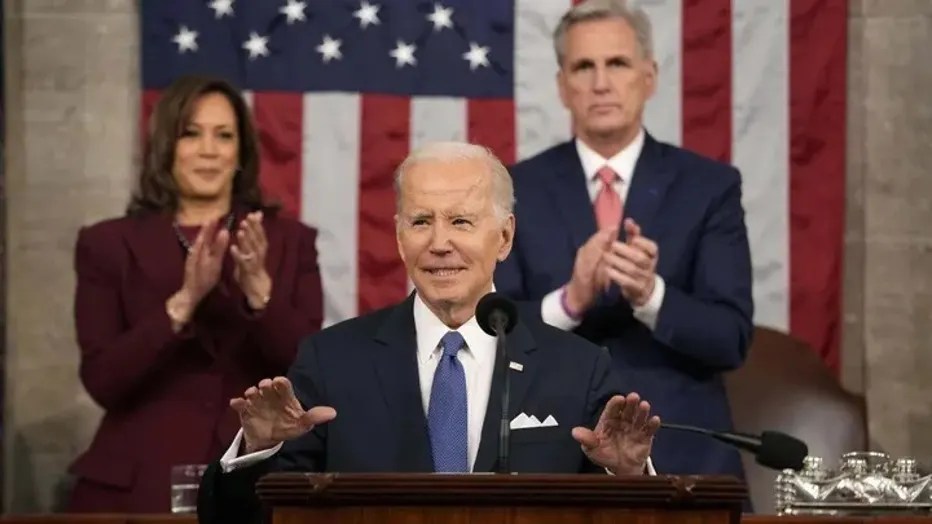
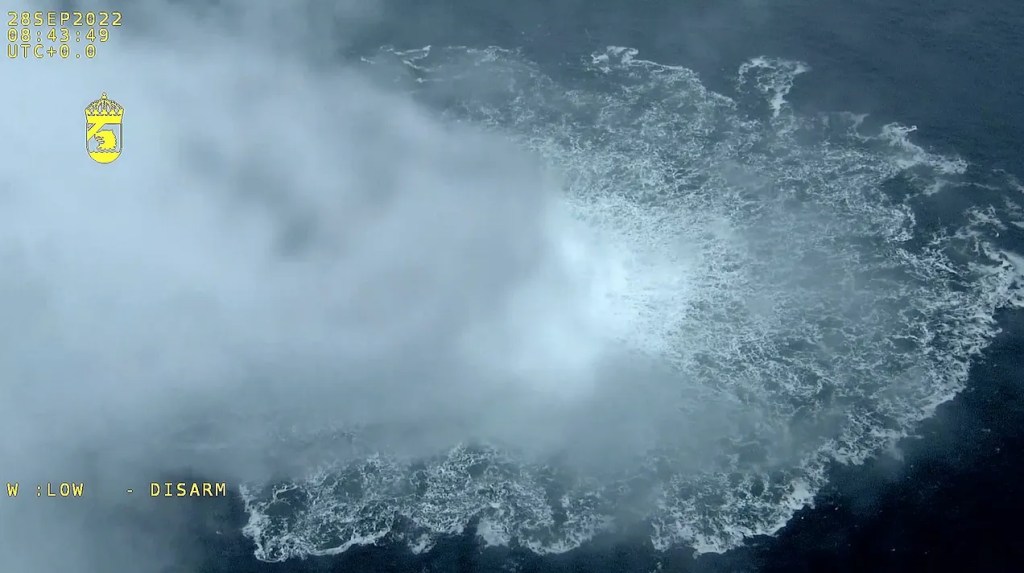
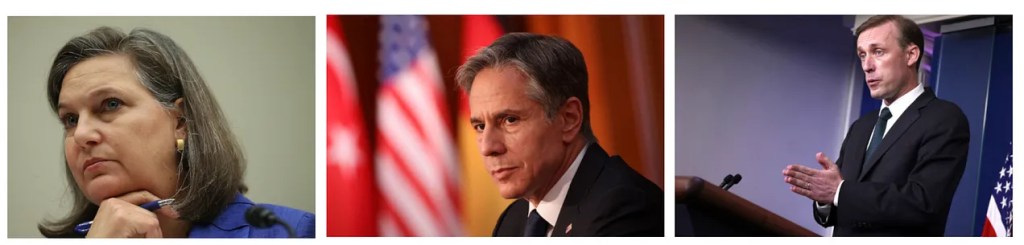
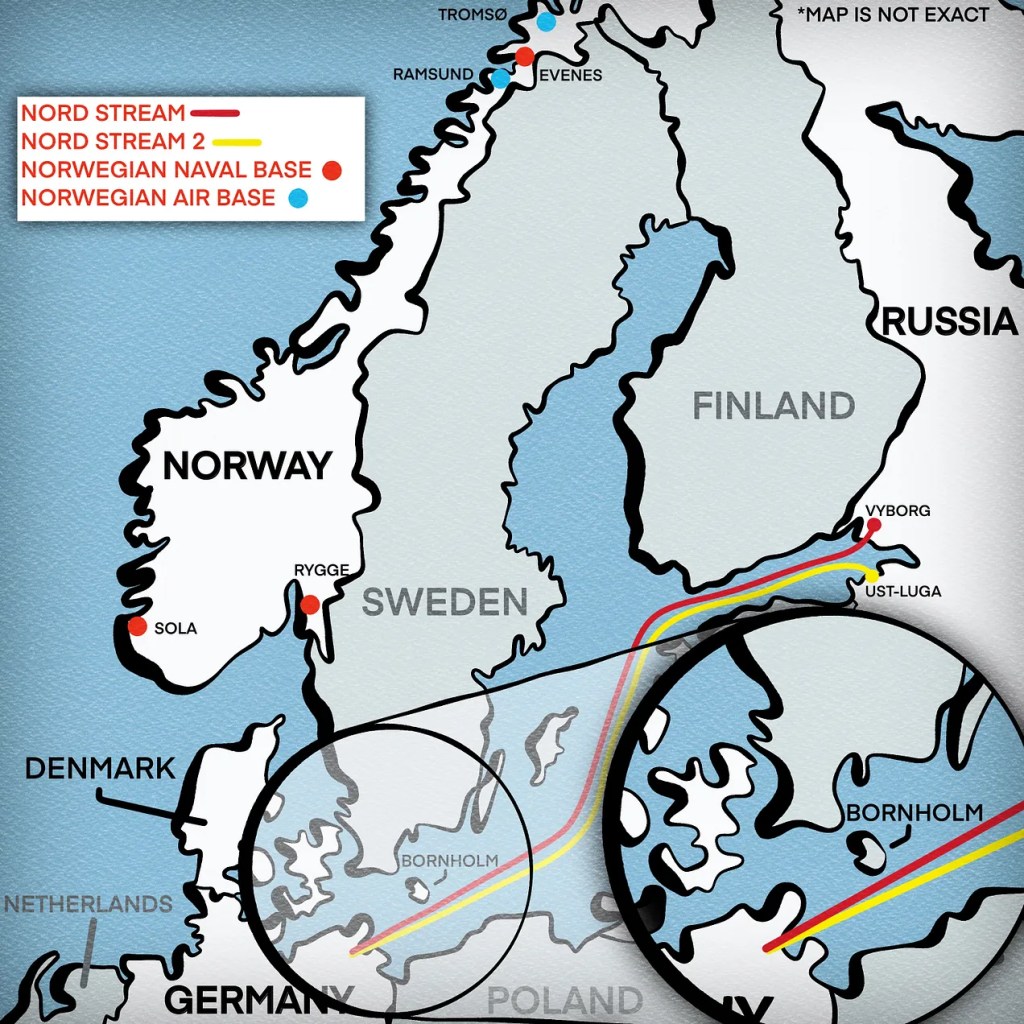


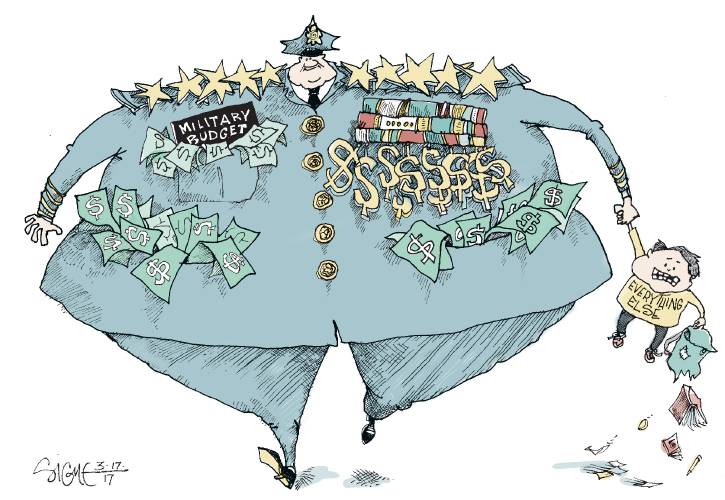
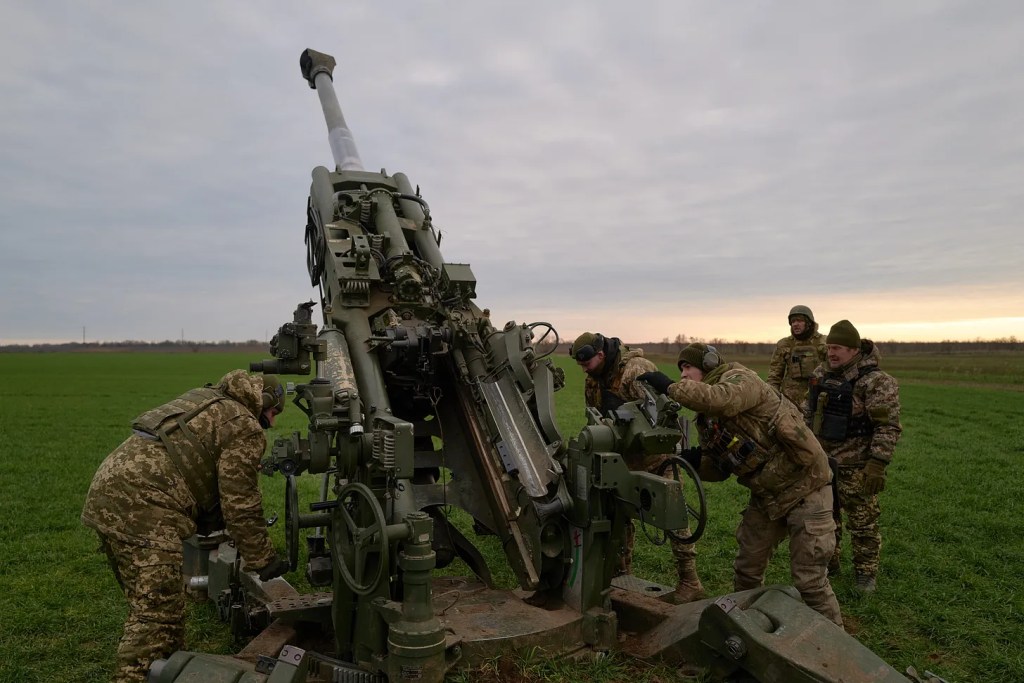
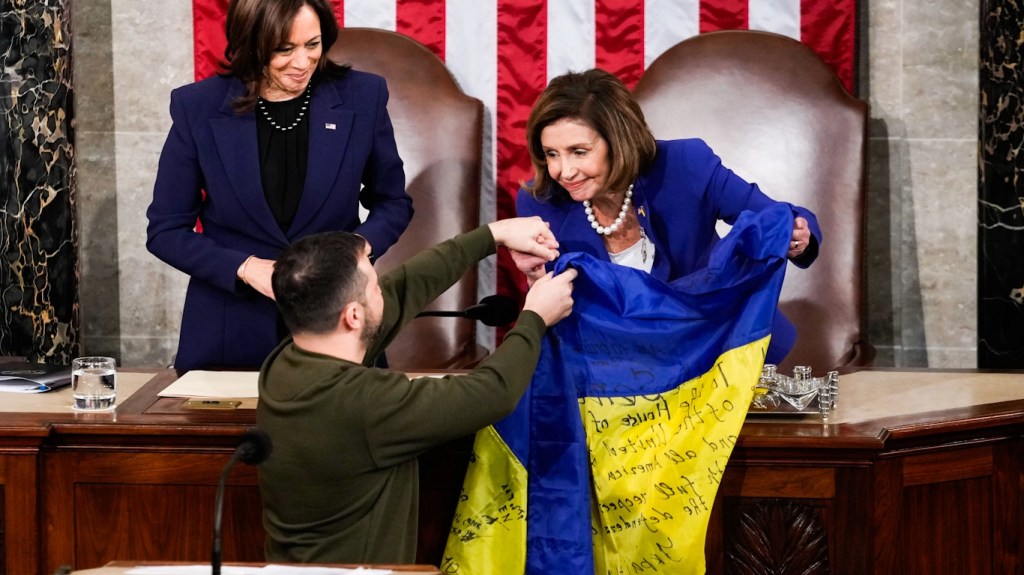

 After the Crash