
Zuck’s New Scam

Don’t buy into Facebook’s pivot to privacy

By Lizzie O’Shea

Source: The Baffler

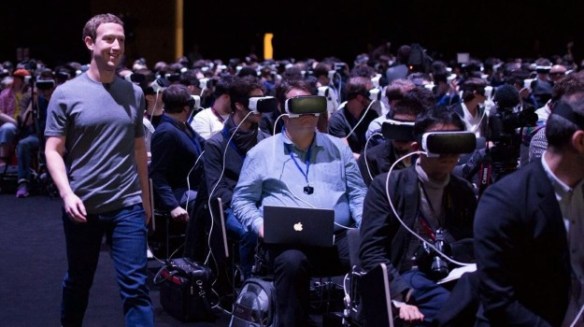
THE RHETORIC AT FACEBOOK—the largest social media platform in the world—is changing. In 2010, Mark Zuckerberg claimed that privacy was no longer a “social norm.” Today, the same man is asserting that “the future is private.” This was the buzz phrase at the company’s developer conference last month, F8, as the platform reoriented away from the newsfeed toward private chats, groups, and stories. Has Mark Zuckerberg been occupied by a parasitic fungus and become a zombie?

There is something stunning about this cultural shift in a corporation that holds such significant global power. It shows that when people speak up and agitate around privacy and data mining it can have a material effect. The idea that people don’t care about privacy, that they are willing to give it all away for the convenience of free services, has been debunked. Facebook specifically has been unable to ignore the waves of criticism it has experienced of late. The capitalist behemoths of the digital age often seem untouchable, and it is easy to forget that they operate in a social context. Like any powerful actor in society, Facebook is subject to the influence of organized people who will not shut up.

Nonetheless, it’s also important to be wary: savvy marketing is not the same as progress. The company is still fundamentally motivated by growth and profit. The presentations at F8 were focused on getting people onto Facebook-owned apps (including Instagram and WhatsApp) and building a sticky web around this engagement so they need never leave. You will shortly be able to buy things, find a date, even apply for a job—all directly through Facebook. Throughout these processes, Facebook will be able to grow its library of behavioral surplus, and in doing so, continue to expand its core business as the most effective and sophisticated supplier of advertising space in human history.

This context can help us better understand Zuckerberg’s privacy turn. Lest you feel uncomfortable about living more of your digital life through Facebook, they want to remind you that they are sufficiently forward thinking and benevolent to respect your privacy. As your adherence to the platform inches toward total, you can be sure the Facebook team is creating “a place where you are safe and supported.”

Well, sorry, Mark, your idea of privacy isn’t the same as mine. Privacy is too often framed in these discussions in highly superficial terms. It is about tinkering with the ways users engage with a platform as a matter of consumer choice. Mark wants you to be able to easily exclude people from seeing your messages and stories—unless that person happens to be him. This vision of privacy doesn’t hold any power because it does not challenge the definitive power framework for users of social media.

Privacy has necessarily become an expansive concept in the digital age, given the myriad ways in which technology occupies more of our personal spaces. To that end: the right to privacy includes the right to exist outside of the market. It is the right to enjoy spaces without feeling as though your presence is being used by marketers to predict your future.

In her recent book, Surveillance Capitalism, Shoshana Zuboff, writes about how these platform collect data and feed it into sophisticated algorithms, to be fabricated into prediction products that anticipate what you will do now, next, and later. Our participation becomes fodder for the “behavioral futures market,” and in turn, this has an influence on our psychology and sense of self. Private groups on Facebook might be slightly more comforting cyber spaces, but the essential topography remains the same. The fancy developer conferences and user products continue to be funded in a specific way. The logic of surveillance capitalism cannot be circumnavigated via a new company slogan. If anything, Zuckerberg’s privacy talk is an endorsement of this model. As Bernard Harcourt points out, “the watching works best not when it is internalized, but when it is absentmindedly forgotten.”

It need not be so: we can expropriate this moment. A better understanding of privacy will not be limited to design concepts generated by highly profitable social media platforms. It needs to encompass how privacy is an essential component of our agency as human beings. Agency, to be explored and expressed fully, requires that we have space outside the influence of capitalism—to have freedom from market forces seeking to manipulate our unconscious. Privacy demands that human emotions like shame, joy, guilt, and desire be explored without someone seeking to profit from the process without us noticing.

The unconscious exists as “neither individual nor collective,” writes the philosopher Mladen Dolar, but rather “precisely between the two, in the very establishment of the ties between an individual (becoming a subject) and a group to which s/he would belong.” In other words, there is a dialectic process at play between the social forces that shape us and our own personality. The baron capitalists of the data era seek to monetize this space—the right to privacy is the theoretical foundation for resistance. We need to elevate privacy to its full rhetorical potential, and recognize how it is both paradoxically individual and collective, and is defined not by consumer choice but agency. And privacy is therefore something that Facebook cannot offer—unless the company is prepared to change their entire business model.

DISMISSED: Trump Fires Scandal Plagued FBI Director James Comey – What Does It Mean?

Image (from Land Destroyer Report): The FBI has an impressive portfolio of intentionally created, then foiled terror plots. Its methods include allowing suspects to handle both real and inoperable weapons and explosives. These methods allow the FBI to switch entrapment cases “live” at any moment simply by switching out duds and arrests with real explosives and successful attacks. Because the FBI uses “informants,” when attacks go live, these confidential assets can be blamed, obfuscating the FBI’s involvement.

By Shawn Helton

Source: 21st Century Wire

US President Donald Trump has accepted a recommendation to ‘dismiss’ FBI director James Comey. Was this a reprisal for the suddenly widened Russia-gate probe into the White House or was there something else at play within the operations of the deep state?

Comey was at the center of a political controversy over much of the last year during the US presidential election cycle in 2016, and well into 2017. Throughout 2016, the former FBI director opened, closed and reopened (only to close again) a probe into Hillary Clinton, her email server and looking into accusations leveled at the Clinton Foundation, while also entertaining a dubious Russian probe into the Trump administration alleged ‘connections to Russia’ that helped mine various stories, including a so-called ‘dossier‘ regarding the newly elected president in early 2017.

In recent years, there have been many highly questionable actions under Comey’s leadership at the FBI, such as the Orlando nightclub shooting incident – who’s main suspect was previously interviewed by the FBI, as well as a highly questionable ‘ISIS inspired’ shooting event in Garland, Texas linked to an FBI informant case run out of Phoenix, Arizona, and the federal agency’s dramatic encroachment on public privacy following a suspicious San Bernardino mass shooting.  These are only just a few examples…

Grabien News highlights a list of scandals that were either attached to Comey or perpetuated under his watch:

“Here are 10 of Comey’s biggest embarrassments at the FBI:

1. Before he bombed the Boston Marathon, the FBI interviewed Tamerlan Tsarnaev but let him go. Russia sent the Obama Administration a second warning, but the FBI opted against investigating him again.

2. Shortly after the NSA scandal exploded in 2013, the FBI was exposed conducting its own data mining on innocent Americans; the agency, Bloomberg reported, retains that material for decades (even if no wrongdoing is found).

3. The FBI had possession of emails sent by Nidal Hasan saying he wanted to kill his fellow soldiers to protect the Taliban — but didn’t intervene, leading many critics to argue the tragedy that resulted in the death of 31 Americans at Fort Hood could have been prevented. 

4. During the Obama Administration, the FBI claimed that two private jets were being used primarily for counterterrorism, when in fact they were mostly being used for Eric Holder and Robert Mueller’s business and personal travel. 

5. When the FBI demanded Apple create a “backdoor” that would allow law enforcement agencies to unlock the cell phones of various suspects, the company refused, sparking a battle between the feds and America’s biggest tech company. What makes this incident indicative of Comey’s questionable management of the agency is that a) The FBI jumped the gun, as they were indeed ultimately able to crack the San Bernardino terrorist’s phone, and b) Almost every other major national security figure sided with Apple (from former CIA Director General Petraeus to former CIA Director James Woolsey to former director of the NSA, General Michael Hayden), warning that such a “crack” would inevitably wind up in the wrong hands.

6. In 2015, the FBI conducted a controversial raid on a Texas political meeting, finger printing, photographing, and seizing phones from attendees (some in the group believe in restoring Texas as an independent constitutional republic).

7. During its investigation into Hillary Clinton’s mishandling of classified material, the FBI made an unusual deal in which Clinton aides were both given immunity and allowed to destroy their laptops. 

8. The father of the radical Islamist who detonated a backpack bomb in New York City in 2016 alerted the FBI to his son’s radicalization. The FBI, however, cleared Ahmad Khan Rahami after a brief interview. 

9. The FBI also investigated the terrorist who killed 49 people and wounded 53 more at the Pulse Nightclub in Orlando, Fla. Despite a more than 10-month investigation of Omar Mateen — during which Mateen admitting lying to agents — the FBI opted against pressing further and closed its case. 

10. CBS recently reported that when two terrorists sought to kill Americans attending the “Draw Muhammad” event in Garland, Texas, the FBI not only had an understanding an attack was coming, but actually had an undercover agent traveling with the Islamists, Elton Simpson and Nadir Soofi. The FBI has refused to comment on why the agent on the scene did not intervene during the attack.”

It’s important to remember that Comey is not the only FBI director who bears responsibility for the controversial aspects of 2013’s Boston Bombing. Under FBI director Robert Mueller “Tamerlan Tsarnaev came to the attention of the FBI on at least two occasions” prior to allegedly being involved in what many researchers have described as a false flag terror event in Boston. A questionable event that has arguably been used as a pretext to further clamp down on individual rights in the US.

We should also be reminded that the FBI has been routinely caught foiling their very own ‘terror plots’ over the past several years.

In recent years, the investigative tactics of various intelligence agencies have come into question, none perhaps more dubious then the Newburgh FBI sting that involved entrapping four men to participate in a fabricated event created by the bureau. Here’s a 2011 passage from The Guardian describing how an FBI informant named Shahed Hussain coerced four others into a fake terror plot:

“The “Newburgh Four” now languish in jail. Hussain does not. For Hussain was a fake. In fact, Hussain worked for the FBI as an informant trawling mosques in hope of picking up radicals.

Yet far from being active militants, the four men he attracted were impoverished individuals struggling with Newburgh’s grim epidemic of crack, drug crime and poverty. One had mental issues so severe his apartment contained bottles of his own urine. He also believed Florida was a foreign country.

Hussain offered the men huge financial inducements to carry out the plot – including $250,000 to one man – and free holidays and expensive cars.

As defence lawyers poured through the evidence, the Newburgh Four came to represent the most extreme form of a controversial FBI policy to use invented terrorist plots to lure targets. “There has been no case as egregious as this. It is unique in the incentive the government provided. A quarter million dollars?” said Professor Karen Greenberg, a terrorism expert at Fordham University.”

The reputation of the FBI has suffered greatly in the recent past as well as over the past couple of decades. Incidentally, the FBI is on record as ‘handling’ Emad A. Salem, a former Egyptian army officer who was a prized undercover operative thrust into confidential informant status and person who played a key role in the 1993 WTC bombing.

All of this has happened under the watchful eye of the FBI…

Over last summer, 21WIRE observed some curious connections between the Clinton Foundation and FBI director James Comey, as well as his questionable handling of other cases related to the Clinton family. Here’s the following passage to consider in light of the new information related to the Clinton investigation:

“Many will also be unaware that before Comey was installed by the Obama Administration as FBI Director, he was on the board of Director at HSBC Bank – a bank implicated in international money laundering, including the laundering of billions on behalf of international drugs and narcotics trafficking cartels.Forbes also points out where Comey was also at the key choke-point during the case involving dodgy auditor KPMG which followed on by the HSBC criminal case:

“If Comey, and his boss Attorney General Alberto Gonzalez, had made a different decision about KPMG back in 2005, KPMG would not have been around to miss all the illegal acts HSBC and Standard Chartered SCBFF +% were committing on its watch. Bloomberg reported in 2007 that back in June of 2005, Comey was the man thrust into the position of deciding whether KPMG would live or die for its criminal tax shelter violations.”

Is this just a surface effort by the White House to clean the slate for an agency perpetually embroiled in controversy?

More from RT below…

Trump fires FBI Director James Comey

RT

President Donald Trump has fired FBI Director James Comey at the recommendation of US Attorney General Jeff Sessions and Deputy Attorney General Rod Rosenstein, according to a White House announcement.

“The FBI is one of our Nation’s most cherished and respected institutions and today will mark a new beginning for our crown jewel of law enforcement,” said President Trump.

“While I greatly appreciate you informing me, on three separate occasions, that I am not under investigation, I nevertheless concur with the judgment of the Department of Justice that you are not able to effectively lead the Bureau,” Trump told Comey in a letter.

The letter announcing the termination was hand-delivered to FBI headquarters by Keith Schiller, a Trump security aide, according to several reports citing a White House official.

A search for a new permanent FBI Director will begin immediately.

The firing of Comey comes days after he testified to Congress on investigations into alleged Russian meddling in the 2016 US election.

RT continues here