Saturday Matinee: Peking Opera Blues

Running Out of Karma: Tsui Hark’s Peking Opera Blues

By Sean Gilman

Source: The End of Cinema

I first saw this eight months ago, on my first night home after the birth of my second kid (I had rented it from Scarecrow Video and needed to watch it before returning it the next day). Needless to say, exhausted and occasionally interrupted, I remembered very little of the experience, other than that I liked the film quite a bit. Happily, a more clear-headed rewatch confirms that initial vague impression: this is a great movie, perhaps the best melding of director Tsui Hark’s twin impulses toward subversion and entertainment I’ve seen yet.

The setup follows two plotlines that will come together and intertwine with a third, each focused on a female protagonist. Brigitte Lin plays the daughter of a local warlord. She dresses like a man (having spent time studying in the West, and also because she’s Brigitte Lin) and is secretly a revolutionary. She and fellow revolutionary Mark Cheng (memorable as Louis Koo’s able assistant in Johnnie To’s Election 2) have to steal some MacGuffins from the general’s safe. Cherie Chung (from The Enigmatic Case) plays a musician who stole a box of jewelry from a soldier (Tung Man, played by Cheung Kwok Keung) in the chaos after the previous general was run out of town. Through a series of complications, the box ends up at a local theatre troupe, where Sally Yeh, daughter of the director (played by film director, actor, clock Wu Ma), wants very much to go on-stage but can’t because women aren’t allowed to perform. Lin and Cheng also find themselves at the troupe, as it’s the favored entertainment for the most powerful people in town, including the local police commander/gangster Liu, who becomes infatuated with the star actor, Fa.

That covers the first 20 minutes or so of the film, what follows is an elegantly structured twisting and deepening of the characters and their relations as the film progresses through a variety of suspense and comic set pieces. Ching Siu-tung choreographs some exceptional action scenes, usually featuring Mark Cheng jumping into or shooting a bunch of bad guys (the sequences at the theatre make ingenious use of the space’s multi-leveled design, with Cheng diving under and jumping over tables and benches, then on the main stage and up to the stage above it before swinging across the rafters and finally onto the rooftops), but there are also cunningly designed short sequences like the one David Bordwell describes early in Planet Hong Kong, where Mark and Cheung and Cherie hide in Sally’s bed from her father. The two father-daughter relationships are especially poignant, with Lin’s eyes exploring every aspect of her self-hatred for destroying the father she loves while opposing everything he stands for politically. It’s most remarkable to see her usually implacable image break down in anguish near the end of the film and even in happiness in a brief middle section where she gets drunk with the other girls. As well Wu Ma brings a note of knowing sadness to the theatre director father, a man who we took as a stock type gains nuance when we realize exactly why he so strictly keeps his daughter away from the stage: because if she catches the eye of the powerful, she’ll be forced to prostitute herself for the sake of the company (as Liu attempts with Fa). Complex as well are the film’s romantic relationships. Not so much the main one between Mark and Brigitte (if that even is a romance given Lin’s ambiguous orientation), but the all but unspoken one between Cheung (whose soldier I don’t think is even named in the screenplay) and Cherie, which exists almost entirely in the subtle looks he gives her of longing and disappointment at her more venal moments. That soldier, in fact, is one of the more fascinating characters in the film: a hapless guy, bullied by his fellows, who joins the revolutionaries by chance, falls in love with a girl and ends up saving the life of the heroine in a spectacular last minute rescue. There are few martial arts films I know of that have so many richly developed characters and relationships. The only one that even comes to mind in Tsui’s own epic Once Upon a Time in China.

The Peking Opera setting provides Tsui a world full of potential meaning, and he plays it up beautifully. The gender reversals required of the all-male stage echo the real-life reversals of Lin’s character, as she not only dresses like a man but takes on the traditional hero role (note that it’s the women who rescue the men time and again). When the other two women make it on stage, they become women impersonating men impersonating women, just as they more or less unwillingly take on the roles of revolutionaries. Eventually, the politics that undergirds the plot comes to be seen as a form of performance, with one general shuffling on stage as the other exits, the rebels scheme amounting to a lifting of a curtain (exposing certain warlords as conspiring with foreigners) all while the real power lurks behind the scenes, in the form of the black clad local police force. That the local commander is both bluntly evil and homosexual (as well as the ultra-effeminate depictions of the male actors) might be a cause for concern were it not for the sincere warmth with which Tsui depicts the homoerotic relations between the three women (Sally in particular seems infatuated with Brigitte). Instead, what we see is sexuality, with politics, as another kind of performance that serves to either mask our baser urges (the violence of the commander, the greed of Cherie) and/or complicate our nobler ones (the father-daughter relations, the multiple instances of self-sacrifice throughout the film, as each hero in turn faces death to save the others).

The result is a film not too far in spirit from the anarchic nihilism of Tsui’s earliest films, the burn-it-all youth drama Dangerous Encounters – First Kind or the cannibal comedy We’re Going to Eat You. But instead of merely exposing the world, politics, and human relations as a sham, Tsui instead finds a humane warmth at our core, while simultaneously celebrating the artistry of that disguising performance itself: Mark’s ultra-cool secret agent and Lin’s resolute stoicism, as well as the athleticism of the opera performers. The film opens with a series of close up shots of Peking Opera costumes and props and actors, scored to a traditional sounding song with a modern synthesizer beat. And it ends with a close-up from that same series of a performer in full make-up, laughing maniacally at us, or maybe with us.

Saturday Matinee: Donnie Darko

By Caleb Quass

Source: Medium

Enigma as a thematic device in itself is something I’ve applied to the films of David Lynch and his surrealist ilk, but until my third viewing of Donnie Darko, it’s not something I had considered for Richard Kelly’s debut film. Viewing once again the theatrical cut of the film, I started wondering whether or not the significantly-extended director’s cut could actually offer anything significant in its additional footage, or if it would merely obfuscate such an atmospherically uneasy movie through its clarity.

Like the characters’ immature dialogue and the mostly non-nostalgic depiction of a recently bygone era, the mysterious and almost unknowable nature (at least from casual viewings) of Donnie Darko’s happenings come across as a manifestation of the turbulence and teenage angst that define the titular character (Jake Gyllenhaal). That the film features such subtly brilliant performances and an alluringly spooky atmosphere are just the icing on the cake but just as important in rendering this a truly brilliant film.

Plot summaries have always been weirdly difficult for me, and that’s especially the case with the disorienting stream of events that Donnie Darko offers. The psychologically-unstable social outcast is awakened by a giant bunny rabbit and lead from his bedroom, where shortly after a jet engine mysteriously crashes through the roof in what would have almost certainly been his demise. This “imaginary friend” Frank continually appears and speaks to Donnie, compelling him to commit destructive acts with far-reaching consequences.

All the while, he regularly sees his therapist, forms a relationship with a new student (Jena Malone), experiences “daylight” hallucinations related to time travel, researches time travel via a book written by the town’s unspeaking hermit “Grandma Death” (Patience Cleveland), and generally copes with the frustrations of being a precocious, cynical teenager in a conformist society — all as Frank forebodingly counts down the “28 days, 6 hours, 42 minutes, 12 seconds” until the world ends.

There’s a lot going on, but even as Donnie Darko climaxes without the sort of resolution that audiences may expect, it’s never unwatchable or less than compelling. From the opening minutes of the film where Donnie rides his bike around a darkly-photographed suburbia to the post-punk stylings of Echo and the Bunnymen, a mood is established and never broken. It’s typical Midwest American iconography through the lens of a disillusioned adolescent, and though the slow-motion, pop music-infused high school sequences, as well as the dialogue of aimless friendships and budding romances, are reminiscent of coming-of-age dramadies, Donnie Darko never embraces these things as genuine or even necessarily normal. Scenes have a tendency to bleed into one another with the slightly-hurried pace of the “paranoid schizophrenia” which Donnie’s therapist (Katherine Ross) offers as an explanation for the hallucinations, and the already somewhat downbeat pop music is complimented by a jittery, melancholy score by Michael Andrews.

Perhaps most peculiar of all, though, is the look of the film in general. The interiors of Donnie Darko are just a little too dark, and its daylight scenes just don’t feel sunny, as though constantly threatened by an impending storm. Something is extra dismal and extra drab about every classroom, street, and upper-middle-class household, and though this is an extraordinarily subjective designation, it just looks depressed. Donnie never forms an especially healthy relationship with anyone in the film, and his extrasensory premonitions are apt counterparts to his frustrations with society, labeling as an outsider, and all the implicit complexities of puberty.

Though admirable for its thematic strengths, Donnie Darko ultimately makes its impact through its sneaky emotional core, which continually grows in the background until exploding in the film’s fatalistic conclusion. Here again the movie embraces a pubescent concept, the notion that one’s own life is a direct burden on others, but with a sobering shift in perspective. After his mind-bending odyssey results in the literal death and figurative destruction of multiple people, Donnie’s ultimate fate is to sacrifice himself to undo his supposed harm upon the world, harm which, paradoxically, only occurred through his quest to stop it. On the level of pure logic, this might not make sense, but on a dramatic level, it’s pure poetic tragedy. The film’s “Mad World” montage could have been a miserable failure in its sudden spike in melodrama, but instead it is the culmination of the sorrow and emotional terror that was just beneath the surface all along.

The entirety of human emotion cannot, as the delusional teacher played by Beth Grant suggests, be divided into “fear and love” or any other two extremes. Donnie understood that, but what neither he nor anyone else understands is exactly how it does function. Donnie Darko is a masterpiece not because its convoluted story offers any answers, but because unlike the majority of shallow coming-of-age narratives, it knows that it can’t.

Saturday Matinee: Dark Star

By Roger Ebert

Source: RogerEbert.com

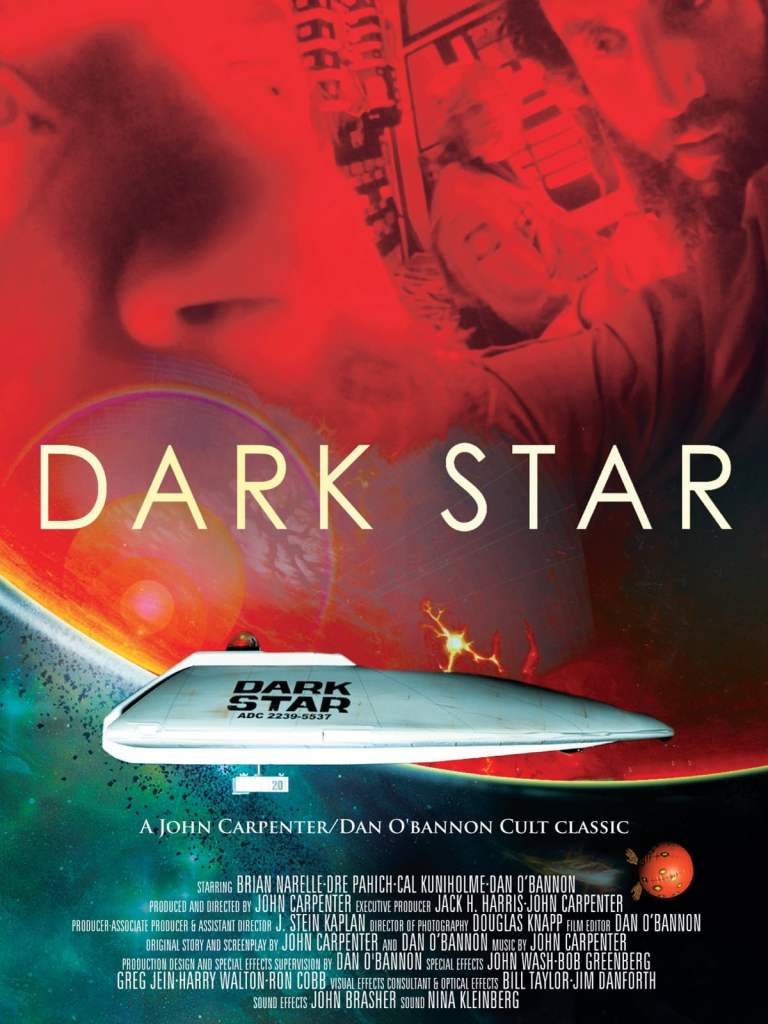
“Dark Star” is one of the damnedest science fiction movies I’ve ever seen, a berserk combination of space opera, intelligent bombs, and beach balls from other worlds. It has a checkered history. It began as a student project by John Carpenter (later to direct “Halloween“) and Dan O’Bannon (later to write “Alien“), and grew over a period of time and expanding budgets into a full-length film.

It was finished some four years ago, before “Star Wars,” and might have had a big success as a cult film if its original distributor hadn’t been so chicken-hearted that he dumped it in a string of Southern California drive-ins and then pulled it out of commercial release. As it is, “Dark Star” has found audiences on the campus and revival circuits, has been a hit here at Facets Multimedia, and, at last, is having its first commercial run at the Three Penny Cinema.

It was finished some four years ago, before “Star Wars,” and might have had a big success as a cult film if its original distributor hadn’t been so chicken-hearted that he dumped it in a string of Southern California drive-ins and then pulled it out of commercial release. As it is, “Dark Star” has found audiences on the campus and revival circuits, has been a hit here at Facets Multimedia, and, at last, is having its first commercial run at the Three Penny Cinema.

The movie’s best sequence centers around the care and feeding of the pet alien they’ve taken on board (a sequence that O’Bannon may have drawn on for the original screenplay of “Alien”). The “Dark Star’s” onboard alien looks like a plastic beach ball with claws, and has a nasty way of sneaking out of sight; a crew member chases it into an elevator shaft and gets himself into a very tight spot. (The elevator sequence looks suspiciously as if it were filmed on the floor of a horizontal hallway photographed to look like a vertical shaft.)

Otherwise, life just sorta drifts past, until a chain of accidents leads to a situation where a bomb does not detach from the ship as planned, and will explode in 24 minutes, blowing the “Dark Star” to smithereens. The bomb cannot be disarmed because, intelligent little devil that it is, it’s convinced that it has a mission to self-destruct.

The movie’s best sequence centers around the care and feeding of the pet alien they’ve taken on board (a sequence that O’Bannon may have drawn on for the original screenplay of “Alien”). The “Dark Star’s” onboard alien looks like a plastic beach ball with claws, and has a nasty way of sneaking out of sight; a crew member chases it into an elevator shaft and gets himself into a very tight spot. (The elevator sequence looks suspiciously as if it were filmed on the floor of a horizontal hallway photographed to look like a vertical shaft.)

Otherwise, life just sorta drifts past, until a chain of accidents leads to a situation where a bomb does not detach from the ship as planned, and will explode in 24 minutes, blowing the “Dark Star” to smithereens. The bomb cannot be disarmed because, intelligent little devil that it is, it’s convinced that it has a mission to self-destruct.

And so, in an incredible and hilarious scene, a crew member floats out into space, confronts the stubborn thinking bomb, and uses pure logic in an attempt to reason it out of exploding. The strategy: If the bomb can be convinced it has no evidence that the universe really exists, then how can its instructions be valid?

This is a fun movie, and a bright and intelligent one. It bears few signs of having been made on a low budget, and the special effects are reasonably slick. And it has a mercifully low-key comic approach; many satiric comedies by young filmmakers are frantic and overwrought, but this one is wry, laid back and fond of its situations. And on the same program is “Hardware Wars,” a short subject starring steam irons, pop-up toasters and other kitchen appliances in outer space.

Saturday Matinee: Buck and the Preacher

Buck and the Preacher review – Poitier and Belafonte are glorious in overlooked western

Sidney Poitier’s first directorial effort makes for a wild ride, packed with memorable turns and smart filmmaking

By Fedor Tot

Source: We Love Cinema

Sidney Poitier and Harry Belafonte, two icons of the Civil Rights movement, sit at the centre of Buck and the Preacher. The two occupy a totemic space in the cultural imagination that has to some extent calcified their images. Part of the brilliance of this much-overlooked western is how it plays against this calcification – Belafonte, as the Preacher of the title, is introduced bathing stark naked, a rambunctious character with the gift of the gab, grimy teeth and scratchy beard. It’s a far cry from Belafonte’s more clean-cut roles, and a glorious against-type performance devoid of ego.

Poitier for his part, ostensibly plays another stoic good man, the type he built his career around. But here, too, there are wrinkles, perhaps unsurprisingly given that this was Poitier’s first directorial effort, taking over the shoot having had the initial director Joseph Sargent fired over creative differences regarding the depiction of race. Poitier’s Buck may be a lawful man, but he’s taciturn and cautious, pushed to lawlessness mostly by the threat of white violence.

The two titular characters meet out west. Buck is a professional wagon master aiding Black folk looking for safe passage away from the post-slavery South, with former masters hiring “labour recruiters” (as they call themselves) to force them back to the cotton field. The Preacher is more chaotic, a lifelong con-man primarily motivated by money. The clash of these two characters against a wider environment of white hostility provides the film with much of its dramatic tension.

As with many actors-turned-directors, Poitier’s direction could be accused of being a little staid at times: this is certainly a handsome western, but parts do lack a bit of flair, such as an opening raid that’s simply dull. And yet on occassion Poitier-as-director hits upon a rich seam of inspiration.

Two scenes late on in the film are a case in point, a brilliant marriage of action and theme. The first is the quietest bank robbery ever committed to film, told almost entirely in whispers, our protagonists pushed fully outside of the law as a means of survival. The second, their final stand, stranded on a rocky, claustrophobic outcrop, surrounded on all sides, having to remain hidden under cover. Poitier is using both aural and geographical textures to comment on Blackness – survival in a racist society requiring both silence and invisibility – expressed purely in filmic terms.

It’s remarkably smart and astute directing in these sections, yet the central charm of this film remains Belafonte. His Preacher is a delicious, smart-talking and charismatic creation, a shifty anti-hero that plays nicely against Poitier’s righteousness. Buck and the Preacher might not have the rawness or nihilism of the predominantly revisionist westerns produced concurrently, such as those by Sam Peckinpah (The Wild Bunch) and Robert Altman (McCabe and Mrs. Miller), but it remains a smart and entertaining film.

Saturday Matinee: Diamantino

By Peter Sobczynski

Source: RogerEbert.com

The new Portuguese/French/Brazilian co-production “Diamantino” could technically be described as a political satire but anyone going into it expecting the hard-edged humor of a “Dr. Strangelove” or “Wag the Dog” will soon realize that it’s not quite like those earlier works—probably around the time that the gigantic fluffy puppy dogs first make an appearance. Instead, it takes a far more whimsical approach that suggests a weird hybrid of “Being There” and “All the World’s a Stooge,” the 1941 Three Stooges short in which Moe, Larry and Curly are taken in by a rich woman who is inexplicably convinced that they are child war refugees, as presented by Michel Gondry at his absolute Gondriest. The results are uneven—how could they not be?—but the sheer weirdness of the whole enterprise has a charm to it and it certainly is never boring. Bewildering, maybe, but never boring.


Let us go back to those fluffy dogs for a minute. They are manifestations in the mind of Diamantino (Carloto Cotta), the star striker for Portugal’s soccer team, that allow him to filter out all distractions and hit the shots that have made him an idol on the level of real-life Portuguese soccer player Cristiano Ronaldo. Alas, one day, the power of the fluffy dogs fails Diamantino and he misses a crucial shot that prevents his team from advancing to the World Cup final and he becomes a pariah in his home country and a laughing stock around the world. This would be hard enough for most people to bear but we soon realize that Diamantino is basically a big kid himself who is innocent in most of the ways of the world—not only do the sheets on his bed have his face and logo emblazoned on them, it is evident that he has never had anyone into his room to share them with him.

In an attempt to do some good and honor his recently deceased father, Diamantino decides to take in a refugee to live at his palatial estate, much to the consternation of his cruel and abusive twin sisters (Anabella and Margarida Moreira), who mistreat him even as they are robbing him blind. The “refugee” turns out to be Aisha (Cleo Tavares), a lesbian Secret Service agent working undercover as a teenage boy from Mozambique to investigate suspicions that Diamantino is involved with a money-laundering scheme. That, not surprisingly, is the work of his sisters and if that were not enough, the two have embroiled their uncomprehending brother into a plot by Portuguese nationalists to leave the EU. Such a scheme includes an elaborate ad campaign focused on Diamantino as the epitome of Portuguese manhood, as well as machinations from a mad scientist determined to harvest the source of his greatness that winds up calling certain aspects of his manhood into question.

So yeah, “Diamantino” is strange as can be and then some, but the problem that it’s not as outrageous as it clearly wants to be in terms of the details. The material involving the shifting nature of the relationship between Diamantino and Aisha, whose true identity as an adult woman he remains blissfully unaware of for much of the narrative, would seem to be tailor-made for the kind of cheerfully transgressive humor that the writing/directing duo of Gabriel Abrantes and Daniel Schmidt are clearly aiming for but never quite achieve. Likewise, the more overtly political material involving the nationalists duping Diamantino into participating in their anti-EU campaign leans a little more towards the innocuous than the incisive. The stuff involving the mad scientist and the unexpected results of her experiments on Diamantino are absurd enough but enter the proceedings in such an arbitrary manner that it fails to land the impact that it might have had with a more focused screenplay.

And yet, even though “Diamantino” never quite digs beneath its aggressively goofy, candy-colored surfaces to deliver truly penetrating satire, it still manages to hold one’s interest for the most part. As a comedic collision between the not entirely dissimilar worlds of political and popular culture and the mayhem that can ensue when the two intertwine, the film has a likable oddball energy that is further boosted by an outlandish visual style that’s reminiscent of what the legendarily over-the-top 1967 version of “Casino Royale” is like at its best moments. “Diamantino” is also blessed with a number of random bits of strange humor that wind up hitting more than they miss, ranging from the aforementioned bed linen to several hilarious needle drops on the soundtrack. Best of all, it has a performance by Cotta as Diamantino that is perfectly calibrated so that he comes across less as a moron, which is what might have resulted in the hands of lesser actors, than as a genuine innocent—a Candide of the soccer pitch—who we find ourselves laughing with instead of at. Admittedly, a film like this may not be to all tastes, but those with a taste for the silly and the strange should get a kick out of it.


Watch Diamantino on Hoopla here: https://www.hoopladigital.com/movie/diamantino-carloto-cotta/17616054

Saturday Matinee: The Legend of the Stardust Brothers

The Legend of The Stardust Brothers (1985) review.

By P-J Van Haecke

Source: Psycho Cinema

Introduction

In 1985, the young Makoto Tezuka, son of manga godfather Osamu Tezuka, was approached by the famous musician and tv-personality Haruo Chicada with the question to make a movie for the soundtrack he had created for a non-existing movie. Makoto Tezuka, which by then had already directed various experimental narratives, accepted and directed what would become his feature-debut narrative.

Review

One day, Kan (Kan Takagi) and Shingo (Shingo Kubota), both singers of rival bands and both vying for fame and popularity, are given an invitation by a representative of the president of the talent agency Atomic Promotion, Minami (Kiyohiko Ozaki).

The following day, having arrived at the agency, they meet the innocent and charming Marimo (Kyoto Togawa), a girl who has, driven by her desire to force an audition with the president, been caught trespassing several times. Ultimately, in order to make Kan and Shingo agree to Minami’s proposal,she gives up her desire to become a singer, instead settling for a role as president of their fan-club. But as Kan and Shingo become stars, the will soon learn that fame always comes with nasty side effects.

The Legend of the Stardust Brothers is not just another over-the-top narrative about fame and the side-effects that often go together with fame, e.g. jealousy and addiction. The Legend of the Stardust Brothers – and this is amazing – still manages, even though the narrative is envisioned as pure entertainment, to evoke (intended or unintended) a political message against uniformity (Narra-note 1).  This message, which might be more relevant today than at the time of this narrative’s release, is specifically important for Japan as such, as the concept of harmony still dictates much of the social fabric. One can formulate the ultimate message of the narrative as follows: In order to combat the political forces focused on disciplining society into uniformity and obedience, diversity and the freedom of expression – subjectivity as such – are our only weapons.

The Legend of Stardust Brothers – see the visuals framing Minami’s first song – also criticizes the system of agencies as well as the blind desire for fame that drives many young people.  Besides evoking the problematic power agencies have – a problem persisting up until this day – it also underlines the naivety of people who willingly give up their own agency, their own right to decide. Last but not least, The Legend of The Stardust Brothers questions the often problematic connection between mass media and politics, i.e. media as the mouthpiece of politics, entertainment as crowd-control and political influence.

The Legend of The Stardust Brothers truly deserves the signifier ‘legend’. While the main narrative thread may very well be an approximation of “what truly happened” – as is implied by the very end – the framed and presented narrative is nothing other than the exaggerated and at some times rather absurd version of Shingo and Kan. This absurdity at the level of the narrative is supported by cinematographical absurdity and the energy to be found at the level of the acting performances.

The cinematographical ‘absurdity’ is especially sensible at the level of the effects. While the various cheap special-effects betray the limitations of the budget ‐ and may even cause some frowns – these effects have after 33 years also attained a certain charm. We would even say that the cheapness of various effects help emphasizing the craziness and absurdity of the narrative as such. But these so-called cheap effects should not detract the spectator from those effects that blend fluently into the narrative fabric, e.g. the colour divide in the opening song, the fun practical horror effects, the animation sequence, and the instances of stop-motion. As a matter of fact, it has to be applauded that Makoto Tezuka, in full knowledge of the limitations of his budget, realized, in a rather bold fashion, his cinematographical vision without much compromise.

In Makoto’s framing, it is very easy to realize that, at various instances in the narrative, visual composition took preference over cinematographical continuity. In the catchy opening song, there are some compositional choices – choices deliberately braking the continuity – that have no other effect than heighten the fun. In other words, they function successfully as tongue-in-the-cheek visual puns.Furthermore, many of the visual effects – the effects we mentioned above – applied in the later narrative can be seen in the same way, as visual elements focused on fun.

There is a certain youthful energy that supports the entire narrative, an energy that emanates from Shingo Kubota and Kan Takagi and – as mentioned before – gets empowered by the bold way the narrative is framed as such. It is especially this energy, paired with those moments of charming comedic over-acting – over-acting often function of the amateurism of the concerned actors (see for instance Kiyohiko Ozaki’s performance) – that turn The Legend Of The Stardust Brothers into a 100 minutes long crazy roller-coaster of fun and musical entertainment.

The music of The Legend Of The Stardust Brothers is utterly fantastic. Besides creating the fun eighties vibe that persists throughout the narrative, the infectious songs allow the spectator to enjoy a wide range of genres popular in the eighties. It is also evident that the music genres have also dictated the performances as such – ISSAY’s performance for instance brings the style of David Bowie wonderfully to live.

The Legend of the Stardust Brothers is one of those rare narratives that has become better by aging, instead of turning ugly and sour. While the ripeness of the narrative is not able to beautify all its faults, the pure fun oozing from the narrative and the performances secures the enjoyment the spectator can extract from this energetic and truly irresistible legend. In other words, the time for this narrative to become, thanks to the release of the DVD/Blu-ray by Third Windows Films, a cult-classic has finally arrived.

Narra-note 1: This concerns the revelation of Kaoru’s father. For more information, one can read our exclusive report of our meeting with Makoto Tezuka.


Watch The Legend of the Stardust Brothers on Hoopla here: https://www.hoopladigital.com/movie/the-legend-of-the-stardust-brothers-shingo-kubota/17400468

Saturday Matinee: The Elephant Man

RIP David Lynch (January 20, 1946 – January 16, 2025) 

The Elephant Man (1980) is not often considered one of David Lynch’s masterpieces, though it’s one of his most critically acclaimed films, having been nominated for eight Academy Awards and winning a BAFTA Award for Best Film. It also happens to be a film of great personal significance because it was my first David Lynch film experience.

Though only six, I still remember seeing a daytime screening with my mom and being disturbed yet fascinated by the stark black and white imagery and lead character (played by John Hurt and loosely based on Joseph Merrick). Though I may have been too young to follow the plot, the film’s emotional journey and compassionate message left a lasting impression.

Saturday Matinee: The Legend Of Billie Jean

What Went Right With… The Legend Of Billie Jean (1985)?

By WWRW

Source: What Went Right With

The 1980s were a crap time for politics and economics but in terms of entertainment, the decade was responsible for some great movies, especially those geared toward kids and teens. Most ’80s movies like Back To The Future and Breakfast Club are well known, then there’s the second-tier which includes not-so-famous-but-still-recognisable stuff such as Flight Of The Navigator and WarGames. But then there’s the section below that; films that have now become cult classics because the mainstream were either unaware or too snobbish to watch them when they were first released. The Legend Of Billie Jean is one of these forgotten gems; it has nothing to do with the classic Michael Jackson song, but it’s a fantastic teen film that’s unfortunately underexposed and underrated, even to this day. Starring Helen Slater (Secret Of My SuccessRuthless People) and an early role for Christian Slater (HeathersYoung Guns) (no relation by the way) the story is about sister and brother Billie Jean Davy and Binx Davy played by Helen and Christian respectively. After Binx’ beloved Honda Elite scooter is vandalised by local bullies, Jean asks the alpha bully’s father for $608 to repair it. It seems however, that being a prick runs in their family as the dad, Mr. Pyatt, will only hand over the money in exchange for sexual favours, which of course leads to refusal, and ends in an unintended shooting. Billie Jean, Binx, and her two friends then have to go on the run but infamy and fame go hand-in-hand with being an outlaw…

The Legend Of Billie Jean is all about how role models and heroes are made. Like Alex Rogan in The Last Starfighter, Billie Jean lives in a trailer park and isn’t someone who anyone would look up to. But, as she stands-up for what’s right and becomes a fugitive in the process, she becomes an inspiration to all teenagers and is even helped by them to evade the cops. Billie Jean is asked to autograph a newspaper, her Joan Of Arc-inspired haircut is copied by local teens and her image is adorned on t-shirts, caps, posters, frisbees, bumper stickers, and even airplane banners as she becomes the “legend” in the title. You could see this as a comment on how consumerism and capitalism is an unavoidable by-product of causes and activism, but that’s not the message here. This film is a precursor to the overrated Queen & Slim whose narrative essentially did the same thing but stereotypically and depressingly rather than upbeat and uplifting as is the case here. Unlike Queen & SlimThe Legend Of Billie Jean doesn’t just focus on the original “crime”. Whilst on her Texan Riviera outlaw odyssey, Billie Jean rescues a kid from his abusive father, and thus becomes a genuine hero akin to Supergirl.

Set in the height of summer in Corpus Christi, Texas, the cinematography isn’t Do The Right Thing (which made relatively cold days look blisteringly hot) and the direction isn’t something that stands-out either (although there’s a Larry Cohen-esque interviewing of what looks like real people in “Ocean Park Mall”). That being said, the look and feel is appropriate to the setting and the target audience. In terms of cast, Helen Slater is great as the principled lead character and her friends are an oddball mixture which includes Yeardly Smith (Maximum Overdrive) who most people will know as the voice of Lisa in The Simpsons. Richard Bradford is particularly believable as the rapey Mr. Pyatt who then sets-up a stall to sell Billie Jean merch, and the always likeable Peter Coyote plays the cop who isn’t just out for blood but the one bloke who’s looking to discover what really happened. Keith Gordon (Dressed To KillChristine) also plays a pre-Pretty In Pink love interest across the class divide.

Being an ’80s teen movie, there’s the obligatory mall scene (the fictional Ocean Park Mall is shot in Sunrise Mall in Corpus Christi which is sadly now closed), our protagonists somehow use toy walkie-talkies long-range, and there’s inept cops chasing but never catching our heroes. In terms of soundtrack, this isn’t a John Hughes movie so the music is a little bit ropey and too “old” for the intended target audience (Pat Benatar instead of Simple Minds) but that being said, now that almost four decades have passed, even crappy pop music of the day sounds tolerable.

The Legend Of Billie Jean has an unrealistic and idealist narrative; it’s a feel-good adventure rather than a depressing drama. It could also be seen as a Feminist film whether it was originally intended to be or not. Like a reverse of The Goonies or Stranger Things, the girls outnumber the boys here. With the female lead sticking-up for her brother as well and fighting against a male sexual assaulter, plus a screenplay that isn’t shy about menstruation, if it was made today, critics would be slobbering over it as it ticks all their boxes in regards to female empowerment. That being said, on Rotten Tomatoes, The Legend Of Billie Jean is rated at 40% which makes it sound like a sub-par, throwaway flick which it quite clearly isn’t. I think mainstream critics need their heads testing or need to recognise that their reviews were wrong. After all…

Fair Is Fair.