The Third World Revolt vs American Greatness

By Christopher Roach

Source: Covert Geopolitics

Although losing a war and taking a blow to prestige can be a painful process, the American people’s interests require the dismantling of the American empire.

Back in my high-school debating days, policy debate teams frequently concluded their arguments with an extreme and somewhat absurd parade of horribles. This was a testament to their intelligence and creativity, plus being dead wrong carried few consequences. Through convoluted chains of logic, they argued that some small change in environmental or trade policy would lead to nuclear war or America’s domination by the “global south.”

Even then, this all struck me as ridiculous. How could the Third World, with its periodic famines and coups, ever threaten the United States? Back then we were fully dominant over the entire world after the collapse of the Soviet Union and the Warsaw Pact.

A lot has changed.

The Birth of the Nonaligned Movement

During the Cold War, the various nations on the periphery acted, in some ways, as judges of the two competing systems. While the United States and Soviet Union were accused of manipulating the Third World for selfish reasons, the manipulation went both ways. Being coy, Third World leaders often managed to squeeze real benefits, like infrastructure projectsdiscounted military equipment, and other forms of aid by siding with one side or the other.

During the Cold War, the nations of the Third World were wary of being compelled to take sides, risking conflicts orthogonal to their own interests and sacrificing their sovereignty through excessive dependence on a patron. This is why the nonaligned movement gained power, with India in particular at the forefront, where it was joined by interested Middle Eastern, African, and Latin American nations.

These nations, which had gained sovereignty only very recently from their colonial masters, were understandably touchy about their independence. They did not want to exchange a formal colonial structure for an informal one.

When the Cold War ended, the United States remained the sole superpower for some time, but, rather than achieving worldwide assent, this instead fueled envy, fear, and resentment. No longer able to chart their own path, every nation became subordinate on some level to American power.

Aggressive Idealism Fuels Anti-Americanism

At the height of its military power, starting during the Clinton presidency, American leaders began to embrace an aggressive “idealism” that set out to change the character, values, and customs of other countries. Purely “humanitarian” interventions like Kosovo and Somalia became common.

In Iraq and Afghanistan, this idealism meant feminism and democracy. In Eastern Europe, it meant the promotion of gay rights and secularism, alienating the conservative and religious people who once idealized the United States. In Latin America, idealism demanded capitalism and loosened trade restrictions.

The invocation of “Freedom” and “Democracy,” while it sounds noble and idealistic to our ears, began to sound like a threat to nations who were out of step with the West’s ruling classes. Unilateral American military intervention in such diverse places as Panama, Iraq, Serbia, Syria, and Libya made nations on the sidelines wary that they could be next.

Brazil, Russia, China, India and South Africa—the so-called BRICS—do not have much in common. They have diverse economic and political systems, distinct languages, very different histories, and members appeared on both sides of Cold War alliances. But they share a common orientation to American power:  our aspirations to maintain “sole superpower” status threatens their national power and independence.  Perceiving this as a zero-sum game, they seek to pivot world attention, prosperity, and power away from the United States and its Western European allies.

Among these American competitors, China and Russia stand out most of all. Through their de facto alliance, they now dominate the Eurasian landmass. Their industrial capacity has revealed significant advantages in a war of attrition. And, finally, with their history as former American enemies, they have a habitual and strong resistance to American interference with their destinies.

While Russia and China’s conduct is easily understood, the growing and diverse anti-American coalition, along with these other nations’ willingness to accept Russian and Chinese leadership, needs explanation.  The heart of the matter is sovereignty. American demands and desires currently constrain each of the BRICS nations and the many smaller nations of the Third World, whether it is in energy, central banking, sanctions, trade, or even domestic policies on issues like feminism and gay rights.

The proposed “multipolar world” has a lot of momentum because it does not require submission to a particular Chinese or Russian model for internal governance. Russia and China are mostly agnostic about internal affairs, unlike the “idealistic” United States. Rather, the alternative promotes a more organic (and potentially chaotic) distribution of power from the current system.

Finally, neither Russia nor China could displace the United States. Thus, at most, they can usher in a world of “multipolarity,” where all countries will be less constrained, and larger countries like them have, at most, regional strength.

Ukraine War Now Existential for the American Empire

The current war in Ukraine is bringing a lot of things to a head. The United States and Europe imagined the rest of the world would view the conflict as a morality play: a big, powerful bully dominating its innocent and unassuming neighbor. This, indeed, is how most leaders and many people in the West perceive events.

But this has been a tough sell in the Third World, which is the chief reason sanctions have faced resistance. While Russia is bigger than Ukraine, Ukraine is big relative to its separatist eastern provinces, with whom it has had a conflict since 2014. Since most developing nations began as anti-colonial movements for national liberation, Ukraine’s attempts to forcibly reintegrate the East does not look so different from the types of struggles Brazil and India had during their independence movements.

Moreover, with Ukraine aligned so closely with the West—using NATO tanks, NATO mercenaries, and NATO money to prosecute its defense—much of the world does not perceive a bully pushing around its stalwart neighbor, but rather an American bully using its Ukrainian lackey for realpolitik designs against Russia. This is a particularly popular view in China, of course. But, judging from editorials and open source comments, it is also widely held in places like Africa and India, where many people view Russia in a positive light because of its opposition to the United States.

Until now, American power rested on actual American superiority in economics, military power, and cultural influence.  The United States soundly defeated Iraq in the first Gulf War, emerged from the Cold War intact and wealthy, and soon proceeded to project power with great skill in the early days of the Afghanistan and Iraq campaigns. But since that time, we have departed Afghanistan and Iraq without a victory. In parallel, we spread chaos in Libya and Syria, failing to conclude regime change operations in the latter.

American military prowess is no longer undisputed or inevitable, undermining the broader claim of America as the “sole superpower.” This was all avoidable, but having overextended itself, the visible evidence of American decline is now confirmed. This is what happens when a nation is ruled by disloyal, short-sighted, and foolish people.

To state the obvious, losing wars is never good for an empire. The Ottoman and Russian empires dissolved under the stresses of the First World War. While part of the victorious allies, World War II cemented the subordinate status of France and the United Kingdom, and their empires fell apart after the war. Finally, and most recently, the Soviet Union broke apart after its costly and controversial campaign in Afghanistan.

Russia’s attempts to assert power in its near-abroad fueled America’s interest in the current Ukraine War.  The theory was that we would pursue our interests on the cheap, prevent challenges to American hegemony, with the added benefit that Ukrainians would be doing the dying. Because of our military and economic superiority, supporters claimed the war would kill Russians, weaken their military, and destabilize Putin’s hold on power.

Proponents of the war did not really consider what would happen in the reverse case. What if not Russia, but the United States found itself strained economically, losing critical and hard-to-replace weapons in a war of attrition, visibly demonstrating its impotence and weakness on the world stage? Wouldn’t the same dire consequences intended for Russia now happen to us?

Indeed, they would. Luckily, actual American security does not depend on the continuation of America’s dominance of the globe, nor does American prosperity. Indeed, our prosperity has declined as the requirements of the military industrial complex and the behemoth welfare state devalue our currency and impoverish taxpayers. Further, our aspirations to maintain sole superpower status has endangered us by fueling anti-Americanism, while encouraging significant moral compromise at home.

Although losing a war and taking a blow to prestige can be a painful process, the American people’s interests require the dismantling of the American empire. Our current course risks manifesting the dire and once-implausible scenarios popular on the high school debate circuit. It is time to change course.

The Next Crisis Is Anyone’s Guess, But the Government Is Ready to Lockdown the Nation

By John & Nisha Whitehead

Source: The Rutherford Institute

“The whole aim of practical politics is to keep the populace alarmed (and hence clamorous to be led to safety) by an endless series of hobgoblins, most of them imaginary.”—H.L. Mencken

First came 9/11, which the government used to transform itself into a police state.

Then the COVID-19 pandemic hit, which the police state used to test out its lockdown powers.

In light of the government’s tendency to exploit crises (legitimate or manufactured) and capitalize on the nation’s heightened emotions, confusion and fear as a means of extending the reach of the police state, one has to wonder what so-called crisis it will declare next.

It’s a simple enough formula: first, you create fear, then you capitalize on it by seizing power.

Frankly, it doesn’t even matter what the nature of the next national emergency might be (terrorism, civil unrest, economic collapse, a health scare, or the environment) as long as it allows the government to lockdown the nation and justify all manner of tyranny in the so-called name of national security.

Cue the Emergency State.

Terrorist attacks, mass shootings, “unforeseen economic collapse, loss of functioning political and legal order, purposeful domestic resistance or insurgency, pervasive public health emergencies, and catastrophic natural and human disasters”: the government has been anticipating and preparing for such crises for years now.

As David C. Unger writes for the New York Times: “Life, liberty, and the pursuit of happiness have given way to permanent crisis management: to policing the planet and fighting preventative wars of ideological containment, usually on terrain chosen by, and favorable to, our enemies. Limited government and constitutional accountability have been shouldered aside by the kind of imperial presidency our constitutional system was explicitly designed to prevent.”

Here’s what we know: given the rate at which the government keeps devising new ways to establish itself as the “solution” to all of our worldly problems at taxpayer expense, each subsequent crisis ushers in ever larger expansions of government power and less individual liberty.

This is the slippery slope to outright tyranny.

You see, once the government acquires (and uses) authoritarian powers—to spy on its citizens, to carry out surveillance, to transform its police forces into extensions of the military, to seize taxpayer funds, to wage endless wars, to censor and silence dissidents, to identify potential troublemakers, to detain citizens without due process—it does not voluntarily relinquish them.

The lesson for the ages is this: once any government is allowed to overreach and expand its powers, it’s almost impossible to put the genie back in the bottle. As Harvard constitutional law professor Laurence Tribe recognizes, “The dictatorial hunger for power is insatiable.

Indeed, the history of the United States is a testament to the old adage that liberty decreases as government (and government bureaucracy) grows. To put it another way, as government expands, liberty contracts.

In this way, every crisis since the nation’s early beginnings has become a make-work opportunity for the government.

Each crisis has also been a test to see how far “we the people” would allow the government to sidestep the Constitution in the so-called name of national security; a test to see how well we have assimilated the government’s lessons in compliance, fear and police state tactics; a test to see how quickly we’ll march in lockstep with the government’s dictates, no questions asked; and a test to see how little resistance we offer up to the government’s power grabs when made in the name of national security.

Most critically of all, it has been a test to see whether the Constitution—and our commitment to the principles enshrined in the Bill of Rights—could survive a national crisis and true state of emergency.

Unfortunately, we’ve been failing this particular test for a long time now.

Indeed, the powers-that-be have been pushing our buttons and herding us along like so much cattle since World War II, at least, starting with the Japanese attacks on Pearl Harbor, which not only propelled the U.S. into World War II but also unified the American people in their opposition to a common enemy.

That fear of attack by foreign threats, conveniently torqued by the growing military industrial complex, in turn gave rise to the Cold War era’s “Red Scare.” Promulgated through government propaganda, paranoia and manipulation, anti-Communist sentiments boiled over into a mass hysteria that viewed anyone and everyone as suspect: your friends, the next-door neighbor, even your family members could be a Communist subversive.

This hysteria, which culminated in hearings before the House Un-American Activities Committee, where hundreds of Americans were called before Congress to testify about their so-called Communist affiliations and intimidated into making false confessions, also paved the way for the rise of an all-knowing, all-seeing governmental surveillance state.

By the time 9/11 rolled around, all George W. Bush had to do was claim the country was being invaded by terrorists, and the government used the USA Patriot Act to claim greater powers to spy, search, detain and arrest American citizens in order to keep America safe.

By way of the National Defense Authorization Act, Barack Obama continued Bush’s trend of undermining the Constitution, going so far as to give the military the power to strip Americans of their constitutional rights, label them extremists, and detain them indefinitely without trialall in the name of keeping America safe.

Despite the fact that the breadth of the military’s power to detain American citizens violates not only U.S. law and the Constitution but also international laws, the government has refused to relinquish its detention powers made possible by the NDAA.

Then Donald Trump took office, claiming the country was being invaded by dangerous immigrants and insisting that the only way to keep America safe was to expand the reach of the border police, empower the military to “assist” with border control, and essentially turn the country into a Constitution-free zone.

That so-called immigration crisis then morphed into multiple crises (domestic extremism, the COVID-19 pandemic, race wars, civil unrest, etc.) that the government has been eager to use in order to expand its powers.

Joe Biden, in turn, has made every effort to expand the reach of the militarized police state, pledging to hire 87,000 more IRS agents and 100,000 police officers, and allowing the FBI to operate as standing army.

What the next crisis will be is anyone’s guess, but you can be sure that there will be a next crisis.

So, what should you expect if the government decides to declare another state of emergency and institutes a nationwide lockdown?

You should expect more of the same, only worse.

More compliance, less resistance.

More fear-mongering, mind-control tactics and less tolerance for those who question the government’s propaganda-driven narratives.

Most of all, you should expect more tyranny and less freedom.

Given the government’s past track record and its long-anticipated plans for using armed forces to solve domestic political and social problems in response to a future crisis, there’s every reason to worry about what comes next.

Mark my words: as I make clear in my book Battlefield America: The War on the American People and in its fictional counterpart The Erik Blair Diaries, if and when another crisis arises—if and when a nationwide lockdown finally hits—if and when martial law is enacted with little real outcry or resistance from the public— then we will truly understand the extent to which the powers-that-be have fully succeeded in acclimating us to a state of affairs in which the government has all the power and “we the people” have none. 

In the meantime, if all we do to reclaim our freedoms and regain control over our runaway government is vote for yet another puppet of the Deep State, by the time the next crisis arises, it may well be too late.

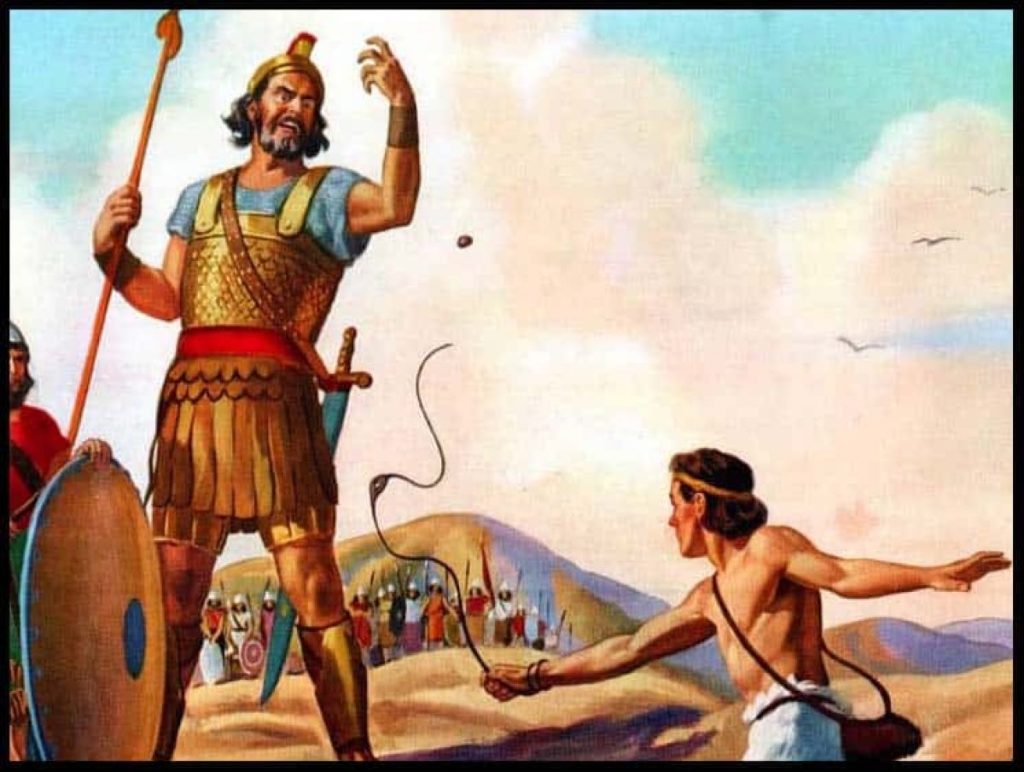
How the Russian David Can Finally Defeat the U.S.-NATO Goliath

By Eric Zuesse

Source: The Duran

When the Soviet Union broke up, and ended its Warsaw Pact military alliance, and ended its communism — all of which happened in 1991 — there was a very clearly understood verbal agreement that the U.S. and its NATO military alliance against the Soviet Union made to the Soviet leaders, repeatedly promising that NATO would not expand toward Russia’s borders; or, as George Herbert Walker Bush’s U.S. Secretary of State, James Baker, famously put it at the time, that NATO would not expand even “one inch to the east.” In other words, America promised that if the Cold War would end on the Soviet side, then it would end also on the American side, and so its military alliance wouldn’t expand to become nearer to Russia’s command-center The Kremlin, which would constitute a threat to blitz-invade Russia from that more-nearby nation.

Mikhail Gorbachev, the last Soviet leader, didn’t demand the termination of America’s military alliance against the Soviet Union, as a condition for the Soviet Union to end its military alliance against America and its NATO, but demanded only that NATO no longer would be a military alliance against Russia — that NATO would not take any of the former Warsaw Pact countries, nor any of the former Soviet countries, the countries that adjoin or are near to Russia and that would then become a threat to become a staging-area to invade Russia.

That was the agreement: to end the Cold War on both sides, not merely on the Russian side. But, on 24 February 1990, G.H.W. Bush secretly started telling his allied European heads-of-state that he and they would not be keeping their part of the bargain, because “We prevailed, they didn’t.” In other words, he was saying that they would go for conquest against Russia itself, and that they all had actually been liars to the contrary — that their instructions now were to go for conquest against Russia.

However, the expansion toward Russia’s borders couldn’t take place immediately, because they needed to continue the pretense of friendliness at least for a while in order to infiltrate their billionaires into Russia’s economy in partnership with whomever in Russia would get privatized Russian businesses so as to make Russia so dependent upon American capital as to become peacefully an American colony. That’s what happened during the 1990s, the Yeltsin years. Then, in 1999, Bill Clinton finally sprung upon Russia the start of NATO’s expansion, by adding Czechoslovakia and Poland to NATO. By the time that Putin came into power in 2000, it was already clear that America was an imperialistic, hostile, nation, and a liar, never to be trusted on anything.

In 2007 — after George W. Bush brought, into NATO, Bulgaria, Estonia, Latvia, Lithuania, Romania, Slovakia, and Slovenia — Putin said at the Munich Security Conference, on 10 February 2007, that NATO’s expansion “represents a serious provocation that reduces the level of mutual trust. And we have the right to ask: against whom is this expansion intended?” It was a remarkably weak statement on the matter, but even so was unacceptable to the imperialists. And, from that moment on, the U.S. Government and media started turning openly against him and for “regime-change in Russia.” Americans’ favorability ratings of Russia, which had been 58% in 2006, never again reached that high a level, and reached a new low of 24% in 2015 (after America’s coup grabbed Ukraine), and a new all-time low of 9% in 2023, while American’s favorability toward Ukraine as a new U.S. vassal nation reached an all-time high of 68% in 2023. The American masses were interpreting things in precisely the ways that America’s Government and billionaires, and their media, wanted them to.

If America wins its war against Russia in the battlefields of Ukraine, then the next step will be placing its missiles against The Kremlin onto Ukraine’s border 300 miles and five minutes of missile-flying distance away from their target, to blitz-behead Russia, and so to ‘win’ WW III.

At this stage, Russia has only two realistic options to achieve national security: either it will form a mutual-defense pact with China guaranteeing that any nation which invades either Russia or China will immediately find itself in a WW III against BOTH China and Russia; or else, it will relocate Russia’s capital city out of Moscow, which is now only seven minutes away from NATO, into Novosibirsk, which is nearly 2,000 miles and 40 minutes away from NATO and also away from Japan — truly a safe location for Russia’s capital city (which no western-Russian city can be). Russia is the only nation that is so vast it contains a city located nearly 2,000 miles away from any U.S.-or-allied military base or launching site. It needs to take advantage of this unique national-security asset which it contains.

Other countries have moved their capital cities, for far lesser reasons; so, Russia should do it now, in order to achieve national security (which is the biggest reason imaginable).  And, then, all of the trillions of dollars that America has been spending to conquer Russia will be immediately turned to dust. Once Russia has moved its capital to Novosibirsk, nothing that America does will be able to threaten Russia seriously again. It would radically transform international relations, because U.S.-and-allied aggression would finally have a natural limit. There would then be one country, at last, that the voracious U.S. empire won’t be able to grab. And this, of course, would also make Russia a magnet for all other countries that haven’t yet been successfully grabbed by the U.S. and now hosting any of its 900 foreign military bases. So: the number of U.S.-occupied countries might then finally begin to decline — which decline would add yet more to the entire world’s security, by removing the world’s biggest national-security threat. America’s foreign military bases threaten every nation, and don’t merely vassalize the given nation. Simply moving Russia’s capital to Novosibirsk would achieve all of this — for Russia, and for the world.

—————

Investigative historian Eric Zuesse’s new book, AMERICA’S EMPIRE OF EVIL: Hitler’s Posthumous Victory, and Why the Social Sciences Need to Change, is about how America took over the world after World War II in order to enslave it to U.S.-and-allied billionaires. Their cartels extract the world’s wealth by control of not only their ‘news’ media but the social ‘sciences’ — duping the public.

A War Like No Other in Ukraine

By Peter Van Buren

Source: WeMeantWell.com

Joe Biden created for the U.S. a war like no other, one where others die and the U.S. simply sits back and pays the bills on a gargantuan scale. No attempts are made at diplomacy by the Americans, and the diplomatic efforts of others like the Chinese are dismissed as evil attempts to gain influence in the area (similar for Chinese diplomatic work in the Yemen war.) Biden is coming close to achieving 1984‘s goal of perpetual warfare while only putting a handful of American lives at risk. He has learned lessons from the Cold War, and already put them into play. Can we call it the Biden Doctrine yet?

Biden’s strategy is clear enough now after well more than a year of conflict; what he has been sending to Ukraine jumped from helmets and uniforms to F-16s in only 15 months and shows no signs of stopping. The problem is U.S. weapons are never enough for victory and always “just enough” to allow the battle to go on until then next round. If the Ukrainians think they are playing the U.S. for suckers for free arms they best check who is really paying for everything, in blood.

Putin is playing this game himself in a way, careful not to introduce anything too powerful, such as strategic bombers, and upset the balance and offer Biden the chance to intervene in the war directly (one can hear old man Biden on TV now, explaining American airstrikes are needed to prevent a genocide, the go-to excuse he learned at Obama’s knee.) That’s what the current escalation holds, airpower. Ukraine will find even with the promise of the F-16 it can’t acquire aircraft and train up pilots fast enough (minimum training time is 18-24 months), and next will be begging the U.S. to serve as its air force. As it is the planes are likely to be based out of Poland and Romania, suggesting NATO will pick up the high-skilled tasks of maintaining and repairing them. Left unclear is the NATO role in required aerial refueling to keep the planes over the battlefield. F-16s aside, a spin off bonus to all these weapons gifts is that the vast majority of transfers to date have been “presidential drawdowns.” This means the U.S. sends used or older weapons to Ukraine, after which the Pentagon can use the Congressionally-authorized funds to replenish their stocks by purchasing new arms. The irony that war machines once in Iraq are now on the ground in Ukraine can’t be missed.

The U.S. strategy seems based on creating a ghastly tie of sorts, two sides lined up across a field shooting at each other until one side called it quits for the day. Same as in 1865, same as in 1914, but the new factor is today those armies face off across those fields with 21st-century HIMARS artillery, machine guns, and other tools of killing far more effective than a musket. It is unsustainable, literally chewing up men, albeit not Americans. The question meanwhile of how many more Ukrainians have to die is answered privately by Joe Biden as “potentially all of them.” Anything else requires you to cynically believe Biden thinks he can simply purchase victory,

Up until now this has all been the Cold War playbook. Fighting to the last Afghan was a strategy perfected in Soviet-held Afghanistan in the 1980s. Yet what is different is the scale — since Russia invaded Ukraine, the United States sent over $37 billion worth of military aid to support Kiev’s war effort, the single largest arms transfer in U.S. history and one with no signs of stopping. A single F-16 costs up to $350 million a copy if bought with weapons, maintenance equipment, and spare parts kits.

Yet despite the similarities to Cold War Strategy 101, some lessons have been learned over the intervening years. One of America’s fail-points throughout the Cold War and the War on Terror was the use of puppet governments largely imposed or direly supported by American money and muscle. Because these governments lacked the support of the people (see Vietnam, Iraq, and Afghanistan) they were non-starters with the lifespan of fruit flies. Ukraine is different; the puppet government is the government, beholden to the U.S. for its very survival but more or less supported directly by the people for now.

The other lesson learned has to do with nation building, or rebuilding or reconstruction, whatever the vast post-war expenditures will be called in this conflict. No more straight-up governmental efforts as in Vietnam, Iraq, and Afghanistan. This time it will be all private enterprise. “It is obvious that American business can become the locomotive that will once again push forward global economic growth,” President Zelensky said, boasting that BlackRock, JP Morgan, and Goldman Sachs, and others “have already become part of our Ukrainian way.”

The NYT calls Ukraine “the world’s largest construction site” and predicts projects there in the multi-billions, as high in some estimates as $750 billion. It will be, says the Times, a “gold rush: the reconstruction of Ukraine once the war is over. Russia is stepping up its offensive heading into the second year of the war, but already the staggering rebuilding task is evident. Hundreds of thousands of homes, schools, hospitals and factories have been obliterated along with critical energy facilities and miles of roads, rail tracks and seaports. The profound human tragedy is unavoidably also a huge economic opportunity.” Earlier this year JP Morgan and Zelensky signed a memorandum of understanding stipulating Morgan would assist Ukraine in its reconstruction.

And maybe those large American companies have learned the lessons of Iraq and Afghanistan. Of the billions spent, much money was wasted on dead ends and much was siphoned off due to corruption. But success or failure, the contractors always got paid in our Wars of Terror. With that in mind, more than 300 companies from 22 countries signed up for a Rebuild Ukraine exhibition and conference in Warsaw. At the World Economic Forum in Davos, Switzerland, a standing-room-only crowd packed Ukraine House to discuss investment opportunities.

The eventual gold rush in rebuilding makes for an interesting addendum to the Biden strategy of fighting to the last Ukrainian. The more that is destroyed the more that needs to be rebuilt, and the potential for more money to pour into U.S. companies smart enough to wait by the trough for the killing to subside. But why wait? Drones operated by Danish companies have already mapped every bombed-out structure in the Mykolaiv Oblast region, with an eye toward using the data to help decide what reconstruction contracts should be issued.

So let’s put some lipstick on this pig of a strategy and call it the Biden Doctrine. Part I is to limit direct U.S. combat involvement while fanning the flames for others. Part II is to provide massive amounts of arms to enable a fight to the last local person. Part III is to transform the home government into a puppet instead of creating an unpopular one afresh. Part IV is to turn the reconstruction process into a profit center for American companies. How long the war lasts and how many die are cynically not part of the strategy. The off ramp in Ukraine, a diplomatic outcome that resets the map to pre-invasion 2022 levels, is clear enough to Washington. The Biden administration seems content, shamefully, not to call forcefully for diplomatic efforts but instead to bleed out the Russians as if this was Afghanistan 1980, albeit in the heart of Europe.

High Stakes as Uncle Sam’s Days of Impunity Are Finally Over

By Finian Cunningham

Source: Strategic Culture Foundation

The edifice of American imperial power has never been challenged at its foundation. It is now.

Russia and China are determined to hold the American perpetrators of the Nord Stream sabotage to account. Uncle Sam’s days – indeed decades – of wanton criminality are over. There’s going to be hell to pay as the imperialist tyranny in Washington hits a wall of reality.

Several weeks have gone by with the United States and its Western lackeys stonewalling at the United Nations Security Council, squirming and resisting calls from Moscow and Beijing for an international criminal investigation into the sabotage of the Baltic Sea pipelines that were blown up in September.

A swathe of independent observers, such as American economics professor Jeffrey Sachs and former CIA analyst Ray McGovern, have concurred with the investigative report published on February 8 by renowned journalist Seymour Hersh which claims that U.S. President Joe Biden and his senior White House staff ordered the Pentagon to take out the natural gas pipeline that runs along the Baltic Sea bed from Russia to Germany.

Russia and China are adamant about not letting this vital subject be ignored. They want a proper investigation, international accountability and criminal prosecution. Moscow and Beijing are right to insist on this. Washington and its Western allies’ presumption of impunity has gone on for too many decades. The buck stops here and both Russia and China are strong enough to ensure that the United States cannot threaten, blackmail, or arm-twist its way out of scrutiny.

The Nord Stream project is a major international civilian infrastructure, costing in excess of $20 billion to construct over more than a decade. At 1,200 kilometres in length under the Baltic Sea, it is an impressive feat of engineering, symbolizing the mutual benefits of good neighborliness and cooperative trading.

For the United States to blow this pipeline up in order to knock Russia out of the European energy market so that it could muscle in with its own more expensive gas supplies is a shocking act of state terrorism and criminality. It is also potentially an act of war against Russia and callous sabotage against supposed European allies whose citizens are now suffering economic misery from soaring energy bills. German workers have this week shut down the entire economy from industrial protests over collapsing businesses and unbearable cost of living.

Of course, the Nord Stream sabotage is an urgent matter of basic justice, accountability for an atrocious crime, as well as massive international financial reparations. It’s almost hilarious how the self-proclaimed American protagonist of “rules-based global order” is desperately procrastinating over a glaring incident of dereliction and chaos.

But more than the essential obligation of justice is the legacy of impunity. For the perpetrators of such a wanton terrorist act not to be held accountable sets a perilous precedent. Otherwise, what is stopping the state terrorists from repeating equally brazen acts of sabotage and warmongering? The very concept of international law and the United Nations Charter is demolished, not simply undermined.

The Nord Stream incident potentially opens an era of rampant lawlessness and state banditry – by a nuclear superpower, the United States, using its Western minions for cover. The Western news media, in their reluctance to investigate, are also exposed as nothing more than propaganda channels in the service of imperial masters.

The present is reminiscent of the 1930s during a time of fascist expansionism by Nazi Germany and other imperialist nations, including the United States, Britain, France, Italy, Spain and Japan, and others. Nazi Germany was not the unique culprit during that earlier time of barbarism, notwithstanding the official Western revisionism of history to absolve itself.

After the Second World War amid the ashes of international destruction and up to 85 million deaths, the United Nations and its Charter were founded to ostensibly enshrine the stricture that there would be no repetition of the 1930s-style lawlessness and state terrorism.

That lofty aspiration was always a pathetic illusion. The decades after WWII saw no halt to the imperialist warmongering and subterfuges carried out primarily by the United States and its Western allies, in particular Britain. What a mockery that the U.S. and Britain were afforded permanent member states of the UN Security Council given that these two rogue powers have been largely responsible for countless wars post-1945. The decades-long wars in Vietnam, Iraq and Afghanistan are but the most notorious war crimes of the Anglo-American “special relationship”.

During the Cold War decades, the Soviet Union provided a limited check on the worst depredations by Western imperialists. The People’s Republic of China was not strong enough to act as a deterrent force.

For about two decades after the Cold War officially ended in 1991 following the dissolution of the Soviet Union, the United States rulers perceived a license for “full-spectrum dominance”. Washington embarked on a frenzy of endless wars that up till recently have prevailed.

The first reality check on the unbridled violence of the U.S. imperialists and their NATO henchmen was Russia’s military intervention in Syria in late 2015 to put an end to the Western machinations for yet another regime-change operation. Washington and its accomplices failed in their nefarious goals in Syria, albeit the Americans persist in illegally occupying part of the Arab country and stealing its oil resources.

Ukraine is the full manifestation of the end to impunity for the United States.

Russia under Vladimir Putin has recovered the military strength that was lost with the dissolution of the Soviet Union. In some ways, present-day Russia is even more formidable owing to the development of new forms of weapons, such as hypersonic missiles and S-500 air defenses. Also, Russia’s economy is on a sounder footing than the Soviet Union which relied excessively on militarism. Hence, Moscow has been able to withstand the economic assault that Washington and its allies have tried to mount over the Ukraine conflict.

Just as important, too, China has risen to economic and military superpower status. Together, Russia and China now present an invulnerable countervailing force to the United States and its Western allies.

For nearly eight decades after World War Two, the United States was relatively free to run amok, trashing international law and nations’ sovereignty, racking up death tolls by the millions, and terrorizing the planet with its “benign”, narcissistic tyranny.

The conflict in Ukraine, where Russia has said “enough is enough” to years of U.S.-led NATO aggression, is demonstrating that the days of impunity are finally over for the would-be American hegemon.

Washington has recklessly raised the stakes to an unsustainable height in Ukraine. It has bet the house – and farm – on subjugating Russia for its next insatiable imperial move against China. But Moscow and Beijing are calling Uncle Sam’s bluff. The buck stops here.

The edifice of American imperial power has never been challenged at its foundation. It is now.

New Cold War Propaganda: About China’s Spy Balloon and the US Spy Planes that have Violated the Airspace of Sovereign Nations

By Timothy Alexander Guzman

Source: Silent Crow News

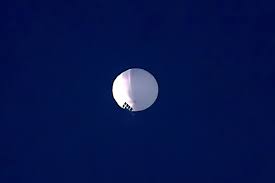
Washington’s political establishment says China was spying on US sovereign territory with what China has called their ‘weather balloon.  China’s Foreign Affairs Ministry Spokesperson issued a statement:

The airship is from China. It is a civilian airship used for research, mainly meteorological, purposes. Affected by the Westerlies and with limited self-steering capability, the airship deviated far from its planned course. The Chinese side regrets the unintended entry of the airship into US airspace due to force majeure. The Chinese side will continue communicating with the US side and properly handle this unexpected situation caused by force majeure

However, the Western mainstream-media has been non-stop with the hysteria on China’s “spy balloon” invading US sovereign territory, but when it comes to the US government and its Military-Industrial Complex (MIC) who has consistently invaded the airspace of many sovereign countries, it is barely mentioned and forgotten.  The bottom line is that the China balloon story is all about war propaganda.  The US and its allies are setting the stage for another war, this time against China. 

The Associated Press (AP) China balloon: Many questions about suspected spy in the sky reported on what the Pentagon has claimed regarding China’s spy balloon, “The Pentagon says the balloon, which is carrying sensors and surveillance equipment, is maneuverable and has shown it can change course. It has loitered over sensitive areas of Montana where nuclear warheads are siloed, leading the military to take actions to prevent it from collecting intelligence.”  Brigadier General Pat Ryder, the Pentagon’s press secretary said, “the balloon was not a military or physical threat” and that “once the balloon was detected, the U.S. government acted immediately to protect against the collection of sensitive information.”  

CNN also jumped in on the propaganda bandwagon and published What is a suspected Chinese spy balloon doing above the US?’, and surprisingly asked a legit question, “Don’t spies use satellites now?”  But CNN switched back to  its propaganda mode when they reported on what Peter Layton, a fellow at the Griffith Asia Institute in Australia and former Royal Australian Air Force officer had said, “Using balloons as spy platforms goes back to the early days of the Cold War. Since then, the US has used hundreds of them to monitor its adversaries.”  So, the US has used these types of balloons in the past, “But with the advent of modern satellite technology enabling the gathering of overflight intelligence data from space, the use of surveillance balloons had been going out of fashion.  Or at least until now.”  They mention the advancement of “miniaturization of electronics” which complements the idea of “floating intelligence platforms.”  Layton said that “Balloon payloads can now weigh less and so the balloons can be smaller, cheaper and easier to launch.”  An article published by The Washington Post ‘How do stratospheric Balloons Work? Here’s a Visual Guidesaid that “Experts in national security and aerospace said the craft appears to share characteristics with high-altitudes balloons used by developed countries around the world for weather forecasting, telecommunications and scientific research.”   

The Democrats and Republicans are united against a common adversary and that is China.  They say how dare the Chinese Communist Party release a surveillance balloon on our sovereign territory and defy international law.  Well, it is true that a foreign object that invades a sovereign country’s airspace  does violate international law, but for decades, the US has invaded the sovereign airspace of many countries around the world including Nicaragua, Venezuela, Iran, and others. 

So let’s go back to November 11th, 1984, the United Press International (UPI) headlined with Nicaragua said U.S. spy planes Sunday broke the sound… reported that “Nicaragua said U.S. spy planes Sunday broke the sound barrier twice over the country, causing minor damages and fueling the leftist Sandinista government’s fears of an American invasion.”  The SR-71 or its more accurate name, “The SR-71 “Blackbird” is used for “strategic reconnaissance” or in other words, to spy on its adversaries.  The SR-71 Blackbird is manufactured by Lockheed Martin, a heavyweight in the MIC was identified by the Sandinistas during the time of the Iran-Contra affair “Within two hours of each other, what the Nicaraguans identified as a U.S. SR-71 ‘Blackbird’ jets flew over Managua and other cities, breaking the sound barrier with a loud boom.”                  

Another incident happened on December 5th, 2011, this time in Iran. Lockheed Martin’s RQ-170 Sentinel unmanned aerial vehicle (UAV) was noticed in the city of Kashmar, located in northeastern Iran and was seized by a cyberwarfare unit from Iranian forces.  The Cyberwarfare unit gained control of the UAV spy drone and landed the plane although the western media reported that the spy plane was shot down.  The Obama regime initially denied Iran’s claims but later admitted that the aircraft that was supposedly shot down, was a US drone.  Iran did file a complaint to the United Nations over the US violating its airspace shortly after.  The RQ-170 Sentinel Unmanned Aerial Vehicle is described in Airforce-technology.com as “a high altitude and long-endurance unmanned aerial vehicle (UAV) designed and manufactured by Skunk Works, a division of Lockheed Martin Corporation, for the United States Air Force (USAF)” and that “The UAV can capture real-time imagery of the battlefield and transfer the data to the ground control station (GCS) through a line of sight (LOS) communication data link.”  It was also used against various countries, “The low-observable design enables the aircraft to fly on the borders of Iran, China, India and Pakistan for capturing real-time information regarding missile tests, telemetry and multispectral intelligence.”

On July 21st, 2019, Venezuela’s airspace was also violated by the US military as Reuter’s headlined with U.S. says Venezuelan plane aggressively shadowed a U.S. military aircraftnot mentioning that it was a spy plane, “The U.S. military on Sunday accused a Venezuelan fighter aircraft of “aggressively” shadowing a U.S. Navy EP-3 Aries II plane over international airspace, in yet another sign of the increasing hostility between the two nations.”  Keep in mind that that Obama had imposed sanctions against Venezuela, “The encounter between the U.S. and Venezuelan planes occurred on Friday, the same day that the Trump administration announced it was sanctioning four top officials in Venezuela’s military counterintelligence agency.”  The US military had issued a statement about the incident and said that “it had determined the “Russian-made fighter aggressively shadowed the EP-3 at an unsafe distance in international airspace for a prolonged period of time, endangering the safety of the crew and jeopardizing the EP-3 mission.”  So, what was that mission?  To spy on Venezuela’s oil fields?  This was during the time when the Trump regime’s hostilities towards the Maduro government was at an all-time high,  “U.S. President Donald Trump’s administration has repeatedly used sanctions in an effort to oust Venezuelan President Nicolas Maduro, whose 2018 re-election has been deemed illegitimate by the United States and most Western nations.”  The EP-3 stems from the P-3 Orion.  The P-3 Orion is an anti-submarine and surveillance aircraft also developed by Lockheed Martin in the 1960’s for the US Navy.  The EP-3 known as ARIES (Airborne Reconnaissance Integrated Electronic System) has specific capabilities that can intercept various signals.  It is an aircraft that is operated by naval personnel with specific skills that includes cryptographers, technicians and even linguists to translate intercepted messages in foreign languages. 

Online news website ‘The Drive’ is one of the internet’s main sources for news, features and guides about modern automotive culture and other technologies has a section called ‘The War Zone’ published an article titled The U.S. Army’s Newest Spy Plane in Action in Africa and Latin America admits that “After almost getting canned in 2012, the enhanced Medium Altitude Reconnaissance and Surveillance System is now snooping abroad.”  “Rules for thee, and not for me” is the US model, so “snooping abroad” is I guess justified.  According to The Drive:

The first version of the U.S. Army’s newest spy plane is in action in Africa and Latin America. At the same time, the service is finishing tests of three additional sub-variants in Arizona.  On March 12, 2017, Scout Warrior first reported these overseas deployments. The War Zone subsequently learned only some of the four signals intelligence-focused versions of the Enhanced Medium Altitude Reconnaissance and Surveillance System (EMARSS-S) were snooping abroad.

In an Email, U.S. Army Lt. Col. Sean Smith confirmed this particular model was supporting U.S. Africa Command (AFRICOM) and U.S. Southern Command (SOUTHCOM) operations. “There are no other EMARSS variants fielded or deployed at this time,” he added.  Despite its name, the EMARSS-S has a suite of signal-snooping gear to track and listen in on enemy communications, as well as the ability to record full-motion video during the day or at night. Each aircraft also has work stations connected to the controversial Distributed Common Ground System – Army (DCGS-A) intelligence data network, which is supposed to help collect, compile, and distribute information rapidly across units

Not only do they openly admit that the US has spy planes in Africa and Latin America, to them it makes perfect sense! 

Sending the aircraft to work with AFRICOM and SOUTHCOM makes perfect sense for early deployments. The regions these commands work are relatively low threat environments for American aircraft, but offer no shortage of work tracking drug smugglers, terrorists, and insurgents in remote areas

Let me get this straight, they are using spy planes “to track drug smugglers, terrorists, and insurgents”?  Call me cynical but “tracking drug smugglers, terrorists and insurgents” is only a half-truth.  Maybe in a small number of cases they have tracked real drug smugglers and others, but the US government has been involved in drug smuggling operations in the past, just ask the CIA.  As for tracking terrorists, the US government and the intelligence community has supported terrorists in the Middle East and Latin America for decades and as for tracking insurgencies of let’s say, in Iraq, it is usually against US and NATO occupiers, so who are they fooling? 

In Central and South America and Africa, Army spy planes such as the RC-12X Guardrail Common Sensor (GRCS) and EO-5C Airborne Reconnaissance Low – Multisensor (ARL-M) already fly routine missions, in cooperation with other aircraft and personnel from the U.S. Air Force, American law enforcement agencies, local security forces, and private contractors. After 9/11, the Pentagon found renewed interest in monitoring terrorist groups and potential hotspots in Africa with a similar mix of assets

To the US establishment, any form of spying on its territory is considered a declaration of war, but any violation of airspace of their perceived enemies anywhere in the Global South is justified because the US government can do whatever they want and bypass international law.  The Chinese spy balloon story is to create fear that an enemy is collecting data on its nuclear missile sites and on the American people.  Now they are accusing China of spying on Latin America with another balloon which asks the obvious question, why?  China has a good relationship with most of Latin America.  The US establishment, the MIC and the mainstream media are all pushing for a new war with a nuclear power that has a formidable military that would fight any foreign invasion on its territory.  China is not interested in becoming a global empire, it is the US who wants to remain a global empire.  It’s all war propaganda, nothing more, and nothing less.             

Hardly Anyone Is Thinking Logically About The Risk Of Nuclear War

By Caitlin Johnstone

Source: CaitlinJohnstone.com

The Bulletin of the Atomic Scientists has moved its symbolic Doomsday Clock to ninety seconds to midnight, the closest it has ever been set since its founding after the second world war. Chief among their reasons for doing so is the increasingly dangerous war in Ukraine.

statement authored by the Bulletin’s editor John Mecklin is as biased against Russia as any mainstream western punditry today and makes no mention of the US empire’s role in provokingprolonging and benefiting from this conflict, yet it still provides a fairly reasonable appraisal of the magnitude of the threat we’re staring down the barrel of at this point in history:

This year, the Science and Security Board of the Bulletin of the Atomic Scientists moves the hands of the Doomsday Clock forward, largely (though not exclusively) because of the mounting dangers of the war in Ukraine. The Clock now stands at 90 seconds to midnight—the closest to global catastrophe it has ever been.

The war in Ukraine may enter a second horrifying year, with both sides convinced they can win. Ukraine’s sovereignty and broader European security arrangements that have largely held since the end of World War II are at stake. Also, Russia’s war on Ukraine has raised profound questions about how states interact, eroding norms of international conduct that underpin successful responses to a variety of global risks.

And worst of all, Russia’s thinly veiled threats to use nuclear weapons remind the world that escalation of the conflict—by accident, intention, or miscalculation—is a terrible risk. The possibility that the conflict could spin out of anyone’s control remains high.

Mecklin encourages dialogue between Russia, Ukraine and NATO powers in order to de-escalate tensions in “this time of unprecedented global danger.” He quotes UN Secretary-General Antonio Guterres, who warned last August that the world has entered “a time of nuclear danger not seen since the height of the Cold War.”

We came a hair’s breadth from nuclear annihilation during the chaotic and unpredictable brinkmanship at the height of the last cold war, and in fact had numerous close calls that could have easily wound up going another way. As former Secretary of State Dean Acheson put it, humanity survived the Cuban Missile Crisis by “plain dumb luck”.

There’s no logical basis for the belief that we’ll get lucky again. Believing nuclear war won’t happen because it didn’t happen last time is a type of fallacious reasoning known as normalcy bias; it’s as rational as believing Russian roulette is safe because the man handing you the pistol didn’t blow his head off when he pulled the trigger.

But that’s the kind of sloppy thinking you’ll run into when you try to discuss this subject in public; I’m always encountering arguments that there’s no risk of nuclear war because we’ve gone all this time without disaster. One of the reasons I engage so much on social media is that I find it’s a good way of keeping tabs on the dominant propaganda narratives in our civilization and understanding what people are thinking and believing about things, and nowhere have I been met with more fuzzbrained comments than the times I’ve written about the need to prevent an entirely preventable nuclear holocaust.

The most common response I get is something along the lines of “Well if there is a nuclear war it will be Putin’s fault,” as though whose “fault” it is will matter to us while we’re watching the world end, along with the related “Well Russia shouldn’t have invaded then” and “Well Russia should stop threatening to use nukes then.” People genuinely don’t seem to understand that in the event of a full-scale nuclear war, it will really be the end of everyone. They still kind of imagine everyone still being there and shaking their fists at Russia afterward, and themselves sitting there feeling self-righteous and vindicated for correctly saying what a bad, bad man Vladimir Putin is.

They don’t understand that there will be no pundits discussing the nuclear armageddon on Fox and MSNBC, arguing about whose fault it was and which political party is to blame. They don’t get that there won’t be any war crimes tribunals in the radioactive ashes as the biosphere starves to death in nuclear winter. They don’t understand that once the nukes start flying, nobody’s shoulds or shouldn’ts about it will matter at all, and neither will your political opinions about Putin. All that will matter is that it happened, and that it can’t be taken back.

Another common response when I talk about the looming threat of nuclear war is, “Oh so you just don’t care about Ukrainians and you want them all to die.” The other day some lady responded to a Twitter thread I made about the need to avoid nuclear armageddon by saying that I must love rape and war crimes. People sincerely believe that’s a valid response to a discussion about the need to prevent the single worst thing that could possibly happen from happening. It really doesn’t seem to occur to them that they’re not actually engaging the subject at hand in any real way.

Slightly more perceptive interlocutors will argue that if we back down to tyrants just because they have nuclear weapons then everyone will try to get nukes and those who have them will become more belligerent, which will end up making nuclear war more likely in the long run. This response is a straw man fallacy because it misrepresents the argument as “just back down” rather than a call to engage in diplomacy and dialogue to de-escalate and begin sincerely negotiating toward detente, none of which is happening to any meaningful extent in this conflict. More importantly, it pretends that Russia is just invading its neighbor out of the blue instead of the well-documented reality that it is in fact responding to provocations by the US empire. The US has a moral obligation to de-escalate a conflict it knowingly provoked to advance its own interests, especially when that conflict could kill everyone in the world.

The whole “We can’t just back down to bullies like Putin” line of argumentation is further invalidated by the fact that it’s one thing to draw a line in the sand that must never be crossed — even if in the face of armageddon — but it’s quite another to say that line should be over something as small as who governs Crimea. This planet is populated with eight billion humans and countless other sentient creatures, very few of whom care one way or another who governs Crimea and almost none of whom would be willing to watch their loved ones die over it. Wanting to draw the line there is obnoxious, arrogant, and absurd.

And that’s just the shoddy brainwork of the rank-and-file public; the thinking of those who actually got us into this situation is surely just as dogshit. From what I can tell standing on this side of the thick veils of government secrecy which separate us from the truth, it appears to arise predominantly from a combination of immense hubris and zealous groupthink; hubris to think they can control all possible outcomes in a game of brinkmanship with so many small, unpredictable moving parts, and zealous groupthink in mindlessly adhering to the imperial doctrine that US unipolar planetary hegemony must be secured at all cost. They’re playing games with the life of every creature on this planet, and anyone who thinks that’s smart or wise should be as far from such decisions as possible.

The logical faceplants I’m describing here seem to arise partly from the fact that our civilization is completely inundated with empire propaganda about this conflict, and partly from the fact that people just haven’t thought terribly hard about nuclear war and what it would mean. The latter is probably because the prospect of everyone dying horrifically is such a huge, heavy, uncomfortable subject to sit down and deeply grapple with to the extent that it demands. For most people it’s just this vague, blurry mass in the periphery of their awareness, because they’ve been doing all these weird mental gymnastics to squirm and compartmentalize away from this thing rather than facing it.

But if ever there was a time to start doing some rigorous independent thinking and stop trusting the authorities to sort things out, it would be now. They’re showing us every sign that they’re just going to keep ramping up these games of nuclear chicken until they either fill their bottomless need for more complete global control or get us all killed trying. People need to start waking up to what’s going on and start making things uncomfortable for the people who are driving our world toward total destruction.

It does not need to be this way. Peace talks are possible. Diplomacy, de-escalation and detente are possible. Anyone who says otherwise is lying. We need to start building some public pressure to end this madness, because if the mushroom clouds ever show up, there is not one person alive who in that moment will believe that it was worth it.

THE WEST’S FALSE NARRATIVE ABOUT RUSSIA AND CHINA

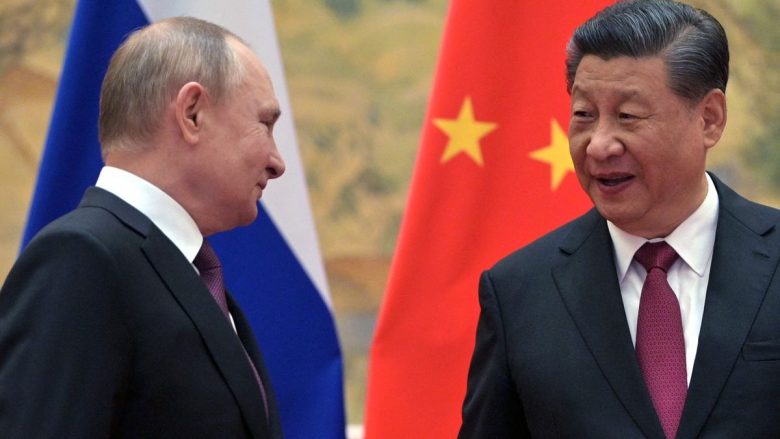
Vladimir Putin meets with Xi Jinping in Beijing just weeks before the invasion of Ukraine. Photograph: SPUTNIK/Reuters

By Jeffrey Sachs

Source: New Cold War

The world is on the edge of nuclear catastrophe in no small part because of the failure of Western political leaders to be forthright about the causes of the escalating global conflicts. The relentless Western narrative that the West is noble while Russia and China are evil is simple-minded and extraordinarily dangerous. It is an attempt to manipulate public opinion, not to deal with very real and pressing diplomacy.
___________________________

The essential narrative of the West is built into US national security strategy. The core US idea is that China and Russia are implacable foes that are “attempting to erode American security and prosperity.” These countries are, according to the US, “determined to make economies less free and less fair, to grow their. militaries, and to control information and data to repress their societies and expand their influence.”

The irony is that since 1980 the US has been in at least 15 overseas wars of choice (Afghanistan, Iraq, Libya, Panama, Serbia, Syria, and Yemen just to name a few), while China has been in none, and Russia only in one (Syria) beyond the former Soviet Union. The US has military bases in 85 countries, China in 3, and Russia in 1 (Syria) beyond the former Soviet Union.

President Joe Biden has promoted this narrative, declaring that the greatest challenge of our time is the competition with the autocracies, which “seek to advance their own power, export and expand their influence around the world, and justify their repressive policies and practices as a more efficient way to address today’s challenges.” US security strategy is not the work of any single US president but of the US security establishment, which is largely autonomous, and operates behind a wall of secrecy.

The overwrought fear of China and Russia is sold to a Western public through manipulation of the facts. A generation earlier George W. Bush, Jr. sold the public on the idea that America’s greatest threat was Islamic fundamentalism, without mentioning that it was the CIA, with Saudi Arabia and other countries, that had created, funded, and deployed the jihadists in Afghanistan, Syria, and elsewhere to fight America’s wars.

Or consider the Soviet Union’s invasion of Afghanistan in 1980, which was painted in the Western media as an act of unprovoked perfidy. Years later, we learned that the Soviet invasion was actually preceded by a CIA operation designed to provoke the Soviet invasion! The same misinformation occurred vis-à-vis Syria. The Western press is filled with recriminations against Putin’s military assistance to Syria’s Bashar al-Assad beginning in 2015, without mentioning that the US supported the overthrow of al-Assad beginning in 2011, with the CIA funding a major operation (Timber Sycamore) to overthrow Assad years before Russia arrived.

Or more recently, when US House Speaker Nancy Pelosi recklessly flew to Taiwan despite China’s warnings, no G7 foreign minister criticised Pelosi’s provocation, yet the G7 ministers together harshly criticised China’s “overreaction” to Pelosi’s trip.

The Western narrative about the Ukraine war is that it is an unprovoked attack by Putin in the quest to recreate the Russian empire. Yet the real history starts with the Western promise to Soviet President Mikhail Gorbachev that NATO would not enlarge to the East, followed by four waves of NATO aggrandisement: in 1999, incorporating three Central European countries; in 2004, incorporating 7 more, including in the Black Sea and Baltic States; in 2008, committing to enlarge to Ukraine and Georgia; and in 2022, inviting four Asia-Pacific leaders to NATO to take aim at China.

Nor do the Western media mention the US role in the 2014 overthrow of Ukraine’s pro-Russian president Viktor Yanukovych; the failure of the Governments of France and Germany, guarantors of the Minsk II agreement, to press Ukraine to carry out its commitments; the vast US armaments sent to Ukraine during the Trump and Biden Administrations in the lead-up to war; nor the refusal of the US to negotiate with Putin over NATO enlargement to Ukraine.

Of course, NATO says that is purely defensive, so that Putin should have nothing to fear. In other words, Putin should take no notice of the CIA operations in Afghanistan and Syria; the NATO bombing of Serbia in 1999; the NATO overthrow of Moammar Qaddafi in 2011; the NATO occupation of Afghanistan for 15 years; nor Biden’s “gaffe” calling for Putin’s ouster (which of course was no gaffe at all); nor US Defence Secretary Lloyd Austin stating that the US war aim in Ukraine is the weakening of Russia.

At the core of all of this is the US attempt to remain the world’s hegemonic power, by augmenting military alliances around the world to contain or defeat China and Russia. It’s a dangerous, delusional, and outmoded idea. The US has a mere 4.2% of the world population, and now a mere 16% of world GDP (measured at international prices). In fact, the combined GDP of the G7 is now less than that of the BRICS (Brazil, Russia, India, China, and South Africa), while the G7 population is just 6 percent of the world compared with 41 percent in the BRICS.
There is only one country whose self-declared fantasy is to be the world’s dominant power: the US. It’s past time that the US recognised the true sources of security: internal social cohesion and responsible cooperation with the rest of the world, rather than the illusion of hegemony. With such a revised foreign policy, the US and its allies would avoid war with China and Russia, and enable the world to face its myriad environment, energy, food and social crises.

Above all, at this time of extreme danger, European leaders should pursue the true source of European security: not US hegemony, but European security arrangements that respect the legitimate security interests of all European nations, certainly including Ukraine, but also including Russia, which continues to resist NATO enlargements into the Black Sea. Europe should reflect on the fact that the non-enlargement of NATO and the implementation of the Minsk II agreements would have averted this awful war in Ukraine. At this stage, diplomacy, not military escalation, is the true path to European and global security.