Global Planned Financial Tsunami Has Just Begun

By F. William Engdahl

Source: Global Research

Since the creation of the US Federal Reserve over a century ago, every major financial market collapse has been deliberately triggered for political motives by the central bank. The situation is no different today, as clearly the US Fed is acting with its interest rate weapon to crash what is the greatest speculative financial bubble in human history, a bubble it created. Global crash events always begin on the periphery, such as with the 1931 Austrian Creditanstalt or the Lehman Bros. failure in September 2008. The June 15 decision by the Fed to impose the largest single rate hike in almost 30 years as financial markets are already in a meltdown, now guarantees a global depression and worse.

The extent of the “cheap credit” bubble that the Fed, the ECB and Bank of Japan have engineered with buying up of bonds and maintaining unprecedented near-zero or even negative interest rates for now 14 years, is beyond imagination. Financial media cover it over with daily nonsense reporting , while the world economy is being readied, not for so-called “stagflation” or recession. What is coming now in the coming months, barring a dramatic policy reversal, is the worst economic depression in history to date. Thank you, globalization and Davos.

Globalization

The political pressures behind globalization and the creation of the World Trade Organization out of the Bretton Woods GATT trade rules with the 1994 Marrakesh Agreement, ensured that the advanced industrial manufacturing of the West, most especially the USA, could flee offshore, “outsource” to create production in extreme low wage countries. No country offered more benefit in the late 1990s than China. China joined WHO in 2001 and from then on the capital flows into China manufacture from the West have been staggering. So too has been the buildup of China dollar debt. Now that global world financial structure based on record debt is all beginning to come apart.

When Washington deliberately allowed the September 2008 Lehman Bros financial collapse, the Chinese leadership responded with panic and commissioned unprecedented credit to local governments to build infrastructure. Some of it was partly useful, such as a network of high-speed railways. Some of it was plainly wasteful, such as construction of empty “ghost cities.” For the rest of the world, the unprecedented China demand for construction steel, coal, oil, copper and such was welcome, as fears of a global depression receded. But the actions by the US Fed and ECB after 2008, and of their respective governments, did nothing to address the systemic financial abuse of the world’s major private banks on Wall Street and Europe , as well as Hong Kong.

The August 1971 Nixon decision to decouple the US dollar, the world reserve currency, from gold, opened the floodgates to global money flows. Ever more permissive laws favoring uncontrolled financial speculation in the US and abroad were imposed at every turn, from Clinton’s repeal of Glass-Steagall at the behest of Wall Street in November 1999. That allowed creation of mega-banks so large that the government declared them “too big to fail.” That was a hoax, but the population believed it and bailed them out with hundreds of billions in taxpayer money.

Since the crisis of 2008 the Fed and other major global central banks have created unprecedented credit, so-called “helicopter money,” to bailout the major financial institutions. The health of the real economy was not a goal. In the case of the Fed, Bank of Japan, ECB and Bank of England, a combined $25 trillion was injected into the banking system via “quantitative easing” purchase of bonds, as well as dodgy assets like mortgage-backed securities over the past 14 years.

Quantitative madness

Here is where it began to go really bad. The largest Wall Street banks such as JP MorganChase, Wells Fargo, Citigroup or in London HSBC or Barclays, lent billions to their major corporate clients. The borrowers in turn used the liquidity, not to invest in new manufacturing or mining technology, but rather to inflate the value of their company stocks, so-called stock buy-backs, termed “maximizing shareholder value.”

BlackRock, Fidelity, banks and other investors loved the free ride. From the onset of Fed easing in 2008 to July 2020, some $5 trillions had been invested in such stock buybacks, creating the greatest stock market rally in history. Everything became financialized in the process. Corporations paid out $3.8 trillion in dividends in the period from 2010 to 2019. Companies like Tesla which had never earned a profit, became more valuable than Ford and GM combined. Cryptocurrencies such as Bitcoin reached market cap valuation over $1 trillion by late 2021. With Fed money flowing freely, banks and investment funds invested in high-risk, high profit areas like junk bonds or emerging market debt in places like Turkey, Indonesia or, yes, China.

The post-2008 era of Quantitative Easing and zero Fed interest rates led to absurd US Government debt expansion. Since January 2020 the Fed, Bank of England, European Central Bank and Bank of Japan have injected a combined $9 trillion in near zero rate credit into the world banking system. Since a Fed policy change in September 2019, it enabled Washington to increase public debt by a staggering $10 trillion in less than 3 years. Then the Fed again covertly bailed out Wall Street by buying $120 billion per month of US Treasury bonds and Mortgage-Backed Securities creating a huge bond bubble.

A reckless Biden Administration began doling out trillions in so-called stimulus money to combat needless lockdowns of the economy. US Federal debt went from a manageable 35% of GDP in 1980 to more than 129% of GDP today. Only the Fed Quantitative Easing, buying of trillions of US government and mortgage debt and the near zero rates made that possible. Now the Fed has begun to unwind that and withdraw liquidity from the economy with QT or tightening, plus rate hikes. This is deliberate. It is not about a stumbling Fed mis-judging inflation.

Energy drives the collapse

Sadly, the Fed and other central bankers lie. Raising interest rates is not to cure inflation. It is to force a global reset in control over the world’s assets, it’s wealth, whether real estate, farmland, commodity production, industry, even water. The Fed knows very well that Inflation is only beginning to rip across the global economy. What is unique is that now Green Energy mandates across the industrial world are driving this inflation crisis for the first time, something deliberately ignored by Washington or Brussels or Berlin.

The global shortages of fertilizers, soaring prices of natural gas, and grain supply losses from global draught or exploding costs of fertilizers and fuel or the war in Ukraine, guarantee that, at latest this September-October harvest time, we will undergo a global additional food and energy price explosion. Those shortages all are a result of deliberate policies.

Moreover, far worse inflation is certain, due to the pathological insistence of the world’s leading industrial economies led by the Biden Administration’s anti-hydrocarbon agenda. That agenda is typified by the astonishing nonsense of the US Energy Secretary stating, “buy E-autos instead” as the answer to exploding gasoline prices.

Similarly, the European Union has decided to phase out Russian oil and gas with no viable substitute as its leading economy, Germany, moves to shut its last nuclear reactor and close more coal plants. Germany and other EU economies as a result will see power blackouts this winter and natural gas prices will continue to soar. In the second week of June in Germany gas prices rose another 60% alone. Both the Green-controlled German government and the Green Agenda “Fit for 55” by the EU Commission continue to push unreliable and costly wind and solar at the expense of far cheaper and reliable hydrocarbons, insuring an unprecedented energy-led inflation.

Fed has pulled the plug

With the 0.75% Fed rate hike, largest in almost 30 years, and promise of more to come, the US central bank has now guaranteed a collapse of not merely the US debt bubble, but also much of the post-2008 global debt of $303 trillion. Rising interest rates after almost 15 years mean collapsing bond values. Bonds, not stocks, are the heart of the global financial system.

US mortgage rates have now doubled in just 5 months to above 6%and home sales were already plunging before the latest rate hike. US corporations took on record debt owing to the years of ultra-low rates. Some 70% of that debt is rated just above “junk” status. That corporate non-financial debt totaled $9 trillion in 2006. Today it exceeds $18 trillion. Now a large number of those marginal companies will not be able to rollover the old debt with new, and bankruptcies will follow in coming months. The cosmetics giant Revlon just declared bankruptcy.

The highly-speculative, unregulated Crypto market, led by Bitcoin, is collapsing as investors realize there is no bailout there. Last November the Crypto world had a $3 trillion valuation. Today it is less than half, and with more collapse underway. Even before the latest Fed rate hike the stock value of the US megabanks had lost some $300 billion. Now with stock market further panic selling guaranteed as a global economic collapse grows, those banks are pre-programmed for a new severe bank crisis over the coming months.

As US economist Doug Noland recently noted, “Today, there’s a massive “periphery” loaded with “subprime” junk bonds, leveraged loans, buy-now-pay-later, auto, credit card, housing, and solar securitizations, franchise loans, private Credit, crypto Credit, DeFi, and on and on. A massive infrastructure has evolved over this long cycle to spur consumption for tens of millions, while financing thousands of uneconomic enterprises. The “periphery” has become systemic like never before. And things have started to Break.”

The Federal Government will now find its interest cost of carrying a record $30 trillion in Federal debt far more costly. Unlike the 1930s Great Depression when Federal debt was near nothing, today the Government, especially since the Biden budget measures, is at the limits. The US is becoming a Third World economy. If the Fed no longer buys trillions of US debt, who will? China? Japan? Not likely.

Deleveraging the bubble

With the Fed now imposing a Quantitative Tightening, withdrawing tens of billions in bonds and other assets monthly, as well as raising key interest rates, financial markets have begun a deleveraging. It will likely be jerky, as key players like BlackRock and Fidelity seek to control the meltdown for their purposes. But the direction is clear.

By late last year investors had borrowed almost $1 trillion in margin debt to buy stocks. That was in a rising market. Now the opposite holds, and margin borrowers are forced to give more collateral or sell their stocks to avoid default. That feeds the coming meltdown. With collapse of both stocks and bonds in coming months, go the private retirement savings of tens of millions of Americans in programs like 401-k. Credit card auto loans and other consumer debt in the USA has ballooned in the past decade to a record $4.3 trillion at end of 2021. Now interest rates on that debt, especially credit card, will jump from an already high 16%. Defaults on those credit loans will skyrocket.

Outside the US what we will see now, as the Swiss National Bank, Bank of England and even ECB are forced to follow the Fed raising rates, is the global snowballing of defaults, bankruptcies, amid a soaring inflation which the central bank interest rates have no power to control. About 27% of global nonfinancial corporate debt is held by Chinese companies, estimated at $23 trillion. Another $32 trillion corporate debt is held by US and EU companies. Now China is in the midst of its worst economic crisis since 30 years and little sign of recovery. With the USA, China’s largest customer, going into an economic depression, China’s crisis can only worsen. That will not be good for the world economy.

Italy, with a national debt of $3.2 trillion, has a debt-to-GDP of 150%. Only ECB negative interest rates have kept that from exploding in a new banking crisis. Now that explosion is pre-programmed despite soothing words from Lagarde of the ECB. Japan, with a 260% debt level is the worst of all industrial nations, and is in a trap of zero rates with more than $7.5 trillion public debt. The yen is now falling seriously, and destabilizing all of Asia.

The heart of the world financial system, contrary to popular belief, is not stock markets. It is bond markets—government, corporate and agency bonds. This bond market has been losing value as inflation has soared and interest rates have risen since 2021 in the USA and EU. Globally this comprises some $250 trillion in asset value a sum that, with every fed interest rise , loses more value. The last time we had such a major reverse in bond values was forty years ago in the Paul Volcker era with 20% interest rates to “squeeze out inflation.”

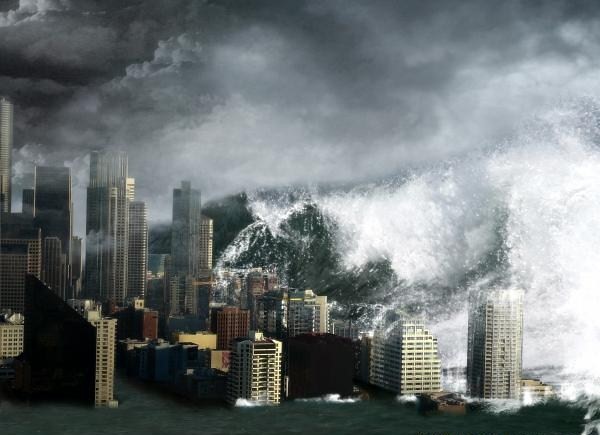
As bond prices fall, the value of bank capital falls. The most exposed to such a loss of value are major French banks along with Deutsche Bank in the EU, along with the largest Japanese banks. US banks like JP MorganChase are believed to be only slightly less exposed to a major bond crash. Much of their risk is hidden in off-balance sheet derivatives and such. However, unlike in 2008, today central banks can’t rerun another decade of zero interest rates and QE. This time, as insiders like ex-Bank of England head Mark Carney noted three years ago, the crisis will be used to force the world to accept a new Central Bank Digital Currency, a world where all money will be centrally issued and controlled. This is also what Davos WEF people mean by their Great Reset. It will not be good. A Global Planned Financial Tsunami Has Just Begun.
The ‘Values,’ ‘Vision,’ and ‘Democracy’ of an Inauthentic Opposition

Average Americans, whose economic survival is threatened, have no political party to represent them, including deceptive Democrats who claim to be their champions and blame others when their deception fails, says Paul Street.

By Paul Street

Source: Consortium News

Never underestimate the capacity of the United States’ Inauthentic Opposition Party, the corporate Democrats, for self-congratulatory delusion and the externalization of blame.

Look, for example, at the Democratic National Committee’s (DNC) recently filed 66-page lawsuit against Russia, WikiLeaks, and the 2016 Donald Trump campaign. The document accuses Russia of “mount[ing] a brazen attack on the American democracy,” “destabilize[ing] the U.S. political environment” on Trump’s (and Russia’s) behalf, and “interfering with our democracy….”

“The [RussiaGate] conspiracy,” the DNC Complaint says, “undermined and distorted the DNC’s ability to communicate the [Democratic] party’s values and vision to the American electorate” and “sowed discord within the Democratic Party at a time when party unity was essential…”

Yes, Russia, like numerous other nations living under the global shadow of the American Superpower, may well have tried to have some surreptitious say in 2016 U.S. presidential election. (Why wouldn’t the Kremlin have done that, given the very real and grave threats Washington and its Western NATO allies have posed for many years to post-Soviet-era Russian security and peace in Eastern Europe?)

Still, charging Russia with interfering with US-“American democracy” is like me accusing the Washington Capital’s star left winger Alex Ovechkin of interfering with my potential career as a National Hockey League player (I’m middle aged and can’t skate backwards). The U.S. doesn’t have a functioning democracy to undermine, as numerous careful studies (see this,this,this,this,this,this,this,this, and this) have shown.

We have, rather, a corporate and financial oligarchy, an open plutocracy. U.S.-Americans get to vote, yes, but the nation’s “unelected dictatorship of money” reigns nonetheless in the United States, where, as leading liberal political scientists Benjamin Page (Northwestern) and Marin Gilens (Princeton) find, “government policy…reflects the wishes of those with money, not the wishes of the millions of ordinary citizens who turn out every two years to choose among the preapproved, money-vetted candidates for federal office.”

Our Own Oligarchs

Russia and WikiLeaks “destabilized the U.S. political environment”? Gee, how about the 20 top oligarchic U.S. mega-donors who invested more than $500 million combined in disclosed campaign contributions (we can only guess at how much “dark,” that is undisclosed, money they gave) to candidates and political organizations in the 2016 election cycle? The 20 largest organizational donors also gave a total of more than $500 million. The foremost plutocratic election investors included hard right-wing billionaires like casino owner Sheldon Adelson ($83 million disclosed to Republicans and right-wing groups), hedge-fund manager Paul Singer ($26 million to Republicans and the right), hedge fund manager Robert Mercer ($26 million) and packaging mogul Richard Uihlein ($24 million).

How about the multi-billionaire Trump’s own real estate fortune, which combined with the remarkable free attention the corporate media oligopoly granted him to help catapult the orange-tinted fake-populist beast past his more traditional Republican primary opponents? And what about the savagely unequal distribution of wealth and income in Barack Obama’s America, so extreme in the wake of the Great Recession that Hillary’s primary campaign rival Bernie Sanders could credibly report that the top tenth of the upper U.S.1% possessed nearly as much wealth as the nation’s bottom 90%? Such extreme disparity helped doom establishment, Wall Street- and Goldman Sachs-embroiled candidates like Jeb Bush, Marco Rubio, and Mrs. Clinton in 2016. Russia and WikiLeaks did not create that deep, politically- and neoliberal-policy-generated socioeconomic imbalance.

Double Vision

And just what were the Democratic Party “values and vision” that Russia, Trump, and WikiLeaks supposedly prevented the DNC and the Clinton team from articulating in 2016? As the distinguished political scientist and money-politics expert Thomas Ferguson and his colleagues Paul Jorgensen and Jie Chen noted in an important study released three months ago, the Clinton campaign “emphasized candidate and personal issues and avoided policy discussions to a degree without precedent in any previous election for which measurements exist….it deliberately deemphasized issues in favor of concentrating on what the campaign regarded as [Donald] Trump’s obvious personal weaknesses as a candidate.” Strangely enough, the Twitter-addicted reality television star Trump had a lot more to say about policy than the former First Lady, U.S. Senator, and Secretary of State Hillary Clinton, a wonkish Yale Law graduate.

The Democrats “values and vision” in 2016 amounted pretty much to the accurate but hardly inspiring or mass-mobilizing notion that Donald Trump was an awful person who was unqualified for the White House. Clinton ran almost completely on candidate character and quality. This was a blunder of historic proportions, given Clinton’s own highly problematic character brand. Any campaign needs a reasonably strong policy platform to stand on in case of candidate difficulties.

By Ferguson, Jorgenson, and Chen’s account, Hillary’s peculiar policy silence was about U.S. oligarchs’ campaign money. Thanks to candidate Trump’s bizarre nature and his declared isolationism and nationalism, Clinton achieved remarkable campaign finance success with normally Republican-affiliated capitalist sectors less disposed to abide the standard, progressive-sounding policy rhetoric of Democratic Party candidates than their more liberal counterparts.

One ironic but “fateful consequence” of her curious connection to conservative business interests was her “strategic silence about most important matters of public policy. … Misgivings of major contributors who worried that the Clinton campaign message lacked real attractions for ordinary Americans were rebuffed. The campaign,” Ferguson, Jorgenson, and Chen wrote, “sought to capitalize on the angst within business by vigorously courting the doubtful and undecideds there, not in the electorate.”

Other Clinton mistakes included failing to purchase television ads in Michigan, failing to set foot in Wisconsin after the Democratic National Convention, and getting caught telling wealthy New York City campaign donors that Trump’s white supporters were “a basket of” racist, sexist, nativist, and homophobic “deplorables.” This last misstep was a Freudian slip of the neoliberal variety. It reflected and advanced the corporate Democrats’ longstanding alienation of and from the nation’s rural and industrial and ex-industrial “heartland.”

Fake Progressives

As left historian Nancy Fraser noted after Trump was elected, the Democrats, since at least the Bill Clinton administration, had joined outwardly progressive forces like feminism, antiracism, multiculturalism, and LGBTQ rights to “financial capitalism.” This imparted liberal “charisma” and “gloss” to “policies that …devastated…what were once middle-class lives” by wiping out manufacturing, weakening unions, slashing wages, and increasing the “precarity of work.”

To make matters worse, Fraser rightly added, the “progressive neoliberal” blue-and digital-zone Democrats “compounded” the “injury of deindustrialization” with “the insult of progressive moralism,” which rips red-and analog-zone whites as culturally retrograde (recall candidate Obama’s problematic 2008 reflection on how rural and small-town whites “cling to religion and guns”) and yet privileged by the simple color of their skin.

Such insults from elite, uber-professional class neo-liberals like Obama (Harvard Law) and the Clintons (Yale Law) would sting less in the nation’s “flyover zones” if the those uttering them had not spent their sixteen years in the White House governing blatantly in accord with the wishes of Wall Street, Silicon Valley, and the leading multinational corporations. Like Bill Clinton’s two terms, the Obama years were richly consistent with Sheldon Wolin’s early 2008 description of the Democrats as an “inauthentic opposition” whose dutiful embrace of “centrist precepts” meant they would do nothing to “substantially revers[e] the drift rightwards” or “significantly alter the direction of society.”

The fake-“progressive” Obama presidency opened with the expansion of Washington’s epic bailout of the very parasitic financial elites who recklessly sparked the Great Recession (this with no remotely concomitant expansion of federal assistance to the majority middle- and working-class victims), the abandonment of campaign pledges to restore workers’ right to organize (through the immediately forgotten Employee Free Choice Act), and the kicking of Single Payer health care advocates to the curb as Obama worked with the big drug and insurance syndicates to craft a corporatist, profit-friendly health insurance reform. Obama’s second term ended with him doggedly (if unsuccessfully) championing the arch-authoritarian global-corporatist Trans Pacific Partnership.

This Goldman Sachs and Citigroup-directed policy record was no small part of what demobilized the Democrats’ mass electoral base in ways that “destabilized the U.S. political environment” to the benefit of the reactionary populist Trump, whose Mercer family-backed proto-fascistic strategist and Svengali Steve Bannon was smartly attuned to the Democrats’ elitist class problem.

There was a major 2016 presidential candidate who ran with genuinely progressive “values and vision” – Bernie Sanders. The most remarkable finding in Ferguson, Jorgenson, and Chen’s study is that the self-declared “democratic socialist” Sanders came tantalizingly close to winning the Democratic presidential nomination with no support from Big Business. The small-donor Sanders campaign was “without precedent in American politics not just since the New Deal, but across virtually the whole of American history … a major presidential candidate waging a strong, highly competitive campaign whose support from big business was essentially zero.”

Sanders was foiled by the big-money candidate Clinton’s advance control of the Democratic National Committee and convention delegates. Under a formal funding arrangement it worked up with the Democratic National Committee (DNC) in late September of 2015, the depressing “lying neoliberal warmonger” Hillary’s campaign was granted advance control of all the DNC’s “strategic decisions.” The Democratic Party’s presidential caucuses and primaries were rigged against Sanders in ugly ways that provoked a different lawsuit last year – a class-action suit against the DNC on behalf of Sanders’ supporters. The complaint was dismissed by a federal judge who ruled on the side of DNC lawyers by agreeing that the DNC was within its rights to violate their party’s charter and bylaws by selecting its candidate in advance of the primaries.

How was that for the noble “values and vision” that “American democracy” inspires atop the not-so leftmost of the nation’s two major and electorally viable political parties?

Under Cover of Russia-gate

That’s what “sowed discord within the Democratic Party at a time when party unity was essential…” Russia didn’t do it. Neither did WikiLeaks or the Trump campaign. The Clinton campaign and the Democratic Party establishment – themselves funded by major U.S. oligarchs like San Francisco hedge-fund billionaire Tom Steyer– did that on their own.

Could Sanders – the most popular politician in the U.S. (something rarely reported in a “mainstream” corporate media that could barely cover his giant campaign rallies even as it obsessed over Trump’s every bizarre Tweet) – have defeated the orange-tinted beast in the general election? Perhaps, though much of the oligarchic funding Hillary got would have gone to Trump if “socialist” Bernie had been the Democratic nominee. It is unlikely that Sanders could have accomplished much as president in a nation long controlled by the capitalist oligarchy in numerous ways that go far beyond campaign finance alone.

Meanwhile, under the cover of RussiaGate, the still-dismal and dollar-drenched corporate-imperial Democrats seem content to continue tilting to the center-right, purging Sanders-style progressives from the party’s leadership and citing the party’s special election victories (Doug Jones and Conor Lamb) against deeply flawed and Trump-backed Republicans in two bright-red voting districts (the state of Alabama and a fading Pennsylvania canton) as proof that tepid neoliberal centrism is still (even after Hillary’s stunning defeat) the way to go.

Along the way, the Inauthentic Opposition’s candidate roster for the upcoming Congressional mid-term election is loaded with an extraordinary number of contenders with U.S. military and intelligence backgrounds, consistent with Congressional Democrats repeated votes to give massive military and surveillance-state funds and power to a president they consider (accurately enough) unbalanced and dangerous.

The trick, the neoliberal “CIA Democrats” think, is to run conservative, Wall Street-backed imperial and National Security State veterans who pretend (see Eric Draitser’s recent piece on “How Clintonites Are Manufacturing Faux Progressive Congressional Campaigns”) to be aligned with majority-progressive left-of-center policy sentiments and values. It’s still very much their party.

Whatever happens during the next biennial electoral extravaganza, “the crucial fact” remains, in Wolin’s words nine years ago, “that for the poor, minorities, the working class and anti-corporatists there is no opposition party working on their behalf” in the United States – the self-declared homeland and headquarters of global democracy.


Paul Street is an independent radical-democratic policy researcher, journalist, historian, author and speaker based in Iowa City, Iowa, and Chicago, Illinois.  He is the author of seven books. His latest is They Rule: The 1% v. Democracy (Paradigm, 2014)

Bank Crimes Pay: Under the Thumb of the Global Financial Mafiocracy

banksters-too-big-to-fail-640x509

By Andrew Gavin Marshall

Source: Occupy.com

On Nov. 13, the United Kingdom’s Serious Fraud Office (SFO) announced it was charging 10 individual bankers, working for two separate banks, Deutsche Bank and Barclays, with fraud over their rigging of the Euribor rates. The latest announcement shines the spotlight once again on the scandals and criminal behavior that have come to define the world of global banking.

To date, only a handful of the world’s largest banks have been repeatedly investigated, charged, fined or settled in relation to a succession of large financial scams, starting with mortgage fraud and the Libor scandal in 2012, the Euribor scandal and the Forex (foreign exchange) rate rigging. At the heart of these scandals, which involve the manipulation of interest rates on trillions of dollars in transactions, lie a handful of banks that collectively form a cartel in control of global financial markets – and the source of worldwide economic and financial crises.

Banks such as HSBC, JPMorgan Chase, Barclays, Bank of America, Citigroup, Deutsche Bank, Royal Bank of Scotland and UBS anchor the global financial power we have come to recognize as fraud. The two, after all, are not mutually exclusive. In more explicit terms, this cartel of banks functions as a type of global financial Mafia, manipulating markets and defrauding investors, consumers and countries while demanding their pound of flesh in the form of interest payments. The banks force nations to impose austerity measures and structural reforms under the threat of cutting off funding; meanwhile they launder drug money for other cartels and organized crime syndicates.

Call them the global Mafiocracy.

In May, six major global banks were fined nearly $6 billion for manipulation of the foreign exchange market, which handles over $5 trillion in daily transactions. Four of the six banks pleaded guilty to charges of “conspiring to manipulate the price of U.S. dollars and euros exchanged.” Those banks were Citigroup, JPMorgan Chase, Barclays and Royal Bank of Scotland, while two additional banks, UBS and Bank of America, were fined but did not plead guilty to the specific charges. Forex traders at Citigroup, JPMorgan Chase and other banks conspired to manipulate currency prices through chat room groups they established, where they arrogantly used names like “The Mafia” and “The Cartel.”

The FBI said the investigations and charges against the big banks revealed criminal behavior “on a massive scale.” The British bank Barclays paid the largest individual fine at around $2.3 billion. But as one trader at the bank wrote in a chat room conversation back in 2010, “If you aint cheating, you aint trying.” The total fines, while numerically large, were but a small fraction of the overall market capitalization of each bank – though the fine on Barclays amounted to some 3.4% of the bank’s market capitalization, the highest percentage by far among the group.

Despite the criminal conspiracy charges covering the years 2007 through 2013, the banks and their top officials continue to lay the blame squarely at the feet of individual traders. Axel Weber, the former president of the German Bundesbank (the central bank of Germany), who is now chairman of Switzerland’s largest bank, UBS, commented that “the conduct of a small number of employees was unacceptable and we have taken appropriate disciplinary actions.”

Looking at the larger scale of bank fines and fraud in the roughly eight years since the global financial crisis, the numbers increase substantially. In addition to a 2012 settlement for mortgage-related fraud in the U.S. housing market, which amounted to some $25 billion, several large banks paid individual fines related to mortgage and foreclosure fraud – including a $16 billion fine for Bank of America, and $13 billion for JPMorgan Chase. Added to these are fines related to the rigging of the Libor rate (the interest rate at which banks lend to each other) and the Forex rigging, as well as money laundering, violating sanctions, manipulating the price of gold, manipulating the U.S. electricity market and assisting tax evasion, among other crimes.

According to a research paper published in June, the total cost of litigation (fines, penalties, settlements, etc.) paid by 16 major global banks since 2010 has reached more than $300 billion. Bank of America paid the most, amounting to more than $66 billion, followed by JPMorgan Chase, Lloyds, Citigroup, Barclays, RBS, Deutsche Bank, HSBC, BNP Paribas, Santander, Goldman Sachs, Credit Suisse, UBS, National Australia Bank, Standard Chartered and Société Générale.

Virtually all of these banks also appear on a list of data, compiled through 2007, revealing them to be among the most interconnected and powerful financial institutions in the world. This core group of corporations forms part of a network of 147 financial institutions that Swiss scientists refer to as the “super-entity,” which, through their various shareholdings, collectively controland own each other and roughly 40% of the world’s 43,000 largest transnational corporations.

In other words, the big banks – along with large insurance companies and asset management firms – do not simply act as a cartel in terms of engaging in criminal activities, but they form a functionally interdependent network of global financial and corporate control. Further, the banks work together in various industry associations and lobbying groups where they officially represent their collective interests.

The largest European banks and financial institutions are represented by the European Financial Services Round Table (EFR), whose membership consists of the CEOs or Chairmen of roughly 25 of the top financial institutions on the continent, including Deutsche Bank, AXA, HSBC, Allianz, RBS, ING, Barclays, BNP Paribas, UBS, and Credit Suisse, among others.

In the United States, the Financial Services Forum (FSF) represents the largest American along with some European banks and financial institutions. The Forum’s membership consists of less than 20 executives, including the CEOs or Chairmen of such firms as Bank of America, Morgan Stanley, JPMorgan Chase, Goldman Sachs, Citigroup, UBS, HSBC, AIG, Bank of New York Mellon, State Street Corporation, Deutsche Bank and Wells Fargo, among others.

And on a truly global scale, there is the Institute of International Finance (IIF), the premier global association representing the financial industry, with a membership of nearly 500 different institutions from more than 70 countries around the world, including banks, insurance companies, asset management firms, sovereign wealth funds, central banks, credit ratings agencies, hedge funds and development banks.

In addition to these various groups and associations, many of the same large banks and their top executives also serve as members, leaders or participants in much more secretive groups and forums – for example, the International Monetary Conference (IMC), a yearly meeting of hundreds of the world’s top bankers hosted by the American Bankers Association, which invites selected politicians, central bankers and finance ministers to attend their off-the-record discussions. In addition, there is the Institut International d’Etudes Bancaires (International Institute of Banking Studies), or IIEB, which brings together the top officials from dozens of Europe’s major financial institutions for discussions with central bankers, presidents and prime ministers in “closed sessions” with virtually no coverage in the media.

These financial institutions are major owners of government debt, which gives them even greater leverage over the policies and priorities of governments. Exercising this power, they typically demand the same thing: austerity measures and “structural reforms” designed to advance a neoliberal market economy that ultimately benefits those same banks and corporations. The banks in turn create the very crises that require governments to bail them out, racking up large debts that banks turn into further crises, pressuring economic reforms in return for further loans. The cycle of crisis and control continues, and all the while, the big banks and financial institutions engage in criminal conspiracies, fraud, manipulation and money-laundering on a massive scale, including acting as the financial services arm of the world’s largest drug cartels and terrorists organizations.

Welcome to the world governed by the global financial Mafiocracy – because if you’re not concerned, you’re not paying attention.