
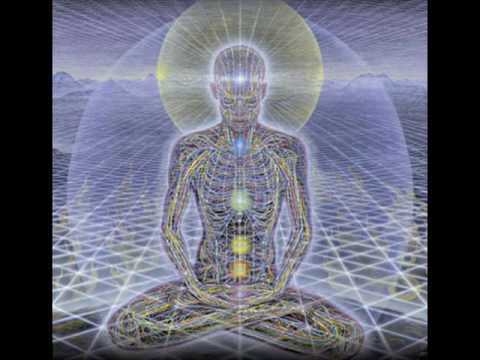
Buddhism and the Brain

741-hz-consciousness-expansion-is-bes-airl-hear-the-messages-of-the-universe-in-your-mind

Many of Buddhism’s core tenets significantly overlap with findings from modern neurology and neuroscience. So how did Buddhism come close to getting the brain right?

By David Weisman

Source: Seed Magazine

Over the last few decades many Buddhists and quite a few neuroscientists have examined Buddhism and neuroscience, with both groups reporting overlap. I’m sorry to say I have been privately dismissive. One hears this sort of thing all the time, from any religion, and I was sure in this case it would break down upon closer scrutiny. When a scientific discovery seems to support any religious teaching, you can expect members of that religion to become strict empiricists, telling themselves and the world that their belief is grounded in reality. They are always less happy to accept scientific data they feel contradicts their preconceived beliefs. No surprise here; no human likes to be wrong.

But science isn’t supposed to care about preconceived notions. Science, at least good science, tells us about the world as it is, not as some wish it to be. Sometimes what science finds is consistent with a particular religion’s wishes. But usually not.

Despite my doubts, neurology and neuroscience do not appear to profoundly contradict Buddhist thought. Neuroscience tells us the thing we take as our unified mind is an illusion, that our mind is not unified and can barely be said to “exist” at all. Our feeling of unity and control is a post-hoc confabulation and is easily fractured into separate parts. As revealed by scientific inquiry, what we call a mind (or a self, or a soul) is actually something that changes so much and is so uncertain that our pre-scientific language struggles to find meaning.

Buddhists say pretty much the same thing. They believe in an impermanent and illusory self made of shifting parts. They’ve even come up with language to address the problem between perception and belief. Their word for self is anatta, which is usually translated as ‘non self.’  One might try to refer to the self, but the word cleverly reminds one’s self that there is no such thing.

When considering a Buddhist contemplating his soul, one is immediately struck by a disconnect between religious teaching and perception. While meditating in the temple, the self is an illusion. But when the Buddhist goes shopping he feels like we all do: unified, in control, and unchanged from moment to moment. The way things feel becomes suspect. And that’s pretty close to what neurologists deal with every day, like the case of Mr. Logosh.

Mr. Logosh was 37 years old when he suffered a stroke. It was a month after knee surgery and we never found a real reason other than trivially high cholesterol and smoking. Sometimes medicine is like that: bad things happen, seemingly without sufficient reasons. In the ER I found him aphasic, able to understand perfectly but unable to get a single word out, and with no movement of the right face, arm, and leg. We gave him the only treatment available for stroke, tissue plasminogen activator, but there was no improvement. He went to the ICU unchanged. A follow up CT scan showed that the dead brain tissue had filled up with blood. As the body digested the dead brain tissue, later scans showed a large hole in the left hemisphere.

Although I despaired, I comforted myself by looking at the overlying cortex. Here the damage was minimal and many neurons still survived. Still, I mostly despaired. It is a tragedy for an 80-year-old to spend life’s remainder as an aphasic hemiplegic. The tragedy grows when a young man looks towards decades of mute immobility. But you can never tell with early brain injuries to the young. I was yoked to optimism. After all, I’d treated him.

The next day Mr. Logosh woke up and started talking. Not much at first, just ‘yes’ and ‘no.’ Then ‘water,’ ‘thanks,’ ‘sure,’ and ‘me.’ We eventually sent him to rehab, barely able to speak, still able to understand.

One year later he came back to the office with an odd request. He was applying to become a driver and needed my clearance, which was a formality. He walked with only a slight limp, his right foot a bit unsure of itself. His voice had a slight hitch, as though he were choosing his words carefully.

When we consider our language, it seems unified and indivisible. We hear a word, attach meaning to it, and use other words to reply. It’s effortless. It seems part of the same unified language sphere. How easily we are tricked! Mr. Logosh shows us that unity of language is an illusion. The seeming unity of language is really the work of different parts of the brain, which shift and change over time, and which fracture into receptive and expressive parts.

Consider how easily Buddhism accepts what happened to Mr. Logosh. Anatta is not a unified, unchanging self. It is more like a concert, constantly changing emotions, perceptions, and thoughts. Our minds are fragmented and impermanent. A change occurred in the band, so it follows that one expects a change in the music.

Both Buddhism and neuroscience converge on a similar point of view: The way it feels isn’t how it is. There is no permanent, constant soul in the background. Even our language about ourselves is to be distrusted (requiring the tortured negation of anatta). In the broadest strokes then, neuroscience and Buddhism agree.

How did Buddhism get so much right? I speak here as an outsider, but it seems to me that Buddhism started with a bit of empiricism. Perhaps the founders of Buddhism were pre-scientific, but they did use empirical data. They noted the natural world: the sun sets, the wind blows into a field, one insect eats another. There is constant change, shifting parts, and impermanence. They called this impermanence anicca, and it forms a central dogma of Buddhism.

This seems appropriate as far as the natural world is concerned. Buddhists don’t apply this notion to mathematical truths or moral certainties, but sometimes, cleverly, apply it to their own dogmas. Buddhism has had millennia to work out seeming contradictions, and it is only someone who was not indoctrinated who finds any of it strange. (Or at least any stranger than, say, believing God literally breathed a soul into the first human.)

Early on, Buddhism grasped the nature of worldly change and divided parts, and then applied it to the human mind. The key step was overcoming egocentrism and recognizing the connection between the world and humans. We are part of the natural world; its processes apply themselves equally to rocks, trees, insects, and humans. Perhaps building on its heritage, early Buddhism simply did not allow room for human exceptionalism.

I should note my refusal to accept that they simply got this much right by accident, which I find improbable. Why would accident bring them to such a counterintuitive belief? Truth from subjective religious rapture is also highly suspect. Firstly, those who enter religious raptures tend to see what they already know. Secondly, if the self is an illusion, then aren’t subjective insights from meditation illusory as well?

I don’t mean to dismiss or gloss over the areas where Buddhism and neuroscience diverge. Some Buddhist dogmas deviate from what we know about the brain. Buddhism posits an immaterial thing that survives the brain’s death and is reincarnated. After a person’s death, the consciousness reincarnates. If you buy into the idea of a constantly changing immaterial soul, this isn’t as tricky and insane as it seems to the non-indoctrinated. During life, consciousness changes as mental states replace one another, so each moment can be considered a reincarnation from the moment before. The waves lap, the sand shifts. If you’re good, they might one day lap upon a nicer beach, a higher plane of existence. If you’re not, well, someone’s waves need to supply the baseline awareness of insects, worms, and other creepy-crawlies.

The problem is that there’s no evidence for an immaterial thing that gets reincarnated after death. In fact, there’s even evidence against it. Reincarnation would require an entity (even the vague, impermanent one called anatta) to exist independently of brain function. But brain function has been so closely tied to every mental function (every bit of consciousness, perception, emotion, everything self and non-self about you) that there appears to be no remainder. Reincarnation is not a trivial part of most forms of Buddhism. For example, the Dalai Lama’s followers chose him because they believe him to be the living reincarnation of a long line of respected teachers.

Why have the dominant Western religious traditions gotten their permanent, independent souls so wrong? Taking note of change was not limited to Buddhism. The same sort of thinking pops up in Western thought as well. The pre-Socratic Heraclitus said, “Nothing endures but change.” But that observation didn’t really go anywhere. It wasn’t adopted by monotheistic religions or held up as a central natural truth. Instead, pure Platonic ideals won out, perhaps because they seemed more divine.

Western thought is hardly monolithic or simple, but monotheistic religions made a simple misstep when they didn’t apply naturalism to themselves and their notions of their souls. Time and again, their prominent scholars and philosophers rendered the human soul exceptional and otherworldly, falsely elevating our species above and beyond nature. We see the effects today. When Judeo-Christian belief conflicts with science, it nearly always concerns science removing humans from a putative pedestal, a central place in creation. Yet science has shown us that we reside on the fringes of our galaxy, which itself doesn’t seem to hold a particularly precious location in the universe. Our species came from common ape-like ancestors, many of which in all likelihood possessed brains capable of experiencing and manifesting some of our most precious “human” sentiments and traits. Our own brains produce the thing we call a mind, which is not a soul. Human exceptionalism increasingly seems a vain fantasy. In its modest rejection of that vanity, Buddhism exhibits less error and less original sin, this one of pride.

How well will any religion apply the lessons of neuroscience to the soul? Mr. Logosh, like every person who’s brain lesion changes their mind, challenges the Western religions. An immaterial soul cannot easily account for even a stroke associated with aphasia. Will monotheistic religions change their idea of the soul to accommodate data? Will they even try? It is doubtful. The rigid human exceptionalism is cemented firmly into dogma.

Will Buddhists allow neuroscience to render their idea of reincarnation obsolete? This is akin to asking if the Dalai Lama and his followers will decide he’s only the symbolic reincarnation of past teachers. This is also doubtful, but Buddhism’s first steps at least made it possible. Unrelated to neuroscience and neurology, in 1969 the Dalai Lama said his “office was an institution created to benefit others. It is possible that it will soon have outlived its usefulness.” Impermanence and shifting parts entail constant change, so perhaps it is no surprise that he’s lately said he may choose the next office holder before his death.

Buddhism’s success was to apply the world’s impermanence to humans and their souls. The results have carried this religion from ancient antiquity into modernity, an impressive distance. With no fear of impermanent beliefs or constant change, how far will they go?

The Wisdom in the Dark Emotions

107287-693x693r2-YinYang7

I recently rediscovered the following article (through Disinfo.com) which seems more applicable to the world today than when it was originally written more than ten years ago. It may help explain certain questions about our culture such as:

  • Why so many are obsessed with youth while topics of aging and death are often avoided.
  • Why the most popular narratives in mass media always have a happy resolution.
  • Why children are regularly taught to suppress dark emotions and are shielded from them in stories and in life.
  • Why some choose to ignore or deny current events.
  • Why more people impulsively need to keep themselves distracted at every waking moment.
  • Why approximately 1 in 10 Americans are now on antidepressant drugs.

These may all be symptoms of a multitude of complex problems, but they’re also examples of the unhealthy ways we cope with them. In my view, being open to and understanding dark emotions are necessary to attain true emotional resiliency to endure life’s challenges. It’s important not just for survival, but to enable us to more effectively act to rectify socio-economic problems which are connected to personal and global problems.

The Wisdom in the Dark Emotions

By Miriam Greenspan

Originally posted at Shambhala Sun

Grief, fear and despair are part of the human condition. Each of these emotions is useful, says psychotherapist Miriam Greenspan, if we know how to listen to them.

I was brought to the practice of mindfulness more than two decades ago by the death of my first child. Aaron died two months after he was born, never having left the hospital. Shortly after that, a friend introduced me to a teacher from whom I learned the basics of Vipassana meditation: how to breathe mindfully and meditate with “choiceless” awareness. I remember attending a dharma talk in a room full of fifty meditators. The teacher spoke about the Four Noble Truths. Life is inherently unsatisfactory, he said. The ego’s restless desires are no sooner fulfilled than they find new objects. Craving and aversion breed suffering. One of his examples was waiting in line for a movie and then not getting in.

I asked: “But what if you’re not suffering because of some trivial attachment? What if it’s about something significant, like death? What if you’re grieving because your baby was born with brain damage and died before he had a chance to live?” I wept openly, expecting that there, of all places, my tears would be accepted.

The teacher asked, “How long has your son been dead?” When I told him it had been two months, his response was swift: “Well then, that’s in the past now, isn’t it? It’s time to let go of the past and live in the present moment.”

I felt reprimanded for feeling sad about my son’s death. The teacher’s response baffled me. Live in the present? My present was suffused with a wrenching sorrow—a hole in my heart that bled daily. But the present moment, as he conceived of it, could be cleanly sliced away from and inured against this messy pain. Divested of grief, an emotionally sanitized “present moment” was served up as an antidote for my tears. However well meaning, the message was clear: Stop grieving. Get over it. Move on.

This is a familiar message. Its unintended emotional intolerance often greets those who grieve, especially if they do so openly. I call this kind of intolerance “emotion-phobia”: a pervasive fear and reflexive avoidance of difficult emotions in oneself and/or others. This is accompanied by a set of unquestioned normative beliefs about the “negativity” of painful feelings.

Emotion-phobia is endemic to our culture and perhaps to patriarchal culture in general. You’ll find it in sub-cultures as different as spiritual retreats, popular self-help books and psychiatric manuals. In fact, my teacher’s supposedly Buddhist response was very much in line with the prevailing psychiatric view of grief. According to the Diagnostic and Statistical Manual IV (the “bible” of psychiatry), the patient who is grieving a death is allotted two months for “symptoms” such as sadness, insomnia and loss of appetite before being diagnosable with a “Major Depressive Disorder.” Grief, perhaps the most inevitable of all human emotions, given the unalterable fact of mortality, is seen as an illness if it goes on too long. But how much is too long? My mother, a Holocaust survivor, grieved actively for the first decade of my life. Was this too long a grief for genocide? Time frames for our emotions are nothing if not arbitrary, but appearing in a diagnostic and statistical manual, they attain the ring of truth. The two month limit is one of many examples of institutional psychiatry’s emotion-phobia.

Emotions like grief, fear and despair are as much a part of the human condition as love, awe and joy. They are our natural and inevitable responses to existence, so long as loss, vulnerability and violence come with the territory of being human. These are the dark emotions, but by dark, I don’t mean that they are bad, unwholesome or pathological. I mean that as a culture we have kept these emotions in the dark—shameful, secret and unseen.

Emotion-phobia dissociates us from the energies of these emotions and tells us they are untrustworthy, dangerous and destructive. Like other traits our culture distrusts and devalues—vulnerability, for instance, and dependence—emotionality is associated with weakness, women and children. We tend to regard these painful emotions as signs of psychological fragility, mental disorder or spiritual defect. We suppress, intellectualize, judge or deny them. We may use our spiritual beliefs or practices to bypass their reality.

Few of us learn how to experience the dark emotions fully—in the body, with awareness—so we end up experiencing their energies in displaced, neurotic or dangerous forms. We act out impulsively. We become addicted to a variety of substances and/or activities. We become depressed, anxious or emotionally numb, and aborted dark emotions are at the root of these characteristic psychological disorders of our time. But it’s not the emotions themselves that are the problem; it’s our inability to bear them mindfully.

Every dark emotion has a value and purpose. There are no negative emotions; there are only negative attitudes towards emotions we don’t like and can’t tolerate, and the negative consequences of denying them. The emotions we call “negative” are energies that get our attention, ask for expression, transmit information and impel action. Grief tells us that we are all interconnected in the web of life, and that what connects us also breaks our hearts. Fear alerts us to protect and sustain life. Despair asks us to grieve our losses, to examine and transform the meaning of our lives, to repair our broken souls. Each of these emotions is purposeful and useful—if we know how to listen to them.

But if grief is barely tolerated in our culture, even less are fear and despair. The fact is we are all afraid and act as if we’re not. We fear the sheer vulnerability of existence; we fear its unpredictability. When we are unable to feel our fear mindfully, we turn it into anger, psychosomatic ailments or a host of “anxiety disorders”—displacements of fears we can’t feel or name.

According to experts, some 50 million people in this country suffer from phobias at some point in their lives, and millions more are diagnosed with other anxiety disorders. One reason is that we’ve lost touch with the actual experience of primal, natural fear. When fear is numbed, we learn little about what it’s for—its inherent usefulness as an alarm system that we ignore at our peril. Benumbed fear is especially dangerous when it becomes an unconscious source of vengeance, violence and other destructive acts. We see this acted out on the world stage as much as in the individual psyche.

As for despair, how many among us have not experienced periods of feeling empty, desolate, hopeless, brooding over the darkness in our world? This is the landscape of despair. Judging from my thirty years of experience as a psychotherapist, I would say that despair is common, yet we don’t speak of despair anymore. We speak of clinical depression, serotonin-deficiency, biochemical disorder and the new selective serotonin-reuptake inhibitors. We treat the “illness” with a host of new medications. In my view, “depression” is the word we use in our highly medicalized culture for a condition of chronic despair—despair that is stuck in the body and toxified by our inability to bear it mindfully. When we think of all despair as a mental disorder or a biochemical illness, we miss the spiritual metamorphosis to which it calls us.

In retrospect, a more helpful answer from my meditation teacher (and one more in line with the Buddha’s teachings) might have been, If you are grieving, do so mindfully. Pay attention to your grief. Stop and listen to it. Befriend it and let it be. The dark emotions are profound but challenging spiritual teachers, like the Zen master who whacks you until you develop patience and spiritual discipline. When grief shattered my heart after Aaron’s death, that brought with it an expansion, the beginning of my experience of a Self larger than my broken ego. Grieving mindfully—without recourse to suppression, intellectualization or religious dogmatism—made me a happier person than I’d ever been.

What I learned by listening closely to grief was a transformational process I call “the alchemy of the dark emotions.” Many years after Aaron’s death, after a second radiantly healthy child and a third who was born with a mysterious neuromotor disorder, I began to write about these alchemies—from grief to gratitude, fear to joy, and despair to faith—that I had experienced in my own life and witnessed countless times in my work as a psychotherapist.

The alchemy of the dark emotions is a process that cannot be forced, but it can be encouraged by cultivating certain basic emotional skills. The three basic skills are attending to, befriending and surrendering to emotions that make us uncomfortable. Attending to our dark emotions is not just noticing a feeling and then distancing ourselves from it. It’s about being mindful of emotions as bodily sensations and experiencing them fully. Befriending emotion is how we extend our emotional attention spans. Once again, this is a body-friendly process—getting into the body, not away from it into our thoughts. At the least, it’s a process of becoming aware of how our thoughts both trigger emotions and take us away from them. Similarly, surrender is not about letting go but about letting be. When you are open to your heart’s pain and to your body’s experience of it, emotions flow in the direction of greater healing, balance and harmony.

Attending to, befriending and surrendering to grief, we are surprised to discover a profound gratitude for life. Attending to, befriending and surrendering to fear, we find the courage to open to our vulnerability and we are released into the joy of knowing that we can live with and use our fear wisely. Attending to, befriending and surrendering to despair, we discover that we can look into the heart of darkness in ourselves and our world, and emerge with a more resilient faith in life.

Because we are all pretty much novices at this process, we need to discipline ourselves to be mindful and tolerant of the dark emotions. This is a chaotic, non-linear process, but I have broken it down to seven basic steps: 1) intention, 2) affirmation, 3) sensation, 4) contextualization, 5) the way of non-action, 6) the way of action and 7) the way of surrender.

Intention is the means by which the mind, heart and spirit are engaged and focused. Transforming the dark emotions begins when we set our intention on using our grief, fear and despair for the purpose of healing. It is helpful to ask yourself: What is my best intention with regard to the grief, fear and despair in my life? What would I want to learn or gain from this suffering?

The second step in using the dark emotions for growth is affirming their wisdom. This means changing the way we think about how we feel, and developing and cultivating a positive attitude toward challenging feelings.

Emotional intelligence is a bodily intelligence, so you have to know how to listen to your body. The step I call “sensation” includes knowing how to sense and name emotions as we experience them in the body. We need to become more familiar and friendly with the actual physical sensations of emotional energy. Meditation, T’ai chi, yoga and other physical practices that cultivate mindfulness are particularly useful. How does your body feel when you are sad, fearful or despairing? What kinds of stories does your mind spin about these emotions? What happens when you simply observe these sensations and stories, without trying to understand, analyze or change anything?

In step four, contextualization, you acquaint yourself with the stories you usually tell yourself about your emotional suffering, and then place them in a broader social, cultural, global or cosmic context. In enlarging your personal story, you connect it to a larger story of grief, fear or despair in the world. This gets us out of the isolation and narcissism of our personal history, and opens us to transforming our suffering into compassion.

Step five, the way of non-action, is the skill that psychologists call “affect tolerance.” This step extends our ability to befriend the pain of the dark emotions in the body. When you can tolerate the pain of grief, fear and despair without acting prematurely to escape it, you are practicing the way of non-action. Again, it is helpful to meditate on your emotions with the intention of really listening to them. What does your grief, fear or despair ask of you? In meditation, listen to the answers that come from your heart, rather than from your analytic mind.

The dark emotions ask us to act in some way. While the way of non-action builds our tolerance for dark emotional energy, step six is about finding an action or set of actions that puts this energy to good use. In the way of action, we act not in order to distract ourselves from emotion but in order to use its energy with the intention of transformation. The dark emotions call us to find the right action, to act with awareness and to observe the transformations that ensue, however subtle. Action can be strong medicine in times of trouble. If you are afraid, help someone who lives in fear. For example, volunteer at a battered women’s shelter. If you’re sad and lonely, work for the homeless. If you’re struggling with despair, volunteer at a hospice. Get your hands dirty with the emotion that scares you. This is one of the best ways to find hope in despair, to find connection in a shared grief and to discover the joy of working to create a less broken world. Finally, step seven, the way of surrender, is the art of conscious emotional flow. Emotional flow is something that happens automatically when you know how to attend to and befriend your emotions. When we are in flow with emotion, the energy becomes transformative, opening us to unexpected vistas.

When we look deeply into the dark emotions in our lives, we find both the universality of suffering and how much suffering is unnecessary, the result of social inequities, oppression, large scale violence and trauma. Our awareness both of the universality of suffering and of its socially created manifestations is critical to the healing journey. Knowing how our grief, fear and despair may be connected to larger emotional currents and social conditions de-pathologizes these emotions, allowing us to accept and tolerate them more fruitfully, and with more compassion for ourselves and others. We begin to see the dark emotions as messengers, information-bearers and teachers, rather than “negative” energies we must subdue, tame or deny. We tend to think of our “negative” emotions as signs that there’s something wrong with us. But the deepest significance of the feelings is simply our shared human vulnerability. When we know this deeply, we begin to heal in a way that connects rather than separates us from the world.