
From Dollar Hegemony to Global Warming

Globalization, Glyphosate and Doctrines of Consent

By Colin Todhunter

Source: Dissident Voice

There has been an on-going tectonic shift in the West since the abandonment of the Bretton Woods agreement in 1971. This accelerated when the USSR ended and has resulted in the ‘neoliberal globalization’ we see today.

At the same time, there has been an unprecedented campaign to re-engineer social consensus in the West. Part of this strategy, involves getting populations in Western countries to fixate on ‘global warming’, ‘gender equity’ and ‘anti-racism’: by focusing on identity politics and climate change, the devastating effects and injustices brought about by globalized capitalism and associated militarism largely remain unchallenged by the masses and stay firmly in the background.

This is the argument presented by Denis Rancourt, researcher at Ontario Civil Liberties Association, in a new report. Rancourt is a former full professor of physics at the University of Ottawa in Canada and author of ‘Geo-economics and geo-politics drive successive eras of predatory globalization and socialengineering: Historical emergence of climate change, gender equity, andanti-racism as state doctrines’ (April 2019).

In the report, Rancourt references Michael Hudson’s 1972 book Super Imperialism: The Economic Strategy of American Empire to help explain the key role of maintaining dollar hegemony and the importance of the petrodollar to US global dominance. Aside from the significance of oil, Rancourt argues that the US has an existential interest to ensure that opioid drugs are traded in US dollars, another major global commodity. This explains the US occupation of Afghanistan. He also pinpoints the importance of US agribusiness and the arms industry in helping to secure US geo-strategic goals.

Since the fall of the USSR in 1991, Rancourt says that US war campaigns have, among other things, protected the US dollar from abandonment, destroyed nations seeking sovereignty from US dominance, secured the opium trade, increased control over oil and have frustrated Eurasian integration. In addition, we have seen certain countries face a bombardment of sanctions and hostility in an attempt to destroy energy-producing centres that the US does not control, not least Russia.

He also outlines the impacts within Western countries too, including: the systematic relative loss of middle-class economic status, the rise of urban homelessness, the decimation of the industrial working class, corporate megamergers, rising inequality, the dismantling of welfare, financial speculation, stagnant wages, debt, deregulation and privatisation. In addition, the increased leniency in food and drug regulation has led to the dramatic increase in the use of the herbicide glyphosate, which has been concurrent with upsurges of many diseases and chronic ailments.

In the face of this devastation, Western nations have had to secure ongoing consent among their own populations. To help explain how this has been achieved, Rancourt focuses on gender equity, anti-racism and global warming as state doctrines that have been used to divert attention from the machinations of US empire (and also to prevent class consciousness taking hold). I recently asked Denis Rancourt about this aspect of his report.

Colin Todhunter:  Can you say a bit about yourself and how you came to produce this report? What is it meant to achieve?

Denis Rancourt:  I’m a former physics professor, environmental scientist and a civil rights advocate. I currently work as a researcher for the Ontario Civil Liberties Association (ocla.ca). During a conversation about civil rights issues I had with the executive director of OCLA, we identified several important societal and economic phenomena that seemed to be related to the early 1990s. So, I eventually settled in to do some ‘heavy lifting’, research wise.

While there is no lack of hired intellectuals and experts to wrongly guide our perception, my research demonstrates a link between surges in large-scale suppression and exploitation of national populations with the acceleration of an aggressive, exploitative globalization.

CT: In your report, you’ve described the consequences of the abandonment of Bretton Woods and the dissolution of the USSR in terms of dollar hegemony, US militarism and the devastating impacts of ‘neoliberal globalisation’ both for nation states and for ordinary people.

DR: There is little doubt that Russian and Chinese analysts have a solid understanding of what I have outlined in my report. For instance, foreshadowing Trump’s trade war, the People’s Liberation Army Major-General Qiao Liang’s April 2015 speech to the Chinese Communist Party’s Central Committee and government office, included the following:

Since that day [dissolution of Bretton Woods], a true financial empire has emerged, the US dollar’s hegemony has been established, and we have entered a true paper currency era. There is no precious metal behind the US dollar. The government’s credit is the sole support for the US dollar. The US makes a profit from the whole world. This means that the Americans can obtain material wealth from the world by printing a piece of green paper. […] If we [now] acknowledge that there is a US dollar index cycle [punctuated by engineered crises, including war] and the Americans use this cycle to harvest from other countries, then we can conclude that it was time for the Americans to harvest China…

CT: You discuss the need for states to ensure consent: the need to pacify, hypnotize and align populations for continued globalization; more precisely, the need to divert attention from the structural violence of economic policies and the actual violence of militarism. Can you say something about how the issue of global warming relates to this?

DR:  Irrespective of whether the so-called ‘climate crisis’ is real, exaggerated or fabricated, it is clear, from the data in my report, that the ethos of global warming was engineered on a global scale and benefits the exploiters of the carbon-economy and, more indirectly, the state.

For example, one of the studies that I review shows that a many-fold increase in mainstream media reporting about global warming suddenly occurred in the mid-2000s, in all the leading news media, at the same time that the financiers and their acolytes such as Al Gore decided to make and manage a global carbon economy. This media campaign has been sustained ever since and the global warming ethos has been institutionalized.

Carbon sequestration schemes have devastated local communities on every occupied continent. If anything, carbon schemes − from wind farms to biofuel harvesting to industrial battery production to solar-cell array installations to mining uranium to mega hydro-dam construction and so on – have accelerated habitat destruction.

Meanwhile, economic and military warfare rages, glyphosate is dumped into the ecosphere at unprecedented rates (poured on GM herbicide-resistant cash crops), active genocides are in progress (Yemen), the US is unilaterally withdrawing from nuclear treaties and forcing an arms race with next generation death machines and US-held extortionary loans are serviced by land-use transformation on the scale of nations; while our educated children have nervous breakdowns trying to get governments to “act” on “climate”.

In the early-1990s, a world conference on climate environmentalism was an express response to the dissolution of the Soviet Union. This was part of a global propaganda project intended to mask the new wave of accelerated predatory globalism that was unleashed now that the USSR was definitively out of the way.

CT: What are your thoughts on Greta Thunberg and the movement surrounding her?

DR:  It is sad and pathetic. The movement is a testament to the success of the global propaganda project that I describe in my report. The movement is also an indicator of the degree to which totalitarianism has taken hold in Western societies; wherein individuals, associations and institutions lose their ability for independent thought to steer society away from the designs of an occupying elite. Individuals (and their parents) become morality police in the service of this ‘environmentalism’.

CT: You also talk about the emergence of gender-equity (third wave feminism) and anti-racism as state doctrines. Can you say something about this?

DR: In my report, I use historical institutional records and societal data to demonstrate that a triad of ‘state religions’ was globally engendered and emerged on cue following the dissolution of the Soviet Union. This triad consists of climate alarmism, exaggerated tunnel-vision focus on gender equity and a campaign of anti-racism focused on engineering thoughts, language and attitudes.

These state ideologies were conceived and propelled by UN efforts and the resulting signed protocols. Western academia enthusiastically took up and institutionalized the program. Mainstream media religiously promoted the newly minted ethos. Political parties largely applied increased quotas of gender and race elected representatives.

These processes and ideas served to sooth, massage and occupy the Western mind, especially among the upper-middle, professional and managerial classes and the elite classes of economically occupied territories but did nothing to alleviate the most violent and globally widespread forms of actual racism and misogyny as a result of predatory globalization and militarism.

Ironically, the global attacks on human dignity, human health and the environment were in proportion to the systematic and sometimes shrill calls for gender equity, anti-racism and climate ‘action’. The entire edifice of these ‘state religions’ leaves no room for required conflicts of class and expressly undermines any questioning of the mechanisms and consequences of globalization.

CT: Can you say something about the Gilets Jaunes (Yellow Vests), Brexit and the Trump electoral phenomenon?

DR: Combine aggressive globalization, constant financial predation, gutting of the Western working and middle classes and a glib discourse of climate change, anti-racism and gender equity and something has to give. French geographer Christophe Guilluy predicted the reactions in some detail, and it is not difficult to understand. It is no accident that the revolting working- and middle-classes are critical of the narratives of climate crisis, anti-racism and gender equity; and that their voices are cast by the mainstream media as racist, misogynist and ignorant of science.

It seems that any class which opposes its own destruction is accused of being populated by racist and ignorant folks that can’t see that salvation lies in a carbon-managed and globalized world. It becomes imperative, therefore, to shut down all the venues where such an ‘ignorant lot’ could communicate their views, attempt to organize and thereby threaten the prevailing social order.
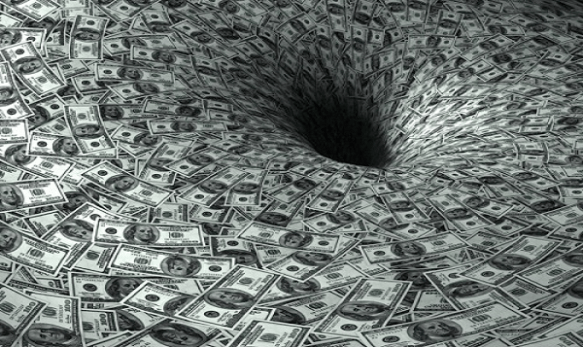
USA in a Debt Trap Death Spiral

By F. William Engdahl

Source: New Eastern Outlook

The US economy and its financial structures have never recovered from the great financial meltdown of 2008 despite the passage of ten years. Little discussion has been given to the fact that the Republican Congress last year abandoned the process of mandatory budget cuts or automatic sequestration that had been voted in a feeble attempt to rein in the dramatic rise in US government debt. That was merely an added factor in what soon will be recognized as a classic debt trap. What is now looming over not just the US economy but also the global financial system is a crisis that could spell the end of the post-1944 dollar system.

First some basic background. When President Nixon, on advice of Paul Volcker, then at US Treasury, announced on August 15, 1971 the unilateral end of the Bretton Woods gold-dollar system, to replace it with a floating dollar, Washington economists and Wall Street bankers realized that the unique role of the US dollar as leading reserve currency held by all central banks and the currency for world commodity and other trade, especially oil, gave them something that appeared to be a gift from monetary heaven.

So long as the world needed US dollars, Washington could run government deficits without end. Foreign central banks, especially the Bank of Japan in the 1980’s and since the turn of the century, the Peoples’ Bank of China, would have little choice but to reinvest their surplus trade dollar earnings in interest-bearing AAA-rated US Treasury securities. This perverse dollar system allowed Washington to finance its wars in faraway places like Afghanistan or Iraq with other peoples’ money. During the Administration of George W. Bush, when Washington’s annual budget deficit exceeded annually one trillion dollars, Vice President Dick Cheney cynically quipped, “debt doesn’t matter; Reagan proved that.” Up to a point that appeared so. Now we are getting dangerously near to that “point” where debt does matter.

Federal Debt Rise

There are generally speaking three major divisions of debt measured in the US economy: Federal debt of Washington, corporate debt and private household debt. Today, owing in large part to ten years of historic low interest rates following the largest financial crisis in history–the 2007-2008 sub-prime crisis that became a global systemic crisis after September 2008–all three sectors have borrowed as if there was no tomorrow because of the near-zero Federal Reserve interest rates and their various Quantitative Easings. Nothing so radical can last forever.

Since the financial crisis erupted in 2008 US Federal debt has more than doubled from $10 trillion to over $21 trillion today. Yet conditions were made manageable by a Federal Reserve emergency policy that dealt with the financial and banking crisis by buying almost $500 billion annually of that debt. Much of the remainder was bought by China, Japan and even Russia and Saudi Arabia. Further debt levels were restrained by the bipartisan spending caps established in the Budget Control Act of 2011 that had kept recent deficits partially in check.

Now conditions of future US Federal debt and deficit growth are pre-programmed for systemic crisis over the next several years.

‘Trumponomics’ Disaster

The economics of the Trump Tax Cuts Act of 2017, signed in December, dramatically cut certain taxes on business corporations from 35% to 21%, but did not offset that with revenue increases elsewhere. The promise is that cheaper taxes will spur economic growth. This is a myth under present economic conditions and overall public and private debt burdens. Instead, the new tax law, assuming ideal economic conditions, will decrease expected revenues by a total of $1 trillion over the next 10 years. If the economy goes into severe recession, highly likely, tax revenues will plunge and the deficits will explode even more.

What the new Trump tax cut act will do is dramatically increase the size of the US annual budget deficit. The Congressional Budget Office estimates that as early as Fiscal Year 2019 the annual deficit that must be financed by debt will reach $1 trillion. Then the Treasury Borrowing Advisory Committee expects government debt issues of $ 955 billion for FY2018, compared with $ 519 billion in FY 2017. Then for FY 2019 and 2020 the deficit will exceed $1 trillion. By 2028, ten years from now, under mild economic assumptions, the size of the USA Federal debt will rise to an untenable $34 trillion from roughly $21 trillion today, and the deficit in 2028 will exceed $1.5 trillion. And this year 2018 alone, with historically low interest rates the cost of interest only on the total Federal debt will reach $500 billion.

Zombie borrowers…time bombs

Now after almost a decade of unprecedented low interest rates to bail out Wall Street and create new asset inflation in stocks, bonds and housing, the Fed is in the early stages of what some call QT or Quantitative Tightening. Interest rates are rising and have been for the past year, so far very gradually as the Fed is being cautious. The Fed however is continuing to raise rates, and now the Fed Funds stands at 1.75% after nearly ten years at effectively zero. Were they to stop now it would signal a market panic that the Fed knew something far worse than they say.

Because never in its history has the Federal Reserve indulged in such a monetary experiment with so low rates so long, the effects of reversing are going to be as well unprecedented. At the onset of the 2008 financial crisis the Fed rates were around 5%. That is what the Fed is aiming at to return to “normal.” However, with rising interest rates, the lowest credit sector, so-called non-investment grade or “junk bonds” face domino style defaults.

Moody’s Credit Rating has just issued a warning that, barring some sort of miracle, as US interest rates rise, and they are, as much as 22% of US corporations that are being kept alive borrowing at historically low interest, not only in shale oil but in construction and utilities, so-called “zombie” corporations, will face an avalanche of mass defaults on their debt. Moody’s writes that, “low interest rates and investor appetite for yield has pushed companies into issuing mounds of debt that offer comparatively low levels of protection for investors.” The Moody’s report goes on to state some alarming numbers: since 2009, the level of global non-financial junk-rated companies has soared by 58%, representing $3.7 trillion in outstanding debt, the highest ever. Some 40%, or $2 trillion, are rated B1 or lower. Since 2009, US corporate debt has increased by 49%, hitting a record total of $8.8 trillion. Much of that debt has been used to fund stock repurchases by the companies to boost their stock price, the main reason for the unprecedented Wall Street stock market bubble.

Fully 75% of federal spending is economically non-productive including military, debt service, social security. Unlike during the 1930s Great Depression when levels of Federal debt were almost nil, today the debt is 105% of GDP and rising. Spending on national economic infrastructure including the Tennessee Valley Authority and a network of federally-build dams and other infrastructure resulted in the great economic boom of the 1950s. Spending $1.5 trillion on a dysfunctional F-35 all-purpose fighter jet program won’t do it.

Into this precarious situation Washington is doing its very best to antagonize the very countries that it needs to finance these deficits and buy the US debt—China, Russia and even Japan. As financial investors demand more interest to invest in US debt, the higher rates will trigger the default avalanche Moody’s warns. This is the real backdrop to the dangerous US foreign policy actions of the recent period. No one in Washington seems to care and that’s the alarming fact.

The Global De-dollarization and the US Policies

index

By Vladimir Odintsov

Source: New Eastern Outlook

In its quest for world domination, which the White House has been pursuing for more than a century, it relied on two primary tools: the US dollar and military might. In order to prevent Washington from establishing complete global hegemony, certain countries have recently been revising their positions towards these two elements by developing alternative military alliances and by breaking with their dependence on the US dollar.

Until the mid-twentieth century, the gold standard was the dominant monetary system, based on a fixed quantity of gold reserves stocked in national banks, which limited lending. At that time, the United States managed to become the owner of 70% of world’s gold reserves (excluding the USSR), therefore it pushed its weakened competitor, the UK, aside resulting to the creation of the Bretton Woods financial system in 1944. That’s how the US dollar became the predominant currency for international payments.

But a quarter century later this system had proven ineffective due to its inability to contain the economic growth of Germany and Japan, along with the reluctance of the US to adjust its economic policies to maintain the dollar-gold balance. At that time, the dollar experienced a dramatic decline but it was saved by the support of rich oil exporters, especially once Saudi Arabia began to exchange its black gold for US weapons and support in talks with Richard Nixon. As a result, President Richard Nixon in 1971 unilaterally ordered the cancellation of the direct convertibility of the United States dollar to gold, and instead he established the Jamaican currency system in which oil has become the foundation of the US dollar system. Therefore, it’s no coincidence that from that moment on the control over oil trade has become the number one priority of Washington’s foreign policy. In the aftermath of the so-called Nixon Shock the number of US military engagements in the Middle East and other oil producing regions saw a sharp increase. Once this system was supported by OPEC members, the global demand for US petrodollars hit an all time high. Petrodollars became the basis for America domination over the global financial system which resulted in countries being forced to buy dollars in order to get oil on the international market.

Analysts believe that the share of the United States in today’s world gross domestic product shouldn’t exceed 22%. However, 80% of international payments are made with US dollars. As a result, the value of the US dollar is exceedingly high in comparison with other currencies, that’s why consumers in the United States receive imported goods at extremely low prices. It provides the United States with significant financial profit, while high demand for dollars in the world allows the US government to refinance its debt at very low interest rates.

Under these circumstances, those hedging against the dollar are considered a direct threat to US economic hegemony and the high living standards of its citizens, and therefore political and business circles in Washington attempt by all means to resist this process. This resistance manifested itself in the overthrow and the brutal murder of Libyan leader Muammar Gaddafi, who decided to switch to Euros for oil payments, before introducing a gold dinar to replace the European currency.

However, in recent years, despite Washington’s desire to use whatever means to sustain its position within the international arena, US policies are increasingly faced with opposition. As a result, a growing number of countries are trying to move from the US dollar along with its dependence on the United States, by pursuing a policy of de-dollarization. Three states that are particularly active in this domain are China, Russia and Iran. These countries are trying to achieve de-dollarization at a record pace, along with some European banks and energy companies that are operating within their borders.

The Russian government held a meeting on de-dollarization in spring of 2014, where the Ministry of Finance announced the plan to increase the share of ruble-denominated contracts and the consequent abandonment of dollar exchange. Last May at the Shanghai summit, the Russian delegation manged to sign the so-called “deal of the century” which implies that over the next 30 years China will buy $ 400 billion worth of Russia’s natural gas, while paying in rubles and yuans. In addition, in August 2014 a subsidiary company of Gazprom announced its readiness to accept payment for 80,000 tons of oil from Arctic deposits in rubles that were to be shipped to Europe, while the payment for the supply of oil through the “Eastern Siberia – Pacific Ocean” pipeline can be transferred in yuans. Last August while visiting the Crimea, Russia’s President Vladimir Putin announced that “the petrodollar system should become history” while “Russia is discussing the use of national currencies in mutual settlements with a number of countries.” These steps recently taken by Russia are the real reasons behind the West’s sanction policy.

In recent months, China has also become an active member of this “anti-dollar” campaign, since it has signed agreements with Canada and Qatar on national currencies exchange, which resulted in Canada becoming the first offshore hub for the yuan in North America. This fact alone can potentially double or even triple the volume of trade between the two countries since the volume of the swap agreement signed between China and Canada is estimated to be a total of 200 billion yuans.

China’s agreement with Qatar on direct currency swaps between the two countries are the equivalent of $ 5.7 billion and has cast a heavy blow to the petrodollar becoming the basis for the usage of the yuan in Middle East markets. It is no secret that the oil-producing countries of the Middle Eastern region have little trust in the US dollar due to the export of inflation, so one should expect other OPEC countries to sign agreements with China.

As for the Southeast Asia region, the establishment of a clearing center in Kuala Lumpur, which will promote greater use of the yuan locally, has become yet another major step that was made by China in the region. This event occurred in less than a month after the leading financial center of Asia – Singapore – became a center of the yuan exchange in Southeast Asia after establishing direct dialogue regarding the Singapore dollar and the yuan.

The Islamic Republic of Iran has recently announced its reluctance to use US dollars in its foreign trade. Additionally, the President of Kazakhstan Nursultan Nazarbayev has recently tasked the National Bank with the de-dollarization of the national economy.

All across the world, the calls for the creation of a new international monetary system are getting louder with each passing day. In this context it should be noted that the UK government plans to release debts denominated in yuans while the European Central Bank is discussing the possibility of including the yuan in its official reserves.

Those trends are to be seen everywhere, but in the midst of anti-Russian propaganda, Western newsmakers prefer to keep quiet about these facts, in particular, when inflation is skyrocketing in the United States. In recent months, the proportion of US Treasury bonds in the Russian foreign exchange reserves has been shrinking rapidly, being sold at a record pace, while this same tactic has been used by a number of different states.

To make matters worse for the US, many countries seek to export their gold reserves from the United States, which are deposited in vaults at the Federal Reserve Bank. After a scandal of 2013, when the US Federal Reserve refused to return German gold reserves to its respective owner, the Netherlands have joined the list of countries that are trying to retrieve their gold from the US. Should it be successful the list of countries seeking the return of gold reserves will double which may result in a major crisis for Washington.

The above stated facts indicate that the world does not want to rely on US dollars anymore. In these circumstances, Washington relies on the policy of deepening regional destabilization, which, according to the White House strategy, must lead to a considerable weakening of any potential US rivals. But there’s little to no hope for the United States to survive its own wave of chaos it has unleashed across the world.

Vladimir Odintsov, political commentator, exclusively for the online magazine “New Eastern Outlook”