BRICS 11 – Strategic Tour de Force

By Pepe Escobar

Source: The Unz Review

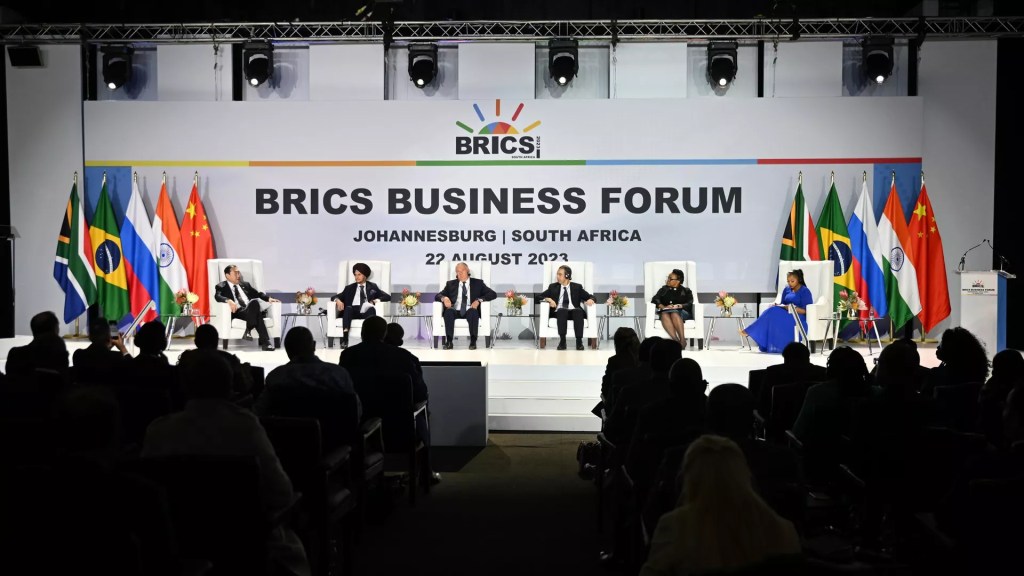
Chinese President Xi Jinping defined all the major decisions embedded in the 15th BRICS summit in South Africa as “historic”. That may be seen as an understatement.

It will take time for the Global South, or Global Majority, or “Global Globe” (copyright President Lukashenko), not to mention the stunned collective West, to fully grasp the enormity of the new strategic stakes.

President Putin, for his part, described the negotiations on BRICS expansion as quite difficult. By now a relatively accurate picture is emerging of what really went down on that table in Johannesburg.

India wanted 3 new members. China wanted as many as 10. A compromise was finally reached, with 6 members: Egypt, Iran, Saudi Arabia, United Arab Emirates (UAE), Argentina and Ethiopia.

So from now on it’s BRICS 11. And that’s just the beginning. Starting with the rotating Russian presidency of BRICS on January 1, 2024, more partners will be progressively included, and most certainly a new round of full members will be announced at the BRICS 11 summit in Kazan in October next year.

So we may soon progress to BRICS 20 – on the way to BRICS 40. The G7, for all practical purposes, is sliding towards oblivion.

Bur first things first. At that fateful table in Johannesburg, Russia supported Egypt. China went all out for Persian Gulf magic: Iran, UAE and the Saudis. Of course: Iran-China are already deep into a strategic partnership, and Riyadh is already accepting payment for energy in yuan.

Brazil and China supported Argentina, Brazil’s troubled neighbor, running the risk of having its economy fully dollarized, and also a key commodity provider to Beijing. South Africa supported Ethiopia. India, for a series of very complex reasons, was not exactly comfortable with 3 Arab/Muslim members (Saudi Arabia, UAE, Egypt). Russia assuaged New Delhi’s fears.

All of the above respects geographic principles and imprints the notion of BRICS representing the Global South. But it goes way beyond that, blending cunning strategy and no-nonsense realpolitik.

India was mollified because Russian Foreign Minister Sergey Lavrov, at the table in Johannesburg negotiating on behalf of President Putin, and highly respected by New Delhi, fully understood that a new, single BRICS currency is a long way away. What really matters, short and medium term, is expanding intra-BRICS trade in their national currencies.

That was stressed by New Development Bank (NDB) president Dilma Rousseff in her report to the South African summit hosts – even as Brazilian President Lula once again emphasized the importance of setting up a work group to discuss a BRICS currency.

Lavrov understood how New Delhi is absolutely terrified of secondary sanctions by the US, in case its BRICS role gets too ambitious. Prime Minister Modi is essentially hedging between BRICS and the completely artificial imperial obsession embedded in the terminology “Indo-Pacific” – which masks renewed containment of China. The Straussian neo-con psychos in charge of US foreign policy are already furious with India buying loads of discounted Russian oil.

New Delhi’s support for a new BRICS currency would be interpreted in Washington as all-out trade war – and sanctions dementia would follow. In contrast, Saudi Arabia’s MbS doesn’t care: he’s a top energy producer, not consumer like India, and one of his priorities is to fully court his top energy client, Beijing, and pave the way for the petroyuan.

It Takes Just a Single Strategic Move

Now let’s get into the strategic stakes. For all practical purposes, in Eurasian terms, BRICS 11 is now on the way to lord over the Arctic Sea Route; the International North South Transportation Corridor (INSTC); BRI’s East West Corridors; the Persian Gulf; the Red Sea; and the Suez Canal.

That blends several overland corridors with several nodes of the Maritime Silk Roads. Nearly total integration in the Heartland and the Rimland. All with just a single strategic move in the geopolitical/geoeconomic chessboard.

Much more than an increase of BRICS 11 collective GDP to 36% of the world’s total (already larger than the G7), with the group now encompassing 47% of the world’s population, the top geopolitical and geoeconomic breakthrough is how BRICS 11 is about to literally break the bank on the energy and commodities market fronts.

By incorporating Iran, Saudi Arabia and the UAE, BRICS 11 instantly shines on as an oil and gas powerhouse. BRICS 11 now controls 39% of global oil exports; 45.9% of proven reserves; and at least 47.6% of all oil produced globally, according to InfoTEK.

With BRICS 11 possibly including Venezuela, Algeria and Kazakhstan as new members as early as in 2024, it may control as much as 90% of all oil and gas traded globally.

Inevitable corollary: operations settled in local currencies bypassing the US dollar. And inevitable conclusion: petrodollar in a coma. The Empire of Chaos and Plunder will lose its free lunch menu: control of global oil prices and means to enforce “diplomacy” via a tsunami of unilateral sanctions.

Already in the horizon, direct BRICS 11-OPEC+ symbiosis is inevitable. OPEC+ is effectively run by Russia and Saudi Arabia.

A ground-shaking geoeconomic reorientation is at hand, involving everything from routes plied by global supply chains and new BRICS roads to the progressive interconnection of BRI, the Saudi Vision 2030 and massive port expansion in the UAE.

By choosing Ethiopia, BRICS expands its African reach on mining, minerals and metals. Ethiopia is rich in gold, platinum, tantalum, copper, niobium and offers vast potential in oil and natural gas exploration. Saudi Arabia and the UAE, incidentally, are also involved in mining.

This all spells out fast, progressive integration of North Africa and West Asia.

How Diplomacy Goes a Long Way

The BRICS 11 Shock of the New, in the energy sphere, is a sharp historical counterpoint to the 1973 oil shock, after which Riyadh started wallowing in petrodollars. Now Saudi Arabia under MbS is operating a tectonic shift, in the process of becoming strategically aligned with Russia-China-India-Iran.

Diplomatic coup does not even begin to describe it. This is the second stage of the Russian-initiated and Chinese-finalized rapprochement between Riyadh and Tehran, recently sealed in Beijing. The Russia-China strategic leadership, working patiently in synch, never lost sight of the ball.

Now compare it with collective West’s “strategies”, such as the G7-imposed oil price cap. Essentially the G7 “coalition of the willing” self-imposed a price cap on Russian crude imported by sea. The result is that they had to start buying way more oil products from Global South nations which ignored the price cap and duly increased their purchase of Russian crude.

Guess who are the top two: BRICS members China and India.

After wallowing in several stages of denial, the collective West may – or may not – realize it’s a fool’s dream to attempt to “de-couple” the West-ruled part of the global economy from China, whatever is spewed out by Washington.

BRICS 11 now shows, graphically, how the “Global South/Global Majority/”Global Globe” is more non-aligned with the West than anytime in recent history.

By the way, the president of the G77, Cuban leader Diaz-Canel, was at the BRICS summit representing the de-facto new Non-Aligned Movement (NAM): the G77 actually incorporates no less than 134 nations. Most are African. Xi Jinping in Johannesburg met in person with the leaders of most of them.

The collective West, in panic, regards all of the above as “dangerous”. So the last refuge is, predictably, rhetorical: “de-coupling”, “de-risking”, and similar idiocies.

Yet that may also get practically dangerous. As in the first ever trilateral summit in Camp David on August 18 between the Empire and two Asian vassals, Japan and South Korea. That may be interpreted as the first move towards a military-political Asian NATO even more toxic than Quad or AUKUS, obsessed to simultaneously contain China, Russia and the DPRK.

The Collective Outstripping of the Global North

The UN lists 152 nations in the world as “developing countries”. BRICS 11 is aiming at them – as they outstrip the Global North on everything from population growth to overall contribution to global GDP growth measured by PPP.

In the past 10 years since the announcement of BRI first in Astana and then in Jakarta, Chinese financial institutions have lent nearly $1 trillion for infrastructure connectivity projects across the Global South. The upcoming BRI forum in Beijing will signal a renewed drive. That’s the BRI-BRICS symbiosis.

In the G20 last year, China was the first nation to lobby for the inclusion of the 55-member African Union (AU). That may happen at the G20 summit next month in New Delhi; in that case, Global South representation will be close to parity with the Global North.

Claims that Beijing was organizing a malign conspiracy to turn BRICS into a weapon against the G7 are infantile. Realpolitik – and geoeconomic indicators – are dictating the terms, configuring the Shock of the New: the G7’s irreversible irrelevance with the rise of BRICS 11.

The BRICS Reshape the Global Geopolitical Map

By Manuel F. Diaz

Source: InfoBrics.org

Thirty years ago, pluripolarity was far from a reality in a world that had been under U.S. hegemony since the collapse of the Soviet Union in 1991. Today, however, humanity is taking important steps toward forming a plural geopolitics whose protagonists are the emerging countries that challenge Western power.

The turning point towards a new form of integration, which will generate a new world political balance, occurred in 2009 when Brazil, Russia, India, and China held the first BRIC summit.

After the incorporation of South Africa to this group in 2010, the BRICS has generated such real prospects that other nations with productive capacity and diversified economies have expressed interest in joining. Among them are Saudi Arabia, Algeria, Argentina, the United Arab Emirates, and Mexico.

In the article “Can the BRICS Trump the IMF and the World Bank?,” Palestinian-American journalist Ramzy Baroud noted that “one of the biggest opportunities and challenges” the BRICS now faces is expanding its membership while maintaining its current growth.

Recent financial reports revealed that the BRICS have the world’s largest gross domestic product (GDP) and that economic bloc contributes 31.5 percent of global GDP, while the Group of Seven (G7) stuck at 30.7 percent.

The International Monetary Fund (IMF) and the World Bank (WB) are known for providing financial support to developing countries under conditions that, under the pretext of defending human rights or democracy, seek to favor the privatization of public goods and the opening of domestic markets for Western foreign investors.

Due to these politically-driven conditionalities, the struggle for alternatives to the IMF-WB mechanisms becomes a political task. The Global South requires international institutions that are not interested in indirectly manipulating or controlling national economies.

That is the call for the BRICS to evolve towards integration schemes that go beyond the exclusively economic realm, although the basis of the fight against the U.S.-controlled institutions is the formation of an alternative economy.

Recently, the BRICS placed a capital of US$50 billion for the launch of their New Development Bank (NDB), which will be chaired by former Brazilian president Dilma Rousseff.

This happened at a time when presidents Xi Jinping (China) and Lula da Silva (Brazil) showed a shared interest in influencing the peaceful solution of the Ukrainian conflict.

Under these circumstances, to argue that the BRICS are a group with purely economic interests is to ignore much of the its history.

“The timing of the BRICS expansion, the stern political discourse of its members, potential members and allies, the repeated visits by top Russian and Chinese diplomats to Africa and other regions of the Global South, etc… indicate that the BRICS have become the new geopolitical, economic and diplomatic platform for the countries of the South,” said Baroud.

Meanwhile, the Western powers, whose economies are struggling to stay afloat, are closely and suspiciously watching the changes taking place in the Global South at the hands of the BRICS.

The Hegemon Will Go Full Hybrid War Against BRICS+

The Hybrid War 2.0 against the Global South has not even started. Swing states, you have all been warned.

By Pepe Escobar

Source: Global Research

U.S. Think Tank Land hacks are not exactly familiar with Montaigne: “On the highest throne in the world, we still sit only on our own bottom.”

Hubris leads these specimens to presume their flaccid bottoms are placed high above anyone else’s. The result is that a trademark mix of arrogance and ignorance always ends up unmasking the predictability of their forecasts.

U.S. Think Tank Land – inebriated by their self-created aura of power – always telegraphs in advance what they’re up to. That was the case with Project 9/11 (“We need a new Pearl Harbor”). That was the case with the RAND report on over-extending and unbalancing Russia. And now that’s the case with the incoming

American War on BRICS as outlined by the chairman of the New York-based Eurasia Group.

It’s always painful to suffer through the intellectually shallow Think Thank Land wet dreams masquerading as “analyses” but in this particular case key Global South players need to be firmly aware of what awaits them.

Predictably, the whole “analysis” revolves around the imminent, devastating humiliation to the Hegemon and its vassals: what happens next in country 404, also known – for now – as Ukraine.

Brazil, India, Indonesia and Saudi Arabia are dismissed as “four major fence-sitters” when it comes to the U.S./NATO proxy war against Russia. It’s the same old “you’re with us or against us” trope.

But then we are presented with the six major Global South culprits: Brazil, India, Indonesia, Saudi Arabia, South Africa and Turkey.

In yet another crude, parochial remix of a catch phrase referring to the American elections, these are qualified as the key swing states the Hegemon will need to seduce, cajole, intimidate and threaten to assure its dominance of the “rules-based international order”.

Saudi Arabia and South Africa are added to a previous report focused on the “four major fence sitters”.

The swing state manifesto notes that all of them are G-20 members and “active in both geopolitics and geoeconomics” (Oh really? Now that’s some breaking news). What it does not say is that three of them are BRICS members (Brazil, India, South Africa) and the other three are serious candidates to join BRICS+: deliberations will be turbo-charged in the upcoming BRICS summit in South Africa in August.

So it’s clear what the swing state manifesto is all about: a call to arms for the American war against the BRICS.

So BRICS packs no punch

The swing state manifesto harbors wet dreams of near-shoring and friend-shoring moving away from China. Nonsense: enhanced intra-BRICS+ trade will be the order of the day from now on, especially with the expanded practice of trade in national currencies (see Brazil-China or within ASEAN), the first step towards widespread de-dollarization.

The swing states are characterized as “not a new incarnation” of the Non-Aligned Movement (NAM), or “other groupings dominated by the Global South, such as the G-77 and BRICS.”

Talk about exponential nonsense. This is all about BRICS+ – which now has the tools (including the NDB, the BRICS bank) to do what NAM could never accomplish during the Cold War: establish the framework of a new system bypassing Bretton Woods and the interlocking coercion mechanisms of the Hegemon.

As for stating that BRICS has not “packed much punch” that only reveals U.S. Think Tank Land’s cosmic ignorance of what BRICS + is all about.

The position of India is only considered in terms of being a Quad member – defined as a “U.S.-led effort to balance China”. Correction: contain China.

As for the “choice” of swing states of choosing between the U.S. and China on semiconductors, AI, quantum technology, 5G and biotechnology, that’s not about “choice”, but to what level they are able to sustain Hegemon pressure to demonize Chinese technology.

Pressure on Brazil, for instance, is much heavier than on Saudi Arabia or Indonesia.

In the end though, it all comes back to the Straussian neocon obsession: Ukraine. The swing states, in varying degrees, are guilty of opposing and/or undermining the sanctions dementia. Turkey, for instance, is accused of channeling “dual-use” items to Russia. Not a word on the U.S. financial system viciously forcing Turkish banks to stop accepting Russian MIR payment cards.

On the wishful thinking front, this pearl stands out among many: “The Kremlin seems to believe it can make a living by turning its trade south and east.”

Well, Russia is already making excellent living all across Eurasia and a vast expanse of the Global South.

The economy has re-started (drivers are domestic tourism, machine building and the metals industry); inflation is at only 2.5% (lower than anywhere in the EU); unemployment is at only 3.5%; and head of the Central Bank Elvira Nabiullina said that by 2024 growth will be back to pre-SMO levels.

U.S. Think Tankland is congenitally incapable of understanding that even if BRICS+ nations may still have some serious trade credit issues to iron out, Moscow has already shown how even an implied hard backing of a currency can turn out to be an instant game changer. Russia is at the same time backing not only the ruble but also the yuan.

Meanwhile, the Global South de-dollarization caravan moves on relentlessly – as much as the proxy war hyenas may keep howling in the dark. When the full – staggering – scale of NATO’s humiliation in Ukraine unfolds, arguably by mid-summer, the de-dollarization high-speed train will be fully booked, non-stop.

“Offer you can’t refuse” rides again

If all of the above was not already silly enough, the swing state manifesto doubles down on the nuclear front, accusing them of “future (nuclear) proliferation risks”: especially – who else – Iran.

By the way, Russia is defined as a “middle power, but one in decline”. And “hyper-revisionist” to boot. Oh dear: with “experts” like this, the Americans don’t even need enemies.

And yes, by now you may be excused to roar with laughter: China is accused of attempting to direct and co-opt BRICS. The “suggestion” – or “offer you can’t refuse”, Mafia-style – to the swing states is that you cannot join a “Chinese-directed, Russian-assisted body actively opposing the United States.”

The message is unmistakable: “The threat of a Sino-Russian co-optation of an expanded BRICS—and through it, of the global south—is real, and it needs to be addressed.”

And here are the recipes to address it. Invite most swing states to the G-7 (that was a miserable failure). “More high-level visits by key U.S. diplomats” (welcome to cookie distributor Vicky Nuland). And last but not least, Mafia tactics, as in a “nimbler trade strategy that begins to crack the nut of access to the U.S. market.”

The swing state manifesto could not but let the Top Cat out of the bag, predicting, rather praying that “U.S.-China tensions rise dramatically and turn into a Cold War-style confrontation.” That’s already happening – unleashed by the Hegemon.

So what would be the follow-up? The much sought after and spun-to-death “decoupling”, forcing the swing states to “align more closely with one side or the other”. It’s “you’re with us or against us” all over again.

So there you go. Raw, in the flesh – with inbuilt veiled threats. The Hybrid War 2.0 against the Global South has not even started. Swing states, you have all been warned.

The Impending Economic Collapse – A Cause of Current Conflict

By Phil Butler

Source: New Eastern Outlook

Brazil’s Luiz Inacio Lula da Silva has called on BRICS nations to create an alternative to replace the dollar in foreign trade. Other experts suggest President Joe Biden’s policies will destroy America’s middle class for good. The news comes when China and Russia strengthen ties with Brazil and Latin America. Brazil’s leader questioned the institution of the U.S. dollar as the world’s trade currency in the first place and asked why each country could not trade in its currency.

This brings to the forefront the historical moment when the gold standard was abolished in favor of the current system. When President Richard Nixon moved to abolish the gold standard as a commitment mechanism, his administration ushered in decades of relative volatility and made hard currency.

The exchange of gold was severely curtailed through the Bretton Woods international monetary agreement of 1944. When the International Monetary Fund was established, the U.S. Dollar became the most potent currency in the world. Initially, the role of the IMF was only to assist with international transactions, but as we see today, that institution has far overstepped its original purpose. Today, the IMF is a leverage arm for the United States and a few European nations to fund countries/regimes that align with its policy. The U.S., for instance, has an almost 20% share of contributions to the fund.

The primary purpose of remaining off the gold standard is that the government can print money endlessly, with two primary goals. First, a massive defense budget and needless proxy wars would not be possible if the United States were on the gold standard. Secondly, the people who control the central banks cannot extract interest on national debts that are currently out of control. So, the fiat currency supposedly backed by the “full faith and credit” of the government, the dollar, is worth what lying politicians and finance ministers say it is.

One look at the worldwide bond market reveals a disturbing imbalance. The U.S., which now has over $51 trillion in outstanding debt, has borrowed more to finance wars and programs than China, Japan, Germany, Italy, France, the U.K., and Canada combined. The American taxpayer is responsible for almost 40% of all the foreign debt in the world. And the outlook for the short and long-term future could be better.

President Joe Biden wants to borrow even more when his administration conducts a proxy war against Russia in Ukraine. With billions flowing into Europe’s most corrupt country, Americans are on the precipice of an economic catastrophe not seen since the Great Depression.

According to the Bipartisan Policy Center in Washington and the Congressional Budget Office, the government will no longer be able to pay everyone — including bondholders, Social Security recipients, and federal employees — sometime this summer or early this fall. A New York Times report from late March outlines the situation. But the problem is far worse than many experts suggest. No matter which way lawmakers move, the U.S. has almost insurmountable fiscal issues. The ramifications will be dire whether or not they raise the debt limit. And if the BRICS countries go off the dollar as a trade currency… Well.

Many experts predict that American greenbacks won’t be worth the printed paper if the world stops using the U.S. dollar as its world currency reserve. Moreover, if the dollar loses its value significantly, every American who owes a credit card loan or a home mortgage will find it ten times harder to pay off those debts.

To make matters worse, millions of jobs will be sacrificed for the Federal Reserve to get any financial stability. Analysis from RSM International shows that the central banks must “induce” a recession to get America’s economic situation in check. And the dollar being made useless by the larger world community was not a factor in their analysis.

The bottom line is if we were still on the gold standard, this would be fine. The gold standard reduced the risks of such economic crises and recessions. Income levels were higher when we were on the bullion-backed system. More importantly, the gold standard created hard limits on printing money and limiting military spending. For more intuition on this, this Barron’s report reveals how our current failing system came into being. The information also serves as a crystal ball for what will happen.

As confidence in the dollar wanes and U.S. policy overseas gets more aggressive toward BRICS nations and others, the tipping point of the American hegemony draws closer.

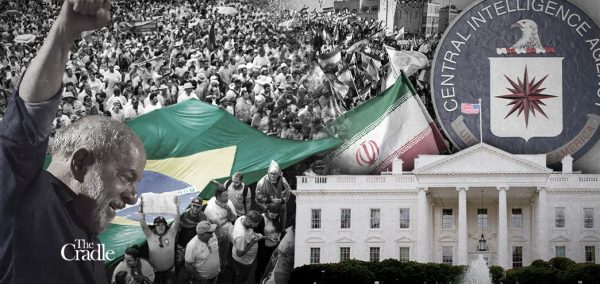
Why the CIA Attempted a ‘Maidan Uprising’ in Brazil

By Pepe Escobar

Source: The Unz Review

A former US intelligence official has confirmed that the shambolic Maidan remix staged in Brasilia on 8 January was a CIA operation, and linked it to the recent attempts at color revolution in Iran.

On Sunday, alleged supporters of former right-wing President Jair Bolsonaro stormed Brazil’s Congress, Supreme Court, and presidential palace, bypassing flimsy security barricades, climbing on roofs, smashing windows, destroying public property including precious paintings, while calling for a military coup as part of a regime change scheme targeting elected President Luis Inacio “Lula” da Silva.

According to the US source, the reason for staging the operation – which bears visible signs of hasty planning – now, is that Brazil is set to reassert itself in global geopolitics alongside fellow BRICS states Russia, India, and China.

That suggests CIA planners are avid readers of Credit Suisse strategist Zoltan Pozsar, formerly of the New York Fed. In his ground-breaking 27 December report titled War and Commodity Encumbrance, Pozsar states that “the multipolar world order is being built not by G7 heads of state but by the ‘G7 of the East’ (the BRICS heads of state), which is a G5 really but because of ‘BRICSpansion’, I took the liberty to round up.”

He refers here to reports that Algeria, Argentina, Iran have already applied to join the BRICS – or rather its expanded version “BRICS+” – with further interest expressed by Saudi Arabia, Turkiye, Egypt, Afghanistan, and Indonesia.

The US source drew a parallel between the CIA’s Maidan in Brazil and a series of recent street demonstrations in Iran instrumentalized by the agency as part of a new color revolution drive: “These CIA operations in Brazil and Iran parallel the operation in Venezuela in 2002 that was highly successful at the start as rioters managed to seize Hugo Chavez.”

Enter the “G7 of the East”

Straussian neo-cons placed at the top of the CIA, irrespective of their political affiliation, are livid that the “G7 of the East” – as in the BRICS+ configuration of the near future – are fast moving out of the US dollar orbit.

Straussian John Bolton – who has just publicized his interest in running for the US presidency – is now demanding the ouster of Turkey from NATO as the Global South realigns rapidly within new multipolar institutions.

Russian Foreign Minister Sergey Lavrov and his new Chinese counterpart Qin Gang have just announced the merging of the China-driven Belt and Road Initiative (BRI) and the Russia-driven Eurasia Economic Union (EAEU). This means that the largest 21st century trade/connectivity/development project – the Chinese New Silk Roads – is now even more complex, and keeps expanding.

That sets the stage for the introduction, already being designed at various levels, of a new international trading currency aimed at supplanting then replacing the US dollar. Apart from an internal debate among the BRICS, one of the key vectors is the discussion team set up between the EAEU and China. When concluded, these deliberations will be presented to BRI-EAEU partner nations and of course the expanded BRICS+.

Lula at the helm in Brazil, in what is now his third non-successive presidential term, will offer a tremendous boost to BRICS+, In the 2000s, side by side with Russian President Putin and former Chinese President Hu Jintao, Lula was a key conceptualizer of a deeper role for BRICS, including trade in their own currencies.

BRICS as “the new G7 of the East,” as defined by Pozsar, is beyond anathema – as much for Straussian neo-cons as for neoliberal.

The US is being slowly but surely expelled from wider Eurasia by concerted actions of the Russia-China strategic partnership.

Ukraine is a black hole – where NATO faces a humiliation that will make Afghanistan look like Alice in Wonderland. A feeble EU being forced by Washington to de-industrialize and buy US Liquified Natural Gas (LNG) at absurdly high cost has no essential resources for the Empire to plunder.

Geoeconomically, that leaves the US-denominated “Western Hemisphere,” especially immense energy-rich Venezuela as the key target. And geopolitically, the key regional actor is Brazil.

The Straussian neo-con play is to pull all stops to prevent Chinese and Russian trade expansion and political influence in Latin America, which Washington – irrespective of international law and the concept of sovereignty, continues to call “our backyard.” In times where neoliberalism is so “inclusive” that Zionists wear swastikas, the Monroe Doctrine is back, on steroids.

All about the ‘strategy of tension’

Clues for Maidan in Brazil can be obtained, for instance, at the US Army Cyber Command at Fort Gordon, where it’s no secret the CIA deployed hundreds of assets across Brazil ahead of the recent presidential election – faithful to the “strategy of tension” playbook.

CIA chatter was intercepted at Fort Gordon since mid-2022. The main theme then was the imposition of the widespread narrative that ‘Lula could only win by cheating.’

A key target of the CIA operation was to discredit by all means the Brazilian electoral process, paving the way for a prepackaged narrative that is now unraveling: a defeated Bolsonaro fleeing Brazil and seeking refuge at former US president Donald Trump’s Mar-a-Lago mansion. Bolsonaro, advised by Steve Bannon, did flee Brazil, skipping Lula’s inauguration, but because he’s terrified he may be facing the slammer sooner rather than later. And by the way, he is in Orlando, not Mar-a-Lago.

The icing on the stale Maidan cake was what happened this past Sunday: fabricating a 8 January in Brasilia mirroring the events of 6 January, 2021 in Washington, and of course imprinting the Bolsonaro-Trump link on people’s minds.

The amateurish nature of 8 January in Brasilia suggests CIA planners got lost in their own plot. The whole farce had to be anticipated because of Pozsar’s report, which everyone-who-matters has read across the New York-Beltway axis.

What is clear, is that for some factions of the powerful US establishment, getting rid of Trump at all costs is even more crucial than crippling Brazil’s role in BRICS+.

When it comes to the internal factors of Maidan in Brazil, borrowing from novelist Gabriel Garcia Marquez, everything walks and talks like the Chronicle of a Coup Foretold. It is impossible that the security apparatus around Lula could not have foreseen these events, especially considering the tsunami of signs on social networks.

So there must have been a concerted effort to act softly – without any preventive big sticks – while just emitting the usual neoliberal babble.

After all, Lula’s cabinet is a mess, with ministers constantly clashing and some members supporting Bolsonaro even a few months ago. Lula calls it a “national unity government,” but it is more like a tawdry patchwork job.

Brazilian analyst Quantum Bird, a globally respected physics scholar who has returned home after a long stint in NATO lands, notes how there are “too many actors in play and too many antagonistic interests. Among Lula’s ministers, we find Bolsonarists, neoliberal-rentiers, climate interventionism converts, identity politics practitioners and a vast fauna of political neophytes and social climbers, all well aligned with Washington’s imperial interests.”

CIA-stoked ‘militants’ on the prowl

One plausible scenario is that powerful sectors of the Brazilian military – at the service of the usual Straussian neo-con think tanks, plus global finance capital – could not really pull off a real coup, considering massive popular rejection, and had to settle at best for a “soft” farce. That illustrates just how much this self-aggrandizing and highly corrupt military faction is isolated from Brazilian society.

What is deeply worrying, as Quantum Bird notes, is that the unanimity in condemning 8 January from all quarters, while no one took responsibility, “shows how Lula navigates virtually alone in a shallow sea infested by sharpened corals and hungry sharks.”

Lula’s position, he adds, “decreeing a federal intervention all by himself, without strong faces of his own government or relevant authorities, shows an improvised, disorganized and amateurish reaction.”

And all that, once again, after CIA-stoked “militants” had been organizing the “protests” openly on social media for days.

The same old CIA playbook though remains at work. It still boggles the mind how easy it is to subvert Brazil, one of the natural leaders of the Global South. Attempted old school coups cum regime change/color revolution scripts will keep being played – remember Kazakhstan in early 2021, and Iran only a few months ago.

As much as the self-aggrandizing faction of the Brazilian military may believe they control the nation, if Lula’s significant masses hit the streets in full force against the 8 January farce, the army’s impotence will be graphically imprinted. And since this is a CIA operation, the handlers will order their tropical military vassals to behave like ostriches.

The future, unfortunately, is ominous. The US establishment will not allow Brazil, the BRICS economy with the best potential after China, to be back in business with full force and in synch with the Russia-China strategic partnership.

Straussian neo-cons and neoliberals, certified geopolitical jackals and hyenas, will get even more ferocious as the “G7 of the East,” Brazil included, moves to end the suzerainty of the US dollar as imperial control of the world vanishes.

The fog of war and the global paradigm shift

By Fabio Reis Vianna

Source: The Saker

Perhaps the maxim of the Brazilian thinker José Luís Fiori that “expansionism and war are two essential parts of the machine that produces power and wealth in the interstate system” has never been so pertinent and seems to be confirmed at the exact historical moment we are witnessing.

The extraordinary events that resulted from the Russian intervention in Ukraine, which began on February 24, leave indelible marks and confirm some of the perceptions that have already been mentioned in other articles by us.

The western-led international order is clearly being questioned in its hierarchy of power, and the war in Ukraine is a clear symptom of this questioning.

What really causes astonishment, however, is the perception that this war aims at something much bigger than it might seem at first sight, because it would not be a regional war, but a war of global proportions: a hegemonic war.

The paradigm shift represented by the Russian intervention in Ukraine consolidates, therefore, the path of a new international system, more fragmented, and where Western power is weakened. In this scenario, the tectonic plates of the international system are slowly moving in the face of the new, and unprecedented, world that is unfolding.

Therefore, like it or not, the elites of countries like Brazil, so subservient to the security strategy of the United States, are being pushed towards a consensual solution in the direction of the Eurasian experience through the BRICS. In this way, the brazilian military, so reactionary and obedient to Washington, is facing a new world, apparently already understood by the diplomatic tradition of “Itamaraty”, and even by the powerful Brazilian agrobusiness lobby.

In the opposite direction, the blindness of the European elites causes astonishment by feeding a game that plunges Europe back into what it has always been: the great stage of military interstate competition of the last 500 years.

Therefore, taking this terrible premise into consideration, the armistice that made possible the creation of the European Union, as well as the common currency, would have been a mere interregnum of peace, until the next war.

Retaking its tragic place in the classical international system, Europe is once again the scene of the old theater of death, and the maxim that “peace is almost always a truce which lasts for the time imposed by the expansive compulsion of the winners, and the need for revenge of the losers,” has never been more apposite.

In this context, the german humiliation represented by the American veto of the Nord Stream II gas pipeline is paradigmatic. On February 7, in the middle of the White House, and even before the Russian intervention in Ukraine, Joe Biden publicly disavows the newly appointed german chancellor Olaf Scholz, stating categorically that the Nord Stream II pipeline would be stopped.

This attitude could be considered the trigger for Russian intervention and the opening of Pandora’s Box for the new world that is opening. Besides representing, in symbolic terms, the humiliation of Germany as a sovereign country, it consolidates the definitive “Coup d’Etat” in the European integration project.

With Ukrainian president Vladimir Zelensky being a kind of spokesman of a script written in Washington – or, who knows, Hollywood – the repeated attacks on European leaders who have worked so hard for the normalization of Russian-European Union relations, as is the case of the recent attack on former chancellor Angela Merkel, indicate that the instruments of fourth generation war, already used by the United States in other regions of the planet, are intensifying in the heart of the western alliance.

Not only the maintenance, but the deepening of the continuous and unlimited reproduction and expansion of the American military empire is a reality that became even clearer after the first Russian tank entered Ukrainian territory, even if this meant destabilizing, or even destroying, old and loyal allies.

In this sense, the old premise carried by many scholars of the “realist” school of International Relations, as well as by great thinkers of the World System, that the concentration of global power in a single state would be an essential condition for lasting world peace, falls to the ground.

The “Hyperpower Paradox” is confirmed as a slap in the face of the enormous theoretical consensus developed since the mid-1970s of the last century.

In other words, since the first minute of the US bombing of Iraq in 1991, which followed the 48 military interventions of the 1990s, and the 24 interventions in the first two decades of the 21st century – which in turn culminated in 100,000 bombings around the globe – the International System is immersed in a somber process of permanent, or infinite, war, which contradicts the Kantian utopia of perpetual peace reflected in the idea of hegemonic stability.

Thus, it was a mistake to consider that the unipolar global power that emerged with the victory in the cold war could exercise its hegemony in the name of peace and global stability, assuming, therefore, a responsible leadership and in the name of a great global governance.

On the contrary, what we have witnessed over the last 30 years is the escalation of interstate competition, with the reaction of other states to the insane and inconsequential process of power expansion carried out by the American military empire.

As a result, we find ourselves before a world that seemed to belong only to the history books; where the national interests of the great powers return with the force that, as it turns out, they never stopped having, but were only dormant.

This new (old) geopolitics of nations, therefore, leaves its clearest mark with what Russia imposes in its intervention in Ukraine: contesting the primacy that only westerners have the legitimacy to impose their will through war.

This is the novelty that shakes the structures of the International System.

In the face of this imminent war of global proportions, resulting from the Russian challenge and the intensification of the arms race – with the alarming return of Germany and Japan to the game – we are inexorably heading for a deepening of the interstate systemic chaos, as well as the escalation of systemic social conflict, particularly in Europe.

As in other moments in the history of the World System, Europe is once again the nerve center of the global power struggle. And as in other tragic moments in history, the behavior of European leaders is once again irrational; in the midst of a negative-sum game. The Europeans lose.


Fabio Reis Vianna, lives in Rio de Janeiro, is a bachelor of laws (LL.B), MA student in International Relations at the University of Évora (Portugal), writer and geopolitical analyst. He currently maintains a column on international politics at the centennial Brazilian newspaper Monitor Mercantil.

World War III Has Already Started, And It’s An Economic War

By Brandon Smith

Source: Alt-Market.us

In an article I published in April of 2018, titled World War III Will Be An Economic War, I outlined a number of factors that portend a large scale conflict between East and West and why this war would be mainly economic in nature. I investigated how this conflict would actually benefit globalists and globalist institutions seeking to bring down multiple nations’ economies while hiding the engineered crisis behind a wall of geopolitical chaos and noise.

The goal? To convince the masses that national sovereignty is a plague that only leads to widespread death, and that the “solution” is a one-world system – conveniently managed by the globalists, of course. That is to say, more centralization is always offered as the solution to every problem.

Furthermore, the war itself acts as cover for the inflationary collapse that our central bank and government has created. We are already seeing fraud propagandists like White House Press Secretary Jen Psaki attempting to mislead the public into believing all our current inflation problems stem from the Ukraine war. This claim requires some impressive mental gymnastics and an epic level of ignorance, but Psaki seems to have no shame about her role as a soulless Goebbels-like figure.

One issue which I used to get a lot of arguments over was the idea that countries like Russia and China would end up so closely aligned. People claimed there were too many disparities and that the countries would ultimately turn on each other in the middle of a financial crisis.

Well, it’s four years later and now we’re going to see if that is true or not. So far, it looks like I was correct.

My position has long been that certain nations have been preparing for a collapse of the U.S. dollar as the world reserve currency (the primary currency used in the majority of trade around the world). My belief is that America’s top economic position is actually an incredible weakness; the dollar’s hegemony is not a strength, but an Achilles heel. If the dollar was to lose reserve status, the whole of the U.S. economy and parts of the global economy would implode, leaving behind only those who prepared – those who saw the writing on the wall and planned ahead.

The Dollar Crash Coalition

There are four nations that have been actively positioning for the crash of the dollar and they include: China, Russia, India, Brazil (five if you count the limited involvement of part South Africa). These countries are also known as the BRICS. The BRICS are rarely mentioned in the mainstream media anymore, but there was a time around a decade ago when they were discussed regularly.

My fascination with the BRICS back then was primarily due to their odd trade behaviors. Specifically, their bilateral agreements which cut out the dollar as the reserve currency, and the fact that they were stockpiling tons upon tons of gold.

It was as if they had some kind of inside information that an economic conflict or disaster was coming, and they were getting ready to decouple from the dollar and the global supply chain.

Today, as the Ukraine war rages, there is constant hype about the union of nations opposed to Russia’s invasion to the point that the narrative has become bizarre. There is an incredible level of cultism in the mainstream media right now encouraging a mindless mob response. They have been trying to drum up something very similar to a behavioral vortex that many of us in conservative circles have seen thousands of times in the past few years: Western media is weaponizing cancel culture against Russia.

It’s not just a general admonition of the Kremlin or of Putin, that would be normal. Rather, it’s an outright dismissal of anything remotely related to Russia, from bar owning dummies throwing away all their vodka (even though most of it is not made in Russia), to the International Cat Federation banning certain cats from competitions because they are Russian bred.

This is pure childish insanity, but again, we’ve seen this before with cancel culture in the US.

The thinking is utterly collectivist and goes a little something like this:

“We shall shun them from the hive and isolate them. We will erase their existence and rewrite their identity and history. Then we will punish them by taking away their ability to survive economically until they submit and conform to the directives of the gatekeepers, who shall remain nameless.”

That said, as most conservatives know, cancel culture is a failed strategy. Despite the international push to cancel Russia and media claims that Russia is now “completely isolated and alone,” the narrative is apparently designed more to con the masses, not intimidate the Kremlin. They are, in fact, not isolated at all. And, guess which countries are staunchly refusing to support actions and sanctions against the Ukraine invasion?

That’s right, the other members of the BRICS.

China has outright refused to accommodate any sanctions and is directly working with Russia to alleviate trade issues. As I’ve been pointing out for ten years, they’ve been preparing for this moment. Hell, if the rest of the world doesn’t want Russian exports and oil, China will certainly buy them.

India is eerily silent on Ukraine, despite endless pressure from the U.S.

Both Brazil and South Africa have taken neutral stances on Ukraine and continue to trade with Russia. It would appear that the cancellation of Russia has already failed before it really began.

The narrative only serves a purpose in that it gives the western public two false impressions:

  1. It makes the people think that cancel culture on an international scale is working and that Russia will soon fold when the opposite is true.
  2. It tricks people into thinking that all the risk is on the Russian side when, in reality, most of the risk is on the western side. This will make the inevitable economic disaster all the more frightening when it occurs.

Personally, I don’t have any affinity for either side of the Ukraine conflict. I feel empathy for the Ukrainian people, but certainly not the Ukrainian government and their globalist partners. I also have no love for Putin and his many friends in the globalist World Economic Forum.

That said, even if you think one side is right and the other side is wrong, one cannot deny that the cancel culture mentality of the west is going to lead to an epic disaster. What people don’t seem to understand is that this calamity will hurt the U.S. and Europe just as much as it hurts Russia, if not more so.

The Economic Weaponry Of Fortress Asia

The close economic relationship between Russia and China is fast building towards a “Fortress Asia” which guarantees a certain amount of insulation from global instability.

Russia exports a surprising number of raw materials that many countries rely on, from fertilizers to industrial metals like nickel and aluminum. But, their biggest export by far is energy in the form of oil and natural gas. Europe in particular is utterly dependent on Russia for between 40% to 50% of its heating and electricity. Cuts to Russian energy exports would devastate Europe in a year’s time and it’s unlikely other exporters would be able to fill the void in the near term, at least not without huge price increases.

According to the IEA, Russia is the third largest oil producer in the world behind Saudi Arabia and the U.S. and it is the largest exporter to global markets. Sanctions on Russian oil would mean a massive shift in supply and multiple markets rushing to fill the gap.

Just the threat of cuts to Russian oil  caused large overnight price spikes in gasoline in the U.S. and Europe. Brent crude prices skyrocketed from $90 a barrel to $130 a barrel in a matter of a couple weeks.

I don’t think it will stop there, either. I expect crude prices to climb into the $200 per barrel range and gas prices to jump to around $7 a gallon before increased U.S. shale pumping helps balance out the supply (and this is a best case scenario). Some of the price will be due to speculation, but ultimately without Russian oil prices will remain high even if the war in Ukraine ends.

And here is where we get to a key aspect of this scenario which I don’t think many people are taking into account. It does not matter if Russia pulls out of Ukraine, and it certainly doesn’t matter if Ukraine surrenders. The economic side of the war will continue, and it will only escalate.

Retaliation In Economic Warfare

Beyond oil and energy the combined influence of the BRICS has the power to dramatically disrupt the U.S. dollar’s world reserve status. China alone holds trillions in dollars and U.S. treasuries which it can dump on the market anytime it pleases. China is the world’s largest exporter and most nations including the U.S. rely on Chinese manufacturing. This is why China’s draconian Covid shutdowns have caused a constant strain on the global supply chain. Around 20% of imports to the US come from China, including over 97% of our antibiotics.

The BRICS in combination control a vast swath of the export and manufacturing markets. They don’t even need to dump the dollar in trade, all they have to do is say they prefer a basket of currencies like the International Monetary Fund (IMF)’s Special Drawing Rights. The dollar’s value would collapse, and that would be in the midst of already rising inflation.

Another interesting development from the economic war is the increasing calls for crypto and digital currency solutions. I would note that it’s not just the BRICS who are refusing to go against Russia; there is also the matter of globalist institutions like the IMF and the Bank for International Settlements (BIS). Not surprisingly, Russia’s membership in these world banking platforms remains secure. Russia continues to hold billions in IMF SDRs. Both institutions have been calling for the implementation of a global digital currency system (which obviously they would control).

If the world economic war continues at its current trajectory, it is only a matter of time before trade sanctions turn into currency attacks. This is where the U.S. will be hurt the most.

It is perhaps not so coincidental that the globalists have staged themselves to benefit. With no world reserve currency established and an inflationary crisis raging, they will attempt to swoop in to “save the day” and assert that they have the perfect solution: A global digital currency system based on blockchain technology but tied to the IMF’s SDR basket system and administered by them.

In other words, with all the inflation present in national currencies, the IMF will offer the public a digital currency or cryptocurrency that promises them more stability. The inflationary crisis in confidence will be used to push people into a digital system which has no privacy and can be used to control them by denying them access on a whim, much like how the Chinese social credit system operates.

Ukraine is only the first domino in a long chain that is meant to lead to a one-world economic system centralized into the hands of the money elites.

There are ways to disrupt it, and the plan may not succeed at all, but there’s no avoiding the economic pain that will be caused in the meantime. All that we can do is accept that World War III is upon us and the weapons will be economic rather than nuclear.

Bolivia coup led by Christian fascist paramilitary leader and millionaire – with foreign support

Bolivian coup leader Luis Fernando Camacho is a far-right multi-millionaire who arose from fascist movements in the Santa Cruz region, where the US has encouraged separatism. He has courted support from Colombia, Brazil, and the Venezuelan opposition.

By Max Blumenthal and Ben Norton

Source: The Grayzone

When Luis Fernando Camacho stormed into Bolivia’s abandoned presidential palace in the hours after President Evo Morales’s sudden November 10 resignation, he revealed to the world a side of the country that stood at stark odds with the plurinational spirit its deposed socialist and Indigenous leader had put forward.

With a Bible in one hand and a national flag in the other, Camacho bowed his head in prayer above the presidential seal, fulfilling his vow to purge his country’s Native heritage from government and “return God to the burned palace.”

“Pachamama will never return to the palace,” he said, referring to the Andean Mother Earth spirit. “Bolivia belongs to Christ.”

Bolivia’s extreme right-wing opposition had overthrown leftist President Evo Morales that day, following demands by the country’s military leadership that he step down.

Virtually unknown outside his country, where he had never won a democratic election, Camacho stepped into the void. He is a powerful multi-millionaire named in the Panama Papers, and an ultra-conservative Christian fundamentalist groomed by a fascist paramilitary notorious for its racist violence, with a base in Bolivia’s wealthy separatist region of Santa Cruz.

Camacho hails from a family of corporate elites who have long profited from Bolivia’s plentiful natural gas reserves. And his family lost part of its wealth when Morales nationalized the country’s resources, in order to fund his vast social programs — which cut poverty by 42 percent and extreme poverty by 60 percent.

In the lead-up to the coup, Camacho met with leaders from right-wing governments in the region to discuss their plans to destabilize Morales. Two months before the putsch, he tweeted gratitude: “Thank you Colombia! Thank you Venezuela!” he exclaimed, tipping his hat to Juan Guaido’s coup operation. He also recognized the far-right government of Jair Bolsonaro, declaring, “Thank you Brazil!”

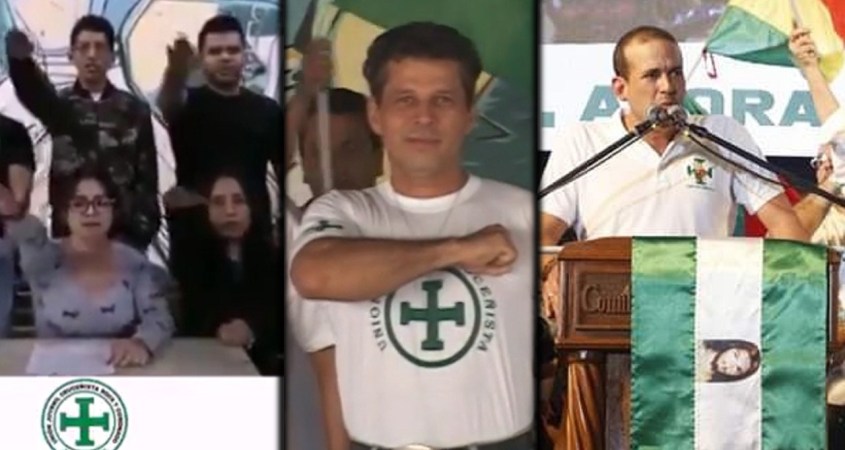
Camacho had spent years leading an overtly fascist separatist organization called the Unión Juvenil Cruceñista. The Grayzone edited the following clips from a promotional historical documentary that the group posted on its own social media accounts:

While Camacho and his far-right forces served as the muscle behind the coup, their political allies waited to reap the benefits.

The presidential candidate Bolivia’s opposition had fielded in the October election, Carlos Mesa, is a “pro-business” privatizer with extensive ties to Washington. US government cables published by WikiLeaks reveal that he regularly corresponded with American officials in their efforts to destabilize Morales.

Mesa is currently listed as an expert at the Inter-American Dialogue, a DC-based think tank funded by the US government’s soft-power arm USAID, various oil giants, and a host of multi-national corporations active in Latin America.

Evo Morales, a former farmer who rose to prominence in social movements before becoming the leader of the powerful grassroots political party Movement Toward Socialism (MAS), was Bolivia’s first Indigenous leader. Wildly popular in the country’s substantial Native and peasant communities, he won numerous elections and democratic referenda over a 13-year period, often in landslides.

On October 20, Morales won re-election by more than 600,000 votes, giving him just above the 10 percent margin needed to defeat opposition presidential candidate Mesa in the first round.

Experts who did a statistical analysis of Bolivia’s publicly available voting data found no evidence of irregularities or fraud. But the opposition claimed otherwise, and took to the streets in weeks of protests and riots.

The events that precipitated the resignation of Morales were indisputably violent. Right-wing opposition gangs attacked numerous elected politicians from the ruling leftist MAS party. They then ransacked the home of President Morales, while burning down the houses of several other top officials. The family members of some politicians were kidnapped and held hostage until they resigned. A female socialist mayor was publicly tortured by a mob.

Following the forced departure of Morales, coup leaders arrested the president and vice president of the government’s electoral body, and forced the organization’s other officials to resign. Camacho’s followers proceeded to burn Wiphala flags that symbolized the country’s Indigenous population and the plurinational vision of Morales.

The Organization of American States, a pro-US organization founded by Washington during the Cold War as an alliance of right-wing anti-communist countries in Latin America, helped rubber stamp the Bolivian coup. It called for new elections, claiming there were numerous irregularities in the October 20 vote, without citing any evidence. Then the OAS remained silent as Morales was overthrown by his military and his party’s officials were attacked and violently forced to resign.

The day after, the Donald Trump White House enthusiastically praised the coup, trumpeting it as a “significant moment for democracy,” and a “strong signal to the illegitimate regimes in Venezuela and Nicaragua.”

Emerging from the shadows to lead a violent far-right putsch

While Carlos Mesa timidly condemned the opposition’s violence, Camacho egged it on, ignoring calls for an international audit of the election and emphasizing his maximalist demand to purge all supporters of Morales from government. He was the true face of the opposition, concealed for months behind the moderate figure of Mesa.

A 40-year-old multi-millionaire businessman from the separatist stronghold of Santa Cruz, Camacho has never run for office. Like Venezuelan coup leader Juan Guaidó, whom more than 80 percent of Venezuelans had never heard of until the US government anointed him as supposed “president,” Camacho was an obscure figure until the coup attempt in Bolivia hit its stride.

He first created his Twitter account on May 27, 2019. For months, his tweets went ignored, generating no more than three or four retweets and likes. Before the election, Camacho did not have a Wikipedia article, and there were few media profiles on him in Spanish- or English-language media.

Camacho issued a call for a strike on July 9, posting videos on Twitter that got just over 20 views. The goal of the strike was to try to force the resignation of Bolivian government’s electoral organ the Supreme Electoral Tribunal (TSE). In other words, Camacho was pressuring the government’s electoral authorities to step down more than three months before the presidential election.

It was not until after the election that Camacho was thrust into the limelight and transformed into a celebrity by corporate media conglomerates like the local right-wing network Unitel, Telemundo, and CNN en Español.

All of a sudden, Camacho’s tweets calling for Morales to resign were lighting up with thousands of retweets. The coup machinery had been activated.

Mainstream outlets like the New York Times and Reuters followed by anointing the unelected Camacho as the “leader” of Bolivia’s opposition. But even as he lapped up international attention, key portions of the far-right activist’s background were omitted.

Left unmentioned were Camacho’s deep and well-established connections to Christian extremist paramilitaries notorious for racist violence and local business cartels, as well as the right-wing governments across the region.

It was in the fascist paramilitaries and separatist atmosphere of Santa Cruz where Camacho’s politics were formed, and where the ideological contours of the coup had been defined.

Cadre of a Francoist-style fascist paramilitary

Luis Fernando Camacho was groomed by the Unión Juvenil Cruceñista, or Santa Cruz Youth Union (UJC), a fascist paramilitary organization that has been linked to assassination plots against Morales. The group is notorious for assaulting leftists, Indigenous peasants, and journalists, all while espousing a deeply racist, homophobic ideology.

Since Morales entered office in 2006, the UJC has campaigned to separate from a country its members believed had been overtaken by a Satanic Indigenous mass.

The UJC is the Bolivian equivalent of Spain’s Falange, India’s Hindu supremacist RSS, and Ukraine’s neo-Nazi Azov battalion. Its symbol is a green cross that bears strong similarities to logos of fascist movements across the West.

And its members are known to launch into Nazi-style sieg heil salutes.

https://twitter.com/GrayzoneProject/status/1194137427474038784

Even the US embassy in Bolivia has described UJC members as “racist” and “militant,” noting that they “have frequently attacked pro-MAS/government people and installations.”

After journalist Benjamin Dangl visited with UJC members in 2007, he described them as the “brass knuckles” of the Santa Cruz separatist movement. “The Unión Juvenil has been known to beat and whip campesinos marching for gas nationalization, throw rocks at students organizing against autonomy, toss molotov cocktails at the state television station, and brutally assault members of the landless movement struggling against land monopolies,” Dangl wrote.

“When we have to defend our culture by force, we will,” a UJC leader told Dangl. “The defense of liberty is more important than life.”

Camacho was elected as vice president of the UJC in 2002, when he was just 23 years old. He left the organization two years later to build his family’s business empire and rise through the ranks of the Pro-Santa Cruz Committee. It was in that organization that he was taken under the wing of one of the separatist movement’s most powerful figures, a Bolivian-Croatian oligarch named Branko Marinkovic.

In August, Camacho tweeted a photo with his “great friend,” Marinkovic. This friendship was crucial to establishing the rightist activist’s credentials and forging the basis of the coup that would take form three months later.

Camacho’s Croatian godfather and separatist powerbroker

Branko Marinkovic is a major landowner who ramped up his support for the right-wing opposition after some of his land was nationalized by the Evo Morales government. As chairman of the Pro-Santa Cruz Committee, he oversaw the operations of the main engine of separatism in Bolivia.

In a 2008 letter to Marinkovic, the International Federation for Human Rights denounced the committee as an “actor and promoter of racism and violence in Bolivia.”

The human rights group added that it “condemn[ed] the attitude and secessionist, unionist and racist discourses as well as the calls for military disobedience of which the Pro-Santa Cruz Civic Committee for is one of the main promoters.”

In 2013, journalist Matt Kennard reported that the US government was working closely with the Pro-Santa Cruz Committee to encourage the balkanization of Bolivia and to undermine Morales. “What they [the US] put across was how they could strengthen channels of communication,” the vice president of the committee told Kennard. “The embassy said that they would help us in our communication work and they have a series of publications where they were putting forward their ideas.”

In a 2008 profile on Marinkovic, the New York Times acknowledged the extremist undercurrents of the Santa Cruz separatist movement the oligarch presided over. It described the area as “a bastion of openly xenophobic groups like the Bolivian Socialist Falange, whose hand-in-air salute draws inspiration from the fascist Falange of the former Spanish dictator Franco.”

The Bolivian Socialist Falange was a fascist group that provided safe haven to Nazi war criminal Klaus Barbie during the Cold War. A former Gestapo torture expert, Barbie was repurposed by the CIA through its Operation Condor program to help exterminate communism across the continent. (Despite its antiquated name, like the German National Socialists, this far-right extremist group was violently anti-leftist, committed to killing socialists.)

The Bolivian Falange came into power in 1971 when its leader, Gen. Hugo Banzer Suarez, ousted the leftist government of Gen. Juan Jose Torres Gonzales. The government of Gonzales had infuriated business leaders by nationalizing industries and antagonized Washington by ousting the Peace Corps, which it viewed as an instrument of CIA penetration. The Nixon administration immediately welcomed Banzer with open arms and courted him as a key bulwark against the spread of socialism in the region. (An especially ironic 1973 dispatch appears on Wikileaks showing Secretary of State Henry Kissinger thanking Banzer for congratulating him on his Nobel Peace Prize).

The movement’s putschist legacy persevered during the Morales era through organizations like the UJC and figures such as Marinkovic and Camacho.

The Times noted that Marinkovic also supported the activities of the UJC, describing the fascist group as “a quasi-independent arm of the committee led by Mr. Marinkovic.” A member of the UJC board told the US newspaper of record in an interview, “We will protect Branko with our own lives.”

Marinkovic has espoused the kind of Christian nationalist rhetoric familiar to the far-right organizations of Santa Cruz, calling, for instance, for a “crusade for the truth” and insisting that God is on his side.

The oligarch’s family hails from Croatia, where he has dual citizenship. Marinkovic has long been dogged by rumors that his family members were involved in the country’s powerful fascist Ustashe movement.

The Ustashe collaborated openly with Nazi German occupiers during World War Two. Their successors returned to power after Croatia declared independence from the former Yugoslavia – a former socialist country that was intentionally balkanized in a NATO war, much in the same way that Marinkovic hoped Bolivia would be.

Marinkovic denies that his family was part of the Ustashe. He claimed in an interview with the New York Times that his father fought against the Nazis.

But even some of his sympathizers are skeptical. A Balkan analyst from the private intelligence firm Stratfor, which works closely with the US government and is popularly known as the “shadow CIA,” produced a rough background profile on Marinkovic, speculating, “Still don’t know his full story, but I would bet a lot of $$$ that this dude’s parents are 1st gen (his name is too Slavic) and that they were Ustashe (read: Nazi) sympathizers fleeing Tito’s Communists after WWI.”

The Stratfor analyst excerpted a 2006 article by journalist Christian Parenti, who had visited Marinkovic at his ranch in Santa Cruz. Evo Morales’ “land reform could lead to civil war,” Marinkovic warned Parenti in the Texas-accented English he picked up while studying at the University of Texas.

Today, Marinkovic is an ardent supporter of Brazil’s far-right leader Jair Bolsonaro, whose only complaint about Chilean dictator Augusto Pinochet was that he “didn’t kill enough.”

Marinkovic is also a public admirer of Venezuela’s far-right opposition. “Todos somos Leopoldo” — “we are all Leopoldo,” he tweeted in support of Leopoldo López, who has been involved in numerous coup attempts against Venezuela’s elected leftist government.

While Marinkovic denied any role in armed militant activity in his interview with Parenti, he was accused in 2008 of playing a central role in an attempt to assassinate Morales and his Movement Toward Socialism party allies.

He told the New York Times less than two years before the plot developed, “If there is no legitimate international mediation in our crisis, there is going to be confrontation. And unfortunately, it is going to be bloody and painful for all Bolivians.”

An assassination plot links Bolivia’s right to international fascists

In April 2009, a special unit of the Bolivian security services barged into a luxury hotel room and cut down three men who were said to be involved in a plot to kill Evo Morales. Two others remained on the loose. Four of the alleged conspirators had Hungarian or Croatian roots and ties to rightist politics in eastern Europe, while another was a right-wing Irishman, Michael Dwyer, who had only arrived in Santa Cruz six months before.

The ringleader of the group was said to be a former leftist journalist named Eduardo Rosza-Flores who had turned to fascism and belonged to Opus Dei, the traditionalist Catholic cult that emerged under the dictatorship of Spain’s Francisco Franco. In fact, the codename Rosza-Flores assumed in the assassination plot was “Franco,” after the late Generalissimo.

During the 1990s, Rosza fought on behalf of the Croatian First International Platoon, or the PIV, in the war to separate from Yugoslavia. A Croatian journalist told Time that the “PIV was a notorious group: 95% of them had criminal histories, many were part of Nazi and fascist groups, from Germany to Ireland.”

By 2009, Rosza returned home to Bolivia to crusade on behalf of another separatist movement in Santa Cruz. And it was there that he was killed in a luxury hotel with no apparent source of income and a massive stockpile of guns.

The government later released photos of Rosza and a co-conspirator posing with their weapons. Publication of emails between the ringleader and Istvan Belovai, a former Hungarian military intelligence officer who served as a double agent for the CIA, cemented the perception that Washington had a hand in the operation.

Marinkovic was subsequently charged with providing $200,000 to the plotters. The Bolivian-Croatian oligarch initially fled to the United States, where he was given asylum, then relocated to Brazil, where he lives today. He denied any involvement in the plan to kill Morales.

As journalist Matt Kennard reported, there was another thread that tied the plot to the US: the alleged participation of an NGO leader named Hugo Achá Melgar.

“Rozsa didn’t come here by himself, they brought him,” the Bolivian government’s lead investigator told Kennard. “Hugo Achá Melgar brought him.”

The Human Rights Foundation destabilizes Bolivia

Achá was not just the head of any run-of-the-mill NGO. He had founded the Bolivian subsidiary of the Human Rights Foundation (HRF), an international right-wing outfit that is known for hosting a “school for revolution” for activists seeking regime change in states targeted by the US government.

HRF is run by Thor Halvorssen Jr., the son of the late Venezuelan oligarch and CIA asset Thor Halvorssen Hellum. The first cousin of the veteran Venezuelan coup plotter Leopoldo Lopez, Halvorssen was a former college Republican activist who crusaded against political correctness and other familiar right-wing hobgoblins.

After a brief career as a firebrand right-wing film producer, in which he oversaw a scandalous “anti-environmentalist” documentary financed by a mining corporation, Halvorssen rebranded as a promoter of liberalism and the enemy of global authoritarianism. He launched the HRF with grants from right-wing billionaires like Peter Thiel, conservative foundations, and NGOs including Amnesty International. The group has since been at the forefront of training activists for insurrectionary activity from Hong Kong to the Middle East to Latin America.

Though Achá was granted asylum in the US, the HRF has continued pushing regime change in Bolivia. As Wyatt Reed reported for The Grayzone, HRF “freedom fellow” Jhanisse Vaca Daza helped trigger the initial stage of the coup by blaming Morales for the Amazon fires that consumed parts of Bolivia in August, mobilizing international protests against him.

At the time, Daza posed as an “environmental activist” and student of non-violence who articulated her concerns in moderate-seeming calls for more international aid to Bolivia. Through her NGO, Rios de Pie, she helped launch the #SOSBolivia hashtag, which signaled the imminent foreign-backed regime-change operation.

Courting the regional right, prepping the coup

While HRF’s Daza rallied protests outside Bolivian embassies in Europe and the US, Fernando Camacho remained behind the scenes, lobbying right-wing governments in the region to bless the coming coup.

In May, Camacho met with Colombia’s far-right President Ivan Duque. Camacho was helping to spearhead regional efforts at undermining the legitimacy of Evo Morales’ presidency at the Inter-American Court of Human Rights, seeking to block his candidacy in the October election.

That same month, the rightist Bolivian agitator also met with Ernesto Araújo, the chancellor of Jair Bolsonaro’s ultra-conservative administration in Brazil. Through the meeting, Camacho successfully secured Bolsonaro’s backing for regime change in Bolivia.

This November 10, Araújo enthusiastically endorsed the ouster of Morales, declaring that “Brazil will support the democratic and constitutional transition” in the country.

Then in August, two months before Bolivia’s presidential election, Camacho held court with officials from Venezuela’s US-appointed coup regime. These included Gustavo Tarre, Guaido’s faux Venezuelan OAS ambassador, who formerly worked at the right-wing Center for Strategic and International Studies (CSIS) think tank in Washington.

After the meeting, Camacho tweeted gratitude to the Venezuelan coup-mongers, as well as to Colombia and Brazil.

Mesa and Camacho: a marriage of capitalist convenience

Back in Bolivia, Carlos Mesa occupied the spotlight as the opposition’s presidential candidate.

His erudite image and centrist policy proposals put him in a seemingly alternate political universe from fire-breathing rightists like Camacho and Marinkovic. For them, he was a convenient front man and acceptable candidate who promised to defend their economic interests.

“It might be that he is not my favorite, but I’m going to vote for him, because I don’t want Evo,” Marinkovic told a right-wing Argentine newspaper five days before the election.

Indeed, it was Camacho’s practical financial interests that appeared to have necessitated his support for Mesa.

The Camacho family has formed a natural gas cartel in Santa Cruz. As the Bolivian outlet Primera Linea reported, Luis Fernando Camacho’s father, Jose Luis, was the owner of a company called Sergas that distributed gas in the city; his uncle, Enrique, controlled Socre, the company that ran the local gas production facilities; and his cousin, Cristian, controls another local gas distributor called Controgas.

According to Primera Linea, the Camacho family was using the Pro-Santa Cruz Committee as a political weapon to install Carlos Mesa into power and ensure the restoration of their business empire.

Mesa has a well-documented history of advancing the goals of transnational companies at the expense of his own country’s population. The neoliberal politician and media personality served as vice president when the US-backed President Gonzalo “Goni” Sanchez de Lozada provoked mass protests with his 2003 plan to allow a consortium of multinational corporations to export the country’s natural gas to the US through a Chilean port.

Bolivia’s US-trained security forces met the ferocious protests with brutal repression. After presiding over the killing of 70 unarmed protesters, Sanchez de Lozada fled to Miami and was succeeded by Mesa.

By 2005, Mesa was also ousted by huge demonstrations spurred by his protection of privatized natural gas companies. With his demise, the election of Morales and the rise of the socialist and rural Indigenous movements behind him were just beyond the horizon.

US government cables released by WikiLeaks show that, after his ouster, Mesa continued regular correspondence with American officials. A 2008 memo from the US embassy in Bolivia revealed that Washington was conspiring with opposition politicians in the lead-up to the 2009 presidential election, hoping to undermine and ultimately unseat Morales.

The memo noted that Mesa had met with the chargé d’affaires of the US embassy, and had privately told them he planned to run for president. The cable recalled: “Mesa told us his party will be ideologically similar to a social democratic party and that he hoped to strengthen ties with the Democratic party. ‘We have nothing against the Republican party, and have in fact gotten support from IRI (International Republican Institute) in the past, but we think we share more ideology with the Democrats,’ he added.”

wikileaks bolivia carlos mesa

Today, Mesa serves as an in-house “expert” at the Inter-American Dialogue, a neoliberal Washington-based think tank focused on Latin America. One of the Dialogue’s top donors is the US Agency for International Development (USAID), the State Department subsidiary that was exposed in classified diplomatic cables published on Wikileaks for strategically directing millions of dollars to opposition groups including those “opposed to Evo Morales’ vision for indigenous communities.”

Other top funders of the Dialogue include oil titans like Chevron and ExxonMobil; Bechtel, which inspired the initial protests against the administration in which Mesa served; the Inter-American Development Bank, which has forcefully opposed Morales’ socialist-oriented policies; and the Organization of American States (OAS), which helped delegitimize the Morales’s re-election victory with dubious claims of irregular vote counts.

Finishing the job

When Carlos Mesa touched off nationwide protests in October by accusing the Evo Morales government of committing electoral fraud, the right-wing firebrand hailed by his followers as “Macho Camacho” emerged from the shadows. Behind him was the hardcore separatist shock force that he led in Santa Cruz.

Mesa faded into the distance as Camacho emerged as the authentic face of the coup, rallying his forces with the uncompromising rhetoric and fascist symbology that defined the Unión Juvenil Cruceñista paramilitary.

As he declared victory over Morales, Camacho exhorted his followers to “finish the job, let’s get the elections going, let’s start judging the government criminals, let’s put them in jail.”

Back in Washington, meanwhile, the Trump administration released an official statement celebrating Bolivia’s coup, declaring that “Morales’s departure preserves democracy.”