Two for Tuesday
Reply


A raunchy convent comedy loosely based on The Decameron, a 14th century classic
By Frederic and Mary Ann Brussat
Source: Spirituality & Practice
The Decameron by Giovanni Bocccaccio is a literary classic written in medieval times; it’s a bawdy collection of humorous and irreverent tales.
The unconventional Italian director Pier Paolo Pasolini took a crack at this erotic material with his 1971 film. Now Jeff Baena (the writer of I Heart Huckabees) has come up with a convent comedy based on some of the same material. It focuses on the uncontrollable sexual urges of three rowdy nuns. In one of the first scenes, they unleash a torrent of abusive rants on the gardener; this is not language you’d expect from women in habits!
The young nuns are out-of-control women who really do not belong in the convent. Sister Alessandra (Alison Brie) is anxiously awaiting her father (Paul Reiser) to pay her dowry so she can get married. Sister Generva (Kate Micucci) is an unruly woman addicted to gossip, and Sister Fernanda (Aubrey Plaza) is a wild explorer of witchcraft who participates in forbidden pagan rituals at night in the woods.
Trying to keep these three troublesome nuns in line proves to be an impossible task for Father Tommasso (John C. Reilly) who drinks too much, and Sister Marea (Molly Shannon), who has her own longings. All hell breaks loose when a handsome servant called Massetto (Dave Franco) arrives. He has just barely escaped the wrath of a nobleman (Nick Offerman) whose lusty wife (Lauren Weedman) had made him her sexual toy.
Father Tommasso takes this strapping young man under his wings. To keep him safe from the sisters, he suggests he act like he’s a deaf-mute. Massetto’s presence soon becomes a raunchy sex adventure for the three insatiable nuns who cannot get enough of him. When a puritanical Bishop (Fred Armisen) arrives, he is stunned and taken aback by the avid pursuit of pleasure at the convent. His tirades against “loving the world” fall on deaf ears.
This film is not for everyone, but given its source material, it is not likely to do much damage to the reputation of religious folk, and it actually might amuse quite a few of us!
Watch, The Little Hours on Kanopy here: https://www.kanopy.com/en/product/2257210
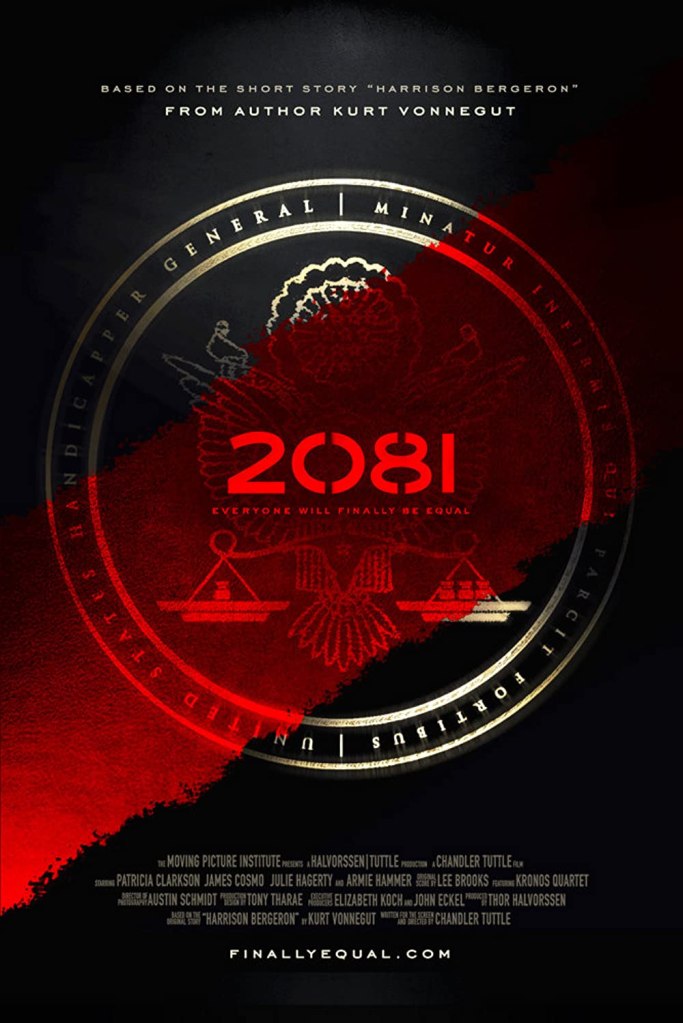
Source: Wikipedia
2081 is a 2009 science fiction featurette which premiered at the Seattle International Film Festival on May 29, 2009. It is directed and written by Chandler Tuttle, based on the 1961 short story “Harrison Bergeron” by author Kurt Vonnegut. The cast is led by James Cosmo, Julie Hagerty, Patricia Clarkson, and Armie Hammer. The story paints a picture through the use of hyperbole of a future in which a powerful, dictatorial government goes to extreme measures to ensure that absolute equality exists between all individuals.
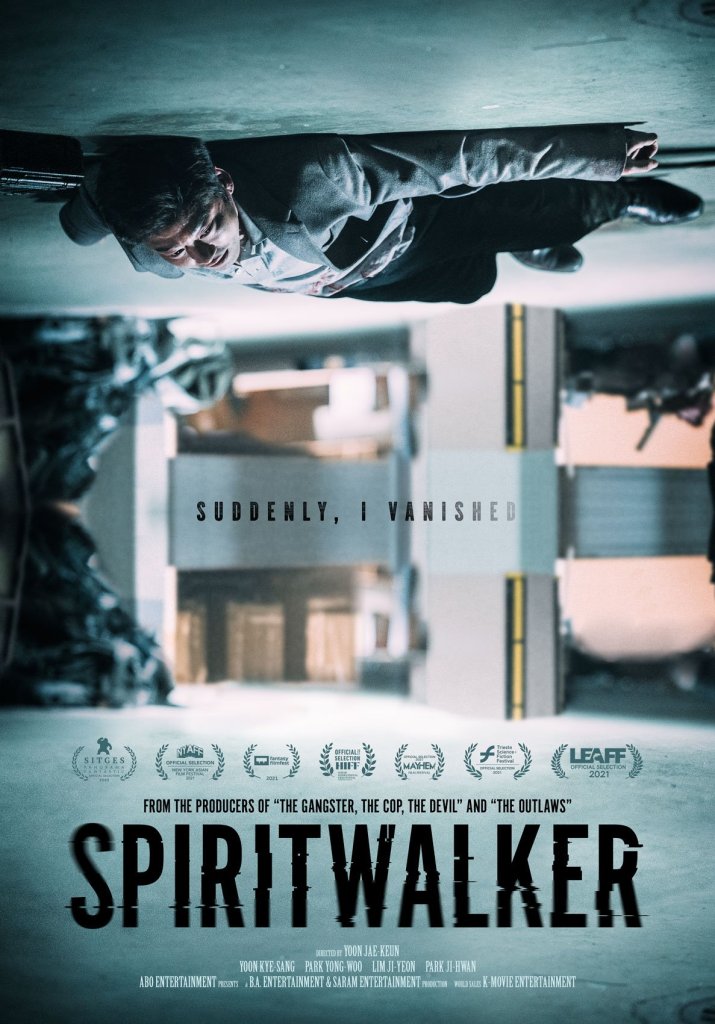
Spiritwalker (2021) Review
Director: Yoon Jae-Keun
Cast: Park Yong-Woo, Lim Ji-Yeon, Park Ji-Hwan, Yoo Seung-Mok, Lee Sung-Wook, Seo Hyun-Woo, Baek Do-Gyum, Woo Kang-Min
Running Time: 110 min.
By Paul Bramhall
Source: City on Fire
It’s fair to say the body-swap plot device has been a recurring theme in cinema over the years. While more often than not the gimmick has been used for comedic purposes, thankfully there are filmmakers out there who have been willing to apply it to further afield. Movies like the 1998 thriller Fallen spring to mind, in which Denzel Washington attempts to catch the spirit of a serial killer who can take over people’s bodies, as does the pulpy Jason Goes to Hell: The Final Friday, in which the spirit of everyone’s favorite hockey mask wearing psycho takes on similar abilities. Joining the ranks in 2021 is Yoon Jae-geun’s Spiritwalker, which sees the director and writer returning to the screen for the first time since his debut with 2010’s Heartbeat.
Opening with Yoon Kye-sang (The Outlaws, Poongsan) slumped against the door of a recently crashed vehicle and nursing a gun shot wound, things seem amiss when the reflection he sees of himself in the car window isn’t his own, and to confound matters further he has no recollection of who he is. Embarking on a mission to uncover his identity, matters aren’t helped by the fact that whenever it hits 12:00 (both noon and midnight), his spirit shifts into the body of someone else. The loss of memory and 12-hour body swap cycle make up the crux of what keeps Spiritwalker propelling itself forward, and it’s easy to imagine the Blu-ray cover containing the quote “The Bourne Identity meets The Beauty Inside!” Taking the amnesia plot device of the former, and the timed body-swapping gimmick of the latter, Jae-geun has created one of the more unique entries in Korea’s recent pool of action thrillers.
While the concept of Spiritwalker could easily result in confusion onscreen, especially when it becomes apparent that the bodies his spirit goes into are one’s we’re also familiar with, Jae-geun does a good job of translating it into cinematic language without insulting the audience’s intelligence. While during the first half he uses the trick of switching between showing Kye-sang and the actor of whoever’s body he’s in, by the latter half he trusts the audience to know whose body Kye-sang is supposed to be in, letting the actor take centre stage in the movie that’s billed as being his starring vehicle (something I’m sure he was thankful for).
Unfortunately as is the case with many high concept thrillers, the concept requires a lot of attention to execute and not stumble over its own logic, so much so that in the end other areas suffer. Kye-sang has a likeable screen presence, and I’ve enjoyed most of his performances since he first came on my radar through watching Poongsan at the time of its release in 2011. He left a considerable impression as the villain who faces off against Ma Dong-seok in 2017’s The Outlaws, however here his character feels underdeveloped and lacks personality. Surprisingly, considering how important it should be for a character to be well drawn in a plot that hinges on said character inhibiting other characters bodies, this doesn’t prove to be detrimental to the overall plot. As a central protagonist to root for though, through no fault of his own Kye-sang doesn’t really connect on any deeper level other than being a cipher onscreen.
A bigger issue is the narrative that’s been constructed around the body-swap device in order to explain it, which also feels undercooked and leaves several questions unanswered. It’s a shame, as the actual act of changing bodies every 12 hours is handled well and sets up a brisk pace maintained for the almost 110-minute runtime, so it feels like somewhat of a let down when the explanation for it all only feels half baked. Such criticisms point to the fact that Jae-geun clearly wasn’t looking to create an in-depth character study here, musing on the meaning of one’s identity and how deeply it’s connected to our physical appearance. For that, I guess we have The Beauty Inside. To enjoy Spiritwalker it’s best to take it at face value (pun intended), which is a body swap-thriller involving a guy with no memory being chased by a shadowy corporation who he may or may not have used to work for.
The 12-hour framing device instils a welcome sense of urgency into the narrative, and as predictable as it may be, Jae-geun does an admirable job of coming up with a variety of either life endangering or desperate situations that always happen in the closing minutes before Kye-sang’s spirit swaps into another body. Spiritwalker is at its best when playing around with the body-swapping device, such as when Kye-sang’s spirit is transferred into one of the lackeys he’s just threatened by pushing a pen into his neck, and then finds himself having to deal with his own self-inflicted injury. The unpredictable nature of both Kye-sang and the audience not knowing whose body he’ll go into next offsets the expected crises that crop up whenever 12:00 approaches, and keeps things engaging.
Clearly banking on its action credentials as much as its sci-fi leanings, Jae-geun has enlisted martial arts choreographers Park Young-sik and Jung Sung-ho to put together a sprinkling of grounded action scenes. Young-sik is a veteran of the Korean film industry, having lent his martial arts prowess to a countless number of productions since the early 2000’s, including being the martial arts director on the likes of 2008’s A Frozen Flower and 2010’s The Showdown. While Sung-ho has been around almost as long, he also comes with bragging rights of being part of the stunt team for the Netflix series Squid Game, which bagged the Best Stunt Ensemble award at 2022’s Screen Actors Guild Awards.
Recalling the grand tradition of Korean action thrillers made in that wonderful era during the early to mid 2010’s, a time when it seemed like they could do no wrong, the best action scene in Spritwalker takes place within the confines of an apartment (see also The Berlin File and No Tears for the Dead for reference). While in his best friends’ body (played by Lee Sung-wook – Collectors, Microhabitat) Kye-sang’s character finds himself in his girlfriends apartment facing off against a pair of assailants who want to track him down. The ensuing one on one fight against Seo Hyun-woo (The Man Standing Next, Believer) is expertly filmed, even going so far as to seamlessly switch between Sung-wook and Kye-sang without the use of CGI, a true testament of the action experience that’s behind the camera.
The ending also recalls the heyday of modern Korean action cinema, as Kye-sang conveniently finds himself in a character’s body decked out in a sharp black suit (which means he’s also now decked out in a sharp black suit). While fans of Korean cinema will likely recall Won Bin in the finale of The Man from Nowhere, the use of guns rather than blades inevitably brings to mind the John Wick franchise, and its influence is hard to deny. Kye-sang’s performance feels a little more gung-ho and frantic than Keanu Reeves, as he flings himself over tables and through wooden dividers, giving the scene a more frantic feel than Wick’s precision point and shoot technique, however the influence is clearly still there. While the finale gets suitably bloody and desperate, it somehow feels like it stops short before really ramping up, and there’s an odd decision that frames the whole movie to look like a tale of divided lovers which simply doesn’t work.
As a director and writer Yoon Jae-geun is one of those enigmas who seem to occasionally pop up in Korean cinema – defined by the fact that they were once active in the film industry, then drop completely off the map, before re-appearing more than 10 years later with a new movie out of the blue. As a sophomore feature Spiritwalker doesn’t necessarily indicate we can expect to wait less than 10 years for another movie from Jae-geun, however it is an entertaining action thriller that executes its novel premise with aplomb, let down by the fact that everything that surrounds it feels so slight.
Watch Spiritwalker on Hoopla here: https://www.hoopladigital.com/title/14986537
INDIAN COUNTRY NEWS
"It is the duty of every man, as far as his ability extends, to detect and expose delusion and error"..Thomas Paine
Human in Algorithms
From the Roof Top
I See This
blog of the post capitalist transition.. Read or download the novel here + latest relevant posts
अध्ययन-अनुसन्धानको सार
 After the Crash