
Reckless Congress ‘Declares War’ on Russia

Ron_Paul_0723

By Ron Paul

Source: The Ron Paul Institute

Today the US House passed what I consider to be one of the worst pieces of legislation ever. H. Res. 758 was billed as a resolution “strongly condemning the actions of the Russian Federation, under President Vladimir Putin, which has carried out a policy of aggression against neighboring countries aimed at political and economic domination.”

In fact, the bill was 16 pages of war propaganda that should have made even neocons blush, if they were capable of such a thing.

These are the kinds of resolutions I have always watched closely in Congress, as what are billed as “harmless” statements of opinion often lead to sanctions and war. I remember in 1998 arguing strongly against the Iraq Liberation Act because, as I said at the time, I knew it would lead to war. I did not oppose the Act because I was an admirer of Saddam Hussein – just as now I am not an admirer of Putin or any foreign political leader – but rather because I knew then that another war against Iraq would not solve the problems and would probably make things worse. We all know what happened next.

That is why I can hardly believe they are getting away with it again, and this time with even higher stakes: provoking a war with Russia that could result in total destruction!

If anyone thinks I am exaggerating about how bad this resolution really is, let me just offer a few examples from the legislation itself:

The resolution (paragraph 3) accuses Russia of an invasion of Ukraine and condemns Russia’s violation of Ukrainian sovereignty. The statement is offered without any proof of such a thing. Surely with our sophisticated satellites that can read a license plate from space we should have video and pictures of this Russian invasion. None have been offered. As to Russia’s violation of Ukrainian sovereignty, why isn’t it a violation of Ukraine’s sovereignty for the US to participate in the overthrow of that country’s elected government as it did in February? We have all heard the tapes of State Department officials plotting with the US Ambassador in Ukraine to overthrow the government. We heard US Assistant Secretary of State Victoria Nuland bragging that the US spent $5 billion on regime change in Ukraine. Why is that OK?

The resolution (paragraph 11) accuses the people in east Ukraine of holding “fraudulent and illegal elections” in November. Why is it that every time elections do not produce the results desired by the US government they are called “illegal” and “fraudulent”? Aren’t the people of eastern Ukraine allowed self-determination? Isn’t that a basic human right?

The resolution (paragraph 13) demands a withdrawal of Russia forces from Ukraine even though the US government has provided no evidence the Russian army was ever in Ukraine. This paragraph also urges the government in Kiev to resume military operations against the eastern regions seeking independence.

The resolution (paragraph 14) states with certainty that the Malaysia Airlines flight 17 that crashed in Ukraine was brought down by a missile “fired by Russian-backed separatist forces in eastern Ukraine.” This is simply incorrect, as the final report on the investigation of this tragedy will not even be released until next year and the preliminary report did not state that a missile brought down the plane. Neither did the preliminary report – conducted with the participation of all countries involved – assign blame to any side.

Paragraph 16 of the resolution condemns Russia for selling arms to the Assad government in Syria. It does not mention, of course, that those weapons are going to fight ISIS – which we claim is the enemy — while the US weapons supplied to the rebels in Syria have actually found their way into the hands of ISIS!

Paragraph 17 of the resolution condemns Russia for what the US claims are economic sanctions (“coercive economic measures”) against Ukraine. This even though the US has repeatedly hit Russia with economic sanctions and is considering even more!

The resolution (paragraph 22) states that Russia invaded the Republic of Georgia in 2008. This is simply untrue. Even the European Union – no friend of Russia – concluded in its investigation of the events in 2008 that it was Georgia that “started an unjustified war” against Russia not the other way around! How does Congress get away with such blatant falsehoods? Do Members not even bother to read these resolutions before voting?

In paragraph 34 the resolution begins to even become comical, condemning the Russians for what it claims are attacks on computer networks of the United States and “illicitly acquiring information” about the US government. In the aftermath of the Snowden revelations about the level of US spying on the rest of the world, how can the US claim the moral authority to condemn such actions in others?

Chillingly, the resolution singles out Russian state-funded media outlets for attack, claiming that they “distort public opinion.” The US government, of course, spends billions of dollars worldwide to finance and sponsor media outlets including Voice of America and RFE/RL, as well as to subsidize “independent” media in countless counties overseas. How long before alternative information sources like RT are banned in the United States? This legislation brings us closer to that unhappy day when the government decides the kind of programming we can and cannot consume – and calls such a violation “freedom.”

The resolution gives the green light (paragraph 45) to Ukrainian President Poroshenko to re-start his military assault on the independence-seeking eastern provinces, urging the “disarming of separatist and paramilitary forces in eastern Ukraine.” Such a move will mean many more thousands of dead civilians.

To that end, the resolution directly involves the US government in the conflict by calling on the US president to “provide the government of Ukraine with lethal and non-lethal defense articles, services, and training required to effectively defend its territory and sovereignty.” This means US weapons in the hands of US-trained military forces engaged in a hot war on the border with Russia. Does that sound at all like a good idea?

There are too many more ridiculous and horrific statements in this legislation to completely discuss. Probably the single most troubling part of this resolution, however, is the statement that “military intervention” by the Russian Federation in Ukraine “poses a threat to international peace and security.” Such terminology is not an accident: this phrase is the poison pill planted in this legislation from which future, more aggressive resolutions will follow. After all, if we accept that Russia is posing a “threat” to international peace how can such a thing be ignored? These are the slippery slopes that lead to war.

This dangerous legislation passed today, December 4, with only ten (!) votes against! Only ten legislators are concerned over the use of blatant propaganda and falsehoods to push such reckless saber-rattling toward Russia.

Here are the Members who voted “NO” on this legislation. If you do not see your own Representative on this list call and ask why they are voting to bring us closer to war with Russia! If you do see your Representative on the below list, call and thank him or her for standing up to the warmongers.

Voting “NO” on H. Res. 758:

1) Justin Amash (R-MI)
2) John Duncan (R-TN)
3) Alan Grayson, (D-FL)
4) Alcee Hastings (D-FL)
5) Walter Jones (R-NC)
6) Thomas Massie (R-KY)
7) Jim McDermott (D-WA)
8 George Miller (D-CA)
9) Beto O’Rourke (D-TX)
10 Dana Rohrabacher (R-CA)
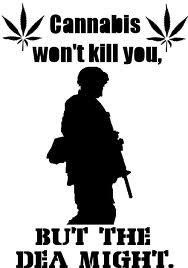
 

Surprise: The Drug War Isn’t About Drugs

Drug-War1By Kevin Carson

Source: Center for a Stateless Society

On the morning of November 6 the US Federal Bureau of Investigation trumpeted its takedown of the Silk Road 2.0 website and the arrest of  alleged operator Blake Benthall.

In so doing the FBI demonstrated, once again, that the War on Drugs has nothing to do with anything its propagandists claim it’s about. If drug criminalization is a public safety issue — about fighting violent crime and gangs, or preventing overdoses and poisoning — shutting down Silk Road is one of the dumbest things the feds can do. Silk Road was a secure, anonymous marketplace in which buyers and sellers could do business without the risk of violence associated with street trade. And the seller reputational system meant that drugs sold on Silk Road were far purer and safer than their street counterparts.

This is true of all the other selling points for the Drug War. Hillary Clinton, in possibly one of the stupidest remarks ever uttered by a human being, says legalizing narcotics is a bad idea “because there’s too much money in it” — referring, presumably, to the lucrative drug trade and the cartels fighting over it.

But there’s so much money in it, and the cartels fight to control it, only because it’s illegal. That’s what happens when you criminalize stuff people want to buy: You create black markets with much higher prices, which organized crime gangs fight to control. Alcohol prohibition created the gangster culture of the 1920s. It’s been with us ever since. When Prohibition was repealed, organized crime just shifted to fighting over other illegal markets. The more consensual, non-violent activities are made illegal, the larger the portion of the economy that’s turned into black markets for gangs to fight over.

In related news, the Mexican drug cartels are reportedly making less money since the legalization or decriminalization of pot in several American states. I wonder why.

Perhaps the biggest joke is that the War on Drugs is fought to reduce drug use. No doubt many people involved in the domestic enforcement side of the Drug War actually believe this, but the left hand doesn’t know what the right hand’s doing. The narcotics trade is an enormous source of money for the criminal gangs that control it, and guess what? The US intelligence community is one of the biggest criminal drug gangs in the world, and the global drug trade is a great way for it to raise money to do morally repugnant stuff it can’t get openly funded by Congress. It’s been twenty years since journalist Gary Webb revealed the Reagan cabinet’s collusion with drug cartels in marketing cocaine inside the United States, to raise money for the right-wing Contra death squads in Nicaragua — a revelation he was gaslighted and driven to suicide for by the US intelligence community and mainstream press.

Now we hear that the US is “losing the drug war in Afghanistan.” Well, obviously — it’s a war that’s designed to be lost. The Taliban were so easy to overthrown in the fall of 2001 because they really did try to stamp out opium poppy cultivation, and with a fair degree of success. This didn’t sit well with the Afghan populace, which traditionally makes a lot of money growing poppies. But the Northern Alliance — which the United States turned into the national government of Afghanistan — was quite friendly to poppy cultivation in its territory. When the Taliban was overthrown, poppy and heroin cultivation resumed normal levels. Putting the US in charge of a “war on drugs in Afghanistan” is like putting Al Capone in charge of alcohol prohibition.

Besides, actually “winning” the drug war would mean ending it. And who in US domestic law enforcement wants to cut off the source of billions in federal aid and military equipment, militarized SWAT teams and unprecedented surveillance and civil forfeiture powers? This is a war meant to go on forever, just like the so-called War on Terror.

The state always encourages moral panic and “wars” on one thing or another in order to keep us afraid, so we’ll give it more power over our lives. Don’t believe its lies.


At the Stuff They Don’t Want You to Know podcast Ben and Matt share their views on the War on Drugs.

mp3 link: http://podcasts.howstuffworks.com/hsw/podcasts/stdwytk-audio/2014-11-14-stdwytk-war-on-drugs.mp3

Cannabis Wars: Lebanese Pot Growers Arm-Up Against ISIS Invaders

cannabis-syria

Source: 21st Century Wire

Ask any hippie or smuggler from 1950 onwards – tales of Lebanese hashish are legendary. Today, ISIS is providing the latest twist along the Silk Road…

As the saying goes, “A breeze in Syria becomes a storm in Lebanon”.

Lebanon’s pot growers have found themselves on the frontline in their country’s defense against an ISIS surge over their eastern border.

Farmers say they are armed and ready to fight off any ISIS encroachment into the Bekaa Valley.

Already in Syria, near Aleppo, ISIS gangs have been torching cannabis fields, labeling the plant as haram, or ‘forbidden’ in their version of Islam. ISIS militants in northern Syria posted their anti-drug exploits on YouTube in late August.

Watch their propaganda video below:

(If only ISIS stood downwind and could inhale some of the smoke – they might adopt a mellower approach to jihad):

The cannabis industry has always been an integral part of the Lebanese farming economy.

Dating all the way back to the Ottoman era, for centuries Lebanon’s fertile Bekaa Valley, just 40 kilometers from the Syrian border, has produced one of the world’s finest cannabis products, Lebanese Red and Blonde hashish and ‘pollen’.

The late 20th century episode of Lebanon’s hashish empire is as complicated as it is colourful. Syria occupied a large portion of the Bekaa, during and after the Lebanese Civil War, from 1976 – 2005, with an estimated half of all available agricultural land being used to grow both cannabis (processed into hashish) and opium poppy (processed into heroin). Once the civil war ended in 1990, Syria, Lebanon and the UN went through the motions of eradicating the cannabis crops the Bekaa. According to Sensi Seeds:

“Between 1991 and 1994, around 30,000 hectares of cannabis was destroyed, leaving 250,000 people and 23,000 family farms bereft of a primary source of income. It is alleged that (while thousands of small-scale farmers were left impoverished) the largest smuggling organisations were compensated with seats in the government.”

In 2001, Hezbollah took a more assertive role in lobbying in Beirut to preserve the Bekaa Valley’s local Shia farmers’ cannabis crop livelihoods, but critics also point out that their role wasn’t purely altruistic, but also had a profit motive through a type of protection racket.

“Control of the volatile region is an ongoing challenge. Violent clashes between rival gangs and with the armed forces have increased since 2005; Hezbollah has generally left it to the army to deal with the unrest, and has been slow to enact decisive policies regarding the future of the region.”

Whatever it is, it seems to be working, and an added bonus has been that because of the destablization and ‘ISIS crisis’ in Syria next door, Lebanese Security Services patrols have become over-stretched along the porous border, leaving cannabis growers and distributors with record profits in 2014.

Fiercely independent residents of the Bekaa know the economic power of their crops, and see them as a national asset, rather than a hazard. Pot kingpin Noah Zaiter, of the Zaiter Clan, once stated publicly that, “Make Marijuana and hashish legal for six months and I’ll pay down all government debt ($36 billion)”.

SBS.au spoke to one grower, 65-year-old farmer Abo Hamoudi, about the current situation, reporting, “In the past, the Lebanese army would descend yearly on this area to destroy the illicit crop, leading to heavy clashes with cannabis farmers. Mr Hamoudi says for the last two years, the army has looked the other way.”

“They’re distracted with Islamic State and are fighting on the border. And we also fight with the army. In two days my turn to fight will come on the border between here and Syria. We fight them on the border so they don’t come inside here.”

Meanwhile, the trade is expanding. Farmer Ali Nasri Shamas, explains, “Every year we are increasing the areas we are planting. We are doing what we have said we would do. Three years ago, we told them [the Lebanese authorities] we will plant double. We did, and we will confront them. The next year, we promised them we would plant five times that amount. We did and we confronted them. And we will increase it every year.”

“Either they provide an alternative, they legalize it or it will be a confrontation between us and them.”

Contributors to this report were 21WIRE senior researcher Peter Sterry, sub editor Jason Smith and writer Patrick Henningsen.


This Mom Could Go To Jail For Saving Her Son With Cannabis Oil. This Needs To Stop

index

By Joe Martino

Source: Collective Evolution

A mother of a 15-year-old could be facing jail time for using cannabis oil to help her son with the side effects of his brain injury. Her son was finally seeing relief from daily migraines, muscle spasms and uncontrollable outbursts.

“I broke the law, but I did it to save my son,” Angela Brown said. She had traveled to Colorado to obtain the cannabis oil and brought it back to Minnesota where it is illegal. She administered the Cannabis oil safely to her son and the results were amazing.

Her Son’s Accident

Angela Brown’s son Trey was a healthy kid, but a baseball accident in 2011 led to a build-up of pressure inside of his head. He was hit with a line drive to the head causing bleeding in his brain. At first, doctors were not sure if he was going to survive. They chose to induce a medical coma. When Trey finally awoke, he didn’t appear to be the same kid according to his mother.

“I cry like every day before I go to bed, like my brain is about to blow up, cause there is so much pressure.” Trey said.

He began dealing with chronic pain, depression and difficult to control outbursts. His mother searched everywhere to try and help treat the effects of his injury. They went through 18 different medications and none of them worked. Trey’s mother felt that the effects of the medications even made her son suicidal.

Then they found cannabis oil and everything was starting to turn around.

Cannabis Oil

Cannabis oil has been making news and headlines for a couple years in ways we may not expect. Cancer and Alzheimer treatments, helping to reduce seizures and replacing potentially harmful medications for many people. Cannabis, although holding a negative stigma, can be seen as a natural miracle substance in a way. It may hold the power to treat and potentially cure a lot of people’s serious diseases.

In the case of Trey, cannabis oil helped to treat and bring quality of life back in a situation where all else was tried and didn’t work.

“It stopped the pain and stopped the muscle spasms,” Trey said. “It was helping me go to school until it then got taken away and then school was really hard again.”

“It was a miracle in a bottle.”Angela Brown

But It’s Illegal In Many Places

The miracle in a bottle didn’t last for Angela and her son. When Trey’s teacher asked how he was doing better in school suddenly, Angela mentioned the oil.

“Well, I gave him an oil that we’d gotten from Colorado, it’s derived from a marijuana plant. And then you could feel the tension in the room.”

It only took a week for the sheriff’s department to confiscate the oil. Later, county officials charged Angela with child endangerment which required child protection to get involved. If she is convicted of her charges she could face up to two years in jail and $6000 in fines.

“It’s asinine, I didn’t hurt my son; I was trying to prevent him from being hurt.”

CBS News, who attained the interview with the family, took the time to reach out to the county prosecutor, law enforcement and Trey’s school district. All declined any form of interview about the case.

The final killer in this story is that in May, Minnesota became the 22nd state to approve specific forms of medicinal marijuana. But the law doesn’t go into effect until 2015. So although this substance is already recognized as something that will become legal very soon, helping her son get better is still a crime.

Why Do We Deny Things That Work?

You might ask yourself why this type of thing could even happen. Are we really that disconnected as a society? Sure one could argue we don’t have the necessary data to state whether or not cannabis oil could have negative effects over time, but the crazy thing is we do have the data that states our medications we so often prescribe have nasty side effects, even after short periods of use. So why is one illegal and the other not? The easy answer is due to social conditioning and stigma.

The deeper answer could go into the realm of business, profit and control. It is often argued that many aspects of the medical system are set up to create life long patients versus properly treating and curing patients.

Although cannabis is finally becoming legal in more places across the world, there is still resistance when it comes to the potential treatment and curing ability the natural plant can have on many serious diseases.

With clinical trials finally on the go with brain cancer patients, the next year of study for cannabis oil could be monumental to the health of our world.

Michael Brown was Killed Because He Didn’t Prostrate Himself to Police Authority

darren-wilson-5hqdefault

This Killing, in Combat, Would Have Been a War Crime

by DAVE LINDORFF

Source: This Can’t Be Happening

What’s wrong with Ferguson Police Officer Darren Wilson’s killing of the unarmed 18-year-old black teenager, Michael Brown, and with a Grand Jury decision not to indict him for that outrageous slaying, is what is wrong with American law enforcement and American “justice” in general.

Both actions were permeated not only with racism, which clearly played a huge rule in both the verdict rendered by a Grand Jury composed of nine whites and only three blacks, and in this tragic police killing by a white cop of a black child, but also by a mentality on the part of police — and apparently by at least a majority of the citizen jurors on a panel evaluating Wilson’s actions — that cops are authorities who must be obeyed without question, on pain of death.

Let’s recall the most crucial evidence in this killing: According to the New York Times it was two shots into the top of the head by Officer Wilson that killed Brown — shots that multiple witnesses confirm were fired after the unarmed Brown was on his knees, already seriously wounded by four other apparently non-lethal shots to arm, neck and upper right chest, with his hands raised and pleading “Don’t shoot.” The Times also reports that those shots, apparently fired when Brown’s head was leaning forward, or from a position above him, appeared to have been fired “not from close range,” a determination based upon an absence of gun powder residue around the area of the entry wounds.

It should not matter in the slightest whether or not Brown had first struck Officer Wilson inside his squad car during a scuffle, as claimed by the cop, or even that the officer, as he testified in an unusual appearance before jurors, “felt terrified” at that time. Nor does it matter, beyond being evidence of an inherent racism, that Wilson says he thought that Brown, approaching him at his car initially, “looked like a demon.” If the non-lethal shots that first hit Brown in arm, neck and upper chest had been fired at that early point, perhaps Wilson would have been justified in firing them in self defense, but it’s what happened after Brown tried to leave the scene that matter.

Dave Lindorff is a founding member of ThisCantBeHappening!, an online newspaper collective, and is a contributor to Hopeless: Barack Obama and the Politics of Illusion (AK Press).

MH17: Malaysia’s Barring from Investigation Reeks of Cover-up

6h3k2h

By Ulson Gunnar

Source: New Eastern Outlook

It was a Malaysian jet, carrying Malaysian passengers, flown by Malaysian pilots, yet after Malaysia Airlines flight MH17 was shot down over Ukraine in July 2014, Malaysia has been systematically blocked from participating in the investigation, leaving an overwhelmingly pro-NATO bloc in charge of the evidence, investigation and outcome as well as the manner in which the investigation will be carried out.

Despite the integral role Malaysia has played during several pivotal moments in the aftermath of the disaster, it appears that the closer to the truth the investigation should be getting, the further Malaysia itself is being pushed from both the evidence and any influence it has on the likely conclusions of the investigation. With the downed aircraft in question being Malaysian, Malaysia as a partner in the investigation would seem a given. Its exclusion from the investigation appears to be an indication that the investigation’s objectivity has been compromised and that the conclusions it draws will likely be politically motivated.

Joint Investigation Team Includes, Excludes Surprising Members 

With the Dutch leading the investigation, the logic being that the flight originated from the Netherlands and the majority of the passengers were Dutch, it has formed a Joint Investigation Team (JIT). At the onset of its creation it seemed obvious that Malaysia would too be included, considering it lost the second largest number of citizens to the disaster and the plane itself was registered in Malaysia. Instead, JIT would end up comprised of Belgium, Ukraine, and Australia, specifically excluding Malaysia.

Malaysia was both surprised and has protested its exclusion from JIT, and has repeatedly expressed a desire to be included directly in the investigation.

Malaysia’s Star newspaper would report, “Malaysian Ambassador to the Netherlands Datuk Dr Fauziah Mohd Taib said Malaysia had not been invited to officially join the Dutch-led Joint Investigation Team (JIT), which is undertaking the criminal probe.” It would also report that, “Transport Minister Datuk Seri Liow Tiong Lai said recently that Malaysia had expressed its stand very clearly that it must be part of the criminal investigation team and had informed Dutch authorities of its intention.”

The Malaysian Insider cited Malaysian scholar Dr. Chandra Muzaffar who believes the decision to exclude his country from the investigation is politically motivated, aiming at excluding members that may urge caution and objectivity instead of draw conclusions first and bend the investigation’s results around those conclusions. In particular, Dr. Muzaffar believes that the investigations is intentionally being skewed to target Russia.

Ukraine’s involvement in the investigation is particularly troublesome. Had MH17 crashed in Ukraine under different circumstances, Ukraine’s role would be welcome. However, it was apparently shot down specifically in a conflict in which Kiev itself is a participant. With both sides of the conflict possessing anti-aircraft weapons and with Kiev itself confirmed to possess weapons capable of reaching the altitude MH17 was flying at when it was allegedly hit, Kiev becomes a possible suspect in the investigation. Kiev’s inclusion in JIT represents a monumental conflict of interest.

Imagine a potential suspect leading an investigation into a crime they may have committed. The possibilities to cover up, skew, spin, tamper with or otherwise distort both the evidence and the outcome of the investigation are endless.

And to compound this already glaring conflict of interest, it was revealed recently that an alleged “secret deal” was struck by JIT in which any member could bar the release of evidence. With all members of JIT being pro-NATO and decidedly arrayed against Moscow, such a “deal” could prevent crucial evidence from being revealed that would effect an otherwise distorted conclusion drawn by the investigators aimed specifically at advancing their greater political agenda in Eastern Europe. Had Malaysia been a member of JIT, the ability of other members to withhold evidence would have been greatly diminished and it is likely such a bizarre deal would not have been conceivable, real or imaged, in the first place.

Malaysia’s Exclusion Foreshadows Politically Motivated Outcome 

With the ongoing conflict in Ukraine perceived as a proxy war between NATO and Moscow, JIT’s membership including the NATO-backed Kiev regime itself (a possible suspect), two NATO members (Belgium and the Netherlands) and Australia who has passed sanctions against Russia over the conflict, is a textbook case of conflict of interest.

Those nations and international organizations calling for an investigation and for justice but who ignore the obvious problem of participants in a conflict investigating a key incident that may benefit their agenda directly, indicates that such calls for justice are disingenuous and instead, what is being done is not an investigation, but a politically motivated witch-hunt aimed at serving an ulterior motive.

Malaysia is not generally perceived to be a stanch ally of Moscow, but it is neither a loyal client state of Washington, London or Brussels. On many issues, Malaysia has exhibited an independence in foreign policy that has perturbed the so-called international order maintained by the West. And Malaysia’s internal politics have long wrestled to stem inroads by Washington’s favorites including Anwar Ibrahim and his political faction, Pakatan Rakyat.

Its inclusion in the investigation would provide a much needed, impartial counterweight to an otherwise fully pro-NATO JIT membership.

To casual observers, the current investigation led by NATO members and Kiev, a possible suspect, would be no different than the Donetsk People’s Republic and Russia leading it. Few would consider a DPR or Russian led investigation impartial, and few should see a NATO-led investigation as impartial. Had Malaysia been included in the process, an argument could have been made that an actual investigation was taking place rather than a complex propaganda campaign.

Malaysia’s exclusion is a troubling sign for the victims of the MH17 disaster, meaning the true culprits will never be known. The overt politically motivated nature of the investigation will on one hand  help fuel NATO’s propaganda war, but on the other hand, fuel the doubts of millions worldwide over the true events that took place in the skies of eastern Ukraine that day. Like so many other events in human history that took place amid a high stake political struggle, the downing of MH17 will be shrouded in mystery, mystery draped over the truth by the irresponsible leadership of NATO, and those in Washington, London and Brussels egging on the conflict in Ukraine to this very day.

Ulson Gunnar, a New York-based geopolitical analyst and writer especially for the online magazine “New Eastern Outlook”.

Onion Dispatches from Ferguson

1416945465-covernytevawfSource: The Onion

Nation Doesn’t Know If It Can Take Another Bullshit Speech About Healing

In the wake of a grand jury’s divisive decision not to charge Ferguson, MO police officer Darren Wilson in the shooting death of unarmed black teenager Michael Brown, a weary American populace told reporters Tuesday that they are not sure if they can take another bullshit speech about healing. “If I have to watch some politician, law enforcement official, or pretty much anyone regurgitate the same meaningless platitudes about setting aside our differences and coming together as a nation, I might just lose it,” said Atlanta resident Samantha Hubbard, echoing the sentiment of hundreds of millions of Americans who are uncertain if they can stomach even a single empty call for respect and civility. “I honestly don’t know if I’m physically capable of listening to another community leader recite the same unbearable garbage about how it’s time for an open and honest dialogue. I swear to God, if I hear even one goddamn person assert there’s more that unites us than divides us, I will immediately blow my brains out.” At press time, the nation was particularly apprehensive at the prospect of a bullshit speech that declared words were not enough.


Ferguson Decision Reaffirms Right Of Police To Use Deadly Force When They Feel Sufficiently Inclined

Following a legal precedent established over the course of decades, the St. Louis County grand jury decision Monday to not indict officer Darren Wilson in the shooting death of an unarmed teen reportedly reaffirmed the right of police to use deadly force whenever they feel sufficiently inclined. “The outcome of this grand jury investigation further supports a police officer’s right to shoot to kill if, and only if, he feels absolutely willing to do so and it suits his purposes,” said Georgetown law professor Adrienne Hoffman, adding that reasonable suspicion to use lethal force is 100 percent optional when an officer fires on a suspect, regardless of circumstances. “This decision makes it completely clear that, when confronted in the line of duty, police are legally justified in using extreme force against a suspect whenever they need to or just feel like it.” Hoffman added that the decision further asserts an officer’s right to claim self-defense against anyone within range of his weapon.


Heavy Police Presence In Ferguson To Ensure Residents Adequately Provoked

FERGUSON, MO—Ahead of a grand jury’s decision over whether to indict officer Darren Wilson in the shooting death of unarmed black teenager Michael Brown, police in the city of Ferguson have reportedly heavily increased their presence this week to ensure residents are adequately provoked. “We’ve deployed additional officers throughout Ferguson in order to make absolutely certain that residents feel sufficiently harassed and intimidated,” said St. Louis County police chief Jon Belmar, assuring locals that officers in full riot gear will be on hand to inflame members of the community for as long as is necessary. “It’s absolutely essential that the people of Ferguson have full confidence that law enforcement is committed to antagonizing them every step of the way.” At press time, the Missouri National Guard was on standby with tanks and urban assault vehicles in case Ferguson residents required additional incitement.

Darren Wilson Wasn’t the First: A Short History of Killer Cops Let Off the Hook

michael-brown-darren-wilson

The U.S. has a long history of allowing police to walk free after vicious racist violence.

By Flint Taylor

Source: In These Times

The Ferguson grand jury’s decision not to indict Ferguson police officer Darren Wilson for the killing of African-American teenager Michael Brown is heartless but unsurprising. But it is important to place the case in context with the history of police violence investigations and prosecutions in high profile cases—and the systemic and racist police brutality that continues to plague the nation. In doing so, there are lessons for the movement for justice in the Michael Brown case, as well as for those who are engaged in the broader struggle against law enforcement violence.

What follows, then, is a brief history of similar high profile cases where public outrage compelled the justice system to confront acts of racially motivated police violence—with, to say the least, less than satisfactory results.

Chicago

Over the past 45 years, Chicago has been a prime example of official indifference and cover-up when it comes to prosecuting the police for wanton brutality and torture.

On December 4, 1969, Black Panther leaders Fred Hampton and Mark Clark were slain in a police raid that implicated the Cook County State’s Attorney and the FBI’s Cointelpro program. A public outcry led to a Federal Civil Rights investigation. Despite finding that the raiding police fired more than 90 shots to one by the Panthers, the Grand Jury in 1970 did not indict, but rather issued a report that equally blamed the police perpetrators and the Panther victims.

Outrage at this decision led to the appointment of a Special Prosecutor who, in the face of extreme official resistance, obtained an indictment against the police and the State’s Attorneys who planned and executed the raid—not for murder and attempted murder, but rather for obstruction of justice.

The case came to trial in front of a politically connected judge who dismissed the case without even requiring that the charged officials put on a defense. Again, the outrage, particularly in the African-American community was so extreme that the chief prosecutor, Edward V. Hanrahan, was voted out of office a week after the verdict was rendered in 1972.

The Jon Burge police torture scandal provides another stark example. Evidence that had been unearthed over the years demonstrated that a crew of predominately white Chicago police detectives, led by Jon Burge, tortured at least 120 African-American men from 1972 to 1991.

Cook County State’s Attorney Richard M. Daley was tendered powerful evidence of this torture as early as 1982, but did not investigate or prosecute Burge and his men. Daley’s office continued to use confessions tortured from the victims to send scores of them to prison—10 of whom went to death row, though they were later saved by a death penalty moratorium in 2000 and by a grant of clemency in 2003 by then-Governor George Ryan—during the next seven years.

In 1989, the local U.S. Attorneys’ office declined to prosecute, as did the Department of Justice in 1996 and Cook County State’s Attorney Richard Devine for the five years directly thereafter. In 2001, due to continuing public pressure, a politically connected Special Prosecutor was appointed to investigate the torture. But after a four year, $7 million investigation, he too refused to indict, instead issuing what is widely considered to be a whitewash report that absolved Daley, Devine, and numerous high Chicago police officials.
Finally, in 2008 the U.S. Attorney indicted Burge for perjury and obstruction of justice, and he was convicted in 2010, and sentenced to 4 ½ years in prison. However, the U.S. Attorney has subsequently declined to prosecute Burge’s confederates for similar offenses.

New Orleans

Chicago is by no means an isolated example of how difficult it is to obtain justice for wanton police violence through the judicial system. In New Orleans, a crew of white detectives responded to the killing of a white police officer in 1980 by terrorizing the black community of Algiers, killing four innocent people and torturing numerous others by “booking and bagging” them: beating suspects with telephone books and suffocating them with bags over their heads.

Seven officers were indicted by the Department of Justice for civil rights violations arising from the torture of one of the victims and three were convicted.  No officers were charged for the four killings or for the other acts of torture.

In 2005, in the wake of Hurricane Katrina, an NOPD officer fatally shot an unarmed black man named Henry Glover, then several of his fellow officers burned his body to cover-up their crime. NOPD officers also shot and killed two unarmed black men on the Danziger Bridge.

After state authorities botched their investigation, the Civil Rights Division of the Justice Department indicted the officers involved in the two cases and obtained convictions of some of the main police actors. However, the Court of Appeals for the Fifth Circuit overturned the verdict in the Glover case, and the trial judge, citing government misconduct, took the extraordinary step of granting the convicted officers a new trial in the Danziger case. 

New York

In 1997, an NYPD officer sexually assaulted a Haitian-American man named Abner Louima in a precinct station bathroom by shoving a broken broomstick up his rectum. Louima’s attacker was subsequently charged with federal civil rights violations, while three of his police accomplices were charged with covering up the crimes.

After Louima’s attacker pleaded guilty, his accomplices were convicted, but the Second Circuit Court of Appeals overturned their convictions on the grounds that the lawyers who represented the officers had a conflict of interest. After they were convicted a second time, the Appeals Court again overturned their convictions—this time on the basis that there was insufficient evidence of intent.

In 1999, four officers from the NYPD’s Street Crimes Unit fired 41 shots at Amadou Diallo, a Guinean immigrant who was reaching for his wallet, hitting him 19 times. The officers were indicted for second degree murder and the case was moved to upstate New York, where a jury acquitted the officers. 

In July of this year, NYPD officers arrested an African-American man named Eric Garner, allegedly for selling untaxed cigarettes. They put a prohibited chokehold on him, forced him to the ground face first with his hands behind his back, and shoved his face into the pavement, where he died a few minutes later of a heart attack. The deadly assault, which was captured on videotape, is now under investigation by a Special Grand Jury empaneled by the District Attorney’s Office.

Los Angeles

Among the most notorious cases was the brutal 1991 beating of Rodney King by five LAPD officers. A videotape captured most of the brutality and also showed several other officers standing by and doing nothing to stop the pummeling of a defenseless black man.

Four officers were charged at the state level with assault with a deadly weapon and use of excessive force. The trial was moved to a predominantly white suburban county, and three of the officers were acquitted of all charges, while the fourth was acquitted of assault with a deadly weapon and other lesser charges. But the jury failed to reach a verdict on his use of excessive force.

After an angry uprising in the Africa- American community of Los Angeles that left 53 dead and around 2,000 injured, the U.S. Justice Department indicted the four officers, and a federal jury convicted two of them, while acquitting the other two.

This past August, LAPD officers fatally shot an unarmed mentally ill African-American man named Ezell Ford, who witnesses said was shot in the back while lying on the ground. Despite massive protests, there has been no grand jury investigation to date, the autopsy report is yet to be released, and the LAPD has not completed its investigation.

Oakland

In Oakland, California in the late 1990s, a unit of police officers dubbed the “Rough Riders” systematically beat, framed and planted narcotics on African Americans whom they claimed were dealing drugs. Four of the “Riders” were indicted by the District Attorney’s Office, and the trial was moved to a suburban county. The ringleader fled the country, and was tried in absentia.

After a year-long trial before a bitterly divided jury on which there were no blacks, the officers were acquitted of eight charges, and the jury was hung on the remaining 27 counts. At the urging of then-Mayor Jerry Brown, the officers were not re-tried.

Also in Oakland, in the early morning hours of New Years Day, 2009, a BART officer shot and killed a young black man named Oscar Grant, who was lying face down, unarmed,  in a busy transit station. The shooting was videotaped, and led to militant protests in Oakland.

Another jury with no black members rejected the charge of murder and instead found the officer guilty of involuntary manslaughter. As a result, Oscar Grant’s killer spent less than a year behind bars. The Department of Justice subsequently opened a civil rights investigation, but no charges were brought.

Milwaukee

From 2007-2012 in Milwaukee, a unit of white police officers, spurred on by the Department’s CompStat program of aggressive policing, stopped and illegally body cavity searched more than 70 African-American men whom they claimed to be investigating for drug dealing. In conducting these searches, most commonly performed on the street, the searching officer reached inside the men’s underwear, and probed their anuses and genitals.

After this highly illegal practice came to light, the unit’s ringleader, Michael Vagnini, was indicted by the Milwaukee County District Attorney on numerous counts of sexual assault, illegal searches, and official misconduct, while three of the other unit officers were also charged for participating in two of the searches. The unit’s sergeant and several other members of the unit, all of whom were present for many of the searches, were not charged.

The charged officers were permitted to plead guilty to the lesser included offenses of official misconduct and illegal strip searches, with Vagnini receiving a 36-month sentence while the other three received sentences that totaled, collectively, less than a month in jail. By pleading guilty, they also received promises that they would not be charged with federal civil rights violations.

Pattern and Practice Investigations

These high profile cases represent only the tip of the iceberg when it comes to cases where racist police violence has not been subjected to equal justice under the law.

Recently, the Justice Department declined to prosecute Little Rock, Arkansas, officers who shot and killed Eugene Ellison, an elderly African American man who was walking out of his home with a cane in his hand, while there have been documented reports of unarmed black men recently being shot down by the police in Chicago; Houston; San Antonio; Beaver Creek, Ohio; and Sarasota, Florida.

In 1994, the United States Congress, recognizing that police misconduct and violence was systemic in many parts of the country, passed 42 U.S. Code Section 14141, which empowered the Justice Department to file suit against police departments alleging patterns and practices of unconstitutional conduct, and to obtain wide ranging court orders, consent decrees, and independent monitors in order to implement reforms to those practices.

Although understaffed, the Pattern and Practice Unit of the Justice Department has attacked systemic and discriminatory deficiencies in police hiring, supervision, and monitoring in numerous police departments over the past 20 years.  A particularly egregious act or series of acts of police violence often prompts the Unit to initiate an investigation, and its lawyers have obtained consent decrees or court orders in Cincinnati, Pittsburgh, Steubenville, Ohio, New Orleans, Puerto Rico, Oakland, and Miami.

Last month, lawyers handling the Little Rock cases requested that the DOJ do a pattern and investigation of the LRPD, and the Unit is reportedly now investigating the practices of the Ferguson Police Department. While these investigations are not a panacea, they offer a mechanism for exposing and reforming blatantly unconstitutional police practices, and have also demonstrated how pervasive the problem systemic police violence continues to be.

In light of this history, the pre-ordained failure of a biased local prosecutor to obtain an indictment against Darren Wilson should not surprise us. But the movement for justice for Michael Brown has brought widespread attention to the nationwide problem of systemic and racist police violence and highlighted the movement that has come together to battle against it.

Just two weeks ago, the Brown case, along with the Burge torture cases, was presented to the United Nations Committee Against Torture in Geneva. The movement should now turn its attention to the Department of Justice, demanding a federal civil rights indictment against Wilson a full scale pattern and practice investigation of the Ferguson Police Department, and, more broadly, an end to systemic and racist police violence.

As the history of the battle against racist police violence so pointedly teaches, the public outcry and agitation must continue not only in Ferguson but across the nation. Because as Frederick Douglas rightly stated many years ago, power concedes nothing without a demand.
Flint Taylor is one of the lawyers for the families of slain Black Panther leaders Fred Hampton and Mark Clark and together with his law partner Jeffrey Haas was trial counsel in the marathon 1976 civil trial. For more information on the Hampton/Clark case, the history of Black Panther Party, and the FBI’s Program to destroy it, visit peopleslawoffice.com.