The Misguided ‘Vault 7’ Whodunit

By Jesselyn Radack

Source: Expose Facts

It is the leakiest of times in the Executive Branch. Last week, Wikileaks published a massive and, by all accounts genuine, trove of documents revealing that the CIA has been stockpiling, and lost control of, hacking tools it uses against targets. Particularly noteworthy were the revelations that the CIA developed a tool to hack Samsung TVs and turn them into recording devices and that the CIA worked to infiltrate both Apple and Google smart phone operating systems since it could not break encryption. No one in government has challenged the authenticity of the documents disclosed.

We do not know the identity of the source or sources, nor can we be 100% certain of his or her motivations. Wikileaks writes that the source sent a statement that policy questions “urgently need to be debated in public, including whether the CIA’s hacking capabilities exceed its mandated powers and the problem of public oversight of the agency” and that the source “wishes to initiate a public debate about the security, creation, use, proliferation and democratic control of cyber-weapons.”

The FBI has already begun hunting down the source as part of a criminal leak investigation. Historically, the criminal justice system has been a particularly inept judge of who is a whistleblower. Moreover, it has allowed the use of the pernicious Espionage Act—an arcane law meant to go after spies—to go after whistleblowers who reveal information the public interest. My client, former NSA senior official Thomas Drake, was prosecuted under the Espionage Act, only to later be widely recognized as a whistleblower. There is no public interest defense to Espionage Act charges, and courts have ruled that a whistleblower’s motive, however salutary, is irrelevant to determining guilt.

The Intelligence Community is an equally bad judge of who is a whistleblower, and has a vested interest in giving no positive reinforcement to those who air its dirty laundry. The Intelligence Community reflexively claims that anyone who makes public secret information is not a whistleblower. Former NSA and CIA Director General Michael V. Hayden speculated that the recent leaks are to be blamed on young millennials harboring some disrespect for the venerable intelligence agencies responsible for mass surveillance and torture. Not only is his speculation speculative, but it’s proven wrong by the fact that whistleblowers who go to the press span the generational spectrum from Pentagon Papers whistleblower Daniel Ellsberg to mid-career and senior level public servants like CIA torture whistleblower John Kiriakou and NSA whistleblower Thomas Drake to early-career millennials like Army whistleblower Chelsea Manning and NSA whistleblower Edward Snowden. The lawbreaker does not get to decide who is a whistleblower.

Not all leaks of information are whistleblowing, and the word “whistleblower” is a loaded term, so whether or not the Vault 7 source conceives of him or herself as a whistleblower is not a particularly pertinent inquiry. The label “whistleblower” does not convey some mythical power or goodness, or some “moral narcissism,” a term used to describe me when I blew the whistle. Rather, whether an action is whistleblowing depends on whether or not the information disclosed is in the public interest and reveals fraud, waste, abuse, illegality or dangers to public health and safety. Even if some of the information revealed does not qualify, it should be remembered that whistleblowers are often faulted with being over- or under-inclusive with their disclosures. Again, it is the quality of the information, not the quantity, nor the character of the source.

Already, the information in the Vault 7 documents revealed that the Intelligence Community has misled the American people. In the wake of Snowden’s revelations, the Intelligence Community committed to avoid the stockpiling of technological vulnerabilities, publicly claiming that its bias was toward “disclosing them” so as to better protect everyone’s privacy. However, the Vault 7 documents reveal just the opposite: not only has the CIA been stockpiling exploits, it has been aggressively working to undermine our Internet security. Even assuming the CIA is using its hacking tools against the right targets, a pause-worthy presumption given the agency’s checkered history, the CIA has empowered the rest of the hacker world and foreign adversaries by hoarding vulnerabilities, and thereby undermined the privacy rights of all Americans and millions of innocent people around the world. Democracy depends on an informed citizenry, and journalistic sources—whether they call themselves whistleblowers or not—are a critical component when the government uses national security as justification to keep so much of its activities hidden from public view.

As we learn more about the Vault 7 source and the disclosures, our focus should be on the substance of the disclosures. Historically, the government’s reflexive instinct is to shoot the messenger, pathologize the whistleblower, and drill down on his or her motives, while the transparency community holds its breath that he or she will turn out to be pure as the driven snow. But that’s all deflection from plumbing the much more difficult questions, which are: Should the CIA be allowed to conduct these activities, and should it be doing so in secret without any public oversight?

These are questions we would not even be asking without the Vault 7 source.

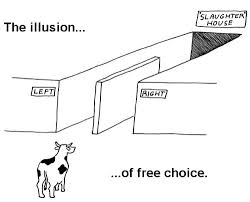
The Illusion of Freedom: The Police State Is Alive and Well

By John W. Whitehead

Source: Battlefield America

“What happened here was the gradual habituation of the people, little by little, to being governed by surprise; to receiving decisions deliberated in secret; to believing that the situation was so complicated that the government had to act on information which the people could not understand, or so dangerous that, even if the people could understand it, it could not be released because of national security… This separation of government from people, this widening of the gap, took place so gradually and so insensibly, each step disguised (perhaps not even intentionally) as a temporary emergency measure or associated with true patriotic allegiance or with real social purposes. And all the crises and reforms (real reforms, too) so occupied the people that they did not see the slow motion underneath, of the whole process of government growing remoter and remoter.”—Historian Milton Mayer, They Thought They Were Free: The Germans, 1933-45

Brace yourself.

There is something being concocted in the dens of power, far beyond the public eye, and it doesn’t bode well for the future of this country.

Anytime you have an entire nation so mesmerized by the antics of the political ruling class that they are oblivious to all else, you’d better beware. Anytime you have a government that operates in the shadows, speaks in a language of force, and rules by fiat, you’d better beware. And anytime you have a government so far removed from its people as to ensure that they are never seen, heard or heeded by those elected to represent them, you’d better beware.

The world has been down this road before.

As historian Milton Mayer recounts in his seminal book on Hitler’s rise to power, They Thought They Were Free, “Most of us did not want to think about fundamental things and never had. There was no need to. Nazism gave us some dreadful, fundamental things to think about—we were decent people‑—and kept us so busy with continuous changes and ‘crises’ and so fascinated, yes, fascinated, by the machinations of the ‘national enemies’, without and within, that we had no time to think about these dreadful things that were growing, little by little, all around us.”

We are at our most vulnerable right now.

The gravest threat facing us as a nation is not extremism—delivered by way of sovereign citizens or radicalized Muslims—but despotism, exercised by a ruling class whose only allegiance is to power and money.

Nero fiddled while Rome burned.

America is burning, and all most Americans can do is switch the channel, tune out what they don’t want to hear, and tune into their own personal echo chambers.

We’re in a national state of denial.

Yet no amount of escapism can shield us from the harsh reality that the danger in our midst is posed by an entrenched government bureaucracy that has no regard for the Constitution, Congress, the courts or the citizenry.

If the team colors have changed from blue to red, that’s just cosmetic.

The playbook remains the same. The leopard has not changed its spots.

Scrape off the surface layers and you will find that the American police state is alive and well and continuing to wreak havoc on the rights of the American people.

“We the people” are no longer living the American Dream.

We’re living the American Lie.

Indeed, Americans have been lied to so sincerely, so incessantly, and for so long by politicians of all stripes—who lie compulsively and without any seeming remorse—that they’ve almost come to prefer the lies trotted out by those in government over less-palatable truths.

The American people have become compulsive believers.

As Nick Cohen writes for The Guardian, “Compulsive liars shouldn’t frighten you. They can harm no one, if no one listens to them. Compulsive believers, on the other hand: they should terrify you. Believers are the liars’ enablers. Their votes give the demagogue his power. Their trust turns the charlatan into the president. Their credulity ensures that the propaganda of half-calculating and half-mad fanatics has the power to change the world.”

While telling the truth “in a time of universal deceit is,” as George Orwell concluded, “a revolutionary act,” believing the truth—and being able to distinguish the truth from a lie—is also a revolutionary act.

Here’s a truth few Americans want to acknowledge: nothing has changed (at least, not for the better) since Barack Obama passed the reins of the police state to Donald Trump.

The police state is still winning. We the people are still losing.

In fact, the American police state has continued to advance at the same costly, intrusive, privacy-sapping, Constitution-defying, relentless pace under President Trump as it did under President Obama.

Police haven’t stopped disregarding the rights of citizens. Having been given the green light to probe, poke, pinch, taser, search, seize, strip, shoot and generally manhandle anyone they see fit in almost any circumstance, all with the general blessing of the courts, America’s law enforcement officials are no longer mere servants of the people entrusted with keeping the peace. Indeed, they continue to keep the masses corralled, under control, and treated like suspects and enemies rather than citizens.

SWAT teams haven’t stopped crashing through doors and terrorizing families. Nationwide, SWAT teams continue to be employed to address an astonishingly trivial array of criminal activities or mere community nuisances including angry dogs, domestic disputes, improper paperwork filed by an orchid farmer, and misdemeanor marijuana possession. With more than 80,000 SWAT team raids carried out every year on unsuspecting Americans for relatively routine police matters and federal agencies laying claim to their own law enforcement divisions, the incidence of botched raids and related casualties continue to rise.

The Pentagon and the Department of Homeland Security haven’t stopped militarizing and federalizing local police. Police forces continue to be transformed into heavily armed extensions of the military, complete with jackboots, helmets, shields, batons, pepper-spray, stun guns, assault rifles, body armor, miniature tanks and weaponized drones. In training police to look and act like the military and use the weapons and tactics of war against American citizens, the government continues to turn the United States into a battlefield.

Schools haven’t stopped treating young people like hard-core prisoners. School districts continue to team up with law enforcement to create a “schoolhouse to jailhouse track” by imposing a “double dose” of punishment for childish infractions: suspension or expulsion from school, accompanied by an arrest by the police and a trip to juvenile court. In this way, the paradigm of abject compliance to the state continues to be taught by example in the schools, through school lockdowns where police and drug-sniffing dogs enter the classroom, and zero tolerance policies that punish all offenses equally and result in young people being expelled for childish behavior.

For-profit private prisons haven’t stopped locking up Americans and immigrants alike at taxpayer expense. States continue to outsource prison management to private corporations out to make a profit at taxpayer expense. And how do you make a profit in the prison industry? Have the legislatures pass laws that impose harsh penalties for the slightest noncompliance in order keep the prison cells full and corporate investors happy.

Censorship hasn’t stopped. First Amendment activities continue to be pummeled, punched, kicked, choked, chained and generally gagged all across the country. The reasons for such censorship vary widely from political correctness, safety concerns and bullying to national security and hate crimes but the end result remained the same: the complete eradication of what Benjamin Franklin referred to as the “principal pillar of a free government.”

The courts haven’t stopped marching in lockstep with the police state. The courts continue to be dominated by technicians and statists who are deferential to authority, whether government or business. Indeed, the Supreme Court’s decisions in recent years have most often been characterized by an abject deference to government authority, military and corporate interests. They have run the gamut from suppressing free speech activities and justifying suspicionless strip searches to warrantless home invasions and conferring constitutional rights on corporations, while denying them to citizens.

Government bureaucrats haven’t stopped turning American citizens into criminals. The average American now unknowingly commits three felonies a day, thanks to an overabundance of vague laws that render otherwise innocent activity illegal, while reinforcing the power of the police state and its corporate allies.

The surveillance state hasn’t stopped spying on Americans’ communications, transactions or movements. On any given day, whether you’re walking through a store, driving your car, checking email, or talking to friends and family on the phone, you can be sure that some government agency, whether it’s your local police, a fusion center, the National Security Agency or one of the government’s many corporate partners, is still monitoring and tracking you.

The TSA hasn’t stopped groping or ogling travelers. Under the pretext of protecting the nation’s infrastructure (roads, mass transit systems, water and power supplies, telecommunications systems and so on) against criminal or terrorist attacks, TSA task forces (comprised of federal air marshals, surface transportation security inspectors, transportation security officers, behavior detection officers and explosive detection canine teams) continue to do random security sweeps of nexuses of transportation, including ports, railway and bus stations, airports, ferries and subways, as well as political conventions, baseball games and music concerts. Sweep tactics include the use of x-ray technology, pat-downs and drug-sniffing dogs, among other things.

Congress hasn’t stopped enacting draconian laws such as the USA Patriot Act and the NDAA. These laws—which completely circumvent the rule of law and the constitutional rights of American citizens, continue to re-orient our legal landscape in such a way as to ensure that martial law, rather than the rule of law, our U.S. Constitution, becomes the map by which we navigate life in the United States.

The Department of Homeland Security hasn’t stopped being a “wasteful, growing, fear-mongering beast.” Is the DHS capable of plotting and planning to turn the national guard into a federalized, immigration police force? No doubt about it. Remember, this is the agency that is notorious for militarizing the police and SWAT teams; spying on activists, dissidents and veterans; stockpiling ammunition; distributing license plate readers; contracting to build detention camps; tracking cell-phones with Stingray devices; carrying out military drills and lockdowns in American cities; using the TSA as an advance guard; conducting virtual strip searches with full-body scanners; carrying out soft target checkpoints; directing government workers to spy on Americans; conducting widespread spying networks using fusion centers; carrying out Constitution-free border control searches; funding city-wide surveillance cameras; and utilizing drones and other spybots.

The military industrial complex hasn’t stopped profiting from endless wars abroad. America’s expanding military empire continues to bleed the country dry at a rate of more than $15 billion a month (or $20 million an hour). The Pentagon spends more on war than all 50 states combined spend on health, education, welfare, and safety. Yet what most Americans fail to recognize is that these ongoing wars have little to do with keeping the country safe and everything to do with enriching the military industrial complex at taxpayer expense.

The Deep State’s shadow government hasn’t stopped calling the shots behind the scenes. Comprised of unelected government bureaucrats, corporations, contractors, paper-pushers, and button-pushers who are actually calling the shots behind the scenes, this government within a government continues to be the real reason “we the people” have no real control over our so-called representatives. It’s every facet of a government that is no longer friendly to freedom and is working overtime to trample the Constitution underfoot and render the citizenry powerless in the face of the government’s power grabs, corruption and abusive tactics.

And the American people haven’t stopped acting like gullible sheep. In fact, many Americans have been so carried away by their blind rank-and-file partisan devotion to their respective political gods that they have lost sight of the one thing that has remained constant in recent years: our freedoms are steadily declining.

Here’s the problem as I see it: “we the people” have become so trusting, so gullible, so easily distracted, so out-of-touch and so sure that our government will always do the right thing by us that we have ignored the warning signs all around us.

In so doing, we have failed to recognize such warning signs as potential red flags to use as opportunities to ask questions, demand answers, and hold our government officials accountable to respecting our rights and abiding by the rule of law.

Unfortunately, once a free people allows the government to make inroads into their freedoms, or uses those same freedoms as bargaining chips for security, it quickly becomes a slippery slope to outright tyranny. And it doesn’t really matter whether it’s a Democrat or a Republican at the helm, because the bureaucratic mindset on both sides of the aisle now seems to embody the same philosophy of authoritarian government.

As I make clear in my book Battlefield America: The War on the American People, this is what happens when you ignore the warning signs.

This is what happens when you fail to take alarm at the first experiment on your liberties.

This is what happens when you fail to challenge injustice and government overreach until the prison doors clang shut behind you.

In the American police state that now surrounds us, there are no longer such things as innocence, due process, or justice—at least, not in the way we once knew them. We are all potentially guilty, all potential criminals, all suspects waiting to be accused of a crime.

So you can try to persuade yourself that you are free, that you still live in a country that values freedom, and that it is not too late to make America great again, but to anyone who has been paying attention to America’s decline over the past 50 years, it will be just another lie.

The German people chose to ignore the truth and believe the lie.

They were not oblivious to the horrors taking place around them. As historian Robert Gellately points out, “[A]nyone in Nazi Germany who wanted to find out about the Gestapo, the concentration camps, and the campaigns of discrimination and persecutions need only read the newspapers.”

The warning signs were definitely there, blinking incessantly like large neon signs.

“Still,” Gellately writes, “the vast majority voted in favor of Nazism, and in spite of what they could read in the press and hear by word of mouth about the secret police, the concentration camps, official anti-Semitism, and so on. . . . [T]here is no getting away from the fact that at that moment, ‘the vast majority of the German people backed him.’”

Half a century later, the wife of a prominent German historian, neither of whom were members of the Nazi party, opined: “[O]n the whole, everyone felt well. . . . And there were certainly eighty percent who lived productively and positively throughout the time. . . . We also had good years. We had wonderful years.”

In other words, as long as their creature comforts remained undiminished, as long as their bank accounts remained flush, as long as they weren’t being discriminated against, persecuted, starved, beaten, shot, stripped, jailed and turned into slave labor, life was good.

This is how tyranny rises and freedom falls.

As Primo Levi, a Holocaust survivor observed, “Monsters exist, but they are too few in number to be truly dangerous. More dangerous are the common men, the functionaries ready to believe and to act without asking questions.”

Freedom demands responsibility.

Freedom demands that people stop sleep-walking through life, stop cocooning themselves in political fantasies, and stop distracting themselves with escapist entertainment.

Freedom demands that we stop thinking as Democrats and Republicans and start thinking like human beings, or at the very least, Americans.

Freedom demands that we not remain silent in the face of evil or wrongdoing but actively stand against injustice.

Freedom demands that we treat others as we would have them treat us. That is the law of reciprocity, also referred to as the Golden Rule, and it is found in nearly every world religion, including Judaism and Christianity.

In other words, if you don’t want to be locked up in a prison cell or a detention camp—if you don’t want to be discriminated against because of the color of your race, religion, politics or anything else that sets you apart from the rest—if you don’t want your loved ones shot at, strip searched, tasered, beaten and treated like slaves—if you don’t want to have to be constantly on guard against government eyes watching what you do, where you go and what you say—if you don’t want to be tortured, waterboarded or forced to perform degrading acts—if you don’t want your children to grow up in a world without freedom—then don’t allow these evils to be inflicted on anyone else, no matter how tempting the reason or how fervently you believe in your cause.

As German theologian and anti-Nazi dissident Dietrich Bonhoeffer observed, “We are not to simply bandage the wounds of victims beneath the wheels of injustice, we are to drive a spoke into the wheel itself.”

Let’s Give the CIA the Credit It Deserves

By Norman Solomon

Source: OpEdNews.com

For months now, our country has endured the tacit denigration of American ingenuity. Countless statements — from elected officials, activist groups, journalists and many others — have ignored our nation’s superb blend of dazzling high-tech capacities and statecraft mendacities.

Fortunately, this week the news about release of illuminating CIA documents by WikiLeaks has begun to give adequate credit where due. And not a moment too soon. For way too long, Russia has been credited with prodigious hacking and undermining of democracy in the United States.

Many Americans have overlooked the U.S. government’s fantastic hacking achievements. This is most unfair and disrespectful to the dedicated men and women of intelligence services like the CIA and NSA. Far from the limelight, they’ve been working diligently to undermine democracy not just overseas but also here at home.

Today, the massive new trove of CIA documents can help to put things in perspective. Maybe now people will grasp that our nation’s undermining of democracy is home-grown and self-actualized. It’s an insult to the ingenious capacities of the United States of America to think that we can’t do it ourselves.

Contrary to all the public relations work that U.S. intelligence agencies have generously done for them, the Russians don’t even rank as peripheral to the obstacles and prospects for American democracy. Rest assured, throughout the long history of the United States, we haven’t needed foreigners to get the job done.

In our current era, can Vladimir Putin take any credit for purging huge numbers of African Americans, Latinos and other minority citizens from the voter rolls? Of course not.

Did Putin create and maintain the barriers that prevented many low-income people from voting on November 8? Only in his dreams.

Can the Kremlin hold a candle to the corporate-owned cable TV channels that gave Donald Trump umpteen free hours of uninterrupted air time for speeches at his campaign rallies? Absolutely not.

Could any Russian operation claim more than a tiny sliver of impact compared to the handiwork of FBI Director James Comey as he boosted Donald Trump’s prospects with a pair of gratuitous announcements about a gratuitously re-opened probe of Hillary Clinton’s emails during the last days of the 2016 campaign? No way.

Is Putin anything but a miniscule lightweight in any efforts to manipulate the U.S. electorate compared to “dark money” American billionaires like the Koch brothers? Give us a break.

And how about the Fourth Amendment of the U.S. Constitution? The Kremlin can only marvel at the way that the CIA, the NSA and the bipartisan leadership in Washington have shredded the Fourth Amendment while claiming to uphold it.

To sum up: The CIA’s efforts to tout Russia add up to jaw-dropping false modesty! The humility of “deep state” leaders in Langley is truly awesome.

Let’s get a grip. Overwhelmingly, the achievements of thwarting democracy in America have been do-it-yourself operations. It’s about time that we give adequate credit to the forces perpetuating this country’s self-inflicted wounds to American democracy.

To loosely paraphrase the beloved comic-strip character Pogo, when the subject is grievous damage to democracy at home, “We have met the ingenuity and it is U.S.” But we’re having a terrible time recognizing ourselves.

Trump proposes huge hike in military and police spending

discretionary_spending_pie_2015_enacted

By Patrick Martin

Source: WSWS.org

The Trump administration sent instructions to federal agencies Monday proposing a $54 billion increase in spending for the Pentagon, the intelligence agencies and the Department of Homeland Security, to be offset by $54 billion in cuts for other agencies, mainly those involved in domestic social services and regulation of business.

Trump’s budget outline sets the stage for his first address to Congress on Tuesday. It provides further evidence that the Trump administration will be dedicated to radically rolling back social spending to finance a dramatic escalation of military operations, both in the neo-colonial wars in the Middle East and against the United States’ ‘great power’ rivals: China and Russia.

Federal departments are being told to file budget requests for the fiscal year that begins October 1, 2017 based on the numbers they were given by the Office of Management and Budget. Each agency will be responsible for working out the cuts required to meet proposed reductions, while the Pentagon, CIA and DHS will propose expanded operations with the additional funds they are to be awarded.

There were no details made public about the exact budget ceilings given to each federal department, but White House officials made it clear that foreign aid programs in the State Department and anti-pollution regulation through the Environmental Protection Agency (EPA) would suffer some of the largest cuts.

The total budget of the EPA is only $9 billion, so many other domestic programs are certain to be hard-hit, involving such departments as Education, Labor, Transportation, Agriculture (which includes food stamps), Housing and Urban Development and Health and Human Services.

The biggest federal social programs, Social Security, Medicare and Medicaid, are not affected by the budget order, which involves only funding for so-called discretionary programs, those financed through annual congressional appropriations. Entitlement programs, where benefits are paid out automatically to those who establish their eligibility, are covered by a separate budget process.

OMB Director Mick Mulvaney appeared at the White House press briefing Monday afternoon to explain the action taken by the Trump administration. He emphasized that setting what he called the “top-line budget number” for each department was only the start of a protracted process.

The OMB will use the figures from each department and agency to prepare a budget outline to be submitted to Congress on March 16. A full budget will not be ready until sometime in May, Mulvaney said. He also indicated that while spending on Social Security, Medicare and Medicaid were not addressed in the action taken Monday, “entitlement reform”—i.e., cuts in these critical programs—would be a subject of discussion with congressional leaders later in the budget process.

Press reports identified the three White House officials who have played the main roles in the initial budgeting: Mulvaney, who was confirmed on February 16 as budget director; National Economic Council Director Gary Cohn, the former president of Goldman Sachs, the huge investment bank; and Stephen K. Bannon, Trump’s chief strategist, the former chief executive of the fascistic Breitbart News site, who exercises increasingly broad sway over all White House policy decisions.

While no details have yet been released of what the $54 billion increase in military-police spending will pay for, the scale of the increase, in and of itself, shows the real character of the Trump administration. This is to be a government of war abroad and mass repression at home.

Trump himself touched on this theme in typically rambling and unfocused remarks to a meeting of the National Governors Association Monday. “We never win a war,” he said. “We never win. And we don’t fight to win. We don’t fight to win. So we either got to win, or don’t fight at all.”

He continued, telling the governors, “My first budget will be submitted to the Congress next month. This budget will be a public safety and national security budget, very much based on those two with plenty of other things, but very strong. And it will include a historic increase in defense spending to rebuild the depleted military of the United States of America at a time we most need it.”

Additional money for the Pentagon is likely to go to a dramatically increased tempo of operations in Iraq and Syria. Defense Secretary James Mattis delivered proposals to the White House Monday for an offensive against Islamic State in Iraq and Syria (ISIS), as required by an executive order issued by Trump last month. No details are available yet, but any acceleration of the bombing campaign, let alone the deployment of significant numbers of the US ground troops, would increase the cost of that war by many billions.

The $54 billion increase would also presumably include funds for the construction of Trump’s planned wall on the US-Mexico border, as well as a massive increase in spending on detention facilities for the hundreds of thousands of immigrants to be rounded up under the executive orders already issued by the White House.

The federal budget is operating under the constraints imposed by the 2011 Budget Control Act, the bipartisan legislation negotiated by the Obama White House, the Republican-controlled House of Representatives, and a Democratic-controlled Senate. This set up the so-called sequester process, under which all discretionary spending is subject to a budget freeze, for both domestic and military programs.

Each year, increased spending for programs under the sequester has been worked out on the basis of roughly equal increases for domestic and military programs. Last year, for fiscal year 2016, Congress approved $543 billion for domestic discretionary programs and $607 billion for the military. The Trump White House plan would thus represent a cut of about 10 percent for domestic programs, and an increase of nearly that amount for the military.

Any significant change in the sequester process would require support from congressional Democrats, particularly in the Senate, where the Republican party holds only a narrow 52-48 edge, and any major legislation would require a 60-vote majority to pass.

Several congressional Republican leaders criticized the White House plan as insufficiently skewed to the military. House Armed Services Committee Chairman Mac Thornberry of Texas issued a statement criticizing the “low budget number” and adding, “The administration will have to make clear which problems facing our military they are choosing not to fix.”

Senator John McCain of Arizona, chairman of the Senate Armed Services Committee, declared that the Trump plan is “a mere 3 percent above President Obama’s defense budget, which has left our military underfunded, undersized and unready.”

For all the statements by Trump and the Republicans bemoaning the supposedly “depleted” state of the US military, the United States spends more on its armed forces than the next 15 countries in the world combined. The military budget is only inadequate if the mission of the US military is assumed to be the conquest of the entire planet and the subduing of all armed resistance from any quarter—which is actually the perspective of the American ruling elite.

Vault 7: CIA Hacking Tools Revealed

Source: WikiLeaks

Press Release

Today, Tuesday 7 March 2017, WikiLeaks begins its new series of leaks on the U.S. Central Intelligence Agency. Code-named “Vault 7” by WikiLeaks, it is the largest ever publication of confidential documents on the agency.

The first full part of the series, “Year Zero”, comprises 8,761 documents and files from an isolated, high-security network situated inside the CIA’s Center for Cyber Intelligence in Langley, Virgina. It follows an introductory disclosure last month of CIA targeting French political parties and candidates in the lead up to the 2012 presidential election.

Recently, the CIA lost control of the majority of its hacking arsenal including malware, viruses, trojans, weaponized “zero day” exploits, malware remote control systems and associated documentation. This extraordinary collection, which amounts to more than several hundred million lines of code, gives its possessor the entire hacking capacity of the CIA. The archive appears to have been circulated among former U.S. government hackers and contractors in an unauthorized manner, one of whom has provided WikiLeaks with portions of the archive.

“Year Zero” introduces the scope and direction of the CIA’s global covert hacking program, its malware arsenal and dozens of “zero day” weaponized exploits against a wide range of U.S. and European company products, include Apple’s iPhone, Google’s Android and Microsoft’s Windows and even Samsung TVs, which are turned into covert microphones.

Since 2001 the CIA has gained political and budgetary preeminence over the U.S. National Security Agency (NSA). The CIA found itself building not just its now infamous drone fleet, but a very different type of covert, globe-spanning force — its own substantial fleet of hackers. The agency’s hacking division freed it from having to disclose its often controversial operations to the NSA (its primary bureaucratic rival) in order to draw on the NSA’s hacking capacities.

By the end of 2016, the CIA’s hacking division, which formally falls under the agency’s Center for Cyber Intelligence (CCI), had over 5000 registered users and had produced more than a thousand hacking systems, trojans, viruses, and other “weaponized” malware. Such is the scale of the CIA’s undertaking that by 2016, its hackers had utilized more code than that used to run Facebook. The CIA had created, in effect, its “own NSA” with even less accountability and without publicly answering the question as to whether such a massive budgetary spend on duplicating the capacities of a rival agency could be justified.

In a statement to WikiLeaks the source details policy questions that they say urgently need to be debated in public, including whether the CIA’s hacking capabilities exceed its mandated powers and the problem of public oversight of the agency. The source wishes to initiate a public debate about the security, creation, use, proliferation and democratic control of cyberweapons.

Once a single cyber ‘weapon’ is ‘loose’ it can spread around the world in seconds, to be used by rival states, cyber mafia and teenage hackers alike.

Julian Assange, WikiLeaks editor stated that “There is an extreme proliferation risk in the development of cyber ‘weapons’. Comparisons can be drawn between the uncontrolled proliferation of such ‘weapons’, which results from the inability to contain them combined with their high market value, and the global arms trade. But the significance of “Year Zero” goes well beyond the choice between cyberwar and cyberpeace. The disclosure is also exceptional from a political, legal and forensic perspective.”

Wikileaks has carefully reviewed the “Year Zero” disclosure and published substantive CIA documentation while avoiding the distribution of ‘armed’ cyberweapons until a consensus emerges on the technical and political nature of the CIA’s program and how such ‘weapons’ should analyzed, disarmed and published.

Wikileaks has also decided to redact and anonymise some identifying information in “Year Zero” for in depth analysis. These redactions include ten of thousands of CIA targets and attack machines throughout Latin America, Europe and the United States. While we are aware of the imperfect results of any approach chosen, we remain committed to our publishing model and note that the quantity of published pages in “Vault 7” part one (“Year Zero”) already eclipses the total number of pages published over the first three years of the Edward Snowden NSA leaks.


Analysis

CIA malware targets iPhone, Android, smart TVs

CIA malware and hacking tools are built by EDG (Engineering Development Group), a software development group within CCI (Center for Cyber Intelligence), a department belonging to the CIA’s DDI (Directorate for Digital Innovation). The DDI is one of the five major directorates of the CIA (see this organizational chart of the CIA for more details).

The EDG is responsible for the development, testing and operational support of all backdoors, exploits, malicious payloads, trojans, viruses and any other kind of malware used by the CIA in its covert operations world-wide.

The increasing sophistication of surveillance techniques has drawn comparisons with George Orwell’s 1984, but “Weeping Angel”, developed by the CIA’s Embedded Devices Branch (EDB), which infests smart TVs, transforming them into covert microphones, is surely its most emblematic realization.

The attack against Samsung smart TVs was developed in cooperation with the United Kingdom’s MI5/BTSS. After infestation, Weeping Angel places the target TV in a ‘Fake-Off’ mode, so that the owner falsely believes the TV is off when it is on. In ‘Fake-Off’ mode the TV operates as a bug, recording conversations in the room and sending them over the Internet to a covert CIA server.

As of October 2014 the CIA was also looking at infecting the vehicle control systems used by modern cars and trucks. The purpose of such control is not specified, but it would permit the CIA to engage in nearly undetectable assassinations.

The CIA’s Mobile Devices Branch (MDB) developed numerous attacks to remotely hack and control popular smart phones. Infected phones can be instructed to send the CIA the user’s geolocation, audio and text communications as well as covertly activate the phone’s camera and microphone.

Despite iPhone’s minority share (14.5%) of the global smart phone market in 2016, a specialized unit in the CIA’s Mobile Development Branch produces malware to infest, control and exfiltrate data from iPhones and other Apple products running iOS, such as iPads. CIA’s arsenal includes numerous local and remote “zero days” developed by CIA or obtained from GCHQ, NSA, FBI or purchased from cyber arms contractors such as Baitshop. The disproportionate focus on iOS may be explained by the popularity of the iPhone among social, political, diplomatic and business elites.

A similar unit targets Google’s Android which is used to run the majority of the world’s smart phones (~85%) including Samsung, HTC and Sony. 1.15 billion Android powered phones were sold last year. “Year Zero” shows that as of 2016 the CIA had 24 “weaponized” Android “zero days” which it has developed itself and obtained from GCHQ, NSA and cyber arms contractors.

These techniques permit the CIA to bypass the encryption of WhatsApp, Signal, Telegram, Wiebo, Confide and Cloackman by hacking the “smart” phones that they run on and collecting audio and message traffic before encryption is applied.


CIA malware targets Windows, OSx, Linux, routers

The CIA also runs a very substantial effort to infect and control Microsoft Windows users with its malware. This includes multiple local and remote weaponized “zero days”, air gap jumping viruses such as “Hammer Drill” which infects software distributed on CD/DVDs, infectors for removable media such as USBs, systems to hide data in images or in covert disk areas ( “Brutal Kangaroo”) and to keep its malware infestations going.

Many of these infection efforts are pulled together by the CIA’s Automated Implant Branch (AIB), which has developed several attack systems for automated infestation and control of CIA malware, such as “Assassin” and “Medusa”.

Attacks against Internet infrastructure and webservers are developed by the CIA’s Network Devices Branch (NDB).

The CIA has developed automated multi-platform malware attack and control systems covering Windows, Mac OS X, Solaris, Linux and more, such as EDB’s “HIVE” and the related “Cutthroat” and “Swindle” tools, which are described in the examples section below.


CIA ‘hoarded’ vulnerabilities (“zero days”)

In the wake of Edward Snowden’s leaks about the NSA, the U.S. technology industry secured a commitment from the Obama administration that the executive would disclose on an ongoing basis — rather than hoard — serious vulnerabilities, exploits, bugs or “zero days” to Apple, Google, Microsoft, and other US-based manufacturers.

Serious vulnerabilities not disclosed to the manufacturers places huge swathes of the population and critical infrastructure at risk to foreign intelligence or cyber criminals who independently discover or hear rumors of the vulnerability. If the CIA can discover such vulnerabilities so can others.

The U.S. government’s commitment to the Vulnerabilities Equities Process came after significant lobbying by US technology companies, who risk losing their share of the global market over real and perceived hidden vulnerabilities. The government stated that it would disclose all pervasive vulnerabilities discovered after 2010 on an ongoing basis.

“Year Zero” documents show that the CIA breached the Obama administration’s commitments. Many of the vulnerabilities used in the CIA’s cyber arsenal are pervasive and some may already have been found by rival intelligence agencies or cyber criminals.

As an example, specific CIA malware revealed in “Year Zero” is able to penetrate, infest and control both the Android phone and iPhone software that runs or has run presidential Twitter accounts. The CIA attacks this software by using undisclosed security vulnerabilities (“zero days”) possessed by the CIA but if the CIA can hack these phones then so can everyone else who has obtained or discovered the vulnerability. As long as the CIA keeps these vulnerabilities concealed from Apple and Google (who make the phones) they will not be fixed, and the phones will remain hackable.

The same vulnerabilities exist for the population at large, including the U.S. Cabinet, Congress, top CEOs, system administrators, security officers and engineers. By hiding these security flaws from manufacturers like Apple and Google the CIA ensures that it can hack everyone &mdsh; at the expense of leaving everyone hackable.


‘Cyberwar’ programs are a serious proliferation risk

Cyber ‘weapons’ are not possible to keep under effective control.

While nuclear proliferation has been restrained by the enormous costs and visible infrastructure involved in assembling enough fissile material to produce a critical nuclear mass, cyber ‘weapons’, once developed, are very hard to retain.

Cyber ‘weapons’ are in fact just computer programs which can be pirated like any other. Since they are entirely comprised of information they can be copied quickly with no marginal cost.

Securing such ‘weapons’ is particularly difficult since the same people who develop and use them have the skills to exfiltrate copies without leaving traces — sometimes by using the very same ‘weapons’ against the organizations that contain them. There are substantial price incentives for government hackers and consultants to obtain copies since there is a global “vulnerability market” that will pay hundreds of thousands to millions of dollars for copies of such ‘weapons’. Similarly, contractors and companies who obtain such ‘weapons’ sometimes use them for their own purposes, obtaining advantage over their competitors in selling ‘hacking’ services.

Over the last three years the United States intelligence sector, which consists of government agencies such as the CIA and NSA and their contractors, such as Booz Allan Hamilton, has been subject to unprecedented series of data exfiltrations by its own workers.

A number of intelligence community members not yet publicly named have been arrested or subject to federal criminal investigations in separate incidents.

Most visibly, on February 8, 2017 a U.S. federal grand jury indicted Harold T. Martin III with 20 counts of mishandling classified information. The Department of Justice alleged that it seized some 50,000 gigabytes of information from Harold T. Martin III that he had obtained from classified programs at NSA and CIA, including the source code for numerous hacking tools.

Once a single cyber ‘weapon’ is ‘loose’ it can spread around the world in seconds, to be used by peer states, cyber mafia and teenage hackers alike.


U.S. Consulate in Frankfurt is a covert CIA hacker base

In addition to its operations in Langley, Virginia the CIA also uses the U.S. consulate in Frankfurt as a covert base for its hackers covering Europe, the Middle East and Africa.

CIA hackers operating out of the Frankfurt consulate ( “Center for Cyber Intelligence Europe” or CCIE) are given diplomatic (“black”) passports and State Department cover. The instructions for incoming CIA hackers make Germany’s counter-intelligence efforts appear inconsequential: “Breeze through German Customs because you have your cover-for-action story down pat, and all they did was stamp your passport”

Your Cover Story (for this trip)
Q: Why are you here?
A: Supporting technical consultations at the Consulate.

Two earlier WikiLeaks publications give further detail on CIA approaches to customs and secondary screening procedures.

Once in Frankfurt CIA hackers can travel without further border checks to the 25 European countries that are part of the Shengen open border area — including France, Italy and Switzerland.

A number of the CIA’s electronic attack methods are designed for physical proximity. These attack methods are able to penetrate high security networks that are disconnected from the internet, such as police record database. In these cases, a CIA officer, agent or allied intelligence officer acting under instructions, physically infiltrates the targeted workplace. The attacker is provided with a USB containing malware developed for the CIA for this purpose, which is inserted into the targeted computer. The attacker then infects and exfiltrates data to removable media. For example, the CIA attack system Fine Dining, provides 24 decoy applications for CIA spies to use. To witnesses, the spy appears to be running a program showing videos (e.g VLC), presenting slides (Prezi), playing a computer game (Breakout2, 2048) or even running a fake virus scanner (Kaspersky, McAfee, Sophos). But while the decoy application is on the screen, the underlaying system is automatically infected and ransacked.


How the CIA dramatically increased proliferation risks

In what is surely one of the most astounding intelligence own goals in living memory, the CIA structured its classification regime such that for the most market valuable part of “Vault 7” — the CIA’s weaponized malware (implants + zero days), Listening Posts (LP), and Command and Control (C2) systems — the agency has little legal recourse.

The CIA made these systems unclassified.

Why the CIA chose to make its cyberarsenal unclassified reveals how concepts developed for military use do not easily crossover to the ‘battlefield’ of cyber ‘war’.

To attack its targets, the CIA usually requires that its implants communicate with their control programs over the internet. If CIA implants, Command & Control and Listening Post software were classified, then CIA officers could be prosecuted or dismissed for violating rules that prohibit placing classified information onto the Internet. Consequently the CIA has secretly made most of its cyber spying/war code unclassified. The U.S. government is not able to assert copyright either, due to restrictions in the U.S. Constitution. This means that cyber ‘arms’ manufactures and computer hackers can freely “pirate” these ‘weapons’ if they are obtained. The CIA has primarily had to rely on obfuscation to protect its malware secrets.

Conventional weapons such as missiles may be fired at the enemy (i.e into an unsecured area). Proximity to or impact with the target detonates the ordnance including its classified parts. Hence military personnel do not violate classification rules by firing ordnance with classified parts. Ordnance will likely explode. If it does not, that is not the operator’s intent.

Over the last decade U.S. hacking operations have been increasingly dressed up in military jargon to tap into Department of Defense funding streams. For instance, attempted “malware injections” (commercial jargon) or “implant drops” (NSA jargon) are being called “fires” as if a weapon was being fired. However the analogy is questionable.

Unlike bullets, bombs or missiles, most CIA malware is designed to live for days or even years after it has reached its ‘target’. CIA malware does not “explode on impact” but rather permanently infests its target. In order to infect target’s device, copies of the malware must be placed on the target’s devices, giving physical possession of the malware to the target. To exfiltrate data back to the CIA or to await further instructions the malware must communicate with CIA Command & Control (C2) systems placed on internet connected servers. But such servers are typically not approved to hold classified information, so CIA command and control systems are also made unclassified.

A successful ‘attack’ on a target’s computer system is more like a series of complex stock maneuvers in a hostile take-over bid or the careful planting of rumors in order to gain control over an organization’s leadership rather than the firing of a weapons system. If there is a military analogy to be made, the infestation of a target is perhaps akin to the execution of a whole series of military maneuvers against the target’s territory including observation, infiltration, occupation and exploitation.


Evading forensics and anti-virus

A series of standards lay out CIA malware infestation patterns which are likely to assist forensic crime scene investigators as well as Apple, Microsoft, Google, Samsung, Nokia, Blackberry, Siemens and anti-virus companies attribute and defend against attacks.

“Tradecraft DO’s and DON’Ts” contains CIA rules on how its malware should be written to avoid fingerprints implicating the “CIA, US government, or its witting partner companies” in “forensic review”. Similar secret standards cover the use of encryption to hide CIA hacker and malware communication (pdf), describing targets & exfiltrated data (pdf) as well as executing payloads (pdf) and persisting (pdf) in the target’s machines over time.

CIA hackers developed successful attacks against most well known anti-virus programs. These are documented in AV defeats, Personal Security Products, Detecting and defeating PSPs and PSP/Debugger/RE Avoidance. For example, Comodo was defeated by CIA malware placing itself in the Window’s “Recycle Bin”. While Comodo 6.x has a “Gaping Hole of DOOM”.

CIA hackers discussed what the NSA’s “Equation Group” hackers did wrong and how the CIA’s malware makers could avoid similar exposure.

Examples

The CIA’s Engineering Development Group (EDG) management system contains around 500 different projects (only some of which are documented by “Year Zero”) each with their own sub-projects, malware and hacker tools.

The majority of these projects relate to tools that are used for penetration, infestation (“implanting”), control, and exfiltration.

Another branch of development focuses on the development and operation of Listening Posts (LP) and Command and Control (C2) systems used to communicate with and control CIA implants; special projects are used to target specific hardware from routers to smart TVs.

Some example projects are described below, but see the table of contents for the full list of projects described by WikiLeaks’ “Year Zero”.


UMBRAGE

The CIA’s hand crafted hacking techniques pose a problem for the agency. Each technique it has created forms a “fingerprint” that can be used by forensic investigators to attribute multiple different attacks to the same entity.

This is analogous to finding the same distinctive knife wound on multiple separate murder victims. The unique wounding style creates suspicion that a single murderer is responsible. As soon one murder in the set is solved then the other murders also find likely attribution.

The CIA’s Remote Devices Branch‘s UMBRAGE group collects and maintains a substantial library of attack techniques ‘stolen’ from malware produced in other states including the Russian Federation.

With UMBRAGE and related projects the CIA cannot only increase its total number of attack types but also misdirect attribution by leaving behind the “fingerprints” of the groups that the attack techniques were stolen from.

UMBRAGE components cover keyloggers, password collection, webcam capture, data destruction, persistence, privilege escalation, stealth, anti-virus (PSP) avoidance and survey techniques.


Fine Dining

Fine Dining comes with a standardized questionnaire i.e menu that CIA case officers fill out. The questionnaire is used by the agency’s OSB (Operational Support Branch) to transform the requests of case officers into technical requirements for hacking attacks (typically “exfiltrating” information from computer systems) for specific operations. The questionnaire allows the OSB to identify how to adapt existing tools for the operation, and communicate this to CIA malware configuration staff. The OSB functions as the interface between CIA operational staff and the relevant technical support staff.

Among the list of possible targets of the collection are ‘Asset’, ‘Liason Asset’, ‘System Administrator’, ‘Foreign Information Operations’, ‘Foreign Intelligence Agencies’ and ‘Foreign Government Entities’. Notably absent is any reference to extremists or transnational criminals. The ‘Case Officer’ is also asked to specify the environment of the target like the type of computer, operating system used, Internet connectivity and installed anti-virus utilities (PSPs) as well as a list of file types to be exfiltrated like Office documents, audio, video, images or custom file types. The ‘menu’ also asks for information if recurring access to the target is possible and how long unobserved access to the computer can be maintained. This information is used by the CIA’s ‘JQJIMPROVISE’ software (see below) to configure a set of CIA malware suited to the specific needs of an operation.


Improvise (JQJIMPROVISE)

‘Improvise’ is a toolset for configuration, post-processing, payload setup and execution vector selection for survey/exfiltration tools supporting all major operating systems like Windows (Bartender), MacOS (JukeBox) and Linux (DanceFloor). Its configuration utilities like Margarita allows the NOC (Network Operation Center) to customize tools based on requirements from ‘Fine Dining’ questionairies.

HIVE

HIVE is a multi-platform CIA malware suite and its associated control software. The project provides customizable implants for Windows, Solaris, MikroTik (used in internet routers) and Linux platforms and a Listening Post (LP)/Command and Control (C2) infrastructure to communicate with these implants.

The implants are configured to communicate via HTTPS with the webserver of a cover domain; each operation utilizing these implants has a separate cover domain and the infrastructure can handle any number of cover domains.

Each cover domain resolves to an IP address that is located at a commercial VPS (Virtual Private Server) provider. The public-facing server forwards all incoming traffic via a VPN to a ‘Blot’ server that handles actual connection requests from clients. It is setup for optional SSL client authentication: if a client sends a valid client certificate (only implants can do that), the connection is forwarded to the ‘Honeycomb’ toolserver that communicates with the implant; if a valid certificate is missing (which is the case if someone tries to open the cover domain website by accident), the traffic is forwarded to a cover server that delivers an unsuspicious looking website.

The Honeycomb toolserver receives exfiltrated information from the implant; an operator can also task the implant to execute jobs on the target computer, so the toolserver acts as a C2 (command and control) server for the implant.

Similar functionality (though limited to Windows) is provided by the RickBobby project.

See the classified user and developer guides for HIVE.

Frequently Asked Questions

Why now?

WikiLeaks published as soon as its verification and analysis were ready.

In Febuary the Trump administration has issued an Executive Order calling for a “Cyberwar” review to be prepared within 30 days.

While the review increases the timeliness and relevance of the publication it did not play a role in setting the publication date.

Redactions

Names, email addresses and external IP addresses have been redacted in the released pages (70,875 redactions in total) until further analysis is complete.

  1. Over-redaction: Some items may have been redacted that are not employees, contractors, targets or otherwise related to the agency, but are, for example, authors of documentation for otherwise public projects that are used by the agency.
  2. Identity vs. person: the redacted names are replaced by user IDs (numbers) to allow readers to assign multiple pages to a single author. Given the redaction process used a single person may be represented by more than one assigned identifier but no identifier refers to more than one real person.
  3. Archive attachments (zip, tar.gz, …) are replaced with a PDF listing all the file names in the archive. As the archive content is assessed it may be made available; until then the archive is redacted.
  4. Attachments with other binary content are replaced by a hex dump of the content to prevent accidental invocation of binaries that may have been infected with weaponized CIA malware. As the content is assessed it may be made available; until then the content is redacted.
  5. The tens of thousands of routable IP addresses references (including more than 22 thousand within the United States) that correspond to possible targets, CIA covert listening post servers, intermediary and test systems, are redacted for further exclusive investigation.
  6. Binary files of non-public origin are only available as dumps to prevent accidental invocation of CIA malware infected binaries.

Organizational Chart

The organizational chart corresponds to the material published by WikiLeaks so far.

Since the organizational structure of the CIA below the level of Directorates is not public, the placement of the EDG and its branches within the org chart of the agency is reconstructed from information contained in the documents released so far. It is intended to be used as a rough outline of the internal organization; please be aware that the reconstructed org chart is incomplete and that internal reorganizations occur frequently.

Wiki pages

“Year Zero” contains 7818 web pages with 943 attachments from the internal development groupware. The software used for this purpose is called Confluence, a proprietary software from Atlassian. Webpages in this system (like in Wikipedia) have a version history that can provide interesting insights on how a document evolved over time; the 7818 documents include these page histories for 1136 latest versions.

The order of named pages within each level is determined by date (oldest first). Page content is not present if it was originally dynamically created by the Confluence software (as indicated on the re-constructed page).

What time period is covered?

The years 2013 to 2016. The sort order of the pages within each level is determined by date (oldest first).

WikiLeaks has obtained the CIA’s creation/last modification date for each page but these do not yet appear for technical reasons. Usually the date can be discerned or approximated from the content and the page order. If it is critical to know the exact time/date contact WikiLeaks.

What is “Vault 7”

“Vault 7” is a substantial collection of material about CIA activities obtained by WikiLeaks.

When was each part of “Vault 7” obtained?

Part one was obtained recently and covers through 2016. Details on the other parts will be available at the time of publication.

Is each part of “Vault 7” from a different source?

Details on the other parts will be available at the time of publication.

What is the total size of “Vault 7”?

The series is the largest intelligence publication in history.

How did WikiLeaks obtain each part of “Vault 7”?

Sources trust WikiLeaks to not reveal information that might help identify them.

Isn’t WikiLeaks worried that the CIA will act against its staff to stop the series?

No. That would be certainly counter-productive.

Has WikiLeaks already ‘mined’ all the best stories?

No. WikiLeaks has intentionally not written up hundreds of impactful stories to encourage others to find them and so create expertise in the area for subsequent parts in the series. They’re there. Look. Those who demonstrate journalistic excellence may be considered for early access to future parts.

Won’t other journalists find all the best stories before me?

Unlikely. There are very considerably more stories than there are journalists or academics who are in a position to write them.

The Duran’s Alex Christoforou: Treating Russia As The ‘Bogeyman’ Has Failed

russia_wants_war_look_how_closely_they_put_country_to_our_military_bases

By

Source: MintPress News

ATHENS — So-called “fake news” has been in the news in recent months, and this debate over what is and what isn’t legitimate news reflects the political divisiveness that is increasingly prevalent in the United States and in Europe.

Like MintPress News, another website which was accused of purveying “fake news” is The Duran, a recently-launched website which offers perspectives and analysis on geopolitical issues which are frequently not found in mainstream U.S. and European media.

As the news cycle moved at lightning speed in recent months, MintPress had the opportunity to conduct a series of interviews with Alex Christoforou, one of the co-founders and writers for The Duran. In this wide-ranging interview, Christoforou discusses Trump’s election, foreign policy rhetoric and maneuvers thus far, the Russian reaction to the NATO buildup along its border, the anti-Russian sentiment in the U.S. political arena and mass media, developments in Syria and the Ukraine, the recent Cyprus reunification talks which were held in Geneva, the role of Turkey in the region and Turkish relations with the U.S. and Russia, the Trump administration’s support for “Brexit” and the possibility of a “Grexit,” the accusations of “fake news,” and more. These interviews first aired on Dialogos Radio in January and February.

MintPress News (MPN): President Trump has spoken out in favor of improved U.S. relations with Russia and with Vladimir Putin. Do you believe that Trump will make good on this pledge, in light of the challenges he is facing?

Alex Christoforou (AC): That’s an interesting question, and I think that’s something that everyone’s debating right now, how sincere he is in creating an atmosphere of detente between the U.S. and Russia. The first thing is that Obama was absolutely terrible for U.S.-Russia relations. He pretty much threw the whole relationship back into the Cold War era. Trump has got a lot of ground to cover, and there’s a lot of forces at work right now which are adamant about not having Trump create an atmosphere of detente with Russia. So Trump is really in a tough position here, especially given the initiatives that the Obama administration took up, which was really an effort by the outgoing administration to box Trump in.

They’ve created a hysteria of Russian hacking which has no evidence whatsoever, no evidence has been presented to the public at all. You have various media outlets really publishing a lot of fake news about Trump’s relationship with Putin and Russia. The fact is that Trump has never even met Vladimir Putin. So you have this interesting dynamic; if Trump does approach Russia with a much friendlier foreign policy and a much more workable foreign policy, right away Trump is going to be labeled by the mainstream media, the establishment media as a Putin stooge, as a Kremlin stooge, as a Russian “useful idiot,” and they’re going to point fingers and say, “Look, we told you so, Trump is the Manchurian candidate of the Kremlin.” It’s all absolutely ridiculous, to be honest.

My opinion is, sure the Kremlin was relieved to have Trump win the presidency, but not for the reasons that people think. Putin has made no secret of the fact that he wants a good partner in the United States and that the last eight years, especially the second term of Obama, have been very tense between Russia and the U.S. So Putin is probably looking forward to having a world leader that he can speak with on equal terms. Obama definitely was not that world leader. Without a doubt, Obama and Putin did not get along.

I think from that standpoint, Russia understands that in Trump they may have a leader that they can speak with. On the other hand, there’s this misconception that Russia was happy to see Hillary Clinton lose. This is false. Yes, Hillary Clinton was a dangerous prospect for a U.S. president. She was very bullish, very much a war hawk on Russia, especially with regard to Syria and the Ukraine, which are two geopolitical regions that are extremely important to Russia. But saying that, Putin definitely got the best of Obama on just about every single foreign policy initiative that the two countries faced in the last eight years. So the Kremlin pretty much knew that it if was going to be four years of Hillary Clinton, it would be a very easy go as to dealing with the U.S. on various challenges that the two countries faced.

On the one hand, I think they’re looking forward to Trump, and speaking with a world leader that they could work with. On the other hand, I think there’s a big part of Russia and a big part of the Kremlin that says, “We really ran over Obama pretty easily,” as far as geopolitics is concerned, and Hillary Clinton likely would have been a lot easier of an opponent to deal with. Will Trump stand by his word? I think he will. He’s a negotiator and I think he’s going to want to do deals.


MPN: The Trump administration’s foreign policy could be characterized as contradictory thus far, with this opening toward warmer relations with Russia on the one hand and an increased rhetoric against Iran on the other hand. Where do you believe these foreign policy contradictions can lead?

AC: I don’t think anybody knows yet where it could lead. Certainly we are seeing a change. On the one hand, we see that Trump would like better relations with Russia, which is what he was saying during his campaign as well. However, the mass media and most politicians from both sides of the aisle are quite hostile toward Russia. Trump has continued to maintain, however, that he desires good relations with Putin’s government. On the other hand, we see that Iran has taken over the “bogeyman” role which Russia held during the Obama administration, and it is evident that the Trump administration wants to do something about Iran. What this something will be, we don’t know just yet. The Trump administration is acting in a hostile manner toward Iran, including President Trump himself and [Secretary of Defense James] Mattis. Until now, we haven’t seen any concrete actions, other than a reinstatement of certain sanctions. But I do fear what action the Trump administration might decide to take against Iran. We will just have to see.

I do think that Trump, so far, is testing the waters, and it is clear that he does want better relations with Russia, while with Iran he is not following the same path as Obama. What these changes will be though and what policies will be adopted is not yet certain. It is still early, though, and much can change.

I think you definitely have a Cabinet that’s got mixed feelings about Russia, a Cabinet that’s very deep in its military experience. That could be seen as a good thing or a bad thing. One thing that military people seem to understand is the price of war and the risks of war, and that’s a good thing. They’re just not flippant about going into war because they understand what’s at stake and the human tragedy of war. On the other hand, military Cabinet picks tend to be a lot more hawkish and a lot more eager to project America’s military superiority.

I don’t agree with all of Trump’s Cabinet selections, but I think the most significant selection of all is that of Secretary of State Rex Tillerson. The Obama administration and Hillary Clinton and John Kerry left behind so much chaos, so many problems that Tillerson really has his work cut out for him. It’s not just Russia, but Syria, the Ukraine, Libya, ISIS, China, and Iran. For the first time, though, a successful businessperson will be in charge of the State Department, and it will be interesting to see which policies he will enforce.

I think at the end of the day, Trump will await people’s opinions, but I think the buck will stop with him. At least that’s the impression that I get as to what type of leader he will be. I think all the decisions will begin and end with his final word. It’s going to be a wait-and-see, but all signs show that he’s going to take a very CEO type of approach to running the country.


MPN: Do you believe that the fierce backlash that the Trump administration has faced is precisely a result of this desire for developing better relations with Russia?

AC: Yes, of course. That’s part of it. This panic over Russia began with Obama, continued with Hillary Clinton, and it seems that all of Washington, all of the advisers and certainly all of the media, are trying to undermine any efforts toward achieving detente between the two countries. My opinion is that this is an effort to smear Trump and to claim that he is unfit for the presidency.

For the time being, I don’t think we will see a significant shift in U.S.-Russia relations. I think we’ll be in a better position to judge things after six months or a year of the new administration. For now, the Russia hysteria has been thrust to the forefront to cast a negative cloud over Trump. However, the average American does not care about what’s happening with Russia. They are concerned with jobs, jobs, jobs. That is how they will evaluate the Trump administration and the new president. I think that this tactic of blaming Russia for everything and casting Putin as the bogeyman has failed, as proven by the election result itself, and I think it will continue to fail. The American people don’t care about what’s happening with Russia. They care about what’s happening at home.


MPN: Where do you believe all of the anti-Russian fearmongering can ultimately lead?

AC: It can lead to a hot war. It definitely has led to a cold war. The last thing we want is a hot war. You have two nuclear powers who are inching closer to each other in conflict, and I think that needs to be scaled back, and scaled back right away. I think we’ve already seen various proxy wars between the U.S. and Russia take place. We saw it in the Ukraine, we saw it in Syria. We already see the two sides engaging with each other, though they’re not engaging directly with each other. NATO troops moving up to Russia’s border is very provocative. We should never forget that the last time forces amassed on Russia’s border was during World War II, and during that war we cannot forget that Russia lost 28 million people. They paid a very, very heavy price for defeating Nazi Germany on the Eastern Front. So if there’s one thing that there’s any red lines that Russia is very firm about, it’s about having troops amassed on their border, and the other red line was about having any countries that are bordering them, for example the Ukraine, be integrated into NATO. These are red lines that Russia has been very firm in saying may not be crossed.

Saying that, Trump has really got to scale back the aggressive posturing of Obama. The media has helped to portray Russia as the aggressor, but when you take a step back and see who has provoked all the conflict in the various hot spots of the world, Russia has been very reactionary. The Ukraine was a coup d’etat. The U.S. and the European Union overthrew a democratically-elected government. That’s a fact. It’s indisputable, and that coup d’etat was initiated by [Assistant Secretary of State] Victoria Nuland and Ambassador [Geoffrey] Pyatt in Athens. This coup d’etat was instigated by a neoconservative faction in Washington. They put in place a far-right government, and some factions of that far-right party are openly fascist and neo-Nazi, and Russia reacted. Syria is the same thing. In Syria, you see a situation where the United States, with the help of Turkey, Saudi Arabia, and Qatar, went to overthrow a secular sovereign leader, once again, internationally recognized by the United Nations. They went to overthrow that leader, and they created chaos. Russia, once again, reacted to that, to the facts on the ground, and you have what’s been a complete disaster in Syria.

You have a very deep state and neocon faction in the U.S. that’s combined forces with this Hillary Clinton-neoliberal faction to create a lot of tension between U.S.-Russia relations. You have the mainstream media, which was in the tank with the neoliberal Hillary cabal from the get-go, fueling the fires of Russian hysteria, but the situation is anything but Russia being the aggressor. Russia has actually reacted to the facts being created by these neoconservatives and neoliberals that have really just run roughshod over the world disastrously, in Syria, in Libya, in Somalia, in Iraq, in Afghanistan, in the Ukraine. It’s been one disaster after another, and Putin has been very correct in really castigating the United States and saying, during his U.N. speech, “Do you realize what you’ve done?” That’s a profound statement, in telling the world this cannot continue, this regime change policy, this constant war-like attitude toward the Middle East has to stop, otherwise we’re going to turn a cold war and various proxy wars into hot war. The mainstream media is not helping, that’s for sure.


MPN: Recently, NATO forces have been mobilized in Germany and in Eastern Europe, the Russian ambassador to Turkey was murdered and the Russian ambassador to Greece lost his life under unclear circumstances. We had the Russian diplomats that were expelled from Washington in the final days of the Obama administration, and of course the accusations of Russian hacking and meddling in the U.S. elections. How has Vladimir Putin responded to all of this, in your view?

AC: Brilliantly, I think. Vladimir Putin’s response to all of this has really been wait-and-see. He was well within his diplomatic range and his diplomatic standing to retaliate against Obama’s kicking out of the 35 diplomats and the closing down of the two Russian locations in the U.S., but he didn’t. He took a very smart attitude of “Obama is gone in two or three weeks, let’s wait and see what Trump says and what Trump does when he comes into office.”

It was, in my opinion, such childish behavior from Obama toward Trump and toward the transition. Obama should not have been doing these things. It was very childish of him, and I think he lost a lot of respect from a lot of people on the world stage, as just being a very spiteful and childish world leader. He should not have taken these actions against Russia with only two, three weeks left in office. He should not have tried to sabotage Trump’s transition, and he should have really worked with the Trump administration to create a smooth transition.

The diplomat that died in Greece was actually a very underreported news story. Very, very few mainstream media outlets even picked up on that story, and it was, from what I’m seeing in the Greek media that’s reporting on it, under very unclear, very suspicious circumstances. No one really knows much about it. So that was an interesting story that was not picked up.


MPN: On the part of Russia, we have not seen much of a response to new Ukrainian attacks against the Donbass. What is the Ukraine trying to achieve, and why has Russia seemingly not responded?

AC: It’s very simple. The Ukraine is one of the problems that was created by Obama, Hillary Clinton, John Kerry, Victoria Nuland, and the EU. Let’s not forget that they overthrew the Ukrainian government. This was an illegal and provocative action, and in any event, the Ukraine was scheduled to hold elections the following year. There was no need for the U.S. and the EU to undertake this action against the Ukraine, the Ukrainian people, and against Russia, but they did so.

Now, I believe that the Ukraine is trying to start a new conflict and to once again draw attention to itself, because Kiev fears that Trump does not care much about the Ukrainian issue. I think Trump has shown this thus far. Trump recently spoke with Ukrainian President [Petro] Poroshenko, and it was the first time that the U.S. president did not use the phrase “Russian aggression toward the Ukraine,” which Obama would repeatedly state. Trump said that a solution has to be found for the Ukraine, that the two sides need to sit at the same table. This rhetoric was much different from that which was employed by Obama all these years, and I think the Ukrainian authorities are in shock. I detect some panic on their part, but instead of trying to find a solution to this problem, they are going in the opposite direction and trying to provoke a new conflict, hoping that the U.S. will intervene and side with them and that this will undermine the positive relations that Trump is seeking to develop with Putin. This is an incorrect strategy and it will not succeed. Europe cannot handle a war in the Ukraine. I think German Chancellor Angela Merkel understands this and Putin clearly stated this to her, that the Ukrainian government must halt these actions and sit at the negotiating table again and enforce the Minsk Protocol.

For the time being, I think Russia is holding steady with regard to the Ukraine and won’t make a move, because Russia knows, as does the EU, Merkel, and Trump, that the Ukraine is in a difficult situation. It’s a failed state. The efforts of the Obama administration and the EU in the Ukraine have failed, the Ukraine can’t handle any more. It is a corrupt state, its people are suffering, their current government is facing tremendous difficulties, and I think it’s a matter of time before we see major changes in the Ukraine.


MPN: What is the situation on the ground in Syria presently, how is Russia currently involved, and what might we expect to see from the Trump administration with regard to its policy toward Syria?

AC: In Syria you had a situation where Russia came in and they pounded the hell out of ISIS and al-Qaida. Al-Qaida, a.k.a. al-Nusra [Jabhat al-Nusra, the former name of the group now known as Jabhat Fateh al-Sham], a.k.a. the “moderate rebels” that the mainstream media seems to love, were lumped in along with ISIS as terrorist groups, which they are. Russia did not separate the two, and they took over military operations within that country along with Iran and the Syrian army. They defeated these terrorist organizations in Aleppo, and they liberated and gained control of the city. The people in Aleppo were extremely happy, they were celebrating. These are things that were not reported in the establishment media. All the reports were saying that [Syrian President Bashar] Assad was going to Aleppo and burning people. These reports have been proven to be 100 percent false. Aleppo is now under the sovereign, internationally-recognized control of the Syrian government, and now that they have control of the major cities in Syria, you’re going to see a campaign to push ISIS, al-Qaida, and al-Nusra out of the country.

Russia has now worked with Turkey to hammer out a ceasefire plan and a plan toward peace. Interestingly enough, the United States was left out of this deal. This was a huge blotch on Obama’s foreign policy record. Here, you have for the first time other powers in the region — Russia, Turkey, Iran — actually hammering out a peace deal without the United States. For Obama and John Kerry, this was probably the lowest point in their foreign policy record over the past eight years. Not only did they destroy a secular, internationally-recognized country, a secular nation that gave women rights, that gave freedom of religion to the all the people, that had health care, that had university education for all, they destroyed that country by trying to move it into the hands of al-Qaida/al-Nusra. But they also were pushed out of the peace plan for that country.

After Aleppo was liberated, I don’t see many people talking about Syria any longer. This was followed by Russia, Iran, and Syria working together to draft a new constitution, without American input, and to try to achieve a solution for Syria, again without U.S. involvement. This is significant. Now, with Trump, we just have to wait and see what his stance toward Syria will be. One thing is certain, though: Trump does not view Assad as the problem. He views ISIS as the problem, and I believe he will be able to collaborate with Russia to fight ISIS wherever it exists. For the time being, I wouldn’t say that the situation in Syria has calmed, it is still an ugly situation there, but there are efforts being made to find a solution. I think this solution will come from the defeat of ISIS and from Assad staying in power. This is clear. Assad is going nowhere.

I just want to make one more note, as far as the way that the press and the media has been covering this war. It was not a civil war. What happened in Syria was an invasion. It was an invasion of foreign jihadist, Wahhabi, ISIS, al-Qaida, al-Nusra forces, and they destabilized the nation and destroyed what was one of the few secular, stable nations in the region. This is a huge point. It’s very, very good that Syria did not go the way of Libya. Hopefully, the Syrian people can get rid of ISIS, can get rid of al-Qaida’s foreign invaders, and can get back to being the secular and peaceful nation that they were. It’s been a disastrous six years for the Syrian people.


MPN: In the closing days of the Obama administration, outgoing Assistant Secretary of State Victoria Nuland was dispatched to broker a solution regarding the divided island of Cyprus. Who is Victoria Nuland and what was her role in the Ukraine?

AC: She overthrew the government, plain and simple. I mean, we have it on tape. Do we not have her calling the ambassador to the Ukraine at that time, Geoffrey Pyatt, pretty much telling him who’s going to be in government? They were going over all the government appointees, they said the famous words about the EU, and the people that they talked about being placed into government were the people, in fact, that were placed into government. Victoria Nuland overthrew a democratically-elected government.

The previous government, as corrupt as it may have been or as unpopular as it may have been by 50 percent of the population that saw it in unfavorable terms, was still a democratically-elected government. Ukraine was going to have elections in a years’ time anyway, so what happened in the Ukraine was extremely regretful. It was the most blatant and obvious coup d’etat that has happened in probably the last 100 years.

[Author’s Note: The husband of Victoria Nuland, Robert Kagan, is a senior fellow with the Project on International Order and Strategy in the Foreign Policy program at the Brookings Institution, and the self-described “liberal interventionist” is widely regarded as a leading neoconservative.]


MPN: Victoria Nuland was one of the major players in these talks, which were held in Geneva in January, regarding the potential reunification in Cyprus. What was the outcome of these talks?

AC: If there’s one person that has taken the Cyprus reunification talks very seriously from the U.S. side, it has been Joe Biden. He’s shown a very big interest in solving the Cyprus problem. Joe Biden, as a politician, has always historically been very warm with the Greek-American population, and he seems to take Greek foreign policy issues very much to heart. Victoria Nuland has shown an interest in solving the Cyprus problem, though I would caution that Victoria Nuland does not seek a solution because she wants to create peace within the island of Cyprus. She sees things more from a geopolitical standpoint, of making sure that Cyprus is aligned with Western Europe, with NATO, and used as very much a geopolitical tool against Russian influence within the region.

The players involved in solving the Cyprus issue are, of course, the Greek Cypriots and the Turkish Cypriots, and along with them are the three guarantor states, which are the United Kingdom, Greece, and Turkey. For this solution to crystallize, it’s my belief that the framework of having a “guarantor nation,” in other words, to guarantee the peace on the island between the two communities, those guarantor nations have to be removed. That means that the 40,000 Turkish soldiers stationed on the island obviously have to leave, the Greek soldiers that are stationed on the island have to leave, and Cyprus has to find its path toward being a unified nation.

The negotiations right now are taking place between the two communities, the U.N. is very actively involved, and we’re very close to hammering out a deal between the two communities. The guarantor nations — Turkey, Greece, and the United Kingdom — will most likely be called in to oversee and to weigh in on whatever deal is finalized between the two sides. I believe that the concept of having “guarantor states” of a sovereign nation is going to be a thing of the past, and I think Cyprus will be a sovereign nation, not a divided island anymore. Victoria Nuland is out, so whatever influence she had in the negotiation process is all but over. Rex Tillerson, as the new Secretary of State, will take over from here on out, and we’ll see how engaged [the U.S. is] or how disengaged it is. We’re very close, and we’ll see how things play out. There’s a few issues at hand that they have to hammer out, very sticky issues, very tough issues, but we’re very, very close to seeing a unified Cyprus.

Saying that, what you’re looking at is a bi-zonal, bi-communal federal state, so you’ll have one country, but you’ll have a two-state solution. Each state will have its laws and certain powers to govern their side of the island, but you will also have one executive branch, which will also govern the island as a whole; a whole member of the international community, of the EU, of the U.N. You’re really looking at a “United States of Cyprus,” and that’s the solution that will most likely be brought to the table.

Regarding the talks, I think that Turkey got what it was looking for — namely, for nothing significant to happen with the Cyprus issue until the Turkish constitutional reforms have been passed. Until then, I believe talks will proceed slowly, step by step, but we won’t see any significant developments until Turkey is ready. Until then, we will only see minor developments. I foresee we will see more developments toward the summer, beginning in May and June and thereafter. Everything, however, will depend on Turkey, and I think that Turkey is not yet ready to express a clear position on the Cyprus issue.


MPN: Where do things stand at the present time with regard to Russian-Turkish relations? Is Turkish president Recep Tayyip Erdogan once again turning away from the U.S./NATO/EU sphere and moving toward Russia?

AC: That’s a good question. Erdogan, he’s something else. I think Erdogan is a survivor, he’s extremely controversial, he’s a very tough person to deal with both for the Russians and for the Americans. There’s no doubt that Erdogan has been hot and cold with Russia. They’ve had huge moments of disparity and very tense moments in recent months, but they’ve also found ways to bridge those gaps and to move past those tense moments. The same holds true with the United States. Erdogan has been playing the U.S. hot and cold as well for the past six months to a year.

I would say, two or three years ago, Erdogan had a vision of a “grand Ottoman resurgence,” a grand Ottoman empire in which Turkey would have influence over Syria, over Iraq, etc. I think now Erdogan has been forced to scale that vision down, and I would say that now Erdogan’s number one concern is the Kurds in the north of Syria. His number one foreign policy initiative is that he cannot allow a Kurdish state to form in the north of Syria and the north of Iraq. That would be disastrous for Turkey and would probably lead to the breakup of Turkey, given that Turkey has, I believe, an estimated 15 million Kurds who reside in the borders of the Turkish state. Having any type of autonomous Kurdish region in the north of Syria and the north of Iraq would be a red line that Erdogan would caution both the United States and Russia cannot be crossed.

Erdogan has scaled back his grand Ottoman vision and is now looking more to consolidating his power in Turkey and making sure that the Turkish state remains intact, without any Kurdish interference. Russia, with regard to Turkey, it’s been hot and cold in recent months, but they keep the channels of communication open. The relations are not the same as they were five to ten years ago, but they are steady, and Russia and Turkey are collaborating on Syria and have found some common ground on this issue. The same holds true for the United States. Erdogan is not an easy world leader to deal with. That’s just a fact.

I believe that Turkey is waiting for the constitutional reforms to pass, so that Erdogan attains absolute power. Until then I don’t believe we’ll see significant developments coming out of Turkey, and I think everyone is waiting to see what policy Trump and Rex Tillerson will adopt toward Turkey. I think we’ll see Turkey take an active role again in about six months. It will not make any moves until Erdogan attains absolute power. We will likely see some adverse developments, perhaps even some positive ones, but we will just have to wait and see.


MPN: Recently, we have seen an increase in Turkish belligerence toward Greece. Do you believe that Erdogan is angling toward fueling a conflict with Greece?

AC: No. There is no chance of such a development. I don’t believe we’ll see anything happen with Turkey. Erdogan, of course, will remain Erdogan. He’ll do what he does, he’ll be provocative toward Greece, Syria, NATO, and Cyprus. But I do not think we’ll see anything major happen until Erdogan attains full control. Turkey is slated to hold a referendum on constitutional reform in April, and in the new system the president will hold absolute power. In other words, we’ll be talking about “Sultan Erdogan” in a couple months’ time. Until this happens, nothing of significance will come out of Turkey. Erdogan will continue to be provocative, that’s his style, but we won’t see anything more until the constitution is changed and power is concentrated in his hands.


MPN: The Trump administration seems to have adopted a positive stance toward Brexit, while Trump’s nominee for the U.S. ambassadorship to the EU, Ted Malloch, has made a series of interesting statements recently, stating that the eurozone is headed toward collapse and predicting that Greece will unilaterally depart from the eurozone. What position do you believe we will see from the Trump administration going forward with regard to the EU, the euro, and issues like Brexit and Grexit?

AC: I think that Malloch and the Trump administration view Brexit positively. I believe that following Brexit, Trump will draw Britain closer to the U.S. sphere and put them against EU interests. Let’s not forget that Trump is a businessman and he is looking for certain things from Europe and from NATO members. He’s been clear about this, and I think he will use the United Kingdom, post-Brexit, to get what he wants from Europe, and in a manner which favors the interests of the United States. That’s how Trump operates; he’s a businessman above all.

Regarding Europe, the EU is doing a fine job destroying itself without the assistance of the United States, Trump, or Brexit. The EU, on its own, has managed to be a dysfunctional institution and European officials are performing a “miracle” in managing to destroy the EU from within. It’s nonsense for Brussels to blame Trump and Brexit for the EU’s problems, when Brussels is managing quite nicely on its own to destroy the EU. The EU has no one to blame but itself.


MPN: It’s been two years since the Syriza government took over power in Greece. How do you evaluate the current situation in the country and the first two years of Syriza’s reign in office?

AC: I think that it’s been terrible. Greece has been in an eight or nine year period of slow suffering. We’ve seen the country hollowed out economically and socially. It’s been just an economic crisis that seems to be never-ending, and you see it on the ground when you’re in Athens. The shops are closing, the people really have very, very few options as far as employment and earning an income. The Syriza government, in my opinion, has done everything in its power to make sure that the public sector is okay but the private sector is just marginalized and, I would say, almost demolished. The taxes have just become so sky high that it’s just destroyed any form of entrepreneurship, any form of desire within the people to start businesses, to run a business, because you just can’t pay the high taxes to keep that business open.

It’s not looking good for Greece, and they definitely need to figure out a way to either remove themselves from the euro and find a way to get back to some sort of economic sustainability, or they need to find a way to get that €350 billion debt wiped off the books, and that’s not going to happen. Germany has been very firm on their stance over the debt. But as long as that debt is hanging over the Greeks’ heads, that situation will never improve. It just cannot, it’s fiscally impossible.


MPN: Let’s talk about the site you write for, The Duran. This is a new online news initiative and you are one of its co-founders. Share with us a few words about it.

AC: The Duran is a publication that we started about eight or nine months ago. Myself, Peter Lavelle, Alexander Mercouris and Vladimir Rodzianko are the co-founders of The Duran, and we take an approach to geopolitics and news from a realpolitik standpoint. In other words, we try to see things from a very logical standpoint. The site is not about feel-good values and what should be right and what should be wrong. It takes a look at news from a perspective of how the world is and from the perspective that nation-states have interests, nation-states approach each other with those interests in mind, some states are big and powerful, some states are not big and powerful. The way the world works is not so much through what I would say has been, the last eight years, a value-based kind of outlook, that our values are morally superior to your values. We take an approach that each nation-state has certain interests and they’re going to deal with each other with those interests in mind and create a realpolitik type of an approach to world order.

The Duran is definitely not looking at things from the left, but we’re also not looking at things from the right. We try to take a much more balanced approach and just look at things from a very logical standpoint in terms of how we cover the news. We’re 100 percent independent. We’ve been accused of being Kremlin or Russia stooges. That’s not the case. We’re very transparent and open with our readers, we have live events with our readers where they can ask us questions via Facebook Live. We don’t try to hide our positions as to how we see geopolitics and the news that’s coming out of the U.S., Europe, etc., and we challenge people and leaders to give us their leaders and to engage in debate. That’s the only way we’re going to understand what has become a very complicated world, and it’s not going to get easier. There’s a lot of moving parts, and we’re moving away from U.S. hegemony to a more multipolar type of world order, where China has become a world power, where Russia has become a world power, where the EU is in a bit of disarray, where the United States with Trump and the election [are going through] a very divisive period, so it’s a very challenging time to cover news, but it’s also a very interesting time to cover news.

Mainstream Media’s ‘Victimhood’

aa-corporate-media-very-good-poster

By Robert Parry

Source: Consortium News

It’s heartwarming that The New York Times and The Washington Post are troubled that President Trump is loosely throwing around accusations of “fake news.” It’s nice and that they now realize that truth does not reliably come from the mouth of every senior government official or from every official report.

The Times is even taking out full-page ads in its own pages to offer truisms about truth: “The truth is hard. The truth is hidden. The truth must be pursued. The truth is hard to hear. The truth is rarely simple. The truth isn’t so obvious. …”  On Sunday, those truth truisms ran opposite an alarmist column by Jim Rutenberg entitled, “Will the Real Democracy Lovers Please Stand Up?” Meanwhile, The Washington Post launched its own melodramatic slogan, “Democracy Dies in Darkness.”

Yet, it was only weeks ago when the Post and Times were eagerly promoting plans for silencing or blacklisting independent news sites that didn’t toe the line on what the U.S. government and its allies were claiming was true.

On Nov. 20, the Times published a lead editorial calling on Facebook and other technology giants to devise algorithms that could eliminate stories that the Times deemed to be “fake.” The Times and other mainstream news outlets – along with a few favored Internet sites – joined a special Google-sponsored task force, called the First Draft Coalition, to decide what is true and what is not. If the Times’ editorial recommendations were followed, the disfavored stories and the sites publishing them would no longer be accessible through popular search engines and platforms, essentially blocking the public’s access to them. [See Consortiumnews.com’s “What to Do About ‘Fake News.’”]

On Thanksgiving Day, the Post ran a front-page story citing an anonymous group, called PropOrNot, blacklisting 200 Web sites, including Consortiumnews.com and other important sources of independent journalism, because we supposedly promoted “Russian propaganda.”

Although PropOrNot and the Post didn’t bother to cite any actual examples or to ask the accused for comment, the point was clear: If you didn’t march in lockstep behind the Official Narrative on, say, the Ukraine crisis or the war in Syria, you were to be isolated, demonized and effectively silenced. In the article, the Post blurred the lines between “fake news” – stories that are simply made up – and what was deemed “propaganda,” in effect, information that didn’t jibe with what the U.S. State Department was saying.

Back then, in November, the big newspapers believed that the truth was easy, simple, obvious, requiring only access to some well-placed government official or a quick reading of the executive summary from some official report. Over the last quarter century or so, the Times, in particular, has made a fetish out of embracing pretty much whatever Officialdom declared to be true. After all, such well-dressed folks with those important-sounding titles couldn’t possibly be lying.

That gullibility went from the serious, such as rejecting overwhelming evidence that Ronald Reagan’s Nicaraguan Contra rebels were deeply involved in drug trafficking, to the silly, trusting the NFL’s absurd Deflategate allegations against Tom Brady. In those “old” days, which apparently ended a few weeks ago, the Times could have run full-page ads, saying “Truth is whatever those in authority say it is.”

In 2002, when the George W. Bush administration was vouching for a motley crew of Iraqi “defectors” describing Saddam Hussein’s hidden WMDs, Iraq’s purchase of some “aluminum tubes” must have been for building nuclear bombs. In 2003, when Secretary of State Colin Powell showed some artist drawings of “mobile chemical weapons labs,” they must really exist – and anyone who doubted Powell’s “slam-dunk” testimony deserved only contempt and ridicule.

When the Obama administration issued a “government assessment” blaming the Syrian military for the sarin gas attack outside Damascus on Aug. 21, 2013, there was no need to scrutinize its dubious assertions or ask for actual proof. To do so made you an “Assad apologist.”

When a bunch of U.S. allies under the effective control of Ukraine’s unsavory SBU intelligence service presented some videos with computer-generated graphics showing Russians supplying the Buk missile that shot down Malaysia Airlines Flight 17 over eastern Ukraine on July 17, 2014, there was no need to examine the holes in the evidence or note that the realistic-looking graphics were fictional and based on dubious assumptions. To do so made you a “Moscow stooge.”

In other words, when the U.S. government was gluing black hats on an “enemy” and white hats on a U.S. “ally,” the Times never seemed to object. Nor did pretty much anyone else in the mainstream media. No one seemed to note that both sides usually deserved gray hats. With very few exceptions – when the State Department or other U.S. agencies were making the charges – the Times and its cohorts simply stopped applying responsible journalistic skepticism.

Of course, there is a problem with “fake news,” i.e., stories that are consciously made up for the purpose of making money from lots of clicks. There are also fact-free conspiracy theories that operate without evidence or in defiance of it. No one hates such bogus stories more than I do — and they have long been a bane of serious journalism, dating back centuries, not just to the last election.

But what the Times, the Post and the rest of the mainstream media have typically ignored is that there are many situations in which the facts are not clear or when there are alternative explanations that could reasonably explain a set of facts. There are even times when the evidence goes firmly against what the U.S. government is claiming. At those moments, skepticism and courage are necessary to challenge false or dubious Official Narratives. You might even say, “The truth is rarely simple. The truth isn’t so obvious…”

A Tough Transition

During the transition from the Obama administration to the Trump team, the Times, the Post and other mainstream media outlets got caught in their own transition from trusting whatever the outgoing officials said to distrusting whatever the incoming officials said. In those final days, big media accepted what President Obama’s intelligence agencies asserted about Russia supposedly interfering in the U.S. election despite the lack of publicly available evidence that could be scrutinized and tested.

Even something as squirrelly as the attack on Trump’s National Security Adviser Michael Flynn – with Obama holdovers citing the never-prosecuted Logan Act from 1799 as the pretext for ginning up some kind of criminal-sounding case that scared Trump into firing Flynn – was treated as legitimate, without serious questions asked. Since Obama officials were doing the feeding, the no-skepticism rule applied to the eating. But whatever statements came from Trump, even his few lucid moments explaining why war with nuclear-armed Russia wasn’t such a great idea, were treated as dangerous nonsense.

When Trump scolded the mainstream press for engaging in “fake news” and then applied the phrase “enemy of the people,” the Times, the Post and the rest went into full victimization-mode. When a few news companies were excluded from a White House news briefing, they all rushed to the barricades to defend freedom of the press. Then, Trump went even further – he rejected his invitation to the White House Correspondents Dinner, the black-tie/evening-gown event where mainstream media stars compete to attract the hottest celebrity guests and hobnob with important government officials, a walking-talking conflict-of-interest-filled evening, an orgy of self-importance.

So, the Times, the Post and their mainstream-media friends now feel under attack. Whereas just weeks ago they were demanding that Google, Facebook and other powerful information platforms throttle those of us who showed professional skepticism toward dubious claims from the U.S. government, now the Times, the Post and the others are insisting that we all rally around them, to defend their journalistic freedom. In another full-page ad on Sunday, the Times wrote: “Truth. It’s more important now than ever.”

I would argue that truth is always important, but especially so when government officials are leading countries toward war, when lives are at stake, whether in Iraq or Syria or Ukraine or the many other global hotspots. At those moments in the recent past, the Times did not treat truth – in all its subtlety and nuance – as important at all.

I would argue, too, that the stakes are raised even higher when propagandists and ideologues are risking the prospect of nuclear war that could kill billions and effectively end human civilization. However, in that case, the American people have seen little truly professional journalism nor a real commitment to the truth. Instead, it’s been much more fun to demonize Russian President Vladimir Putin and paint black-and-white pictures of the evil Russians.

At such moments, those New York Times’ truisms about truth are forgotten: “The truth is rarely simple. The truth isn’t so obvious. …”

Investigative reporter Robert Parry broke many of the Iran-Contra stories for The Associated Press and Newsweek in the 1980s. You can buy his latest book, America’s Stolen Narrative, either in print here or as an e-book (from Amazon and barnesandnoble.com).

Russ Baker on the Media’s Deep State Conversion Moment

index

By Russ Baker

Source: Who.What.Why.

The term “Deep State” has recently become as popular with the media as the term “#resistance.” It certainly wasn’t always that way.

For years, a lonely few have set out to enlighten people on the notion that, when it comes to affairs of state, there is usually more to the story than we are told.

I started WhoWhatWhy because I realized that the publications I worked for had no interest, no understanding of, could not fathom, or were just plain scared to explore the possibility that We, the People, were not in control of our destiny.

You can read most media all day long and you’d never get a sense, except fleetingly, that eight people have as much wealth as half of the world’s population. A handful of people can put their selected candidate in the White House, and the masses remain blissfully unaware as the process unfolds.

A company with vast resources can make sure the so-called free market works a whole lot better for itself than it does for its smaller rivals — even if the other companies offer a better product or service — and corporate media remains silent.

The media typically does not make us wonder why there seem to be wars going on all the time, why Americans are able to live so well compared to most of the world, nor that even today, resource extraction is a very deadly one-way street. They rarely seem to stop and ponder why it is that no matter which of the two political parties is in office, public policy seems to always cater to the 1% and not … the public.

The media does cover politics plenty. But it does not very often cover deep politics — that is, the forces beneath the  surface, the powers behind the daily events, what’s been called the Deep State.

To those unfamiliar with it, this expression sounds creepy, even paranoid, with a hint of conspiracy theory — itself a catchall term designed to discredit any critical analysis that comes perilously close to something that may lead back to the Deep State. How could there be something other than politics or the state — deep politics and a deep state?

Well, ask yourself: Is that giant bank where you have your money actually run by the smiling masses you see in their ads? The ones who say “We’re here for you” but when you call, they all read from the same script and admit they’re powerless? One thing your bank doesn’t do, usually, is advertise the top people, the biggest shareholders, and how much power they wield, and how much money they make.

It takes something like a financial scandal for the CEO to suddenly appear in the limelight, like a mole rubbing its eyes, and you say, “Oh, so that’s the main guy.” You never knew.

The media overall hates these “deep” concepts because they are anathema to people trying to keep their jobs and move up in a hierarchical system owned and influenced by the most powerful, while still wearing the thrilling mantle of “troublemaker.”

Let’s be clear: the Deep State is not six people in hoods muttering incantations. It’s a shifting landscape of those at the top of the heap — not a monolith but a bloody battlefield, with factions breaking both bread and heads.

It includes financiers, industrialists, media titans, generals, spymasters, strategists, and experts in the black arts of mass influence. It even includes a super-verboten topic: how the “overworld” (the legit) do business, albeit usually at arm’s length, with the underworld.

Look at Trump’s track record on this; look at CIA’s well-documented cooperation with the mob and with global drug cartels. Also off-limits to the media: the role of highly profitable illegal activity in making great fortunes (prohibition, drug trade, money laundering) and the cooperation of elements of the state.

***

The deeper meaning and scope of the Deep State is now being misrepresented by those who still hope for handouts from the system — either they’re deliberately obscuring the real nature of the Deep State, or they’re really trying, without much success, to throw some light on a topic to which they’ve come late and have little incentive to dig into too deeply.

One example is the Los Angeles Times, which, despite some great journalism and bravery over the years, has retained a mysteriously close relationship with the CIA and similar entities, serving as their hatchet men against reporters who cut too near the bone of the truth. Look up Gary Webb — or read this “review” of a book on the Deep State by yours truly.  

Recently, one of its longtime Washington hands presumed to explain to the rest of us about the Deep State whose very existence he and his paper denied for so long.

The scariest new catchphrase of the Trump era — and we’re only one month in — is the “deep state,” a term borrowed from countries like Turkey and Egypt, where networks of military officers and intelligence operatives control much of the government.

Um, no. It isn’t just entrenched mid-level bureaucrats, soldiers and spies who make up the Deep State — it is also the extremely wealthy who ultimately manipulate and influence these pawns on the board of power.

The New York Times apparently got the same memo as its West Coast namesake:

A wave of leaks from government officials has hobbled the Trump administration, leading some to draw comparisons to countries like Egypt, Turkey and Pakistan, where shadowy networks within government bureaucracies, often referred to as “deep states,” undermine and coerce elected governments.

The point of all this is that if you limit a description of some poisonous Deep State to those actually employed in “bureaucracies,” you are actually playing into the hands of the most powerful Deep State players: the super-rich who benefit when government itself is discredited to the point that everything can be outsourced — to them. And that’s exactly what we have seen in case after case, with the privatization of intelligence, police work, prisons, schools, and so on. Let’s get rid of those nefarious Deep State education officials and save the day with billionaire Betsy DeVos!

No — the Deep State IS populated by people like Betsy DeVos and her husband and their coterie. They’re the ones who can buy the loyalty of modestly-paid government figures who expect to travel out the revolving door to dip into the abundant coffers of the Koch brothers et al.

To be clear, we probably don’t want to think of the Deep State as synonymous with the plutocracy — it’s not all about money. It is about an ideology of self-interest and a kind of fascist value system, and an ability to build deep links into institutions like the FBI, the Pentagon, the NSA, the CIA, local law enforcement, etc. Of course, elements within the Deep State, as is true throughout the world, can also be forces for good, resisting when things in the surface world “go too far.” That, in part, is what we are seeing in the resistance to Trump from surprising quarters.

It’s also something to keep in mind when we see the Washington Post leading the charge against Trump. The Post is, like Amazon, the property of Jeff Bezos — and the CIA is one of Amazon’s biggest customers (for its cloud computing services.) The CIA is none too happy with Trump — with very good reason, for once (well, there was also that battle with Cheney and the neocons), and so, yes, that too is all the Deep State at work.

And no, don’t look to The Post to fully explain it all. Why? Again, my personal experience — here’s the Post’s contracted-out hit piece on my Deep Politics book.

***

The Deep State has cajoled or intimidated almost the entirety of journalism, mainstream to Left to Right — to ignore its existence, and to defame those who dare investigate it, by lumping them with all manner of crazy under the all-purpose dysphemism “conspiracy theory.” Try googling related terms: conspiracy theorist, conspiracy nut, etc — you will find that the “top” news organizations have routinely beaten up on those who dared break ranks by slapping this deadly moniker on them. It’s the loud cousin of the whispering campaign, the sort that makes it hard to find work and scares off would-be allies.

I’ll note that back in the 1960s, the CIA got really nervous as interest in the assassination of President John F. Kennedy heated up, with reputable, brave people asking a lot of questions about the impossible ridiculous fantasy story the media sold us in the Warren Report. In an internal CIA memo, the agency prescribed all manner of tactics to discredit those who were sticking their noses where they oughtn’t, conferring on them the deadly “Conspiracy Theorist” label.

And, in the 1970s, Carl Bernstein, of Watergate sleuth fame, wrote a piece in Rolling Stone revealing the extent to which the security apparatus had penetrated America’s media itself. Shades of Romania and East Germany.

Even Bill Moyers, whom I greatly admire, and who has been complimentary of WhoWhatWhy’s work — brought on a conservative to explain what Deep State is all about. Given the history and the continuing resistance to the concept at the time that program aired in 2014, probably a smart move.

But the times they are a-changin’. Since Wikileaks’ revelations, since Edward Snowden, since … Trump, the shameless and spineless in journalism have spun on a dime and now the things some of us were attacked for are smack dab in the middle of the “conversation,” albeit with the system stingily withholding credit to those who were there first.

In any case, now that it’s all the vogue, I say to the establishment media: No. You do not get to define this term, you do not get to tell the rest of us if there is a Deep State, the nature of its influence, or whether we should or should not be concerned about it.


Related Videos: