After the Crash

Dispatches From a Long Recovery (Est. 10/2024)

After the Crash

Why Mumia Must Live, and US imperialism Must Die: The Link Between Political Prisoners and the War on Terror

mumia

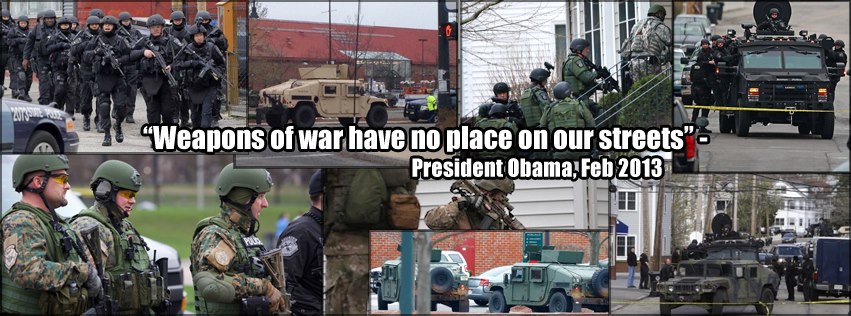
The so-called War on Terror and the national security state did not emerge full-blown from the rubble of 9/11. Both are products of previous waves of police repression, mainly targeting Black radicals. “The FBI’s counter insurgency war on the Black Panther Party chapters and leaders like Mumia established for local police departments a direct link to Washington’s war and surveillance arsenal.”

By Danny Haiphong

Source: Black Agenda Report

The fear of the Muslim/Arab terrorist rekindles the same fear in white America that the Black liberation movement ignited over four decades ago.”

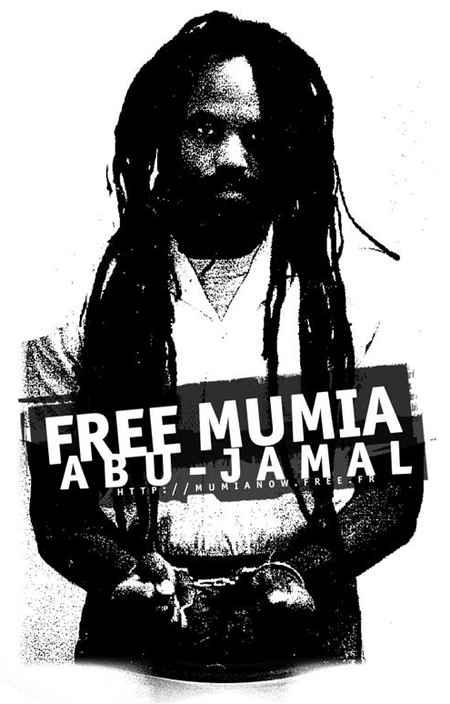
Political Prisoner and journalist Mumia Abu-Jamal has been subjected to over three decades of torture from the US prison gulag. His political imprisonment has placed his life in serious danger, this time not from state execution but instead from extra-legal medical neglect. The prison state has continuously failed in its efforts to murder Mumia through official means and has thus decided to refuse the former Black Panther adequate medical treatment for diabetes. Meanwhile, Boston residents of all classes await the verdict of whether the alleged “Boston bomber” Dzokhar Tsarnaev will receive the death penalty or life in prison. The event that faithful day remains shrouded in questions , but most of the city has accepted the dominant narrative put forth by the FBI and Boston Police Department. The War on Terror that produced the “Boston Bombing” and Mumia’s struggle against the prison state are intimately connected. For Mumia to live with freedom and dignity, the US imperial order behind the War on Terror must die.

Mumia Abu-Jamal’s existence as a political prisoner has been repressed by the establishment, while the War on Terror is a household name in the US. This is because the War on Terror serves the objectives of imperialism and Mumia does not. Mumia joined the Black Panther Party at fifteen and served as the Philadelphia Chapter’s Ministry of Information. He used his talents in journalism in service of Black people both in the BPP and after. This landed him on J. Edgar Hoover’s COINTEPRO list of Black liberation fighters to watch and suppress. In 1978, Mumia covered the Philadelphia police department’s siege on the MOVE Organization. His critical investigation of the Philly PD’s role in repressing MOVE led to his ouster from the journalism industry. In 1982, Mumia was framed for the murder of police officer Daniel Faulkner and sentenced to death.

He used his talents in journalism in service of Black people both in the BPP and after.”

The context of Mumia’s imprisonment is at the essence of US imperialism’s War on Terror, which could be better named its war of terror. In the film Manufacturing Guilt​ , Mumia’s frame-up is blatantly exposed through court documents and investigations. Yet, Mumia has lived much of his life in prison, mostly in solitary confinement. What explains this injustice and how does it relate to the current War on Terror? In Still Black, Still Strong, Dhoruba Bin-Wahad explains how the FBI’s counter insurgency war on the Black Panther Party chapters and leaders like Mumia established for local police departments a direct link to Washington’s war and surveillance arsenal. Washington’s war on Black liberation fighters precipitated the first SWAT team operation in 1969 and the FBI’s declaration that the Black Panther Party was the “greatest threat to the internal security” of the US. The war on Black freedom that jailed Mumia created the technical capacity for the War on Terror.

The recent bombing of the 2013 marathon, and 9/11 before that, created the conditions for a massive expansion of the surveillance state and police state throughout the US mainland. The hundreds of illegally detained prisoners at Guantanamo Bay, the increased surveillance of Muslims and Black people in the US, and the massive spy program instituted by the Patriot Act and similar legislation are daily reminders of US imperialism’s ever expanding repressive apparatus. Internationally, the US led War on Terror interventions have caused the loss of life of millions of people in the Middle East and Africa alongside the thousands more from US aerial drone strikes and proxy war. All of this has been justified as necessary to “counter” the so-called threat of “terrorism.”

The war on Black freedom that jailed Mumia created the technical capacity for the War on Terror.”

Mumia’s story, one shared by numerous US political prisoners sentenced to die in the cages of the prison state, contains in it the seeds that sprouted the rise of the massive War on Terror. Russell Maroon Shoatz, Oscar Lopez Rivera, Leonard Peltier and scores more faced trumped up charges from the state as part of US imperialism’s counter insurgency war on dissent generally and the Black liberation movement in particular. This war has been expanded to meet the needs of US imperialism, which in its current form has produced a potentially explosive situation domestically and globally. The sharpening contradictions of never-ending war and increasing poverty and privatization wouldn’t last long if the counter insurgency war on Mumia and the Panthers hadn’t provided the blueprints and technical support for the mass expansion of the War on Terror’s primary tools: war and surveillance state.

Mumia Abu-Jamal and the rest of the Empire’s political prisoners are caught in the cross hairs of US imperialism’s war of survival. Not only has the material basis of the counter insurgency war that murdered and imprisoned the Black liberation movement grown, but so too has the racist logic behind the repression. The War on Terror’s racist logic has permeated so deeply into the minds of the US public that the mere questioning of the agenda’s blatant deceit is subject to dismissal or defense by most people living in the US mainland. These conditions have left political prisoners with few fighters on the outside pressuring their release. The War on Terror has attempted to erase the memory of political prisoners by reframing the racist justifications for political imprisonment as common sense in what George Jackson called the “Amerikan mind.”

The War on Terror’s racist logic has permeated so deeply into the minds of the US public that the mere questioning of the agenda’s blatant deceit is subject to dismissal.”

So, even though the justification for each and every War on Terror intervention or policy since 2001 are dubious at best, the fear of the Muslim/Arab terrorist rekindles the same fear in white America that the Black liberation movement ignited over four decades ago. The Black Panther Party and their partners in struggle were deemed criminal in every way and many were falsely charged with the murder of police officers, the highest form of offense in the eyes of white America. The War on Terror built off this strategy by throwing the Muslim community into the racist war on the oppressed as a means to control the dissent of the entire population. That the US imperial machinery is complicit in, and a sponsor of, jihadist terror and proxy war matters as little as the innocence of political prisoners when it comes to preserving the Empire and criminalizing all resistance to its rule.

Mumia Abu-Jamal’s life needs to be saved by any means necessary, but fighting to free him based on his criminal case alone won’t develop the movement we need. One of the primary obstacles to building a concrete movement for the freedom of political prisoners is the privileging of innocence over a movement that links political prisoners to the repression of the imperial state. But Mumia’s innocence teaches us the real purpose of political imprisonment. The War on Terror is a consolidation of the forces that were built by imperialism to suppress the revolutionary ideas of Mumia Abu-Jamal. What we need is a reexamination of those ideas in the service of the freedom of all political prisoners. By studying the War on Terror and the repression of the Black Liberation movement from which it grew, it becomes increasingly clear that imperialism must die for Mumia to truly live.
Danny Haiphong is an organizer for Fight Imperialism Stand Together (FIST) in Boston. He is also a regular contributor to Black Agenda Report. Danny can be reached at wakeupriseup1990@gmail.com and FIST can be reached at bostonfist@gmail.com.

Report: Whites More Likely To Be Named CEOs Than Equally Sociopathic Black Candidates

americanpsycho8

Editor’s Note: Good satire always has a firm basis in truth.

Source: The Onion

ALEXANDRIA, VA—Shedding light on the striking lack of diversity within the highest ranks of corporate America, a report from the Executive Leadership Council released Tuesday reveals that white individuals are far more likely to be named CEOs than equally sociopathic black candidates.

Despite widespread evidence that minority executives are just as misanthropic and unprincipled as their Caucasian peers, the study found that less than 1 percent of Fortune 500 companies have black chief executives, demonstrating that the upper levels of the business world frequently remain inaccessible to even the most morally bankrupt of African-Americans.

“Our data shows that when white megalomaniacs and black megalomaniacs contend for the highest corporate positions in the U.S., the latter are routinely passed over,” said the report’s lead author, Sandra Norwood, pointing to dozens of recent instances in which African-American individuals who had proven track records of undermining their colleagues’, employees’, and shareholders’ interests in order to further their own selfish ambitions were not even offered an interview for a company’s top seat. “Vindictive, unscrupulous blacks simply aren’t granted these leadership opportunities, despite possessing the same willingness to maximize short-term profit by eliminating health insurance benefits for part-time employees or commit accounting fraud in order to inflate the value of their personal stock options.”

“These are heartless sadists who have put in countless hours of backstabbing and forsaken all ethical constraints in order to bolster their own power, and yet time and time again they are denied a place at the top of the corporate ladder simply because of the color of their skin,” she continued.

According to the report, even when companies were presented with numerous highly qualified minority candidates with no moral compass and a history of increasing earnings by knowingly rushing an unsafe product to market or outsourcing thousands of manufacturing jobs to overseas sweatshops, the top-tier positions still tended to be awarded almost exclusively to deceitful, empathy-devoid whites.

In fact, the study found that, when presented with identical résumés of potential CEOs who had hid billions of dollars of revenue in offshore tax havens and poached several engineers from a rival business in order to illegally gain confidential trade secrets—one labeled with a common Caucasian name and the other with a traditionally African-American name—boards of directors were far more likely to select the applicant with the white-sounding name. Such findings suggest that many at the highest corporate level still hold inherent biases against amoral, power-hungry egotists of color.

“Even in 2015, many corporate boards will automatically discount a black candidate even if they have demonstrated that they are fully capable of using aggressive intimidation tactics to prevent their company’s workers from forming a labor union,” Norwood said. “Board members often are more comfortable working with lying, underhanded double-crossers who are similar to themselves. Therefore, the individual that they ultimately promote to CEO tends to come from the same cultural background that turned them into destructive, unrepentant monsters.”

According to sources, the dearth of black CEOs within corporate America has prompted a number of companies to institute personnel outreach programs to identify and cultivate malevolent young African-Americans who they believe have the potential to one day violate insider trading laws and initiate spurious patent lawsuits against smaller competitors in order to overwhelm them with legal fees and force them out of the industry.

However, after years of confronting the “glass ceiling” that prevents them from advancing as far as their white peers, many blindly ambitious blacks told reporters they are skeptical that these programs will have a meaningful impact on African-Americans who aspire to become CEOs so that they can immediately downsize as many low-level personnel as necessary to hit profit targets that trigger lucrative personal bonuses.

“When you’re black, you have to be twice as ruthless and deceptive just to reach the senior level, but then you can pretty much forget about ever having a shot at the corner office,” said William Coleman, the sole African-American vice president at a prominent Wall Street financial services group, who says he has yet to be recognized for allocating the risk of his firm’s portfolio of unstable derivatives investments entirely onto the municipal worker pension funds it administers. “My company just elected a white external candidate for our CEO role even after I successfully shifted the blame for a botched merger onto a fellow senior manager before personally firing him and claiming his successes as my own. It’s like they refuse to see how deeply predatory and full of hatred I am.”

“My race shouldn’t be a factor when I’ve proven that I’m a borderline psychopath who will step over anybody in my way to sate my fanatical lust for power,” he continued. “When it comes to succeeding in the business world, that’s all that should matter.”


Related Video:


Ferguson and the Logic of Neoliberalism

Ferguson-RiotA Political Economy Premised on Exploitation and Social Repression

By Rob Urie

Source: Counterpunch.org

While the U.S. Department of Justice report on racist policing practices in Ferguson, Missouri provides direct evidence for skeptical Whites that institutional racism is fact, limiting the investigation to Ferguson implausibly delimits the scope of race based repression in the U.S. Additionally, from slavery to convict leasing to funding the Ferguson city budget with fines and penalties overwhelmingly extracted from poor and middle class Blacks, the economic basis of police repression is isolated in an improbable present. And in fact, the ‘tricks and traps’ used by the Ferguson police for economic extraction closely resembles corporate practices of using contract law, state institutions and monopoly power to take economic resources from those who lack the social power to resist.

A cognitive challenge for White Americans (and ‘conservative’ Blacks) is the distance between facts like police repression in Ferguson and the mythology of capitalist democracy that we live by. Use of the police for economic extraction in Ferguson, for funding the town budget through racial repression, ties state power to economic power within the particular circumstances of American racial and economic history. In a most basic sense this integration reframes state-market relations claimed to relate capitalism to democracy. More broadly, the TPP and TIPP ‘trade’ deals being pushed by President Obama are a variation on the racist shakedown in Ferguson. Their intent is to replace state power with corporate power while leaving Western states intact to provide state services for the benefit of corporations and the illusion of democratic control.

Discovery of a police ‘black site’ in Chicago, the prevalence of racist violence by the police across the U.S., the return of debtor’s prisons and ‘civil forfeiture’ laws that allow the police to take belongings without evidence of a crime illustrate the growing lawlessness of the police. When tied to illegal surveillance carried out by the NSA, DEA and FBI against citizens and non-citizens alike and the extra-judicial powers claimed by Mr. Obama a picture of widespread state lawlessness emerges. When considered in the context of no criminal prosecutions for war crimes against the (George W) Bush administration or against prominent bankers in the financial and economic debacle of the last decade a picture of widespread elite lawlessness emerges. Clearly the state, including local police departments, exists for purposes other than enforcing fealty to the law.

Based on supporting economic theories it is superficially ironic that the resurgence of neo-liberalism since the 1970s is coincident with this growing integration of state and ‘private’ power. Premised on clearly delineated state and market roles, neo-liberalism was / is in theory the economic realm unhindered by state restrictions. This state-market delineation facilitates the facade that capitalism is related to democracy— political freedom in the realm of the political and economic freedom in the realm of the economic. As fact and metaphor the role of the Ferguson police using asymmetrical social power to take economic wealth from vulnerable citizens demonstrates the implausibility of this theorized differentiation in the realm of the political. And new debtor’s prisons (link above) have police and the prison system acting as collection agents for Payday Lenders.

The TPP and TTIP trade deals being pushed by Mr. Obama are designed with analogous levers for extorting wealth. The investor resolution clauses in TTIP have a supranational judiciary ruling on ‘investor’ lawsuits against governments for hypothetical lost profits and taxpayers on the hook for adverse rulings. The relative absence of remaining trade restrictions and tariffs is well covered territory. What remains to be accomplished with these ‘agreements’ is the consolidation of economic power as the power to extract wealth. As with proposals for tradable carbon credits, the ‘product’ of the agreements combines the right to extort by putting forward projects never intended to be built with guarantees against adverse economic developments.

The police in Ferguson used a particular social lever, the residual of slavery, for gratuitous racial repression and for economic extraction. Slavery is a social institution, but it most particularly is an economic institution. It is a social mechanism for accruing the product of slave labor to the slave master. And slavery in the U.S. was ‘legal’ until it wasn’t. Convict leasing was explicit use of ‘the law’ and the judicial system to force poor Blacks to work for little or no pay. ‘The law’ was used as an instrument of economic exploitation and extraction. The push back from Whites and conservative Blacks that the murdered Mike Brown was a criminal because he likely stole a box of cigars takes this same law at face value. This view of the law depends on a similarly improbable separation of political and economic realms as neo-liberal theory.

As political theory might have it, if all of the citizens of Ferguson were intended to benefit from city resources while poor and middle class Blacks were disproportionately forced to pay for them that represents economic taking by some citizens for the benefit of others. The racial character of this taking places it in history. The history of Western colonialism, neo-colonialism and imperialism places it in broader internal and external context. And this history is evidence that distinct realms of the economic and the political never described existing circumstance. The practical relevance is that it places the actions of the police in Ferguson, past and pending ‘trade’ agreements and global economic relations in the space where economic and political power act in an integrated social dimension.

The effect is to reframe ‘the law’ in terms of who is committing particular acts rather than the acts being committed. The police in Ferguson can murder with impunity and shake down citizens at their discretion to fund the city budget (and their paychecks) while poor and middle class Blacks are disproportionately murdered and sent to prison for similar acts. What is legal and what isn’t is determined by who has social power, not by the acts themselves. In a racist and classist society the law is codification of class and race interests. If a black citizen of Ferguson puts a gun to someone’s head and demands their valuables they are a criminal but if the same act is committed by a cop it is within the law. Here events in Ferguson are fact and metaphor— overwhelming evidence (links above) suggests that similar social relations exist across much of the country.

This view of the law has precedence in Richard Nixon’s contention that “when the President does it that means that it is not illegal.” Earlier precedence can be found in Nazi law and in the laws of fascist Italy in the 1930s and 1940s. This isn’t to call anyone who isn’t a self-proclaimed Nazi a Nazi. The precedence lies in the view that the law is the will of a leadership class, be it the Nazi leadership in Germany or city government in Ferguson. One problem with this theory is that it makes the law capricious and ultimately impossible to follow. Race based law enforcement criminalizes race, not nominally proscribed acts. Stories of the Chicago police department’s black site (link above) have political protesters and poor Blacks accused of no crimes taken there. If people can be arrested without evidence that a crime was committed then what is the difference in outcomes between committing and not committing crimes?

A relation of neo-liberalism to fascism can be made through replacement of civil governance with corporate governance that subordinates the rights and privileges of civil society to corporate interests. The investor-state dispute mechanisms (link above) being broadened and formally codified in the TTIP trade deal will be used to demand compensation for environmental regulations that keep drinking water safe and limit greenhouse gas emissions, the metaphorical equivalent of threatening to end the planet if we don’t pay up. Civil forfeiture has the police taking valuables they might want at the point of a gun if necessary. The Ferguson police shake down poor Blacks using the law as a weapon. At the same time a ruling elite has immunity from prosecution for well documented crimes.

Much of what is written here was well understood in the 1950s, 1960s and 1970s. It hardly seems an accident that this collective memory was lost to narrow ideological dogma. Across the country property taxes are being cut with partial differences made up through regressive fees and penalties. This fits the neo-liberal preference for property over labor incomes. And neo-liberal theory has no place for history because all acts within it take place in a temporally isolated present. This dissociates racist policing in Ferguson, Chicago, New York, Detroit and Philadelphia from the roles of the legislature, judiciary, police and prisons in reconstituting the economic exploitation of slavery under the guise of free choice in capitalist democracy. Race is the particular case in America; class is the broader expression of economic power.

The tension between the DOJ report (link above) on racist policing in Ferguson and the Obama administration’s broad support for neo-liberal policies will likely produce a tight circle drawn around events in Ferguson. Already supporters of police repression are raising the argument that the words “hands up, don’t shoot” never transpired. What bearing does precise wording have on a Black child being murdered by the police? And why wouldn’t Black youth have a right to be hostile to police who, as the DOJ reports concludes, are running a racist shakedown operation to force poor and middle class Blacks to fund city government? How would White readers react to being harassed, intimidated, disproportionately jailed and forced to pay for the privilege? Ultimately the problem is larger than Ferguson and social accountability should address political economy premised in exploitation and social repression.

Rob Urie is an artist and political economist. His book Zen Economics is written and awaiting publication.


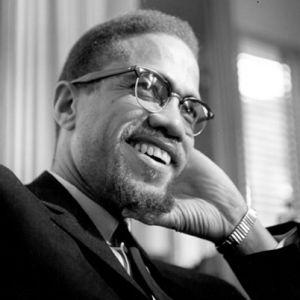
Malcolm X Was Right About America

MalcolmX

(Editors note: Tomorrow marks the 50th anniversary of the passing of Malcolm X. The venerated activist would surely have approved of Hedges’ radical appraisal of his philosophy and principles.)

By Chris Hedges

Source: Axis of Logic

Malcolm X, unlike Martin Luther King Jr., did not believe America had a conscience. For him there was no great tension between the lofty ideals of the nation—which he said were a sham—and the failure to deliver justice to blacks. He, perhaps better than King, understood the inner workings of empire. He had no hope that those who managed empire would ever get in touch with their better selves to build a country free of exploitation and injustice. He argued that from the arrival of the first slave ship to the appearance of our vast archipelago of prisons and our squalid, urban internal colonies where the poor are trapped and abused, the American empire was unrelentingly hostile to those Frantz Fanon called “the wretched of the earth.” This, Malcolm knew, would not change until the empire was destroyed.

“It is impossible for capitalism to survive, primarily because the system of capitalism needs some blood to suck,” Malcolm said. “Capitalism used to be like an eagle, but now it’s more like a vulture. It used to be strong enough to go and suck anybody’s blood whether they were strong or not. But now it has become more cowardly, like the vulture, and it can only suck the blood of the helpless. As the nations of the world free themselves, then capitalism has less victims, less to suck, and it becomes weaker and weaker. It’s only a matter of time in my opinion before it will collapse completely.”

King was able to achieve a legal victory through the civil rights movement, portrayed in the new film “Selma.” But he failed to bring about economic justice and thwart the rapacious appetite of the war machine that he was acutely aware was responsible for empire’s abuse of the oppressed at home and abroad. And 50 years after Malcolm X was assassinated in the Audubon Ballroom in Harlem by hit men from the Nation of Islam, it is clear that he, not King, was right. We are the nation Malcolm knew us to be. Human beings can be redeemed. Empires cannot. Our refusal to face the truth about empire, our refusal to defy the multitudinous crimes and atrocities of empire, has brought about the nightmare Malcolm predicted. And as the Digital Age and our post-literate society implant a terrifying historical amnesia, these crimes are erased as swiftly as they are committed.

“Sometimes, I have dared to dream … that one day, history may even say that my voice—which disturbed the white man’s smugness, and his arrogance, and his complacency—that my voice helped to save America from a grave, possibly even fatal catastrophe,” Malcolm wrote.

The integration of elites of color, including Barack Obama, into the upper echelons of institutional and political structures has done nothing to blunt the predatory nature of empire. Identity and gender politics—we are about to be sold a woman president in the form of Hillary Clinton—have fostered, as Malcolm understood, fraud and theft by Wall Street, the evisceration of our civil liberties, the misery of an underclass in which half of all public school children live in poverty, the expansion of our imperial wars and the deep and perhaps fatal exploitation of the ecosystem. And until we heed Malcolm X, until we grapple with the truth about the self-destruction that lies at the heart of empire, the victims, at home and abroad, will mount. Malcolm, like James Baldwin, understood that only by facing the truth about who we are as members of an imperial power can people of color, along with whites, be liberated. This truth is bitter and painful. It requires an acknowledgment of our capacity for evil, injustice and exploitation, and it demands repentance. But we cling like giddy children to the lies we tell ourselves about ourselves. We refuse to grow up. And because of these lies, perpetrated across the cultural and political spectrum, liberation has not taken place. Empire devours us all.

“We’re anti-evil, anti-oppression, anti-lynching,” Malcolm said. “You can’t be anti- those things unless you’re also anti- the oppressor and the lyncher. You can’t be anti-slavery and pro-slavemaster; you can’t be anti-crime and pro-criminal. In fact, Mr. Muhammad teaches that if the present generation of whites would study their own race in the light of true history, they would be anti-white themselves.”

Malcolm once said that, had he been a middle-class black who was encouraged to go to law school, rather than a poor child in a detention home who dropped out of school at 15, “I would today probably be among some city’s professional black bourgeoisie, sipping cocktails and palming myself off as a community spokesman for and leader of the suffering black masses, while my primary concern would be to grab a few more crumbs from the groaning board of the two-faced whites with whom they’re begging to ‘integrate.’ ”

Malcolm’s family, struggling and poor, was callously ripped apart by state agencies in a pattern that remains unchanged. The courts, substandard schooling, roach-filled apartments, fear, humiliation, despair, poverty, greedy bankers, abusive employers, police, jails and probation officers did their work then as they do it now. Malcolm saw racial integration as a politically sterile game, one played by a black middle class anxious to sell its soul as an enabler of empire and capitalism. “The man who tosses worms in the river,” Malcolm said, “isn’t necessarily a friend of the fish. All the fish who take him for a friend, who think the worm’s got no hook on it, usually end up in the frying pan.” He related to the apocalyptic battles in the Book of Revelation where the persecuted rise up in revolt against the wicked.

“Martin [Luther King Jr.] doesn’t have the revolutionary fire that Malcolm had until the very end of his life,” Cornel West says in his book with Christa Buschendorf, “Black Prophetic Fire.” “And by revolutionary fire I mean understanding the system under which we live, the capitalist system, the imperial tentacles, the American empire, the disregard for life, the willingness to violate law, be it international law or domestic law. Malcolm understood that from very early on, and it hit Martin so hard that he does become a revolutionary in his own moral way later in his short life, whereas Malcolm had the revolutionary fire so early in his life.”

There are three great books on Malcolm X: “The Autobiography of Malcolm X: As Told to Alex Haley,” “The Death and Life of Malcolm X” by Peter Goldman and “Martin & Malcolm & America: A Dream or a Nightmare” by James H. Cone.

On Friday I met Goldman—who as a reporter for a St. Louis newspaper and later for Newsweek knew and covered Malcolm—in a New York City cafe. Goldman was part of a tiny circle of white reporters Malcolm respected, including Charles Silberman of Fortune and M.S. “Mike” Handler of The New York Times, who Malcolm once said had “none of the usual prejudices or sentimentalities about black people.”

Goldman and his wife, Helen Dudar, who also was a reporter, first met Malcolm in 1962 at the Shabazz Frosti Kreem, a Black Muslim luncheonette in St. Louis’ north-side ghetto. At that meeting Malcolm poured some cream into his coffee. “Coffee is the only thing I liked integrated,” he commented. He went on: “The average Negro doesn’t even let another Negro know what he thinks, he’s so mistrusting. He’s an acrobat. He had to be to survive in this civilization. But by me being a Muslim, I’m black first—my sympathies are black, my allegiance is black, my whole objectives are black. By me being a Muslim, I’m not interested in being American, because America has never been interested in me.”

He told Goldman and Dudar: “We don’t hate. The white man has a guilt complex—he knows he’s done wrong. He knows that if he had undergone at our hands what we have undergone at his, he would hate us.” When Goldman told Malcolm he believed in a single society in which race did not matter Malcolm said sharply: “You’re dealing in fantasy. You’ve got to deal in facts.”

Goldman remembered, “He was the messenger who brought us the bad news, and nobody wanted to hear it.” Despite the “bad news” at that first meeting, Goldman would go on to have several more interviews with him, interviews that often lasted two or three hours. The writer now credits Malcolm for his “re-education.”

Goldman was struck from the beginning by Malcolm’s unfailing courtesy, his dazzling smile, his moral probity, his courage and, surprisingly, his gentleness. Goldman mentions the day that psychologist and writer Kenneth B. Clark and his wife escorted a group of high school students, most of them white, to meet Malcolm. They arrived to find him surrounded by reporters. Mrs. Clark, feeling that meeting with reporters was probably more important, told Malcolm the teenagers would wait. “The important thing is these kids,” Malcolm said to the Clarks as he called the students forward. “He didn’t see a difference between white kids and kids,” Kenneth Clark is quoted as saying in Goldman’s book.

James Baldwin too wrote of Malcolm’s deep sensitivity. He and Malcolm were on a radio program in 1961 with a young civil rights activist who had just returned from the South. “If you are an American citizen,” Baldwin remembered Malcolm asking the young man, “why have you got to fight for your rights as a citizen? To be a citizen means that you have the rights of a citizen. If you haven’t got the rights of a citizen, then you’re not a citizen.” “It’s not as simple as that,” the young man answered. “Why not?” Malcolm asked.

During the exchange, Baldwin wrote, “Malcolm understood that child and talked to him as though he was talking to a younger brother, and with that same watchful attention. What most struck me was that he was not at all trying to proselytize the child: he was trying to make him think. … I will never forget Malcolm and that child facing each other, and Malcolm’s extraordinary gentleness. And that’s the truth about Malcolm: he was one of the gentlest people I have ever met.”

“One of Malcolm’s many lines that I liked was ‘I am the man you think you are,’ ” Goldman said. “What he meant by that was if you hit me I would hit you back. But over the period of my acquaintance with him I came to believe it also meant if you respect me I will respect you back.”

Cone amplifies this point in “Martin & Malcolm & America”:

Malcolm X is the best medicine against genocide. He showed us by example and prophetic preaching that one does not have to stay in the mud. We can wake up; we can stand up; and we can take that long walk toward freedom. Freedom is first and foremost an inner recognition of self-respect, a knowledge that one was not put on this earth to be a nobody. Using drugs and killing each other are the worst forms of nobodyness. Our forefathers fought against great odds (slavery, lynching, and segregation), but they did not self-destruct. Some died fighting, and others, inspired by their example, kept moving toward the promised land of freedom, singing ‘we ain’t gonna let nobody turn us around.’ African-Americans can do the same today. We can fight for our dignity and self-respect. To be proud to be black does not mean being against white people, unless whites are against respecting the humanity of blacks. Malcolm was not against whites; he was for blacks and against their exploitation.

Goldman lamented the loss of voices such as Malcolm’s, voices steeped in an understanding of our historical and cultural truths and endowed with the courage to speak these truths in public.

“We don’t read anymore,” Goldman said. “We don’t learn anymore. History is disappearing. People talk about living in the moment as if it is a virtue. It is a horrible vice. Between the twitterverse and the 24-hour cable news cycle our history keeps disappearing. History is something boring that you had to endure in high school and then you are rid of it. Then you go to college and study finance, accounting, business management or computer science. There are damn few liberal arts majors left. And this has erased our history. The larger figure in the ’60s was, of course, King. But what the huge majority of Americans know about King is [only] that he made a speech where he said ‘I have a dream’ and that his name is attached to a day off.”

Malcolm, like King, understood the cost of being a prophet. The two men daily faced down this cost.

Malcolm, as Goldman writes, met with the reporter Claude Lewis not long before his Feb. 21, 1965, murder. He had already experienced several attempts on his life.

“This is an era of hypocrisy,” he told Lewis. “When white folks pretend that they want Negroes to be free, and Negroes pretend to white folks that they really believe that white folks want ’em to be free, it’s an era of hypocrisy, brother. You fool me and I fool you. You pretend that you’re my brother, and I pretend that I really believe you believe you’re my brother.”

He told Lewis he would never reach old age. “If you read, you’ll find that very few people who think like I think live long enough to get old. When I say by any means necessary, I mean it with all my heart, my mind and my soul. A black man should give his life to be free, and he should also be able, be willing to take the life of those who want to take his. When you really think like that, you don’t live long.”

Lewis asked him how he wanted to be remembered. “Sincere,” Malcolm said. “In whatever I did or do. Even if I made mistakes, they were made in sincerity. If I’m wrong, I’m wrong in sincerity. I think that the best thing that a person can be is sincere.”

“The price of freedom,” Malcolm said shortly before he was killed, “is death.”

The Government Killed Martin Luther King Jr.

index

Since today marks the birthday of Martin Luther King Jr. it’s an appropriate time to reflect on his life and legacy but we must also never forget the forces which sought to crush his dream. Because of the work of investigative journalists, we have a clearer idea of the scope of the government’s efforts to discredit and psychologically torment Martin Luther King Jr. such as the following excerpt from an FBI letter to MLK:

King, there is only one thing left for you to do. You know what it is. You have just 34 days in which to do it (this exact number has been selected for a specific reason, it has definite practical significance). You are done. There is but one way out for you. You better take it before your filthy, abnormal fraudulent self is bared to the nation.

Read the complete unredacted FBI letter here: https://www.eff.org/deeplinks/2014/11/fbis-suicide-letter-dr-martin-luther-king-jr-and-dangers-unchecked-surveillance

Given such psychotic threats from the government agency, it’s not much of a stretch to imagine them opting for a more direct approach than trying to bully MLK to commit suicide.

How the Government Killed Martin Luther King, Jr.

By Carl Gibson

Source: Reader Supported News

efore scoffing at this headline, you should know that in 1999, in Memphis, Tennessee, more than three decades after MLK’s death, a jury found local, state, and federal government agencies guilty of conspiring to assassinate the Nobel Peace Prize winner and civil rights leader. The same media you would expect to cover such a monumental decision was absent at the trial, because those news organizations were part of that conspiracy. William F. Pepper, who was James Earl Ray’s first attorney, called over 70 witnesses to the stand to testify on every aspect of the assassination. The panel, which consisted of an even mix of both black and white jurors, took only an hour of deliberation to find Loyd Jowers and other defendants guilty. If you’re skeptical of any factual claims made here, click here for a full transcript, broken into individual sections. Read the testimonies yourself if you don’t want to take my word for it.
It really isn’t that radical a thing to expect this government to kill someone who threatened their authority and had the power to organize millions to protest it. When MLK was killed on April 4, 1968, he was speaking to sanitation workers in Memphis, who were organizing to fight poverty wages and ruthless working conditions. He was an outspoken critic of the government’s war in Vietnam, and his power to organize threatened the moneyed corporate interests who were profiting from the war. At the time of his death, he was gearing up for the Poor People’s Campaign, an effort to get people to camp out on the National Mall to demand anti-poverty legislation – essentially the first inception of the Occupy Wall Street movement. The government perceived him as a threat, and had him killed. James Earl Ray was the designated fall guy, and a complicit media, taking its cues from a government in fear of MLK, helped sell the “official” story of the assassination. Here’s how they did it.

The Setup

The defendant in the 1999 civil trial, Loyd Jowers, had been a Memphis PD officer in the 1940s. He owned a restaurant called Jim’s Grill, a staging ground to orchestrate MLK’s assassination underneath the rooming house where the corporate media alleges James Earl Ray shot Dr. King. During the trial, William Pepper, the plaintiff’s attorney, played a tape of an incriminating 1998 conversation between Jowers, UN Ambassador Andrew Young, and Dexter King, MLK’s son. Young testified that Jowers told them he “wanted to get right with God before he died, wanted to confess it and be free of it.”

On the tape, Jowers mentions that those present at the meetings included MPD officer Marrell McCollough, Earl Clark, an MPD lieutenant and known as the department’s best marksman, another MPD officer, and two men who were unknown to Jowers but whom he assumed to be representatives of federal agencies. While Dr. King was in Memphis, he was under open or eye-to-eye federal surveillance by the 111th Military Intelligence Group based at Fort McPherson in Atlanta, Georgia. Memphis PD intelligence officer Eli Arkin even admitted to having the group in his own office. During his last visit to Memphis in late March of 1968, MLK was under covert surveillance, meaning his room at the Rivermont was bugged and wired. Even if he went out to the balcony to speak, his words were recorded via relay. William Pepper alleges in his closing argument during King v. Jowers that such covert surveillance was usually done by the Army Security Agency, implying the involvement of at least two federal agencies.

Jowers also gave an interview to Sam Donaldson on “Prime Time Live” in 1993. The transcript of the interview was read during the trial, and it was revealed that Jowers openly talked about being asked by produce warehouse owner Frank Liberto to help with MLK’s murder. Liberto had mafia connections, and sent a courier with $100,000 to Jowers, who owned a local restaurant, with instructions to hold the money at his restaurant.

John McFerren owned a store in Memphis and was making a pickup at Liberto’s warehouse at 5:15 p.m. on April 4th, roughly 45 minutes before the assassination. McFerren testified that he overheard Liberto tell someone over the phone, “Shoot the son of a bitch on the balcony.” Other witnesses who testified included café owner Lavada Addison, who was friends with Liberto in the 1970s. She recalled him confiding to her that he “had Martin Luther King killed.” Addison’s son, Nathan Whitlock, also testified. He asked Liberto if he killed MLK, and he responded, “I didn’t kill the nigger but I had it done.” When Whitlock pressed him about James Earl Ray, Liberto replied, “He wasn’t nothing but a troublemaker from Missouri. He was a front man … a setup man.”

The back door of Loyd Jowers’ establishment led to a thick crop of bushes across the street from the Lorraine Motel balcony where Dr. King was shot. On the taped confession to Andrew Young and Dexter King, Jowers says after he heard the shot, Lt. Earl Clark, who is now deceased, laid a smoking rifle at the rear of his restaurant. Jowers then disassembled the rifle, wrapped it in a tablecloth and prepared it for disposal.

The corporate media says it was James Earl Ray who shot MLK, and he did it from the 2nd floor bathroom window of the rooming house across the street from the Lorraine Motel. The official account alleges the murder weapon was dropped in a bundle and abandoned at Dan Canipe’s storefront just before he made his getaway. But even those authorities and media admit that the bullet that tore through MLK’s throat didn’t have the same metallurgical composition as the bullets in the rifle left behind by James Earl Ray. And Judge Joe Brown, a weapons expert called to testify by Pepper in the 1999 trial, said the rifle allegedly used by James Earl Ray had a scope that was never sighted in, meaning that the weapon in question would have fired far to the left and far below the target.

The actual murder weapon was disposed of by taxi driver James McCraw, a friend of Jowers. William Hamblin testified in King v. Jowers that McCraw told him this story over a 15-year period whenever he got drunk. McCraw repeatedly told Hamblin that he threw the rifle over the Memphis-Arkansas bridge, meaning that the rifle is at the bottom of the Mississippi river to this day. And according to Hamblin’s testimony, Canipe said he saw the bundle dropped in front of his store before the actual shooting occurred.

The Conspiracy

To make Dr. King vulnerable, plans had to be made to remove him from his security detail and anyone sympathetic who could be a witness or interfere with the killing. Two black firefighters, Floyd Newsum and Norvell Wallace, who were working at Fire Station #2 across the street from the Lorraine Motel, were each transferred to different fire stations. Newsum was a civil rights activist and witnessed MLK’s last speech to the striking Memphis sanitation workers, “I Have Seen the Mountaintop,” before getting the call about his transfer. Newsum testified that he wasn’t needed at his new assignment, and that his transfer meant that Fire Station #2 would be out of commission unless someone else was sent there in his stead. Newsum talked about having to make a series of inquiries before finally learning that his reassignment had been ordered by the Memphis Police Department. Wallace testified that to that very day, while the official explanation was a vague death threat, he hadn’t once received a satisfactory answer as to why he was suddenly reassigned.

Ed Redditt, a black MPD detective who was assigned to MLK’s security detail, was also removed from the scene an hour before the shooting and sent home, and the only reason given was a vague death threat. Jerry Williams, another black MPD detective, was usually tasked with assembling a security team of black police officers for Dr. King. But he testified that on the night of the assassination, he wasn’t assigned to form that team.

There was a Black Panther-inspired group called The Invaders, who were staying at the Lorraine Motel to help MLK organize a planned march with the striking garbage workers. The Invaders were ordered to leave the motel after getting into an argument with members of MLK’s entourage. The origins of the argument are unclear, though several sources affirm that The Invaders had been infiltrated by Marrell McCollough of the MPD, who later went on to work for the CIA. And finally, the Tact 10 police escort of several MPD cars that accompanied Dr. King’s security detail were pulled back the day before the shooting by Inspector Evans. With all possible obstacles out of the way, MLK was all alone just before the assassination.

The Cover-Up

Around 7 a.m. on April 5, the morning after the shooting, MPD Inspector Sam Evans called Public Works Administrator Maynard Stiles and told him to have a crew destroy the crop of bushes adjacent to the rooming house above Loyd Jowers’ restaurant. This is particularly odd coming from a policeman, since the bushes were in a crime scene area, and crime scene areas are normally roped off, not to be disturbed. The official narrative of a sniper in the bathroom at the rooming house was then reinforced, since a sniper firing from an empty clearing would be far more visible than one hidden behind a thick crop of bushes.

Normally, when a major political figure is murdered, all possible witnesses are questioned and asked to make statements. But Memphis PD neglected to conduct even a basic house-to-house investigation. Olivia Catling, a resident of nearby Mulberry Street just a block away from the shooting, testified that she saw a man leave an alley next to the rooming house across from the Lorraine, climb into a Green 1965 Chevrolet, and speed away, burning rubber right in front of several police cars without any interference. There was also no questioning of Captain Weiden, a Memphis firefighter at the fire station closest to the Lorraine, the same one from which Floyd Newsum had been transferred just a day before.

Memphis PD and the FBI also suppressed the statements of Ray Hendricks and William Reed, who said they saw James Earl Ray’s white mustang parked in front of Jowers’ restaurant, before seeing it again driving away as they crossed another street. Ray’s alibi was that he had driven away from the scene to fix a tire, and these two statements that affirmed his alibi were withheld from Ray’s guilty plea jury.

The jury present at Ray’s guilty plea hearing also wasn’t informed about the bullet that killed MLK having different striations and markings than the other bullets kept as evidence, nor that the bullet couldn’t be positively matched as coming from the alleged murder weapon. Three days after entering the guilty plea, James Earl Ray unsuccessfully attempted to retract it and demand a trial. Incredibly, James Earl Ray turned down two separate bribes, one of which was recorded by his brother Jerry Ray, where he was offered $220,000 by writer William Bradford Huey and the guarantee of a full pardon if he would just agree to have the story “Why I Killed Martin Luther King” written on his behalf.

The Deception

One of the 70 witnesses that William F. Pepper called to testify in King v. Jowers was Bill Schaap, a practicing attorney with particular experience in military law, with bar credentials in New York, Chicago, and DC. Schaap testified at great length about how the government, through the FBI and the CIA, puts people in key positions on editorial boards at influential papers like the New York Times and Washington Post. He describes that although these editorial board members and news directors at cable news outlets may be liberal in their politics, they always take the government’s side in national security-related stories. Before you write that off as conspiracy theory, remember how people like Bill Keller at the New York Times, as well as the Washington Post editorial board, all cheerfully led the march to war in Iraq ten years ago.

Another King v. Jowers witness was Earl Caldwell, a New York Times reporter who was sent to Memphis by an editor named Claude Sitton. Caldwell testified that the orders from his editor were to “nail Dr. King.” In the publication’s effort to sell the story of James Earl Ray as the murderer, the Times cited an investigation into how Ray got the money for his Mustang, rifle, and the long road trip to Tennessee from California. The Times said that according to their own findings as well as the findings of federal agencies, Ray got the money by robbing a bank in his hometown of Alton, Illinois. In Pepper’s closing argument, he says that when he or Jerry Ray talked to the chief of police in Alton, along with the bank president of the branch that was allegedly robbed, neither said they had been approached by the New York Times, or by the FBI. Essentially, the Times fabricated the entire story in order to sell a false narrative that there was no government intervention and that James Earl Ray was a lone wolf.

So for the following 31 years after King’s death, nobody dared to question the constant reiteration of James Earl Ray as the murderer of Martin Luther King. Even 13 years after a jury found the government complicit in a conspiracy to murder the civil rights leader, the complicit media continues to propagate the false narrative they sold us three decades ago and vociferously shout down any alternative theories as to what happened as “conspiracy theory,” framing those putting forth such theories as wackjobs undeserving of any credibility. It’s strikingly similar to how the Washington Post defended their warmongering in a recent editorial commenting on the invasion of Iraq, and had one of their reporters defend the media’s leading of the charge into Iraq.

As we remember Dr. King and the important work he did, we should also reject the official account of his death as loudly as the government and media shout down anyone who tries to contradict their lies. As Edward R. Murrow said, “Most truths are so naked that people feel sorry for them and cover them up, at least a little bit.”


Carl Gibson, 25, is co-founder of US Uncut, a nationwide creative direct-action movement that mobilized tens of thousands of activists against corporate tax avoidance and budget cuts in the months leading up to the Occupy Wall Street movement. Carl and other US Uncut activists are featured in the documentary “We’re Not Broke,” which premiered at the 2012 Sundance Film Festival. He currently lives in Madison, Wisconsin. You can contact him at carl@rsnorg.org, and follow him on twitter at @uncutCG.

Also read:
Who Killed Martin Luther King Jr.?

Martin Luther King assassinated by US Govt: King Family civil trial verdict

“Protect and Serve?” More like Hate and Fear

dyqniri

By Kevin Carson

Source: Center for a Stateless Society

The recent trajectory of events leading up to the shooting of NYPD officers Wenjian Liu and Rafael Ramos, and the nationwide police backlash afterward, have made it clearer than ever how police feel about the public they supposedly protect and serve: they’re terrified of us. For more than twenty years, the Drug War and associated police militarization encouraged an increasing tendency of urban police to see local populations as a dangerous occupied enemy. In Radley Balko’s Rise of the Warrior Cop they admit to stopping and exiting patrol cars randomly in non-white neighborhoods solely to make a show of force, reminding cowed residents who’s boss. And thanks to the mushroom proliferation of SWAT teams (originally designed for use in rare situations like hostage crises) even in small towns, and the enormous flow of surplus military equipment to local police forces like Ferguson, that hostile and fearful attitude towards the local population has spread downward into suburbs and towns.

Meanwhile internal police culture has taken on the same paranoid coloring that caused Lt. Calley and his men to snap and massacre the population of My Lai. Since Hill Street Blues days, cops have commonly described their jobs patrolling the community using “Band of Brothers” rhetoric reminiscent of extended recon missions in Vietnam. But these self-perceptions are utterly detached from reality. Soldiers in Vietnam actually had a high risk of getting killed. But police on-duty casualty rates have fallen steadily for decades. Policing is the ninth-most dangerous job (the top two are logging and fishing); sanitation work is twice as deadly.

That embattled self-image has been the police norm, to an increasing extent, for the past twenty years or more. In recent years police resentment ratcheted further upward over the “chilling effect” of widespread citizen recording of brutality with smart phones, and social media criticism after the Occupy camp shutdowns. But internal police culture went into full-blown panic mode in response to protests over the shooting of Michael Brown, and to the nationwide #WeCantBreathe and #BlackLivesMatter demonstrations after the verdicts in the Michael Brown and Eric Garner shootings.

On police-only message boards, off-duty cops feel free to admit how they really see us: a bunch of sniveling ingrates too spoiled to appreciate the “thin blue line” protecting them from chaos.  Virtually any unarmed non-white person killed by a cop is referred to in such venues as a “criminal” or “thug.” Police apologists go frantically to work digging up dirt on the victims. They depict the victims in language appealing to the most bestial, menacing stereotypes of black men (like the fixation on 12-year-old Tamir Rice’s height and the description of Michael Brown as a hulking linebacker grunting like an animal).

Poul Anderson once wrote that government is the only institution that’s entitled to kill you for disobeying it. That comes through loud and clear with the police — especially the “entitled” part. A police union spokesman flat-out said, if you don’t want to get killed, obey police orders without question. (As if even that were a sufficient guarantee, considering the people having epileptic seizures or in diabetic comas who were killed for “resisting arrest.”) Among the general public “Stop resisting! Stop resisting!” is a punchline, but police even joke among themselves about literally getting away with murder (for example those “We Show Up Early to Beat the Crowds” t-shirts).

To police any criticism at all, even a suggestion that police may sometimes engage in racial profiling or excessive force, is seen as an existential threat. Those same police message boards mentioned above were rife with complaints that protests over the Brown and Garner verdicts were creating an “open season” on cops. The NYPD union gave Mayor Bill de Blasio notice, after he mentioned warning his biracial son to be especially careful around cops, that he would not be welcome at police funerals.

Police paranoia increased its simmer to a boil in response to the protests over Brown’s death and the verdicts; the shooting of Liu and Ramos made it an exploding pressure cooker. Internal NYPD emails accused de Blasio of having “blood on his hands” for his remarks, and implicated protestors as accomplices. Police nationwide have echoed the sentiments.

In short, the cops blame everyone for the hostility that led to Liu’s and Ramos’s death except themselves. Police are professionals at playing the victim card.

The NYPD now considers itself at war. Cops only patrol in pairs, serving warrants and summonses only when absolutely necessary to make an arrest. After decades of asserting how inconceivably dangerous their jobs are, the NYPD responds to two line-of-duty deaths in a force of thousands — the first in THREE YEARS — like it was Pearl Harbor. That speaks volumes about how privileged and entitled they really are.

We can safely assume that, NYPD officers minimize interactions with the public to when an arrest is absolutely necessary, rates of crime by both the public and the cops themselves can only decrease. While they’re at it, maybe they can go on strike — another phenomenon that’s historically associated with drastic drops in the crime rate. That’s one good way of taking criminals off the street.

How ‘Awesome’ Is America?

599730_640x640wc

By Robert Parry

Source: ConsortiumNews.com

Fox News host Andrea Tantaros is facing some well-deserved ridicule for refuting the stomach-turning Senate Intelligence Committee report on torture by declaring that “The United States is awesome. We are awesome” and claiming that the Democrats and President Barack Obama released the report because they want “to show us how we’re not awesome.”

Tantaros’s rant did have the feel of a Saturday Night Live satire, but her upbeat jingoism was only a slight exaggeration of what Americans have been hearing from much of their media and politicians for decades. At least since the presidency of Ronald Reagan, any substantive criticism of the United States has been treated as unpatriotic.

Indeed, a journalist or a politician who dares point out any fundamental flaws in the country or even its actual history can expect to have his or her patriotism challenged. That is how debate over “how we’re not awesome” is silenced.

Fox News may be the poster child of this anti-intellectualism but the same sentiments can be found on the Washington Post’s neocon editorial pages or in the higher-brow New Republic. If you dare point out that America or one of its favored “allies” has done some wrong around the world, you’re an enemy “apologist.” If you regularly adopt a critical stance, you will be marginalized.

That’s why so many serious national problems have lingered or gotten worse. If we don’t kill the messenger, we denounce him or her as un-American.

For instance, the data on racial disparities in police killings and prison incarcerations have long been available, but the vast majority of whites seem oblivious to these continued injustices. To point out that the United States has still not done the necessary hard work to correct these history-based imbalances makes you seem out of step amid the happy-face belief that whatever racism there was is now gone. We have a black president, you know.

So, when white police shoot or otherwise apply excessive violence against blacks at a wildly disproportionate rate to whites, many white Americans just shrug. They even get annoyed if black athletes join in some symbolic protests like raising their hands as Michael Brown did before he was shot to death in Ferguson, Missouri. Many people hate to have the real world intrude on their sports entertainment.

In reaction to such events, Fox News and much of talk radio find reasons to ridicule the victims and the protesters rather than address the real problems. The unwelcome evidence of racism is just another excuse to roll the eyes and infuse the voice with dripping sarcasm.

Mundane Neglect

On a more mundane level in Arlington County, Virginia, where I live, many whites simply don’t see the racial disparities though they are all around. While overwhelmingly white North Arlington benefits from all manner of public investments, including a state-of-the-art subway system which cost billions upon billions of dollars and amenities likes a $2 million “dog park renovation,” racially diverse South Arlington, the historic home of the County’s black population, is systematically shortchanged, except when it comes to expanding the sewage treatment plant.

When the County Board finally approved a much cheaper light-rail mass-transit plan for South Arlington’s Columbia Pike and voted for a public pool complex in another South Arlington neighborhood, North Arlington residents rose up in fury. The local newspaper, the Sun-Gazette, which doesn’t even distribute in much of South Arlington – due to the demographics – rallied the political opposition.

Before long, the County Board was in retreat, killing both the public pools and the light-rail plan, all the better to free up taxpayer money for more North Arlington projects. Yet, when I have noted the racial component to how the two halves of the county are treated, many Arlington whites get furious. They simply don’t see the residual racism or don’t want to see it. They view themselves as enlightened even as they favor neglecting their black and brown neighbors.

After I wrote a column about the history of Columbia Pike, which became an African-American freedom trail after President Abraham Lincoln signed the Emancipation Proclamation and ex-slaves escaped up the roadway toward Washington, one reader complained that I had slighted Robert E. Lee by saying he had “deserted” the U.S. Army when his fans prefer saying that he “resigned his commission,” which sounds so much more proper.

The point is interesting not only because the commenter didn’t seem nearly as concerned about the fate of the African-Americans, some of whom joined the U.S. Colored Troops to fight for the final defeat of slavery. And not only because General Lee violated his oath as a U.S. officer in which he swore to “bear true allegiance to the United States of America” and to “serve them honestly and faithfully against all their enemies or opposers whatsoever, and observe and obey the orders of the President of the United States.”

But the commenter’s point is also interesting because it underscores how white Americans have excused and even glorified the Confederate “heroes” who were fighting to protect a system based on the ownership of other human beings. If you have any doubt about the glorification, just visit Monument Avenue in Richmond, Virginia, where towering statues of Confederate generals dominate the skyline.

Or, if you’re in Arlington and driving on Route One, you might notice that it is still named in honor of Jefferson Davis, the president of the Confederacy who was a fervent white supremacist and a major slaveholder. And, if President Davis and General Lee had been successful in their war of secession, it could have meant that slavery might never have ended. Yet, these protectors of slavery are treated with the utmost respect and any slight toward them requires a protest.

Crude Racism

My writings about Thomas Jefferson also have elicited anger from some people who wish to idolize him as a noble philosopher/statesman when the reality was that he was a crude racist (see his Notes on the State of Virginia) who mistreated his Monticello slaves, including having boys as young as ten whipped and raping one and likely other of his slave girls. [See Consortiumnews.com’s “Thomas Jefferson: America’s Founding Sociopath.”]

Much like the defender of Robert E. Lee who preferred more polite phrasing about the general’s betrayal of his oath, defenders of the Jefferson myth expressed much more outrage over my pointing out these inconvenient truths about their hero than they did about the victims of Jefferson’s despicable behavior and stunning hypocrisies.

Which gets us back to Andrea Tantaros and how “awesome” America is. The context for her remarks was the release of the Senate Intelligence Committee’s torture report which detailed what can no longer be euphemized away as “enhanced interrogation techniques” or EITs as CIA officials prefer.

The only word that can now apply is torture, at least for anyone who has read the page-after-page of near drownings via waterboard, the hallucinatory effects of sleep deprivation, the pain inflicted by hanging people from ceilings, and the sexual sadism of keeping detainees naked and subjecting them to anal rape under the pretext of “rectal rehydration” and “rectal feeding.”

The various apologists for this torture – people like Tantaros, Vice President Dick Cheney and Washington Post columnist Charles Krauthammer – prefer to counterattack by questioning the patriotism or the intellectual consistency of those Americans who are outraged at these actions. The torture defenders excuse the behavior because we were scared after 9/11 and wanted the Bush administration to do whatever it took to keep us safe.

All of these excuses are designed to prevent the sort of soul-searching that one should expect from a mature democratic Republic, a country that seeks to learn from its mistakes, not cover them up or forget them.

Instead of Americans confronting these dark realities of both their history and their present – and making whatever amends and adjustments are necessary – the torture apologists or those who don’t see racism would simply have us wave the flag and declare how “awesome” we are.

Investigative reporter Robert Parry broke many of the Iran-Contra stories for The Associated Press and Newsweek in the 1980s. You can buy his latest book, America’s Stolen Narrative, either in print here or as an e-book (from Amazon and barnesandnoble.com). For a limited time, you also can order Robert Parry’s trilogy on the Bush Family and its connections to various right-wing operatives for only $34. The trilogy includes America’s Stolen Narrative. For details on this offer, click here.

Michael Brown was Killed Because He Didn’t Prostrate Himself to Police Authority

darren-wilson-5hqdefault

This Killing, in Combat, Would Have Been a War Crime

by DAVE LINDORFF

Source: This Can’t Be Happening

What’s wrong with Ferguson Police Officer Darren Wilson’s killing of the unarmed 18-year-old black teenager, Michael Brown, and with a Grand Jury decision not to indict him for that outrageous slaying, is what is wrong with American law enforcement and American “justice” in general.

Both actions were permeated not only with racism, which clearly played a huge rule in both the verdict rendered by a Grand Jury composed of nine whites and only three blacks, and in this tragic police killing by a white cop of a black child, but also by a mentality on the part of police — and apparently by at least a majority of the citizen jurors on a panel evaluating Wilson’s actions — that cops are authorities who must be obeyed without question, on pain of death.

Let’s recall the most crucial evidence in this killing: According to the New York Times it was two shots into the top of the head by Officer Wilson that killed Brown — shots that multiple witnesses confirm were fired after the unarmed Brown was on his knees, already seriously wounded by four other apparently non-lethal shots to arm, neck and upper right chest, with his hands raised and pleading “Don’t shoot.” The Times also reports that those shots, apparently fired when Brown’s head was leaning forward, or from a position above him, appeared to have been fired “not from close range,” a determination based upon an absence of gun powder residue around the area of the entry wounds.

It should not matter in the slightest whether or not Brown had first struck Officer Wilson inside his squad car during a scuffle, as claimed by the cop, or even that the officer, as he testified in an unusual appearance before jurors, “felt terrified” at that time. Nor does it matter, beyond being evidence of an inherent racism, that Wilson says he thought that Brown, approaching him at his car initially, “looked like a demon.” If the non-lethal shots that first hit Brown in arm, neck and upper chest had been fired at that early point, perhaps Wilson would have been justified in firing them in self defense, but it’s what happened after Brown tried to leave the scene that matter.

Dave Lindorff is a founding member of ThisCantBeHappening!, an online newspaper collective, and is a contributor to Hopeless: Barack Obama and the Politics of Illusion (AK Press).

Lara Trace Hentz

INDIAN COUNTRY NEWS

In Saner Thought

"It is the duty of every man, as far as his ability extends, to detect and expose delusion and error"..Thomas Paine

ZEDJournAI

Human in Algorithms

Rooster Crows

From the Roof Top

Aisle C

I See This

The Free

blog of the post capitalist transition.. Read or download the novel here + latest relevant posts

अध्ययन-अनुसन्धान(Essential Knowledge of the Overall Subject)

अध्ययन-अनुसन्धानको सार