In an April 10 op-ed featured in The Atlantic, Lawrence Lessig argued that the greatest challenge for a movement to reform America’s political system is “the politics of resignation”:
We accept the status quo not because we want it, and certainly not because we don’t care about “process.” To the contrary: We are resigned precisely because we view the very process by which we would effect change as corrupt. We thus steer away from the politics of reform, and focus our (dwindling level of) political attention on other issues instead.
I happen to disagree, because while I think it’s true that many view the process by which we effect change as corrupt, I think that’s less of a problem than the fact that the process actually is corrupt, and that in reality there’s little that the average person can do about it (especially since the average American today is struggling economically and is too busy with work, seeking work, or distracting themselves to avoid work). And why shouldn’t Americans feel cynical after witnessing politician after politician of both major parties break promises to implement positive and meaningful changes on larger issues of economic and foreign policy?
Regardless, as a solution Lessig proposes a “political moonshot”, a super PAC to end all super PACS, which he describes in further detail in the following passage:
On May 1, May Day (or better “mayday”), we will announce the first steps of an experiment to see if such a machine could be built. Over the past year, we have been working with some of D.C.’s best analysts, to calculate the cost of winning enough seats in 2016 to pass fundamental reform. That battle will begin this year, with a smaller fund targeted in five districts across the country, for the purpose of seeing what works, and what the bigger campaign in 2016 would actually take. That smaller fund will be raised Kickstarter-style, first through small contributions from the bottom up, then matched by a few large contributions from the top down.
While I would like to see such an effort succeed, I can’t see it happening through feeding more money into a system already corrupted by an inordinate concentration of wealth, especially if donations are matched by “a few large contributions from the top down”. An approach I’d rather see (though just as politically unlikely), would be to allocate tax dollars for publicly funded elections with strict limits on “war chests” and advertising. I have no idea how such changes could be made with the current politicians in office and given the current system, how any candidate committed to reducing the influence of money in politics would be nominated, much less get elected. Ever the optimist, Lessig addresses this issue (on a presidential level) arguing:
But if no ordinary candidate makes this the issue, then maybe we should begin to think about an extraordinary one. A public figure with enormous respect—think David Souter or Christine Todd Whitman or Michael Bloomberg—who runs a campaign with a single promise: that if elected, he or she will hold the government hostage until Congress passes fundamental reform; and then once that reform is enacted, will resign—leaving the vice president to become president.
Think of this as president-as-bankruptcy-judge, taking control for the single purpose of reorganizing a government, and once finished, turning it back to the politicians, now free to lead because the kryptonite of special interest money is gone.
Again, while I would like to see such a plan succeed, history shows that money and vested interests are never defeated so quickly and easily. Is it mere coincidence that the two presidents with the greatest potential to fight for the people were Abraham Lincoln and JFK? Anyway, the tentacles of influence extend far deeper into the Washington DC political establishment than just the surface level of electoral politics. Though I may be overly cynical (or optimistic, depending on one’s point of view), I tend to agree more with the approach taken by candidate for class president Tammy in the film “Election” who delivered this short but effective campaign speech:
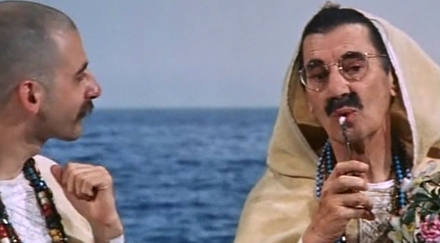
On our family holiday this summer, we had the great good fortune to be shown around Alcatraz Island by Ranger Craig Glassner — among other things, the Ranger responsible for the excellent documentary about the Occupation by Indians of All Tribes that is screened in the visitor center there. Craig let slip that his favorite Alcatraz movie is Skidoo, the 1968 Otto Preminger wacky stoner comedy with Groucho Marx, Jackie Gleason, Carol Channing, Burgess Meredith, Ted “Lurch” Cassidy, and just about every character actor you’ve ever enjoyed.
It’s an LSD-fuelled romp about a retired hit-man (Jackie Gleason) who voluntarily sends himself to Alcatraz to kill his best friend, who has betrayed the mob-boss of all bosses (played by Groucho Marx, who appears to either be stoned or simply method acting in many of his scenes). Meanwhile, the mobster’s daughter has fallen in with a wandering tribe of hippies who get taken in by her mother, Carol Channing, and end up involved in a jail-break that coincides with a mass dosing of Owsley’s finest LSD for everyone on the prison island.
It’s got trippy dance numbers, silly comedy, hippies, and, well, everything. It’s out on DVD after a long purgatory on the trashheap of history. I just watched it. It is something. It is something else.
Luke Rudkowski of WeAreChange interviews Jason and Jennifer Helvenston who successfully challenged the City of Orlando for the right to grow a vegetable garden in their own yard. An inspirational example of how education and common sense can still triumph over absurdly authoritarian legislation.
A message from Jason and Jennifer from their website, Patriot Gardens:
VICTORY… For Food Freedom
It is now legal to grow your own food anywhere in your yard within the City of Orlando. We all managed to change our little part of the world for the better. Congratulations everyone. We did it.
Never mind the convoluted code writing, it would be very difficult for anyone to ever get a “vegetable” code violation again. Our front yard garden is completely legal as is.
We also told the City of Orlando that we expect more than just accepting edible gardens out of a self proclaimed sustainable leader. We hope to see the new Food Security programs and campaigns that we suggested by the time the new ordinance goes into effect in March 2014, all of which cost the city little to no money. The world is watching to see if the City of Orlando is really a sustainable leader. Be sure and let them know what you expect by keeping the pressure on.
The Patriot Garden campaign (including 6000+ petition) is still available to anyone who needs it—we’re not the only ones who have had to protect a front yard garden from the government. We hope to continue the movement. Most importantly, we will continue to help others grow their own food. Please feel free to contact us for help.
Keep those Patriot Garden signs up and keep distributing the petitions for all the others.
The idea of a No Fly List has always been a flawed concept as a true terrorism prevention measure. If people are deemed too dangerous to be allowed to board a flight after being searched and/or scanned and having their bags x-rayed, why would it be okay to let them go free to attack somewhere else? If there’s not enough evidence to suggest they’d stage such attacks they should be allowed to fly. Of course preventing terrorism was merely a stated goal used to justify the unconstitutional No Fly List.
New revelations regarding the true purposes of the No Fly List have been revealed as a result of two recent lawsuits. In 2010, Panagacos v. Towery was filed by Julianne Panagacos and six other antiwar activists against government spy John Towery, who infiltrated at least four different organizations in the Northwest, Port Militarization Resistance, Students for a Democratic Society, the Industrial Workers of the World, and Iraq Veterans Against the War. New documents recently came to light as the result of a Public Records Act request which, according to a WSWS.org article, proved:
Towery attended a Domestic Terrorism Conference in 2007 at which “domestic terrorist” dossiers on antiwar and left-wing activists were distributed for police review. These individuals could later be targeted for state repression ranging from preventing them from boarding airplanes (if they were placed on the federal “no-fly” list) to preventive detention in the event of a mass roundup of supposed “terrorists.”
Of course this comes as no surprise to anyone following independent news sources (and especially activists), but it’s rare to see it supported by official documentation. The same article reveals how, like other instances of FBI entrapment, Towery attempted to recruit one of the plaintiffs in the suit as a terrorist patsy:
Crespo described how Towery had sought to entrap him by persuading him to buy guns and learn how to shoot. After seeming to befriend Crespo while attending antiwar meetings, Towery at one point visited him at home and showed him a gun and how to load and unload it. Later, he showed Crespo documents about military tactics and suggested making use of them in “our actions.” Subsequently, he gave Crespo a copy of a proposed article written from the perspective of the 9/11 hijackers. Fortunately, Crespo’s reaction to these approaches—which he described as “the weirdest thing in the world”—was to keep his distance.
In a new article just posted at RT, another lawsuit in a New York federal court has revealed how the No Fly List has been used by the FBI to recruit Muslim informants:
FBI ‘intentionally and unlawfully’ used No Fly List to recruit Muslims as informers
The FBI used a no-fly list to recruit four US Muslims as informants, violating their constitutional rights to freedom of speech, association and religion. That’s the claim being made by four US Muslims in a New York federal court Tuesday.
Muhammad Tanvir, Jameel Algibhah, Naveed Shinwari and Awais Sajjad, who are between them either US residents or permanent US residents, are demanding that the FBI remove them from the no-fly list which contains the names of people who are not permitted to board a commercial aircraft for travel in or out of the United States, according to threat and intelligence reporting.
“This impermissible abuse of the No Fly List has forced Plaintiffs to choose between their constitutionally-protected right to travel, on the one hand, and their First Amendment rights on the other,” says the lawsuit.
One of the plaintiffs, Awais Sajjad, a lawful permanent US resident, learned that he was on a No Fly List in 2012 when he tried to board a flight to Pakistan. The FBI agents questioned Sajjad at the airport before releasing him. Soon they returned with an offer: he could work as an FBI informer and in return the agency would give him citizenship and compensation, the Washington Post reported.
When he refused, the bureau “kept him on the list in order to pressure and coerce Mr. Sajjad to sacrifice his constitutionally-protected rights,” says the lawsuit.
Meanwhile, three other complainants – Tanvir, Algibhah and Shinwari – said they were added to the list immediately after they refused to work as FBI informants for religious reasons.
Shinwari, a legal US resident from Omaha, Nebraska, said that after his arrival from his native country, Afghanistan, in 2012, he was twice detained and questioned by FBI agents who wanted to know if he knew anything about national security threats. He was soon put on the No Fly List, though he has never been convicted of a crime or posed a threat to national security, according to his lawyers.
In one of their visits, FBI agents wanted to know about the “local Omaha community, did I know anyone who’s a threat?” he says.
“I’m just very frustrated, [and I said] what can I do to clear my name?” says Shinwari. “And that’s where it was mentioned to me: you help us, we help you. We know you don’t have a job; we’ll give you money,” The Guardian reported him as saying.
Though Shinwari was allowed to fly within the United States in March, he still fears that if he flies to Afghanistan to see his wife and family, whom he hasn’t seen for at least two years, he might not be able to return.
“Defendants’ unlawful actions are imposing an immediate and ongoing harm on Plaintiffs and have caused Plaintiffs deprivation of their constitutional rights, emotional distress, damage to their reputation, and material and economic loss,” adds the lawsuit.
According to Jameel Algibhah, from the Bronx, New York, the FBI asked him to get access to a Queens mosque and even pose as an extremist in online forums.
“We’re the only ones who can take you off the list,” an unnamed FBI agent told him, Algibhah told The Guardian.
The fourth plaintiff, Muhammad Tanvir, started taking action against the FBI in October 2013, after he refused to spy on his local Pakistani community. Now he can’t visit his ailing mother.
Ramzi Kassem, associate professor of law at the City University of New York, told the Washington Post that “the no-fly list is supposed to be about ensuring aviation safety, but the FBI is using it to force innocent people to become informants.”
Meanwhile, the lawsuit seeks not only the plaintiffs’ removal from the no-fly list but also the establishment of a more robust legal mechanism to contest placement upon it.
“This policy and set of practices by the FBI is part of a much broader set of policies that reflect over-policing in Muslim-American communities,” said Diala Shamas, one of the lawyers for the four plaintiffs.
The FBI has not commented on the lawsuit.
Meanwhile, this is not the first No Fly List-related lawsuit against the FBI. In 2010 the American Civil Liberties Union (ACLU) attempted to sue US Department of Justice and the FBI over their barring of American citizens, including several veterans of the US military, who ended up on the No Fly List and have been denied entry to their own country.
The No Fly List was created by the US government’s Terrorist Screening Center (TSC) after the September 11, 2001 attacks on the United States. In 2012, the list was extended to around 21,000 individuals.
The list, including US citizens and residents as well as foreigners, has been repeatedly criticized on civil liberties grounds, due to ethnic, religious, economic, political and racial discrimination. It has also raised concerns about privacy and government secrecy.
The ACLU called inclusion on a list a potentially “life-altering” experience, adding that “it is not at all clear what separates a ‘reasonable-suspicion-based-on-a-reasonable-suspicion’ from a simple hunch.”
Until March, no one had successfully convinced a court to force authorities to take them off the No Fly List. Rahinah Ibrahim, a Malaysian architect, became the first person ever removed from the notorious list after the managed to force officials to admit she had been placed on the list due to an error by the agency.
Related Podcast: On the 4/21/14 broadcast of the Project Censored radio show, host Mickey Huff is joined by co-host Dr. Deepa Kumar and Dr. Arun Kundnani, author of The Muslims are Coming! Islamophobia, Extremism, and the Domestic War on Terror. The topic of the show is Islamophobia and the Politics of Empire, from the national insecurity state to drone wars and beyond in the 21st century.
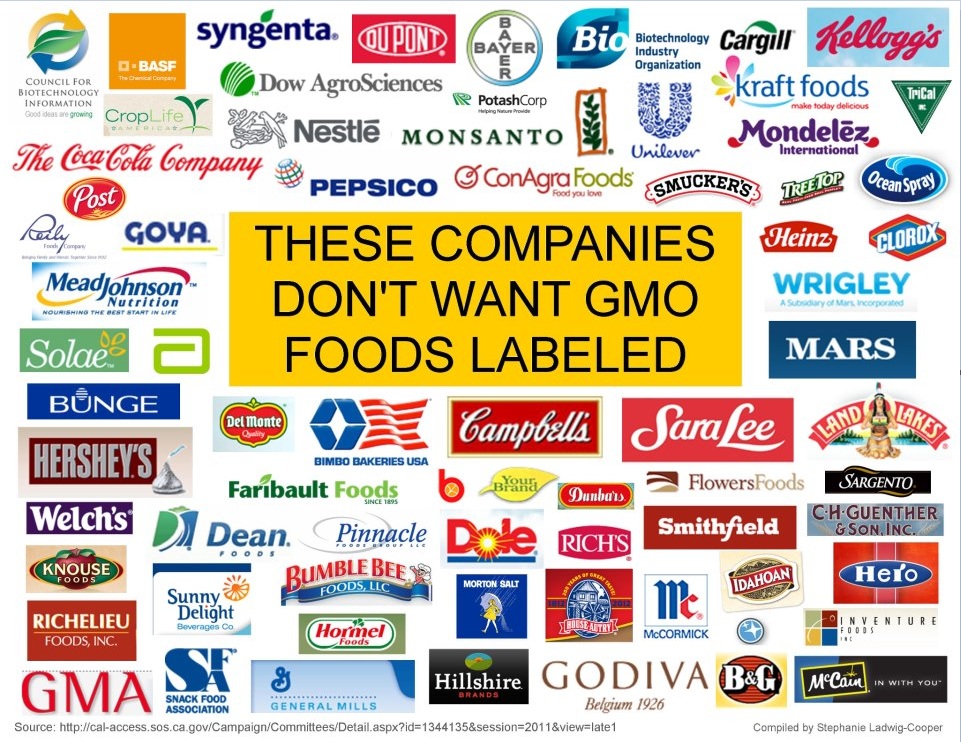
Last week, Representative Mike Pompeo (R-KS) introduced the “Safe and Accurate Food Labeling Act of 2014” (HR 4432), a brainchild of the Grocery Manufacturers Association (GMA) that would serve as a real road block to the thousands of people who have been fighting for the right to know what’s in their food. This piece of legislation would make voluntary (not mandatory) labeling for genetically engineered foods the national standard, ensure that GMOs can be ambiguously labeled as “natural,” create its own rules for non-GMO labeling and, most heinously, preempt all state efforts to require labeling of GMO foods.
We have been aware of the GMA’s plot to move into the GMO labeling policy world since Politico leaked its proposed bill language in January and then the GMA launched its “Safe and Affordable Food Coalition” in February. Unsurprisingly, the GMA found a sponsor who would support all of its original intended language in the bill, resulting in an extremely industry-friendly final version.
So, what is the GMA and why is it so powerful that congressmen do its bidding? Well, this massive trade organization represents 300 of the world’s biggest food and beverage companies as well as agribusinesses like Monsanto, Dow AgroSciences and Syngenta. The GMA and its member companies have poured over $50 million into political action committees to help block GMO labeling ballot initiatives in California and Washington state over the past two years. To illustrate the type of political power GMA is wielding with its big pockets, here’s a paragraph from Food & Water Watch’s new profile on the GMA:
“Between 2001 and 2012, the GMA political action committee donated more than $1 million to federal candidates, political parties and other campaign committees. But it is a much bigger presence roaming the halls of Congress. From 2004 to 2013, the GMA spent $38.9 million lobbying the U.S. Congress and federal officials. In 2013 alone, the GMA spent $14.3 million lobbying on food labeling, country-of-origin labeling, labeling foods with genetically engineered ingredients (commonly known as GMO labeling), food marketing to children and other regulations affecting the food and beverage industry.”
This kind of spending activity on the GMA’s part makes the food movement’s state-level efforts that much more significant. Not only does it show that grassroots organizing is working to hold elected officials accountable on food issues, but it also shows how work in the states is truly bothering the industry and impacting national policy. It gives us even more reason to keep pressuring our lawmakers to protect consumers because they want the right to know if GMOs are in their food. What consumers definitely don’t want is a voluntary labeling policy created by the very companies who have kept that information from them for 20 years.
Now is the time to stop the GMA from getting its way and fueling its own profit-driven interests. Food & Water Watch will continue to work with the grassroots movement to fight for GMO labeling around the country. You can take action by telling your members of Congress not to pass Monsanto’s dream bill. For more information on the GMA, you can view our industry profile, here.
To mark the 15th anniversary of Columbine, featured below are a mindblowing trio of interviews with William K. Zabel from the Binnall of America podcast examining oddities surrounding the Columbine either ignored or suppressed by corporate media:
Today happens to be the day of two pivotal events in American history: the WACO massacre (1993) and the Oklahoma City bombing (1995). In both cases there’s much evidence pointing towards state terrorism and cover-up. Two of the best documentaries which build convincing cases in support of this are “WACO: Rules of Engagement” and “A Noble Lie: Oklahoma City 1995”, both presented here in their entirety.
Lastly, I have recently and belatedly heard the news that whistleblower, investigative journalist and author of “Crossing the Rubicon” Michael C. Ruppert is dead. He reportedly killed himself last Sunday shortly after his final broadcast. Given the nature of Ruppert’s research it would be natural to suspect foul play, but the story is supported by the following statement from a close friend:
Sunday night following Mike’s Lifeboat Hour radio show, he was found dead of a self-inflicted gunshot wound. This was not a “fake” suicide. It was very well planned by Mike who gave us few clues but elaborate instructions for how to proceed without him. His wishes were to be cremated, and as of this moment, there are no plans for a memorial service. However, I will be taking his show this coming Sunday night, April 20, and the entire show will be an In Memoriam show for Mike with opportunities for listeners to call in. It was my privilege to have known Mike for 14 years, to have worked with him, to have been mentored by him, and to have supported him in some of his darkest hours, including the more recent ones. I am posting this announcement with the blessing of his partner Jesse Re and his landlord, Jack Martin. Thank you Mike for all of the truth you courageously exposed and for the legacy of truth-telling you left us. Goodbye my friend. Your memory will live in hour hearts forever. I have no more details to share than I am posting here. We should have much more information by Sunday night.
Carolyn Baker
Many including myself discovered Ruppert’s work through his early independent 9/11 research on his From the Wilderness website. A few years ago his work on Peak Oil was brought to a larger audience through the critically acclaimed documentery “Collapse” (2009). Rest in peace, Mike Ruppert.