Bush-Clinton Mafia Dynasties Merry-Go-Round

The_Godfather_LogoBy Gilbert Mercier

Source: News Junkie Post

If a space or a time traveler would set his time ship’s dial to 2015, with the United States as its destination, one could think that a mandatory preparation for the journey to understand the US’ political system would be an attentive study of the Constitution. After all, the document, drafted in 1787 by the so called “founding fathers” and finally ratified three later in 1790 in its original form, is supposed to be the foundation of the US’ political edifice. Two hundred and twenty-five years later, the document has been so much thoroughly gutted of its substantial original merits, at least in its spirit if not its letter, that the foundation of the building has become a superfluous architectural ornament. While the US Constitution was far from being revolutionary and granted equal rights only to white male landowners, it marked, in conjunction with the French revolution of 1789, a resolute break from the European kingdoms. No kings or queens could ever claim this land again, under any circumstance. A republic, ruled by a meritocracy of well-educated Anglo-Saxon patrician men, was born. Since 190 years after the US Constitution’s ratification, however, which is exactly since 1980, the country has been ruled by two dynasties or their surrogates: the Bushes and the Clintons.

American royal mafia and co: organized crime as political model

To understand the undemocratic and extremely seedy side of US modern-day politics, it would be imperative for our time traveler, de Tocqueville in training, to watch two classics of American cinema: “The Godfather” and “The Godfather Part II”. Director Francis Ford Coppola, in his fictional, yet extremely well-researched and documented films, invited us inside the US’ underbelly. During the 19th century and up to the early 20th century, a massive numbers of poor immigrants, mainly Italians, Irish and Jews from eastern Europe, were lured to the Americas largely to escape economic hardship. Those who landed in the US quickly understood that they were excluded from or at best marginalized in this promised land run by white Anglo-Saxon Protestants. The more ambitious ones, unencumbered by moral boundaries, developed their own form of government and social code of conduct in the form of a tightly knit family-like structure that usually strictly followed ethnic lines. The birth of organized crime in the US, either Italian, Jewish or Irish, was a direct consequence of the fight for survival of communities that were deliberately excluded from power or even any political discourse.

Mafia families had a strictly enforced code of conduct and precise hierarchy, with a Don (boss) at the top; a Consiglierie (adviser to the head of the family) directly picked by the Don; an Under-Boss who was usually groomed to be the Don’s successor; Capos (the lieutenants), and “soldiers”. In the 1930s, under the supervision of Lucky Luciano, the Don of all Dons, not only the five Italian mafia families worked together, but they also collaborated on many occasions with the Jewish and Irish mafia. In this parallel brand of power and economy, mafia families extracted contributions (a primitive form of taxation of usually 10 percent of income) from businesses, ironically to protect them from random criminal activity. By the mid-1930s mafia families controlled large sections of the US economy. The prohibition of alcoholic beverages, which spanned from 1920 to 1933, marked the apogee of the mafia families, either Italian, Jewish or Irish. The mob controlled the flow of liquor, and Americans were thirsty.

During the prohibition era, Joe Kennedy (father of John F. Kennedy and Robert F. Kennedy), the patriarch of a family that passed for being true US aristocracy although he had been the grandson of a dirt-poor potato-famine Irish immigrant, substantially increased his vast fortune by importing, from the UK and Canada, and selling illicit liquor in association with Italian-American don Frank Costello and Jewish gangster Meyer Lansky. Joe Kennedy had an edge on the competition: he went into the prohibition era in 1920 with large stocks of booze from his father’s own stores. In what cannot be a coincidence, on the day prohibition ended 13 years later, Joe Kennedy had three exclusive deals to import British whiskey and gin, as well as a extensive network of retailers already in place. Kennedy understood that his political ambitions for his sons would require vast amounts of money. Like any mafia bosses, don Joe Kennedy wanted to start a dynasty at any cost and regardless of moral or even legal considerations. In the US, money meant power, and this is a notion that was the motto for both supposed blue-blood patriarch Kennedy and don Lucky Luciano.

Bush mafia vs Clinton mafia: Defining US politics from 1980 to 2016

Arguably, the first term of George H. Bush, founder of the Bush dynasty, started in 1980 when he officially became Vice President or, to use the mafia term, super under-boss to Ronald Reagan, an aging actor, perhaps already senile, hired to perform the role of global don: “Leader of the free world” and most powerful man on earth, according to US mainstream media propaganda. Bush Sr. had previously run the Central Intelligence Agency. During the two terms of the Reagan administration (1980 to 1988), it was common knowledge that he was the boss who led US policy. He officially became the don in 1988, and ran his own operation with pretty much the same crew until 1992. James Baker was the key consigliere to don Bush Sr, but he also listened closely to the Talleyrand of US politics, consigliere extraordinaire Henri Kissinger. Bush Sr’s under-boss was Donald Rumsfeld who picked his capo in the person of Dick Cheney. George W. Bush or Bush Jr, when his turn came, kept most of the old don’s crew with some minor changes and additions. Cheney became the under-boss, while Rumsfeld took the vital Pentagon portfolio.

Before George W. Bush’s turn, the Clinton dynasty came along in 1992, courtesy of WallMart, and with the firm intention, as an obligation to their sponsors, to facilitate a global corporate imperialist agenda. With the North American Free Trade Agreement (NAFTA), don Bill Clinton went the extra mile for the benefit of his friends in transnational corporations. Bill Clinton became a favorite of Wall Street’s investment banks, such as Goldman Sachs, by being instrumental in the repeal of the Glass-Steagall Act which was voted in 1933 during the Great Depression in the aftermath of the 1929 Wall Street crash. The Glass-Steagall Act limited commercial banks securities activities, and it clearly separated commercial banking from investment banking, to curtail speculation. The repeal of this Act allowed Wall Street investment banks to gamble money that was held in commercial banks, and this was arguably one of the lead systemic factors in the 2008 global financial-market crash.

Don Clinton’s consigliere was mainly first-lady Hillary, but he also took the advice of the other super-consigliere, beside Kissinger: Polish born Zbigniew Brzezinski. Consigliere Brzezinski started his career in 1966 when he advised Lyndon B. Johnson. He returned in the late 1970s to advise Jimmy Carter. When he was Carter’s consigliere, Brzezinski came up with the idea to finance and arm the Mujahideen in Afghanistan to fight the Soviet Union. Don Clinton’s under-boss was Leon Panetta, and the lead capo was Rahm Emanuel. When dona Hillary Clinton lost what she viewed as being her turn in the driver’s seat, both the Clinton and Bush mafias made sure that young capo Barack Obama, who had not patiently waited for his turn in the limelight, was surrounded by trusted hands. One can imagine the deal imposed on Obama by Bill and Dick. The Bush mafia would keep the Pentagon for the time being; Hillary would run US foreign policy from the State Department; don Bill’s under-boss Leon Panetta would become Obama’s CIA director (2009 to 2011) and boss of the Pentagon (2011 to 2013). Clinton’s trusted lead capo Rahm Emanuel became Obama’s under-boss. Don Bill did not stay idle after the 2008 election, he became Obama’s lead consigliere, with the occasional help on geopolitical dossiers such as Ukraine of… Brzezinski of course. The 88-year-old anti-Russian Democrat uber-consigliere’s latest contribution has been to bring back the Cold War into international affairs. Bill Clinton’s main task was to replenish the family coffers through the Clinton Global Initiative, a fund raising operation disguised as being humanitarian. After the 2010 earthquake, Haiti became don Bill’s pet project and personal fiefdom.

Is there anyway off this sinister merry go round?

By now, our time-traveler hero realizes that the premise of the upcoming 2016 US presidential  election “fight” is already set. It will be a rematch of an old time classic: Bush against Clinton, dona Hillary versus don Jeb. For good measure, and to give American consumers of elections a sense that their democracy is not an illusion, there will be unelectable challengers in the fake primaries. This will be strictly for entertainment purposes and to indulge the so-called American left. On a short list of likely seat warmers for Hillary are Elizabeth Warren, Bernie Sanders, perhaps even Joe Biden. On the Bush side of the ring, the supposed primary challengers will be harder to find: perhaps Mitt Romney again or phony Libertarian Rand Paul. But let us listen to what Consigliere extraordinaire Henry Kissinger recently said on the issue, after all he has advised more US presidents than anyone else alive. In a September 6, 2014 interview with NPR‘s Scott Simon, when asked if Hillary Clinton would make a good president, Kissinger said:“I know Hillary as a person, and as a personal friend. I would say, yes she would be a good president. But that would put me under a great conflict of interest if she were a candidate, because I intend to support the Republicans….Yes I would be comfortable with her as a president.” Our time traveler, de Tocqueville in training, is dazed, confused and disgusted by what the US has grown into: in this display of vile and raw power for power’s sake, the sort of charade that notions like democracy, the common good and morality have become.
 

How America Became an Oligarchy

OLIGARCHY

By Ellen Brown

Source: Counterpunch

“The politicians are put there to give you the idea that you have freedom of choice. You don’t. . . . You have owners.”

— George Carlin, The American Dream

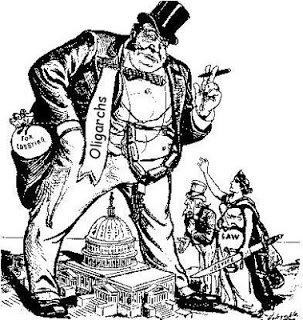
According to a new study from Princeton University, American democracy no longer exists. Using data from over 1,800 policy initiatives from 1981 to 2002, researchers Martin Gilens and Benjamin Page concluded that rich, well-connected individuals on the political scene now steer the direction of the country, regardless of – or even against – the will of the majority of voters. America’s political system has transformed from a democracy into an oligarchy, where power is wielded by wealthy elites.

“Making the world safe for democracy” was President Woodrow Wilson’s rationale for World War I, and it has been used to justify American military intervention ever since. Can we justify sending troops into other countries to spread a political system we cannot maintain at home?

The Magna Carta, considered the first Bill of Rights in the Western world, established the rights of nobles as against the king. But the doctrine that “all men are created equal” – that all people have “certain inalienable rights,” including “life, liberty and the pursuit of happiness” – is an American original. And those rights, supposedly insured by the Bill of Rights, have the right to vote at their core. We have the right to vote but the voters’ collective will no longer prevails.

In Greece, the left-wing populist Syriza Party came out of nowhere to take the presidential election by storm; and in Spain, the populist Podemos Party appears poised to do the same. But for over a century, no third-party candidate has had any chance of winning a US presidential election. We have a two-party winner-take-all system, in which our choice is between two candidates, both of whom necessarily cater to big money. It takes big money just to put on the mass media campaigns required to win an election involving 240 million people of voting age.

In state and local elections, third party candidates have sometimes won. In a modest-sized city, candidates can actually influence the vote by going door to door, passing out flyers and bumper stickers, giving local presentations, and getting on local radio and TV. But in a national election, those efforts are easily trumped by the mass media. And local governments too are beholden to big money.

When governments of any size need to borrow money, the megabanks in a position to supply it can generally dictate the terms. Even in Greece, where the populist Syriza Party managed to prevail in January, the anti-austerity platform of the new government is being throttled by the moneylenders who have the government in a chokehold.

How did we lose our democracy? Were the Founding Fathers remiss in leaving something out of the Constitution? Or have we simply gotten too big to be governed by majority vote?

Democracy’s Rise and Fall

The stages of the capture of democracy by big money are traced in a paper called “The Collapse of Democratic Nation States” by theologian and environmentalist Dr. John Cobb. Going back several centuries, he points to the rise of private banking, which usurped the power to create money from governments:

The influence of money was greatly enhanced by the emergence of private banking. The banks are able to create money and so to lend amounts far in excess of their actual wealth. This control of money-creation . . . has given banks overwhelming control over human affairs. In the United States, Wall Street makes most of the truly important decisions that are directly attributed to Washington.

Today the vast majority of the money supply in Western countries is created by private bankers. That tradition goes back to the 17th century, when the privately-owned Bank of England, the mother of all central banks, negotiated the right to print England’s money after Parliament stripped that power from the Crown. When King William needed money to fight a war, he had to borrow. The government as borrower then became servant of the lender.

In America, however, the colonists defied the Bank of England and issued their own paper scrip; and they thrived. When King George forbade that practice, the colonists rebelled.

They won the Revolution but lost the power to create their own money supply, when they opted for gold rather than paper money as their official means of exchange. Gold was in limited supply and was controlled by the bankers, who surreptitiously expanded the money supply by issuing multiple banknotes against a limited supply of gold.

This was the system euphemistically called “fractional reserve” banking, meaning only a fraction of the gold necessary to back the banks’ privately-issued notes was actually held in their vaults. These notes were lent at interest, putting citizens and the government in debt to bankers who created the notes with a printing press. It was something the government could have done itself debt-free, and the American colonies had done with great success until England went to war to stop them.

President Abraham Lincoln revived the colonists’ paper money system when he issued the Treasury notes called “Greenbacks” that helped the Union win the Civil War. But Lincoln was assassinated, and the Greenback issues were discontinued.

In every presidential election between 1872 and 1896, there was a third national party running on a platform of financial reform. Typically organized under the auspices of labor or farmer organizations, these were parties of the people rather than the banks. They included the Populist Party, the Greenback and Greenback Labor Parties, the Labor Reform Party, the Antimonopolist Party, and the Union Labor Party. They advocated expanding the national currency to meet the needs of trade, reform of the banking system, and democratic control of the financial system.

The Populist movement of the 1890s represented the last serious challenge to the bankers’ monopoly over the right to create the nation’s money. According to monetary historian Murray Rothbard, politics after the turn of the century became a struggle between two competing banking giants, the Morgans and the Rockefellers. The parties sometimes changed hands, but the puppeteers pulling the strings were always one of these two big-money players.

In All the Presidents’ Bankers, Nomi Prins names six banking giants and associated banking families that have dominated politics for over a century. No popular third party candidates have a real chance of prevailing, because they have to compete with two entrenched parties funded by these massively powerful Wall Street banks.

Democracy Succumbs to Globalization

In an earlier era, notes Dr. Cobb, wealthy landowners were able to control democracies by restricting government participation to the propertied class. When those restrictions were removed, big money controlled elections by other means:

First, running for office became expensive, so that those who seek office require wealthy sponsors to whom they are then beholden. Second, the great majority of voters have little independent knowledge of those for whom they vote or of the issues to be dealt with. Their judgments are, accordingly, dependent on what they learn from the mass media. These media, in turn, are controlled by moneyed interests.

Control of the media and financial leverage over elected officials then enabled those other curbs on democracy we know today, including high barriers to ballot placement for third parties and their elimination from presidential debates, vote suppression, registration restrictions, identification laws, voter roll purges, gerrymandering, computer voting, and secrecy in government.

The final blow to democracy, says Dr. Cobb, was “globalization” – an expanding global market that overrides national interests:

[T]oday’s global economy is fully transnational. The money power is not much interested in boundaries between states and generally works to reduce their influence on markets and investments. . . . Thus transnational corporations inherently work to undermine nation states, whether they are democratic or not.

The most glaring example today is the secret twelve-country trade agreement called the Trans-Pacific Partnership. If it goes through, the TPP will dramatically expand the power of multinational corporations to use closed-door tribunals to challenge and supersede domestic laws, including environmental, labor, health and other protections.

Looking at Alternatives

Some critics ask whether our system of making decisions by a mass popular vote easily manipulated by the paid-for media is the most effective way of governing on behalf of the people. In an interesting Ted Talk, political scientist Eric Li makes a compelling case for the system of “meritocracy” that has been quite successful in China.

In America Beyond Capitalism, Prof. Gar Alperovitz argues that the US is simply too big to operate as a democracy at the national level. Excluding Canada and Australia, which have large empty landmasses, the United States is larger geographically than all the other advanced industrial countries of the OECD (Organization for Economic Cooperation and Development) combined. He proposes what he calls “The Pluralist Commonwealth”: a system anchored in the reconstruction of communities and the democratization of wealth. It involves plural forms of cooperative and common ownership beginning with decentralization and moving to higher levels of regional and national coordination when necessary.

Dr. Alperovitz is co-founder of an initiative called The Next System Project, aimed at defining the issues in a national political debate as a first step to realizing the possible. He quotes Prof. Donald Livingston, who asked in 2002:

What value is there in continuing to prop up a union of this monstrous size? . . . [T]here are ample resources in the American federal tradition to justify states’ and local communities’ recalling, out of their own sovereignty, powers they have allowed the central government to usurp.

Taking Back Our Power

If governments are recalling their sovereign powers, they might start with the power to create money, which was usurped by private interests while the people were asleep at the wheel. State and local governments are not allowed to print their own currencies; but they can own banks, and all depository banks create money when they make loans, as the Bank of England recently acknowledged.

The federal government could take back the power to create the national money supply by issuing its own Treasury notes as Abraham Lincoln did. Alternatively, it could issue some very large denomination coins as authorized in the Constitution; or it could nationalize the central bank and use quantitative easing to fund infrastructure, education, job creation, and social services, responding to the needs of the people rather than the banks.

The freedom to vote carries little weight without economic freedom – the freedom to work and to have food, shelter, education, medical care and a decent retirement. President Franklin Roosevelt maintained that we need an Economic Bill of Rights. If our elected representatives were not beholden to the moneylenders, they might be able both to pass such a bill and to come up with the money to fund it.

Ellen Brown is an attorney, founder of the Public Banking Institute, and author of twelve books including the best-selling Web of Debt. Her latest book, The Public Bank Solution, explores successful public banking models historically and globally. Her 300+ blog articles are at EllenBrown.com. Listen to “It’s Our Money with Ellen Brown” on PRN.fm.


Two Stories the Same Day Show That the U.S. is Rotten to the Core

drone_attacks_281210

By Ted Rall

Source: Ted Rall Blog

Still think the United States is governed by decent people? That the system isn’t totally corrupt and obscenely unfair?

Two stories that broke April 23rd ought to wake you up.

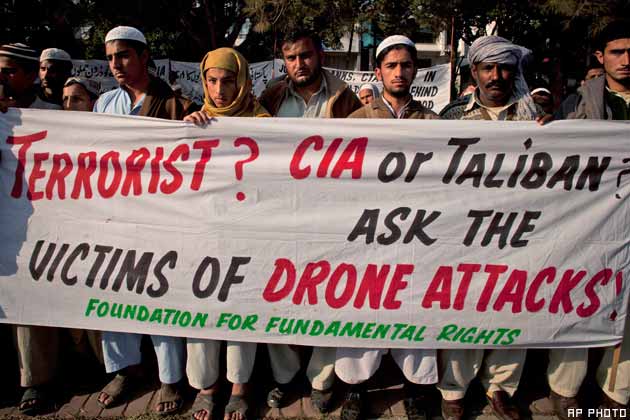
Story 1: President Obama admitted that one of his Predator drones killed two aid workers, an American and an Italian, who were being held hostage by Al Qaeda in Pakistan. As The Guardian reports, “The lack of specificity [about the targets] suggests that despite a much-publicized 2013 policy change by Barack Obama restricting drone killings by, among other things, requiring ‘near certainty that the terrorist target is present,’ the U.S. continues to launch lethal operations without the necessity of knowing who specifically it seeks to kill, a practice that has come to be known as a ‘signature strike.’”

“Lack of specificity” is putting it mildly. According to a report by the group Reprieve, the U.S. targeted 41 “terrorists” — actually, enemies of the corrupt Yemeni and Pakistani regimes — with drones during 2014. Thanks to “lack of specificity,” a total of 1,150 people were killed. Which doesn’t even include the 41 targets, many of whom got away clean.

Obama’s hammy pretend grief was Shatner-worthy. Biting his lip in that sorry/not sorry Bill Clinton way, the president summed up mock sadness for an event that happened back in January. Come on, dude. You seriously expect us to believe you’ve been all weepy for the last three months, except for all those speeches and other public appearances in which you were, you know, laughing and cracking jokes?

Including, um, the same exact day when he pretend-sadded, when he yukked it up with the Super Bowl champion New England Patriots? “That whole story got blown a little out of proportion,” he jibed. (Cuz: “deflate-gate.”) While sad. But laughing.

So. Confusing.

I swear, the right-wing racists are right to hate him. But they hate him for totally the wrong reasons.

Anyway, what took so long for the White House to admit they killed one of our best citizens? “It took weeks to correlate [the hostages’] reported deaths with the drone strikes,” The New York Times quoted White House officials. But in his prepared remarks, Obama said “capturing these terrorists was not possible” — thus the drone strike.

How stupid does the Administration think we are?

The fact that it is possible to find out who dies in a drone fact (albeit after the fact) indicates that there is reliable intelligence coming out of the targeted areas, presumably provided by local police and military sources. If there are cops and troops there who are friendly enough to give us information, then it obviously is possible to ask them to capture the targeted individuals.

Bottom line: the U.S. government is blowing up people with drones willy-nilly, without the slightest clue who they’re blowing up. Which, as political assassinations, are illegal. And which they specifically said was what they were no longer doing. Then they have the nerve to pretend to be sad about the completely avoidable consequences of their actions. They’re disgusting and gross and ought to be locked in prison forever.

Story 2: David Petraeus, former hotshot media-darling general of the Bush and early Obama years, received a slap on the wrist — probation plus a $100,000 fine — for improperly passing on classified military documents to unauthorized people and lying about it to federal agents when they questioned him about it.

Here we go again: more proof that, in the American justice system some people fly first-class while the rest of us go coach.

In this back-asswards world, people like Petraeus who ought to be held to the highest standard because they were entrusted with immense power and responsibility, walk free while low-ranking schlubs who committed the same crime get treated like Al Capone. Private Chelsea Manning, who released warlogs documenting U.S. war crimes in Iraq to Wikileaks, rots in prison for 35 years. Edward Snowden, the 31-year-old systems administrator for a private NSA outsourcing firm who revealed that the U.S. government is reading all our emails and listening to all our phone calls, faces life in prison.

Two years probation. Meanwhile, teachers who helped their students cheat on standardized tests got seven years in prison. To Petraeus, who went to work for a hedge fund, $100,000 is a nice tip for the caddy.

Adding insanity to insult is the fact that Petraeus’ motive for endangering national security was venal: he gave the documents to his girlfriend, who wrote his authorized biography. Manning and Snowden, heroes who in a sane society would receive ticker-tape parades and presidential medals of freedom, weren’t after glory. They wanted to inform the American people about atrocities committed in their name, and about wholesale violations of their basic freedoms, including the right to privacy.

Before he was caught and while he was sharing classified info with his gf, Petraeus had the gall to hypocritically pontificate about a CIA officer who disclosed sensitive information. Unlike Petraeus, the CIA guy got coach-class justice: 30 months in prison.

“Oaths do matter,” Petraeus pompously bloviated in 2012, “and there are indeed consequences for those who believe they are above the laws that protect our fellow officers and enable American intelligence agencies to operate with the requisite degree of secrecy.”

If you’re a first-classer, the consequences are very small.

(Ted Rall, syndicated writer and the cartoonist for The Los Angeles Times, is the author of the new critically-acclaimed book “After We Kill You, We Will Welcome You Back As Honored Guests: Unembedded in Afghanistan.” Subscribe to Ted Rall at Beacon.)

Deepwater Capitalism

gulf-oil-spill17

Reflections on the Fifth Anniversary of One of the Biggest Oil Spills in History

By Quincy Saul

Source: Counterpunch

In memory of Gabriel García Márquez, March 6, 1927-April 17, 2014.

In September of 2009, the BP corporation dug the deepest oil well in history. The 35,055-foot deep Tiber prospect, 300 miles off the Texas coast, promised six billion barrels: one of the largest oil fields ever discovered in the country. So of course, they kept looking for more: They moved their massive drilling rig named Deepwater Horizon fifty miles south of the Louisiana coastline, to a prospect called Macondo, named after the setting of the famous book 100 Years of Solitude, by Gabriel García Márquez.

On April 20, 2010, as they began to seal the well, something went wrong: a mix of oil and gas escaped, rushing up through earth and water, blowing up the Deepwater Horizon, and killing eleven workers, whose bodies were never recovered. Over the next eighty seven days, the whole world watched as over 200 million gallons of oil erupted from the ocean floor into the Gulf of Mexico.

It was the largest oil spill in history – more than ten times the size of the Exxon Valdez disaster in Alaska. The images of animals covered in oil began to haunt our screens again, and the scale of death was so great it still seems impossible to quantify – estimates of the number of birds killed within the first hundred days ranges between 100,000 and one million. But the real nightmare was offshore, as riptides and hired hands collected thousands of animal carcasses into “death gyres”. Riki Ott explains:

“Hurricane Creekkeeper John Wathen managed to get the only footage of what I came to call the ‘death gyres.’ the rip currents that collected dead animals offshore. The Incident Command – BP and the US Coast Guard – kept the media 1,500 feet up in the air so the press couldn’t really capture the situation there. The animal carcasses were corralled, taken out to sea, and dumped at night, according to fishermen who were involved with so-called ‘Night-time Operations.’ Offshore workers reported ‘thousands of dolphins, birds too numerous to count, sea turtles too numerous to count,’ and even whales in the death gyres.” (Earth at Risk, Building a Resistance Movement to Save the Planetedited by Derrick Jensen and Lierre Keith, p. 49)

Five years later, what can we say? If hindsight is 20-20 then presumably we can learn from our mistakes. How did it happen? Was it BP’s fault? Or is there a bigger picture to blame? Five years later, the common sense of this tragedy has yet to dawn, as if the oil has clogged our hearts and minds along with our oceans and beaches. Like the pioneers of Márquez’s Macondo, searching for a way through the swamp, we seem lost, desperately hacking our way through nature and through our own nature. And the past, like the path, seems to always be disappearing behind us.

“…and the cries of the birds and the uproar of the monkeys became more and more remote, and the world became eternally sad. The men on the expedition felt overwhelmed by their most ancient memories in that paradise of dampness and silence, going back to before original sin, as their boots sank into pools of steaming oil and their machetes destroyed bloody lilies and golden salamanders. . . . They could not return because the strip that they were opening as they went along would soon close up with a new vegetation that almost seemed to grow before their eyes.” (Márquez, p. 11-12)

How did it Happen?

“The main thing is not to lose our bearings.” (Márquez, p. 12)

Whodunit? What was the crime scene, and who are the criminals? What murder weapon spawned gyres of death? Five years later, we must look through the tangled jungle of events which have grown up behind us, and remember how we got here. Michael Klare’s insightful blow-by-blow of the events leading up to the accident is worth revisiting. 

“When BP first deployed the rig at the Macondo prospect in January 2010, it set a target date of March 7 for completion of that well. However, due to a series of geological obstacles and technical mishaps, drilling was not completed until April 19, producing a cost overrun on the project of approximately $58 million. It is not surprising, then, that BP’s site managers felt particular pressure to seal the well and move the Deepwater Horizon, to its next scheduled location. In their rush, the site managers made several last-minute decisions. . . . When preparing for the final cementing that would prevent natural gas from leaking into the wellbore, for instance, they decided to use only six “centralizers” to position the well’s steel casing, whereas the original design had called for twenty-one centralizers. They also went ahead with the sealing of the well even though several ‘negative-pressure’ tests suggested a dangerous buildup of gas in the wellbore. . . . the desire to complete the job swiftly and move the expensive drillship to its next assignment certainly contributed to the disaster.” (The Race for What’s Left, The global scramble for the world’s last resourcesKlare, p. 47-8)

One way to solve this crime is to blame the workers – the crime scene is the workplace, and the murder weapon is the botched job. They failed to follow industry regulations; using less than half of the recommended number of centralizers, and ignoring the test results indicating a dangerous buildup of gas. But this explanation is not sufficient, and hides another suspect. If the workers pulled the trigger, who gave the order?

As Klare explains, the workers were in a rush. It was the BP site managers – their cost overrun, their “pressure to seal the well and move,” and the “desire to complete the job swiftly,” which created the conditions in which the oil workers made their fateful decisions. So is BP the murderer? Is the crime scene the BP board room?


Inside BP

At the dawn of the 21st century, BP had a tabloid affair with alternative energy. John Browne, its CEO from 1995 to 2007 re-branded the company, from “British Petroleum” to “Beyond Petroleum”, and urged its shareholders and broader public “to look beyond oil and gas to fuels which can be produced locally and which do not threaten the sustainability of the world’s climate.” In 2008, Browne was replaced by Tony Hayward, whose more sober vision re-branded the company simply “BP”, and clarified that “the energy of the future will be more than oil, but oil will still be a major part of it.” In 2010 he closed BP’s “alternative energy office.” (Klare, p. 41)

Perhaps the public relations team from that office had all been moved to the Gulf Coast, where it has been working overtime since 2010. This has included classroom visits with “hands-on” experiments, substituting cocoa for oil and dish soap for chemical dispersant, to win young hearts and minds to the efficacy of BP’s cleanup efforts.[1] According to the company, the case is closed. A recently released report from BP concluded: “BP has seen no data to suggest a significant long-term population-level impact to any species.” In fact, “BP is claiming that wildlife in the Gulf is thriving and more abundant since the disaster.” (Jensen and Keith, p. 61) In a recent press conference, BP’s executive vice president for response and environmental restoration in the region Laura Folse said “I personally have no concern about oil washing in from the offshore to the shoreline.”

BP is preparing for the punchline, because currently pending in court is the case which will decide how much money BP has to pay in damages for the disaster. While BP is a giant – listed by Fortune magazine as the fourth largest publicly held company in the world – some on Wall Street have expressed fear that the court’s decision could kill the company. This panic began almost immediately after the spill, and BP began to sell off assets all over the world, in Colombia, Egypt, the US, Canada and Argentina. (Klare, p. 215, 216)

But according to forensic accounting expert Ian Ratner who testified recently on the case, BP “actually, has a better balance sheet today than it had before the spill.” Despite around $40 billion in oil spill liabilities, the company is financially better off than before the disaster. What’s more, they are back at the scene of the crime: “We expect to be back and actively drilling during the second half of the year,” said BP Chief Financial Offcer Byron Grote in April 2011. And he kept his promise: like Colonel Buendía in Márquez’s novel, BP gives orders for execution but is isolated and naive about to the results: “Lost in the solitude of his immense power, he began to lose direction.” (Márquez, p. 171) BP seems both all-powerful and powerless, returning to the scene of the crime like a dog unto its vomit, at the mercy of some god or godlessness which demands more drilling.

There is more than meets the eye in this case. Is BP the only culprit on trial? If the workers pulled the trigger, and BP gave the order, who put the gun in its hand? And who made the gun? There is an African saying that “if you want to get at the root of the murder, you have to look for the blacksmith who made the machete.” (Anthills of the SavannahChinua Achebe, p. 159)

The World System

“That was perhaps the only mystery that was never cleared up in Macondo. . . . A trickle of blood came out under the door, crossed the living room, went out into the street, continued on in a straight line across the uneven terraces, went down steps and climbed over curbs, passed along the Street of the Turks, turned a corner to the right and another to the left, made a right angle at the Buendía house, went in under the closed door, crossed through the parlor, hugging the walls so as not to stain the rugs, went on to the other living room, made a wide curve to avoid the dining-room table, went along the porch with the begonias, and passed without being seen under Amaranta’s chair as she gave an arithmetic lesson to Aureliano José, and went through the pantry and came out in the kitchen, where Úrsula was getting ready to crack thirty-six eggs to make bread.” (Márquez, p. 135)

What was the blacksmith that built and blew the Deepwater Horizon? Like the mystery of Macondo in Márquez’s story, the trail of blood climbs and descends, turns corners and crosses paths, taking us from the work place, to the board room, to the stock exchange, and from there it seems to flow into the ocean of normal every-day modern life. As Lamar McKay, chairman and president of BP America said, “the deepwater is indispensable to the world’s energy future.” (Klare, p. 69) The trail doesn’t go cold, it goes everywhere. Like the war of Colonel Buendía, our search for justice in the death gyres seems to get stuck in a stalemate of business as usual: “’Everything normal, Colonel.’ And normality was precisely the most fearful part of that infinite war.” (Márquez, p. 171)

In the early 2000s, the deep sea drilling industry boomed. All the big oil corporations competed to dig the deepest wells, at depths and conditions that boggle the imagination – deeper than Mt. Everest is tall, under thousands of feet of water (and pressure). These projects out-compete space exploration in the audacity of their engineering and in their cost: Shell built a rig called Mars that was three times more expensive than the Mars Pathfinder mission, with arguably more complex technology. (Klare, p. 44) While their locations are industry secrets – no one knows how many or where they all are – they are everywhere, from the Falkland Islands to the Arctic Circle, from South America to West Africa.

A 2010 report by energy expert Michael Smith estimated that big oil would spend $387 billion on offshore drilling between 2010 and 2014 – 33% more than over the previous five years – building 20,000 offshore wells in ever deeper waters. (Klare, p. 44-45) The Deepwater Horizon explosion, which came nineteen days after President Obama announced plans for more offshore drilling, did little or nothing to change the plan. Three days after the explosion, with Macondo still gushing, a White House spokesperson assured that increase in offshore drilling would continue, promising that it would be done “safely, securely, and without harm to the environment.” (Klare, p. 51)

Before Deepwater Horizon, regulations on the industry had been lax. In the United States, the Interior Department’s Mineral Management Service (MMS) took a hands-off approach to the industry, never, for instance, setting any criteria for minimum-pressure tests, which had such fateful consequences in the Gulf. (Klare, p. 50) After a six month moratorium on drilling in the Gulf after the disaster, oil companies began to lobby the courts to being reissuing permits. A new set of safety rules was established, and by April 2011, one year after the disaster, deep drilling in the Gulf, by BP and others, was back online. (Klare, p. 52) Everything normal, Colonel.

This is the normalcy of the infinite war on mother earth: While the fallout of the disaster continues to inflict irreparable damage to the Gulf, the industry which created the crisis is allowed to resume the activity which created it. And the same agencies that failed to regulate the industry before are being trusted to do it right this time. How can this be?

The answer can be found by following the money, like the trickle of blood in Macondo, from the scene of the crime, and out into the world-system. In an energy analysis report from several years ago, it was predicted that due to declining reserves of conventional oil, offshore oil output would contribute 35 percent of global supplies by 2020. By 2015, the report continued, deep-offshore fields would be “the only source of growth to power the world’s expanding economy. . . . Any energy firm that intends to continue being involved in the production of hydrocarbons must, therefore, establish a significant presence in the major deepwater drilling zones.” (Klare, p. 45)

In other words, the industry is too big to fail – even if does fail. Big oil cannot be too strictly regulated or restricted – or punished. Their alibi is the world-system; the modern way of life. This logic was recently re-asserted by Justice Department attorney Steve O’Rourke in the buildup to the court case that will decide BP’s punishment, who said that the penalty “has to be high enough that companies of this size won’t let a spill like this ever happen again. But, again, not so high as to be ruinous to their operation.” In the great state of Louisiana, individuals who murder get capital punishment, but corporations who murder get rehabilitation. Questioned about whether the company would attempt to drill at Macondo again, BP senior vice president Kent Wells responded that “there is a good reservoir there,” and there was no reason to rule it out, because if BP didn’t, someone else would. (Klare, p. 52)

And so BP and the Gulf and all of us have come full circle, back to the scene of the crime. As death approaches for Márquez’s Ursula Buendía, so does the realization for all of us: “time was not passing. . . . it was turning in a circle.” (Márquez, p409) As big oil races ever faster and ever deeper, time somehow seems to stand still. The rush put on the workers is the rush put on the managers, is the rush put on the CEOs, is the rush put on the shareholders, is the same rush put again upon the workers. And in this “race for what’s left,” as Michael Klare calls it, we are left standing still, watching death approaching, as the drilling rigs, like monster space-age vultures, circle Macondo once again.

We must ask again, and answer again, to keep our bearings, and to clear a path to the truth: Is the crime scene the workplace, or is it the board room? The stock exchange, or the gas station down the street? Like the trickle of blood weaving through the town of Macondo, the evidence leads everywhere; back to normal modern life. The crime scene is everywhere. The murder weapon is the world-system. The criminal and the culprit is deepwater capitalism.

Deepwater capitalism is a terminal stage in the global metastasis of a social cancer we call the economy. Capitalism has gone to deep water, as it has gone to the hearts of mountains and into the depths of the earth. Offshore oil drilling is but one horseman, in a world-wide apocalypse of extreme resource extraction. The others are fracking, tar sands, and mountaintop removal. If imperialism is the highest stage of capitalism, then today’s resource extraction apocalypse reveals the highest stage of imperialism – genocide and extinction.

Captain Ahab from Moby Dick, the insane captain of a whaling ship – distant ancestors of today’s offshore oil rigs – speaks for the system: “all my means are sane, my object and my motive mad.” (Melville, p. 177) With sane means and mad motives, Captain Ahab is both a model and a metaphor for today’s economy, whose command will sink civilization. It is the immense power without direction, the normal infinite war, the gravity at the center of a world-wide death gyre.


Conclusions

At the beginning of the road into the swamp they put up a sign that said ‘Macondo’ and another larger one on the main street that said ‘God exists’.” (Márquez, p. 49)

Five years later we owe it to ourselves and to the world to come to some conclusions. It may take millions of years for the ecosystems of the Gulf to recover, but in the meantime we must recover our hearts and our minds from a modernity in which such disasters are normal aspects of every-day life. We must come to some conclusions about this world-system, and about the generations of people who will live and die on the front lines of an infinite struggle against an infinite war.

Regardless of the severity of the punishment BP receives, the fact that it is back at the scene of the crime, drilling, gives us an indication of the real scale of the problem. If BP is a psychopathic recidivist criminal, it is not alone. The global economy which depends on this kind of extreme resource extraction, which gives corporations like BP orders and alibis, and which bends executive, legislative and judicial power to its needs, is on the move, and it will strike again. Bhopal, Macondo, Fukushima – the beat will go on until we pull the emergency break. Michael Klare writes in conclusion to his comprehensive global survey of our doomsday terrain: “As the race for what’s left gains momentum, this sort of predatory behavior will become more frequent and more brutal. . . . Only if we abandon the race altogether . . . . can we hope to avoid calamity on a global scale.” (Klare, p. 218 and 210)

To abandon the race: This is the conclusion to which we must come. It will, however, require much more of us than the reformist measures Klare proposes – increasing efficiency, developing alternative energies, and supporting “green” versus “brown” capital. These will only buy Captain Ahab more time. It’s time for mutiny. It’s time for the emergency break. It’s time for revolution.

Conclusions on the local level in the Gulf are more difficult. Big picture political conclusions will not bring back the fish and the birds, will not restore livelihoods and dreams swept away by poisoned waters. In a region that the federal government has all but abandoned, the future is wholly in the hands of the common people of the Gulf coast.[2] It is an immense burden for any people, let alone those who are still recovering, ten years later, from Hurricane Katrina, and who live trapped between “cancer alley” and rising ocean levels, with the ground literally sinking under their feet. Thus the struggles of the people of the Gulf symbolize for the entire world a last stand for meaning, in a civilization on the brink of oblivion: “It was the last that remained of a past whose annihilation had not taken place because it was still in a process of annihilation, consuming itself from within, ending at every moment but never ending its ending.” (Márquez, p409) After them, the flood.

Like children, many of us are afraid of the dark. We hide from the creeping annihilation even as it seeps ever closer to home. We close off our hearts to the horror, and mute our minds before the madness, even as it consumes us and enlists our complicity. As John W. Tunnell, witness for BP, recently testified, “The images of those dead birds that were oiled, like pelicans, stick in people’s minds more, and so it’s easy to get emotionally involved in those things. . . . you have to step back and critically and unemotionally, objectively to look at what’s going on.”

While BP’s witnesses, as personifications of capital, would have us immerse ourselves in the infamous “icy waters of egotistical calculation,” some people in the Gulf prefigure a different path to the truth. A documentary titled My Louisiana Love chronicles the story of Monique Verdin, a young Native American woman in search of love and life amidst death and indifference: “I want to keep living on our land, but I’m inheriting a dying delta.” She sets out fearlessly into a landscape of annihilation with an open heart, an open mind, and open hands, and in her story there is a universal story.

It is a story of salvation blossoming next to damnation, a story which promises like Holderin that “where danger threatens, that which saves from it also grows.” Like jewelweed growing next to poison ivy, like women’s liberation in Rojava alongside to the patriarchal crusade of ISIS, like God next to Macondo: There is hope here, perhaps the only kind of hope that is real in a world where everything is at least partly toxic, where dioxin swirls in breast milk, and death gyres spiral in the oceanic cradle of life. It is a story that slumbers in a world consumed with cynicism, a world awash in the icy waters of ego. But like the people of Macondo, we await only the right magnet to re-ignite our wonder. As the gypsy proclaimed, “things have a life of their own. . . . It’s simply a matter of waking up their souls.” (Márquez, p. 2)

Quincy Saul is the author of Truth and Dare: A Comic Book Curriculum for the End and the Beginning of the World, and the co-editor of Maroon the Implacable: The Collected Writings of Russell Maroon Shoatz. He is a musician and a co-founder of Ecosocialist Horizons.

REFERENCES

100 Years of Solitude, by Gabriel García Márquez, Harper Perennial Modern Classics, 2006

The Race for What’s Left, The global scramble for the world’s last resources, by Michael T. Klare, Metopolitan Books, Henry Holt and Company, NY, 2012

Earth at Risk, Building a Resistance Movement to Save the Planet, edited by Derrick Jensen and Lierre Keith, Flashpoint Press, 2012

Anthills of the Savannah, by Chinua Achebe, Anchor Book, 1998

Moby Dick, by Herman Melville, St. Botolph Society, 1892

“Suffering a Sea Change,” by Joel Kovel, Capitalism Nature Socialism, Volume 21, Issue 3, September 2010

Notes.

[1]  “NOAA and BP teamed up to visit eighth-grade classrooms in the Gulf to show children how to safely clean up an oil spill. They spilled cocoa powder in a little aquarium to mimic an oil spill – cocoa powder, right? Yummy. They sprinkled in Dawn dish soap to ‘disperse’ the oil. ‘See children? Dispersant works to clean up the oil, and we’re going to save the world. It’s OK.’ (Riki Ott, in Jensen and Keith, p52) Chemical dispersants can best be described with the poem by Gerard Manley Hopkins, “where we, even where we mean to mend her, we end her”: the toxicity of chemical dispersants – arguably more dangerous than the oil they purport to clean up – has been analyzed and documented by many organizations.

[2]  “It really is all up to us. In the Gulf, it didn’t take people twenty years like with the Exxon Valdez spill to realize the federal government was not in control of the situation; it took them two months.” -Riki Ott (Jensen and Keith, p52)


FAA investigating Florida mailman’s landing of gyrocopter on U.S. Capitol lawn

1dfb9_1956

By Ben Montgomery

Source: Tampa Bay Times

Doug Hughes, a 61-year-old mailman from Ruskin, told his friends he was going to do it. He was going to fly a gyrocopter through protected airspace and put it down on the lawn of the U.S. Capitol, then try to deliver 535 letters of protest to 535 members of Congress.

The stunt seemed so outlandish that not even his closest friend thought he would pull it off.

“My biggest fear was he was going to get killed,” said Mike Shanahan, 65, of Apollo Beach, who works with Hughes for the Postal Service.

After 21/2 years of planning, Hughes came hovering low over the buildings of northeast D.C. about 1:20 p.m., like a distant bird. He rounded the Washington Monument a few minutes later, flew straight up the expanse of the National Mall and brought his small craft down right in front of the Capitol, where he was quickly surrounded by police and surrendered without incident.

The flight stunned police, Secret Service and witnesses. Authorities briefly shut down the Capitol as a security measure. The incident brought out dozens of reporters and cameras from national media outlets — exactly what Hughes had hoped for. Hughes, who sees himself as a sort of showman patriot, a mix of Paul Revere and P.T. Barnum, wanted to do something so big and brazen that it would hijack the news cycle and turn America’s attention toward his pet issue: campaign finance reform.

“No sane person would do what I’m doing,” Hughes told the Tampa Bay Times in the weeks before he took flight. He was doing it, he said, because the United States is “heading full-throttle toward a breakdown.”

“There’s no question that we need government, but we don’t have to accept that it’s a corrupt government that sells out to the highest bidder,” Hughes said.

It’s hard to say whether the message got through.

“I don’t think anyone noticed it,” said Sophia Brown, visiting Washington from England. “We noticed it, but nobody made a big deal about it.”

Richard Burns, 27, a worker at a marijuana lobby group in Washington, stood by the Capitol in wonder and solidarity.

“I don’t know whatever it was he was doing, but I support him,” Burns said.

Gil Wheeler, 53, a pilot from Las Vegas, said the biggest problem was how the letter carrier reached restricted airspace in the first place.

“This is just another question for Homeland Security,” Wheeler said. “We still have a lot of questions to ask.”

Late Wednesday, U.S. Capitol Police said Hughes had been arrested, charged under Title 49 of U.S. Code and processed at their headquarters. He was then transferred to the central cellblock in Washington. The FAA was investigating.

News reports said Secret Service agents were investigating at Gettysburg Airport, a small airport in Pennsylvania, where they believe Hughes took off.

Hughes didn’t know whether he would even make it. He imagined being shot down, blown down. Almost every scenario he could imagine involved some type of resistance. Barring that, he said: “They will put the cuffs on me. And they will try to establish who is behind this. . . . The authorities are going to be out to get me.”

His wife could not be reached for comment.

Hughes contacted a Tampa Bay Times reporter last year, saying he wanted to tell someone about his plan and motivation. He said he had no intention of hurting anybody and that he didn’t want to be hurt. By that time, he had already been visited twice by the Secret Service, he said.

The first visit, Hughes told the Times, came one night last spring at about 1 a.m. The agent was accompanied by a Hillsborough County sheriff’s deputy. In a statement issued to media outlets Wednesday, the Secret Service said it interviewed Hughes on Oct. 5, 2013, and that a “complete and thorough investigation was conducted.”

The Secret Service agent asked him questions about his plan, Hughes said, and he said he was honest in his replies, if not totally forthcoming with details. Yes, he did own a gyrocopter. Yes, he kept it in a hangar at the small airport in Wauchula. Yes, he had talked of doing something big to bring attention to the issue of campaign finance reform. No, he was not planning to crash into any buildings or monuments in Washington, D.C.

I’m not a violent person, Hughes remembers saying. All I want to do is draw attention.

Someone inside his circle of secrecy had reported him, telling the Secret Service that Hughes was talking about committing a daring act of civil disobedience that also happened to be a federal crime.

Two days later, Hughes said, the same agent showed up at the post office where Hughes works and asked more questions. One of Hughes’ colleagues told the Tampa Bay Times that he, too, answered questions from the Secret Service.

And then, for months, nothing. That was it, Hughes said. No other questions. No other contact. Hughes put his plan into action.

He bought a burner cell phone and a videocamera and tested a livestream video feed from his gyrocopter. He built a website offline that explained why he was doing this. He bought $250 worth of stamps and stuffed envelopes with his letter:

“I’m demanding reform and declaring a voter’s rebellion in a manner consistent with Jefferson’s description of rights in the Declaration of Independence,” he wrote in his letters. “As a member of Congress, you have three options. 1. You may pretend corruption does not exist. 2. You may pretend to oppose corruption while you sabotage reform. 3. You may actively participate in real reform.”

Late last week, he loaded the gyrocopter onto a trailer and headed for an undisclosed location outside the nation’s capital.

His livestream showed that he took off about 12:10 p.m. Wednesday. He intended to fly about 300 feet high, at 45 mph and wound up landing on the west lawn of the Capitol shortly before 1:30 p.m.

Hughes knew there was a risk he could be shot out of the sky, though he hoped it wouldn’t come to that.

“I don’t believe that the authorities are going to shoot down a 61-year-old mailman in a flying bicycle,” he said. “I don’t have any defense, okay, but I don’t believe that anybody wants to personally take responsibility for the fallout.”

In the end, his flight occurred without incident or escorts. The Times published a story about Hughes’ plans on its website, tampabay.com, shortly after noon when it was clear he had actually taken off and was attempting his flight. His livestream cut in and out but showed his progress. A Times reporter called the Secret Service in Washington, D.C., shortly before 1 p.m. to see if officials were aware of a man in a gyrocopter flying toward the capital. Public information officers there who did not give their names said they had not heard of the protest. They referred a reporter to Capitol Police. A public information officer did not immediately answer.

Sgt. Trina Hamilton in the watch commander’s office said: “He hasn’t notified anybody. We have no information.”

Hughes’ friend, Mike Shanahan, after receiving a call from Hughes early Wednesday, said he contacted a Secret Service agent and left a message but never heard back. Hughes had told his friend he was in Washington, Shanahan recalled. But when Shanahan tried to access the live-streaming website, he could not find it and was unsure if Hughes was really going to take flight.

Before his flight, Hughes said he knew what was at stake. He figured he’ll lose his job of 11 years. And he could lose his tidy little house across from a pond with a fountain. He knew he would lose his freedom. That means losing, at least temporarily, his Russian-born wife and his polite 12-year-old daughter who plays the piano and wins awards at the science fair. He kept them in the dark, he said, for fear they’d be implicated.

Hughes is a slender, soft-spoken, pedantic man, with thinning gray hair and hearing aids. He has no criminal record and it’s rare to hear him curse. But he said he needed the show, the very dramatic public act of civil disobedience, to focus the nation’s attention on campaign finance reform, a topic that in most quarters makes eyes glaze over. Money, he says, has corrupted the democracy.

At the root of Hughes’ disdain is the Supreme Court’s 2010 decision in Citizens United vs. Federal Election Commission, in which the court decided campaign contributions were a form of “political speech” and struck down limits on how much corporations and unions could give to political contenders. The decision changed the game. Campaign spending went through the roof. In Hughes’ mind, there was a parallel spike in favor-dealing and the government is now practically owned by the rich. Hughes likes to point out that nearly half the retiring members of Congress from 1998 to 2004 got jobs as lobbyists earning some 14 times their congressional salaries.

But nobody seems to care.

Hughes thinks the answers are out there, and they’re nonpartisan. He points to reform thinkers like political activist Cenk Uygar and Harvard legal theorist Lawrence Lessig, who launched a political action committee to end political action committees. The motto: “Embrace the irony.”

“I’m not promoting myself,” Hughes said a few weeks ago. “I’m trying to direct millions of people to information, to a menu of organizations that are working together to fix Congress.”

His idea began to blossom 2½ years ago, after his son, John Joseph Hughes, 24, committed suicide by driving his car head-on into another man, killing them both. “Police: Suicidal driver caused deadly crash,” read the headline in the Leesburg newspaper. He was crushed by grief, and disappointed that his son had killed himself — and someone else — to make a stupid, worthless point.

“Something changed in me,” Hughes said. With mourning came a realization. The years Hughes spent thinking about and writing about mundane political issues were for naught if he didn’t have a way to make a point. His political frustrations and grief merged. He doesn’t condone what his son did, but it offered a lesson.

“He paid far too high a price for an unimportant issue,” Hughes said. “But if you’re willing to take a risk, the ultimate risk, to draw attention to something that does have significance, it’s worth doing.”

He has always wanted to fly. Growing up in Santa Cruz, Calif., he used to ride his bike to Sky Park and watch the planes come and go, and read books about the Wright brothers and Kitty Hawk.

At first he thought about using an ultralight fixed-wing plane, but that felt too threatening. He finally found the gyrocopter, which has unpowered helicopter blades on top for lift but gets its thrust from a propeller on the back. The cockpit, if you can call it that, is wide open. “This is as transparent a vehicle that I could come up with,” Hughes said. “You can literally see through it.” He can land the craft in a space the size of half a basketball court.

Hughes told the Times he planned to set up a delayed email blast to alert as many TV and newspaper breaking news desks as he could find, as well as the Secret Service.

The Secret Service statement said it did not receive notification of the flight. Several reporters told the Times they received the email. The Times reported about Hughes’ flight on Twitter and Facebook as it was happening, but most media attention came after his landing at the Capitol. His website went up as scheduled, which broadcast a choppy livestream of his trip.

His biggest fear all along, he said, was losing his nerve.

“I have thought about walking away from this whole thing because it’s crazy,” he said. “But I have also thought about being 80 years old and watching the collapse of this country and thinking that I had an idea once that might have arrested the fall and I didn’t do it.

“And I will tell you completely honestly: I’d rather die in the flight than live to be 80 years old and see this country fall.”

Times staff writers Zachary T. Sampson and Lauren Carroll and researcher Caryn Baird contributed to this report.


This is the text of the letter that Doug Hughes wants to deliver to members of Congress:

Dear ___________,

Consider the following statement by John Kerry in his farewell speech to the Senate —

“The unending chase for money I believe threatens to steal our democracy itself. They know it. They know we know it. And yet, Nothing Happens!” — John Kerry, 2-13

In a July 2012 Gallup poll, 87% tagged corruption in the federal government as extremely important or very important, placing this issue just barely behind job creation. According to Gallup, public faith in Congress is at a 41-year record low, 7%. (June 2014) Kerry is correct. The popular perception outside the DC beltway is that the federal government is corrupt and the US Congress is the major problem. As a voter, I’m a member of the only political body with authority over Congress. I’m demanding reform and declaring a voter’s rebellion in a manner consistent with Jefferson’s description of rights in the Declaration of Independence. As a member of Congress, you have three options.

1. You may pretend corruption does not exist.

2. You may pretend to oppose corruption while you sabotage reform.

3. You may actively participate in real reform.

If you’re considering option 1, you may wonder if voters really know what the ‘chase for money’ is. Your dismal and declining popularity documented by Gallup suggests we know, but allow a few examples, by no means a complete list. That these practices are legal does not make them right! Obviously, it is Congress who writes the laws that make corruption legal.

1. Dozens of major and very profitable corporations pay nothing in taxes. Voters know how this is done. Corporations pay millions to lobbyists for special legislation. Many companies on the list of freeloaders are household names — GE, Boeing, Exxon Mobil, Verizon, Citigroup, Dow …

2. Almost half of the retiring members of Congress from 1998 to 2004 got jobs as lobbyists earning on average fourteen times their Congressional salary. (50% of the Senate, 42% of the House)

3. The new democratic freshmen to the US House in 2012 were ‘advised’ by the party to schedule 4 hours per day on the phones fund raising at party headquarters (because fund raising is illegal from gov’t offices.) It is the donors with deep pockets who get the calls, but seldom do the priorities of the rich donor help the average citizen.

4. The relevant (rich) donors who command the attention of Congress are only .05% of the public (5 people in a thousand) but these aristocrats of both parties are who Congress really works for. As a member of the US Congress, you should work only for The People.

1. Not yourself.

2. Not your political party.

3. Not the richest donors to your campaign.

4. Not the lobbyist company who will hire you after your leave Congress.

There are several credible groups working to reform Congress. Their evaluations of the problem are remarkably in agreement though the leadership (and membership) may lean conservative or liberal. They see the corrupting effect of money — how the current rules empower special interests through lobbyists and PACs — robbing the average American of any representation on any issue where the connected have a stake. This is not democracy even if the ritual of elections is maintained.

The various mechanisms which funnel money to candidates and congress-persons are complex. It happens before they are elected, while they are in office and after they leave Congress. Fortunately, a solution to corruption is not complicated. All the proposals are built around either reform legislation or a Constitutional Amendment. Actually, we need both — a constitutional amendment and legislation.

There will be discussion about the structure and details of reform. As I see it, campaign finance reform is the cornerstone of building an honest Congress. Erect a wall of separation between our elected officials and big money. This you must do — or your replacement will do. A corporation is not ‘people’ and no individual should be allowed to spend hundreds of millions to ‘influence’ an election. That much money is a megaphone which drowns out the voices of ‘We the People.’ Next, a retired member of Congress has a lifelong obligation to avoid the appearance of impropriety. That almost half the retired members of Congress work as lobbyists and make millions of dollars per year smells like bribery, however legal. It must end. Pass real campaign finance reform and prohibit even the appearance of payola after retirement and you will be part of a Congress I can respect.

The states have the power to pass a Constitutional Amendment without Congress — and we will. You in Congress will likely embrace the change just to survive, because liberals and conservatives won’t settle for less than democracy. The leadership and organization to coordinate a voters revolution exist now! New groups will add their voices because the vast majority of Americans believe in the real democracy we once had, which Congress over time has eroded to the corrupt, dysfunctional plutocracy we have.

The question is where YOU individually stand. You have three options and you must choose.

Sincerely,

Douglas M. Hughes

http://www.TheDemocracyClub.org

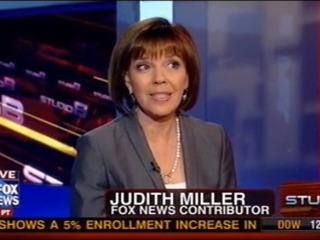
Judith Miller’s Blame-Shifting Memoir

Judy Miller 409By Veteran Intelligence Professionals for Sanity

Source: Consortium News

U.S. intelligence veterans recall the real story of how New York Times reporter Judith Miller disgraced herself and her profession by helping to mislead Americans into the disastrous war in Iraq. They challenge the slick, self-aggrandizing rewrite of history in her new memoir.

MEMORANDUM FOR: Americans Malnourished on the Truth About Iraq

FROM: Veteran Intelligence Professionals for Sanity (VIPS)

SUBJECT: A New “Miller’s Tale” (with apologies to Geoffrey Chaucer)

On April 3, former New York Times journalist Judith Miller published an article in the Wall Street Journal entitled “The Iraq War and Stubborn Myths: Officials Didn’t Lie, and I Wasn’t Fed a Line.” If this sounds a bit defensive, Miller has tons to be defensive about.

In the article, Miller claims, “false narratives [about what she did as a New York Times reporter] deserve, at last, to be retired.” The article appears to be the initial salvo in a major attempt at self-rehabilitation and, coincidentally, comes just as her new book, The Story: A Reporter’s Journey, is to be published today.

In reviewing Miller’s book, her “mainstream media” friends are not likely to mention the stunning conclusion reached recently by the Nobel Prize-winning International Physicians for the Prevention of Nuclear War and other respected groups that the Iraq War, for which she was lead drum majorette, killed one million people. One might think that, in such circumstances – and with bedlam reigning in Iraq and the wider neighborhood – a decent respect for the opinions of mankind, so to speak, might prompt Miller to keep her head down for a while more.

In all candor, after more than a dozen years, we are tired of exposing the lies spread by Judith Miller and had thought we were finished. We have not seen her new book, but we cannot in good conscience leave her WSJ article without comment from those of us who have closely followed U.S. policy and actions in Iraq.

Miller’s Tale in the WSJ begins with a vintage Miller-style reductio ad absurdum: “I took America to war in Iraq. It was all me.” Since one of us, former UN inspector Scott Ritter, has historical experience and technical expertise that just won’t quit, we asked him to draft a few paragraphs keyed to Miller’s latest tale. He shared the following critique:

Miller’s Revisionist History

“Judith Miller did not take America to war in Iraq. Even a journalist with an ego the size of Ms. Miller’s cannot presume to usurp the war power authorities of the President of the United States, or even the now-dormant Constitutional prerogatives of Congress. What she is guilty of, however, is being a bad journalist.

“She can try to hide this fact by wrapping herself in a collective Pulitzer Prize, or citing past achievements like authoring best-selling books. But this is like former Secretary of State Colin Powell trying to remind people about his past as the National Security Advisor for President Reagan or Chairman of the Joint Chiefs of Staff under Presidents George H. W. Bush and Bill Clinton.

“At the end of the day Mr. Powell will be judged not on his previous achievements, but rather on his biggest failure – his appearance before the United Nations Security Council touting an illusory Iraqi weapons-of-mass-destruction threat as being worthy of war. In this same vein, Judith Miller will be judged by her authoring stories for the ‘newspaper of record’ that were questionably sourced and very often misleading. One needs only to examine Ms. Miller’s role while embedded in U.S. Army Mobile Exploitation Team Alpha, hunting for weapons of mass destruction during the 2003 invasion, for this point to be illustrated.

“Miller may not have singlehandedly taken America and the world to war, but she certainly played a pivotal role in building the public case for the attack on Iraq based upon shoddy reporting that even her editor at the New York Times has since discredited – including over reliance on a single-source of easy virtue and questionable credibility – Ahmed Chalabi of the Iraqi National Congress. The fact that she chose to keep this ‘source’ anonymous underscores the journalistic malfeasance at play in her reporting.

“Chalabi had been discredited by the State Department and CIA as a reliable source of information on Iraq long before Judith Miller started using him to underpin her front-page ‘scoops’ for the New York Times. She knew this, and yet chose to use him nonetheless, knowing that then Secretary of Defense Donald Rumsfeld was fully as eager to don the swindlers’ magic suit of clothes, as was the king in Hans Christian Anderson’s fairy tale. In Ms. Miller’s tale, the fairy-tale clothes came with a WMD label and no washing instructions.

“Ms. Miller’s self-described ‘newsworthy claims’ of pre-war weapons of mass destruction stories often were – as we now know (and many of us knew at the time) – handouts from the hawks in the Bush administration and fundamentally wrong.

“Like her early reporting on Iraq, Ms. Miller’s re-working of history to disguise her malfeasance/misfeasance as a reporter does not bear close scrutiny. Her errors of integrity are hers and hers alone, and will forever mar her reputation as a journalist, no matter how hard she tries to spin the facts and revise a history that is highly inconvenient to her. Of course, worst of all, her flaws were consequential – almost 4,500 U.S. troops and 1,000,000 Iraqis dead.”

Relying on the Mistakes of Others

In her WSJ article, Miller protests that “relying on the mistakes of others and errors of judgment are not the same as lying.” It is almost as though she is saying that if Ahmed Chalabi told her that, in Iraq, the sun rises in the west, and she duly reported it, that would not be “the same as lying.”

Miller appears to have worked out some kind of an accommodation with George W. Bush and others who planned and conducted what the post-World War II Nuremburg Tribunal called the “supreme international crime,” a war of aggression. She takes strong issue with what she calls “the enduring, pernicious accusation that the Bush administration fabricated WMD intelligence to take the country to war.”

Does she not know, even now, that there is abundant proof that this is exactly what took place? Has she not read the Downing Street Memorandum based on what CIA Director George Tenet told the head of British Intelligence at CIA headquarters on July 20, 2002; i. e., that “the intelligence and facts were being fixed around the policy” of making war for “regime change” in Iraq?

Does she not know, even at this late date, that the “intelligence” served up to “justify” attacking Iraq was NOT “mistaken,” but outright fraud, in which Bush had the full cooperation of Tenet and his deputy John McLaughlin? Is she unaware that the Assistant Secretary of State for Intelligence at the time, Carl Ford, has said, on the record, that Tenet and McLaughlin were “not just wrong, they lied … they should have been shot” for their lies about WMD? (See Hubris: The Inside Story of Spin, Scandal, and the Selling of the Iraq War by Michael Isikoff and David Corn.)

Blame Blix

Miller’s tale about Hans Blix in her WSJ article shows she has lost none of her edge for disingenuousness: “One could argue … that Hans Blix, the former chief of the international inspectors, bears some responsibility,” writes Miller. She cherry-picks what Blix said in January 2003 about “many proscribed weapons and items,” including 1,000 tons of chemical agent, were still “not accounted for.”

Yes, Blix said that on Jan. 27, 2003. But Blix also included this that same day in his written report to his UN superiors, something the New York Times, for some reason, did not include in its report:

“Iraq has on the whole cooperated rather well so far with UNMOVIC in this field. The most important point to make is that access has been provided to all sites we have wanted to inspect and with one exception it has been prompt. We have further had great help in building up the infrastructure of our office in Baghdad and the field office in Mosul. Arrangements and services for our plane and our helicopters have been good. The environment has been workable.

“Our inspections have included universities, military bases, presidential sites and private residences. Inspections have also taken place on Fridays, the Muslim day of rest, on Christmas day and New Years day. These inspections have been conducted in the same manner as all other inspections.” [See “Steve M.” writing (appropriately) for “Crooks and Liars” as he corrected the record.]

Yes, there was some resistance by Iraq up to that point. Blix said so. However, on Jan. 30, 2003, Blix made it abundantly clear, in an interview published in The New York Times, that nothing he’d seen at the time justified war. (The byline was Judith Miller and Julia Preston.)

The Miller-Preston report said: “Mr. Blix said he continued to endorse disarmament through peaceful means. ‘I think it would be terrible if this comes to an end by armed force, and I wish for this process of disarmament through the peaceful avenue of inspections,’ he said. …

“Mr. Blix took issue with what he said were Secretary of State Colin L. Powell’s claims that the inspectors had found that Iraqi officials were hiding and moving illicit materials within and outside of Iraq to prevent their discovery. He said that the inspectors had reported no such incidents. …

“He further disputed the Bush administration’s allegations that his inspection agency might have been penetrated by Iraqi agents, and that sensitive information might have been leaked to Baghdad, compromising the inspections. Finally, he said, he had seen no persuasive indications of Iraqi ties to Al Qaeda, which Mr. Bush also mentioned in his speech. ‘There are other states where there appear to be stronger links,’ such as Afghanistan, Mr. Blix said, noting that he had no intelligence reports on this issue.”

Although she co-authored that New York Times report of Jan. 30, 2003, Judith Miller remembers what seems convenient to remember. Her acumen at cherry picking may be an occupational hazard occasioned by spending too much time with Chalabi, Rumsfeld and other professional Pentagon pickers.

Moreover, Blix’s February 2003 report showed that, for the most part, Iraq was cooperating and the process was working well:

“Since we arrived in Iraq, we have conducted more than 400 inspections covering more than 300 sites. All inspections were performed without notice, and access was almost always provided promptly. In no case have we seen convincing evidence that the Iraqi side knew in advance that the inspectors were coming. …

“The inspections have taken place throughout Iraq at industrial sites, ammunition depots, research centres, universities, presidential sites, mobile laboratories, private houses, missile production facilities, military camps and agricultural sites. …

“In my 27 January update to the Council, I said that it seemed from our experience that Iraq had decided in principle to provide cooperation on process, most importantly prompt access to all sites and assistance to UNMOVIC in the establishment of the necessary infrastructure. This impression remains, and we note that access to sites has so far been without problems, including those that had never been declared or inspected, as well as to Presidential sites and private residences. …

“The presentation of intelligence information by the US Secretary of State suggested that Iraq had prepared for inspections by cleaning up sites and removing evidence of proscribed weapons programmes.

“I would like to comment only on one case, which we are familiar with, namely, the trucks identified by analysts as being for chemical decontamination at a munitions depot. This was a declared site, and it was certainly one of the sites Iraq would have expected us to inspect.

“We have noted that the two satellite images of the site were taken several weeks apart. The reported movement of munitions at the site could just as easily have been a routine activity as a movement of proscribed munitions in anticipation of imminent inspection.”

Blix made it clear that he needed more time, but the Bush administration had other plans. In other words, the war wasn’t Blix’s fault, as Judy Miller suggests. The fault lay elsewhere.

When Blix retired at the end of June 2004, he politely suggested to the “prestigious” Council on Foreign Relations in New York the possibility that Baghdad had actually destroyed its weapons of mass destruction after the first Gulf War in 1991 (as Saddam Hussein’s son-in-law, Hussein Kamel, who had been in charge of the WMD and rocket programs assured his debriefers when he defected in 1995). Blix then allowed himself an undiplomatic jibe:

“It is sort of fascinating that you can have 100 per cent certainty about weapons of mass destruction and zero certainty of about where they are.”

For the Steering Group, Veteran Intelligence Professionals for Sanity (VIPS)

William Binney, former Technical Director, National Security Agency (ret.)

Thomas Drake, former Senior Executive, NSA

Daniel Ellsberg, former State and Defense Department official, associate VIPS

Frank Grevil, former Maj., Army Intelligence, Denmark, associate VIPS

Katharine Gun, former analyst, GCHQ (the NSA equivalent in the UK), associate VIPS

Matthew Hoh, former Capt., USMC, Iraq & Foreign Service Officer, Afghanistan, associate VIPS

Brady Kiesling, former Political Counseler, U.S. Embassy, Athens, resigned in protest before the attack on Iraq, associate VIPS.

Karen Kwiatkowski, former Lt. Col., US Air Force (ret.), at Office of Secretary of Defense watching the manufacture of lies on Iraq, 2001-2003.

Annie Machon, former officer, MI5 (the CIA equivalent in the UK), associate VIPS

David MacMichael, former Capt., USMC & senior analyst, National Intelligence Council (ret.)

Ray McGovern, former Capt., Army Infantry/Intelligence & CIA presidential briefer (ret.)

Elizabeth Murray, former Deputy National Intelligence Officer for the Near East, National Intelligence Council (ret.)

Todd E. Pierce, Maj., former U.S. Army Judge Advocate (ret.)

Scott Ritter, former Maj., USMC, former UN Weapon Inspector, Iraq

Coleen Rowley, Division Council & Special Agent, FBI (ret.)

Greg Thielmann, former Office Director for Strategic, Proliferation, and Military Affairs in the State Department’s Bureau of Intelligence and Research

Peter Van Buren, former diplomat, Department of State, associate VIPS

Ann Wright, Col., US Army (ret.) & US diplomat (resigned in March, 2003 in opposition to the war on Iraq)

Tsarnaev Guilty of 30 Counts in Boston Bombing Show Trial

show tri·al

noun
noun: show trial; plural noun: show trials
  1. a judicial trial held in public with the intention of influencing or satisfying public opinion, rather than of ensuring justice.

Yesterday Dzhokhar Tsarnaev was found guilty of all 30 counts he was charged for in the Boston Marathon bombing trial. For those following the case who think critically, this came as no surprise not because of any hard evidence proving Tsarnaev’s guilt, but because on the second day of the trial Tsarnaev’s attorney Judy Clarke declared Tsarnaev was guilty in her opening statement saving the state the time and effort of having to prove its case and answer numerous glaring unanswered questions such as the ones asked by WhoWhatWhy and 21st Century Wire.

Now that this particular show trial is over, the government and corporate media will attempt to brush all uncomfortable questions under the rug and, as with JFK, WACO, Oklahoma City Bombing, Columbine, 9/11, Sandy Hook, etc., it will be left to independent researchers and journalists to search for the truth.

For more information about the Boston bombing that the government/corporate-stream media has largely ignored, read this compendium of research and analysis from the Memory Hole blog: http://memoryholeblog.com/2014/04/13/boston-marathon-bombing-a-compendium-of-research-and-analysis/

Ferguson and the Logic of Neoliberalism

Ferguson-RiotA Political Economy Premised on Exploitation and Social Repression

By Rob Urie

Source: Counterpunch.org

While the U.S. Department of Justice report on racist policing practices in Ferguson, Missouri provides direct evidence for skeptical Whites that institutional racism is fact, limiting the investigation to Ferguson implausibly delimits the scope of race based repression in the U.S. Additionally, from slavery to convict leasing to funding the Ferguson city budget with fines and penalties overwhelmingly extracted from poor and middle class Blacks, the economic basis of police repression is isolated in an improbable present. And in fact, the ‘tricks and traps’ used by the Ferguson police for economic extraction closely resembles corporate practices of using contract law, state institutions and monopoly power to take economic resources from those who lack the social power to resist.

A cognitive challenge for White Americans (and ‘conservative’ Blacks) is the distance between facts like police repression in Ferguson and the mythology of capitalist democracy that we live by. Use of the police for economic extraction in Ferguson, for funding the town budget through racial repression, ties state power to economic power within the particular circumstances of American racial and economic history. In a most basic sense this integration reframes state-market relations claimed to relate capitalism to democracy. More broadly, the TPP and TIPP ‘trade’ deals being pushed by President Obama are a variation on the racist shakedown in Ferguson. Their intent is to replace state power with corporate power while leaving Western states intact to provide state services for the benefit of corporations and the illusion of democratic control.

Discovery of a police ‘black site’ in Chicago, the prevalence of racist violence by the police across the U.S., the return of debtor’s prisons and ‘civil forfeiture’ laws that allow the police to take belongings without evidence of a crime illustrate the growing lawlessness of the police. When tied to illegal surveillance carried out by the NSA, DEA and FBI against citizens and non-citizens alike and the extra-judicial powers claimed by Mr. Obama a picture of widespread state lawlessness emerges. When considered in the context of no criminal prosecutions for war crimes against the (George W) Bush administration or against prominent bankers in the financial and economic debacle of the last decade a picture of widespread elite lawlessness emerges. Clearly the state, including local police departments, exists for purposes other than enforcing fealty to the law.

Based on supporting economic theories it is superficially ironic that the resurgence of neo-liberalism since the 1970s is coincident with this growing integration of state and ‘private’ power. Premised on clearly delineated state and market roles, neo-liberalism was / is in theory the economic realm unhindered by state restrictions. This state-market delineation facilitates the facade that capitalism is related to democracy— political freedom in the realm of the political and economic freedom in the realm of the economic. As fact and metaphor the role of the Ferguson police using asymmetrical social power to take economic wealth from vulnerable citizens demonstrates the implausibility of this theorized differentiation in the realm of the political. And new debtor’s prisons (link above) have police and the prison system acting as collection agents for Payday Lenders.

The TPP and TTIP trade deals being pushed by Mr. Obama are designed with analogous levers for extorting wealth. The investor resolution clauses in TTIP have a supranational judiciary ruling on ‘investor’ lawsuits against governments for hypothetical lost profits and taxpayers on the hook for adverse rulings. The relative absence of remaining trade restrictions and tariffs is well covered territory. What remains to be accomplished with these ‘agreements’ is the consolidation of economic power as the power to extract wealth. As with proposals for tradable carbon credits, the ‘product’ of the agreements combines the right to extort by putting forward projects never intended to be built with guarantees against adverse economic developments.

The police in Ferguson used a particular social lever, the residual of slavery, for gratuitous racial repression and for economic extraction. Slavery is a social institution, but it most particularly is an economic institution. It is a social mechanism for accruing the product of slave labor to the slave master. And slavery in the U.S. was ‘legal’ until it wasn’t. Convict leasing was explicit use of ‘the law’ and the judicial system to force poor Blacks to work for little or no pay. ‘The law’ was used as an instrument of economic exploitation and extraction. The push back from Whites and conservative Blacks that the murdered Mike Brown was a criminal because he likely stole a box of cigars takes this same law at face value. This view of the law depends on a similarly improbable separation of political and economic realms as neo-liberal theory.

As political theory might have it, if all of the citizens of Ferguson were intended to benefit from city resources while poor and middle class Blacks were disproportionately forced to pay for them that represents economic taking by some citizens for the benefit of others. The racial character of this taking places it in history. The history of Western colonialism, neo-colonialism and imperialism places it in broader internal and external context. And this history is evidence that distinct realms of the economic and the political never described existing circumstance. The practical relevance is that it places the actions of the police in Ferguson, past and pending ‘trade’ agreements and global economic relations in the space where economic and political power act in an integrated social dimension.

The effect is to reframe ‘the law’ in terms of who is committing particular acts rather than the acts being committed. The police in Ferguson can murder with impunity and shake down citizens at their discretion to fund the city budget (and their paychecks) while poor and middle class Blacks are disproportionately murdered and sent to prison for similar acts. What is legal and what isn’t is determined by who has social power, not by the acts themselves. In a racist and classist society the law is codification of class and race interests. If a black citizen of Ferguson puts a gun to someone’s head and demands their valuables they are a criminal but if the same act is committed by a cop it is within the law. Here events in Ferguson are fact and metaphor— overwhelming evidence (links above) suggests that similar social relations exist across much of the country.

This view of the law has precedence in Richard Nixon’s contention that “when the President does it that means that it is not illegal.” Earlier precedence can be found in Nazi law and in the laws of fascist Italy in the 1930s and 1940s. This isn’t to call anyone who isn’t a self-proclaimed Nazi a Nazi. The precedence lies in the view that the law is the will of a leadership class, be it the Nazi leadership in Germany or city government in Ferguson. One problem with this theory is that it makes the law capricious and ultimately impossible to follow. Race based law enforcement criminalizes race, not nominally proscribed acts. Stories of the Chicago police department’s black site (link above) have political protesters and poor Blacks accused of no crimes taken there. If people can be arrested without evidence that a crime was committed then what is the difference in outcomes between committing and not committing crimes?

A relation of neo-liberalism to fascism can be made through replacement of civil governance with corporate governance that subordinates the rights and privileges of civil society to corporate interests. The investor-state dispute mechanisms (link above) being broadened and formally codified in the TTIP trade deal will be used to demand compensation for environmental regulations that keep drinking water safe and limit greenhouse gas emissions, the metaphorical equivalent of threatening to end the planet if we don’t pay up. Civil forfeiture has the police taking valuables they might want at the point of a gun if necessary. The Ferguson police shake down poor Blacks using the law as a weapon. At the same time a ruling elite has immunity from prosecution for well documented crimes.

Much of what is written here was well understood in the 1950s, 1960s and 1970s. It hardly seems an accident that this collective memory was lost to narrow ideological dogma. Across the country property taxes are being cut with partial differences made up through regressive fees and penalties. This fits the neo-liberal preference for property over labor incomes. And neo-liberal theory has no place for history because all acts within it take place in a temporally isolated present. This dissociates racist policing in Ferguson, Chicago, New York, Detroit and Philadelphia from the roles of the legislature, judiciary, police and prisons in reconstituting the economic exploitation of slavery under the guise of free choice in capitalist democracy. Race is the particular case in America; class is the broader expression of economic power.

The tension between the DOJ report (link above) on racist policing in Ferguson and the Obama administration’s broad support for neo-liberal policies will likely produce a tight circle drawn around events in Ferguson. Already supporters of police repression are raising the argument that the words “hands up, don’t shoot” never transpired. What bearing does precise wording have on a Black child being murdered by the police? And why wouldn’t Black youth have a right to be hostile to police who, as the DOJ reports concludes, are running a racist shakedown operation to force poor and middle class Blacks to fund city government? How would White readers react to being harassed, intimidated, disproportionately jailed and forced to pay for the privilege? Ultimately the problem is larger than Ferguson and social accountability should address political economy premised in exploitation and social repression.

Rob Urie is an artist and political economist. His book Zen Economics is written and awaiting publication.