ISIS 101: What’s really terrifying about this threat

ISIS-and-the-false-flag-frame-up

By John Chuckman

Source: RINF

ISIS certainly is not what a great many people think that it is, if you judge what they think by what our corporate press proclaims incessantly.

Judging by what ISIS actually does and whom its acts benefit, its clandestine associates, and the testimony of some witnesses, ISIS is a complex intelligence operation. Its complexity reflects at least in part the fact that it serves the interests of several countries and that it has more than one objective. Its complexity reflects also the large effort to reinforce a false image with disinformation and staged events such as a video of a beheading which could not have been a beheading unless they’ve discovered a bloodless method until now unknown to science.

The subject of ISIS is not without brief glimmers of humor. The image of bands of men, swathed in Arabic robes and bumping their way around the desert in Japanese pick-up trucks with Kalashnikovs raised in the air for every picture has elements of Monty Python. The idea of modern, trained and well-armed military units turning and running from them resembles a war scene in a Laurel and Hardy comedy such as the one with Hardy stuck upside down in a WWI tank turret kicking his legs the whole time Laurel drives towards the German positions managing accidentally to round-up a whole trench-full of prisoners with some wire fencing that becomes snagged on the tank.

Despite the tiresome stupidities we see and hear about it, ISIS unquestionably does kill people and destroy things, that being its purpose, and there is no humor in that.

ISIS appears to have served several tasks so far. First, it frightened Iraq’s Prime Minister, Nouri al-Maliki, out of office in Iraq, a man America and Israel grew very much to dislike owing simply to his good relations with Iran, one of the unintended consequences of America’s invasion of Iraq being expanded Iranian influence in the region. No doubt al-Maliki was terrified not so much by ISIS approaching in their pick-up trucks as he was by his own military’s tendency, as if on cue, to turn and run from ISIS, often leaving weapons behind. The message was clear: you won’t be protected.

Second, America’s highly selective “air war” against ISIS somehow manages to attack infrastructure targets inside Syria with the feeble excuse that they are facilities helping ISIS. We’ve seen what American bombing can do when it’s undertaken seriously, and somehow I have a hard time imaging the men in Japanese pick-ups lasting long when faced with what hit the Taleban in Afghanistan or Gadhafi’s forces in Libya. The air strikes are partly a show for the world – after all, how can America be seen not to be fighting such extremely well-advertised, super-violent terrorists, guys putting out videos regularly from a studio trailer they must haul around with one of their pick-up trucks?  The air strikes’ main purpose appears to be a way of hurting Assad and assisting those fighting Syria’s army without coming into conflict with Russia, as they would with a large, direct campaign. They likely also punish elements of ISIS which have exceeded their brief and serve as a reminder to the rest of what could happen to them if they stray too far from their subsidized purpose once the war comes to an end.

Three, in some of the ground fighting in Iraq where we’ve read of Iraqi units fighting ISIS, the units are often Kurdish, and sometimes the press uses expressions like “Iraqi and Kurdish troops.” But the Kurdish region is still part of Iraq legally, although it has been given a good deal of autonomy by the central government. The Kurdish region of Iraq is the country’s prime oil-producing area, and in the estimation of many observers, an area both the United States and Israel would very much like to see severed from Iraq in the way Kosovo was severed from Serbia after America’s devastating air war there. This would not only permanently assure Iraq’s weakness, it would create a rather grateful and more willing oil supplier.

Where does ISIS get its technical equipment and the know-how to produce videos and run Internet sites? These are not qualities commonly found among fanatical fundamentalists anywhere; indeed most true radical fundamentalists tend to eschew technology. A supply of advice, technical assistance, and equipment comes from somewhere. Where does ISIS get the money for food, gasoline, clothes, ammunition, and Japanese pick-up trucks? And I wonder, did one of those wild-looking jihadi types just show up one day at an Iraqi car dealership and order a fleet of Japanese pick-ups? Were they delivered out on the desert or did a gang of jihadists march in, waving their Kalashnikovs, to drive them away?

The effort to destroy the Syrian government, whether by means of ISIS or anyone else, is warmly and generously supported by Saudi Arabia and its buddy Qatar – another oil-rich, absolute monarchy where political parties are banned – both these counties’ primary interest being the defence of their immensely privileged situations against creeping threats of all progressive developments such as equal human rights or democracy or indeed against revolt led by external forces. The payments we now know the Saudi royal family long made to Osama bin Laden before 9/11 were simply bribes to keep him and his anti-establishment work out of the country. They really didn’t care a lot about what the money bought elsewhere, but since 9/11 and its many Saudi connections – 15 of the perpetrators plus the past financing plus the many members of the royal family and bin Laden family secretly flown out by American officials at the time – the Saudi authorities were genuinely fearful of how America might respond and have become far more responsive to what America wants in the Middle East and now apply their money to such projects. What America wants in the Middle East is, invariably, what Israel wants, so there is now extensive, secret cooperation where once there was complete official hostility.

We have reports from plane-spotters in the region of daily flights of mysterious planes from Israel to Qatar. We have several eye-witness reports and photographs of supply bundles dropped from unknown planes into ISIS territory. Maybe ISIS has its own air force now? We know Turkey has served both as an entry point for countless terrorists into Syria and as a place of retreat and refuge when fighting with the Syrian army becomes too hot for them, the volumes of such activity having been too great to keep secret. We have reports of Turkish supply flights. A Jordanian official recently told a reporter that ISIS members were trained in 2012 by American instructors working at a secret base in Jordan.

If ISIS is what our corporate news pretends that it is – a fanatical Muslim extremist group that sprang suddenly from the desert sands much like Jack’s bean stalk – one blindingly obvious question is, why does it not attack Israel or Israeli interest? Isn’t that what one would expect from such a cast of characters? But it has not done so, undoubtedly because Israel is an important covert benefactor and supplier.

We might equally ask why ISIS has not attacked Saudi Arabia or its interests, for although the Saudi royal family officially professes a strict and conservative form of Islam, Wahhabism, in fact many of them are very worldly people who spend a good deal of time and money at the world’s great pleasure palaces. Perhaps even more damning for a genuine fanatical fundamentalist, the Saudis now often secretly cooperate and make plans with Israel where mutual interests exist.

No, there is something highly suspicious about Islamic fundamentalist terrorists who avoid such interests while managing to brutally kill poor Syrian soldiers just doing their jobs along with the odd foreign journalist or aid worker who may just have seen something they shouldn’t have seen. Of course, we have Edward Snowden himself having described ISIS as an operation intended to protect Israel. Despite the fact that some news sources have said the interview in which this was revealed never took place, my instincts tell me it likely did. Snowden has never refuted it, and the news sources saying it did not are highly suspect on such a subject.

The way ISIS serves Israeli and American interests is by providing a focus point for extremists, attracting them from various parts of the world so that they can be recorded and kept track of. Also the tracks back to the various countries from which they come provide security services with leads to places where there might be some festering problems. In the meantime, ISIS serves the interest of helping to bring down President Assad, a goal dear to the hearts of Israelis. Please remember that black operations, even the ones about which we know, show little consideration for lives or property. Just think of Israel’s attack on an American spy ship in the Mediterranean during the Six Day War, its pilots knowingly shooting up and bombing for two hours the well-marked ship of its ally and benefactor, no explanation worth hearing ever having been offered.

Just read conservative mainline sources (pretty much a redundant pair of adjectives) about the harm Snowden has done: claims of everything from his revelations about American intelligence having served to help ISIS avoid detection (!) to his revelations having set up the United States for another 9/11! You might think intelligent people would be ashamed of making such asinine public statements, but, no, there are almost no limits to trying to discredit those revealing murderous, dark operations.

We’ve had many reports of officials in various countries, including Canada as I write, concerned about the odd individual or small group running off to join ISIS. Now why should that be a concern? A few flaky people going abroad just removes them from your country, something I should have thought was a complete gain from a security point of view. Even if they were ever to return in future, you would know exactly who they are. Where is the basis for serious concern? But the psychological advantages of noise and hype to scare people about obscure dangers and “lone wolves” and “home-grown terrorists” outweigh completely good sense and intelligence.

Finally, there are numerous reports that Abu Bakr al-Baghdadi (a nom de guerre, not his real name), the leader of ISIS, is a Western intelligence asset. What little we can learn about him makes that entirely plausible. The Supreme Leader of Iran, Ali Khamenei, has said that the man is a Mossad agent, a claim supported supposedly by documents revealed by Edward Snowden. Abu Bakr al-Baghdadi is by all accounts a secretive man who speaks directly with few people, and even his birth place, given as Samarra, Iraq, is not sure. Records of his past, as those from his period of American captivity (always a great opportunity to “turn” someone to serving two interests), are not available. He was once reported killed but is still alive. He is said to have received intensive training from Mossad and the CIA, and some sources give his real name as Simon Elliot (or, Elliot Shimon), but few details can ever be certain in such dark operations.

The truly terrifying aspect of ISIS and other forces fighting with it in Syria is that the United States and Israel have approved and supported such wanton destruction in so beautiful and formerly-peaceful a place as Syria. Millions of lives destroyed and countless historic places damaged as though they were all nothing more than a few pieces moved on a geopolitical chessboard. I think it fair to describe that as the work of psychopaths.

Obama Incites Bloodshed in Venezuela

venezuela-us43

By Nil Nikandrov

Source: Strategic Culture Foundation

The US special services together with their “assistants” from Canada and Great Britain tried again to stage a coup in Venezuela. In the middle of February, Venezuelan President Nicolas Maduro said the national security services frustrated the plans of US embassy and put an end to its hostile actions. As a result, a number of people were arrested, including Venezuelan air force officers and activists of radical opposition. The subversive activities were guided by Western diplomatic missions. The names of those behind the plot are known but they cannot be brought to justice being protected by diplomatic immunity. The President said the plotters wanted to assassinate him. The United States embassy guaranteed that the perpetrators would be granted asylum in America.

The Bolivarian National Intelligence Service (El Servicio Bolivariano de Inteligencia Nacional – SEBIN) had been warned about the conspiracy preparations. A Super Tucano aircraft (a light, highly agile Brazilian aircraft designed principally for pilot training and counterinsurgency operations) used before for special operations by Academi (former Blackwater), an American private military company, was handed over to plotters in the United States. The plane had the insignia of Venezuelan air force. It was armed and prepared to make a flight from Columbia to the island of Curacao where a US forward operating location is stationed. The CIA-recruited pilots, who betrayed the Bolivarian regime and their home country, learned well which targets they had to strike: the presidential palace, the buildings of ministries of Defense and General Staff and TV company TeleSUR. Security agencies found caches of arms, the equipment to provide guidance to the target and a video footage showing air force officers and opposition leaders involved in the plot addressing people. The video footage was given in Miami to journalist Patricia Poleo, a fierce opponent of the current Venezuelan government. She was to make it go on air but the plan was thwarted. The video material got into the hands of SEBIN operatives.

The video showed the plotters with balaclavas on their heads announcing the beginning of insurgency in the armed forces and the establishment of interim government. It was prepared to be made public by El Nacional newspaper at the time of coup. Three key figures of the Venezuelan opposition – Leopoldo López, the mayor of Caracas, Antonio Ledezma, the leader of Voluntad Popular (People’s Will) and former member of parliament Maria Corina Machado signed and distributed a joint communique on February 11, just one day before the planned coup plot that President Nicolas Maduro denounced was to take place. All these people were known to be close to the United States. Entitled “The Call for a National Transition Agreement,” the statement calls for unification of Venezuelans behind a national plan aimed at supplanting the current socialist administration of President Nicolas Maduro. It says the country was going through hardships unparalleled in its history. It is the fault of regime that has been trying for sixteen years to impose a failed system. In the text the current government is described as a “failed” “corrupt” and “inefficient” regime, made up of an “elite of no more 100 people” who have pilfered public funds “which could have been used for the benefit of all”. It also states that Venezuela is on the brink of a “humanitarian crisis” whilst the Maduro government is “delegitimised” and in its “terminal phase”. It says nothing about the hard struggle against the United States trying to overthrow the regime fallen out of its favor. In the effort to achieve the goal, the US uses all any methods without hesitation, including economic sabotage, subversive activities against oil and energy sectors, never ending information war, organizing street protests in big cities and the use of local criminals and Columbian paramilitaries to destabilize the situation in the country. The list also includes artificially created shortages of food and basic consumer goods. The operations against Salvador Allende in Chile come to mind. The US uses the same dirty methods in Venezuela. Waiting in line has become a common occurrence in Venezuelan cities since 2013. Different prices in Columbian and Venezuelan shops are one of the reasons. Almost everything is smuggled to Columbia – from super cheap gas to corn meal and sugar. To some extent the military called by President Maduro to fight the cross border smuggling helped to control the situation.

According to the plotters’ plans, Maria Corina Machado was to head the new government. She has been patronized by former US President George Bush Jr. The Machado’s three minute meeting in the White House with the President of the United States in March 2005 attracted unusually high attention of pro-US media. Maria was painted as the most promising politician able to defeat President Hugo Chavez and become a Venezuelan President absolutely loyal to the United States. The revelations about the Machado’s ties with US intelligence services spoiled the plans. She was the founder, former vice president, and former president of the Venezuelan volunteer civil organization Sumate that used US-provided funds. When it was revealed that Machado got large sums of money from special services, she had to keep away from spotlight. Today the United States needs her again. She is ready to go to any length in an effort to overthrow Nicolas Maduro. Washington wants her to lead the country.

The planning has been done. A group of pro-US Latin American presidents is carrying out the mission. Former Mexican President Felipe Calderón, former Chilean President Sebastian Piñera and former Colombia President Andres Pastrana came to the country under the pretext of expressing their support for Leopoldo López. The real purpose was to see the real situation in the country. Nicolas Maduro never stood in their way. He only said that these people came to support ultra-right wing radicals who do not recognize the government and call for a bloody coup. Maduro warned that the visitors would have their hands soaked in blood if they hobnob with this kind of people.

Of those who signed the statement Machado is the only one who is still at large. A year ago Leopoldo López was put behind bars for inciting street protests resulting in dozens of victims. Antonio Ledezma was detained a few days ago charged with involvement in coup attempt. The conditions of detainment are not so tough; he can continue the struggle against the Bolivarian regime. Recently he sent a letter to media outlets calling for continuing protests and peaceful struggle against Nicolas Maduro to make the current President resign. In the letter he stuck rigidly to the constitution. It says “We must keep up the struggle in the street, in a civil manner with the constitution in our hands and with the truth in front of us” Ledezma wrote. “They [the government] have the weapons but we have the ideas to unite the Venezuelan people. Violence is a pointless vacuum that leads nowhere.” He wants no mercy and calls for solidarity to protect democratic values in Venezuela. He stands out among Venezuelan politicians for his aggressive style and vindictiveness. It is suggested that if the plotters won, he would have headed the Interior Ministry to cleanse the national politics from Bolivarians, Chavistas and other elements hostile to the United States.

After the leading plotters were arrested and their ties with special services and embassies of the United States, Canada and Great Britain were revealed, Nicolas Maduro could say with certainty that another coup attempt orchestrated by Washington was effectively foiled. The tension in the relationship with the United States remains. In December 2014, President Obama endorsed sanctions against top officials of Venezuela accused by Washington of human rights violations. Maduro warned Americans that arbitrary sanctions and other attempts to exert pressure would deteriorate the bilateral relationship even further. He said the United States tried to stage coups in Venezuela a number of times. The US interference into the internal affairs of other countries has become a constant factor to negatively affect the situation in the world.

Jen Psaki, the spokesperson for the United States Department of State, as usually rejected all the accusations of US involvement into the conspiracy to organize a coup in Venezuela. “Well, I think we’ve seen continued accusations, no question, that are false and baseless. And our view continues to be that political transitions must be democratic, constitutional, peaceful, and legal. We do not support a political transition in Venezuela by non-constitutional means. We’re not promoting unrest in Venezuela, nor are we attempting to undermine Venezuela’s economy or its government. And this is a continued effort – ongoing, because I do feel like we talk about these incidents once a week at least – about – of the Venezuelan Government to try to distract attention from the country’s economic and political problems and focus and try to distract and make these false accusations.”

Meanwhile, the investigation continues. Nicolas Maduro says Antonio Ledezma tried to abuse his position to organize a violent coup and destabilize the country. New arrests are to follow. The government of Venezuela is adamant in its desire to prevent the events unfolding according to a scenario worked out by the United States Central Intelligence Agency.

Related Articles:

Obama Failed his Coup in Venezuela (By Thierry Meyssan, Voltairenet.org)

US Aggression Against Venezuela (By Eva Golinger, Counterpunch.org)

Venezuela in the Crosshairs (By Coromoto Jaraba, IntrepidReport.com)

Former CIA Official Lied in Boston Bombing Cover-Up

index

By Daniel Hopsicker

Source: MadCowNews

Former top CIA official Graham Fuller lied in a press interview about his former son-in-law, Ruslan Tsarni, the uncle of “The Brothers Tsarnaev,” Tamerlan, now dead, and Dzhokhar, soon to go on trial in Boston for allegedly planting a homemade pressure-cooker bomb packed with shrapnel near the finish line of the Boston Marathon. 

“A story on the Internet implying possible connections between Ruslan (Tsarni) and the Agency through me is absurd,” Fuller said in an Apr 27 2013 story headlined “Former CIA officer: ‘Absurd’ to link uncle of Boston suspects, Agency,” in Washington-D.C.-based Al-Monitor, which bills itself as the “Pulse of the Middle East.”

Fuller was responding to an exclusive report published here headlined “Was Boston Bombers ‘Uncle Ruslan’ with the CIA?”,which he and reporter Laura Rosen churlishly refused to credit, calling it merely a “story on the Internet” even as they labored to debunk it. Yet it was reported and re-published so widely in the aftermath of the Boston Marathon terror attack that Fuller felt compelled to respond.

Well,  compelled to respond may be a little strong. Still, respond he did, in an interview which marshalled arguments to indicate questioning whether Ruslan Tsarni’s connection with the CIA had been through his famous former father-in-law were not just an exercise in futility. They were absurd

Just to be clear, there is zero evidence to indicate either Uncle Ruslan Tsarni or the CIA hired the Tsarnaev Brothers to blow up Boston.  There is, however, abundant evidence that elements of the U.S. Government have been playing footsie with Chechen terrorists, presumably to divert Russia from committing the kind of rash Neo-Communist Gangster stuff they’d be doing already unless we’re very very  careful.

Here’s a troubling question: If it was blow-back from that campaign which blew up in Boston—throwing covert U.S. support at Chechen terrorists—do you think anyone in the U.S. Government is eager to let the American people in on that no-doubt classified-for-reasons-of-national-security secret?

Why, the very idea seems—to use Mr. Fuller’s word—absurd.

Uncle Ruslan meets ‘the boys’

In his interview, Graham Fuller admitted that a second bombshell disclosure in an exclusive Apr 26, 2013, report headlined Boston bombers’ uncle married daughter of top CIA official, also was true: The Tsarnaev Brothers’ uncle, Ruslan Tsarni, was his former son-in-law.

Tsarni was married to Graham Fuller’s daughter Samantha between 1994 and sometime near the dawn of the millenium, Fuller grudgingly admitted.  Still, he insisted,without explanation, that suggestions that law enforcement should be checking to see if Ruslan Tsarni had “hooked up” with the CIA through Fuller were “absurd.”

It was an odd assertion. At the very moment he was making it, investigators with the FBI—who remained convinced the Tsarnaev Brothers had outside help and support—were in an intensive manhunt to find foreign connections to the case.  Asking questions about links between Ruslan, the CIA, and the bombers would not be seen as out of bounds. Or would they?

Of course, statements by former top CIA officials should be taken with a large grain of salt. Double the salt allowance if the “former” official is still engaged in intrigue in Central Asia.

Hannibal crosses the Alps; Fuller fords his Rubicon

And that’s before discounting fstill further for being widely and infamously known as the man who convinced the Reagan Administration that it would be a neat idea to send a callow Marine Lt. Col. named Oliver North with a cake under one arm and some TOW missiles under the other to a meet-and-greet in Tehran with the Ayatollah.

But back to the body blows being thrown against the credibility of anyone with the temerity of reporting the obvious…

“Fuller retired from the agency almost a decade before the brief marriage,” sniffed Laura Rosen, the reporter  selected to give him a sympathetic hearing.

“I, of course, retired from CIA in 1987,” Fuller offered helpfully, suggesting his Agency past had receded into the far reaches of recorded history, a dimly-remembered time located somewhere just this side of Hannibal crossing the Alps.

If Fuller retired, moved to Florida, and taken up golf while decked out in the vibrant hues of lime-green and canary-yellow sweater-slack combinations favored in the Florida golfing fraternity, he might have a point.

That was not, alas, how Fuller chose to spend his dwindling years. Even today he keeps stirring the pot in Central Asia, a long-time player in what previous generations called the Great Game.

He’s a consultant at Rand Corp; and he’s written a prodigious number of books with Great-Game-y titles: “Turkey & the Arab Spring;” “The Arab Shia’a;” “The Future of Political Islam;” “Turkey’s Kurdish Question;” “The Geopolitics of Islam & the West. “

Kazakh-style crony capitalism, illustrated

Ruslan Tsarni’s former father-in-law isn’t his only link to the CIA. There’s also his decades-long work history, discovered in a press release from a dodgy oil-related company with no assets and a ridiculous name whose President had been somehow lured away from a life-long career with Halliburton.

It reveals that Tsarni had worked in Central Asia for the Agency for International Development (USAID)—a U.S. Government Agency often used for cover by the CIA, including a two-year stint in the former Soviet Republic of Kazakhstan during the “Wild West” days of the early 1990’s, when anything that wasn’t nailed down in that country was up for grabs.

At a time when vast natural resources and enormous fortunes were ‘in play’ during the economic free-for-all in the “Stans” after the collapse of the Soviet Union, 24-year old Ruslan Tsarni was already a ‘player.’

Ruslan Tsarni is once again working (since 2010) working for USAID. Oddly enough, Russia, the country competing with the US for influence in the region, unceremoniously kicked USAID out of the country just months before the Boston Bombing terror attack, for, according to a Putin spokesmen, encouraging his political opposition.

Ruslan Tsarni & the Congress of Chechen International Organizations

In his interview with Laura Rosen, Fuller uncorked a whopper. Said Fuller,“Like all Chechens, Ruslan was very concerned about his native land, but I saw no particular involvement in politics [although] he did try to contact other Chechens around.”

Perhaps Fuller felt that no one would notice. Perhaps he felt immune to fact-checking, a sentiment common among Reagan-era CIA officials. But whatever his motivation, he has been caught in a provable lie.  Ruslan Tsarni, as Fuller well knows, has been up to his neck in Central Asian political intrigue for decades. 

On August 17,1995, while Ruslan Tsarni and Graham Fuller’s daughter Samantha were still virtual newlyweds, Tsarni incorporated a company in Maryland called the “Congress of Chechen International Organizations.” 

Ruslan Tsarni was listed as the company’s resident agent. The group sent aid to Islamic terrorists in Chechnya, including thousands of pairs of combat boots, coordinating its efforts with another so-called “charity,” Benevolence International, designated “financiers of terrorism” by the Treasury Department before being shut down by US Attorney Patrick Fitzgerald.

The company’s listed address, 11114 Whisperwood Ln. Rockville MD., was the home address of former top CIA official s Graham Fuller.

Today, the home remains listed in his wife’s name.

“An impromptu press conference aired live on network television”

With worldwide attention on the upcoming trial of Boston Marathon bombing suspect Dzhokhar Tsarnaev, what facts could possibly be being deliberately de-selected and hidden from view?

In “Long Mile Home” a book about the Boston Marathon Bombing by two Boston Globe reporters,  everything they have to say about Ruslan Tsarni isn’t much:

“On the Friday morning after Tamerlan was  killed, with police still hunting for Dzhokhar, investigators and reporters found their uncle, Ruslan Tsarni, a corporate attorney living outside Washington D.C.

When he emerged after speaking to FBI agents inside his home, he walked up to television cameras and reporters gathered outside looking for the latest in what had become the biggest story in the world. In an impromptu press conference aired live on network television, Tsarni offered condolences to the bombing victims, denounced his nephews, and ordered Dzhokhar to turn himself in.

Asked to explain what provoked the brothers to attack, Tsarni said, “Being losers. Hatred for those who were able to settles themselves. These are the only reasons I can imagine. Anything else—anything to do with religion, with Islam –that’s a fraud. It’s a fake.”

Asked how he felt about the United States, Tsarni said, “I respect this country. I love this country.”

An opinion writer for the Washington Post called his words “inspiring,” and said his press conference was “a moment we all needed.”

The New Yorker said he “looked like he might hunt his nephew down himself.”

That’s it. That’s everything they wrote about Ruslan Tsarni. Nothing about his work overseas for USAID. Nothing about being the former son-in-law of a top CIA official, or about running an organization out of his house that was sending aid to Chechen terrorists. Most of all nothing about his being—at the same time he was calling his nephews “losers”— a guy involved, according to the London Telegraph, in the biggest bank fraud in history.

By anyone’s standards, that’s a lot not to report. The authors must be proud.

“Uncle” Ruslan Tsarni is the elephant in the living room

“News,” someone once wrote, “is selection.”

And selection is always  based on an ideology and an agenda. Just something to remember the next time you’re reading, or watching, the ‘news.’

As jury selection proceeds in Boston in the upcoming trial of Dzhokhar Tsarnaev, the most pressing question about the attack remains one which is so obvious even Time Magazine is asking it: Did They Really Act On Their Own? 

The logical place to start would be with Uncle Ruslan, who’s been married to the daughter of a former top CIA official who remains a”player” in Central Asia’s Great Game.  But, of course, it ain’t gonna happen.

Whether by accident or design, Ruslan Tsarni played the same role in the aftermath of the Boston terror attack played after the 9/11 terror attack by Rudi Dekkers,  manager of Mohamed Atta’s flight school in Venice. And just like Rudi Dekkers before him, his pronouncements were received uncritically.

The mainstream media fawned all over him. He was soon being called “Uncle Ruslan. He  became the primary go-to source on the suspects, peddling his brief about the perfidy and all-around loser nature of his two nephews, one of whom, who he’d helped raise and bring to America, had just been killed in a hail of gunfire with police.

There were no tears for Uncle Ruslan. He was “protected,” and no doubt glad for it.

When Graham Fuller fibbed about Ruslan’s political activities, was it out of personal loyalty, or in support of a larger operation which had Ruslan Tsarni leading every 24-hour news cycle for more than a week during the biggest story of the year? Is there anyone in America who still thinks this happens by accident?

What does this say about the CIA’s ability to mold news coverage of a major event?

Already a valuable asset, Uncle Ruslan hadn’t even executed his most valuable task yet. Tsarni would soon be single-handedly responsible for leading the entire mainstream media of the Western World on a two-week long wild goose chase. Like a Pied Piper for the electronic age, he led the world away from whoever had actually punched the Tsarnaev Brothers ticket to jihad, towards something that didn’t even exist, “a chubby red-haired Armenian Muslim exorcist named Misha.”

More on this in our next story.

Uncle Ruslan’s  network for “international corruption”

When he was pontificating daily on live network television, why had no one thought to ask him about his contemporaneous  involvement in what London newspapers had begun calling “the biggest bank fraud in history?”

That’s the other side, the well-connected oil executive-side, of Ruslan Tsarni, that remains hidden. When one reporter had the bad manners to ask him what he did, Tsarni got touchy, and would say only, “I work for a living.”

End-of-story,CIA-style.

Tsarni is implicated in an international criminal investigation that oddly enough also involves another name currently in the news: Britain’s Prince Andrew, who sold his run-down estate to a Kazakh billionaire banker-turned-fugitive looking for asylum in London who paid Andrew $10 million more than it was worth.

Before he left Almaty for a more exciting life in London, the banker, with Tsarni’s help, had made off with a cool six billion dollars. Six billion. With a “B.”

More on this in our next story too.

When Graham Fuller was caught lying, it confirmed growing suspicions that huge chunks of the truth about the Boston Marathon Bombing—the biggest act of terrorism in America since the 9/11 attack— are deliberately being hidden from view.

In truth, news that another cover-up is underway comes as no great surprise. What is surprising is how much of cover-up, both in the 9/11 and the Boston Marathon terror attacks, was first identified here, in The MadCow Morning News, whose very name points out the surrealistic absurdity of contemporary American journalism.

Novelist Thomas Pynchon put it best: “If they can get you to ask the wrong questions, they don’t have to worry about the answers.”

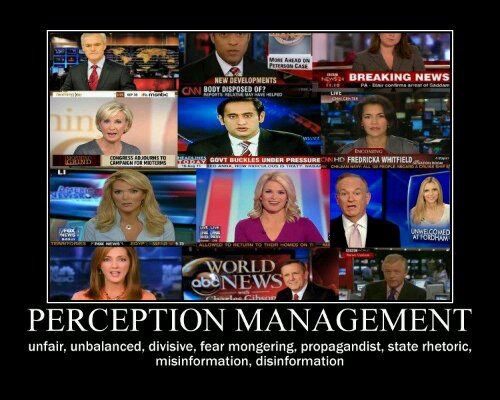
The Victory of ‘Perception Management’

wpid-facebook_-1640825551

By Robert Parry

Source: Consortium News

To understand how the American people find themselves trapped in today’s Orwellian dystopia of endless warfare against an ever-shifting collection of “evil” enemies, you have to think back to the Vietnam War and the shock to the ruling elite caused by an unprecedented popular uprising against that war.

While on the surface Official Washington pretended that the mass protests didn’t change policy, a panicky reality existed behind the scenes, a recognition that a major investment in domestic propaganda would be needed to ensure that future imperial adventures would have the public’s eager support or at least its confused acquiescence.

This commitment to what the insiders called “perception management” began in earnest with the Reagan administration in the 1980s but it would come to be the accepted practice of all subsequent administrations, including the present one of President Barack Obama.

In that sense, propaganda in pursuit of foreign policy goals would trump the democratic ideal of an informed electorate. The point would be not to honestly inform the American people about events around the world but to manage their perceptions by ramping up fear in some cases and defusing outrage in others – depending on the U.S. government’s needs.

Thus, you have the current hysteria over Russia’s supposed “aggression” in Ukraine when the crisis was actually provoked by the West, including by U.S. neocons who helped create today’s humanitarian crisis in eastern Ukraine that they now cynically blame on Russian President Vladimir Putin.

Yet, many of these same U.S. foreign policy operatives – outraged over Russia’s limited intervention to protect ethic Russians in eastern Ukraine – are demanding that President Obama launch an air war against the Syrian military as a “humanitarian” intervention there.

In other words, if the Russians act to shield ethnic Russians on their border who are being bombarded by a coup regime in Kiev that was installed with U.S. support, the Russians are the villains blamed for the thousands of civilian deaths, even though the vast majority of the casualties have been inflicted by the Kiev regime from indiscriminate bombing and from dispatching neo-Nazi militias to do the street fighting.

In Ukraine, the exigent circumstances don’t matter, including the violent overthrow of the constitutionally elected president last February. It’s all about white hats for the current Kiev regime and black hats for the ethnic Russians and especially for Putin.

But an entirely different set of standards has applied to Syria where a U.S.-backed rebellion, which included violent Sunni jihadists from the start, wore the white hats and the relatively secular Syrian government, which has responded with excessive violence of its own, wears the black hats. But a problem to that neat dichotomy arose when one of the major Sunni rebel forces, the Islamic State, started seizing Iraqi territory and beheading Westerners.

Faced with those grisly scenes, President Obama authorized bombing the Islamic State forces in both Iraq and Syria, but neocons and other U.S. hardliners have been hectoring Obama to go after their preferred target, Syria’s President Bashar al-Assad, despite the risk that destroying the Syrian military could open the gates of Damascus to the Islamic State or al-Qaeda’s Nusra Front.

Lost on the Dark Side

You might think that the American public would begin to rebel against these messy entangling alliances with the 1984-like demonizing of one new “enemy” after another. Not only have these endless wars drained trillions of dollars from the U.S. taxpayers, they have led to the deaths of thousands of U.S. troops and to the tarnishing of America’s image from the attendant evils of war, including a lengthy detour into the “dark side” of torture, assassinations and “collateral” killings of children and other innocents.

But that is where the history of “perception management” comes in, the need to keep the American people compliant and confused. In the 1980s, the Reagan administration was determined to “kick the Vietnam Syndrome,” the revulsion that many Americans felt for warfare after all those years in the blood-soaked jungles of Vietnam and all the lies that clumsily justified the war.

So, the challenge for the U.S. government became: how to present the actions of “enemies” always in the darkest light while bathing the behavior of the U.S. “side” in a rosy glow. You also had to stage this propaganda theater in an ostensibly “free country” with a supposedly “independent press.”

From documents declassified or leaked over the past several decades, including an unpublished draft chapter of the congressional Iran-Contra investigation, we now know a great deal about how this remarkable project was undertaken and who the key players were.

Perhaps not surprisingly much of the initiative came from the Central Intelligence Agency, which housed the expertise for manipulating target populations through propaganda and disinformation. The only difference this time would be that the American people would be the target population.

For this project, Ronald Reagan’s CIA Director William J. Casey sent his top propaganda specialist Walter Raymond Jr. to the National Security Council staff to manage the inter-agency task forces that would brainstorm and coordinate this “public diplomacy” strategy.

Many of the old intelligence operatives, including Casey and Raymond, are now dead, but other influential Washington figures who were deeply involved by these strategies remain, such as neocon stalwart Robert Kagan, whose first major job in Washington was as chief of Reagan’s State Department Office of Public Diplomacy for Latin America.

Now a fellow at the Brookings Institution and a columnist at the Washington Post, Kagan remains an expert in presenting foreign policy initiatives within the “good guy/bad guy” frames that he learned in the 1980s. He is also the husband of Assistant Secretary of State for European Affairs Victoria Nuland, who oversaw the overthrow of Ukraine’s elected President Viktor Yanukovych last February amid a very effective U.S. propaganda strategy.

During the Reagan years, Kagan worked closely on propaganda schemes with Elliott Abrams, then the Assistant Secretary of State for Latin America. After getting convicted and then pardoned in the Iran-Contra scandal, Abrams reemerged on President George W. Bush’s National Security Council handling Middle East issues, including the Iraq War, and later “global democracy strategy.” Abrams is now a senior fellow at the Council on Foreign Relations.

These and other neocons were among the most diligent students learning the art of “perception management” from the likes of Raymond and Casey, but those propaganda skills have spread much more widely as “public diplomacy” and “information warfare” have now become an integral part of every U.S. foreign policy initiative.

A Propaganda Bureaucracy

Declassified documents now reveal how extensive Reagan’s propaganda project became with inter-agency task forces assigned to develop “themes” that would push American “hot buttons.” Scores of documents came out during the Iran-Contra scandal in 1987 and hundreds more are now available at the Reagan presidential library in Simi Valley, California.

What the documents reveal is that at the start of the Reagan administration, CIA Director Casey faced a daunting challenge in trying to rally public opinion behind aggressive U.S. interventions, especially in Central America. Bitter memories of the Vietnam War were still fresh and many Americans were horrified at the brutality of right-wing regimes in Guatemala and El Salvador, where Salvadoran soldiers raped and murdered four American churchwomen in December 1980.

The new leftist Sandinista government in Nicaragua also was not viewed with much alarm. After all, Nicaragua was an impoverished country of only about three million people who had just cast off the brutal dictatorship of Anastasio Somoza.

So, Reagan’s initial strategy of bolstering the Salvadoran and Guatemalan armies required defusing the negative publicity about them and somehow rallying the American people into supporting a covert CIA intervention inside Nicaragua via a counterrevolutionary force known as the Contras led by Somoza’s ex-National Guard officers.

Reagan’s task was made tougher by the fact that the Cold War’s anti-communist arguments had so recently been discredited in Vietnam. As deputy assistant secretary to the Air Force, J. Michael Kelly, put it, “the most critical special operations mission we have … is to persuade the American people that the communists are out to get us.”

At the same time, the White House worked to weed out American reporters who uncovered facts that undercut the desired public images. As part of that effort, the administration attacked New York Times correspondent Raymond Bonner for disclosing the Salvadoran regime’s massacre of about 800 men, women and children in the village of El Mozote in northeast El Salvador in December 1981. Accuracy in Media and conservative news organizations, such as The Wall Street Journal’s editorial page, joined in pummeling Bonner, who was soon ousted from his job.

But these were largely ad hoc efforts. A more comprehensive “public diplomacy” operation took shape beginning in 1982 when Raymond, a 30-year veteran of CIA clandestine services, was transferred to the NSC.

A slight, soft-spoken New Yorker who reminded some of a character from a John le Carré spy novel, Raymond was an intelligence officer who “easily fades into the woodwork,” according to one acquaintance. But Raymond would become the sparkplug for this high-powered propaganda network, according to a draft chapter of the Iran-Contra report.

Though the draft chapter didn’t use Raymond’s name in its opening pages, apparently because some of the information came from classified depositions, Raymond’s name was used later in the chapter and the earlier citations matched Raymond’s known role. According to the draft report, the CIA officer who was recruited for the NSC job had served as Director of the Covert Action Staff at the CIA from 1978 to 1982 and was a “specialist in propaganda and disinformation.”

“The CIA official [Raymond] discussed the transfer with [CIA Director] Casey and NSC Advisor William Clark that he be assigned to the NSC as [Donald] Gregg’s successor [as coordinator of intelligence operations in June 1982] and received approval for his involvement in setting up the public diplomacy program along with his intelligence responsibilities,” the chapter said.

“In the early part of 1983, documents obtained by the Select [Iran-Contra] Committees indicate that the Director of the Intelligence Staff of the NSC [Raymond] successfully recommended the establishment of an inter-governmental network to promote and manage a public diplomacy plan designed to create support for Reagan Administration policies at home and abroad.”

During his Iran-Contra deposition, Raymond explained the need for this propaganda structure, saying: “We were not configured effectively to deal with the war of ideas.”

One reason for this shortcoming was that federal law forbade taxpayers’ money from being spent on domestic propaganda or grassroots lobbying to pressure congressional representatives. Of course, every president and his team had vast resources to make their case in public, but by tradition and law, they were restricted to speeches, testimony and one-on-one persuasion of lawmakers.

But things were about to change. In a Jan. 13, 1983, memo, NSC Advisor Clark foresaw the need for non-governmental money to advance this cause. “We will develop a scenario for obtaining private funding,” Clark wrote. (Just five days later, President Reagan personally welcomed media magnate Rupert Murdoch into the Oval Office for a private meeting, according to records on file at the Reagan library.)

As administration officials reached out to wealthy supporters, lines against domestic propaganda soon were crossed as the operation took aim not only at foreign audiences but at U.S. public opinion, the press and congressional Democrats who opposed funding the Nicaraguan Contras.

At the time, the Contras were earning a gruesome reputation as human rights violators and terrorists. To change this negative perception of the Contras as well as of the U.S.-backed regimes in El Salvador and Guatemala, the Reagan administration created a full-blown, clandestine propaganda network.

In January 1983, President Reagan took the first formal step to create this unprecedented peacetime propaganda bureaucracy by signing National Security Decision Directive 77, entitled “Management of Public Diplomacy Relative to National Security.” Reagan deemed it “necessary to strengthen the organization, planning and coordination of the various aspects of public diplomacy of the United States Government.”

Reagan ordered the creation of a special planning group within the National Security Council to direct these “public diplomacy” campaigns. The planning group would be headed by the CIA’s Walter Raymond Jr. and one of its principal arms would be a new Office of Public Diplomacy for Latin America, housed at the State Department but under the control of the NSC.

CIA Taint

Worried about the legal prohibition barring the CIA from engaging in domestic propaganda, Raymond formally resigned from the CIA in April 1983, so, he said, “there would be no question whatsoever of any contamination of this.” But Raymond continued to act toward the U.S. public much like a CIA officer would in directing a propaganda operation in a hostile foreign country.

Raymond fretted, too, about the legality of Casey’s ongoing involvement. Raymond confided in one memo that it was important “to get [Casey] out of the loop,” but Casey never backed off and Raymond continued to send progress reports to his old boss well into 1986. It was “the kind of thing which [Casey] had a broad catholic interest in,” Raymond shrugged during his Iran-Contra deposition. He then offered the excuse that Casey undertook this apparently illegal interference in domestic politics “not so much in his CIA hat, but in his adviser to the president hat.”

As a result of Reagan’s decision directive, “an elaborate system of inter-agency committees was eventually formed and charged with the task of working closely with private groups and individuals involved in fundraising, lobbying campaigns and propagandistic activities aimed at influencing public opinion and governmental action,” the draft Iran-Contra chapter said. “This effort resulted in the creation of the Office of Public Diplomacy for Latin America and the Caribbean in the Department of State (S/LPD), headed by Otto Reich,” a right-wing Cuban exile from Miami.

Though Secretary of State George Shultz wanted the office under his control, President Reagan insisted that Reich “report directly to the NSC,” where Raymond oversaw the operations as a special assistant to the President and the NSC’s director of international communications, the chapter said.

“Reich relied heavily on Raymond to secure personnel transfers from other government agencies to beef up the limited resources made available to S/LPD by the Department of State,” the chapter said. “Personnel made available to the new office included intelligence specialists from the U.S. Air Force and the U.S. Army. On one occasion, five intelligence experts from the Army’s 4th Psychological Operations Group at Fort Bragg, North Carolina, were assigned to work with Reich’s fast-growing operation.”

A “public diplomacy strategy paper,” dated May 5, 1983, summed up the administration’s problem. “As far as our Central American policy is concerned, the press perceives that: the USG [U.S. government] is placing too much emphasis on a military solution, as well as being allied with inept, right-wing governments and groups. …The focus on Nicaragua [is] on the alleged U.S.-backed ‘covert’ war against the Sandinistas. Moreover, the opposition … is widely perceived as being led by former Somozistas.”

The administration’s difficulty with most of these press perceptions was that they were correct. But the strategy paper recommended ways to influence various groups of Americans to “correct” the impressions anyway, removing what another planning document called “perceptional obstacles.”

“Themes will obviously have to be tailored to the target audience,” the strategy paper said.

Casey’s Hand

As the Reagan administration struggled to manage public perceptions, CIA Director Casey kept his personal hand in the effort. On one muggy day in August 1983, Casey convened a meeting of Reagan administration officials and five leading ad executives at the Old Executive Office Building next to the White House to come up with ideas for selling Reagan’s Central American policies to the American people.

Earlier that day, a national security aide had warmed the P.R. men to their task with dire predictions that leftist governments would send waves of refugees into the United States and cynically flood America with drugs. The P.R. executives jotted down some thoughts over lunch and then pitched their ideas to the CIA director in the afternoon as he sat hunched behind a desk taking notes.

“Casey was kind of spearheading a recommendation” for better public relations for Reagan’s Central America policies, recalled William I. Greener Jr., one of the ad men. Two top proposals arising from the meeting were for a high-powered communications operation inside the White House and private money for an outreach program to build support for U.S. intervention.

The results from the discussions were summed up in an Aug. 9, 1983, memo written by Raymond who described Casey’s participation in the meeting to brainstorm how “to sell a ‘new product’ – Central America – by generating interest across-the-spectrum.”

In the memo to then-U.S. Information Agency director Charles Wick, Raymond also noted that “via Murdock [sic] may be able to draw down added funds” to support pro-Reagan initiatives. Raymond’s reference to Rupert Murdoch possibly drawing down “added funds” suggests that the right-wing media mogul had been recruited to be part of the covert propaganda operation. During this period, Wick arranged at least two face-to-face meetings between Murdoch and Reagan.

In line with the clandestine nature of the operation, Raymond also suggested routing the “funding via Freedom House or some other structure that has credibility in the political center.” (Freedom House would later emerge as a principal beneficiary of funding from the National Endowment for Democracy, which was also created under the umbrella of Raymond’s operation.)

As the Reagan administration pushed the envelope on domestic propaganda, Raymond continued to worry about Casey’s involvement. In an Aug. 29, 1983, memo, Raymond recounted a call from Casey pushing his P.R. ideas. Alarmed at a CIA director participating so brazenly in domestic propaganda, Raymond wrote that “I philosophized a bit with Bill Casey (in an effort to get him out of the loop)” but with little success.

Meanwhile, Reich’s Office of Public Diplomacy for Latin America (S/LPD) proved extremely effective in selecting “hot buttons” that would anger Americans about the Sandinistas. He also browbeat news correspondents who produced stories that conflicted with the administration’s “themes.” Reich’s basic M.O. was to dispatch his propaganda teams to lobby news executives to remove or punish out-of-step reporters – with a disturbing degree of success. Reich once bragged that his office “did not give the critics of the policy any quarter in the debate.”

Another part of the office’s job was to plant “white propaganda” in the news media through op-eds secretly financed by the government. In one memo, Jonathan Miller, a senior public diplomacy official, informed White House aide Patrick Buchanan about success placing an anti-Sandinista piece in The Wall Street Journal’s friendly pages. “Officially, this office had no role in its preparation,” Miller wrote.

Other times, the administration put out “black propaganda,” outright falsehoods. In 1983, one such theme was designed to anger American Jews by portraying the Sandinistas as anti-Semitic because much of Nicaragua’s small Jewish community fled after the revolution in 1979.

However, the U.S. embassy in Managua investigated the charges and “found no verifiable ground on which to accuse the GRN [the Sandinista government] of anti-Semitism,” according to a July 28, 1983, cable. But the administration kept the cable secret and pushed the “hot button” anyway.

Black Hats/White Hats

Repeatedly, Raymond lectured his subordinates on the chief goal of the operation: “in the specific case of Nica[ragua], concentrate on gluing black hats on the Sandinistas and white hats on UNO [the Contras’ United Nicaraguan Opposition].” So Reagan’s speechwriters dutifully penned descriptions of Sandinista-ruled Nicaragua as a “totalitarian dungeon” and the Contras as the “moral equivalent of the Founding Fathers.”

As one NSC official told me, the campaign was modeled after CIA covert operations abroad where a political goal is more important than the truth. “They were trying to manipulate [U.S.] public opinion … using the tools of Walt Raymond’s trade craft which he learned from his career in the CIA covert operation shop,” the official admitted.

Another administration official gave a similar description to The Miami Herald’s Alfonso Chardy. “If you look at it as a whole, the Office of Public Diplomacy was carrying out a huge psychological operation, the kind the military conduct to influence the population in denied or enemy territory,” that official explained. [For more details, see Parry’s Lost History.]

Another important figure in the pro-Contra propaganda was NSC staffer Oliver North, who spent a great deal of his time on the Nicaraguan public diplomacy operation even though he is better known for arranging secret arms shipments to the Contras and to Iran’s radical Islamic government, leading to the Iran-Contra scandal.

The draft Iran-Contra chapter depicted a Byzantine network of contract and private operatives who handled details of the domestic propaganda while concealing the hand of the White House and the CIA. “Richard R. Miller, former head of public affairs at AID, and Francis D. Gomez, former public affairs specialist at the State Department and USIA, were hired by S/LPD through sole-source, no-bid contracts to carry out a variety of activities on behalf of the Reagan administration policies in Central America,” the chapter said.

“Supported by the State Department and White House, Miller and Gomez became the outside managers of [North operative] Spitz Channel’s fundraising and lobbying activities. They also served as the managers of Central American political figures, defectors, Nicaraguan opposition leaders and Sandinista atrocity victims who were made available to the press, the Congress and private groups, to tell the story of the Contra cause.”

Miller and Gomez facilitated transfers of money to Swiss and offshore banks at North’s direction, as they “became the key link between the State Department and the Reagan White House with the private groups and individuals engaged in a myriad of endeavors aimed at influencing the Congress, the media and public opinion,” the chapter said.

The Iran-Contra draft chapter also cited a March 10, 1985, memo from North describing his assistance to CIA Director Casey in timing disclosures of pro-Contra news “aimed at securing Congressional approval for renewed support to the Nicaraguan Resistance Forces.”

The chapter added: “Casey’s involvement in the public diplomacy effort apparently continued throughout the period under investigation by the Committees,” including a 1985 role in pressuring Congress to renew Contra aid and a 1986 hand in further shielding the Office of Public Diplomacy for Latin America from the oversight of Secretary Shultz.

A Raymond-authored memo to Casey in August 1986 described the shift of the S/LPD office – where Robert Kagan had replaced Reich – to the control of the Bureau of Inter-American Affairs, which was headed by Assistant Secretary of State Elliott Abrams, who had tapped Kagan for the public diplomacy job.

Even after the Iran-Contra scandal unraveled in 1986-87 and Casey died of brain cancer on May 6, 1987, the Republicans fought to keep secret the remarkable story of the public diplomacy apparatus. As part of a deal to get three moderate Republican senators to join Democrats in signing the Iran-Contra majority report, Democratic leaders agreed to drop the draft chapter detailing the CIA’s domestic propaganda role (although a few references were included in the executive summary). But other Republicans, including Rep. Dick Cheney, still issued a minority report defending broad presidential powers in foreign affairs.

Thus, the American people were spared the chapter’s troubling conclusion: that a secret propaganda apparatus had existed, run by “one of the CIA’s most senior specialists, sent to the NSC by Bill Casey, to create and coordinate an inter-agency public-diplomacy mechanism [which] did what a covert CIA operation in a foreign country might do. [It] attempted to manipulate the media, the Congress and public opinion to support the Reagan administration’s policies.”

Kicking the Vietnam Syndrome

The ultimate success of Reagan’s propaganda strategy was affirmed during the tenure of his successor, George H.W. Bush, when Bush ordered a 100-hour ground war on Feb. 23, 1991, to oust Iraqi troops from Kuwait, which had been invaded the previous August.

Though Iraqi dictator Saddam Hussein had long been signaling a readiness to withdraw – and Soviet President Mikhail Gorbachev had negotiated a withdrawal arrangement that even had the blessings of top U.S. commanders in the field – President Bush insisted on pressing ahead with the ground attack.

Bush’s chief reason was that he – and his Defense Secretary Dick Cheney – saw the assault against Iraq’s already decimated forces as an easy victory, one that would demonstrate America’s new military capacity for high-tech warfare and would cap the process begun a decade earlier to erase the Vietnam Syndrome from the minds of average Americans.

Those strategic aspects of Bush’s grand plan for a “new world order” began to emerge after the U.S.-led coalition started pummeling Iraq with air strikes in mid-January 1991. The bombings inflicted severe damage on Iraq’s military and civilian infrastructure and slaughtered a large number of non-combatants, including the incineration of some 400 women and children in a Baghdad bomb shelter on Feb. 13. [For details, see Consortiumnews.com’s “Recalling the Slaughter of Innocents.”]

The air war’s damage was so severe that some world leaders looked for a way to end the carnage and arrange Iraq’s departure from Kuwait. Even senior U.S. military field commanders, such as Gen. Norman Schwarzkopf, looked favorably on proposals for sparing lives.

But Bush was fixated on a ground war. Though secret from the American people at that time, Bush had long determined that a peaceful Iraqi withdrawal from Kuwait would not be allowed. Indeed, Bush was privately fearful that the Iraqis might capitulate before the United States could attack.

At the time, conservative columnists Rowland Evans and Robert Novak were among the few outsiders who described Bush’s obsession with exorcising the Vietnam Syndrome. On Feb. 25, 1991, they wrote that the Gorbachev initiative brokering Iraq’s surrender of Kuwait “stirred fears” among Bush’s advisers that the Vietnam Syndrome might survive the Gulf War.

“There was considerable relief, therefore, when the President … made clear he was having nothing to do with the deal that would enable Saddam Hussein to bring his troops out of Kuwait with flags flying,” Evans and Novak wrote. “Fear of a peace deal at the Bush White House had less to do with oil, Israel or Iraqi expansionism than with the bitter legacy of a lost war. ‘This is the chance to get rid of the Vietnam Syndrome,’ one senior aide told us.”

In the 1999 book, Shadow, author Bob Woodward confirmed that Bush was adamant about fighting a war, even as the White House pretended it would be satisfied with an unconditional Iraqi withdrawal. “We have to have a war,” Bush told his inner circle of Secretary of State James Baker, national security adviser Brent Scowcroft and Gen. Colin Powell, according to Woodward.

“Scowcroft was aware that this understanding could never be stated publicly or be permitted to leak out. An American president who declared the necessity of war would probably be thrown out of office. Americans were peacemakers, not warmongers,” Woodward wrote.

The Ground War

However, the “fear of a peace deal” resurfaced in the wake of the U.S.-led bombing campaign. Soviet diplomats met with Iraqi leaders who let it be known that they were prepared to withdraw their troops from Kuwait unconditionally.

Learning of Gorbachev’s proposed settlement, Schwarzkopf also saw little reason for U.S. soldiers to die if the Iraqis were prepared to withdraw and leave their heavy weapons behind. There was also the prospect of chemical warfare that the Iraqis might use against advancing American troops. Schwarzkopf saw the possibility of heavy U.S. casualties.

But Gorbachev’s plan was running into trouble with President Bush and his political subordinates who wanted a ground war to crown the U.S. victory. Schwarzkopf reached out to Gen. Powell, chairman of the Joint Chiefs of Staff, to make the case for peace with the President.

On Feb. 21, 1991, the two generals hammered out a cease-fire proposal for presentation to the NSC. The peace deal would give Iraqi forces one week to march out of Kuwait while leaving their armor and heavy equipment behind. Schwarzkopf thought he had Powell’s commitment to pitch the plan at the White House.

But Powell found himself caught in the middle. He wanted to please Bush while still representing the concerns of the field commanders. When Powell arrived at the White House late on the evening of Feb. 21, he found Bush angry about the Soviet peace initiative. Still, according to Woodward’s Shadow, Powell reiterated that he and Schwarzkopf “would rather see the Iraqis walk out than be driven out.”

In My American Journey, Powell expressed sympathy for Bush’s predicament. “The President’s problem was how to say no to Gorbachev without appearing to throw away a chance for peace,” Powell wrote. “I could hear the President’s growing distress in his voice. ‘I don’t want to take this deal,’ he said. ‘But I don’t want to stiff Gorbachev, not after he’s come this far with us. We’ve got to find a way out’.”

Powell sought Bush’s attention. “I raised a finger,” Powell wrote. “The President turned to me. ‘Got something, Colin?’,” Bush asked. But Powell did not outline Schwarzkopf’s one-week cease-fire plan. Instead, Powell offered a different idea intended to make the ground offensive inevitable.

“We don’t stiff Gorbachev,” Powell explained. “Let’s put a deadline on Gorby’s proposal. We say, great idea, as long as they’re completely on their way out by, say, noon Saturday,” Feb. 23, less than two days away.

Powell understood that the two-day deadline would not give the Iraqis enough time to act, especially with their command-and-control systems severely damaged by the air war. The plan was a public-relations strategy to guarantee that the White House got its ground war. “If, as I suspect, they don’t move, then the flogging begins,” Powell told a gratified president.

The next day, at 10:30 a.m., a Friday, Bush announced his ultimatum. There would be a Saturday noon deadline for the Iraqi withdrawal, as Powell had recommended. Schwarzkopf and his field commanders in Saudi Arabia watched Bush on television and immediately grasped its meaning.

“We all knew by then which it would be,” Schwarzkopf wrote. “We were marching toward a Sunday morning attack.”

When the Iraqis predictably missed the deadline, American and allied forces launched the ground offensive at 0400 on Feb. 24, Persian Gulf time.

Though Iraqi forces were soon in full retreat, the allies pursued and slaughtered tens of thousands of Iraqi soldiers in the 100-hour war. U.S. casualties were light, 147 killed in combat and another 236 killed in accidents or from other causes. “Small losses as military statistics go,” wrote Powell, “but a tragedy for each family.”

On Feb. 28, the day the war ended, Bush celebrated the victory. “By God, we’ve kicked the Vietnam Syndrome once and for all,” the President exulted, speaking to a group at the White House. [For more details, see Robert Parry’s Secrecy & Privilege.]

So as not to put a damper on the post-war happy feelings, the U.S. news media decided not to show many of the grisliest photos, such as charred Iraqi soldiers ghoulishly still seated in their burned-out trucks where they had been incinerated while trying to flee. By that point, U.S. journalists knew it wasn’t smart for their careers to present a reality that didn’t make the war look good.

Enduring Legacy

Though Reagan’s creation of a domestic propaganda bureaucracy began more than three decades ago – and Bush’s vanquishing of the Vietnam Syndrome was more than two decades ago – the legacy of those actions continue to reverberate today in how the perceptions of the American people are now routinely managed. That was true during last decade’s Iraq War and this decade’s conflicts in Libya, Syria and Ukraine as well as the economic sanctions against Iran and Russia.

Indeed, while the older generation that pioneered these domestic propaganda techniques has passed from the scene, many of their protégés are still around along with some of the same organizations. The National Endowment for Democracy, which was formed in 1983 under the supervision of Walter Raymond’s NSC operation, is still run by the same neocon, Carl Gershman, and has an even bigger budget, now exceeding $100 million a year.

Gershman and his NED played important behind-the-scenes roles in instigating the Ukraine crisis by financing activists, journalists and other operatives who supported the coup against elected President Yanukovych. The NED-backed Freedom House also beat the propaganda drums. [See Consortiumnews.com’s “A Shadow Foreign Policy.”]

Two other Reagan-era veterans, Elliott Abrams and Robert Kagan, have both provided important intellectual support for continuing U.S. interventionism around the world. Earlier this year, Kagan’s article for The New Republic, entitled “Superpowers Don’t Get to Retire,” touched such a raw nerve with President Obama that he hosted Kagan at a White House lunch and crafted the presidential commencement speech at West Point to deflect some of Kagan’s criticism of Obama’s hesitancy to use military force.

A New York Times article about Kagan’s influence over Obama reported that Kagan’s wife, Assistant Secretary of State Victoria Nuland, apparently had a hand in crafting the attack on her ostensible boss, President Obama.

According to the Times article, the husband-and-wife team share both a common world view and professional ambitions, Nuland editing Kagan’s articles and Kagan “not permitted to use any official information he overhears or picks up around the house” – a suggestion that Kagan’s thinking at least may be informed by foreign policy secrets passed on by his wife.

Though Nuland wouldn’t comment specifically on Kagan’s attack on President Obama, she indicated that she holds similar views. “But suffice to say,” Nuland said, “that nothing goes out of the house that I don’t think is worthy of his talents. Let’s put it that way.”

Misguided Media

In the three decades since Reagan’s propaganda machine was launched, the American press corps also has fallen more and more into line with an aggressive U.S. government’s foreign policy strategies. Those of us in the mainstream media who resisted the propaganda pressures mostly saw our careers suffer while those who played along moved steadily up the ranks into positions of more money and more status.

Even after the Iraq War debacle when nearly the entire mainstream media went with the pro-invasion flow, there was almost no accountability for that historic journalistic failure. Indeed, the neocon influence at major newspapers, such as the Washington Post and the New York Times, only has solidified since.

Today’s coverage of the Syrian civil war or the Ukraine crisis is so firmly in line with the State Department’s propaganda “themes” that it would put smiles on the faces of William Casey and Walter Raymond if they were around today to see how seamlessly the “perception management” now works. There’s no need any more to send out “public diplomacy” teams to bully editors and news executives. Everyone is already onboard.

Rupert Murdoch’s media empire is bigger than ever, but his neocon messaging barely stands out as distinctive, given how the neocons also have gained control of the editorial and foreign-reporting sections of the Washington Post, the New York Times and virtually every other major news outlet. For instance, the demonizing of Russian President Putin is now so total that no honest person could look at those articles and see anything approaching objective or evenhanded journalism. Yet, no one loses a job over this lack of professionalism.

The Reagan administration’s dreams of harnessing private foundations and non-governmental organizations have also come true. The Orwellian circle has been completed with many American “anti-war” groups advocating for “humanitarian” wars in Syria and other countries targeted by U.S. propaganda. [See Consortiumnews.com’s “Selling ‘Peace Groups’ on US-Led Wars.”]

Much as Reagan’s “public diplomacy” apparatus once sent around “defectors” to lambaste Nicaragua’s Sandinistas by citing hyped-up human rights violations now the work is done by NGOs with barely perceptible threads back to the U.S. government. Just as Freedom House had “credibility” in the 1980s because of its earlier reputation as a human rights group, now other groups carrying the “human rights” tag, such as Human Rights Watch, are in the forefront of urging U.S. military interventions based on murky or propagandistic claims. [See Consortiumnews.com’s “The Collapsing Syria-Sarin Case.”]

At this advanced stage of America’s quiet surrender to “perception management,” it is even hard to envision how one could retrace the many steps that would lead back to the concept of a democratic Republic based on an informed electorate. Many on the American Right remain entranced by the old propaganda theme about the “liberal media” and still embrace Reagan as their beloved icon. Meanwhile, many liberals can’t break away from their own wistful trust in the New York Times and their empty hope that the media really is “liberal.”

To confront the hard truth is not easy. Indeed, in this case, it can cause despair because there are so few voices to trust and they are easily drowned out by floods of disinformation that can come from any angle – right, left or center. Yet, for the American democratic Republic to reset its goal toward an informed electorate, there is no option other than to build institutions that are determinedly committed to the truth.

Investigative reporter Robert Parry broke many of the Iran-Contra stories for The Associated Press and Newsweek in the 1980s. You can buy his latest book, America’s Stolen Narrative, either in print here or as an e-book (from Amazon and barnesandnoble.com). You also can order Robert Parry’s trilogy on the Bush Family and its connections to various right-wing operatives for only $34. The trilogy includes America’s Stolen Narrative. For details on this offer, click here.

The Boston Bombing Trial Starts, But Answers Aren’t on the Docket

Boston_Marathon-1024x576

By Russ Baker

Source: WhoWhatWhy

We do not know what will come out of the trial of Dzhokhar Tsarnaev, but one thing we are pretty sure of: we will not get the real, complete story of what actually happened.

Keep this in mind: the prosecution’s job is not principally to fully explain the background of a crime that was committed. It is to convince a jury to convict. Also, in cases such as this, where a lot of questions about security state operations have been raised, the prosecution, as an arm of the federal government, will be under strict orders to win its case without unduly exposing “sources and methods.” That’s a  polite way of saying, “let’s keep the skeletons in the family closet.”

Lead defense counsel Judy Clarke’s job, and her historic role in past cases, has been to do whatever is necessary to ensure her client avoids the death penalty. Meanwhile, the defendant’s job, right now, is to do what his lawyer tells him. It’s not his job to object or say, “Hey, there’s more to this story.”

Clarke’s interest in exposing the truth is strictly limited to: A) using the threat of embarrassing the government or B) casting doubt on its narrative solely as a bargaining chip to keep her client off death row. She has no particular mandate to find out what really happened. Even by her own pronouncements, Clarke either believes her client is guilty or, perceives that the only practical way forward is to accept that her client will be found guilty.

So don’t hold your breath for explanations to some of the questions we’ve raised. They include:

-What actual evidence exists that these brothers made such a sophisticated bomb—which some experts say they could not have? If not, then they had help and did not act alone, as the government insists. Aren’t the identities and roles of other possible players germane?

-What actual evidence exists that these brothers had bombs with them—and detonated them? Pictures of the backpacks that exploded to some people don’t look like the ones the brothers were wearing.

-What actual evidence exists that these brothers shot and killed an MIT police officer? We’re told that video cameras captured the act, but we’re also told that the video doesn’t make a positive ID.

-Did they actually carjack a man, and if so, for how long and under what circumstances? As we have reported, the purported victim, whose identity has not yet been disclosed, substantially changed his story of what happened.

-Why did the brothers’ uncle, who was the son-in-law of an important CIA official, quickly announce (within hours of their death/apprehension) his suspicion that his nephews were indeed the Boston bombers, despite the fact they had never done anything like that nor indicated that they may do such a thing?

-And what about the other CIA associate, a college professor and former case officer who corresponded with Dzhokhar Tsarnaev about Chechnya? Soon after the bombing, the professor, Brian Glyn Williams, was quoted as saying “I hope I didn’t contribute,” an apparent reference to Dzhokhar’s alleged radicalization.

-Why did the FBI seemingly ignore warnings from the Russians that the elder brother was involved in radical activity?

-Why did the FBI harass rather than seek to obtain information from crucial witnesses?

-After being warned by the Russians, why did the FBI fail to monitor Tamerlan when he left the country to travel to restive regions of Russia where Islamists were active? And then how was it that an alert for him was lowered just before he re-entered the U.S.?

-Why has no one been allowed to talk to Dzhokhar to find out his version of events?

-Will the authorities ever explain why so many things that were leaked by the government to prejudice the public (and the jury pool) turned out to be untrue? The claim that Tamerlan Tsarnaev was guilty in a triple homicide in Waltham, Mass., is just one example. The police never questioned Tamerlan about the slayings, even though they knew he was close friends with one of the victims.

-Will the conflicting and dubious explanations about the FBI’s shooting of an unarmed Ibragim Todashev, friend of Tamerlan, in his Florida apartment while being interrogated, be resolved?

-What about claims that there were drills going on during or around the time of the Marathon—and why were there bomb-sniffing dogs at the finish line? Even the cautious Boston Globe noted that officials had planned a training drill eerily similar to what actually happened.

These are some of the things any fair-minded, thoughtful person would like to know.

But the whole thing appears to be sealed, a done deal. We’re hoping for revelations at the trial. But we aren’t expecting too many. The authorities don’t think we need to know much about our country and its doings in that shadowy arena called “national security.” So the chances of them wanting to enlighten us are depressingly slim.

Image Credit:
Boston Bombing. Photo collage by DonkeyHotey for WhoWhatWhy adapted from photos in the public domain or Creative Commons: 
Street Scene – WikimediaDzhokhar Tsarnaev – WikimediaWhite House meeting – WikimediaPolice – Flickr/A Name Like Shields…Vigil – Flickr/Mark Zastrow and Tamerlan Tsarnaev & Ibragim Todashev – DonkeyHotey paintings.

False Flagging the World towards War. The CIA Weaponizes Hollywood

PROPAGANDA

By Larry Chin

Source: GlobalResearch.ca

Almost all wars begin with false flag operations.

The coming conflicts in North Korea and Russia are no exception.

Mass public hysteria is being manufactured to justify aggression against Moscow and Pyongyang, in retaliation for acts attributed to the North Korean and Russian governments, but orchestrated and carried out by the CIA and the Pentagon.

The false flagging of North Korea: CIA weaponizes Hollywood

The campaign of aggression against North Korea, from the hacking of Sony and the crescendo of noise over the film, The Interview, bears all the markings of a CIA false flag operation.

The hacking and alleged threats to moviegoers has been blamed entirely on North Korea, without a shred of credible evidence beyond unsubstantiated accusations by the FBI. Pyongyang’s responsibility has not been proven. But it has already been officially endorsed, and publicly embraced as fact.

The idea of “America under attack by North Korea” is a lie.

The actual individuals of the mysterious group responsible for the hacking remain conveniently unidentified. A multitude of possibilities—Sony insiders, hackers-for-hire, generic Internet vandalism—have not been explored in earnest. The more plausible involvement of US spying agencies—the CIA, the NSA, etc. , their overwhelming technological capability and their peerless hacking and surveillance powers—remains studiously ignored.

Who benefits? It is illogical for Pyongyang to have done it. Isolated, impoverished North Korea, which has wanted improved relations with the United States for years (to no avail), gains nothing by cyberattacking the United States with its relatively weak capabilities, and face the certainty of overwhelming cyber and military response. On the other hand, Washington benefits greatly from any action that leads to regime change in North Korea.

But discussion about Pyongyang’s involvement—or lack of—risks missing the larger point.

This project, from the creation of The Interview to the well-orchestrated international incident, has been guided by the CIA, the Pentagon, and the State Department from the start. It is propaganda. It is a weapon of psychological warfare. It is an especially perverted example of military-intelligence manipulation of popular culture for the purpose of war.

There is nothing funny about any of it.

The Interview was made with the direct and open involvement of CIA and Rand Corporation operatives for the express purpose of destabilizing North Korea. Star and co-director Seth Rogen has admitted that he worked “directly with people who work in the government as consultants, who I’m convinced are in the CIA”. Originally conceived to be a plot taking place in an “unnamed country”, Sony Pictures co-chairman Michael Lynton, who also sits on the board of the Rand Corporation, encouraged the film makers to make the movie overtly about murdering Kim Jong-Un. Bruce Bennett, the Rand Corporation’s North Korean specialist, also had an active role, expressing enthusiasm that the film would assist regime change and spark South Korean action against Pyongyang. Other government figures from the State Department, even operatives connected to Hillary Clinton, read the script.

The infantile, imbecilic, tasteless, reckless idiots involved with The Interview, including the tasteless Rogen and co-director Evan Goldberg, worked with these military-intelligence thugs for months. “Hung out” with them. They do not seem to have had any problem being the political whores for these Langley death merchants. In fact, they had fun doing it. They seem not to give a damn, or even half a damn, that the CIA and the Pentagon have used them, and co-opted the film for an agenda far bigger than the stupid movie itself. All they seem to care about was that they are getting publicity, and more publicity, and got to make a stupid movie. Idiots.

The CIA has now succeeded in setting off a wave of anti-North Korea war hysteria across America. Witness the ignorant squeals and cries from ignorant Americans about how “we can’t let North Korea blackmail us”, “we can’t let Kim take away our free speech”. Listen to the ridiculous debate over whether Sony has the “courage” to release the film to “stand up to the evil North Koreans” who would “blackmail America” and “violate the rights” of idiot filmgoers, who now see it as a “patriotic duty” to see the film.

These mental midgets—their worldviews shaped by the CIA culture ministry with its endorsed pro-war entertainment, violent video games, and gung-ho shoot ‘em ups—are hopelessly brain-curdled, irretrievably lost. Nihilistic and soulless, as well as stupid, most Americans have no problem seeing Kim Jong-Un killed, on screen or in reality. This slice of ugly America is the CIA’s finest post-9/11 army: violent, hate-filled, easily manipulated, eager to obey sheeple who march to whatever drumbeat they set.

And then there are the truly dumb, fools who are oblivious to most of reality, who would say “hey lighten up, it’s only a comedy” and “it’s only a movie”. Naïve, entitled, exceptionalist Americans think the business of the war—the murderous agenda they and their movie are helping the CIA carry out —is all just a game.

The CIA’s business is death, and that there are actual assassination plans in the files of the CIA, targeting heads of state. Kim Jong-Un is undoubtedly on a real assassination list. This is no funny, either.

The real act of war

The provocative, hostile diplomatic stance of the Obama administration speaks for itself. Washington wanted to spark an international incident. It wants regime change in Pyongyang, does not care what North Korea or China think, and does not fear anything North Korea will do about it.

On the other hand, imagine if a film were about the assassination of Benjamin Netanyahu and the toppling of the government in Tel Aviv. Such a film, if it would ever be permitted even in script form, would be stopped cold. If it made it through censors that “magically” never slowed down The Interview (and yes, there is censorship in America, a lot of it) Obama would personally fly to Tel Aviv to apologize. At the very least, Washington would issue statements distancing themselves from the film and its content.

Not so in the case of The Interview. Because American elites actually want the Kim family murdered.

Despite providing no proof of North Korean involvement, President Barack Obama promised a “proportional response”. Promptly, North Korea’s Internet was mysteriously shut down for a day.

Unless one is naïve to believe in this coincidence, all signs point to US spy agencies (CIA, NSA, etc.) or hackers working on behalf of Washington and Langley.

Given the likelihood that North Korea had nothing to do with either the hacking of Sony, the initial pulling of the movie (a big part of the publicity stunt, that was not surprisingly reversed) or the “blackmailing” of moviegoers, the shutting down of North Korea’s Internet was therefore a unilateral, unprovoked act of war. Washington has not officially taken responsibility. For reasons of plausible denial, it never will.

Perhaps it was a dry run. A message. The US got to test how easily it can take down North Korea’s grid. As we witnessed, given overwhelming technological advantage, it was very easy. And when a war against Pyongyang begins in earnest, American forces will know exactly what they will do.

The US is flexing its Asia-Pacific muscles, sending a message not only to Pyongyang, but to China, a big future target. Some of the other muscle-flexing in recent months included the anti-Beijing protests in Hong Kong (assisted by the CIA and the US State Department), ongoing provocations in the South China Sea over disputed oil, and new defense agreements that place new anti-missile systems and missile-guided naval vessels to the region.

The bottom line is that America has once again been mobilized into supporting a new war that could take place soon. The CIA and Sony have successfully weaponized a stupid movie, making it into a cause and a battle cry.

If and when bombs fall on North Korea, blood will be on the hands of the makers of The Interview, every single executive who allowed it to be made, and the hordes who paid to see it.

If America were a decent, sane society, The Interview would be exposed, roundly denounced, boycotted and shunned. Instead it is celebrated.

The CIA should be condemned. Instead, Seth Rogen hangs out with them. America, increasingly dysfunctional, loves them. Obeys them.

The false flagging of Russia

Regarding The Interview, Russian Foreign Ministry spokesman Alexander Lukashevich issued a statement in sympathy with North Korea, correctly calling the film’s concept aggressive and scandalous, and decried the US retaliatory response as counterproductive and dangerous to international relations.

Of course. Washington has no interest in improved international relations.

The Russians should know.

Like Kim Jong-Un, Vladimir Putin has been vilified, demonized and false-flagged, incessantly. If Kim is today’s object of ridicule, Putin is Evil Incarnate.

Consider the hysterical, desperate provocations by Washington in recent months.

A US-NATO coup, engineered by the CIA, toppled the government of Ukraine, planting a pro-US neo-Nazi criminal apparatus on Russia’s doorstep. The CIA and its worldwide network of propagandists pinned the blame on Putin and Russia for aggression, and for obstructing “democracy”.

The MH-17 jetliner is downed by Ukrainian operatives, with the support of the CIA, Mi-6, etc. etc. This false flag operation was blamed on Russia— “Putin’s Missile”. The US and NATO are still trying to pin these murders on Putin.

The war against the Islamic State—a massive CIA false flag operation—seeks to topple with the the Assad government as well as to militarily counter Russia. The ongoing Anglo-American conquest of regional oil and gas supplies, and energy transport routes is also aimed at checkmating Russia and China across the region.

The US and NATO have attacked the Russian federation with sanctions. The US and Saudi Arabia have collapsed oil prices, to further destroy the Russian economy. Full-scale military escalations are being planned. The US Congress is pushing new legislation tantamount to an open declaration of war against Russia.

What next? Perhaps it is time for the CIA to produce a Seth Rogen-James Franco movie about assassinating Putin. Another “parody”. Or how about a movie about killing Assad, or anyone else the United States wants to make into a Public Enemy? Don’t think Langley isn’t working on it.

The return of the Bushes (who were never gone) 

In the midst of all escalating war hysteria comes news that Jeb Bush is “actively exploring” running for president in 2016. The long predicted return of the Bush family, the kings of terrorism, the emperors of the false flag operation, back to the White House appears imminent.

The CIA will have its favorite family back in the Oval Office, with true CIA scion to manage the apocalyptic wars are likely to be launched in earnest in the next two years: Russia/Ukraine, North Korea, the Middle East.

Jeb Bush will “finish the job”.

The 2016 presidential “contest” will be a charade. It is likely to put forth two corrupt establishment political “friends” posing as adversaries, when in fact, they are longtime comrades and conspirators. On one side, Hillary (and Bill) Clinton. On the other side, Jeb Bush, with George H.W., George W. and all of the Bush cronies crawling back out of the rotten woodwork. The fact is that the Clintons and Bushes, and their intertwined networks, have run the country since the 1980s, their respective camps taking turns in power, with Obama as transitional figurehead (his administration has always been run by neoliberal elites connected to the Clintonistas, including Hillary Clinton herself).

The collective history of the Bushes stretches back to the very founding of the American intelligence state. It is the very history of modern war criminality. The resume is George H.W. Bush—the CIA operative and CIA Director—is long and bloody, and littered with cocaine dust. The entire Bush family ran the Iran-Contra/CIA drug apparatus, with the Clintons among the Bush network’s full partners in the massive drug/weapons/banking frauds of that era, the effects of which still resonate today. And we need not remind that the Bush clan and 9/11 are responsible for the world of terror and false flag foreign policy and deception that we suffer today.

While it remains too early to know which way the Establishment will go with their selection (and it depends on how world war shakes out between now and 2016), it is highly likely that Jeb

Bush would be the pick.

Hillary Clinton has already been scandalized—“Benghazi-ed”. Jeb Bush, on the other hand, has ideal Establishment/CIA pedigree. He has waited years for the stupid American public to forget the horrors that his family—Georges H.W. and W.— brought humanity. And now Americans , with their ultra-short memories, have indeed forgotten, if they had ever understood it in the first place.

And the American public does not know who Jeb Bush is, beyond the last name. Jeb Bush, whom Barbara Bush always said was the “smart one”, has been involved in Bush narco-criminal business since Iran-Contra. His criminal activities in Florida, his connection with anti-Castro Cuban terrorists and other connections are there, for those who bother to investigate them. His Latin American connections—including his ability to speak fluent Spanish, a Latin wife and a half-Latin son (George P. Bush, the next up and coming political Bush)—conveniently appeals to the fastest-growing demographic, as well as those in the southern hemisphere drug trade. Recent Obama overtures towards the Latino demographic—immigration, Cuba—appear to be a Democratic Party move to counter Jeb Bush’s known strengths in the same demographic.

Today, in the collective American mind, Kim Jong-Un and Vladimir Putin are “the bad guys”. But the mass murdering war criminal Bushes are saints. “Nice guys”.

A Jeb Bush presidency will be a pure war presidency, one that promises terror, more unspeakable than we are experiencing now, lording it over a world engulfed in holocaust.

This is not a movie.

US escalates campaign against North Korea

cia_psyops_deception_william_colby_casey_james_angleton

By Patrick Martin

Source: WSWS.org

The Obama administration ratcheted up the pressure Friday on the isolated Stalinist regime in North Korea, with the FBI formally accusing North Korea of responsibility for the hacking attack on Sony Pictures Entertainment and Obama declaring that the US government would carry out an unspecified “proportionate response” against Pyongyang at “a time and place of our own choosing.”

Obama made no mention of the cyberattack or North Korea’s alleged responsibility in his opening statement at his end-of-the-year White House press conference, waiting until a suitable question was posed by the media to raise the issue.

The FBI offered no proof of a North Korean link to the hacking attack on Sony, which led to the studio’s cancellation of the planned December 25 release of the Seth Rogen film The Interview, a comedy whose premise is that two American journalists are contracted by the CIA to assassinate North Korean leader Kim Jong-un.

The FBI statement claimed several similarities between computer code used in the malware deployed against Sony and that used in previous attacks linked to North Korea, but these claims are unsubstantiated and computer security experts interviewed in the press have cast doubt on whether any definitive links can be established.

The American public is asked to take on faith the FBI’s declaration that it “now has enough information to conclude that the North Korean government is responsible for these actions.” The statement continued: “North Korea’s actions were intended to inflict significant harm on a US business and suppress the right of American citizens to express themselves.”

Such language is ironic coming from a federal agency that plays a central role in the build-up of a police state apparatus in America. A recent report in the Wall Street Journal, citing figures from the National Center for State Courts, found that the FBI has accumulated criminal record files on 80 million Americans—more than one-third of the adult population.

Obama likewise provided no evidence of North Korean involvement, merely citing the FBI statement as authoritative. He criticized Sony Pictures for withdrawing The Interview from circulation in response to threats from the hackers, who called themselves “Guardians of Peace.”

“We cannot have a society where some dictator someplace can start imposing censorship here in the United States,” Obama said, “because if somebody is able to intimidate folks out of releasing a satirical movie, imagine what they’ll do when they see a documentary that they don’t like, or news reports that they don’t like.”

He continued, “That’s not what America’s about. Again, I’m sympathetic that Sony as a private company was worried about liabilities and this and that and the other. I wish they’d spoken to me first. I would have told them, do not get into a pattern in which you’re intimidated by these kinds of criminal attacks.”

This pretense of alarm over the threat to the civil liberties of Americans is just as hypocritical coming from Obama as from the FBI. His administration has prosecuted more whistleblowers for leaking information about government crimes to the press than any other in American history. Obama has presided over dragnet surveillance of the telecommunications and email of every American by the National Security Agency, trampling on the Bill of Rights. And he has asserted the unprecedented “right” of the president to order the drone missile assassination of anyone in the world, including American citizens.

As for censorship, this is a government that doesn’t hesitate to demand that major newspapers and television networks withhold information from the public, including information on massive violations of the Constitution by the government itself, in the name of “national security.” The media routinely complies, allowing the government to vet and/or censor articles and news reports before they are aired.

The latest charges against North Korea have provided yet another example of the American press corps’ readiness to function as a de facto sounding board for state propaganda. There has been no pretense of critical independence in the vast bulk of reporting on the hacking attack on Sony and the alleged responsibility of the North Korean regime, which has denied any involvement. The government’s claims are simply reported as facts, whether by the television networks and cable channels or newspapers such as the New York Times and Washington Post.

The government’s record of lying, whether on Iraqi weapons of mass destruction, NSA spying, or, more recently, CIA torture, is simply ignored.

The daily newspapers and television networks have largely dropped any reporting on last week’s Senate Intelligence Committee report documenting systematic torture by the CIA of prisoners held in secret prisons overseas. Not a single question was raised about the torture report at Obama’s hour-long press conference.

Obama made it clear that the US government would retaliate against North Korea for the alleged hacking attack on Sony. “They caused a lot of damage, and we will respond,” he said. “We will respond proportionally, and we’ll respond in a place and time and manner that we choose.”

While the tone was matter-of-fact, Obama refused to rule out military action in response to a follow-up question by a reporter, saying only that he would not expand on his previous statement about an indeterminate future response.

White House, Pentagon and intelligence officials were holding daily meetings on North Korea, an Obama spokesman said. Before the FBI issued its finding, Gen. Martin Dempsey, the chairman of the Joint Chiefs of Staff, said he was “very concerned” about the US potentially concluding that a nation-state was behind the attack. “When and if that call is made, it will be a moment to confront that reality” of a state-supported cyberattack on a US corporation, Dempsey said.

The US military buildup in the Asia-Pacific region continues apace. Obama has just signed the 2015 National Defense Authorization Act, which provides for expanded efforts to establish a joint missile defense system in northeast Asia, involving South Korea and Japan. This would be directed against North Korea in the first instance, but ultimately against China, the main US target in the region.

On Thursday, Obama approved the sale of four US frigates to Taiwan, under the Naval Vessel Transfer Act, over the vociferous opposition of Beijing. The sale of the guided-missile frigates “blatantly interferes in China’s domestic affairs and undermines China’s sovereignty and security interests,” a Chinese defense ministry spokesman said.

While Obama said the FBI had not linked the Sony attack to any nation other than North Korea, other US officials pointed out that North Korea’s only connection to the World Wide Web is through China, an indication that further escalation of the Sony affair could involve charging China with at least a supporting role.

Meanwhile, evidence continues to surface that the entire Sony Pictures affair, going back to the original decision by the studio to make a film depicting the murder of Kim Jong-un, was a provocation inspired by the US military-intelligence apparatus.

Email communications obtained by the online publication Daily Beast and cited in many columns and commentaries Friday strongly suggest this. Sony Pictures co-chairman Michael Lynton is on the board of trustees of the Rand Corporation, a leading private consulting firm for the CIA and Pentagon, and it was Rand’s North Korea specialist, Bruce Bennett, who pushed hard for the Sony film to focus on the assassination of North Korea’s ruler.

According to one of these emails, Seth Rogen, the film’s co-director, had initially intended the film to target an unnamed leader of an unnamed country, and it was Lynton himself “that told them to not use a fictitious name, but to go with Kim Jong-un.” The same message, written by Marisa Liston, a Sony senior vice president, said that Rogen and co-director Evan Goldberg “mention that a former CIA agent and someone who used to work for Hillary Clinton looked at the script.”

An email from Bennett, the Rand analyst, to Lynton suggested that the film could actually help unseat the North Korean regime. “I have been clear that the assassination of Kim Jong Un is the most likely path to a collapse of the North Korean government,” Bennett wrote. “I believe that a story that talks about the removal of the Kim family regime and the creation of a new government by the North Korean people (well, at least the elites) will start some real thinking in South Korea and, I believe, in the North once the DVD leaks into the North (which it almost certainly will).”

Lynton responded, “Bruce—Spoke to someone very senior in State (confidentially). He agreed with everything you have been saying. Everything. I will fill you in when we speak.”

Other emails name two State Department officials—Assistant Secretary Daniel Russel and Ambassador Robert King, US special envoy for North Korea human-rights issues—as providing input to the film.

The CIA-engineered oil glut to bring down Putin and Maduro

Russian President Vladimir Putin shakes hands with his Venezuelan counterpart Nicolas Maduro during a signing ceremony at the Kremlin in Moscow

By Wayne Madsen

Source: Intrepid Report

John Brennan’s long familiarity with Saudi Arabia, owing to the time he spent there as the CIA station chief in Riyadh in the 1990s and his knowledge of Saudi oil operations, has paid off. WMR has learned that Brennan’s agents inside Saudi Aramco convinced the firm’s management and the Saudi Oil Ministry to begin fracking operations to stimulate production in Saudi Arabia’s oldest oil fields.

By pumping salt water into older wells, some at a depth of 3 to 6 thousand feet, an inordinate amount of pressure was built up. The CIA’s oil industry implants knew what would occur when the fracking operations began. Due to the dangerously high water pressure, the Saudis were forced continuously pump oil until the pressure became equalized. That process is continuing. If the Saudis ceased pumping oil, they would permanently lose the wells to salt water contamination. In the current “pump it or lose it” situation, the Saudis are forced to pump at a rate that may take up to 5 years before they can slow down production rates.

The net result of the CIA-inspired fracking operations, which the Saudis were warned not to pursue by petroleum engineers working for some foreign-based firms like Schlumberger, is that there will be an oil supply glut for the next 5 years. The glut will be followed by a reduction in Saudi oil production unless new oil fields are brought on line. There is now a major push by U.S. and Canadian oil companies to bring the Keystone XL pipeline from Canada to the United States to offset the expected sharp rise in oil prices in five years.

The CIA operation to frack Middle Eastern oil fields was not only limited to Saudi Arabia. WMR has learned from oil industry sources that similar fracking caused overproduction problems in Kuwait and Iraq.

The result of the sudden decline in oil prices has resulted in heavy damage to the economies of the CIA-targeted countries of Russia, Iran, and Venezuela. Brennan and his economic warfare operatives banked on the Saudi overproduction to harm the economies of all three countries and the CIA has not been disappointed. The CIA figures that the governments of Vladimir Putin in Russia, Ayatollah Ali Khamenei in Iran, and Nicolas Maduro in Venezuela will have long since collapsed and been replaced by pro-Western regimes within 5 years.

Already, from his base in Switzerland, exiled Russian tax evader billionaire Mikhail Khodorkovsky has called for Putin’s overthrow and even his assassination. Meanwhile, the U.S. Congress and the Obama administration have taken cues from the CIA to impose devastating economic sanctions on both Russia and Venezuela. Similar congressional legislation to increase sanctions on Iran is pending.

Russia has been harmed the most by the CIA’s Saudi oil production scheme. The Russian ruble fell 56 percent in value against the U.S. dollar while Russian interest rates climbed to 17 percent. The price of shares of Russia’s largest lending bank, Sberbank, fell 18 percent. Although the Russian economic collapse has resulted in financial ripples around the world, with Austrian and French banks losing their stock values and the value of the Polish zloty and Hungarian forint falling against the dollar, the Obama administration says that there will be no easing on economic sanctions imposed on Russia over Ukraine. Obama has put the investments of American holders of Russian bonds in dire jeopardy.

The Pacific Investment Management Company’s (PEBIX) Emerging Markets Bond Fund, which holds over $800 million in Russian bonds, has lost almost 8 percent in value in the past few weeks.

Russian Central Bank Vice Chairman Sergei Shvetsov said, “What is happening is a nightmare that we could not even have imagined a year ago.”

Meanwhile, basic staples in Venezuela, including cooking oil, rice, and corn flour, are becoming hard to obtain. The U.S. dollar has jumped 1,700 percent in value against the Venezuelan bolivar on the black market. The CIA is using the financial collapse to push for an undemocratic overthrow of the Venezuelan government.

Iran, which has been under punitive Western economic sanctions for a number of years over its nuclear power program, is probably best able to weather the storm. Iran has built up a rather impressive domestic food production, telecommunications, and oil industry infrastructure to survive the sanctions. However, Iranian President Hassan Rouhani appears very aware of the Saudi role in the conspiracy to drive down oil prices.

Rouhani recently said, “The main reason for [the oil price plunge] is [a] political conspiracy by certain countries against the interest of the region and the Islamic world and it is only in the interest of some other countries . . . Iran and people of the region will not forget such conspiracies, or in other words, treachery against the interests of the Muslim world.”

Brennan’s and the CIA’s industrial sabotage of the Saudi and other Middle East oil industries will continue to have far-reaching effects on the world economy. Oil industry insiders fear that the CIA has unleashed something that may deal a devastating blow to the global economy.