Back From the Abyss

1405110494214

Since June 4, Stephen Lendman’s blog has been without updates and his last post indicated he’s been having serious health problems. But just yesterday he returned with an account of his struggle to regain his health and like a true fighter, he devotes more than half of his new post to condemning Israeli war crimes.

Back from the Abyss

By Stephan Lendman

Source: SteveLendmanBlog

I’ve been ill and unable to do what I love best for 2 months. Yesterday, August 6, I came home for the first time since hospitalized on June 4.

At the time, I posted a brief message on my blog site. I expected a few days of treatment. Then home to resume my writing and media work.

Things didn’t turn out that way. I owe my friends, colleagues and readers an explanation.

Multiple problems developed. One rather serious one. Thankfully they were resolved. But it took time – 2 weeks at Northwestern Memorial Hospital followed by 6 weeks at Warren Barr rehab facility.

The experience was life changing. I wondered at times if I’d ever be me again. I still have lots of recovery to go as an outpatient.

I worked very hard with good therapy people helping me daily. I’m deeply grateful to them for taking me from a very low point to going home yesterday.

It never felt so good to walk through my front door. I began emailing friends and colleagues to explain. More emailing coming.

Wonderful responses came. Means so much to this old guy – age 80 in mid-August. Still with so much I want to do – articles, media work and another book or 2 – maybe more as able.

I’ll slowly get back to what I love best. My health, of course, is top priority. Later this morning I have hours of treatment at Northwestern Mem. Hosp and weekly after that for 2 months followed by monthly treatment for a year.

I’m working with wonderful doctors. Some personal friends. They know what I do. They want me back in full swing. Will take time. I’m very patient.

Writing et al will come as able. Important not to overdue it. Yet what i love best is therapeutic – for the mind, soul and body. I’m fully committed to return to a much full health as possible – my top priority.

My great thanks to everyone now wishing me well. I was offline, unconnected with no email addresses so unable to communicate until now.

Physically for a good while I wasn’t in good shape enough to do it.

Now I’m back. My output won’t be my customary 2 articles a day. I’ll do what I can as health and strength permits.

Words can’t explain how wonderful it feels and how deeply grateful i am to be back from a very low point – mostly dependent on others to being near independent again now.

I can do things now we otherwise take for granted – my personal hygiene, cooking, laundry, all chores in my apartment, walk on the street with a walker, ride the bus, take a cab down, shop nearby and more.

Each day begins with an exercise regimen. It’s crucial to my recovery and ability to regain full health and vigor.

It gives me the energy to do my daily tasks. A day at a time I hope will make me fully me again – the me I largely took for granted. Never again.

While absent I couldn’t write on vital issues I’d have focused on daily – Israel’s genocidal, cold, calculated, premeditated aggression, mass murder and destruction of Gaza.

It was and remains one of history’s greatest crimes of war, against humanity, and genocide.

Israel remains unaccountable as always. Cairo talks will achieve nothing for the Palestinians. Israeli agreements when made aren’t worth the paper they’re written on.

They’re systematically and repeatedly violated. Expect nothing different this time.

The Gaza war was much more than against Hamas. It was against millions of Palestinian non-combatant men, women, children, infants, the elderly and infirm. It’s genocide writ large.

It’s supported by Washington with billions of dollars of annual aid, weapons, Security Council vetoes and more.

The international community yawns and lets Israel get away with unspeakable crimes with impunity.

The pattern repeated large and smaller scale since the 1947-48 war taking a horrific toll on the entire Palestinian population.

Expect more of the same ahead. Expect Palestine’s liberating struggle to continue with virtually no help from the international community.

Expect more Israeli initiated mass much and destruction. Expect multiple daily pre-dawn Israeli West Bank incursions, terrorizing Palestinian families.

Expect many more political prisoners in Israel’s gulag. Expect torture, targeted assassinations and land theft to continue unabated.

Expect justice systematically denied as always. Expect Palestinians largely on their own in their struggle for dignity and proper treatment never afforded.

Expect Israeli crimes of war, against humanity and slow-motion genocide to continue unabated.

Expect Hamas and other resistance groups to be unjustly blamed for repeated Israeli crimes – like premeditated shelling UN refuges, civilian neighborhoods, hospitals, schools, mosques, power and other vital infrastructure and more.

Israel is a lawless, rogue, racist, apartheid terror state – uncountable for horrific crimes repeatedly.

Palestinian suffering is beyond words to explain properly. When will it end? How? No time soon for sure.

How many more Palestinians will die unjustly? How many more will have Israeli shells, bombs and missiles dismember their bodies?

How many more families will lose loved ones? How many more communities will be destroyed? How many more orphaned Palestinian children will be on their own?

How many more parents will lose their offspring, homes and all their possessions?

How much longer will injustice prevail? When, if ever, will Israel be held accountable?

When, if ever, will US tax dollars stop funding Israel’s out-of-control killing machine.

Future articles will have much more to say – written as health permits.

And much to say about the war in Ukraine – the democratic freedom fighting struggle against lawless, illegitimate US installed fascism.

Much to say about these and other important issues ahead as health and strength permits.

It’s wonderful being back doing what I love best.


Stephen Lendman lives in Chicago. He can be reached at lendmanstephen@sbcglobal.net. 

His new book as editor and contributor is titled “Flashpoint in Ukraine: US Drive for Hegemony Risks WW III.”

http://www.claritypress.com/LendmanIII.html

Visit his blog site at sjlendman.blogspot.com. 

Listen to cutting-edge discussions with distinguished guests on the Progressive Radio News Hour on the Progressive Radio Network.

It airs three times weekly: live on Sundays at 1PM Central time plus two prerecorded archived programs. 

http://www.progressiveradionetwork.com/the-progressive-news-hour 

The Real Reasons America Used Nuclear Weapons Against Japan

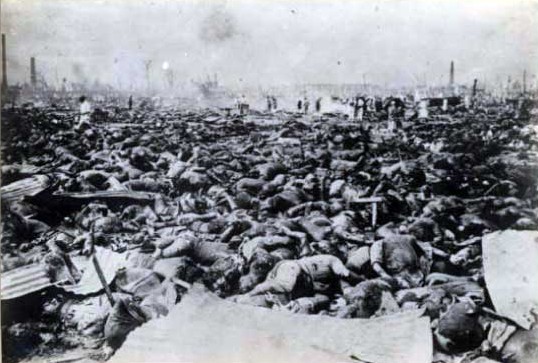
Hiroshima_Capp

Today marks the anniversary of the atomic bombing of Hiroshima in 1945, an event responsible for the deaths of up to 166,000 lives, most of whom were innocent civilians. This was followed by the use of another atomic bomb (using plutonium instead of uranium) on Nagasaki three days later, claiming at least 80,000 (mostly civilian) lives. As the U.S. continues to kill innocent people through long distance weapons such as drones, it’s more important than ever to question official claims about what they are doing in the name of “freedom” and “democracy” and the real reasons why. Historians such as Howard Zinn have long known that official government justifications for the bombings were lies. The fundamental reasons were economic and geopolitical, and much supporting documentation has been helpfully compiled in the following post.

The REAL Reason America Used Nuclear Weapons Against Japan (It Was Not To End the War Or Save Lives)

Source: Washington’s Blog

Atomic Weapons Were Not Needed to End the War or Save Lives

Like all Americans, I was taught that the U.S. dropped nuclear bombs on Hiroshima and Nagasaki in order to end WWII and save both American and Japanese lives.

But most of the top American military officials at the time said otherwise.

The U.S. Strategic Bombing Survey group, assigned by President Truman to study the air attacks on Japan, produced a report in July of 1946 that concluded (52-56):

Based on a detailed investigation of all the facts and supported by the testimony of the surviving Japanese leaders involved, it is the Survey’s opinion that certainly prior to 31 December 1945 and in all probability prior to 1 November 1945, Japan would have surrendered even if the atomic bombs had not been dropped, even if Russia had not entered the war, and even if no invasion had been planned or contemplated.

General (and later president) Dwight Eisenhower – then Supreme Commander of all Allied Forces, and the officer who created most of America’s WWII military plans for Europe and Japan – said:

The Japanese were ready to surrender and it wasn’t necessary to hit them with that awful thing.

Newsweek, 11/11/63, Ike on Ike

Eisenhower also noted (pg. 380):

In [July] 1945… Secretary of War Stimson, visiting my headquarters in Germany, informed me that our government was preparing to drop an atomic bomb on Japan. I was one of those who felt that there were a number of cogent reasons to question the wisdom of such an act. …the Secretary, upon giving me the news of the successful bomb test in New Mexico, and of the plan for using it, asked for my reaction, apparently expecting a vigorous assent.

During his recitation of the relevant facts, I had been conscious of a feeling of depression and so I voiced to him my grave misgivings, first on the basis of my belief that Japan was already defeated and that dropping the bomb was completely unnecessary, and secondly because I thought that our country should avoid shocking world opinion by the use of a weapon whose employment was, I thought, no longer mandatory as a measure to save American lives. It was my belief that Japan was, at that very moment, seeking some way to surrender with a minimum loss of ‘face’. The Secretary was deeply perturbed by my attitude….

Admiral William Leahy – the highest ranking member of the U.S. military from 1942 until retiring in 1949, who was the first de facto Chairman of the Joint Chiefs of Staff, and who was at the center of all major American military decisions in World War II – wrote (pg. 441):

It is my opinion that the use of this barbarous weapon at Hiroshima and Nagasaki was of no material assistance in our war against Japan. The Japanese were already defeated and ready to surrender because of the effective sea blockade and the successful bombing with conventional weapons.

The lethal possibilities of atomic warfare in the future are frightening. My own feeling was that in being the first to use it, we had adopted an ethical standard common to the barbarians of the Dark Ages. I was not taught to make war in that fashion, and wars cannot be won by destroying women and children.

General Douglas MacArthur agreed (pg. 65, 70-71):

MacArthur’s views about the decision to drop the atomic bomb on Hiroshima and Nagasaki were starkly different from what the general public supposed …. When I asked General MacArthur about the decision to drop the bomb, I was surprised to learn he had not even been consulted. What, I asked, would his advice have been? He replied that he saw no military justification for the dropping of the bomb. The war might have ended weeks earlier, he said, if the United States had agreed, as it later did anyway, to the retention of the institution of the emperor.

Moreover (pg. 512):

The Potsdam declaration in July, demand[ed] that Japan surrender unconditionally or face ‘prompt and utter destruction.’ MacArthur was appalled. He knew that the Japanese would never renounce their emperor, and that without him an orderly transition to peace would be impossible anyhow, because his people would never submit to Allied occupation unless he ordered it. Ironically, when the surrender did come, it was conditional, and the condition was a continuation of the imperial reign. Had the General’s advice been followed, the resort to atomic weapons at Hiroshima and Nagasaki might have been unnecessary.

Similarly, Assistant Secretary of War John McLoy noted (pg. 500):

I have always felt that if, in our ultimatum to the Japanese government issued from Potsdam [in July 1945], we had referred to the retention of the emperor as a constitutional monarch and had made some reference to the reasonable accessibility of raw materials to the future Japanese government, it would have been accepted. Indeed, I believe that even in the form it was delivered, there was some disposition on the part of the Japanese to give it favorable consideration. When the war was over I arrived at this conclusion after talking with a number of Japanese officials who had been closely associated with the decision of the then Japanese government, to reject the ultimatum, as it was presented. I believe we missed the opportunity of effecting a Japanese surrender, completely satisfactory to us, without the necessity of dropping the bombs.

Under Secretary of the Navy Ralph Bird said:

I think that the Japanese were ready for peace, and they already had approached the Russians and, I think, the Swiss. And that suggestion of [giving] a warning [of the atomic bomb] was a face-saving proposition for them, and one that they could have readily accepted.

***

In my opinion, the Japanese war was really won before we ever used the atom bomb. Thus, it wouldn’t have been necessary for us to disclose our nuclear position and stimulate the Russians to develop the same thing much more rapidly than they would have if we had not dropped the bomb.

War Was Really Won Before We Used A-Bomb, U.S. News and World Report, 8/15/60, pg. 73-75.

He also noted (pg. 144-145, 324):

It definitely seemed to me that the Japanese were becoming weaker and weaker. They were surrounded by the Navy. They couldn’t get any imports and they couldn’t export anything. Naturally, as time went on and the war developed in our favor it was quite logical to hope and expect that with the proper kind of a warning the Japanese would then be in a position to make peace, which would have made it unnecessary for us to drop the bomb and have had to bring Russia in.

Alfred McCormack – Director of Military Intelligence for the Pacific Theater of War, who was probably in as good position as anyone for judging the situation – believed that the Japanese surrender could have been obtained in a few weeks by blockade alone:

The Japanese had no longer enough food in stock, and their fuel reserves were practically exhausted. We had begun a secret process of mining all their harbors, which was steadily isolating them from the rest of the world. If we had brought this project to its logical conclusion, the destruction of Japan’s cities with incendiary and other bombs would have been quite unnecessary.

General Curtis LeMay, the tough cigar-smoking Army Air Force “hawk,” stated publicly shortly before the nuclear bombs were dropped on Japan:

The war would have been over in two weeks. . . . The atomic bomb had nothing to do with the end of the war at all.

The Vice Chairman of the U.S. Bombing Survey Paul Nitze wrote (pg. 36-37, 44-45):

[I] concluded that even without the atomic bomb, Japan was likely to surrender in a matter of months. My own view was that Japan would capitulate by November 1945.

***

Even without the attacks on Hiroshima and Nagasaki, it seemed highly unlikely, given what we found to have been the mood of the Japanese government, that a U.S. invasion of the islands [scheduled for November 1, 1945] would have been necessary.

Deputy Director of the Office of Naval Intelligence Ellis Zacharias wrote:

Just when the Japanese were ready to capitulate, we went ahead and introduced to the world the most devastating weapon it had ever seen and, in effect, gave the go-ahead to Russia to swarm over Eastern Asia.

Washington decided that Japan had been given its chance and now it was time to use the A-bomb.

I submit that it was the wrong decision. It was wrong on strategic grounds. And it was wrong on humanitarian grounds.

Ellis Zacharias, How We Bungled the Japanese Surrender, Look, 6/6/50, pg. 19-21.

Brigadier General Carter Clarke – the military intelligence officer in charge of preparing summaries of intercepted Japanese cables for President Truman and his advisors – said (pg. 359):

When we didn’t need to do it, and we knew we didn’t need to do it, and they knew that we knew we didn’t need to do it, we used them as an experiment for two atomic bombs.

Many other high-level military officers concurred. For example:

The commander in chief of the U.S. Fleet and Chief of Naval Operations, Ernest J. King, stated that the naval blockade and prior bombing of Japan in March of 1945, had rendered the Japanese helpless and that the use of the atomic bomb was both unnecessary and immoral. Also, the opinion of Fleet Admiral Chester W. Nimitz was reported to have said in a press conference on September 22, 1945, that “The Admiral took the opportunity of adding his voice to those insisting that Japan had been defeated before the atomic bombing and Russia’s entry into the war.” In a subsequent speech at the Washington Monument on October 5, 1945, Admiral Nimitz stated “The Japanese had, in fact, already sued for peace before the atomic age was announced to the world with the destruction of Hiroshima and before the Russian entry into the war.” It was learned also that on or about July 20, 1945, General Eisenhower had urged Truman, in a personal visit, not to use the atomic bomb. Eisenhower’s assessment was “It wasn’t necessary to hit them with that awful thing . . . to use the atomic bomb, to kill and terrorize civilians, without even attempting [negotiations], was a double crime.” Eisenhower also stated that it wasn’t necessary for Truman to “succumb” to [the tiny handful of people putting pressure on the president to drop atom bombs on Japan.]

British officers were of the same mind. For example, General Sir Hastings Ismay, Chief of Staff to the British Minister of Defence, said to Prime Minister Churchill that “when Russia came into the war against Japan, the Japanese would probably wish to get out on almost any terms short of the dethronement of the Emperor.”

On hearing that the atomic test was successful, Ismay’s private reaction was one of “revulsion.”

Why Were Bombs Dropped on Populated Cities Without Military Value?

Even military officers who favored use of nuclear weapons mainly favored using them on unpopulated areas or Japanese military targets … not cities.

For example, Special Assistant to the Secretary of the Navy Lewis Strauss proposed to Secretary of the Navy James Forrestal that a non-lethal demonstration of  atomic weapons would be enough to convince the Japanese to surrender … and the Navy Secretary agreed (pg. 145, 325):

I proposed to Secretary Forrestal that the weapon should be demonstrated before it was used. Primarily it was because it was clear to a number of people, myself among them, that the war was very nearly over. The Japanese were nearly ready to capitulate… My proposal to the Secretary was that the weapon should be demonstrated over some area accessible to Japanese observers and where its effects would be dramatic. I remember suggesting that a satisfactory place for such a demonstration would be a large forest of cryptomeria trees not far from Tokyo. The cryptomeria tree is the Japanese version of our redwood… I anticipated that a bomb detonated at a suitable height above such a forest… would lay the trees out in windrows from the center of the explosion in all directions as though they were matchsticks, and, of course, set them afire in the center. It seemed to me that a demonstration of this sort would prove to the Japanese that we could destroy any of their cities at will… Secretary Forrestal agreed wholeheartedly with the recommendation

It seemed to me that such a weapon was not necessary to bring the war to a successful conclusion, that once used it would find its way into the armaments of the world…

General George Marshall agreed:

Contemporary documents show that Marshall felt “these weapons might first be used against straight military objectives such as a large naval installation and then if no complete result was derived from the effect of that, he thought we ought to designate a number of large manufacturing areas from which the people would be warned to leave–telling the Japanese that we intend to destroy such centers….”

As the document concerning Marshall’s views suggests, the question of whether the use of the atomic bomb was justified turns  … on whether the bombs had to be used against a largely civilian target rather than a strictly military target—which, in fact, was the explicit choice since although there were Japanese troops in the cities, neither Hiroshima nor Nagasaki was deemed militarily vital by U.S. planners. (This is one of the reasons neither had been heavily bombed up to this point in the war.) Moreover, targeting [at Hiroshima and Nagasaki] was aimed explicitly on non-military facilities surrounded by workers’ homes.

Historians Agree that the Bomb Wasn’t Needed

Historians agree that nuclear weapons did not need to be used to stop the war or save lives.

As historian Doug Long notes:

U.S. Nuclear Regulatory Commission historian J. Samuel Walker has studied the history of research on the decision to use nuclear weapons on Japan. In his conclusion he writes, “The consensus among scholars is that the bomb was not needed to avoid an invasion of Japan and to end the war within a relatively short time. It is clear that alternatives to the bomb existed and that Truman and his advisors knew it.” (J. Samuel Walker, The Decision to Use the Bomb: A Historiographical Update, Diplomatic History, Winter 1990, pg. 110).

Politicians Agreed

Many high-level politicians agreed.  For example, Herbert Hoover said (pg. 142):

The Japanese were prepared to negotiate all the way from February 1945…up to and before the time the atomic bombs were dropped; …if such leads had been followed up, there would have been no occasion to drop the [atomic] bombs.

Under Secretary of State Joseph Grew noted (pg. 29-32):

In the light of available evidence I myself and others felt that if such a categorical statement about the [retention of the] dynasty had been issued in May, 1945, the surrender-minded elements in the [Japanese] Government might well have been afforded by such a statement a valid reason and the necessary strength to come to an early clearcut decision.

If surrender could have been brought about in May, 1945, or even in June or July, before the entrance of Soviet Russia into the [Pacific] war and the use of the atomic bomb, the world would have been the gainer.

Why Then Were Atom Bombs Dropped on Japan?

If dropping nuclear bombs was unnecessary to end the war or to save lives, why was the decision to drop them made? Especially over the objections of so many top military and political figures?

One theory is that scientists like to play with their toys:

On September 9, 1945, Admiral William F. Halsey, commander of the Third Fleet, was publicly quoted extensively as stating that the atomic bomb was used because the scientists had a “toy and they wanted to try it out . . . .” He further stated, “The first atomic bomb was an unnecessary experiment . . . . It was a mistake to ever drop it.”

However, most of the Manhattan Project scientists who developed the atom bomb were opposed to using it on Japan.

Albert Einstein – an important catalyst for the development of the atom bomb (but not directly connected with the Manhattan Project) – said differently:

“A great majority of scientists were opposed to the sudden employment of the atom bomb.” In Einstein’s judgment, the dropping of the bomb was a political – diplomatic decision rather than a military or scientific decision.

Indeed, some of the Manhattan Project scientists wrote directly to the secretary of defense in 1945 to try to dissuade him from dropping the bomb:

We believe that these considerations make the use of nuclear bombs for an early, unannounced attack against Japan inadvisable. If the United States would be the first to release this new means of indiscriminate destruction upon mankind, she would sacrifice public support throughout the world, precipitate the race of armaments, and prejudice the possibility of reaching an international agreement on the future control of such weapons.

Political and Social Problems, Manhattan Engineer District Records, Harrison-Bundy files, folder # 76, National Archives (also contained in: Martin Sherwin, A World Destroyed, 1987 edition, pg. 323-333).

The scientists questioned the ability of destroying Japanese cities with atomic bombs to bring surrender when destroying Japanese cities with conventional bombs had not done so, and – like some of the military officers quoted above – recommended a demonstration of the atomic bomb for Japan in an unpopulated area.

The Real Explanation?

History.com notes:

In the years since the two atomic bombs were dropped on Japan, a number of historians have suggested that the weapons had a two-pronged objective …. It has been suggested that the second objective was to demonstrate the new weapon of mass destruction to the Soviet Union. By August 1945, relations between the Soviet Union and the United States had deteriorated badly. The Potsdam Conference between U.S. President Harry S. Truman, Russian leader Joseph Stalin, and Winston Churchill (before being replaced by Clement Attlee) ended just four days before the bombing of Hiroshima. The meeting was marked by recriminations and suspicion between the Americans and Soviets. Russian armies were occupying most of Eastern Europe. Truman and many of his advisers hoped that the U.S. atomic monopoly might offer diplomatic leverage with the Soviets. In this fashion, the dropping of the atomic bomb on Japan can be seen as the first shot of the Cold War.

New Scientist reported in 2005:

The US decision to drop atomic bombs on Hiroshima and Nagasaki in 1945 was meant to kick-start the Cold War rather than end the Second World War, according to two nuclear historians who say they have new evidence backing the controversial theory.

Causing a fission reaction in several kilograms of uranium and plutonium and killing over 200,000 people 60 years ago was done more to impress the Soviet Union than to cow Japan, they say. And the US President who took the decision, Harry Truman, was culpable, they add.

“He knew he was beginning the process of annihilation of the species,” says Peter Kuznick, director of the Nuclear Studies Institute at American University in Washington DC, US. “It was not just a war crime; it was a crime against humanity.”

***

[The conventional explanation of using the bombs to end the war and save lives] is disputed by Kuznick and Mark Selden, a historian from Cornell University in Ithaca, New York, US.

***

New studies of the US, Japanese and Soviet diplomatic archives suggest that Truman’s main motive was to limit Soviet expansion in Asia, Kuznick claims. Japan surrendered because the Soviet Union began an invasion a few days after the Hiroshima bombing, not because of the atomic bombs themselves, he says.

According to an account by Walter Brown, assistant to then-US secretary of state James Byrnes, Truman agreed at a meeting three days before the bomb was dropped on Hiroshima that Japan was “looking for peace”. Truman was told by his army generals, Douglas Macarthur and Dwight Eisenhower, and his naval chief of staff, William Leahy, that there was no military need to use the bomb.

“Impressing Russia was more important than ending the war in Japan,” says Selden.

John Pilger points out:

The US secretary of war, Henry Stimson, told President Truman he was “fearful” that the US air force would have Japan so “bombed out” that the new weapon would not be able “to show its strength”. He later admitted that “no effort was made, and none was seriously considered, to achieve surrender merely in order not to have to use the bomb”. His foreign policy colleagues were eager “to browbeat the Russians with the bomb held rather ostentatiously on our hip”. General Leslie Groves, director of the Manhattan Project that made the bomb, testified: “There was never any illusion on my part that Russia was our enemy, and that the project was conducted on that basis.” The day after Hiroshima was obliterated, President Truman voiced his satisfaction with the “overwhelming success” of “the experiment”.

We’ll give the last word to University of Maryland professor of political economy – and former Legislative Director in the U.S. House of Representatives and the U.S. Senate, and Special Assistant in the Department of State – Gar Alperovitz:

Though most Americans are unaware of the fact, increasing numbers of historians now recognize the United States did not need to use the atomic bomb to end the war against Japan in 1945. Moreover, this essential judgment was expressed by the vast majority of top American military leaders in all three services in the years after the war ended: Army, Navy and Army Air Force. Nor was this the judgment of “liberals,” as is sometimes thought today. In fact, leading conservatives were far more outspoken in challenging the decision as unjustified and immoral than American liberals in the years following World War II.

***

Instead [of allowing other options to end the war, such as letting the Soviets attack Japan with ground forces], the United States rushed to use two atomic bombs at almost exactly the time that an August 8 Soviet attack had originally been scheduled: Hiroshima on August 6 and Nagasaki on August 9. The timing itself has obviously raised questions among many historians. The available evidence, though not conclusive, strongly suggests that the atomic bombs may well have been used in part because American leaders “preferred”—as Pulitzer Prize–winning historian Martin Sherwin has put it—to end the war with the bombs rather than the Soviet attack. Impressing the Soviets during the early diplomatic sparring that ultimately became the Cold War also appears likely to have been a significant factor.

***

The most illuminating perspective, however, comes from top World War II American military leaders. The conventional wisdom that the atomic bomb saved a million lives is so widespread that … most Americans haven’t paused to ponder something rather striking to anyone seriously concerned with the issue: Not only did most top U.S. military leaders think the bombings were unnecessary and unjustified, many were morally offended by what they regarded as the unnecessary destruction of Japanese cities and what were essentially noncombat populations. Moreover, they spoke about it quite openly and publicly.

***

Shortly before his death General George C. Marshall quietly defended the decision, but for the most part he is on record as repeatedly saying that it was not a military decision, but rather a political one.

Related Articles:
Truman Knew
The Bombing of Nagasaki August 9, 1945. Unwelcome Truths for Church and State

Israeli Crimes and World Hypocrisy

gazze

By Robert Fantina

Source: Counterpunch

With Israeli terror continuing to be unleashed on the Gaza Strip, it might be interesting to look at the world’s reaction, or lack thereof.

First, let’s establish context. Israel was formed by the ethnic cleansing of over 750,000 Palestinians, driven from their homes with no recompenses, to refugee camps. Israel took far more than 50% of their land at that time. Since then, through illegal settlement building, Palestinians are squeezed into less than 20% of their own land, and that amount is constantly shrinking.

The U.S., Israel’s favorite puppet in all the world, is always stepping forward to ‘nobly’ offer its services to resolve this issue. However, when the United Nations Security Council criticizes Israel for some aspect of its numerous violations of international law, the U.S. vetoes the resolution.

While the U.S. disingenuously offers to broker a deal between Israel and Palestine, Israeli Prime Minister Benjamin Netanyahu states categorically that Israel will never give up the West Bank. This is an integral part of Palestine, and a future, free Palestinian state.

The U.S. wishes to broker negotiations between two entities for which there can be no negotiation. That can only occur when each party has something the other wants, which can only be obtained by surrendering something it has. Palestine has much that Israel wants, but Israel can simply take it, without giving anything in return. It has done so for generations, and the U.S. has always condoned it.

Israel claims, incredibly, that it is only doing what it needs to do to ensure its national security. This is the country that receives over $3 billion from the U.S. every year and, as a result, has the fourth most powerful military in the world. Palestine, with no military budget since it has no military, can hardly be seen as threatening Israel.

A look at some of the violations of international law that Israel is committing even as this is writing, is shocking.

In the Gaza Strip:

* Bombing schools, residences, mosques and hospitals.

* Targeting children, such as those playing on a Gaza beach, killing at least four of them.

* Bombing without regard to the safety of ‘non-combatants’.

* Blockading all Gaza’s borders: land, sea and air.

* Turning off the water supply to Gaza’s residents.

* Destroying reservoirs that Palestinians use for drinking water.

In the West Bank:

* Moving hundreds of thousands of Israelis into the occupied territory.

* Displacing hundreds of thousands of residents by destroying entire cities.

* Restricting certain roads to ‘Israeli only’.

* Establishing countless checkpoints within the West Bank, making movement from one area to another that should take a few minutes, last for hours.

* Depriving residents of needed medical assistance.

Both lists could go on.

Now let’s see what some of the world’s leaders have said about all this.

* Canadian Prime Minister Stephen Harper: “The indiscriminate rocket attacks from Gaza on Israel are terrorist acts, for which there is no justification.”

* U.S. President Barack Obama reaffirmed Israel’s right to defend itself from rocket attacks by Hamas militants.

* U.S. secretary of State John Kerry said no country can accept such rocket attacks, adding that de-escalating the crisis is ultimately in everyone’s interests.

* German Foreign Minister Frank-Walter Steinmeier said, “The missile attack on Israel from the Gaza Strip has created a situation which threatens a spiraling process of violence and violent counter measures. Israel of course has the right to protect its citizens from rocket attacks.”

* Stephane Dujarric, a spokesman for United Nations Secretary-General Ban Ki-moon, said that Ban Ki-moon “condemns the recent multiple rocket attacks on Israel from Gaza” and that “these indiscriminate attacks on civilian areas must stop.”

* French Ambassador to Israel Patrick Maisonnave said on Tuesday, “When one is here [Ashdod, Israel], 30 kilometers [19 miles] from Gaza, you can feel up close the constant anxiety and fear which the families in the south live with, who find themselves yet again hostage to the violence. I would like to say to these families that we are not forgetting them and that France stands alongside them.”

* The UN secretary-general Ban Ki-moon told an emergency meeting of the Security Council that Israel and Hamas “must exercise maximum restraint” to end the fighting.


It might be helpful to look at each of these statements in some detail, to understand how blatantly and unfairly each one favors Israel.

Mr. Harper says there is no justification for the attacks from Gaza. Perhaps he is not aware that Israel has for years blockaded the Gaza Strip, depriving its residents of any freedom of movement. He is unaware, perhaps, that Israel closely monitors what is imported and exported to and from Israel. The following lists some of the ‘dangerous’ items that Israel either has prevented, or currently prevents, being imported to the Gaza Strip: lentils, pasta, tomato paste and juice, soda, juice, jam, spices, shaving cream, potato chips, cookies and candy, dry food, ginger and chocolate, crayons, stationary, soccer balls, musical instruments, toilet paper, books, candles, crayons, clothing, cups, cutlery, crockery, electric appliances such as refrigerators and washing machines, glasses, light bulbs, matches, needles, sheets, blankets, shoes, mattresses, spare machine and car parts, and threads. In addition, Israel has prevented the importing of fishing ropes and rods, hatcheries and spare parts for hatcheries, batteries for hearing aids, wheelchairs. Construction materials such as glass, steel, bitumen, wood, paint, doors, plastic pipes, metal pipes, metal reinforcement rods, aggregate, generators, high voltage cables and wooden telegraph poles have no or highly limited entry into Gaza.

Much of the Gazan economy depends on fishing. Israelis shoot fishermen working within three miles of the shore, boundaries far within what international law allows.

Mr. Obama and Mr. Kerry said that Israel has a right to defend itself from rockets. Neither of them mentions Palestinians’ rights to self-determination, or the numerous violations of international law of which Israel is guilty.

Mr. Steinmeier misses the mark completely by saying that the situation in the Middle East was created by missile attacks from Gaza. Israel created the ‘situation’ generations ago, and has fanned the flames of it by its continuing abominable suppression of the human rights of the Palestinians.

Mr. Dujarric, while condemning rocket attacks from Gaza, didn’t have anything to say about the numerous resolutions passed by the United Nations condemning Israel’s violations of Palestinians’ basic human rights. The U.N., he might consider, has passed more such resolutions condemning Israel than it has of all other countries combined.

Mr. Maisonnave, incredibly, talks about the anxiety and fear which families within range of Gazan bombs must live. He seems unaware that all Gazans live with that anxiety and fear on a daily basis.

Mr. Ki-moon does not seem to understand that ‘maximum restraint’ is very different when applied to a third world, oppressed and occupied peoples, than it is when applied to a major military power.

Not all world leaders are so short-sighted. Turkish President Abdullah Gül has warned Israel against a ground assault on the Gaza Strip, and demanded that it stop its air strikes on civilians. Said he: “Israel, as though exploiting, is bombing Palestine from sea and land, destroying houses and killing innocent people in front of the world’s eyes.”

A media report is also telling:  “Rockets from Gaza have struck parts of central and southern Israel, disrupting the lives of people there but so far causing no serious casualties.” While that may be a true statement, there is no mention of the rockets from Israel that have struck all over the Gaza Strip, causing over 400 deaths of men, women and children, and over 1,000 injuries.

The U.S., many other countries and much of the U.S. media are all blaming Palestine for the violence. And while some of the blame does rest with Palestine, it is not Hamas, but the weak, spineless, puppet of Israel, President Mahmoud Abbas. He has for years worked with the Israel government, allowing it to steal more and more land, and displace more and more Palestinians. Even as of today, following the murders of four Palestinian children playing on a beach, he has not petitioned the International Criminal Court for redress. Palestinians would fare no worse if Netanyahu himself were the titular head of the Palestinian Authority.

The right to self-determination is foundational for all people. Israel, with the complicity of Canada, the U.S., and several other countries, has for generations denied Palestinians this basic right. Resistance to such horrific oppression is always justified. Imperial nations such as the U.S., which has successfully destroyed revolutionary peoples’ movements around the world, are understandably concerned about Palestinian national aspirations. The powerful Israeli lobby will not allow any U.S. lawmakers to questions its genocidal practices. There is no such thing as statesmanship in U.S. governance; there is only the profit motive, and human rights take a distant second (or third, or fourth) place to that.

It took years for people around the world to finally bring an end to the apartheid practices of South Africa. The movement to end the apartheid practices of Israel is ever-growing. Its success cannot come too soon for the suffering Palestinians.

Robert Fantina’s latest book is Empire, Racism and Genocide: a History of US Foreign Policy (Red Pill Press).

Kiev Losing, Sanctions Flopped, Airliner Down, War Back On?

mh17-crash8-data

By Tony Cartalucci

Source: New Eastern Outlook

With Kiev’s forces being encircled and decimated in eastern Ukraine, western Ukrainians in Kiev protesting the war, and US sanctions receiving global ridicule as feckless – the downing of a Malaysian Boeing 777 airliner with over 280 on board in eastern Ukraine – allegedly shot down over a conflict zone – will undoubtedly be exploited by NATO to vilify Kiev’s opponents, particularly fighters in the east and Russia who NATO accuses of “destabilizing eastern Ukraine.”

Preceding the downing of Malaysian flight MH17, just hours beforehand, Ukraine claimed Russia had shot down one of its SU-25 ground attack aircraft. The BBC’s article, “Ukraine conflict: Russia accused of shooting down jet,” stated that:

A Ukrainian security spokesman has accused Russia’s air force of shooting down one of its jets while it was on a mission over Ukrainian territory. 

Andriy Lysenko, spokesman for the Ukrainian National Security and Defence Council, said an Su-25 ground attack plane was downed on Wednesday evening. 

Russia’s defence ministry called the accusation “absurd”, Russian state media reported. 

Rebels in eastern Ukraine say they shot down two Su-25 jets on Wednesday. 

Ukraine also alleges rockets were fired at its forces from Russian territory.

While the weapon systems used to down the Ukrainian SU-25′s were not mentioned, previous aircraft lost to separatists in eastern Ukraine were most likely hit by Igla man-portable anti-air systems. The downed 777 was flying at an altitude of 33,000 feet – unreachable by the Igla system. To down it would require a sophisticated weapon system most likely inaccessible to eastern Ukrainian fighters. This was confirmed by the regime in Kiev itself. New York Daily News reported in an article titled, “Malaysia Airlines plane feared shot down in Ukraine near Russian border,” that:

Anton Gerashenko, an adviser to Ukraine’s Interior Minister, said on Facebook that the plane was flying at an altitude of 33,000 feet when it was hit by a missile fired from a Buk launcher, reported Interfax, a Ukranian news agency.

The Buk system is maintained by both Russia and Ukraine. Russia would most likely not supply the sophisticated weapon system to fighters in Ukraine even if it were backing them militarily, because it would be nearly impossible to prevent its use or abuse from being traced directly back to Moscow. Ukrainian Buk systems, had the regime in Kiev lost control of one or more, should have been reported missing and international precautions taken to divert vulnerable aircraft around the conflict zone.

Western Reaction

US Senator John McCain, who had been standing in Kiev on stage with Neo-Nazis of the Svoboda Party shortly before they overthrew the elected government of President Viktor Yanukovych, stated in an NBC interview:

“To leap to conclusions could be very embarrassing and really inappropriate until we have more information,” he told NBC’s Andrea Mitchell. “But there have been, as you mentioned, previous incidents of shot down of Ukrai

nian aircraft. This was an airliner headed towards Russian air space. And it has the earmarks, and I’m not concluding, but it has the earmarks of a mistaken identification of an aircraft that they may have believed was Ukrainian.

“If that’s true, this is a horrible tragedy event which was certainly unanticipated by anybody, no matter who they are,” he said. “And there will be incredible repercussions if this is the case. Exactly what those will be will have to be determined by how we find out who was responsible.”

McCain added, “If it is a result of either separatists or Russian actions mistakingly believing that this was a Ukrainian warplane, I think there’s going to be hell to pay and there should be.”

McCain never mentioned what should or could happen if it was the regime he helped put into power that was responsible for downing the airliner.

With the most likely weapon system responsible being the Buk launcher, and the regime in Kiev ascertaining so quickly how the plane was downed and who was responsible, it is now up to Kiev to explain how a Buk system ended up in the hands of separatists and why they would have fired at a plane flying at 33,000 feet heading toward the Russian border at speeds consistent with an airliner.

Cui Bono?

The remote possibility that separatists obtained a sophisticated Buk anti-air missile system, was able to maintain and operate it, failed to identify the Malaysian 777, and exercised the poor judgement to fire on it – would make the tragedy a catastrophic case of mistaken identify – for the separatists have no conceivable reason to fire on a Malaysian passenger liner – and absolutely nothing to gain by doing so.

However, for the regime in Kiev facing decimated and unraveling military forces in the east, growing dissent in the west, and Western sponsors who are unable to materialize any form of meaningful aid militarily, economically, or politically – shooting down a civilian airliner and blaming it on the separatists could unite public opinion and the leadership of European nations behind NATO and the US for a more direct intervention on behalf of Kiev and change the tide of what is now a battle they will otherwise inevitably lose.

The West is already working hard to set the stage for such a scenario. The BBC in an article titled, “Malaysia airliner crashes in east Ukraine conflict zone,” stated that:

Sir Tony Brenton, a former UK ambassador to Russia, told BBC News it would not be a huge surprise if suspicion initially fell on the rebels.

“That would be very damaging both for them and for their Russian supporters,” he said.

“The Russians have undoubtedly been supplying them with weapons, almost certainly with anti-aircraft weapons, so Russia would very likely be implicated and that would raise the volume of international criticism of Russia.”

Only the West and their proxies in Kiev would stand to benefit from this – and commentators like Tony Brenton and the BBC intentionally prey on the ignorance of their audience in hopes that they don’t know the difference between the Igla systems separatists most likely have, and the Buk system they most likely don’t have or are unable to operate.

This is the second Malaysian 777 to be lost under extraordinary circumstances this year. Malaysian flight MH370 disappeared in March, 2014, and has yet to be found despite unprecedented international search efforts.

In the RT timeline of the event, the following report was posted:

13:07 GMT: Ukraine’s traffic controllers ordered the Boeing-777 to lower by 500 meters when the aircraft entered Ukrainian airspace, says a statement on the Malaysia Airlines official website.

“MH17 filed a flight plan requesting to fly at 35,000ft (10,660 meters) throughout Ukrainian airspace. This is close to the ‘optimum’ altitude. However, an aircraft’s altitude in flight is determined by air traffic control on the ground. Upon entering Ukrainian airspace, MH17 was instructed by Ukrainian air traffic control to fly at 33,000ft (10,058 meters).”

Related Article: Obama Definitely Caused the Malaysian Airliner to Be Downed


Israel is Captive to its “Destructive Process”

By Chris Hedges

Source: OpEdNews.com

Raul Hilberg in his monumental work, “The Destruction of the European Jews” chronicled a process of repression that at first was “relatively mild” but led, step by step, to the Holocaust. It started with legal discrimination and ended with mass murder. “The destructive process was a development that was begun with caution and ended without restraint,” Hilberg wrote.

The Palestinians over the past few decades have endured a similar “destructive process.” They have gradually been stripped of basic civil liberties, robbed of assets including much of their land and often their homes, have suffered from mounting restrictions on their physical movements, been blocked from trading and business, especially the selling of produce, and found themselves increasingly impoverished and finally trapped behind walls and security fences erected around Gaza and the West Bank.

“The process of destruction [of the European Jews] unfolded in a definite pattern,” Hilberg wrote. “It did not, however, proceed from a basic plan. No bureaucrat in 1933 could have predicted what kind of measures would be taken in 1938, nor was it possible in 1938 to foretell the configuration of the undertaking in 1942. The destructive process was a step-by-step operation, and the administrator could seldom see more than one step ahead.”

There will never be transports or extermination camps for the Palestinians, but amid increasing violence against Palestinians larger and larger numbers of them will die, in airstrikes, targeted assassinations and other armed attacks. Hunger and misery will expand. Israeli demands for “transfer” — the forced expulsion of Palestinians from occupied territory to neighboring countries — will grow.

The Palestinians in Gaza live in conditions that now replicate those first imposed on Jews by the Nazis in the ghettos set up throughout Eastern Europe. Palestinians cannot enter or leave Gaza. They are chronically short of food — the World Health Organization estimates that more than 50 percent of children in Gaza and the West Bank under 2 years old have iron deficiency anemia and reports that malnutrition and stunting in children under 5 are “not improving” and could actually be worsening. Palestinians often lack clean water. They are crammed into unsanitary hovels. They do not have access to basic medical care. They are stateless and lack passports or travel documents. There is massive unemployment. They are daily dehumanized in racist diatribes by their occupiers as criminals, terrorists and mortal enemies of the Jewish people.

“A deep and wide moral abyss separates us from our enemies,” Israeli Prime Minister Benjamin Netanyahu said recently of the Palestinians. “They sanctify death while we sanctify life. They sanctify cruelty while we sanctify compassion.”

Ayelet Shaked, a member of the right-wing Jewish Home Party, on her Facebook page June 30 posted an article written 12 years ago by the late Uri Elitzur, a leader in the settler movement and a onetime adviser to Netanyahu, saying the essay is as “relevant today as it was then.” The article said in part: “They [the Palestinians] are all enemy combatants, and their blood shall be on all their heads. Now this also includes the mothers of the martyrs, who send them to hell with flowers and kisses. They should follow their sons, nothing would be more just. They should go, as should the physical homes in which they raised the snakes. Otherwise, more little snakes will be raised there.”

The belief that a race or class of people is contaminated is used by ruling elites to justify quarantining the people of that group. But quarantine is only the first step. The despised group can never be redeemed or cured — Hannah Arendt noted that all racists see such contamination as something that can never be eradicated. The fear of the other is stoked by racist leaders such as Netanyahu to create a permanent instability. This instability is exploited by a corrupt power elite that is also seeking the destruction of democratic civil society for all citizens — the goal of the Israeli government (as well as the goal of a U.S. government intent on stripping its own citizens of rights). Max Blumenthal in his book “Goliath: Life and Loathing in Greater Israel” does a masterful job of capturing and dissecting this frightening devolution within Israel.

The last time Israel mounted a Gaza military assault as severe as the current series of attacks was in 2008, with Operation Cast Lead, which lasted from Dec. 27 of that year to Jan. 18, 2009. That attack saw 1,455 Palestinians killed, including 333 children. Roughly 5,000 more Palestinians were injured. A new major ground incursion, which would be designed to punish the Palestinians with even greater ferocity, would cause a far bigger death toll than Operation Cast Lead did. The cycle of escalating violence, this “destructive process,” as the history of the conflict has illustrated, would continue at an accelerating rate.

The late Yeshayahu Leibowitz, one of Israel’s most brilliant scholars, warned that, followed to its logical conclusion, the occupation of the Palestinians would mean “concentration camps would be erected by the Israeli rulers” and “Israel would not deserve to exist, and it will not be worthwhile to preserve it.” He feared the ascendancy of right-wing, religious Jewish nationalists and warned that “religious nationalism is to religion what National Socialism was to socialism.” Leibowitz laid out what occupation would finally bring for Israel:

“The Arabs would be the working people and the Jews the administrators, inspectors, officials, and police — mainly secret police. A state ruling a hostile population of 1.5 to 2 million foreigners would necessarily become a secret-police state, with all that this implies for education, free speech and democratic institutions. The corruption characteristic of every colonial regime would also prevail in the State of Israel. The administration would suppress Arab insurgency on the one hand and acquire Arab Quislings on the other. There is also good reason to fear that the Israel Defense Force, which has been until now a people’s army, would, as a result of being transformed into an army of occupation, degenerate, and its commanders, who will have become military governors, resemble their colleagues in other nations.”

Israel is currently attacking a population of 1.8 million that has no army, no navy, no air force, no mechanized military units, no command and control and no heavy artillery. Israel pretends that this indiscriminate slaughter is a war. But only the most self-deluded supporter of Israel is fooled. The rockets fired at Israel by Hamas — which is committing a war crime by launching those missiles against the Israeli population — are not remotely comparable to the 1,000-pound iron fragmentation bombs that have been dropped in large numbers on crowded Palestinian neighborhoods; the forced removal of some 300,000 Palestinians from their homes; the more than 160 reported dead — the U.N. estimates that 77 percent of those killed in Gaza have been civilians; the destruction of the basic infrastructure; the growing food and water shortages; and the massing of military forces for a possible major ground assault.

When all this does not work, when it becomes clear that the Palestinians once again have not become dormant and passive, Israel will take another step, more radical than the last. The “process of destruction” will be stopped only from outside Israel. Israel, captive to the process, is incapable of imposing self-restraint.

A mass movement demanding boycotts, divestment and sanctions is the only hope now for the Palestinian people. Such a movement must work for imposition of an arms embargo on Israel; this is especially important for Americans because weapons systems and attack aircraft provided by the U.S. are being used to carry out the assault. It must press within the United States for cutoff of the $3.1 billion in military aid that the U.S. gives to Israel each year. It must organize to demand suspension of all free trade and other agreements between the U.S. and Israel. Only when these props are knocked out from under Israel will the Israeli leadership be forced, as was the apartheid regime in South Africa, to halt its “destructive process.” As long as these props remain, the Palestinians are doomed. If we fail to act we are complicit in the slaughter.

War is Our Business and Business Looks Good

6a01053596fb28970c01348365f7e1970c-450wi

By Edward S. Herman

Source: Z Magazine

It is enlightening to see how pugnacious the U.S. establishment, led by a Peace Laureate, has been in dealing with the Ukraine crisis. The crisis arguably began when the Yanukovich government rejected an EU bailout program in favor of one offered by Russia. The mainstream media (MSM) have virtually suppressed the fact that the EU proposal was not only less generous than the one offered by Russia, but that, whereas the Russian plan did not preclude further Ukrainian deals with the EU, the EU plan would have required a cut-off of further Russian arrangements. And whereas the Russian deal had no military clauses, that of the EU required that Ukraine affiliate with NATO. Insofar as the MSM dealt with this set of offers, they not only suppressed the exclusionary and militarized character of the EU offer, they tended to view the Russian deal as an improper use of economic leverage, “bludgeoning,” but the EU proposal was “constructive and reasonable” (Ed., NYT, November 20, 2014). Double standards seem to be fully internalized within the U.S. establishment. The protests that ensued in Ukraine were surely based in part on real grievances against a corrupt government, but they were also pushed along by right-wing groups and by U.S. and allied encouragement and support that increasingly had an anti-Russian and pro-accelerated regime change flavor. They also increased in level of violence. The sniper killings of police and protesters in Maidan on February 21, 2014 brought the crisis to a new head. This violence overlapped with, and eventually terminated, a negotiated settlement of the struggle brokered by EU members that would have ended the violence, created an interim government, and required elections by December. The accelerated violence ended this transitional plan, which was replaced by a coup takeover along with the forced flight of Victor Yanukovich.

There is credible evidence that the sniper shootings of both protesters and police were carried out by a segment of the protesters in a false-flag operation that worked exceedingly well, “government” violence serving as one ground for the ouster of Yanukovich. Most telling was the intercepted phone message between Estonia’s Minister of Foreign Affairs, Urmas Paet, and EU Foreign Policy chief Catherine Upton, in which Paet regretfully reported compelling evidence that the shots killing both police and protesters came from a segment of the protesters. This account was almost entirely suppressed in the MSM. For example, the New York Times never mentioned it once through the following two months. It is also enlightening that the protesters at Maidan were never called “militants” in the MSM, although a major and effective segment was armed and violent—that term was reserved for protesters in Eastern Ukraine, who were commonly designated “pro-Russian” as well as militants (for details see the tabulation in Herman and Peterson, “The Ukraine Crisis and the Propaganda System in Overdrive,” in Stephen Lendman, ed,, Flashpoint in Ukraine). There is also every reason to believe that the coup and establishment of a right-wing and anti-Russian government were encouraged and actively supported by U.S. officials.

Victoria Nuland’s intercepted “fuck the EU” words express her hostility to a group that, while generally compliant and subservient, departed from neocon plans for a proper government in Kiev headed by somebody like “Yats.” So she would surely have been pleased when the EU-supported February compromise plan was ended by the violence and coup. The U.S. support of the coup government has been enthusiastic and unqualified. Whereas Kerry and company delayed recognition of the elected government of Maduro in Venezuela,and have strongly urged him to dialogue and negotiate with the Venezuelan protesters—in fact, threatening him if he doesn’t—Kerry and company have not done the same in Ukraine where the Kiev government forces have slowly escalated their attacks on the Eastern Ukraine, but not on “protesters,” only on “militants.”

The Kiev government’s military is now using jets and helicopters to bomb targets in the East and heavy artillery and mortars in its ground operations. Its targets have included hospitals and schools. As of June 8, civilian casualties have been in the hundreds. A dramatic massacre of 40 or more pro-Russian protesters in Odessa on May 2 by a well-organized cadre of neo-Nazi supporters, possibly agents of the Kiev government, was an early high point in this pacification campaign. No investigation of this slaughter has been mounted by the Kiev government or “international community” and it has not interfered in the slightest with Western support of Kiev. In parallel, the MSM have treated it in very low key. (The New York Times buried this incident in a back page continuation of a story on “Deadly Clashes Erupt in Ukraine,” May 5, which succeeds in covering up the affiliation of the killers). Kerry has been silent, though we may imagine his certain frenzy if Maduro’s agents had carried out a similar action in Venezuela. Recall the “Racak massacre,” where the deaths of 40 alleged victims of the Serb military created an international frenzy. But in that case the United States needed a casus belli, whereas in the Odessa case there is a pacification war already in process by a U.S. client, so MSM silence is in order.

It is an interesting feature of media coverage of the Ukraine crisis that there is a regular focus on alleged or possible Russian aid, control of and participation in the actions of the protesters/militants/insurgents in Eastern Ukraine. This was evident in the Times’s gullible acceptance of a claim that photos of insurgents included a Russian pictured in Russia, later acknowledged to be problematic (Andrew Higgins, Michael Gordon, and Andrew Kramer, “Photos Link Masked Men in East Ukraine to Russia,” NYT, April 20, 2014) and another lead article, which was almost entirely speculation (Sabrina Tavernise, “In Ukraine Kremlin Leaves No Fingerprints,” NYT, June 1, 2014). But this interest in foreign intrusion in Ukraine affairs, with the implication of wrongdoing, does not extend to evidence of U.S. and other NATO power aid and control. Visits by Biden, Cain, Nuland and intelligence and Pentagon figures are sometimes mentioned, but the scope and character of aid and advice, of U.S. “fingerprints,” is not discussed and seems to be of little interest. It is in fact normalized so that, as with the aid plans in which Russian, proposals are “bludgeons” but U.S.- EU plans are “constructive and reasonable” the double standard is in good working order here as well.

Isn’t there a danger that Russia will enter this war on behalf of the pro-Russian majority of the eastern part of Ukraine now under assault? Possibly, but not likely, as Putin is well aware that the Obama-neocon-military-industrial complex crowd would welcome this and would use it, at minimum, as a means of further dividing Russia from the EU powers, further militarizing U.S. clients and allies, and firming up the MIC’s command of the U.S. national budget. Certainly there are important forces in this country that would love to see a war with Russia and it is notable how common are political comments, criticisms, and regrets at Obama’s weak response to Russian “aggression” (e.g., David Sanger, “Obama Policy Is put to Test: Global Crises Challenge a Strategy of Caution,” NYT, March 17, 2014). But so far Putin refuses to bite.

In response to this pressure from the powerful war-loving and war-making U.S. constituencies, Obama has been furiously denouncing Russia and has hastened to exclude it from the G-8, impose sanctions and penalties on the villain state, increase U.S. troops and press military aid on the near-Russia states allegedly terrified at the Russian threat, carry out training exercises, and maneuvers with these allies and clients, assure them of the sacredness of our commitment to their security, and press these states and major allies to increase their military budgets. One thing he hasn’t done is to restrain his Kiev client in dealing with the insurgents in eastern Ukraine. Another is engaging Putin in an attempt at a settlement. Putin has stressed the importance of a constitutional formation of a Ukraine federation in which a still intact Ukraine would allow significant autonomy to the Eastern provinces. There was a Geneva meeting and joint statement on April 17 in which all sides pledged a de-escalation effort, disarming irregulars, and constitutional reform. But it was weak, without enforcement mechanisms, and had no effect. The most important requirement for de-escalation would be the termination of what is clearly a Kiev pacification program for Eastern Ukraine. That is not happening, because Obama doesn’t want it to happen. In fact, he takes the position that it is up to Russia to curb the separatists in East Ukraine and he has gotten his G-7 puppies to agree to give Russia one month to do this or face more severe penalties.

This situation calls to mind Gareth Porter’s analysis of the “perils of dominance,” where he argued that the Vietnam war occurred and became a very large one because U.S. officials thought that, with their overwhelming military superiority North Vietnam and its allies in the south would surrender and accept U.S. terms—most importantly a U.S.-controlled South Vietnam—as military escalation took place and a growing toll was imposed on the Vietnamese (see his Perils of Dominance: Imbalance of Power and the Road to War in Vietnam). It didn’t work. In the Ukraine context, the United States once again has a militarily dominant position. On its own and through its NATO arm it has encircled Russia with satellites established in violation of the 1990 promise of James Baker and Hans-Dietrch Genscher to Mikhail Gorbachev to not move eastward “one inch,” and it has placed anti-missile weapons right on Russia’s borders. And now it has engineered a coup in Ukraine that empowered a government openly hostile to Russia, threatening both the well-being of Russian-speaking Ukrainians and the control of the major Russian naval base in Crimea. Putin’s action in reincorporating Crimea into Russia was an inevitable defensive reaction to a serious threat to Russian national security. But it may have surprised the Obama team, just as the Vietnamese refusal to accept surrender terms may have surprised the Johnson administration. Continuing to push the Vietnamese by escalation didn’t work, although it did kill and injure millions and ended the Vietnamese alternative way. Continuing and escalating actions against Russia in 2014 may involve a higher risk for the real aggressor and for the world, but there are real spinoff benefits to Lockheed and other members of the MIC.

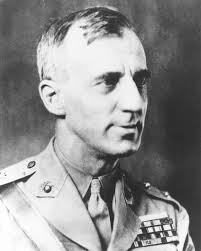
Smedley Butler and the Racket That Is War

index

By Sheldon Richman

Source: The Future of Freedom Foundation

From 1898 to 1931, Smedley Darlington Butler was a member of the U.S. Marine Corps. By the time he retired he had achieved what was then the corps’s highest rank, major general, and by the time he died in 1940, at 58, he had more decorations, including two medals of honor, than any other Marine. During his years in the corps he was sent to the Philippines (at the time of the uprising against the American occupation), China, France (during World War I), Mexico, Central America, and Haiti.

In light of this record Butler presumably shocked a good many people when in 1935 — as a  second world war was looming — he wrote in the magazine Common Sense:

I spent 33 years and four months in active military service and during that period I spent most of my time as a high class muscle man for Big Business, for Wall Street and the bankers. In short, I was a racketeer, a gangster for capitalism [corporatism]. I helped make Mexico and especially Tampico safe for American oil interests in 1914. I helped make Haiti and Cuba a decent place for the National City Bank boys to collect revenues in. I helped in the raping of half a dozen Central American republics for the benefit of Wall Street. I helped purify Nicaragua for the International Banking House of Brown Brothers in 1902-1912. I brought light to the Dominican Republic for the American sugar interests in 1916. I helped make Honduras right for the American fruit companies in 1903. In China in 1927 I helped see to it that Standard Oil went on its way unmolested. Looking back on it, I might have given Al Capone a few hints. The best he could do was to operate his racket in three districts. I operated on three continents.

That same year he published a short book with the now-famous title War Is a Racket, for which he is best known today. Butler opened the book with these words:

War is a racket. It always has been.

It is possibly the oldest, easily the most profitable, surely the most vicious. It is the only one international in scope. It is the only one in which the profits are reckoned in dollars and the losses in lives.

He followed this by noting: “For a great many years, as a soldier, I had a suspicion that war was a racket; not until I retired to civil life did I fully realize it. Now that I see the international war clouds gathering, as they are today, I must face it and speak out.”

Butler went on to describe who bears the costs of war — the men who die or return home with wrecked lives, and the taxpayers — and who profits — the companies that sell goods and services to the military. (The term military-industrial complexwould not gain prominence until 1961, when Dwight Eisenhower used it in his presidential farewell address. See Nick Turse’s book The Complex: How the Military Invades Our Everyday Lives.)

Writing in the mid-1930s, Butler foresaw a U.S. war with Japan to protect trade with China and investments in the Philippines, and declared that it would make no sense to the average American:

We would be all stirred up to hate Japan and go to war — a war that might well cost us tens of billions of dollars, hundreds of thousands of lives of Americans, and many more hundreds of thousands of physically maimed and mentally unbalanced men.

Of course, for this loss, there would be a compensating profit — fortunes would be made.  Millions and billions of dollars would be piled up. By a few. Munitions makers. Bankers.  Ship builders. Manufacturers. Meat packers. Speculators. They would fare well.…

But what does it profit the men who are killed? What does it profit their mothers and sisters, their wives and their sweethearts? What does it profit their children?

What does it profit anyone except the very few to whom war means huge profits?

Noting that “until 1898 [and the Spanish-American War] we didn’t own a bit of territory outside the mainland of North America,” he observed that after becoming an expansionist world power, the U.S. government’s debt swelled 25 times and “we forgot George Washington’s warning about ‘entangling alliances.’ We went to war. We acquired outside territory.”

It would have been far cheaper (not to say safer) for the average American who pays the bills to stay out of foreign entanglements. For a very few this racket, like bootlegging and other underworld rackets, brings fancy profits, but the cost of operations is always transferred to the people — who do not profit.

Butler detailed the huge profits of companies that sold goods to the government during past wars and interventions and the banks that made money handling the government’s bonds.

The normal profits of a business concern in the United States are six, eight, ten, and sometimes twelve percent. But war-time profits — ah! that is another matter — twenty, sixty, one hundred, three hundred, and even eighteen hundred per cent — the sky is the limit. All that traffic will bear. Uncle Sam has the money. Let’s get it.

Of course, it isn’t put that crudely in war time. It is dressed into speeches about patriotism, love of country, and ‘we must all put our shoulders to the wheel,’ but the profits jump and leap and skyrocket — and are safely pocketed.

And who provides these returns? “We all pay them — in taxation.… But the soldier pays the biggest part of the bill.”

His description of conditions at veterans’ hospitals reminded me of what we’re hearing today about the dilapidated veterans’ health care system. Butler expressed his outrage at how members of the armed forces are essentially tricked into going to war — at a pitiful wage.

Beautiful ideals were painted for our boys who were sent out to die. This was the “war to end all wars.” This was the “war to make the world safe for democracy.” No one mentioned to them, as they marched away, that their going and their dying would mean huge war profits. No one told these American soldiers that they might be shot down by bullets made by their own brothers here. No one told them that the ships on which they were going to cross might be torpedoed by submarines built with United States patents. They were just told it was to be a “glorious adventure.”

Thus, having stuffed patriotism down their throats, it was decided to make them help pay for the war, too. So, we gave them the large salary of $30 a month.

Butler proposed ways to make war less likely. Unlike others, he had little faith in disarmament conferences and the like. Rather, he suggested three measures: (1) take the profit out of war by conscripting “capital and industry and labor” at $30 a month before soldiers are conscripted; (2) submit the question of entry into a proposed war to a vote only of “those who would be called upon to do the fighting and dying”; (3) “make certain that our military forces are truly forces for defense only.”

It’s unlikely that these measures would ever be adopted by Congress or signed by a president, and of course conscription is morally objectionable, even if the idea of drafting war profiteers has a certain appeal. But Butler’s heart was in the right place. He was aware that his program would not succeed: “I am not a fool as to believe that war is a thing of the past.”

Yet in 1936 he formalized his opposition to war in his proposed constitutional “Amendment for Peace.” It contained three provisions:

  • The removal of the members of the land armed forces from within the continental limits of the United States and the Panama Canal Zone for any cause whatsoever is prohibited.
  • The vessels of the United States Navy, or of the other branches of the armed service, are hereby prohibited from steaming, for any reason whatsoever except on an errand of mercy, more than five hundred miles from our coast.
  • Aircraft of the Army, Navy and Marine Corps is hereby prohibited from flying, for any reason whatsoever, more than seven hundred and fifty miles beyond the coast of the United States.

He elaborated on the amendment and his philosophy of defense in an article in Woman’s Home Companion, September 1936.

It’s a cliche of course to say, “The more things change, the more they stay the same,” but on reading Butler today, who can resist thinking it? As we watch Barack Obama unilaterally and illegally reinsert the U.S. military into the Iraqi disaster it helped cause and sink deeper into the violence in Syria, we might all join in the declaration with which Butler closes his book:

TO HELL WITH WAR!

Postscript: In 1934 Butler publicly claimed he had been approached by a group of businessmen about leading half a million war veterans in a coup against President Franklin D. Roosevelt with the aim of establishing a fascist dictatorship. This is known as the “Business Plot.” A special committee set up by the U.S. House of Representatives, which heard testimony from Butler and others, reportedly issued a document containing some confirmation. The alleged plot is the subject of at least one book, The Plot to Seize the White House, and many articles.

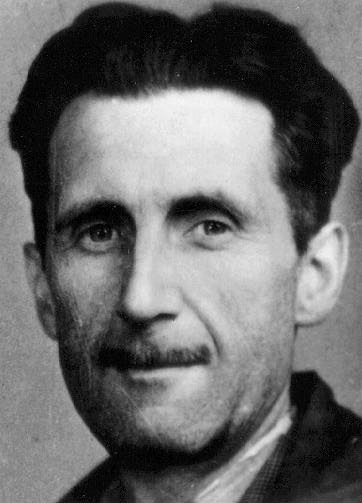
George Orwell on the Atomic Bomb

George_Orwell_press_photo

On this day in 1903, Eric Blair (who later adopted the pen name George Orwell) was born in Bihar, India. He’s best known as the author of  “1984”, one of the greatest dystopian novels and a major influence on countless novels and films (and unfortunately, seemingly a prophetic manual for authoritarian surveillance states around the world). Anyone who hasn’t read 1984 by now should definitely read it as soon as possible because it’s more relevant than ever. Many of Orwell’s socio-political predictions of the novel are shockingly accurate though descriptions of some technologies may be dated. As Robert Montgomerie noted in a recent OpEdNew.com article, 1984 also describes different stages many working within a system may experience as they come to terms with its fascist nature: apathy, cognitive dissonance, awakening, passive aggressive rebellion, and salvation through confession.

On October 19, 1945, two months after atomic bombs were dropped over Hiroshima and Nagasaki (a holocaust which many are only now realizing was not morally defensible), he wrote the following essay which hints at some of the themes covered in greater detail in the novel 1984 which was published in 1949:


You and the Atomic Bomb

By George Orwell

Considering how likely we all are to be blown to pieces by it within the next five years, the atomic bomb has not roused so much discussion as might have been expected. The newspapers have published numerous diagrams, not very helpful to the average man, of protons and neutrons doing their stuff, and there has been much reiteration of the useless statement that the bomb ‘ought to be put under international control.’ But curiously little has been said, at any rate in print, about the question that is of most urgent interest to all of us, namely: ‘How difficult are these things to manufacture?’

Such information as we — that is, the big public — possess on this subject has come to us in a rather indirect way, apropos of President Truman’s decision not to hand over certain secrets to the USSR. Some months ago, when the bomb was still only a rumour, there was a widespread belief that splitting the atom was merely a problem for the physicists, and that when they had solved it a new and devastating weapon would be within reach of almost everybody. (At any moment, so the rumour went, some lonely lunatic in a laboratory might blow civilisation to smithereens, as easily as touching off a firework.)

Had that been true, the whole trend of history would have been abruptly altered. The distinction between great states and small states would have been wiped out, and the power of the State over the individual would have been greatly weakened. However, it appears from President Truman’s remarks, and various comments that have been made on them, that the bomb is fantastically expensive and that its manufacture demands an enormous industrial effort, such as only three or four countries in the world are capable of making. This point is of cardinal importance, because it may mean that the discovery of the atomic bomb, so far from reversing history, will simply intensify the trends which have been apparent for a dozen years past.

It is a commonplace that the history of civilisation is largely the history of weapons. In particular, the connection between the discovery of gunpowder and the overthrow of feudalism by the bourgeoisie has been pointed out over and over again. And though I have no doubt exceptions can be brought forward, I think the following rule would be found generally true: that ages in which the dominant weapon is expensive or difficult to make will tend to be ages of despotism, whereas when the dominant weapon is cheap and simple, the common people have a chance. Thus, for example, tanks, battleships and bombing planes are inherently tyrannical weapons, while rifles, muskets, long-bows and hand-grenades are inherently democratic weapons. A complex weapon makes the strong stronger, while a simple weapon — so long as there is no answer to it — gives claws to the weak.

The great age of democracy and of national self-determination was the age of the musket and the rifle. After the invention of the flintlock, and before the invention of the percussion cap, the musket was a fairly efficient weapon, and at the same time so simple that it could be produced almost anywhere. Its combination of qualities made possible the success of the American and French revolutions, and made a popular insurrection a more serious business than it could be in our own day. After the musket came the breech-loading rifle. This was a comparatively complex thing, but it could still be produced in scores of countries, and it was cheap, easily smuggled and economical of ammunition. Even the most backward nation could always get hold of rifles from one source or another, so that Boers, Bulgars, Abyssinians, Moroccans — even Tibetans — could put up a fight for their independence, sometimes with success. But thereafter every development in military technique has favoured the State as against the individual, and the industrialised country as against the backward one. There are fewer and fewer foci of power. Already, in 1939, there were only five states capable of waging war on the grand scale, and now there are only three — ultimately, perhaps, only two. This trend has been obvious for years, and was pointed out by a few observers even before 1914. The one thing that might reverse it is the discovery of a weapon — or, to put it more broadly, of a method of fighting — not dependent on huge concentrations of industrial plant.

From various symptoms one can infer that the Russians do not yet possess the secret of making the atomic bomb; on the other hand, the consensus of opinion seems to be that they will possess it within a few years. So we have before us the prospect of two or three monstrous super-states, each possessed of a weapon by which millions of people can be wiped out in a few seconds, dividing the world between them. It has been rather hastily assumed that this means bigger and bloodier wars, and perhaps an actual end to the machine civilisation. But suppose — and really this the likeliest development — that the surviving great nations make a tacit agreement never to use the atomic bomb against one another? Suppose they only use it, or the threat of it, against people who are unable to retaliate? In that case we are back where we were before, the only difference being that power is concentrated in still fewer hands and that the outlook for subject peoples and oppressed classes is still more hopeless.

When James Burnham wrote The Managerial Revolution it seemed probable to many Americans that the Germans would win the European end of the war, and it was therefore natural to assume that Germany and not Russia would dominate the Eurasian land mass, while Japan would remain master of East Asia. This was a miscalculation, but it does not affect the main argument. For Burnham’s geographical picture of the new world has turned out to be correct. More and more obviously the surface of the earth is being parceled off into three great empires, each self-contained and cut off from contact with the outer world, and each ruled, under one disguise or another, by a self-elected oligarchy. The haggling as to where the frontiers are to be drawn is still going on, and will continue for some years, and the third of the three super-states — East Asia, dominated by China — is still potential rather than actual. But the general drift is unmistakable, and every scientific discovery of recent years has accelerated it.

We were once told that the aeroplane had ‘abolished frontiers’; actually it is only since the aeroplane became a serious weapon that frontiers have become definitely impassable. The radio was once expected to promote international understanding and co-operation; it has turned out to be a means of insulating one nation from another. The atomic bomb may complete the process by robbing the exploited classes and peoples of all power to revolt, and at the same time putting the possessors of the bomb on a basis of military equality. Unable to conquer one another, they are likely to continue ruling the world between them, and it is difficult to see how the balance can be upset except by slow and unpredictable demographic changes.

For forty or fifty years past, Mr. H. G. Wells and others have been warning us that man is in danger of destroying himself with his own weapons, leaving the ants or some other gregarious species to take over. Anyone who has seen the ruined cities of Germany will find this notion at least thinkable. Nevertheless, looking at the world as a whole, the drift for many decades has been not towards anarchy but towards the reimposition of slavery. We may be heading not for general breakdown but for an epoch as horribly stable as the slave empires of antiquity. James Burnham’s theory has been much discussed, but few people have yet considered its ideological implications — that is, the kind of world-view, the kind of beliefs, and the social structure that would probably prevail in a state which was at once unconquerable and in a permanent state of ‘cold war’ with its neighbors.

Had the atomic bomb turned out to be something as cheap and easily manufactured as a bicycle or an alarm clock, it might well have plunged us back into barbarism, but it might, on the other hand, have meant the end of national sovereignty and of the highly-centralised police state. If, as seems to be the case, it is a rare and costly object as difficult to produce as a battleship, it is likelier to put an end to large-scale wars at the cost of prolonging indefinitely a ‘peace that is no peace’.