
Send the Mad Dog to the Corporate Kennel

By Ray McGovern

Source: Consortium News

Outgoing Defense Secretary Gen. James “Mad Dog” Mattis was famous for quipping, “It’s fun to shoot some people.” It remains a supreme irony that Mattis was widely considered the only “adult in the room” in the Trump administration. Compared to whom? John Bolton, the rabid neocon serving as national security adviser? That would be the epitome of “condemning with faint praise.”

With his ramrod-straight image, not to mention his warrior/scholar reputation extolled in the media, Mattis was able to disguise the reality that he was, as Col. Andrew Bacevich put it on Democracy Now! this morning, “totally unimaginative.” Meaning that Mattis was simply incapable of acknowledging the self-destructive, mindless nature of U.S. “endless war” in the Middle East, which candidate-Trump had correctly called “stupid.” In his resignation letter, Mattis also peddled the usual cant about the indispensable nation’s aggression being good for the world.

Mattis was an obstacle to Trump’s desire to pull troops out of Syria and Afghanistan (and remains in position to spike Trump’s orders). Granted, the abrupt way Trump announced his apparently one-man decision was equally stupid. But withdrawal of ground troops is supremely sane, and Mattis was and is a large problem. And, for good or ill, Trump — not Mattis — was elected president.

Marine Wisdom

Historically, Marines are the last place to turn for sound advice. Marine Gen. Smedley Butler (1881-1940), twice winner of the Medal of Honor, was brutally candid about this, after he paused long enough to realize, and write, “War is a Racket”:

“I suspected I was just part of a racket at the time. Now I am sure of it. Like all members of the military profession I never had an original thought until I left the service. My mental faculties remained in suspended animation while I obeyed the orders of the higher- ups. …”

Shortly after another Marine general, former CENTCOM commander Anthony Zinni, retired, he stood by silently as he personally watched then-Vice President Dick Cheney give his most important speech ever (on August 26, 2002). Cheney blatantly lied about Iraq’s (non-existent) WMD, in order to grease the skids for the war of aggression against Iraq. Zinni had kept his clearances and was “back on contract.” He was well read-in on Iraq, and knew immediately that Cheney was lying.

A few years later, Zinni admitted that he decided that his lips would be sealed. Far be it for a Marine to play skunk at the picnic.  And, after all, he was being honored that day at the same Veterans of Foreign Wars convention where Cheney spoke.  As seems clear now, Zinni was also lusting after the lucrative spoils of war given to erstwhile generals who offer themselves for membership on the corporate Boards of the arms makers/merchants that profiteer on war.

(For an earlier critique of senior Marines, see: “Attacking Syria: Thumbing Noses at Constitution and Law.” )

Marine officer, now Sen. Pat Roberts, R, Kansas, merits “dishonorable mention” in this connection. He never rose to general, but did become Chair of the Senate Intelligence Committee at an auspicious time for Cheney and Bush. Roberts kowtowed, like a “good Marine,” to their crass deceit, when a dollop of honesty on his part could have prevented the 2003 attack on Iraq and the killing, maiming, destruction, and chaos that continues to this day.  Roberts knew all about the fraudulent intelligence, and covered it up — together with other lies — for as long as he remained Senate Intelligence Committee Chairman

Scott Ritter on Pat Roberts

Roberts’s unconscionable dereliction of duty enraged one honest Marine, Maj. Scott Ritter, who believes “Semper Fi” includes an obligation to tell the truth on matters of war and peace.  Ritter, former UN chief weapons inspector for Iraq, who in April  wrote in April 2005 “Semper Fraud, Senator Roberts,” based partly on his own experience with that complicit Marine.

Needless to say, higher ranking, more malleable Marines aped Zinni in impersonating Uncle Remus’s Tar Baby — not saying nuttin’.

It is conceivable that yet another sharply-saluting Marine, departing Chairman of the Joint Chiefs of Staff Joseph Dunford, may be tapped by Trump to take Mattis’s job. If that happens, it will add to President Trump’s bizarre penchant for picking advisers hell bent on frustrating the objectives he espoused when he was running for office, some of which — it is becoming quite clear — he genuinely wants to achieve.

Trump ought to unleash Mattis now, and make sure Mattis keeps his distance from the Pentagon and the Military-Industrial Complex, before he is asked to lead an insurrection against a highly vulnerable president — as Gen. Smedley Butler was asked to do back in the day. Butler said no.
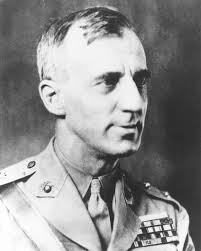
Smedley Butler and the Racket That Is War

index

By Sheldon Richman

Source: The Future of Freedom Foundation

From 1898 to 1931, Smedley Darlington Butler was a member of the U.S. Marine Corps. By the time he retired he had achieved what was then the corps’s highest rank, major general, and by the time he died in 1940, at 58, he had more decorations, including two medals of honor, than any other Marine. During his years in the corps he was sent to the Philippines (at the time of the uprising against the American occupation), China, France (during World War I), Mexico, Central America, and Haiti.

In light of this record Butler presumably shocked a good many people when in 1935 — as a  second world war was looming — he wrote in the magazine Common Sense:

I spent 33 years and four months in active military service and during that period I spent most of my time as a high class muscle man for Big Business, for Wall Street and the bankers. In short, I was a racketeer, a gangster for capitalism [corporatism]. I helped make Mexico and especially Tampico safe for American oil interests in 1914. I helped make Haiti and Cuba a decent place for the National City Bank boys to collect revenues in. I helped in the raping of half a dozen Central American republics for the benefit of Wall Street. I helped purify Nicaragua for the International Banking House of Brown Brothers in 1902-1912. I brought light to the Dominican Republic for the American sugar interests in 1916. I helped make Honduras right for the American fruit companies in 1903. In China in 1927 I helped see to it that Standard Oil went on its way unmolested. Looking back on it, I might have given Al Capone a few hints. The best he could do was to operate his racket in three districts. I operated on three continents.

That same year he published a short book with the now-famous title War Is a Racket, for which he is best known today. Butler opened the book with these words:

War is a racket. It always has been.

It is possibly the oldest, easily the most profitable, surely the most vicious. It is the only one international in scope. It is the only one in which the profits are reckoned in dollars and the losses in lives.

He followed this by noting: “For a great many years, as a soldier, I had a suspicion that war was a racket; not until I retired to civil life did I fully realize it. Now that I see the international war clouds gathering, as they are today, I must face it and speak out.”

Butler went on to describe who bears the costs of war — the men who die or return home with wrecked lives, and the taxpayers — and who profits — the companies that sell goods and services to the military. (The term military-industrial complexwould not gain prominence until 1961, when Dwight Eisenhower used it in his presidential farewell address. See Nick Turse’s book The Complex: How the Military Invades Our Everyday Lives.)

Writing in the mid-1930s, Butler foresaw a U.S. war with Japan to protect trade with China and investments in the Philippines, and declared that it would make no sense to the average American:

We would be all stirred up to hate Japan and go to war — a war that might well cost us tens of billions of dollars, hundreds of thousands of lives of Americans, and many more hundreds of thousands of physically maimed and mentally unbalanced men.

Of course, for this loss, there would be a compensating profit — fortunes would be made.  Millions and billions of dollars would be piled up. By a few. Munitions makers. Bankers.  Ship builders. Manufacturers. Meat packers. Speculators. They would fare well.…

But what does it profit the men who are killed? What does it profit their mothers and sisters, their wives and their sweethearts? What does it profit their children?

What does it profit anyone except the very few to whom war means huge profits?

Noting that “until 1898 [and the Spanish-American War] we didn’t own a bit of territory outside the mainland of North America,” he observed that after becoming an expansionist world power, the U.S. government’s debt swelled 25 times and “we forgot George Washington’s warning about ‘entangling alliances.’ We went to war. We acquired outside territory.”

It would have been far cheaper (not to say safer) for the average American who pays the bills to stay out of foreign entanglements. For a very few this racket, like bootlegging and other underworld rackets, brings fancy profits, but the cost of operations is always transferred to the people — who do not profit.

Butler detailed the huge profits of companies that sold goods to the government during past wars and interventions and the banks that made money handling the government’s bonds.

The normal profits of a business concern in the United States are six, eight, ten, and sometimes twelve percent. But war-time profits — ah! that is another matter — twenty, sixty, one hundred, three hundred, and even eighteen hundred per cent — the sky is the limit. All that traffic will bear. Uncle Sam has the money. Let’s get it.

Of course, it isn’t put that crudely in war time. It is dressed into speeches about patriotism, love of country, and ‘we must all put our shoulders to the wheel,’ but the profits jump and leap and skyrocket — and are safely pocketed.

And who provides these returns? “We all pay them — in taxation.… But the soldier pays the biggest part of the bill.”

His description of conditions at veterans’ hospitals reminded me of what we’re hearing today about the dilapidated veterans’ health care system. Butler expressed his outrage at how members of the armed forces are essentially tricked into going to war — at a pitiful wage.

Beautiful ideals were painted for our boys who were sent out to die. This was the “war to end all wars.” This was the “war to make the world safe for democracy.” No one mentioned to them, as they marched away, that their going and their dying would mean huge war profits. No one told these American soldiers that they might be shot down by bullets made by their own brothers here. No one told them that the ships on which they were going to cross might be torpedoed by submarines built with United States patents. They were just told it was to be a “glorious adventure.”

Thus, having stuffed patriotism down their throats, it was decided to make them help pay for the war, too. So, we gave them the large salary of $30 a month.

Butler proposed ways to make war less likely. Unlike others, he had little faith in disarmament conferences and the like. Rather, he suggested three measures: (1) take the profit out of war by conscripting “capital and industry and labor” at $30 a month before soldiers are conscripted; (2) submit the question of entry into a proposed war to a vote only of “those who would be called upon to do the fighting and dying”; (3) “make certain that our military forces are truly forces for defense only.”

It’s unlikely that these measures would ever be adopted by Congress or signed by a president, and of course conscription is morally objectionable, even if the idea of drafting war profiteers has a certain appeal. But Butler’s heart was in the right place. He was aware that his program would not succeed: “I am not a fool as to believe that war is a thing of the past.”

Yet in 1936 he formalized his opposition to war in his proposed constitutional “Amendment for Peace.” It contained three provisions:

  • The removal of the members of the land armed forces from within the continental limits of the United States and the Panama Canal Zone for any cause whatsoever is prohibited.
  • The vessels of the United States Navy, or of the other branches of the armed service, are hereby prohibited from steaming, for any reason whatsoever except on an errand of mercy, more than five hundred miles from our coast.
  • Aircraft of the Army, Navy and Marine Corps is hereby prohibited from flying, for any reason whatsoever, more than seven hundred and fifty miles beyond the coast of the United States.

He elaborated on the amendment and his philosophy of defense in an article in Woman’s Home Companion, September 1936.

It’s a cliche of course to say, “The more things change, the more they stay the same,” but on reading Butler today, who can resist thinking it? As we watch Barack Obama unilaterally and illegally reinsert the U.S. military into the Iraqi disaster it helped cause and sink deeper into the violence in Syria, we might all join in the declaration with which Butler closes his book:

TO HELL WITH WAR!

Postscript: In 1934 Butler publicly claimed he had been approached by a group of businessmen about leading half a million war veterans in a coup against President Franklin D. Roosevelt with the aim of establishing a fascist dictatorship. This is known as the “Business Plot.” A special committee set up by the U.S. House of Representatives, which heard testimony from Butler and others, reportedly issued a document containing some confirmation. The alleged plot is the subject of at least one book, The Plot to Seize the White House, and many articles.