China’s unexpected gains from the Red Sea crisis

Despite Beijing’s maritime security priority, Yemen’s Red Sea ban on Israeli-linked shipping has boosted China’s regional standing while miring its US adversary in an unwinnable crisis.

By Giorgio Cafiero

Source: The Cradle

The Gaza war’s expansion into the Red Sea has created an international maritime crisis involving a host of countries. Despite a US-led bombing campaign aimed at deterring Yemen’s Ansarallah-aligned navy from carrying out missile and drone strikes in the Red Sea, the armed forces continue to ramp up attacks and now are using “submarine weapons.” 

As these clashes escalate dangerously, one of the world’s busiest bodies of water is rapidly militarizing. This includes the recent arrival to the Gulf of Aden of a Chinese fleet, including the guided-missile destroyer Jiaozuo, the missile frigate Xuchang, a replenishment vessel, and more than 700 troops – including dozens of special forces personnel – as part of a counter-piracy mission. 

Beijing has voiced its determination to help restore stability to the Red Sea. “We should jointly uphold the security on the sea lanes of the Red Sea in accordance with the law and also respect the sovereignty and territorial integrity of the countries along the Red Sea coast, including Yemen,” Chinese Foreign Minister Wang Yi emphasized last month.

As the largest trading nation in the world, China depends on the Red Sea as its “maritime lifeline.” Most of the Asian giant’s exports to Europe go through the strategic waterway, and large quantities of oil and minerals that come to Chinese ports transit the body of water. 

The Chinese have also invested in industrial parks along Egypt and Saudi Arabia’s Red Sea coasts, including the TEDA–Suez Zone in Ain Sokhna and the Chinese Industrial Park in Saudi Arabia’s Jizan City for Primary and Downstream Industries. 

Chinese neutrality in West Asia

Prior to the sending of the 46th fleet of the Chinese People’s Liberation Army Navy, Beijing’s response to Ansarallah’s maritime attacks had been relatively muted. China has since condemned the US–UK airstrikes against Ansarallah’s military capabilities in Yemen, and refused to join the western-led naval coalition, Operation Prosperity Guardian (OPG).

China’s response to mounting tension and insecurity in the Red Sea is consistent with Beijing’s grander set of foreign policy strategies, which include respect for the sovereignty of nation-states and a doctrine of “non-interference.” 

In the Persian Gulf, China has pursued a balanced and geopolitically neutral agenda resting on a three-pronged approach: enemies of no one, allies of no one, and friends of everyone. 

China’s position vis-à-vis all Persian Gulf countries was best exemplified almost a year ago when Beijing brokered a surprise reconciliation agreement between Iran and Saudi Arabia, in which it played the role of guarantor. 

In Yemen, although China aligns with the international community’s non-recognition of the Ansarallah-led government in Sanaa, Beijing has nonetheless initiated dialogues with those officials and maintained a non-hostile stance – unlike many Arab and western states.

Understanding Beijing’s regional role 

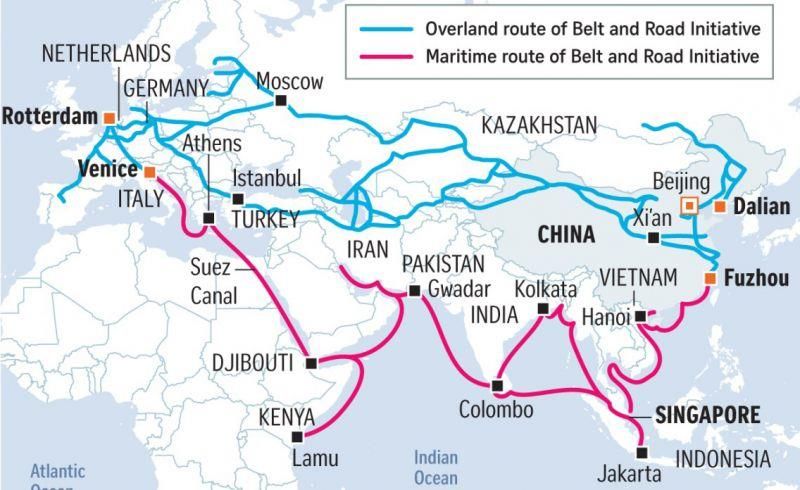
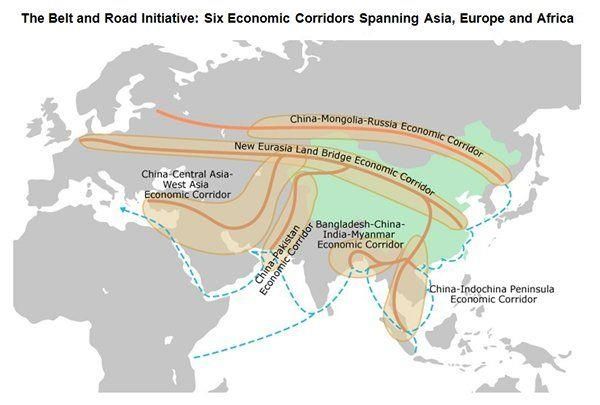
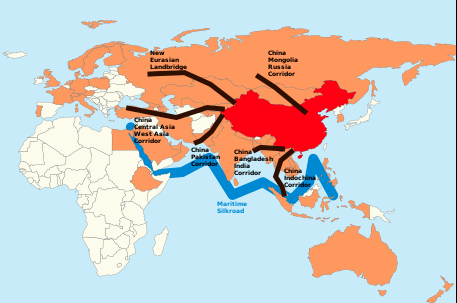
Overall, China tries to leverage its influence in West Asian countries to mitigate regional tensions and advance stabilizing initiatives. Its main goal is ultimately to ensure the long-term success of President Xi Jinping’s multi-trillion dollar Belt and Road Initiative (BRI) and keep trade routes free of conflict. 

Often labeled by the west as a “free rider,” China is accused of opportunistically benefiting from US- and European-led security efforts in the Persian Gulf and the northwestern Indian Ocean without contributing to them. 

But given China’s anti-piracy task force in the Gulf of Aden and its military base in Djibouti, this accusation isn’t entirely justified.

Beijing’s motivations for staying out of OPG were easy to understand: first, China has no interest in bolstering US hegemony; second, joining the naval military coalition could upset its multi-vector diplomacy vis-à-vis Ansarallah and Iran; and third, the wider Arab–Islamic world and the rest of the Global South would interpret it as Chinese support for Israel’s war on Gaza. 

Rejecting the OPG mission has instead bolstered China’s regional image as a defender of the Palestinian cause.

Speaking to The Cradle, Javad Heiran-Nia, director of the Persian Gulf Studies Group at the Center for Scientific Research and Middle East Strategic Studies in Iran, said: 

[Beijing’s] cooperation with the West in securing the Red Sea will not be good for China’s relations with the Arabs and Iran. Therefore, China has adopted political and military restraint to avoid jeopardizing its economic and diplomatic interests in the region.

Dropping the blame on Washington’s doorstep

Beijing recognizes the Red Sea security crisis to be a direct “spillover” from Gaza, where China has called for an immediate ceasefire.

As Yun Sun, co-director of the China Program at the Washington-based Stimson Center, informed The Cradle:

The Chinese do see the crisis in the Red Sea as a challenge to regional peace and stability but see the Gaza crisis as the fundamental origin of the crisis. Therefore, the solution to the crisis in the Chinese view will have to be based on ceasefire, easing of the tension and returning to the two-state solution.

Jean-Loup Samaan, a senior research fellow at the National University of Singapore’s Middle East Institute, agrees, telling The Cradle:

Chinese diplomats have been carefully commenting on the events, but in Beijing’s narrative, the rise of attacks is a consequence of Israel’s war in Gaza – and perhaps more importantly the US policy in support [of] the Netanyahu government.

But in January, after the US and UK began their bombing campaign of Ansarallah targets in Yemen, China began to weigh in with serious concerns about the Red Sea crisis. Beijing noted that neither Washington nor London had received authorization for the use of force from the UN Security Council, and, therefore, as Sun explained it, the US–UK strikes “lack legitimacy in the Chinese view.”  

How the Red Sea Crisis benefits Beijing

China has capitalized on intensifying anger directed against the US from all over the Islamic world and Global South. The Gaza war and its spread into the Red Sea have delivered Beijing some easy soft-power gains and reinforced to Arab audiences the vital importance of multipolarity.
This point was drummed home by Victor Gao, vice president of the Center for China and Globalization, when he told the 2023 Doha Forum: 

The fact that there is only one single country which [on 8 December, 2023] vetoed the United Nations Security Council Resolution calling for ceasefire in the Israel-Palestine War should convince all of us that we should be very lucky living not in the unipolar World.

Certainly, China has experienced some economic repercussions from the Red Sea crisis, although the extent of this is difficult to calculate. Yet Beijing’s political gains appear to trump any associated financial losses. As Sun explained to The Cradle, “The crisis does affect China, but the loss has been mostly economic and minor, while the gains are primarily political as China stands with the Arab countries on Gaza.”

In some ways, China has actually gained economically from the Red Sea crisis. With Ansarallah making a point of only targeting Israel-linked vessels, there is a widespread view that Chinese ships operating in the area are immune from Yemeni attacks. 

After many international container shipping lines decided to reroute around South Africa to avoid Ansarallah’s missiles and drones, two ships operating under the Chinese flag – the Zhong Gu Ji Lin and Zhong Gu Shan Dong – continued transiting the Red Sea. 
As Bloomberg reported early this month:

Chinese-owned merchant ships are getting hefty discounts on their insurance when sailing through the Red Sea, another sign of how Houthi attacks in the area are punishing the commercial interests of vessels with ties to the West.

US officials have since implored Beijing to pressure Iran into ordering the de-facto Yemeni government to halt maritime attacks. Those entreaties have failed, however, largely because Washington incorrectly assumes that Beijing holds influence over Tehran and that Iran can make demands of Ansarallah. Regardless, the fact that the US would turn to China for such help amid escalating tensions in the Red Sea is a boost to Beijing’s status as a go-to power amid global security crises.

China also has much to gain from the White House’s disproportionate focus on Gaza and the Red Sea. Since October–November 2023, the US has had significantly less bandwidth for its South China Sea and Taiwan files. In turn, this frees Beijing to act more confidently in West Asia while the US remains distracted. According to Heiran-Nia:

The developments in the Red Sea will keep America’s focus on the region and not open America’s hand to expand its presence in the Indo–Pacific region, [where] America’s main priority is to contain China. The war in Ukraine has the same advantage for China. While the connectivity of the Euro–Atlantic region with the Indo–Pacific region is expanding to contain China and increase NATO cooperation with the Indo–Pacific, the tensions in [West Asia] and Ukraine will be a boon for China.

Ultimately, the Red Sea crisis and Washington’s failure to deter Ansarallah signal yet another blow to US hegemony. From the Chinese perspective, the growing Red Sea conflict serves to further isolate the US and highlight its limitations as a security guarantor – particularly in light of its unconditional support for Israel’s brutal military assault on Gaza.

It is reasonable to call China a winner in the Red Sea crisis.
Win-Win vs Lose-Lose: The Time Has Come for the World to Choose

By Matthew Ehret

Source: Strategic Culture Foundation

It is a tragedy of our age that society has been locked in a zero-sum operating system for so long that many people living in the west cannot even imagine a world order designed in any other way… even if that zero sum system can ultimately do nothing but kill everyone holding onto it.

Is this statement too cynical?

It is a provable fact that if one chooses to organize their society around the concept that all players of a “great game” must exist in a finite world of tension as all zero-sum systems presume, then we find ourselves in a relatively deterministic trajectory to hell.

You see, this world of tension which game masters require in today’s world are generated by increasing rates of scarcity (food, fuel, resources, space, etc). As this scarcity increases due to population increases tied to heavy doses of arson, it naturally follows that war, famine, and other conflict will rise across all categories of divisions (ethnic, religious, linguistic, gender, racial etc). Showcasing this ugly misanthropic philosophy during a December 21, 1981 People Magazine Interview, Prince Philip described the necessity of reducing the world population stating:

“We’re in for a major disaster if it isn’t curbed-not just for the natural world, but for the human world. The more people there are, the more resources they’ll consume, the more pollution they’ll create, the more fighting they will do. We have no option. If it isn’t controlled voluntarily, it will be controlled involuntarily by an increase in disease, starvation, and war.”

When such a system is imposed upon a world possessing atomic weapons, as occurred in the wake of FDR’s death and the sabotage of the great president’s anti-colonial vision, the predictably increased rates of conflict, starvation and ignorance can only spill over into a global war if nuclear superpowers chose to disobey the limits and “norms” of this game at any time.

Perhaps some utopian theoreticians sitting in their ivory towers at Oxford, Cambridge or the many Randian think tanks peppering foreign policy landscape believed that this game could be won if only all nation states relinquished their sovereignty to a global government… but that hasn’t really happened, has it?

Instead of the relinquishing of sovereignty, the past decade has seen a vast rise of nationalism across all corners of the earth which have been given new life by the rise of China’s Belt and Road Initiative and broader multipolar alliance. While these impulses have taken on many shapes and forms, they are united in the common belief that nation states must not become a thing of the past but rather must become determining forces of the world’s economic and political destinies.

The Case of the Bi-Polar USA

Unfortunately, within the USA itself where nationalism has seen an explosive rise in popularity under President Trump, the old uni-polar geopolitical paradigm has continued to hold tight under such neocon carryovers as Mike Pompeo, Defense Secretary Esper, CIA director Gina Haspel and the large caste of Deep State characters still operating among the highest positions of influence on both sides of the aisle.

While I genuinely believe that Trump would much rather work with both Russia, China and other nations of the multipolar alliance in lieu of blowing up the world, these aforementioned neocons think otherwise evidenced by Pompeo’s October 6 speech in Japan. In this speech, Pompeo attempted to rally other Pacific nations to an anti-Chinese security complex known as the Quad (USA, Australia, Japan and India). With his typically self-righteous tone, Pompeo stated that “this is not a rivalry between the United States and China. This is for the soul of the world”. Earlier Pompeo stated “If the free world doesn’t change Communist China, Communist China will change us.”

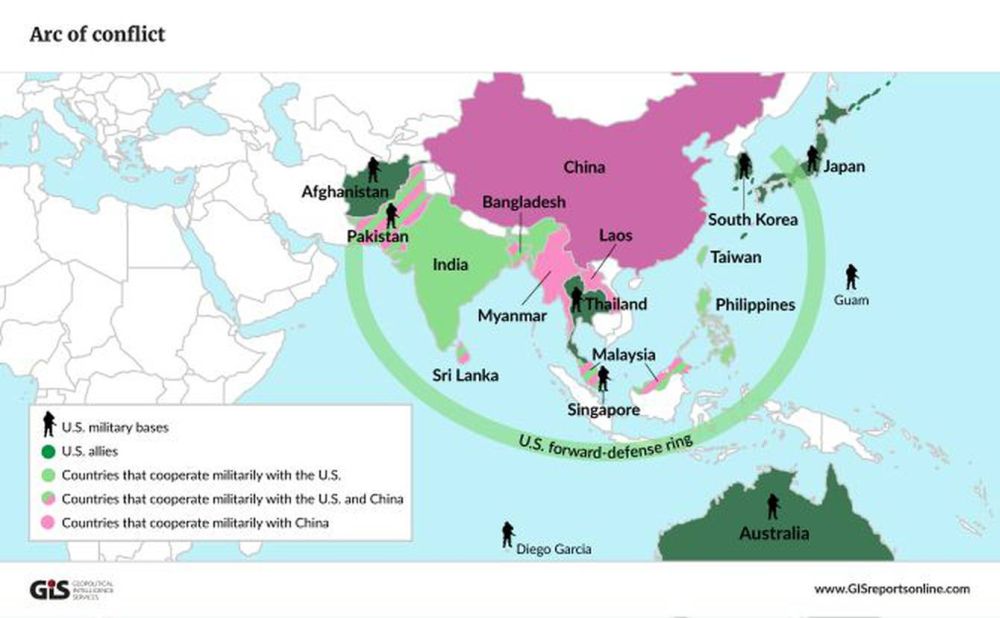
Pompeo’s efforts to break China’s neighbours away from the Belt and Road Initiative have accelerated relentlessly in recent months, with territorial tensions between China and Japan, Vietnam, South Korea, Malaysia, Taiwan, Indonesia, Philippines, Indonesia and Brunei being used by the USA to enflame conflict whenever possible. It is no secret that the USA has many financial and military tentacles stretching deep into all of those Pacific nations listed.

Where resistance to this anti-China tension is found, CIA-funded “democracy movements” have been used as in the current case of Thailand, or outright threats and sanctions as in the case of Cambodia where over 24 Chinese companies have been sanctioned for the crime of building infrastructure in a nation which the USA wishes to control.

Pompeo’s delusional efforts to consolidate a Pacific Military bloc among the QUAD states floundered fairly quickly as no joint military agreement was generated creating no foundation upon which a larger alliance could be built.

China’s Foreign Minister Wang Yi accurately called out this regressive agenda on October 13 saying:

“In essence [the Indo-Pacific Strategy] aims to build a so-called Indo-Pacific NATO underpinned by the quadrilateral mechanism involving the United States, Japan, India and Australia. What it pursues is to trumpet the Cold War mentality and to stir up confrontation among different groups and blocs and to stoke geopolitical competition. What it maintains is the dominance and hegemonic system of the United States. In this sense, this strategy is itself an underlying security risk. If it is forced forward it will wind back the clock of history.”

China Responds with Class

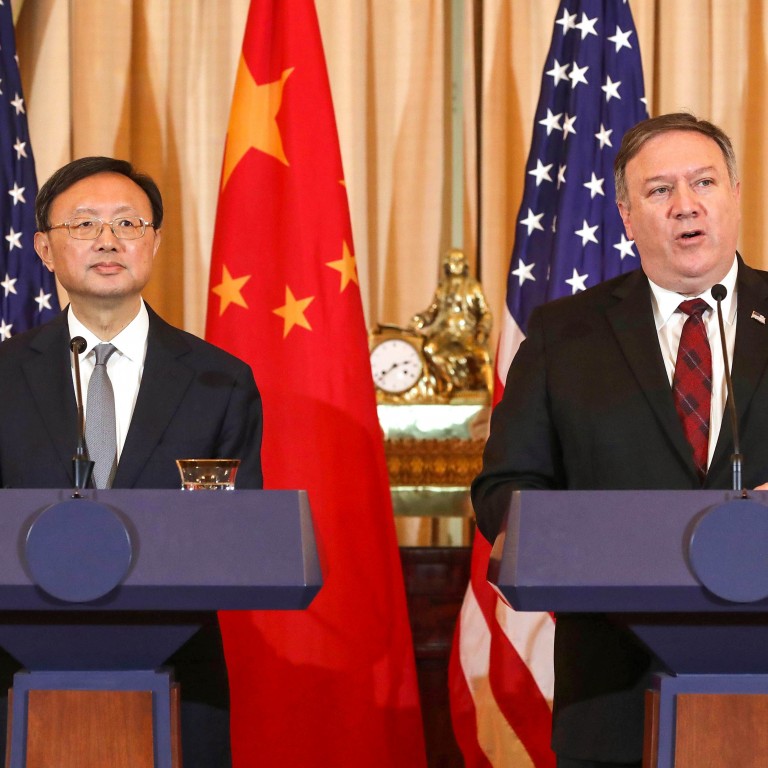
China’s response to this pompous threat to peace was classy to say the least with Wang Yi teaming up with Yang Jiechi (Director of China’s Central Foreign Affairs Commission) who jointly embarked on simultaneous foreign tours that demonstrated the superior world view of “right-makes-might” diplomacy. Where Wang Yi focused his efforts on Southeast Asia with visits to the Philippines, Indonesia, Cambodia, Malaysia, Laos, Thailand and Singapore, Yang Jiechi embarked on a four-legged tour of Sri Lanka, the UAE, Algeria and Serbia.

While COVID assistance was a unifying theme throughout all meetings, concrete economic development driven by the Belt and Road Initiative was relentlessly advanced by both diplomats. In all bilateral agreements reached over this past week, opportunities for cooperation and development were created with a focus on diminishing the points of tension which geopolticians require in order for their perverse “game” to function.

In Malaysia, the $10 billion, 640 Km East Coast Rail link was advanced that will be completed with China’s financial and technical help by 2026 providing a key gateway in the BRI, as well as two major industrial parks that will service high tech products to China and beyond over the coming decades.

After meeting with Wang Yi on October 9, Indonesia’s Special Presidential Envoy announced that “Indonesia is willing to sign cooperation documents on the Belt and Road Initiative and Global Maritime Fulcrum at an early date, enlarge its cooperation with China on trade and investment, actively put in place currency swap arrangements and settlements in local currency, step up the joint efforts in human resources and disaster mitigation, and learn from China’s fight against poverty.”

In Cambodia, a major Free Trade Agreement was begun which will end tariffs on hundreds of products and create new markets for both nations. On the BRI, the New International Land-Sea Trade corridor and Lancang-Mekong Cooperation plans were advanced.

In the Philippines, Wang Yi and Foreign Minister Locsin discussed Duterte’s synergistic Build Build Build program which reflects the sort of long term infrastructure orientation characteristic of the BRI which are both complete breaks with the decades-long practices of usurious IMF loans which have created development bottlenecks across the entire developing sector.

In Thailand Wang Yi met with the Thai Prime Minister where the two accelerated the building of the 252 km Bangkok-Korat high speed rail line which will then connect to Laos and thence to China’s Kunmin Province providing a vital artery for the New Silk Road.

In the past few years, the USA has been able to do little to counter China’s lucrative offers while at best offering cash under the rubric of the Lower Mekong Initiative established under the Hillary-Obama administration in preparation for the Asia Pivot encirclement of China that was unleashed in 2012. This was done as part of a desperate effort to keep China’s neighbors loyal to the USA and was meant to re-enforce Obama’s Trans-Pacific Partnership which Trump thankfully destroyed during his first minutes in office.

Yang Jiechi’s Four-Legged Tour

In Sri Lanka, a $90 million grant was offered by China which will be devoted to medical resources, water supplies and education and which the Chinese embassy website stated “will contribute to the well being of Sri Lankans in a post-COVID era”. Another $989 million loan was delivered for the completion of a massive expressway stretching from Central Sri Lanka’s tea growing district to the Port of Hambanota. While this port is repeatedly used by detractors of the BRI like Pompeo as proof of the “Chinese debt trap”, recent studies have proven otherwise.

In the UAE, the Chinese delegation released a press release after meeting with Prince Zayed al-Nahyan stating: “Under the strategic guidance of President Xi and the Abu Dhabi crown prince, China will enrich the connotation of its comprehensive strategic partnership with UAE, cement the political trust and support, promote alignment of development strategies, and advance high-quality joint construction of the Belt and Road.”

In Algeria, Yang offered China’s full support for the New Economic Revival Plan which parallels the Philippines’ Build Build Build strategy by focusing on long term industrial growth rather than IMF-demands for privatization and austerity that have kept North Africa and other nations backward for years.

Finally in Serbia which is a vital component of the BRI, the Chinese delegation gave its full support to the Belgrade-Budapest railway, and other long term investments centered on transport, energy and soft infrastructure, including the expansion of the Chinese-owned Smederevo Steel Plant which employs over 12 000 Serbians and which was saved from bankruptcy by China in 2016. By the end of the trip, Prime Minister Brnabic announced: “Serbia strongly supports China both bilaterally and multilaterally, including President Xi Jinping’s Access and Roads Initiative and the 17+1 Cooperation Mechanism, in the context of which most of Serbia’s infrastructure and strategy projects will be realized”

The Spirit of Win-Win Must Not Be Sabotaged

Overall, the spirit of the growing New Silk Road is fast moving from a simple east-south trade route towards a global program stretching across all of Africa, to the Middle East, to the High Arctic and Latin America. While this program is driven by a longer view of the past and future than most westerners realize, it is quickly becoming evident that it is the only game in town with a future worth living in.

While China has committed to the enlightened idea that human society is more than a “sum of parts”, the Cold Warriors of the west have chosen to hold onto obsolete notions of human nature that suppose we live in a world of “each vs. all”. These obsolete notions are premised on the bestial idea that our species is destined to do little more than fight for diminishing returns of scraps in a closed -system struggle for survival where only a small technocratic elite of game masters calling themselves “alphas” control the levers of production and consumption from above.

Thus far, President Trump has distinguished himself from other dark age war hawks in his administration by promoting a foreign policy outlook centered on economic development. This has been seen in his recent victories in achieving economic normalization between Serbia and Kosovo, and endorsing the Alaska-Canada railway last month. With the elections just around the corner and the war hawks flying in full force, it is clear that these piecemeal projects, though sane and welcomed are still not nearly enough to break the USA away from its course of war with China and towards a new age of win-win cooperation required for the ultimate survival of our species.

The Global Pivot Away From America

By Graham Vanbergen

Source: TruePublica

There was a day when the world realised they’d had enough of America. It wasn’t when America turned it back on the Herculean effort to sign the world up to the Paris Climate Agreement or TTIP or America’s continuous support for Israel’s murderous actions in Gaza or various other deals that took years to iron out and negotiate that have since been trashed. It was a moment we knew was going to happen but least expected to prove so important.

This was a deal that took the combined effort of the European Union, the United Kingdom, Germany, France, China and Russia. It took twelve years to negotiate. America was a key player and the deal signed, sealed and delivered on October 18th 2015. It was the Iran nuclear deal.

That landmark agreement stopped the escalation of nuclear weapons programs, not just in Iran, but actually in the Mid-East more widely.

With no evidence from any source of Iran breaching its nuclear deal, Iran now has many trading partners. However, America was not one of them. Rightly, the Iranians did not trust their old foe. And so it came to pass that Donald Trump withdrew from the deal, as expected last month.

Palpable European anger to protect the deal and keep it on track spawned a completely new global confidence to move in the same direction. The EU had prepared banking and trading systems to support EU companies doing business with Iran. China was committed having signed a huge joint oil pipeline deal and then launched the petroyuan. Russia has many reasons to protect this deal – obviously and also trades not USDs but Rubles and through a bartering system. Then India announced a few days ago a trade deal with Iran, again bypassing USDs. Then EU diplomats, working on a collaborative agreement in Cuba since 2016 announce that deal to be done and dusted just a few days ago. Last week, 14 African countries announced their intention to switch from USDs to China’s Yuan. All have dumped trading predominantly in US dollars for one reason or another.

On the 10th May, the EU declared that America had just become Europe’s number one threat to its economy.

The EU Commissioner for Economic Affairs, Pierre Moscovici warned Trump’s protectionism represented a “dangerous nexus.”

To that end, the European Union continues to retract from the USA. EuActiv reports that: “The EU and China announced on Friday (1 June) that they would expand trade and investment cooperation amid the global trade dispute triggered by US tariffs.”

Wang Yi, state councillor and minister of foreign affairs of China confirms: “In the context of growing uncertainties in the world, it is even more important for China and the EU to deepen our strategic partnership.”

What has really happened here is a global pivot. Leaders are striking whilst ‘the iron is hot’. Wang’s visit to Brussels, in the framework of the annual EU-China high-level strategic dialogue, came hot on the heels of US President Donald Trump’s confirmation of additional tariffs against Europe and other nations’ steel and aluminium exports. Trump has, to all intents, ended up galvanising other world leaders into real action.

This pivotal moment may take some time to be made fully functional, maybe decades.

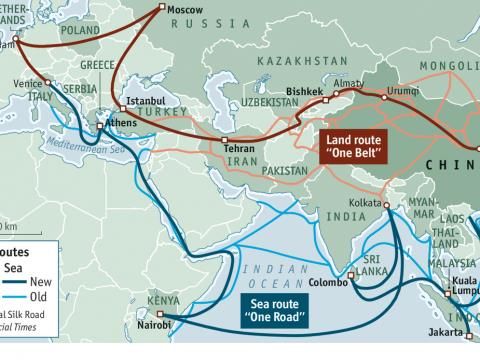
In the meantime, China’s One Belt One Road or Belt Road Initiative (BRI) costing nearly $1trillion is well underway and cannot be ignored. A modern Silk Road that links China, Russia, Europe and Africa in trading routes across land and sea.

Foreign minister Wang Yi has described the initiative as a “symphony of all relevant parties”.

Beijing believes it will kick start “a new era of globalisation”.

One party not included in this symphony is America.

According to the global consultancy McKinsey, the BRI has the potential to massively overshadow the US’ post-war Marshall reconstruction plan, involving about 65% of the world’s population, one-third of its GDP and helping to move about a quarter of all its goods and services.

The ‘belt’ is a series of overland corridors connecting China with Europe, via Central Asia and the Middle East.

One year ago last May, China hoped to put some meat on the bones at an international forum in Beijing but the initiative was greeted with a mix of excitement and suspicion. Beijing saw 28 heads of state and government leaders but German Chancellor Angela Merkel turned down an invitation as did US president Donald Trump.

Today, that initiative now looks like a go. Europe has all but given China the green light. Merkel included.

America has just proven itself to be the new bogeyman on the international geopolitical block. It is headed up by an unstable administration whose warped worldview, beset with paranoia sees nothing but enemies hiding in the dark. It wants a destabilised world because that’s what America does best and profits from most. In the meantime, everyone else just wants to trade, get on and make some money.