DISMISSED: Trump Fires Scandal Plagued FBI Director James Comey – What Does It Mean?

Image (from Land Destroyer Report): The FBI has an impressive portfolio of intentionally created, then foiled terror plots. Its methods include allowing suspects to handle both real and inoperable weapons and explosives. These methods allow the FBI to switch entrapment cases “live” at any moment simply by switching out duds and arrests with real explosives and successful attacks. Because the FBI uses “informants,” when attacks go live, these confidential assets can be blamed, obfuscating the FBI’s involvement.

By Shawn Helton

Source: 21st Century Wire

US President Donald Trump has accepted a recommendation to ‘dismiss’ FBI director James Comey. Was this a reprisal for the suddenly widened Russia-gate probe into the White House or was there something else at play within the operations of the deep state?

Comey was at the center of a political controversy over much of the last year during the US presidential election cycle in 2016, and well into 2017. Throughout 2016, the former FBI director opened, closed and reopened (only to close again) a probe into Hillary Clinton, her email server and looking into accusations leveled at the Clinton Foundation, while also entertaining a dubious Russian probe into the Trump administration alleged ‘connections to Russia’ that helped mine various stories, including a so-called ‘dossier‘ regarding the newly elected president in early 2017.

In recent years, there have been many highly questionable actions under Comey’s leadership at the FBI, such as the Orlando nightclub shooting incident – who’s main suspect was previously interviewed by the FBI, as well as a highly questionable ‘ISIS inspired’ shooting event in Garland, Texas linked to an FBI informant case run out of Phoenix, Arizona, and the federal agency’s dramatic encroachment on public privacy following a suspicious San Bernardino mass shooting.  These are only just a few examples…

Grabien News highlights a list of scandals that were either attached to Comey or perpetuated under his watch:

“Here are 10 of Comey’s biggest embarrassments at the FBI:

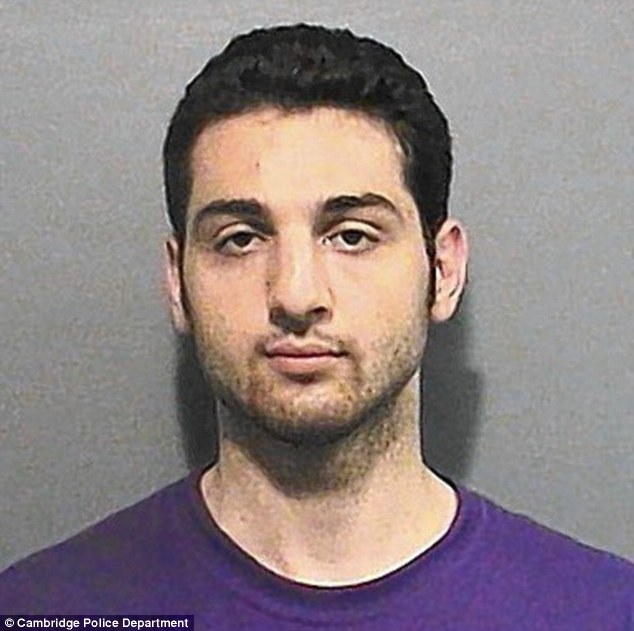
1. Before he bombed the Boston Marathon, the FBI interviewed Tamerlan Tsarnaev but let him go. Russia sent the Obama Administration a second warning, but the FBI opted against investigating him again.

2. Shortly after the NSA scandal exploded in 2013, the FBI was exposed conducting its own data mining on innocent Americans; the agency, Bloomberg reported, retains that material for decades (even if no wrongdoing is found).

3. The FBI had possession of emails sent by Nidal Hasan saying he wanted to kill his fellow soldiers to protect the Taliban — but didn’t intervene, leading many critics to argue the tragedy that resulted in the death of 31 Americans at Fort Hood could have been prevented. 

4. During the Obama Administration, the FBI claimed that two private jets were being used primarily for counterterrorism, when in fact they were mostly being used for Eric Holder and Robert Mueller’s business and personal travel. 

5. When the FBI demanded Apple create a “backdoor” that would allow law enforcement agencies to unlock the cell phones of various suspects, the company refused, sparking a battle between the feds and America’s biggest tech company. What makes this incident indicative of Comey’s questionable management of the agency is that a) The FBI jumped the gun, as they were indeed ultimately able to crack the San Bernardino terrorist’s phone, and b) Almost every other major national security figure sided with Apple (from former CIA Director General Petraeus to former CIA Director James Woolsey to former director of the NSA, General Michael Hayden), warning that such a “crack” would inevitably wind up in the wrong hands.

6. In 2015, the FBI conducted a controversial raid on a Texas political meeting, finger printing, photographing, and seizing phones from attendees (some in the group believe in restoring Texas as an independent constitutional republic).

7. During its investigation into Hillary Clinton’s mishandling of classified material, the FBI made an unusual deal in which Clinton aides were both given immunity and allowed to destroy their laptops. 

8. The father of the radical Islamist who detonated a backpack bomb in New York City in 2016 alerted the FBI to his son’s radicalization. The FBI, however, cleared Ahmad Khan Rahami after a brief interview. 

9. The FBI also investigated the terrorist who killed 49 people and wounded 53 more at the Pulse Nightclub in Orlando, Fla. Despite a more than 10-month investigation of Omar Mateen — during which Mateen admitting lying to agents — the FBI opted against pressing further and closed its case. 

10. CBS recently reported that when two terrorists sought to kill Americans attending the “Draw Muhammad” event in Garland, Texas, the FBI not only had an understanding an attack was coming, but actually had an undercover agent traveling with the Islamists, Elton Simpson and Nadir Soofi. The FBI has refused to comment on why the agent on the scene did not intervene during the attack.”

It’s important to remember that Comey is not the only FBI director who bears responsibility for the controversial aspects of 2013’s Boston Bombing. Under FBI director Robert Mueller “Tamerlan Tsarnaev came to the attention of the FBI on at least two occasions” prior to allegedly being involved in what many researchers have described as a false flag terror event in Boston. A questionable event that has arguably been used as a pretext to further clamp down on individual rights in the US.

We should also be reminded that the FBI has been routinely caught foiling their very own ‘terror plots’ over the past several years.

In recent years, the investigative tactics of various intelligence agencies have come into question, none perhaps more dubious then the Newburgh FBI sting that involved entrapping four men to participate in a fabricated event created by the bureau. Here’s a 2011 passage from The Guardian describing how an FBI informant named Shahed Hussain coerced four others into a fake terror plot:

“The “Newburgh Four” now languish in jail. Hussain does not. For Hussain was a fake. In fact, Hussain worked for the FBI as an informant trawling mosques in hope of picking up radicals.

Yet far from being active militants, the four men he attracted were impoverished individuals struggling with Newburgh’s grim epidemic of crack, drug crime and poverty. One had mental issues so severe his apartment contained bottles of his own urine. He also believed Florida was a foreign country.

Hussain offered the men huge financial inducements to carry out the plot – including $250,000 to one man – and free holidays and expensive cars.

As defence lawyers poured through the evidence, the Newburgh Four came to represent the most extreme form of a controversial FBI policy to use invented terrorist plots to lure targets. “There has been no case as egregious as this. It is unique in the incentive the government provided. A quarter million dollars?” said Professor Karen Greenberg, a terrorism expert at Fordham University.”

The reputation of the FBI has suffered greatly in the recent past as well as over the past couple of decades. Incidentally, the FBI is on record as ‘handling’ Emad A. Salem, a former Egyptian army officer who was a prized undercover operative thrust into confidential informant status and person who played a key role in the 1993 WTC bombing.

All of this has happened under the watchful eye of the FBI…

Over last summer, 21WIRE observed some curious connections between the Clinton Foundation and FBI director James Comey, as well as his questionable handling of other cases related to the Clinton family. Here’s the following passage to consider in light of the new information related to the Clinton investigation:

“Many will also be unaware that before Comey was installed by the Obama Administration as FBI Director, he was on the board of Director at HSBC Bank – a bank implicated in international money laundering, including the laundering of billions on behalf of international drugs and narcotics trafficking cartels.Forbes also points out where Comey was also at the key choke-point during the case involving dodgy auditor KPMG which followed on by the HSBC criminal case:

“If Comey, and his boss Attorney General Alberto Gonzalez, had made a different decision about KPMG back in 2005, KPMG would not have been around to miss all the illegal acts HSBC and Standard Chartered SCBFF +% were committing on its watch. Bloomberg reported in 2007 that back in June of 2005, Comey was the man thrust into the position of deciding whether KPMG would live or die for its criminal tax shelter violations.”

Is this just a surface effort by the White House to clean the slate for an agency perpetually embroiled in controversy?

More from RT below…

Trump fires FBI Director James Comey

RT

President Donald Trump has fired FBI Director James Comey at the recommendation of US Attorney General Jeff Sessions and Deputy Attorney General Rod Rosenstein, according to a White House announcement.

“The FBI is one of our Nation’s most cherished and respected institutions and today will mark a new beginning for our crown jewel of law enforcement,” said President Trump.

“While I greatly appreciate you informing me, on three separate occasions, that I am not under investigation, I nevertheless concur with the judgment of the Department of Justice that you are not able to effectively lead the Bureau,” Trump told Comey in a letter.

The letter announcing the termination was hand-delivered to FBI headquarters by Keith Schiller, a Trump security aide, according to several reports citing a White House official.

A search for a new permanent FBI Director will begin immediately.

The firing of Comey comes days after he testified to Congress on investigations into alleged Russian meddling in the 2016 US election.

RT continues here

Fort Lauderdale Shooting: FBI Involvement in Another Act of Violence

4-2-640x426

By James Henry

Source: Who.What.Why.

Two months before Esteban Santiago opened fire with a semi-automatic pistol at Fort Lauderdale’s airport Friday, killing five and injuring six, he underwent an “assessment” by the Federal Bureau of Investigation (FBI).

This procedure, which can involve intrusive investigations and interrogation, ended with the Bureau finding that Santiago had committed no crimes and had no ties to terrorism.

A growing number of these incidents exhibit the same disturbing feature: the FBI and/or other federal agencies had prior knowledge of the perpetrators. And there’s another common thread: the FBI’s ex post facto explanations of those interactions do not make a lot of sense. What is never raised is the possibility that the government’s actions are actually pushing already unstable people over the edge.

The phenomenon has become so common that even mainstream outlets like Fox News have taken to calling people like Santiago “Known Wolves.” However, the problem is usually framed as one of law-enforcement agencies “hamstrung” by “politically correct” culture and outdated “civil liberties” limits placed upon investigators. Issues of who should and who should not be given access to guns inevitably tops the discussion.

Despite all the focus on “known wolves” like Santiago, one line of questioning is seldom pursued: What exactly took place during their interactions with government investigators, and how likely is it that these government actions made violence more probable in the future?

Soon after the shooting, the FBI told reporters that two months earlier Santiago had walked into the Anchorage FBI office and made “disturbing” remarks about hearing voices, and being forced to watch ISIS videos. He seemed “agitated and incoherent,” while maintaining “that his mind was being controlled by a US intelligence agency.” They confiscated his gun, which was registered to him.

The FBI, after deciding he had broken no laws and had no terrorist ties, turned him over to the local police who had him hospitalized briefly.

Anchorage police Chief Chris Tolley said “Santiago was having terroristic thoughts and believe he was being influenced by ISIS.”  Nevertheless, after undergoing some sort of psychiatric evaluation, he “was not adjudicated mentally ill” — and they returned to him his 9mm Walther.

Federal law-enforcement sources told NBC News that they believe it was the same gun he allegedly used in the airport shootings.

After the FBI’s “assessment” was complete, Santiago flew from Anchorage last week, ultimately ending his trip at the Fort Lauderdale, Florida, airport.

Mind Control

While the very mention of “mind control” being conducted by a “US intelligence agency” conjures images of wild-eyed paranoia, and is thus discounted out of hand, there is in fact a long and sordid history of efforts by national security agencies to manipulate individuals for various reasons. “Psychological manipulation” may be a more apt term.

Indeed, there appears to be a pattern emerging: more and more disturbed individuals who commit mass atrocities had many prior interactions with national security agents.

Ted Kaczynski, infamously known as the “UnaBomber,” was the victim of a CIA-funded MK-ULTRA psychological experiment when he was an undergraduate at Harvard University. Part of the experiment involved abusive and humiliating interrogations. Understandably, many familiar with the case have wondered whether this abuse led him to later commit acts of anonymous terror.

Similarly, is it possible that Santiago’s interactions with the FBI or some other federal agency pushed him to the tipping point?

The record shows that various federal agencies have taken investigative interest in Santiago over the last few years. He was investigated by “Homeland Security Investigations” for child pornography in either 2011 or 2012, law-enforcement sources told a local CBS affiliate in Miami. Three weapons and a computer were seized, but there was not enough evidence to prosecute.

A “US military official” also told NBC Nightly News that Santiago, a veteran who served during the war in Iraq, was “being tracked” by Army Criminal Investigation Command because of “psychological issues.”

The FBI, for its part, claims to have conducted an “assessment” of him after its interaction with Santiago in Anchorage in November.

We don’t know — and likely never will know — what those investigations looked like. The agencies involved almost never divulge “sources and methods.” We do know that as a result of his interaction with the FBI, Santiago was sent to an as yet unnamed mental health facility where he underwent some kind of “psychological treatment.” Since he was an Army veteran, it’s likely the Veterans Administration was involved.

An assessment, usually cited by the FBI as the “least intrusive” level of investigation done by the Bureau, can nonetheless be very intrusive. According to an ACLU fact sheet, FBI assessments can include:

collecting information from online sources, including commercial databases.

recruiting and tasking informants to gather information about you.

using FBI agents to surreptitiously gather information from you or your friends and neighbors without revealing their true identity or true purpose for asking questions.

having FBI agents follow you day and night for as long as they want.

The FBI can also conduct an assessment on an individual just to see if he or she would make a good informant — regardless of whether that person is suspected of a crime.

Could these government intrusions push an already unstable person further into paranoia or delusion? Conscientious investigators would surely take care not to “set off” paranoid individuals who have been targeted for investigation. But it is not hard to imagine careless or unscrupulous investigators pushing too hard — particularly if the investigation involved anything touching on “national security.”

Assessing What, Exactly?

It’s worth noting that the FBI had also conducted an assessment of Tamerlan Tsarnaev, the “mastermind” behind the Boston Marathon bombing who died in a gunfight with police.

Attorneys for his younger brother, Dzhokhar, who was convicted and sentenced to death in 2015, wrote in court documents that Tamerlan Tsarnaev’s interactions with the Bureau “were among the precipitating events for Tamerlan’s actions during the week of April 15, 2013.” Family members and “other sources” told Dzhokhar’s defense team that the FBI tried to pressure Tamerlan into becoming an informant.

Dzhokhar’s lawyers suggested that Tamerlan Tsarnaev’s interactions with the Bureau could have “increased his paranoia and distrust.”

We also know that an undercover FBI agent goaded Elton Simpson to “tear up Texas” shortly before he and his roommate, Nadir Soofi, shot up a “Draw Mohammed” contest in Garland, Texas, on May 3, 2015. Hours before the event, the FBI sent a bulletin to local police warning that Simpson was “interested in the event.”

Even more troubling, there was an undercover FBI agent at the event communicating about security measures with a third individual, whom agents knew had been in contact with one of the shooters.

All this information was only made public because some of the agent’s text messages were quoted in court documents.

Arun Kundnani, lecturer on terrorism studies at New York University, told The Intercept about the incident:

The FBI uses informants and undercover agents to pressure suspected ISIS sympathizers into committing acts of violence, so that they can then be prosecuted. The Garland shooter case is the most striking illustration yet of the dangers of this approach. Essentially, it suggests the government may be manufacturing the very threat it is supposed to be countering.

The list goes on: Omar Mateen, the Pulse nightclub shooter; Ahmad Khan Rahimi, the NY/NJ bomber; Usaama Rahim, shot dead after he went after police with a knife in Boston; Army Maj. Nidal Hasan, the Fort Hood shooter; and Wasil Farooqui, who attacked two random people with a knife in Virginia  — all had interactions with the Bureau before seemingly going berserk.

FBI CYA

“The FBI failed there… The federal government already knew about [Santiago’s claim that the CIA was making him watch ISIS videos] for months, they had been evaluating him for a while, but they didn’t do anything,” the accused shooter’s brother Bryan Santiago told the Associated Press.

In what has become almost a boilerplate description of these assessments, the FBI told reporters that the FBI investigated Santiago, conducted “interagency checks” and did “database reviews.”

“During our initial investigation we found no ties to terrorism,” Special Agent Ritzman told reporters. “He broke no laws when he came into our [Anchorage] office making disjointed comments about mind control.”

But as we’ve seen time and again, it’s the FBI’s statements about its interactions with a soon-to-be-violent perpetrator that are disjointed. (Read this for an in-depth analysis and comparison of the FBI’s explanation of its interactions with one of the “Boston bombers” and the more recent “NY/NJ Bomber.”)

Note the specific reference to terrorism in the FBI statement. The implication is that Santiago could not have been investigated further because no direct link to terrorism was found. But he told them he had been watching ISIS videos, so there was a link.

In fact, the FBI routinely goes after people for similar activity. Since 9/11 the Bureau has been repeatedly accused of creating elaborate, time-consuming stings to entrap individuals who, the agency believes,,might commit an act of violence in the future — on no more evidence than social media rants and the like.

Another curious discrepancy in the FBI report: the agency claims that Santiago said in November he didn’t want to hurt anyone, but since he had recently been arrested for domestic violence, there was reason to suspect he was capable of such action.

Maybe “mind control” is too strong a term to describe what these individuals experienced at the hands of government investigators. But whatever is going on in the shadows, it is not ending well for the rest of us.

ANOTHER TERRORIST, ANOTHER PAST CONNECTION WITH THE FBI

b-2-700x470

By James Henry

Source: Who.What.Why.

Another terrorist attack in a major American city, more frightening images and talk of pressure cookers and ball bearings, BBs and pipe bombs, “lone wolves” and Christmas tree lights.

The latest alleged perpetrator is Ahmad Khan Rahami, a young Muslim man who grew up in America and likes souped-up cars. He became “self-radicalized” watching videos on the Internet that inspired him to blow up innocent Americans.

Some experts say the bombs he made show a high level of sophistication and training, but with more than a half a dozen bombs deployed, not a single person was killed. Some saw it coming — others say they can’t believe it.

He traveled to Afghanistan or Pakistan — or both — in the years prior to the attack. Nobody seems to know what he did there, but authorities are pretty sure there’s no wider conspiracy.

Cornered and desperate after authorities released his picture to the public, it’s a small miracle the suspect is still alive after a wild shootout with police.

Sound familiar?

The Boston Herald understandably thinks so. In a piece titled “Attack had eerie resemblance to Boston Marathon bombings,” the Herald points out the many superficial similarities to the 2013 attack at the Boston Marathon. The lead paragraph reads: “From pressure cookers, the release of a suspect photo, to the subsequent manhunt and shootout with cops, yesterday’s arrests of Ahmad Khan Rahami in New York City and New Jersey has stirred echoes of blasts at the Boston Marathon in 2013, security experts said.”

But there are far more significant similarities.

https://twitter.com/NYCityAlerts/status/777365213914001409?ref_src=twsrc%5Etfw

The reliably pro-law-and-order Herald left out the part about the FBI’s prior contact with the suspect. The New York Times, to its  credit, did inform us that the FBI conducted an “assessment” on Rahami in 2014, because his father told them he was a terrorist. Then dad took it back.

Interestingly, the Times also mentioned that the suspect’s father claims to have fought with the CIA-supported Afghan Mujahedin against the Soviets back in the 80s. The Times didn’t attach much significance to either revelation and probably won’t pursue the connections much further.

But, as with Tamerlan Tsarnaev, another recent “lone wolf” who suddenly started acting as a cartoonish Muslim fanatic, the FBI and CIA can be found lurking in the back story.

It is entirely possible that there are a lot of so-called lone wolves on the prowl — a sort of self-directed fifth-column of ISIS. But, according to investigative journalist Trevor Aaronson, an alarming number of them are being pushed and prodded by provocateurs on the federal payroll. We don’t know if Rahami was similarly pushed, but it’s a valid question nonetheless.

The FBI claims to have sent undercover agents to “investigate” Rahami, but “didn’t find enough information to charge him,” according to theBoston Globe. What that investigation consisted of is still, and likely will remain, unclear. The FBI seldom reveals its “sources and methods.”

At the very least, the public should be told what this type of contact looks like and whether it is at least conceivable that such government actions can contribute to pushing young men to commit these types of crimes.

But despite these obvious concerns, the US government’s “war on terror” strategies are strangely absent from President Barack Obama’s Countering Violent Extremism program, which is currently grappling with the thorny issue of what might be provoking these desperate acts.

Will we get a legitimate investigation that delves into the precise nature of federal agents’ interactions with Rahami, or will we just get another whitewash that only looks at “intelligence failures.” It will most likely be the latter (here’s why).

History Doesn’t Repeat, It Rhymes

How likely is it that Rahami’s travel to Afghanistan, an active war zone, escaped the scrutiny of federal agents? Tamerlan Tsarnaev traveled overseas to a geopolitical hotspot in the years before the Boston Marathon bombing, but the Feds claim to have ignored internal warnings about him and waved him through at the airport.

The FBI appears to be covering up their prior interactions with Tamerlan Tsarnaev. Will we see the same thing with Rahami?

Authorities never nailed down exactly where the bombs the Tsarnaevs used were made and who made them. Will we get these details in the Rahami  case? The public would like to know who is making all these “sophisticated” explosives.

Like Rahami, Tamerlan Tsarnaev had many of the hallmarks of an individual the FBI routinely coerces to act as undercover informants. In fact, WhoWhatWhy has documented compelling evidence (see here, here andhere).

And what about that decision to release the photos of Rahami? As with the Tsarnaevs such an action almost guarantees a desperate reaction from the pursued — not surprisingly ending in a potentially lethal gun battle.

Former Boston police Commissioner Edward F. Davis, who questioned the wisdom of releasing the Tsarnaevs’ photos after the Marathon bombing, again seems to be questioning the release of such photos. He told the Boston Herald: “Once those pictures go out, that’s when it’s most dangerous. … He [Rahami] attempted suicide by cop. It’s all very familiar.”

The Boston Bombing Trial Starts, But Answers Aren’t on the Docket

Boston_Marathon-1024x576

By Russ Baker

Source: WhoWhatWhy

We do not know what will come out of the trial of Dzhokhar Tsarnaev, but one thing we are pretty sure of: we will not get the real, complete story of what actually happened.

Keep this in mind: the prosecution’s job is not principally to fully explain the background of a crime that was committed. It is to convince a jury to convict. Also, in cases such as this, where a lot of questions about security state operations have been raised, the prosecution, as an arm of the federal government, will be under strict orders to win its case without unduly exposing “sources and methods.” That’s a  polite way of saying, “let’s keep the skeletons in the family closet.”

Lead defense counsel Judy Clarke’s job, and her historic role in past cases, has been to do whatever is necessary to ensure her client avoids the death penalty. Meanwhile, the defendant’s job, right now, is to do what his lawyer tells him. It’s not his job to object or say, “Hey, there’s more to this story.”

Clarke’s interest in exposing the truth is strictly limited to: A) using the threat of embarrassing the government or B) casting doubt on its narrative solely as a bargaining chip to keep her client off death row. She has no particular mandate to find out what really happened. Even by her own pronouncements, Clarke either believes her client is guilty or, perceives that the only practical way forward is to accept that her client will be found guilty.

So don’t hold your breath for explanations to some of the questions we’ve raised. They include:

-What actual evidence exists that these brothers made such a sophisticated bomb—which some experts say they could not have? If not, then they had help and did not act alone, as the government insists. Aren’t the identities and roles of other possible players germane?

-What actual evidence exists that these brothers had bombs with them—and detonated them? Pictures of the backpacks that exploded to some people don’t look like the ones the brothers were wearing.

-What actual evidence exists that these brothers shot and killed an MIT police officer? We’re told that video cameras captured the act, but we’re also told that the video doesn’t make a positive ID.

-Did they actually carjack a man, and if so, for how long and under what circumstances? As we have reported, the purported victim, whose identity has not yet been disclosed, substantially changed his story of what happened.

-Why did the brothers’ uncle, who was the son-in-law of an important CIA official, quickly announce (within hours of their death/apprehension) his suspicion that his nephews were indeed the Boston bombers, despite the fact they had never done anything like that nor indicated that they may do such a thing?

-And what about the other CIA associate, a college professor and former case officer who corresponded with Dzhokhar Tsarnaev about Chechnya? Soon after the bombing, the professor, Brian Glyn Williams, was quoted as saying “I hope I didn’t contribute,” an apparent reference to Dzhokhar’s alleged radicalization.

-Why did the FBI seemingly ignore warnings from the Russians that the elder brother was involved in radical activity?

-Why did the FBI harass rather than seek to obtain information from crucial witnesses?

-After being warned by the Russians, why did the FBI fail to monitor Tamerlan when he left the country to travel to restive regions of Russia where Islamists were active? And then how was it that an alert for him was lowered just before he re-entered the U.S.?

-Why has no one been allowed to talk to Dzhokhar to find out his version of events?

-Will the authorities ever explain why so many things that were leaked by the government to prejudice the public (and the jury pool) turned out to be untrue? The claim that Tamerlan Tsarnaev was guilty in a triple homicide in Waltham, Mass., is just one example. The police never questioned Tamerlan about the slayings, even though they knew he was close friends with one of the victims.

-Will the conflicting and dubious explanations about the FBI’s shooting of an unarmed Ibragim Todashev, friend of Tamerlan, in his Florida apartment while being interrogated, be resolved?

-What about claims that there were drills going on during or around the time of the Marathon—and why were there bomb-sniffing dogs at the finish line? Even the cautious Boston Globe noted that officials had planned a training drill eerily similar to what actually happened.

These are some of the things any fair-minded, thoughtful person would like to know.

But the whole thing appears to be sealed, a done deal. We’re hoping for revelations at the trial. But we aren’t expecting too many. The authorities don’t think we need to know much about our country and its doings in that shadowy arena called “national security.” So the chances of them wanting to enlighten us are depressingly slim.

Image Credit:
Boston Bombing. Photo collage by DonkeyHotey for WhoWhatWhy adapted from photos in the public domain or Creative Commons: 
Street Scene – WikimediaDzhokhar Tsarnaev – WikimediaWhite House meeting – WikimediaPolice – Flickr/A Name Like Shields…Vigil – Flickr/Mark Zastrow and Tamerlan Tsarnaev & Ibragim Todashev – DonkeyHotey paintings.

BOSTON UPDATE: FBI War on Marathon Bombing Witnesses Continues

fbi-foils-fbi-plot

By James Henry

Source: WhoWhatWhy

The Boston Marathon bombing is much more important than has been acknowledged, principally because it is the major domestic national security event since 9-11 and has played a major role in expanding the power of the security state. For that reason, WhoWhatWhy is continuing to investigate troubling aspects of this story and the establishment media treatment of it. So even as it slips from the headlines, we will be exploring new elements of the story regularly as the trial of Dzhokhar Tsarnaev approaches. 

***

Since the Boston Marathon bombing a year and a half ago, the FBI appears to be intimidating, harassing, and silencing friends and acquaintances of the Tsarnaev brothers. Dzhokhar Tsarnaev’s lawyers have noticed it too—they’re having trouble getting anyone to talk to them, recent court papers reveal.

In what WhoWhatWhy previously described as the FBI’s “war on witnesses”, the Bureau seems to be employing a scorched earth strategy of destroying anything that might be of use to the “enemy.”

On August 29, Tsarnaev’s lawyers filed a motion requesting a continuance for more time to prepare their defense, noting the fact that they were given only half the median preparation time that federal courts have allowed over the past decade for defendants on trial for their lives. (The judge did grant a two-month delay while refusing the defense request to move the trial out of Boston.)

The lawyers cited “outpaced requirements” in building a proper defense for their client: (1) the international nature of the investigation—including language and geographic barriers, (2) the large amount of evidence that has to be scrutinized, and most tellingly, (3) the climate of intimidation and fear created by the FBI’s investigative efforts since the bombing. They write:

Domestic defense mitigation investigation has been conducted amid a growing atmosphere of anxiety and agitation generated by highly-publicized arrests, indictments, prosecutions, deportations (and, in one instance, the FBI killing) of members of Dzhokhar and Tamerlan Tsarnaev’s peer groups.

Most news reports brush over that last part. As if shooting to death an unarmed man involved in this case—as an FBI agent did to Tamerlan’s friend Ibragim Todashev—is not relevant to the difficulties the defense team has had in getting witnesses to talk to them. But even less extreme events are enough to silence potential witnesses, such as the mysterious closing of their bank accounts.

Prosecutors resisted this and an earlier attempt to have the trial delayed. The victims have a right to see justice done—swiftly, the thinking goes.

The victims and their families certainly deserve justice for this horrible atrocity. True justice should include a full accounting—something a hurried, one-sided investigation is not likely to produce. And of course Boston and the American public deserve, and need, the truth, whatever it may be.

Yet a close read of the motion document reveals FBI activities that seem more of an effort to conceal than to illuminate.

The FBI’s March to the Sea

Tsarnaev’s defense team makes reference to the most troubling—and most anxiety-producing—action by the FBI since the bombing: the shooting to death of Tamerlan’s friend, Todashev. (See our earlier story on the head-scratching circumstances surrounding that shooting, including the questionable history of the agent who pulled the trigger.)

Some of the FBI’s aggressive tactics described in the defense document look like outright intimidation. For instance, individuals “with lawful immigration status have been detained for hours and required to surrender their electronic devices upon re-entry to the United States.”

And take a look at this excerpt:

“The investigation has been further hampered by aggressive FBI follow-up tracking and questioning of potential witnesses, as well as by the unrelenting attention of the news media.”

It is one thing to be aggressively tracking and questioning individuals suspected of committing crimes, but to be doing this to presumably innocent witnesses reeks of intimidation. Witness intimidation is a tactic ordinarily associated with mafia or drug cartel defendants.

Notably, this “tracking” must have been brought to the attention of defense lawyers by witnesses themselves, indicating overt surveillance: “We’re watching you.”

Then, farther down in the document:

“These difficult circumstances are compounded by a continuing pattern of aggressive FBI re-interviewing of potential witnesses — on occasion within hours of an attempted contact by defense investigator [emphasis added].”

Within hours of an attempted contact by defense investigator? Is the defense team being watched too? (We reached out to Tsarnaev’s defense team hoping they could expand on that, but have not yet had a response.)

It wouldn’t be the first time the FBI was caught spying on defense lawyers in a high-profile terrorism case. Lawyers for accused 9/11 mastermind Khalid Shaikh Mohammed allege that the FBI has been surveilling  them.

Whether legal counsel are being watched directly or simply getting caught up in the surveillance of Tsarnaev’s acquaintances, the effect is the same: the feds know who is talking to whom, and when.

That’s a Nice Immigration Status You Got There…

Witnesses who are not U.S. citizens—which describes the majority of Tsarnaev’s friends, family, and many in the local Muslim community—are particularly vulnerable to law enforcement manipulation. The threat of deportation is a clear and present danger to these individuals, “regardless of whether criminal charges are ever brought or proven against them,” Tsarnaev’s lawyers wrote.

Indeed, a handful of people loosely connected to the Tsarnaevs have already been deported, or had deportation proceedings initiated against them, despite having nothing to do with the Boston Marathon bombing. These include:

–   Konstantin Morozov: friend of Tamerlan, arrested and jailed pending deportation reportedly after refusing to wear a wire for the FBI as the Bureau sought information on one of Tamerlan’s Chechen friends.

–   Tatiana Gruzdeva: girlfriend of Ibragim Todashev, deported after speaking with Boston Magazine about the circumstances surrounding her boyfriend’s death.

–   Ashurmamad Miraliev: friend of Ibragim Todashev, was reportedly denied a request for an attorney while interrogated by FBI for over six hours, and transferred to an immigration detention center where deportation proceedings were initiated.

–   Khusen Taramov: friend of Ibragim Todashev, denied reentry to the United States after visiting Chechnya, despite having a Green Card.

Why hasn’t Boston’s “liberal” media made more noise about this? Arguably, the most newsworthy portion of Tsarnaev’s motion for continuance—potential witness intimidation—has been glossed over or ignored in most mainstream media accounts.

The Florida chapter of the Council on American-Islamic Relations reached out to the media and the public to expose the intimidation and harassment of Todashev’s friends and associates—and got a fair amount press coverage by their local media. The same cannot be said for the Boston area press.

Have they, albeit indirectly, been intimidated, too? The Boston media has historically had a close relationship with law enforcement, and when it ever so slightly challenged the police, found its usual (and needed) sources shut down.

However, if ever there was a moment for the local press to do the right thing, this is surely it.

FBI Agent Who Executed Ibragim Todashev is a Corrupt Ex-Oakland Cop

Ibragim Todashev

By Joanne Potter and Abby Martin

Source: Media Roots

The city of Boston was shaken last year when its marathon was tragically bombed, leaving three people dead and 264 others injured. The alleged mastermind behind the deadly attacks, Tamerlan Tsarnaev, was killed in a shootout with Boston police. His little brother and alleged co-perpetrator, Dzhohar, is now awaiting trial and will potentially face execution.

Amidst the insanity ensuing from last year’s horrors, one story was largely swept under the rug: the bizarre execution of 27 year old Chechan-American Ibragim Todashev. A month after the bombings, Todashev was interrogated by state and federal officials at his Orlando apartment about his alleged association with the Tsarneavs and his purported role in the Waltham triple murders of 2011.

According to official reports, Todashev was in the process of writing a confession to the Waltham homicides when for no apparent reason, he ‘flipped out’ and propelled a coffee table into the air, striking the agent on the back of his head. He then ran to the kitchen area of his apartment and armed himself with a red pole/broom handle. The unnamed FBI agent shot Todashev seven times, once in the head.

Earlier this year, an internal FBI investigation and Florida State Attorney cleared the FBI agent who fatally shot Ibragim Todashev of any wrong doing. Prosecutor Jeffrey L. Ashton ruled the shooting was reasonable in that: ‘the actions of the Special Agent of the FBI were justified in self-defense and in defense of another’.

Aaron McFarlane

Recent unredacted documents reveal the unnamed agent to be Special Agent Aaron McFarlane, an ex-Oakland police officer with quite a controversial record in his short stint on the force.

The ‘Riders’ case was the biggest police corruption scandal ever witnessed by Oakland Police Department. It cost the Department nearly $11 million to settle civil lawsuits by 119 people who claimed they were falsely arrested, beaten, and had evidence falsified against them. The plaintiffs also alleged that Oakland Police Department turned a blind eye to the police misconduct.

Officers Clarence Mabanag, Jude Siapno, and Matthew Hornung stood accused of 26 counts including kidnapping, assault, conspiracy, false arrests and lying in police reports. McFarlane testified in defense of Mabanag, stating that he had always taught him how to write accurate police reports. However, under cross-examination it was alleged that McFarlane had falsified his own reports at the request of the group’s leader. Once he was faced with evidence proving his guilt, McFarlane pled the fifth.

After five years and two mistrials, the charges were dismissed against the three officers. McFarlane was never charged in connection with falsifying police reports or potentially lying on the witness stand. Regardless, he ended up in legal trouble for committing the same types of actions as the riders.

In November 2003, a man named Aaron Girard filed a civil suit against Aaron McFarlane and his Oakland PD colleague, Steven Nowak, for aggravated battery, false arrest, violation of his civil rights and emotional distress. Girard stated he had witnessed McFarlane and Nowak physically beating an individual who had already been subdued in front of a hospital. Girard took a photograph of the incident and when McFarlane and Nowak realized, they attacked him. The plaintiff alleged he was beaten, kicked and punched around the body, suffering injuries to his shoulder, arm, knee and neck. He claimed he was then falsely arrested by McFarlane and Nowak. Neither McFarlane nor Nowak ever faced charges over the incident.

Additionally, both officers were previously sued by a man named Michael Cole, who filed his complaint on March 26 of the same year (2003). The full details of the complaint are unavailable, although the pair were accused of beating the plaintiff with a ‘hand foot and billy club’ before falsely imprisoning him.

After serving only four years in the police force, Macfarlane retired on disability with a leg injury, collecting a pension of more than $52 thousand dollars annually for the rest of his life.

In his short time as an officer, McFarlane had been accused of falsifying police reports, lying under oath, aggravated battery, making false arrests, violating the rights of suspects, assault with a weapon and false imprisonment, yet was never convicted of any charges.

Other than the questionable circumstances surrounding the death of Ibragim Todashev, it is not known if Aaron McFarlane has ever been involved in any other incident after leaving the Oakland Police Department. And it’s not likely to be known, considering the agency’s secrecy surrounding the release of his identity.

According to Carol Rose, executive director of ACLU of  Massachusetts,

“We still don’t know what happened…nor why the explanations from those who were present at the shooting death have been inconsistent, suggesting at various times that Mr. Todashev allegedly threatened agents, including with a knife, a pipe, a stick or pole, an agent’s gun, the deceased’s martial arts training, or even a samurai sword.”

Unfortunately, the investigators on the case weren’t able to interview McFarlane himself about what happened, and had to rely only on prewritten statements.

This alone should prove the report is inconclusive, and prompt the investigation to re-open. However, a New York Times FOIA request reveals that between 1993 and 2011, FBI agents fatally shot about 70 subjects and wounded 80 others, and in every single case, the agent’s use of force was determined to be justified.

When a federal agency coordinates with so many forces to try to suppress the truth, there’s usually something to hide.

**

Watch Abby Martin break down Aaron McFarlane’s track record and the case of Ibragim Todashev starting at 14:45:

New Cover-up in Boston Bombing Saga—Blaming Moscow

article-0-1CFA75C300000578-914_634x631

By Russ Baker

Source: WhoWhatWhy.com

Maybe you heard: the Russians are responsible for the Boston Marathon Bombing. At least indirectly.

That’s what the New York Times says. Had the Russians told the Americans everything they knew about Tamerlan Tsarnaev, the bombing might have been averted by the FBI. The Times knows this because it was told so by an anonymous “senior American official” who got an advance look at a report from the “intelligence community.”

***

Anyone who still entertains the fantasy that America is a vigorous, healthy democracy with an honest and reliable security apparatus and an honest, competent, vigilant media need only consider this major news leak just published as a New York Times exclusive. It pretty much sums up the fundamental corruption of our institutions, the lack of accountability, and the deep-dyed complicity of the “finest” brand in American journalism.

Killing Two Birds with One Stone

Just days before the first anniversary of the Boston bombing on April 15, some unnamed “senior American official” puts the blame for the bombing squarely on…Vladimir Putin.

It takes a keen understanding of certain members of the American media to know they will promote, without question, the latest “intelligence community” version of events. Which is that responsibility for the second largest “terror attack” after 9/11 should be pinned on the Russians, currently America’s bête noir over Ukraine.

Consider the cynical manipulation of public opinion involved here. The government permits, presumably authorizes, a high official—the Attorney General or someone of that status, perhaps even the Vice President—to leak confidential information for no apparent purpose beyond seeking to put a damper on legitimate inquiries into the behavior of the American government at the most fundamental level.

And the world’s vaunted “newspaper of record”—its brand largely based on insider access and the willingness of powerful figures to give it “hot stuff” in return for controlling public perceptions— shamelessly runs this leak with no attempt to question its timing or provenance.

Let’s look at what this article actually says. Here’s the opening paragraph:

The Russian government declined to provide the FBI with information about one of the Boston marathon bombing suspects two years before the attack that likely would have prompted more extensive scrutiny of the suspect, according to an inspector general’s review of how U.S. intelligence and law enforcement agencies could have thwarted the bombing.

And here’s the “takeaway”:

While the review largely exonerates the FBI, it does say that agents in the Boston area who investigated the Russian intelligence in 2011 could have conducted a few more interviews when they first examined the information.

The FBI agents also could have ordered turkey sandwiches instead of pastrami, which surely would have been a little healthier.

***

So, New York Times, should we trust the anonymous individual, or more importantly, the report that none of us have seen?

The report was produced by the inspector general of the Intelligence Community, which has responsibility for 17 separate agencies, and the inspectors general from the Department of Homeland Security and the Central Intelligence Agency.

Now, the Times doesn’t offer any useful context on why these reviews took place, beyond a pro forma effort to respond to complaints from a handful of congressional members (see this and this). The article does not address the quality or credibility of this “self-investigation” and the overall track record of these investigators. Nor does it express undue interest in why the report appears to have been finished just in time for the anniversary of the bombing.

In our view, the article is one hundred percent “stovepiping.” That’s when claimed raw intelligence is transmitted directly to an end user without any attempt at scrutiny or skepticism. This is irresponsible journalism, and it is the kind of behavior (from The New York Times again) that smoothed the way for the U.S. to launch the Iraq war in 2003.

The Times doesn’t even point out how self-serving the report is, coming from an “intelligence community” that has been publicly criticized for its actions leading up to the Boston Marathon bombing and its behavior since. (For more on the dozens of major reasons not to trust anything the authorities say about the Boston Bombing, see this, this, and this. For perspective on the media’s cooperation with the FBI in essentially falsifying the Bureau’s record throughout its history, see this).

Now let’s consider the core substance of the new revelations:

[A]fter an initial investigation by the F.B.I., the Russians declined several requests for additional information about Mr. Tsarnaev….

Did the Times ask the Russians about this? Did they find out if the Russians actually “declined” several requests, or whether they ever got back to the FBI?

The anonymous official notes one specific piece of evidence that the Russians did not share until after the bombing: that intercepted telephone conversations between Tamerlan Tsarnaev and his mother included discussions of Islamic jihad. The official speculates that this information might have given the FBI greater authority to conduct surveillance of the suspects.

However, the reality is that the Russians had already warned that Tamerlan was an Islamic radical, and it is not clear how this additional information would necessarily have provided anything truly substantive to add to a request for spying authority.

It’s also highly questionable, based in part on Edward Snowden’s revelations, whether the FBI or the NSA were actually adhering to such restrictions on spying anyway. Finally, it’s worth noting how truly remarkable it is that the Russians shared such intelligence at all. That they didn’t want to volunteer that they were capturing telephone calls is not that surprising, on the other hand.

Hiding the Real Story?

The Times does mention, almost in passing, what should have been the key point of an article: the timing of the “news” regarding the report:

It has not been made public, but members of Congress are scheduled to be briefed on it Thursday, and some of its findings are expected to be released before Tuesday, the first anniversary of the bombings.

This leak, which clears the FBI of all charges of incompetence or worse, comes just when the “American conversation” will again intensely focus on the nature of the “war on terror” and the trustworthiness of our vast secret state.

It also comes, most conveniently for the Bureau, at the precise moment when Dzhokhar Tsarnaev’s defense counsel has been seeking to learn the exact chronology and nature of the FBI’s interaction with the Tsarnaev family.

Months ago, we ran Peter Dale Scott’s rumination on whether the FBI could have recruited Tamerlan Tsarnaev as an informant, as it has done thousands of times before with other immigrants of a similar profile. Recently, the defense for Tamerlan’s younger brother, Dzhokhar, essentially claimed this was correct—that the Bureau at least attempted to recruit the older Tsarnaev. That has been cursorily reported by the major media, but no one seems to have connected the dots linking this claim to the new report that conveniently exonerates the FBI for failing to take action against the Tsarnaevs in time to stop the bombing.

A Curious Little Slip

As we have previously reported, it was the same duo of New York Times national security reporters, Schmidt and Schmitt, who had first, inadvertently it seems, raised a tremendously important question: when did the Tsarnaev family first come to the attention of the FBI?

The Russian warning to the US about Tamerlan Tsarnaev purportedly came in March 2011.

But according to an earlier article by Schmitt and Schmidt (along with a third reporter), the Bureau’s first contact with the Tsarnaevs came in January 2011. Though the Times did not make anything of this fact, it would be enormously consequential—because it would mean that the FBI was interacting with the Tsarnaevs two months before the Russians suggested the US take a close look at Tamerlan Tsarnaev.

If that was in error, the Times should have issued a correction. But it hasn’t. (Neither Schmidt nor Schmitt responded to WhoWhatWhy’s emails requesting comment.)

Interestingly, Schmidt and Schmitt, in subsequent articles, including the recent one, make no more mention of this early FBI contact. As it stands, the New York Times is on record of having asserted, again based on what sources told it, that the FBI was interacting with the Tsarnaevs before the Russians ever contacted it. If that early report was true, then by definition, the Inspector General’s report (and the leaked article about it) would be calculated parts of a cover-up about an FBI foul-up.

Conversely, if the early report was in error, then we need to know who provided it, or how they got that information wrong. Serious investigators know not to reject anomalies and “wrong” early reports as simply the result of haste or rumor without at least checking out the possibility that the early reports were right—but were later suppressed because they might cause problems to someone in power.

***

It is worth noting that the revelations in the new report—sure to be picked up by other media outlets that tend to repeat unquestioningly whatever the Times publishes—will be all the average American remembers about the FBI’s failure to prevent the Marathon bombing, and what may lie behind that failure.

Most members of the public will never know of the substantial indications that something is seriously wrong with what the government has put out about this affair. They will only recall that the FBI was somehow “cleared.” And they will probably remember that Putin’s Russia was somehow at fault.

In the final analysis, what we have just witnessed is the kind of arrant manipulation that shows the contempt of the “system” for the “people.” The “best” news organization gets another exclusive story. The US government gets to point its finger again at the Russian bogeyman. The FBI and the security apparatus get another free pass.

And the American people, once again, are fed pig slop and told to imagine sirloin.

Handy chart for conspiracy theorists (with new Boston Bombing updates)

251543_10151388666682589_92757733_n

By Russ Baker

Originally posted at WhoWhatWhy

Lazy and imitative journalists and academics like to bandy around the term “conspiracy theory.” It is a one-size-fits-all putdown. But those who are unafraid of the real world know that conspiracies happen, and not only on House of Cards.

Conspiracies are prosecuted every day in courthouses throughout the land. As for outfits like the FBI and the CIA, journalism’s job is to continuously forget all the abuses and outright illegalities perpetrated over the years by these institutions, and to treat their claims with respect and trust.

The use of “conspiracy theory” is highly selective. When powerless people say that the CIA is doing something like illegally entering others’ computers, they are conspiracy theorists. But when Senator Dianne Feinstein, chair of the Senate Intelligence Committee, says it, she’s…well, a senator condemning an illegal act by the Central Intelligence Agency.

***

Sometime back, we ran a piece here in response to an op-ed in the New York Times that poked fun at those of us who don’t trust everything the authorities say about the Boston Marathon bombing. (We’ve had a few more things to say on that subject, such as this and this.)

Now, we’re pleased to present a little graphic that our friends at SwayWhat put together to illustrate a point: 63 percent of Americans believe at least one thing that someone else has labeled a “conspiracy theory.” The question always is, who’s doing the labeling? Anything involving more than one person committing a crime and conspiring in secret to do it is a conspiracy. Therefore, anyone who posits that 19 hijackers were behind the 9/11 attack is in fact a “conspiracy theorist.”

Of course, what exercises The New York Times most is when ordinary citizens smell a conspiracy in some kind of governmental cover-up which the mainstream media has failed to explore. Despite evidence of previous U.S. government involvement in conspiracies and cover-ups galore (from Watergate to Iran-Contra), the mainstream media is predictably shocked when someone suggests it might be happening again.

Enjoy.

Screen shot 2014-03-16 at 1.52.16 PM

Editor’s note: Check out Russ Baker’s site for an excellent two part expose on newly uncovered anomalies surrounding the Boston Bombing cover up:

Boston Bomber Carjacking Unravels. Part 1 of 2

Something Dead Wrong Here: Investigating the Mysterious and Central Character, “Danny.” Part 2 of 2