
The Public Execution of Mumia Abu-Jamal?

By Linn Washington Jr.

Source: This Can’t Be Happening

In August 1936 nearly 20,000 people filled a vacant lot next to a municipal building in a small Kentucky town to watch the hanging of a man convicted of rape. This hanging, conducted by two executioners retained by that town, would be the last official ‘public execution’ in America.

Although states across this country have banned executions where the public can freely attend, some contend that the American public is again witnessing the spectacle of a public execution – more precisely: the spectacle of a killing occurring in plain sight administered by governmental authorities.

This current spectacle of governmental killing involves a high-profile inmate in Pennsylvania that evidence indicates is quite possibly experiencing a ‘slow execution’ through calculated medical mistreatment.

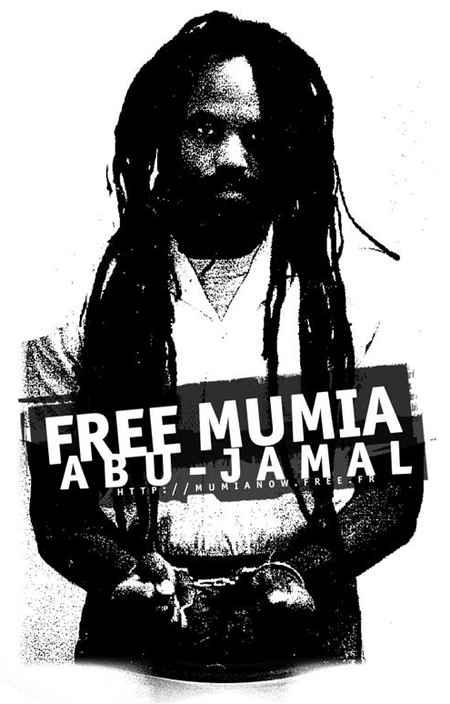
Author/activist Mumia Abu-Jamal, perhaps the most widely known prison inmate in America, is gravely ill, hardly able to walk or talk because of severe complications related largely to the diabetes which medical personnel inside a Pennsylvania prison failed to diagnose for months. Prison medical personnel either did not detect the diabetes earlier this year while giving Abu-Jamal numerous blood tests that easily identify the elevated blood sugar levels of diabetes or did not inform Abu-Jamal of the blood test results.

That failure to find his raging diabetes led to Abu-Jamal’s emergency hospitalization at the end of March, after he collapsed, unconscious and in sugar shock. When authorities finally transported Abu-Jamal from the SCI Mahanoy prison to the hospital, he was on the verge of a potentially fatal diabetic coma. Weeks before that emergency hospitalization, Abu-Jamal’s blood pressure spiked to a level that required hospitalization that he did not receive, stated persons working with Abu-Jamal.

Despite Abu-Jamal’s obvious painful and deteriorating medical condition, Pennsylvania prison authorities have barred Abu-Jamal from receiving access to or consultation from medical experts assembled by his supporters.

Those experts could provide the quality of care unavailable at either the demonstrably incompetent infirmary inside SCI Mahanoy or that non-prison hospital authorities utilized. (Abu-Jamal has had adverse reactions to medications he has received from the Mahanoy prison infirmary, his supporters said.)

The refusal of Pennsylvania prison authorities to properly treat Abu-Jamal or permit him access to non-prison medical personnel who could effectively treat his conditions fuel understandable fears among Abu-Jamal’s far-flung supporters that anti-Abu-Jamal forces are trying to effectuate the death sentence that once hung over Abu-Jamal.

The ‘fear’ that foul play could be apart of Abu-Jamal’s poor medical care arises from the fact that police, politicians and others had vigorously campaigned for Abu-Jamal’s execution for 28-years. Abu-Jamal received a death sentence following his controversial 1982 conviction for killing a Philadelphia policeman. That campaign for execution included many forms of harassment. The extraordinary punishments from that campaign provide proof for many that Abu-Jamal is a political prisoner.

“They are outright killing him in front of us,” Pam Africa said. Africa, a close associate of Abu-Jamal and head of International Concerned Friends and Family of Mumia Abu-Jamal, visits him regularly.
(Abu-Jamal’s death sentence was converted to life in prison after federal courts repeatedly upheld the dismissal of the death sentence citing constitutional violations.)

“He is in pain. His skin is so bad from that rash that he looks like a burn victim,” Africa said. “The is F*%king horrible …”

When prison authorities returned Abu-Jamal to SCI Mahanoy from that hospital, following a few days care in the ICU, he was still seriously ill.

Yet, prison authorities ordered him returned to his prison cell after a brief stay in the Mahanoy infirmary following his return from the ICU. Authorities returned him to his cell despite his visibly weakened condition, dramatic 70-lb.weight loss, labored breathing, swelling of his body parts and open sores on his skin from a festering rash.

Prison authorities certainly knew that Abu-Jamal’s weakened condition would make it difficult for him to walk back to the infirmary for help since the distance from his cell to the infirmary is the distance of about three-city-blocks. Certainly authorities knew the difficulties facing Abu-Jamal even in obtaining meals from the dining hall, a nearly two-block distance from his cell.

Prison Radio, the San Francisco-based media entity that has broadcast Abu-Jamal’s prison commentaries for decades, recently issued an update on his medical condition utilizing information provided by Abu-Jamal’s wife, Wadiya following her latest visit.

According to that report Abu-Jamal “is extremely swollen in his neck, chest, legs and his skin is worse than ever, with open sores. He was not in a wheelchair, but can only take baby steps. He is very weak. He was nodding off during the visit. He was not able to eat – he was fed with a spoon. These are symptoms that could be associated with hyper glucose levels, diabetic shock, diabetic coma, and with kidney stress and failure.”

Prison Radio, a few days before that updated report on Abu-Jamal’s condition, had released information that Pennsylvania prison authorities were refusing proposals to address Abu-Jamal’s worsening medical condition.

Prison Radio revealed that prison authorities had notified Bret Grote, a lawyer for Abu-Jamal, that they would not allow Abu-Jamal to be examined by his own doctor, and would not allow his doctor to speak with prison medical staff to assist or direct Abu-Jamal’s care. Prison officials are also refusing to allow regular phone calls between Abu-Jamal and his doctor and they said they would not allow Abu-Jamal to be examined by an endocrinologist (a diabetes specialist).

Proposals for Abu-Jamal receiving medical care from personnel outside the prison system are not out of line. Authorities allowed millionaire John DuPont to have his medical issues treated by his own private physician at his expense while he served a life sentence for murder before dying in a Pennsylvania prison. Authorities denying Abu-Jamal allowances that authorities have extended to other inmates is a part of the pattern of punishments that target Abu-Jamal.

Charges that prison authorities are deliberating mistreating Abu-Jamal are routinely dismissed as hyperbole by authorities despite abundant examples of mistreatment directed at Abu-Jamal and other inmates.

For example, in 2010 an inmate serving a life sentence like Abu-Jamal filed a lawsuit against Pennsylvania prison authorities challenging their refusal to provide him with medical treatment for acute kidney stones despite a previous court settlement where authorities had agreed to provide that inmate with his needed treatment.

That inmate, Walter Chruby, secured an injunction from a trial court judge ordering immediate treatment. Chruby’s lawsuit, according to a court ruling on that injunction, stated that immediately after Chruby won that first court order for treatment, prison authorities “began withholding or intentionally delaying adequate medical care…”

The medical mistreatment of Mumia Abu-Jamal comes at a time when callous law enforcement, particularly brutality and fatal shootings by police, is in the national spotlight. Abu-Jamal, in his books and commentaries produced in prison, has been a strident critic of inequities in the criminal justice system. The medical mistreatment of Abu-Jamal is rife with callousness and inhumanity.
Call and write these people and demand that Abu-Jamal be provided with appropriate medical care for this eminently treatable disease!:

Gov. Tom Wolf, PA Governor: 717-787-2500 • governor@PA.gov 508 Main Capitol Building, Harrisburg PA 17120

John Wetzel Secretary of the Deparment of Corrections ra-crpadocsecretary@pa.gov 717-728-4109 • 717-728-4178 Fax 1920 Technology Pkwy, Mechanicsburg PA 17050

John Kerestes, Superintendent SCI Mahanoy: 570-773-2158 x8102 570-783-2008 Fax 301 Morea Road, Frackville PA 17932

Susan McNaughton, Public Information Office PA DOC DOC Press secretary: 717-728-4025 PA DOC smcnaughton@pa.gov
Public Information Officer, SCI Mahanoy

Jane Hinman 570-773-2158; then dial zero SCI Mahanoy: 570-773-2158 x8102 • 570-783-2008 Fax 301 Morea Road, Frackville PA 17932
Why Mumia Must Live, and US imperialism Must Die: The Link Between Political Prisoners and the War on Terror

mumia

The so-called War on Terror and the national security state did not emerge full-blown from the rubble of 9/11. Both are products of previous waves of police repression, mainly targeting Black radicals. “The FBI’s counter insurgency war on the Black Panther Party chapters and leaders like Mumia established for local police departments a direct link to Washington’s war and surveillance arsenal.”

By Danny Haiphong

Source: Black Agenda Report

The fear of the Muslim/Arab terrorist rekindles the same fear in white America that the Black liberation movement ignited over four decades ago.”

Political Prisoner and journalist Mumia Abu-Jamal has been subjected to over three decades of torture from the US prison gulag. His political imprisonment has placed his life in serious danger, this time not from state execution but instead from extra-legal medical neglect. The prison state has continuously failed in its efforts to murder Mumia through official means and has thus decided to refuse the former Black Panther adequate medical treatment for diabetes. Meanwhile, Boston residents of all classes await the verdict of whether the alleged “Boston bomber” Dzokhar Tsarnaev will receive the death penalty or life in prison. The event that faithful day remains shrouded in questions , but most of the city has accepted the dominant narrative put forth by the FBI and Boston Police Department. The War on Terror that produced the “Boston Bombing” and Mumia’s struggle against the prison state are intimately connected. For Mumia to live with freedom and dignity, the US imperial order behind the War on Terror must die.

Mumia Abu-Jamal’s existence as a political prisoner has been repressed by the establishment, while the War on Terror is a household name in the US. This is because the War on Terror serves the objectives of imperialism and Mumia does not. Mumia joined the Black Panther Party at fifteen and served as the Philadelphia Chapter’s Ministry of Information. He used his talents in journalism in service of Black people both in the BPP and after. This landed him on J. Edgar Hoover’s COINTEPRO list of Black liberation fighters to watch and suppress. In 1978, Mumia covered the Philadelphia police department’s siege on the MOVE Organization. His critical investigation of the Philly PD’s role in repressing MOVE led to his ouster from the journalism industry. In 1982, Mumia was framed for the murder of police officer Daniel Faulkner and sentenced to death.

He used his talents in journalism in service of Black people both in the BPP and after.”

The context of Mumia’s imprisonment is at the essence of US imperialism’s War on Terror, which could be better named its war of terror. In the film Manufacturing Guilt​ , Mumia’s frame-up is blatantly exposed through court documents and investigations. Yet, Mumia has lived much of his life in prison, mostly in solitary confinement. What explains this injustice and how does it relate to the current War on Terror? In Still Black, Still Strong, Dhoruba Bin-Wahad explains how the FBI’s counter insurgency war on the Black Panther Party chapters and leaders like Mumia established for local police departments a direct link to Washington’s war and surveillance arsenal. Washington’s war on Black liberation fighters precipitated the first SWAT team operation in 1969 and the FBI’s declaration that the Black Panther Party was the “greatest threat to the internal security” of the US. The war on Black freedom that jailed Mumia created the technical capacity for the War on Terror.

The recent bombing of the 2013 marathon, and 9/11 before that, created the conditions for a massive expansion of the surveillance state and police state throughout the US mainland. The hundreds of illegally detained prisoners at Guantanamo Bay, the increased surveillance of Muslims and Black people in the US, and the massive spy program instituted by the Patriot Act and similar legislation are daily reminders of US imperialism’s ever expanding repressive apparatus. Internationally, the US led War on Terror interventions have caused the loss of life of millions of people in the Middle East and Africa alongside the thousands more from US aerial drone strikes and proxy war. All of this has been justified as necessary to “counter” the so-called threat of “terrorism.”

The war on Black freedom that jailed Mumia created the technical capacity for the War on Terror.”

Mumia’s story, one shared by numerous US political prisoners sentenced to die in the cages of the prison state, contains in it the seeds that sprouted the rise of the massive War on Terror. Russell Maroon Shoatz, Oscar Lopez Rivera, Leonard Peltier and scores more faced trumped up charges from the state as part of US imperialism’s counter insurgency war on dissent generally and the Black liberation movement in particular. This war has been expanded to meet the needs of US imperialism, which in its current form has produced a potentially explosive situation domestically and globally. The sharpening contradictions of never-ending war and increasing poverty and privatization wouldn’t last long if the counter insurgency war on Mumia and the Panthers hadn’t provided the blueprints and technical support for the mass expansion of the War on Terror’s primary tools: war and surveillance state.

Mumia Abu-Jamal and the rest of the Empire’s political prisoners are caught in the cross hairs of US imperialism’s war of survival. Not only has the material basis of the counter insurgency war that murdered and imprisoned the Black liberation movement grown, but so too has the racist logic behind the repression. The War on Terror’s racist logic has permeated so deeply into the minds of the US public that the mere questioning of the agenda’s blatant deceit is subject to dismissal or defense by most people living in the US mainland. These conditions have left political prisoners with few fighters on the outside pressuring their release. The War on Terror has attempted to erase the memory of political prisoners by reframing the racist justifications for political imprisonment as common sense in what George Jackson called the “Amerikan mind.”

The War on Terror’s racist logic has permeated so deeply into the minds of the US public that the mere questioning of the agenda’s blatant deceit is subject to dismissal.”

So, even though the justification for each and every War on Terror intervention or policy since 2001 are dubious at best, the fear of the Muslim/Arab terrorist rekindles the same fear in white America that the Black liberation movement ignited over four decades ago. The Black Panther Party and their partners in struggle were deemed criminal in every way and many were falsely charged with the murder of police officers, the highest form of offense in the eyes of white America. The War on Terror built off this strategy by throwing the Muslim community into the racist war on the oppressed as a means to control the dissent of the entire population. That the US imperial machinery is complicit in, and a sponsor of, jihadist terror and proxy war matters as little as the innocence of political prisoners when it comes to preserving the Empire and criminalizing all resistance to its rule.

Mumia Abu-Jamal’s life needs to be saved by any means necessary, but fighting to free him based on his criminal case alone won’t develop the movement we need. One of the primary obstacles to building a concrete movement for the freedom of political prisoners is the privileging of innocence over a movement that links political prisoners to the repression of the imperial state. But Mumia’s innocence teaches us the real purpose of political imprisonment. The War on Terror is a consolidation of the forces that were built by imperialism to suppress the revolutionary ideas of Mumia Abu-Jamal. What we need is a reexamination of those ideas in the service of the freedom of all political prisoners. By studying the War on Terror and the repression of the Black Liberation movement from which it grew, it becomes increasingly clear that imperialism must die for Mumia to truly live.

Danny Haiphong is an organizer for Fight Imperialism Stand Together (FIST) in Boston. He is also a regular contributor to Black Agenda Report. Danny can be reached at wakeupriseup1990@gmail.com and FIST can be reached at bostonfist@gmail.com.

The Commencement Controversy and the Real Mumia

n00000875-b

By Kevin Price

Source: TruthThroughStruggle

Three weeks ago I visited imprisoned journalist, Mumia Abu-Jamal, at SCI-Mahanoy in Pennsylvania. I’ve been visiting with Mumia, sometimes regularly, for the last decade. Despite the polarizing rhetoric from those who’ve fought for three decades for Mumia’s state sanctioned murder, the man I met is one of the kindest, funniest, and most intelligent people I’ve had the pleasure to know. The first time I visited with Mumia, on death row at SCI-Greene in 2004, the conversation was so engaging that the visit was halfway over before I realized his hands had been shackled the whole time. After years of organizing around his case I knew he was a brilliant thinker, but I was pleasantly surprised by his sense of humor and silliness.

I learned of Mumia’s case as a teenager in 1997, when my world was rocked by reading his gripping book documenting death row life, “Live From Death Row.” The same week I purchased his newly released collection of musings, essays, and poems, “Death Blossoms.” I stayed up all night reading it, inspired by the empathy and insight coming through the pages. At that point I was a freshmen in high school and had begun to get politicized by an active punk scene in Norfolk, VA. Mumia’s writing opened my eyes to worlds I had never even considered. I started organizing heavily for a new trial for Mumia as well as working on many other causes and movements. After over 15 years studying this case I know that his trial was a travesty of justice (as does Amnesty International and many international governing bodies) and I believe that he is innocent.

In person and in his writings Mumia rarely focuses on his own case, instead focusing on broad international struggles for justice. On our most recent visit we talked about books we’re reading, world events, and mutual friends. For a few years he’s been studying musical composition and when I told him that I didn’t know how to read music he spent an hour passionately explaining the basics to me. I learned a lot. These visits have been some of the most educational hours of my life. It’s easy, absorbed in conversation, to forget that we are in a prison. It’s hard to comprehend that this man was nearly put to death on two separate occasions and that the mere mention of his name will send many into a fit of rage. If they actually met Mumia they wouldn’t recognize him next to the violent cop-killer straw man the media built in his image. Mumia has been characterized by much of the mainstream media as an unrepentant murderer. When word got out that an audio recording by Mumia would be the commencement address at Goddard College this Sunday, Fox News and other media pundits manufactured a media controversy.

Over the years I’ve seen a lot of backlash by the Fraternal Order of Police and others who want Mumia dead. When Rage Against the Machine and the Beastie Boys organized a massive benefit show in his defense there was media uproar and pressure to shut down the show. When Mumia was made the first honorary citizen of Paris, France since Pablo Picasso, and Saint-Denis, France named a street after him, the US House of Representatives passed HR 1082 condemning Mumia and Saint-Denis, France. The hysteria over having Mumia as the commencement speaker at Goddard is just the most recent in a long series of similar media spectacles. This one hits a bit closer to home for me because I graduated from Goddard College in 2012 and have friends who will be graduating this Sunday. I love Goddard and am very protective of it. Conversations with Mumia were part of the catalyst for my enrolling in Goddard. He attended Goddard in the 70s and finished his degree there in 1995, knowing he might be executed before graduation.

It’s difficult to watch a person that you love and respect routinely slandered in the media. Goddard College and their graduating students have been condemned for their decision and attacked as well. I’m impressed with the way the school and the graduating students are defending their decision. There are a number of symbolic reasons it’s valuable to have Mumia speak at commencement. The United States is the largest jailer in the world history, with over 2,000,000 people in the prison system. Racism plays a key role in deciding who will be convicted and the sentence they will receive, and as a result black men are incarcerated at vastly disproportionate numbers. The lack of educational opportunities and diminishing job options are a huge factor in our sky rocketing rates of imprisonment. If we seek to change these conditions I can think of no better speaker than Mumia Abu-Jamal, an accomplished academic, and brilliant black man who is wrongfully convicted. With the rampant police murders of black people, notably Eric Garner and Mike Brown, it’s important to publicly assert that black lives matter and that the victims of police brutality and judicial misconduct must be defended.

These are wonderful symbolic reasons to celebrate the choice of Mumia as a commencement speaker. However, Mumia is not a symbol. He is a man who was wrongfully held in solitary confinement on death row for nearly 30 years and is now being wrongfully held in general population with no legal possibility for parole. He has children who have had children in the years he’s been away. He is a man with a brilliant mind and an unstoppable pen. Those who oppose him have been fighting for decades to silence his voice. Yet every week, often twice a week, Mumia continues work as a journalist, writing and recording audio commentaries over the prison phone calls. With so much at stake it only seems right that we listen.

_______________________________________________________________________________________________
To hear Mumia’s commentaries go to http://www.prisonradio.org

For more information on who Mumia is, his case and his writings go to http://www.freemumia.com