
The Difference Between the Death Star and the Pentagon

StarWarsPentagon

By Carey Wedler

Source: The Anti-Media

The Imperial Death Star from Star Wars and the Pentagon have much in common. It is not difficult to observe the similarities between the two behemoth structures and what they represent-especially in recent years.

For one, both used to be part of representative republics and both represent the military wings of the empires in power. In 2007, Alternet reported that the U.S. had 737 bases, 38 of which were “major,” and that

“…perhaps the optimum number of major citadels and fortresses for an imperialist aspiring to dominate the world is somewhere between thirty-five and forty.”

The desire of the military’s operatives to exert control over regions all over the world parallels the desire of the Emperor and Vader to rule the galaxy.

Another similarity is the desire of both the Death Star’s leaders and those at the Pentagon to weed out dissent. One of the main objectives of the dark side’s adherents is to find the rebels and eliminate them.

Though the Pentagon hasn’t quite started assassinating political dissidents (or entire planets, though Hiroshima and Nagasaki are an earthly comparison to Alderaan), it has made its views crystal clear: protesters are a form of terrorist and anyone deemed associated with terrorism may be denied his or her rights.

Still another commonality between the two ministries of war and destruction is the level of decadence afforded to the galactic and American agencies. The Death Star was a moon-sized, laser-clad behemoth for the Dark Side. The Pentagon employs 23,000 people in a floor space three times the size of the Empire state building and spawns doomsday technology. In both societies, the resources devoted to violence far outweigh those dedicated to promoting peace or the well-being of humanity (or alienhood).

It is easy to compare the Death Star and the Pentagon as manifestations of evil that seek power and rule by force. But there exists at least one stark difference:

In the Washington Post this week, it was revealed that the Pentagon is looking for someone to fill its “Yoda” position.

The job ad for “Director of the Office of Net Assessment” currently reads:

“The Director’s primary function is to develop assessments that compare the standings, trends and future prospects of U.S. military capability and military potential with that of other countries.”

The job was founded and held by longtime analyst Andrew W. Marshall, who recently retired. Because of his wisdom and knowledge throughout the years, he came to be known as “Yoda.”

And therein lies the difference between the rulers of the Death Star and the rulers of the Pentagon: at least Darth Vader, the emperor and their cohorts knew they were evil.

Vader repeatedly spoke of the powers of the Dark Side, of the great benefit of crossing over into evil. In the Empire Strikes Back, he tempted Luke to join the dark side to rule the galaxy with him:

“Luke, you can destroy the Emperor. He has foreseen this. It is your destiny, join me and together we can rule the galaxy as father and son.”

He iterated the slavery of being on the dark side in Return of the Jedi:

“You don’t know the power of the dark side. I must obey my master.”

Considering the empire practices what is called the “dark side” of the force, its members knew exactly what they signed up for.

But to a clearly significant portion of employees at the Pentagon, the irony is lost. It has gone over their heads that working for the world’s biggest, arguably most vicious military, is not working on the side of morality, peace, or freedom.

By calling a man who works for the Pentagon “Yoda”-a virtuous practitioner of the force- it is clear that many who work for the Pentagon believe they are working for a “force” of good. It’s scary. It’s scarier that the Pentagon likely has employees who know of its evil and yet continue to work there.

May all Pentagon employees recognize its evil, quit their jobs at the American Death Star, and work to promote the true meaning of the “force” (the same goes for soldiers of governments around the world). As the real Yoda said:

“Fear is the path to the dark side. Fear leads to anger. Anger leads to hate. Hate leads to suffering.”

This is exactly how violent governments keep their people and foot soldiers under control and realizing this is the first step to achieving freedom and peace.


What Would Afghan Spending Buy at Home?

By Russ Baker

Source: WhoWhatWhy

Most of the stories headlining how President Obama plans to cut troops in Afghanistan as part of his planned exit from that country have not bothered to provide numbers on U.S. military spending there.

A few have, but almost in passing. For example, CNN doesn’t indicate the current levels of spending, but notes that

Tony Blinken, Obama’s deputy national security adviser, told CNN that the United States will spend about $20 billion on the continued military presence in Afghanistan after 2014.

In other words, $20 billion is what the U.S. will spend after it has effectively “withdrawn.”

Too bad news organizations don’t routinely give us a sense of what we are spending, or what else we might get for the same monies directed toward other purposes.

But here’s one thing to consider: $20 billion is about one-third to one-half of what the United States Department of Education spends on elementary, secondary and vocational education, and comparable to what it spends on higher education.

When President Obama released his Fiscal Year 2013 budget, Education Secretary Arne Duncan “announced that high-quality education is absolutely critical to rebuilding our economy.” Maybe so, but domestic spending is constantly under assault—and the lawmakers who reflexively support any and all military allocations are often the same ones complaining about “big government” and “wasteful” spending.

Here are a few other comparative statistics: (numbers vary, of course, from year to year)

-$20 billion is what the U.S. government budgeted for 2013 to subsidize often-struggling farmers

-It’s four-fifths of what we spend for science, space and technology

-It’s more than twice the budget of the Environmental Protection Agency

-It’s a third of what we spend on veterans’ hospital and medical care—on the people who fight in all wars combined

-It’s about a third of what we spend on administration of justice

-It’s five times what’s budgeted for energy conservation in 2014 and 2015

-It’s about 8 times what we spend on national parks—which have suffered continued cuts in recent years, resulting in reduced services and closures

If it’s not achieving something of clear benefit to Americans, why does the spending continue at such levels? Here’s another thing to consider, a graphic on Afghanistan we’ve run in the past to considerable interest:

11

Sources for Budget Data:

OMB Historical Budget Tables

Department of Interior 2014 Budget Highlights

Swiss Voters Reject Multibillion Dollar Boondoggle

index

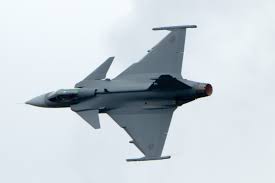
In a vote last Sunday, 53.7% of Swiss voters rejected a government plan to fund the procurement of 22 Gripen fighter jets which would have cost at least $3.5 billion. In a public statement, Susanne Leutenegger Oberholzer, a Social Democrat member of parliament said: “The people have spoken. We surely don’t have the money for such unnecessary acquisitions.” Supporters of the plan such as Federal Councilor and defense minister, Ueli Maurer argued “This decision has the effect of creating security gaps” but a majority of voters expressed their belief that money spent to procure the planes could be better be spent on other things.

This story should be especially striking to U.S. citizens, who are constantly told they live in a Democracy yet don’t have a chance in hell of voting down similar military spending proposals or ones much worse like the F-35 Joint Strike Fighter project. According to a Bloomberg article quoting Pentagon officials, the program’s life-cycle cost including development and decades of support is projected to top $1.5 trillion. The manufacture of the F-35 funnels business to a global network of contractors including 1,300 suppliers in 45 states, making it the defense project “too big to kill”. Despite a number of high profile technical problems and numerous delays the F-35 remains in development and is expected to go into full production in 2019, seven years later than planned. By that time other countries are likely to have cheaper unmanned drone fighters with superior performance and capabilities. How does this colossal waste of money and time make us safer?

War on Terror in Perspective

Video

A couple weeks ago Obama was interviewed on “The Tonight Show”. In response to a question from Leno about whether it’s safe for Americans to travel abroad in light of a heightened terror alert, he replied “The odds of dying in a terrorist attack are a lot lower than they are of dying in a car accident, unfortunately”. While he probably meant it’s unfortunate that the rate of car accident fatalities is so high, it could also be his conscience (if he has one) admitting the actual threat posed by terrorism is so far less than car crashes and other causes of death, it is indeed weak justification for vastly disproportionate government spending. Regardless of interpretation, he was actually telling the truth.

According to Reason.com, in the period after 9/11 from 2001 to September 2011, only 30 Americans were killed in terrorist attacks on U.S. soil. Data from the 2013 edition of the AFL-CIO’s “Death on the Job” report, shows 70,664 workplace fatalities in the U.S. from 2001 to 2011. According to a Wiki page on U.S. motor vehicle deaths, from 2002 to 2011, 392,760 Americans were killed in car crashes. So in a similar time-frame the number of Americans killed in terrorist attacks were about .04% of the number of Americans killed in work related incidents in the U.S. and .008% of Americans killed in car crashes. Americans are 2,355 times more likely to die on the job and 13,092 times more likely to die on the road than from a terrorist attack.

Of the U.S. government’s $3.5 trillion total expenditure budget for fiscal year 2012,1.4 trillion was defense-related. So military spending is at least 40% of the U.S. budget (a conservative estimate not including black budget projects) for a terror threat that is miniscule compared to actual dangers that kill far more Americans.

Of course one is unlikely to learn this from corporate-stream news because the focus and priorities of corporate media and government spending tell us whose interests they promote and protect. By keeping citizens in a state of ignorance and fear, countless taxpayer dollars can more easily be diverted from essential public services and infrastructure in the name of “homeland security” and “defense” but with a tacit effect of consolidating power and weakening opposition. Rather than make us safer and more secure, U.S. government response to terrorism has had the opposite effect. Now more than ever we must overcome fear and raise awareness of the agenda at the root of the world’s worst problems through self education, questioning corporate media, organizing, strategic actions (or inactions), etc. We also need to start expanding alternatives to the current system (ie. worker owned cooperatives, small local farms and permaculture). The dominant top-heavy political and economic institutions will inevitably have to collapse or transform not only because they may be irreparably corrupt, but are socially and environmentally unsustainable.