Saturday Matinee: A Bittersweet Life

By George Karystianis

Source: Film Mining 101

Kim Jee-woon’s career is a peculiar one. Filled with masterpieces from his native country (South Korea) and excluding a rather tame Hollywood debut (“The Last Stand” (2013)), he always manages to surprise through his creative outputs due to a chameleonic ability to transcend genres the same way Kubrick, Tarantino and Scorsese (among others) can do.

While other contemporary directors from South Korea (e.g., Bong Joon-ho) include sharp socio-economic commentary and heavy metaphors of emotional allegories, Jee-woon’s films are on a different plane altogether. Bearing genuine traits of auterism, his flicks feature dark stories, complex characters, ambiguous morality and inevitable outcomes.

Following outputs on black comedy (“The Quiet Family” (1998)) and psychological horror (“A Tale of Two Sisters“ (2003)), “A Bittersweet Life” (2005) sees the prolific filmmaker taking a stab at the much established neo-noir action drama with hearty dosages of all your favorite gangster and revenge tropes. Coming hot after the international success of Park Chan-wook’s “Oldboy” (2003), some comparisons might be unavoidable but the only common element for both films is the revenge centric plot.

Embracing a more stylish take on action, Jee-woon’s direction relishes on sudden outbursts of choregraphed violence heading towards a climatic finale that owes a lot to John Woo. Yet “A Bittersweet Life” is at its best when Kim Sun-woo’s stylish, silent and stoic enforcer is on screen. A brilliant (roughly) antihero, he kicks copious amounts of ass under a slick black suit that would make John Wick blush when he is not contemplating how empty his life is (and has been). Delivering a stand out performance, Lee Byung-hun demonstrates what an exceptional actor he is building up a resume filled with challenging roles which demand less talk, more emotion and interesting dramatic layers.

Split into two halves, the moment the inevitable story of betrayal unfolds, Sun-woo consumes the scenery, a human stark contrast against his more emotionally involved cast. Whether he is beating down goons, or escapes narrowly with his life, there are not any moral dilemmas to be answered or cute romances that might take this antihero out of the gangster abyss. No, this is pure old fashioned revenge, packaged gorgeously under Jee-woon’s stylistic flourishes who would go on bigger and more outrageous pastures (Byung-hun on his arm, e.g., “The Good, the Bad, and the Weird” (2008)). A particular fight or die skirmish inside a warehouse is appropriately tense and thrilling bearing stakes and playing interesting against traditional conventions.

There are some minor glimpses of the other life which Sun-woo could have had mostly through the surrogate relationship of “protection” with a talented cellist who acts as the catalyst for the action but the script never fully encapsulates this aspect. We see everything through Kim’s eyes and his perspective of violence and structure is perhaps the only one he has known. Thus, the few loose subplots involving oppositional crime bosses and the cellist herself could initially confuse someone although they are ultimately resolved by the time the credits roll.

A Bittersweet Life” might not be a genre breaking entry but it is expertly made and aims to please fans of the genre with stand out performances, great action, beautiful shots and an interesting choice of Spanish guitar infused soundtrack that gives a melancholic aura, wholly suitable for such a protagonist. It is a pleasing nail bitter from start to finish and a vehicle to showcase t the acting talents of Byung-hun.

____________________

Watch A Bittersweet Life on Kanopy here: https://www.kanopy.com/en/product/13436028

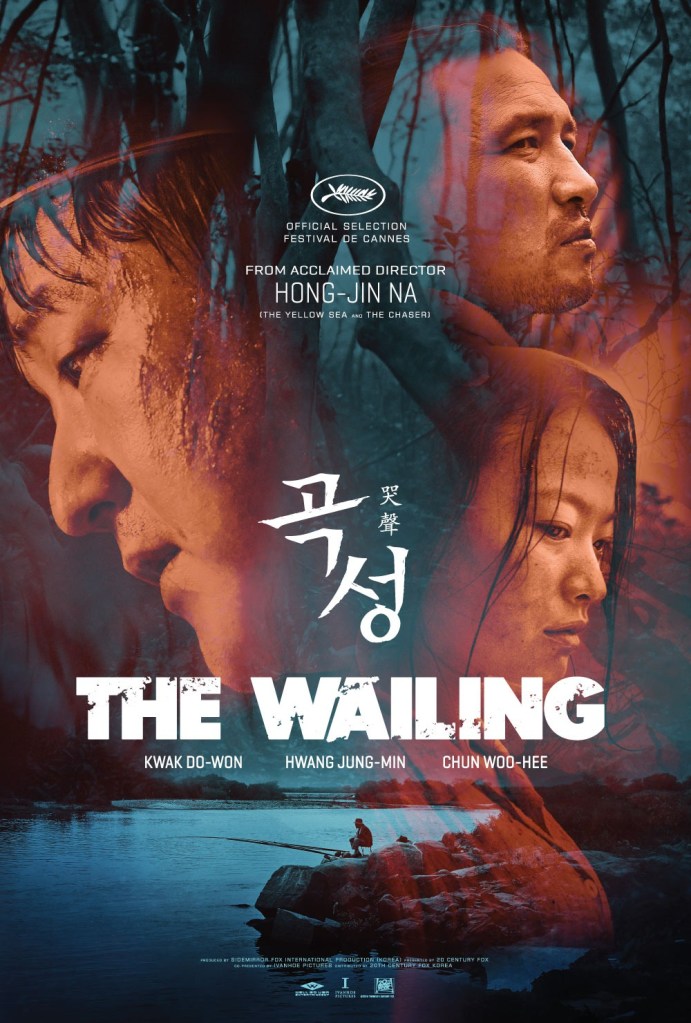
Saturday Matinee: The Wailing

Film Analysis: The Wailing (2016) by Na Hong-jin screening on Fantasia International Film Festival

By Panos Kotzathanasis

Source: Asian Movie Pulse

Na Hong-jin is one of those rare cases in S. Korean cinema, which, despite having enormous success with their films, are not exactly eager to follow up. In that fashion, he has shot just three films in eight years, with the previous one (The Yellow Sea) screening six years before. His absence was quite felt in the country’s cinema, but his return fully compensates. “The Wailing” is already an international success, amassing more the $51 million in international revenue, while it has also won five Blue Dragon Awards (Director, Supporting Actor, Popularity Award, Editing, and Music). Here are seven reasons for the film’s success.

In a seemingly peaceful village, a kind of epidemic suddenly breaks out, with people losing their minds and attacking their relatives and with their skin suffering from a hideous infection. Their attacks have resulted in violent deaths, and the local police seem unable to deal with the case, eventually concluding that poisonous mushrooms are causing this behavior. Among them is officer Jong-goo, who hears a rumor about a Japanese man living on the top of a nearby hill being the actual perpetrator, a suspicion that becomes stronger after a strange young woman, named Moo-myeong confirms the fact. Eventually, he tracks down the man’s house and comes across a series of truly horrific spectacles. Being kind of coward himself, he tries to avoid the situation as much as possible, but when his little daughter, Hyo-jin, comes down with similar symptoms, Jong-doo is willing to go to extremes to save her. Meanwhile, his mother-in-law invites Il- gwang, a shaman, to perform an exorcism on the girl while a deacon  named Yang Yi-sam, is also involved, as a translator of Japanese for the police. The truth about what is really going on, and who the actual evil characters are, changes all the time, until the end. In that fashion, Na Hong-jin manages to retain the agony for the whole duration of the movie, as the twists are continuous and quite shocking.

Underneath the elaborate script, Na Hong-jin has hidden a very sharp, sociopolitical allegory, which my friend and expert on Korean film allegory, Bastian Meiresonne has pointed out to me. Moo-myeong, the shaman woman, is a direct reference to South Korea’s current president, Park Geun-hye, who has an intense connection with shamanism (or Muism, as is the Korean version of it) through the Eternal Life Church and her advisor, Choi Soon-sil, the instigator of the latest scandal that has led to her impeachment trial. In that fashion, Moo-myeong (shaman / white woman) is manipulating people to accuse the foreigner (or the past of South Korea in another interpretation). Her accusations make the people of the town become more and more racist, and to eventually kill the foreigner. It is always a dream sequence or a story told that has the Japanese man doing magic, or he is nearby, but he never actually does anything. The only time that he performs shamanism is in order to counter the woman’s sorcery.

The sequence where Moo-myeong is throwing stones at Jong-goo symbolizes how racism gets to people. It takes quite awhile, and lots of small “stones”, and people in the beginning are negative, like Jong-goo, who tells the woman to leave. Eventually though, it gets to them, and when they understand what is happening, it is too late. This allegory becomes clear during the sequence where the Japanese man turns into a monster in front of the wannabe priest, Yang Yi-sam. He says to him: “You only see me as you want to see me – and if I would tell you how I really look like (normal guy), you wouldn’t believe me anyway.” In that fashion, racism makes targeted people seem like monsters. The wannabe priest is an allegory regarding South Korea’s very troubled religious history, with Protestants and Catholics doing a lot of wrong in the country.

At one point, people call upon Korea’s traditional past – the shaman – (Il-Gwang) to help them, whose first question is how much he will be paid. As soon as the ritual is over (where he actually did nothing), he puts on his brand sportswear, in a symbolism of how old Korea has been left behind for money and western “values”. The only one who seems to realize the truth is the little girl, Hyo-jin, who symbolizes the children in general. She continuously yells “STOP”, but her parents continue to do the wrong thing and trust the shaman – Park Geun-hye – as they succumb to racism. In that fashion, Na Hong-jin means that the children will turn against their parents for the consequences they will have to pay, due to their mistakes.

Na Hong-jin directs and pens an agonizing thriller, building the tension gradually as the story progresses, until the utterly shocking finale, one of the film’s greatest sequences. He incorporates a plethora of horror-favorite elements and notions, including zombies, vampires, demons, and exorcists, although the only one majorly implemented is the latter, with the rest existing, for the most part, to create an atmosphere of supernatural horror. In that fashion, he avoids the reef of hyperbole, maintaining a very serious approach throughout the film, despite some minor moments of unexpected humor. The pace is neither fast nor slow, but has the most fitting speed for the story, which artfully escalates as the time passes, until the impressive ending with the continuous plot twists. Apart from that, there is much cursing, violence, and a number of truly grotesque bloodbaths and spectacles in general, which supplement the general aesthetics of the film. Lastly, the allegories are another element that moves the film beyond the typical horror movie, adding another level and more substance.

The cast is another point of excellence, with Kwak Do-won giving a wonderful performance as Jong-goo, an easily intimidated police officer who transforms into a relentless hunter for the sake of his daughter. Kwak has been mostly cast in secondary roles during his career, and he proves in this film that he is made of protagonist material. Hwang Jung-min is great as usual as Il-gwang, in his path to become the next Song Kang-ho. The exorcism scene is the highlight of his impressive performance. The one who truly steals the show, however, is Jun Kunimura as the mysterious Japanese man, whose acting and physique make him the perfect choice for the particular role, as he constantly exhibits a subtle but obvious threat, despite the fact that he does not speak very much. Kim Hwan-hee is also great as little Hyo-jin, in a rather difficult role that demanded her transformation from a cute and smart little girl to a violent, constantly cursing, possessed individual. Lastly, the gorgeous Chun Woo-hee shines particularly in the end, with a truly eerie performance.

Technically the film is magnificent, with Hong Kyung-pyo’s cinematography wonderfully presenting the grotesque atmosphere in the rural surroundings of the film, while exhibiting images of bucolic beauty as much as of onerous terror, particularly inside the various houses in the area. Furthermore, the extensive shooting in natural light gives the film an eerie essence that so suits its general atmosphere. Kim Sun-min’s editing is also great, retaining the agony throughout the film, while the sequencing is a work of art, particularly during the exorcism scene and the ending. Jang Young-gyu magnificently supplements the general atmosphere of the film, especially during the agonizing scenes.

All of the film’s aspects find their apogee in the exorcism scene, the movie’s most impressive and meaningful sequence. In terms of acting, Hwang Jung-min has the central role, presenting an exorcist performing a complicated ritual, as he dances around, killing a cock and chanting the whole time. Kw ak Do-won wonderfully portrays his character’s agony, particularly due to the reactions of his daughter, as Kim Hwan-hee is truly terrifying screaming and kicking as if she is being killed. Jun Kunimura is also great, as he presents his character’s stress over countering the ritual. The cinematography of the scene is extraordinary, as the difference in the two exorcisms is presented by the opposite colors (white and black) of the cocks sacrificed and the setting where they take place: the first in full light, and the second one in the darkness. Since the two rituals occur simultaneously, the editing is also masterful, as the two scenes alternate magnificently. The music, mainly produced through hand drums, heightens the tension even more.

“The Wailing” features many grotesque scenes. Cannibalism, violent killings, people acting like zombies, the terribly depicted skin infection, the cock killing ritual, and the amounts of blood all point towards an extreme horror film. The same applies to Hyo-jin’s behavior, which is very hard to watch, particularly during the ritual scene. The sequences involving the dog and the interior of the Japanese man’s house also move in the same direction. However, Na Hong-jin manages to “hide” this grotesqueness, as the other more artful elements of the film are the ones that dominate in the end. The intricate script with the deep and meaningful allegory, the well-analyzed characters, the fitting pace, and the elaborate cinematography that presents images of extreme beauty, alongside those of extreme grotesqueness, succeed in making the film watchable by anybody. The sporadic humor also moves in this direction, and this along with the aforementioned elements make “The Wailing” a great combination of artistry, meaningfulness, and entertainment, which even applies to fans of the extreme.

“The Wailing” is a truly great spectacle, a must-see for every fan of S. Korean cinema and a great return for a great filmmaker.

Watch The Wailing on Hoopla here: https://www.hoopladigital.com/title/11707489

Saturday Matinee: Beasts Clawing at Straws

Director: Kim Young-Hoon
Cast: Jeon Do-Yeon, Jung Woo-Sung, Bae Sung-Woo, Youn Yuh-Jung, Jeong Man-Sik, Shin Hyun-Bin, Jung Ga-Ram, Jin Kyung, Park Ji-Hwan, Kim Joon-Han 
Running Time: 108 min.

By Paul Bramhall

Source: City of Fire

Adapted from a Japanese novel by Keisuke Sone, Beasts Clawing at Straws marks the directorial debut of Kim Yong-hoon, who also penned the script after being impressed by the novels intertwining story. Onscreen it’s easy to see why it made for a compelling big screen outing, as an impressively cast ensemble come together for an almost Shakespearean comedy of errors that focuses on 10 characters, all of whom are looking to get their hands on a Luis Vuitton bag stuffed with cash.

Taking place in the North Western harbour city of Pyeongtaek, giving the surrounds of Beasts Clawing at Straws a welcomely different aesthetic from the usual Seoul set thrillers, we initially meet a down on his luck bathhouse worker played by Bae Sung-woo (MetamorphosisThe Great Battle). Life’s been giving Sung-woo a tough time after going bankrupt, which isn’t made any easier by living with his mother, played by Youn Yuh-jung (Minari, Keys to the Heart). Suffering from the onset of dementia, she feels sure his wife (Jin Kyung – The WitnessVeteran) is trying to kill her, and matters are confounded further by their daughter having to take a break from studying to work so she can afford the tuition fees. Sung-woo and his family are fundamentally good people, the only ones in the entire cast, however when he finds the bag in question stuffed in one of the bathhouse lockers, the contents understandably prove hard to resist.

Meanwhile a frazzled immigration officer played by Jung Woo-sung (Steel RainAsura: City of Madness) is also in debt and being pressured to repay a vicious loan shark, played by Jung Man-sik (The SwordsmanRampant). His limbs are on the line, and to make matters worse his girlfriend has disappeared, although in reality she’s running a hostess bar across town. Played by Jeon Do-yeon (The ShamelessMemories of the Sword), she’s always on the make and seems to be two steps ahead in whatever shifty deals are afoot. Working in the hostess bar is a newcomer played by Shin Hyun-bin (Seven Years of NightConfidential Assignment), a character forced into the world of hostessing after she fell victim to a financial scam, but equally to get away from her abusive husband. When a Chinese customer (Jung Ga-ram – The Odd Family: Zombie On SaleBeliever) falls for her, he offers to assist with getting rid of her violent spouse.

All of these disparate scenarios gradually end up connecting with each other in different ways across the 108 minute runtime, and for a first time director Yong-hoon does an amicable job of balancing them all in a way that lets us get to know each character just enough to be invested in them. While the synopsis may indicate that Sung-woo is as close as we get to a main character as the everyman who ends up out of his depth, onscreen we get to spend just as much time with Woo-sung as the immigration officer and Do-yeon as the hostess bar madame. It’s the first time for the pair to share the screen together, and as 2 of the most recognisable faces in Korean cinema for more than 20 years, it’s a fitting vehicle to show off their talents. Woo-sung here is in the same hyper tense state that we saw him in Asura: City of Madness (although he doesn’t end up half as bloodied), and it’s undeniably fun to see him return to this kind of role.

As with almost any production she appears in though, it’s Do-yeon that steals the show whenever she’s onscreen. One of the world’s best actresses, after recent appearances in disaster flicks like Ashfall and Emergency Declaration which offered solid but unremarkable roles, it’s a real pleasure to see her here in a role fitting to her talents. Perhaps even more ruthless than the loan sharks who turn out to be as much on her tail as they do Woo-sung’s, it’s Do-yeon’s character who lingers most in the memory as the end credits roll.

It’s also another of Do-yeon’s movies that I was reminded of the most when watching Beasts Clawing at Straws, with the whole concept of various unsavoury characters in pursuit of a stash of dubiously acquired cash recalling Ryoo Seung-wan’s 2002 crime caper No Blood No Tears. Yong-hoon employs a similar caper style feel to his debut, and despite the fact that characters repeatedly get killed off left right and centre (in various gruesome ways), the violence never feels like its breaking from the black comedy tone which is established from the outset. At its core it’s a tale of dog-eat-dog, with each dog never knowing if there’s a bigger dog just around the corner, and it’s a scenario which allows for a brisk pace and some unexpected surprises.

The tension is ratcheted up further by the arrival of a cop from Seoul looking into a dismembered body that’s washed ashore. Played by the always welcome Yoon Je-moon clocking in a special appearance, ironically the last time he clocked in a special appearance was also playing a cop alongside Jung Woo-sung in 2017’s Asura: City of Madness. Je-moon’s character, who seems just as keen on hanging out in the local hostess bars and downing a few beers, has a habit of turning up at the most inconvenient of times, pushing half the cast who are already on edge just that little bit closer to it. Indeed it’s the concoction of the characters that populate the narrative that makes Beasts Clawing at Straws so much fun, with everyone suffering from some kind of bad luck, debt, or simply a case of being in the wrong place at the wrong time (or right, depending on which way you look at it).

The biggest surprise that Yong-hoon has up his sleeve is that it’s only revealed mid-way through that we’re in fact watching a non-linear tale play out, and have been watching a number of timelines that are playing out concurrently rather than chronologically. It’s executed in an unassuming way, and shows off first time director Yong-hoon’s strong grasp of storytelling, almost certainly making him a talent to watch out for in the future. Matched with the scripts unbiased approach to who gets killed off next, while there’s been countless movies that prove going after a bag stuffed with cash of unknown origin always turns out to be a bad idea, Beats Clawing at Straws does enough with the concept to keep it feeling fresh.

With that being said there are moments when Yong-hoon’s inexperience shows through. In particular the plot thread involving Shin Hyun-bin’s rookie escort pairing with Jung Ga-ram as the customer that falls for her, and the subsequent sub-plot that sees Ga-ram offering to kill off her husband, feels undercooked. The scenario plays out, however in the end it doesn’t feel particularly important to the overall plot, coming across more like an inconsequential aside that should have either been dropped or spent more time connecting to the bigger picture. Similarly for Youn Yuh-jung as the meddling and paranoid mother, who’s character ultimately just feels kind of there, but fails to serve any real purpose.

These are minor flaws though in what’s an undeniably fun movie, and it’s easy to imagine the tagline for its western release going something alone the lines of “No Country for Old Men meets Pulp Fiction!” There’s arguably traces of both the Coen Brothers and Quentin Tarantino’s filmmaking DNA throughout both the tone and structure of Beasts Clawing at Straws, but Yong-hoon’s success is that it never feels like it’s being derivative of either. The distinctive locales of hostess bars, late night saunas, and scrappy apartments forever bathed in the neon of the surrounding nightlife mean there’s no question we’re in Korean territory. With a healthy mix of black comedy, typically brutal violence, and colourful characters, the lesson on offer is one we should already know, but as a reminder to leave bags stuffed full of cash exactly where they are, Beasts Clawing at Straws is an entertaining one.

Watch Beasts Clawing at Straws on Hoopla here: https://www.hoopladigital.com/title/15296509

Saturday Matinee: Parasite

Bong Joon-ho delivers a biting satirical thriller about class warfare and social inequality

By Prahlad Srihari

Source: Firstpost.

Bong Joon-ho has always been interested in the mechanics of genre cinema. The South Korean director has made a career of subverting established genres in an intelligent, meaningful manner. In The Host and Okja, he took the creature feature and added socio-political subtext to it. The serial killer thriller, Memories of Murder, highlighted police incompetence in South Korea and the Hitchcockian murder mystery, Mother, revealed the cultural divide between men and women in Korean society.

Fortunes change when Ki-woo falsifies his credentials to land a tutoring job with a wealthy couple, Mr Park (Lee Sun-kyun) and his gullible wife Yeon-kyo (Cho Yeo-jeong). While he teaches their daughter Da-hye (Jung Ziso), he learns that their troublesome son Da-song (Jung Hyeon-jun) also needs help improving his drawing skills. Ever the opportunist, he recommends his sister — not revealing her real identity of course. She recommends her father as a driver after getting the previous one fired by setting him up as a sex fiend. Ki-taek then recommends his wife to take over as housekeeper after a scheme involving the most creative use of peaches since Call Me By Your Name. After their clandestine infiltration operation into the Parks’ lives is complete, the story makes so many intense and unexpected twists and turns, it turns into a whole different beast altogether.

The cast of Parasite deliver performances of exceptional psychological acuity and perverse frivolity. Led by Bong’s frequent collaborator Song Kang-ho, they are sure to conjure the loudest of laughs and the strongest of emotional reactions from their audiences.

Bong brilliantly uses the upstairs-downstairs distinction in the Parks’ house to reveal a socially divided society. And the society is not just divided by wealth but also culture. Bong revisits a familiar theme of the proliferation of American values over traditional Korean ones. The Parks are a Westernised family who live in a sleek, modernist home with white picket fences — and who buy toys and gadgets from the US, exemplifing the upper crust. Ki-taek’s family, meanwhile, lives in a sordid apartment in the basement, where cockroaches thrive and drunkards urinate on their windows. So, with Parasite, Bong tries to bring to light this deep, festering malady at the heart of Korean society.

Parasite offers a cleverly paced, thoroughly entertaining blend of sumptuous visuals and wickedly dark humour. The music too makes the plot twists and revelations hit that much harder.

Despite the cultural and language barriers, Parasite is an unforgettable cinematic experience as it speaks to universal ideas, themes and emotions. If Bong Joon-ho’s style of genre filmmaking hasn’t become an adjective already, it sure is time now.

Watch Parasite on Kanopy here: https://www.kanopy.com/product/parasite-2