
The Twilight of Freedom

By Craig Murray

Source: CraigMurray.org.uk

Three British journalists I know personally – Johanna Ross, Vanessa Beeley and Kit Klarenberg – have each in the last two years been detained at immigration for hours on re-entering their own country, and questioned by police under anti-terrorist legislation.

This is plainly an abuse of the power to detain at port of entry, because in each case they could have been questioned at any time in the UK were there legitimate cause, and the questioning was not focused on their travels.

They were in fact detained and interrogated simply for holding and publishing dissident opinion on foreign policy, and in particular for supporting a more collaborative approach to Russia – with which, lest we forget, the UK is not at war.

These detentions have taken place over the period of a couple of years. All were targeted for journalism and this is plainly a continuing policy of harassment of dissident British journalists.

I have three times in that same period been questioned by police in my own home in Edinburgh for journalism, over three separate matters. I spent four months in jail for publicising essential information to show that a high level conspiracy was behind the false accusations against Scottish Independence leader Alex Salmond.

Julian Assange remains in maximum security jail for publicising the truth about war crimes. Meanwhile a new National Security Bill goes through the Westminster parliament, which will make it illegal for a journalist possess or publish classified information.

This has never been illegal. The responsibility has always lain with the whistleblower or leaker, not the journalist or publisher. It seeks to enshrine in UK law precisely what the US Government is seeking to achieve against Assange using the US 1917 Espionage Act. This is a huge threat to journalism.

It is also worth pointing out that, if Evan Gershkovich was indeed doing nothing more than he has claimed to have been doing in Russia, that action would land him a long jail sentence in either the USA or the UK under the provisions which both governments are attempting to enforce.

On top of that, you have the Online Safety Bill, which under the excuse of protecting against paedophilia, will require social media gatekeepers to remove any kind of content the government deems as illegal.

When you put all this together with the new Public Order Act, which effectively gives the police authority to ban any protest they wish to ban, there is a fundamental change happening.

This is not just a theoretical restriction on liberty. Active enforcement against non-approved speech is already underway, as shown by those detentions and, most strongly of all, by Julian’s continued and appalling incarceration.

To complete the horror, there is no longer a genuine opposition within the political class. Keir Starmer’s Labour Party opposes none of this wave of attacks on civil liberties. The SNP has been sending out identical stock replies from its MPs on Julian Assange, 100% backing the UK government line on his extradition and imprisonment.

I feel this very personally. I know all of these people affected – Julian, Alex, Kit, Vanessa, Johanna, and view them as colleagues whose rights I defend, even though I do not always agree with all of their disparate views.

Two other people I know personally and admire are under attack. The campaign of lies and innuendo against Roger Waters this last few weeks has been astonishing in both its viciousness and its mendacity, recalling the dreadful attacks on Jeremy Corbyn.

More mundane but also part of the same phenomenon, my friend Randy Credico has had his Twitter account cancelled.

To be a dissident in the UK, or indeed the “West”, today is to see, every single day, your friends persecuted and to see the walls close in upon yourself.

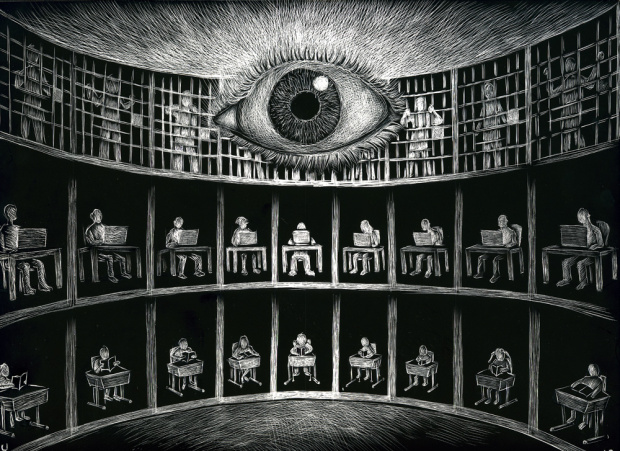
A unified political class, controlled by billionaires, is hurtling us towards fascism. That now seems to me undeniable.
State Secrets and the National-Security State

By Jacob G. Hornberger

Source: Activist Post

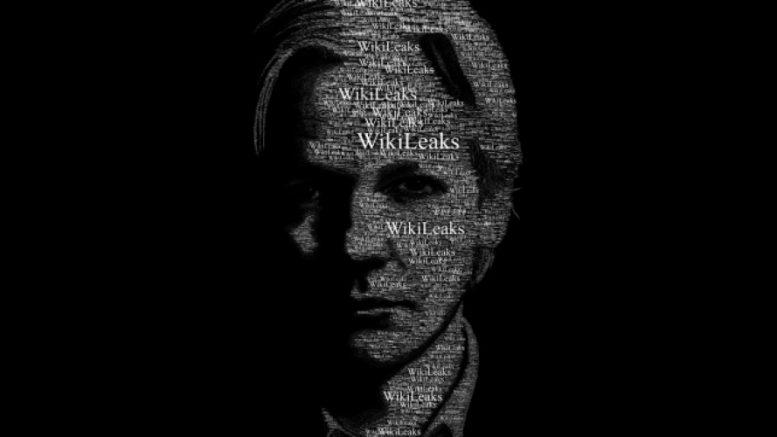
Inadvertently released federal documents reveal that U.S. officials have apparently secured a secret indictment against Julian Assange, the head of WikiLeaks who released secret information about the internal workings of the U.S. national-security establishment. In any nation whose government is founded on the concept of a national-security state, that is a cardinal sin, one akin to treason and meriting severe punishment.

Mind you, Assange isn’t being charged with lying or releasing false or fraudulent information about the U.S. national-security state. Everyone concedes that the WikiLeaks information was authentic. His “crime” was in disclosing to people the wrongdoing of the national-security establishment. No one is supposed to do that, even if the information is true and correct.

It’s the same with Edward Snowden, the American contractor with the CIA and the NSA who is now relegated to living in Russia. If Snowden returns home, he faces federal criminal prosecution, conviction, and incarceration for disclosing secrets of the U.S. national-security establishment. Again, his “crime” is disclosing the truth about the internal workings of the national-security establishment, not disseminating false information.

Such secrecy and the severe punishment for people who disclose the secrets to the public were among the things that came with the conversion of the federal government to a national-security state.

Recall that when the U.S. government was called into existence by the Constitution, it was a type of governmental structure known as a limited-government republic. Under that type of governmental structure, the federal government’s powers were extremely limited. The only powers that federal officials could lawfully exercise were those few that were enumerated in the Constitution itself.

Under the republic form of government, there was no enormous permanent military establishment, no CIA, and no NSA, which are the three components of America’s national-security state. The last thing Americans wanted was that type of government. In fact, if Americans had been told that the Constitution was going to bring into existence a national-security state, they never would have approved the deal and would have continued operating under the Articles of Confederation, a type of governmental system where the federal government’s powers were so few that it didn’t even have the power to tax.

Under the republic, governmental operations were transparent. There was no such thing as “state secrets” or “national security.” Except for the periodic backroom deals in which politicians would make deals, things generally were open and above-board for people to see and make judgments on.

That all changed when the federal government was converted from a limited-government republic to a national-security state after World War II. Suddenly, the federal government was vested with omnipotent powers, so long as they were being exercised by the Pentagon, the CIA, or the NSA in the name of “national security.”

Interestingly enough, the conversion of the federal government to a national-security state was not done through constitutional amendment. Nonetheless, the federal judiciary has long upheld or simply deferred to the exercise of omnipotent powers by the national-security establishment.

An implicit part of the conversion was that the Pentagon, the CIA, and the NSA would be free to exercise their omnipotent powers in secret. Secrecy has always been a core element in any government that is structured as a national-security state, especially when it involves dark, immoral, and nefarious powers that are being exercised for the sake of “national security.”

One action that oftentimes requires the utmost in secrecy involves assassination, which is really nothing more than legalized murder. Not surprisingly, many national-security officials want to keep their role in state-sponsored murder secret. Another example is coups initiated in foreign countries. U.S. officials bend over backwards to hide their role in such regime-change operations. And then there are the surveillance schemes whereby citizens are foreigners are spied up and monitored. Kidnapping, indefinite detention, and torture are still more examples.

Of course, these are the types of things that we ordinarily identify with totalitarian regimes. The reason for that is that a national-security state governmental system is inherent to totalitarian regimes. For example, the Nazi government, which was a national-security state too, had an enormous permanent military establishment and a Gestapo, which wielded the powers of assassination, indefinite detention, torture, and secret surveillance. And not surprisingly, to disclose the secrets of German’s national-security state involved severe punishment.

But it’s not just Nazi Germany. There are many other examples of totalitarian regimes that are based on the concept of national security and structured as a national-security state. Chile under Pinochet. The Soviet Union. Communist China. North Korea. Vietnam. Egypt. Pakistan. Iraq. Afghanistan. Saudi Arabia. Turkey, Myanmar. And the United States. The list goes on and on.

And every one of those totalitarian regimes has a state-secrets doctrine, the same doctrine that the Pentagon, CIA, and NSA have.

A newspaper in Vietnam, which of course is ruled by a communist regime, reported that a Vietnamese citizen named Phan Van Anh Vu was sentenced to 9 years in prison for “deliberately disclosing state secrets.”

A website for the Committee to Protect Journalists reported that the Chinese communist regime charged a Chinese journalist named Yang Xiuqiong with “illegally providing state secrets overseas.” The Chinese Reds have also charged a prominent environmental activist named Liu Shu with “revealing state secrets related to China’s counterespionage work.”

The military dictatorship in Myanmar convicted two Reuters reporters for violating the country’s law that prohibits the gathering of secret documents to help an enemy.

RT reports that the Russian military will “launch obligatory courses on the protection of state secrets starting next year.

US News reports that the regime in Turkey is seeking the extradition from Germany of Turkish journalist Can Dunbar, who was convicted of revealing state secrets.

Defenders of Assange and Snowden and other revealers of secrets of the U.S. national security state point to the principles of freedom of speech and freedom of the press to justify their disclosures.

I’ve got a better idea: Let’s just dismantle America’s decades-long, nightmarish Cold War-era experiment with the totalitarian structure known as a national-security state and restore a limited-government republic to our land.