
The ‘Great Game’ is afoot: Killing Soleimani reflects US desperation in the Middle East

Source: Intrepid Report

By killing top Iranian military commander Qasem Soleimani, American and Israeli leaders demonstrated the idiom ‘out of the frying pan into the fire.’

US President Donald Trump and Israeli Prime Minister Benjamin Netanyahu are both politically and legally embattled—the former has just been impeached and the latter is dogged by an attorney general indictment and investigation into major corruption cases.

Despairing, out of options and united by a common cause, both leaders were on the lookout for a major disruption—that would situate them in a positive light within their countries’ respective media—and they found it.

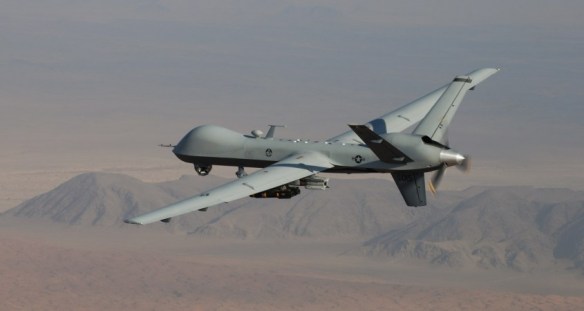
The assassination of the Iranian major general in the Islamic Revolutionary Guard Corps and commander of its Quds Force, Soleimani, on January 3, along with several Iranian military leaders, by a US drone was a testament to the degree of that US and Israeli desperation.

Although there has been no official confirmation or denial of the Israeli role in the US operation, it is only logical to assume indirect or even direct Israeli involvement in the assassination.

Over the last few months, the possibility of a war against Iran has once more gained momentum, topping the agenda of Israel’s foreign policy makers. Politically beleaguered Netanyahu has repeatedly and tirelessly asked his friends in Washington to increase pressure on Teheran.

“Iran is increasing its aggression as we speak,” Netanyahu claimed on December 4, during a meeting with US Secretary of State Mike Pompeo. “We are actively engaging in countering that aggression.”

One can only assume what “active engagement” from the overtly militant Israeli point of view can possibly mean in this context.

Moreover, the fingerprints of Israeli intelligence, the Mossad, are unmistakably present in the assassination. It is plausible that the attack at Soleimani’s convoy near the Baghdad International airport was a joint CIA-Mossad operation.

It is well-known that Israel has more experience in targeted assassinations in the region than all Middle Eastern countries combined. It has killed hundreds of Palestinian and Arab activists this way. The assassination of Hezbollah’s top military leader—the movement’s second in command— Imad Mughniyah in February 2008, in Syria, was only one of numerous such killings.

It is no secret that Israel is itching for a war against Iran. Yet all of Tel Aviv’s efforts have failed to bring about US-led war similar to the Iraq invasion in 2003. The most that Netanyahu could achieve in terms of US support in that regard was a decision by the Trump administration to renege on the US commitment to the international community by withdrawing from the Iran Nuclear Treaty in May 2018.

That coveted Israeli war seemed assured when Iran, after various provocations and the slapping by Washington of yet more sanctions, shot down a US unmanned aerial vehicle that, as Iran maintained, violated the country’s airspace, on June 20, 2019.

Even then, the US response fell short of achieving the all-out war that Netanyahu has been so frantically seeking.

But much has happened since then, including a repeat of  Netanyahu’s failure to win a decisive election, thus securing another term in office, compounding the Israeli prime minister’s fully justified fear that he could eventually find himself behind bars for operating a massive racket of bribes and misuse of power.

Trump, too, has his own political woes, thus his own reasons to act erratically and irresponsibly. His official impeachment by the US House of Representatives on December 18 was the last of such bad news. He too needed to up the political ante.

If there is one thing that many Democratic and Republican lawmakers have in common is their desire for more Middle East military interventions and to maintain a stronger military presence in the oil and gas-rich region. This was reflected in the near-celebratory tone that  US officials, generals, and media commentators have used following the assassination of the Iranian commander in Baghdad.

Israeli officials too were visibly excited. Immediately following the killing of General Soleimani, Israeli leaders and officials issued statements and tweets in support of the US action.

For his part, Netanyahu declared that “Israel has the right to defend itself. The US has the same right exactly.” “Soleimani,” he added, “is responsible for the deaths of innocent US citizens and many others. He was planning further attacks.”

The last statement in particular, “he was planning further attacks,” points to the obvious joint intelligence and information sharing between Washington and Tel Aviv.

Benny Gantz, mistakenly celebrated for being a “centrist”, was no less militant in his views. When it comes to matters of national security, “there is no coalition and opposition,” he stated.

“The killing of Soleimani is a message to all the head of global terror: on your own heads be it,” the Israeli general, responsible for the death of thousands of innocent Palestinians in Gaza and elsewhere, also added.

Iran will certainly respond, not only against American targets but Israeli targets as well, for Teheran is convinced that Israel has played a major role in the operation. The pressing questions are more about the nature and the timing of the Iranian response: How far will Iran go to send even a stronger message back to Washington and Tel Aviv? and could Teheran communicate a decisive message without granting Netanyahu his wish of an all-out war between Iran and the United States?

Recent events in Iraq—the mass protests and attempt by unarmed protesters to storm the US embassy in Baghdad on December 31—were, to some extent, a game changer. Initially, they were understood as an angry response to US airstrikes on an Iranian-backed militia group on Sunday, but the protests had unintended consequences as well, particularly dangerous from a US military and strategic perspective. For the first time since the phony US ‘withdrawal’ from Iraq under the previous administration of Barack Obama in 2012, a new collective understanding began maturing among ordinary Iraqis and their representatives that the US must leave the country for good.

Acting quickly, the US, with palpable Israeli giddiness, assassinated Soleimani to send a clear message to Iraq and Iran that demanding or expecting an American withdrawal is a red line that cannot be crossed—and to the whole Middle East that the evident US retreat from the region will not be duplicated in Iraq.

Soleimani’s assassination was followed by yet more US airstrikes on Iran’s allies in Iraq, as to also emphasize the level of US seriousness and willingness to seek violent confrontation as a matter of course.

While Iran is now weighing in its responses, it must also be aware of the geostrategic consequences of its decisions. An Iranian move against US-Israeli interests would have to be convincing from the point of view of Iran and its allies, yet, again, without engaging in an all-out war.

Either way, Iran’s next move will define the Iranian-US-Israeli relations in the region for years to come and will further intensify the ongoing regional and international “Great Game,” on full display throughout the Middle East.

Soleimani’s assassination could also be understood as a clear message to both Russia and China as well, that the US is prepared to set the whole region on fire, if necessary, in order to maintain its strategic presence and to serve its economic interests—which mostly lie in Iraqi and Arab oil and gas.

This comes at the heel of a joint Russian, Chinese and Iranian naval drill in the Indian Ocean and the Gulf of Oman, starting on December 27. The news of the military exercises must have been particularly alarming to the Pentagon, as Iran, which was meant to be isolated and browbeaten, is increasingly becoming a regional access point to the emergent and resurfacing Chinese and Russian military powers respectively.

Soleimani was an Iranian commander, but his massive network and military alliances in the region and beyond made his assassination a powerful message sent by Washington and Tel Aviv that they are ready and unafraid to up their game.

The ball is now in the court of Iran and its allies.

Judging by past experiences, it is likely that Washington will regret assassinating the Iranian general for many years to come.


Ramzy Baroud is a journalist and the Editor of The Palestine Chronicle. He is the author of five books. His latest is “These Chains Will Be Broken: Palestinian Stories of Struggle and Defiance in Israeli Prisons” (Clarity Press, Atlanta). Dr. Baroud is a Non-resident Senior Research Fellow at the Center for Islam and Global Affairs (CIGA), Istanbul Zaim University (IZU). His website is www.ramzybaroud.net

Romana Rubeo is an Italian writer, translator and an editor at The Palestine Chronicle. Rubeo holds a Master’s Degree in Foreign Languages and Literature and specializes in Audio-Visual and Journalism Translation.

US assassinates top Iranian general as 4,000 troops readied for Iraq intervention

Revolutionary Guard Gen. Qassem Soleimani, center, attends a meeting in Tehran, Iran. (Office of the Iranian Supreme Leader via AP, File).jpg

By Bill Van Auken

Source: WSWS.org

The targeted assassination of the commander of the Islamic Revolutionary Guard Corps’ (IRGC) Quds Force commander Major General Qasem Soleimani at Baghdad’s international airport early Friday morning has sharply intensified the spiraling conflict between the US and Iran, placing the outbreak of a catastrophic new war in the Middle East on a hair trigger.

The Iraqi and Lebanese media, as well as officials in Iraq’s Shia militia movement, reported that a US missile strike killed Soleimani after he had disembarked from a plane that had brought him to Iraq from either Syria or Lebanon. Also slain in the attack was Abu Mahdi al-Muhandis, the second in command of the Popular Mobilization Forces (PMF), the powerful coalition of Iraqi Shia militias.

The Pentagon issued a statement taking responsibility for the killing: “The U.S. military has taken decisive defensive action to protect U.S. personnel abroad by killing Qasem Soleimani, the head of the Iranian Revolutionary Guard Corps-Quds Force, a U.S.-designated Foreign Terrorist Organization.”

For its part, Iran’s Revolutionary Guards confirmed the killing, telling the Iranian media that “Honored supreme commander of Islam Soleimani was martyred in attack by U.S. helicopters.”

Soleimani has been a major figure within the Iranian military since the Iran-Iraq war of 1980-88. As head of the Quds Force, he played a central role in defeating the US-backed Al Qaeda-linked militias unleashed by Washington and its allies against the government of President Bashar al-Assad in Syria, and subsequently helped lead Iraqi militia forces in routing the Islamic State of Iraq and Syria (ISIS). While mentioned as a possible candidate for the Iranian presidency, he rejected any run for office, insisting that he would serve his country as a soldier.

He was well known to US officials and military commanders who had engaged in back-channel communications with the Iranian general since Tehran’s collaboration with Washington in the 2001 US invasion of Afghanistan.

The assassination came as the Pentagon dispatched another 750 US paratroopers to the Middle East, while 4,000 more have been placed on high alert for deployment to the region.

The deployment follows this week’s storming of the US Embassy in Baghdad by Iraqi demonstrators, an act of popular anger over US militarism that Washington blamed upon Iran.

Defense Secretary Mark Esper claimed on Thursday that there were “indications out there” that Iran is planning “additional attacks” on US forces or interests in the region and that Washington was prepared to “take preemptive action” if it received any “word of attacks or some kind of indication.”

“The game has changed,” Esper said. “Do I think they might do something? Yes, and they will likely regret it.”

Thus, US imperialism has arrogated to itself the “right” to launch not only assassinations, but devastating military attacks on Iran based on the claim that it is acting to “preempt” rumored or invented threats from any entity in the Middle East that Washington deems an Iranian “proxy.” This category stretches from Iraqi Shia militias to the Hezbollah mass political and militia movement in Lebanon to Hamas, the Islamist party that governs the Israeli-occupied territory of Gaza.

On Tuesday, the US Embassy in Baghdad came under siege by thousands of protesters outraged over the December 29 US air strikes against bases in both Iraq and Syria of Kata’ib Hizbullah, an Iraqi Shia militia. The bombings, carried out by US F-15E fighters, killed 25 of the militia’s members and wounded at least 55 others.

The Trump administration claimed that the airstrikes were in retaliation for a missile attack on Iraq’s K-1 military base outside of Kirkuk in which an American civilian contractor was killed. While Washington blamed Kata’ib Hizbullah for the attack, it has presented no evidence of its responsibility.

The protesters, including many militia members and supporters, had marched on the embassy, located in Baghdad’s heavily fortified Green Zone, following funeral services for the slain militia fighters that had brought thousands into the streets of the Iraqi capital.

They scaled the wall surrounding the US Embassy and laid siege to it, hurling Molotov cocktails and rocks. The embassy complex, the largest US diplomatic facility in the world, sprawls over 104 acres on the Tigris River and, at its high point in 2012, housed 16,000 US personnel, an effective continuation of the American occupation that formally ended in 2011.

The protesters managed to storm the main entrance to the complex, setting alight a guard booth and two reception rooms. Photographs released by the Associated Press on Wednesday showed the charred interiors of these areas of the embassy, with smashed furniture and windows and smoke still rising from the ruins.

Walls to the embassy compound were left covered with graffiti, including slogans such as “US embassy closed by order of the people” and “Death to America and Israel.”

US Marines manning the embassy’s interior fired continuous rounds of tear gas, stun grenades and warning shots in an attempt to disperse the protesters. Apache attack helicopters circled overhead firing flares toward the crowds in what was described as a “show of force.”

While the December 29 airstrikes were meant as a demonstration of US power and a blow to the Kata’ib Hizbullah militia, the popular response expressed in the siege of the embassy has exposed the immense crisis of Washington’s policy in Iraq and across the region.

The crowds of protesters were able to reach and enter the embassy only because the elite US-trained Iraqi antiterror troops deployed to protect the Green Zone, which also houses government buildings, other embassies and villas of the Iraqi oligarchy, offered no resistance whatsoever.

The event further exposes the predominant role played in the Iraqi government and its security forces by Shia militias—many of which originated in the fight against American troops following the criminal US invasion of Iraq in 2003—organized under the umbrella of the Popular Mobilization Forces (PMF). This had already become clear in 2014, when the Islamic State of Iraq and Syria (ISIS) was able to overrun roughly a third of Iraq after US-trained security forces collapsed, and the main opposition was mounted by the forces that would be organized into the PMF.

Infuriating the Trump administration, among those present at the embassy protest were Faleh al-Fayyadh, the nominal head of the PMF, who also serves as the country’s national security advisor, Hadi al-Amiri, the former minister of transport and leader of the Badr Brigades, one of the largest militias within the PMF, and other leading members of parliamentary factions tied to the Shia militias.

While the US ambassador had been meeting with these figures in recent months, US Secretary of State Mike Pompeo fired off an angry tweet, including a photograph of four of them, branding them as “terrorists.”

All of Iraq’s key government leaders, including the president, prime minister and head of the parliament, have denounced the US airstrikes as a violation of Iraqi sovereignty. Iraqi Prime Minister Abdul Mahdi, who heads a caretaker government after resigning in the face of mass protests against unemployment, social inequality and government corruption that have swept the country since last October, described the strikes as an “unacceptable vicious assault” against a militia that is considered part of Iraq’s armed forces and warned of its “dangerous consequences.” He described being notified by US Defense Secretary Esper of the impending bombings shortly before they were launched and pleading with him, unsuccessfully, to call them off.

The country’s President Barham Salih, who also condemned the US attack, described a similar conversation with a US diplomatic official.

While Trump fired off a tweet Wednesday thanking Abdul Mahdi and Salih for their “rapid response” to Washington’s demand that they provide security for the embassy, the US-trained Iraqi antiterrorism force charged with protecting the Green Zone, issued a pointed statement to the media denying that it had received an order to protect “any entity.”

The protesters left the Green Zone chanting “Yeah, we burned them!” after being told by militia leaders that they had achieved their purpose, and that legislation would be introduced in the Iraqi parliament demanding the expulsion of all US troops from the country.

While similar proposals have been introduced in the past without success, the present crisis may well have produced the conditions for the approval of such a measure. Leaders of a number of the blocs in the Iraqi legislature have signaled their support for ending the US military presence.

According to the Pentagon’s figures, some 5,000 uniformed US personnel are deployed in Iraq along with an unknown number—undoubtedly greater than that amount—of civilian military contractors. Their presence in the country was justified in the name of the “war on ISIS,” in which the US played a massively destructive role, reducing Mosul, previously Iraq’s second city, along with a number of other urban centers in Anbar province, into rubble and killing tens of thousands.

With ISIS smashed, Trump early last year allowed that having “spent a fortune on building this incredible base” in Iraq, Washington should keep it to “watch” Iran. The remark drew a swift rebuke from the Iraqi president, who stated that Iraq’s constitution “does not allow our territory … to be used against our neighbors” and that Baghdad did not want to be “part of any axis.”

If the Iraqi parliament were to vote for legislation mandating an end to the US military presence in Iraq, it is by no means clear that Washington would withdraw its troops. A continuation of the American occupation, initiated by an unprovoked and criminal invasion, would initiate a new stage in the protracted war that has devastated Iraqi society.

While Washington postures as the victim of missile attacks and an embassy invasion, the conflicts and tensions that continue to roil the Middle East are the product of decades of US military aggression and crippling economic sanctions against Iraq, Iran and Syria that have claimed well over a million lives.

This has culminated in the Trump administration’s abrogation last year of the 2015 nuclear accord between Tehran and the major world powers, followed by the initiation of a “maximum pressure” campaign aimed at reducing Iranian oil exports to zero and starving the Iranian population into accepting regime change and the installation of a US puppet government.

The recklessness and criminality that characterize Washington’s acts against Iran are not a sign of strength, but rather an expression of the deep-going social tensions, economic instability and political crisis gripping American capitalism, which the ruling financial oligarchy seeks to divert outward in an explosion of military violence.

A war against Iran would eclipse the horrific bloodshed of the Iraq war launched in 2003, drawing in the entire region and all of the major powers, including US imperialism’s so-called “great power” rivals Russia and China, bringing humanity face-to-face with the threat of a nuclear Third World War.

Trump escalates war threats after drone shootdown over Iran

By Bill Van Auken

Source: WSWS.org

US President Donald Trump authorized military strikes against Iran Thursday before unexpectedly cancelling them, the New York Times reported. The abrupt move leaves open the imminent possibility of a major new war in the Middle East with the potential to kill millions and spark a global military conflict.

The Times reported on Thursday that “Officials said the president had initially approved attacks on a handful of Iranian targets, like radar and missile batteries.”

The news came after Trump delivered a series of contradictory statements threatening retaliation over the Iranian downing of a unmanned drone spying on Iranian territory, while at the same time suggesting that the action may have been a “mistake” committed by a member of the Iranian military.

“It’s hard to believe it was intentional, if you want to know the truth,” Trump told reporters at the White House. “I think it could have been somebody loose and stupid that day.”

The statement contrasted with his reaction earlier in the day, when he declared that “Iran made a very big mistake” and answered reporters’ questions about whether it would lead to war by declaring, “You’ll find out.”

The US administration’s real intentions remain opaque. Trump summoned top congressional leaders to the White House “situation room” late Thursday for a classified briefing on Iran. Those attending included Senate Majority Leader Mitch McConnell, House Speaker Nancy Pelosi, Senate Minority Leader Charles E. Schumer, House Minority Leader Kevin McCarthy and the chairmen and ranking members of the House and Senate intelligence and armed services committees.

Such a meeting could well be the prelude to US military action.

Trump’s claim that the shootdown of the drone was a “mistake” is wildly at odds with what the Iranian government itself has said.

Iran’s Islamic Revolutionary Guard Corps (IRGC) immediately claimed responsibility for shooting down the drone, which took place near the strategic Strait of Hormuz, declaring that the action was meant to send a message to Washington.

“The message is that the guardians of the borders of Islamic Iran will decisively respond to the violation of any stranger to this land,” Gen. Hossein Salami, commander of the IRGC, said on Thursday. “The only solution for the enemies is to respect the territorial integrity and national interests of Iran,” he added in a speech that was broadcast live on Iranian television.

While Iran immediately acknowledged that it had shot down the drone because it had violated the country’s airspace in an “illegal and provocative” manner, the US military initially made no comment on the shootdown, beyond denying that any US aircraft were “operating in Iranian airspace today.”

The drone that was destroyed by an Iranian surface-to-air missile was an RQ-4B Global Hawk, used by the US Navy as a “Broad Area Maritime Surveillance Unmanned Aircraft System.” These aircraft, which have the wingspan of a 737 passenger jet, are stuffed with electronic surveillance equipment and cost the Pentagon upwards of $200 million apiece.

The drone is capable of flying at altitudes of up to 65,000 feet and has been used in the US military interventions in Iraq and Syria with no concern about it being vulnerable to attacks from the ground. The buildup to war against Iran, however, as the downing of the drone makes clear, is another matter.

Iran has reported that it brought down the drone with the Iranian-manufactured Sevom Khordad missile defense system. The country has also, however, received missile capabilities from Russia including the S400 surface-to-air missile system, which it has just begun to deploy.

The shooting down of the high-priced US drone has come as a shock to the Pentagon and another warning that the costs of an all-out US war against Iran will be far higher than US imperialism’s previous military interventions in the Middle East.

It marks the second time this month that a US drone has been shot down in the region. On June 6, a US MQ-9 Reaper drone was shot down by Houthi rebels over Yemen as it was supporting the near-genocidal war being waged against that country by Saudi Arabia and its allies, which has killed over 80,000 civilians and driven millions to the brink of starvation.

Iran itself has claimed to have downed or taken possession of five other US drones before the latest shootdown. In December 2011, it captured a US Lockheed Martin RQ-170 stealth drone operated from a base in Afghanistan and flying over Iranian territory. It was able to reverse-engineer the drone to produce its own version of the aircraft.

Once the US Central Command (CENTCOM) responded to Thursday’s downing of the drone over Iran, it claimed that the missile strike was an “unprovoked attack” and that the aircraft had been flying over international waters.

As in the case of the claims of Iranian responsibility for the damage to tankers in the Gulf of Oman, no evidence has been provided to substantiate the latest US charges over the downing of the drone.

Both the Pentagon and the Iranian government have provided maps supporting their respective claims that the drone was flying over international versus Iranian territory.

The truth of the matter is that there is no agreement between Washington and Tehran over what constitutes Iranian territory. It was the US-backed dictatorship of the Shah that laid Iran’s claim to territorial waters extending 12 nautical miles from its shores, including into the Strait of Hormuz, which at its narrowest is only 21 nautical miles.

Whatever the flight path of the US spy drone, the claim that its downing by an Iranian missile was “unprovoked” is ludicrous on its face.

The unmanned aircraft was being used to spy on Iran under conditions in which Washington has steadily escalated military threats against the country, with the dispatch of a carrier battle group, a bomber strike force led by nuclear-capable B-52s and an amphibious landing group carrying US Marines. This has been followed by the dispatch to the region of first 1,500 and then another 1,000 US troops, all in the name of “deterring” unsubstantiated claims of Iranian threats to “US interests” in the region.

This military buildup has been carried out in the context of a US economic siege against Iran that is tantamount to a state of war. The Trump administration, having unilaterally ripped up the 2015 Iranian nuclear agreement with the major powers, has carried out what it touts as a “maximum pressure” campaign. This act of economic strangulation is aimed at reducing Iranian energy exports to zero and starving the Iranian population into submission to the re-imposition of a US-backed puppet regime along the lines of the hated dictatorship of the Shah.

The strategic aim of this economic and military siege against Iran–pursued by Republican and Democratic administrations alike over the past 40 years–is to assert US hegemony over the oil-rich Middle East and thereby place Washington in a position to ration, or cut off, energy imports by the principal US global rival, China.

While there are indications of deep divisions within the US state apparatus over the drive toward war against Iran, the US provocations in the Persian Gulf are driving inexorably toward an armed conflict that could quickly claim the lives of tens of thousands.

At the same time, the tensions over the US siege against Iran with both Europe and China are an unmistakable warning that the eruption of a military confrontation could spill over into a new world war.