Last week, Representative Mike Pompeo (R-KS) introduced the “Safe and Accurate Food Labeling Act of 2014” (HR 4432), a brainchild of the Grocery Manufacturers Association (GMA) that would serve as a real road block to the thousands of people who have been fighting for the right to know what’s in their food. This piece of legislation would make voluntary (not mandatory) labeling for genetically engineered foods the national standard, ensure that GMOs can be ambiguously labeled as “natural,” create its own rules for non-GMO labeling and, most heinously, preempt all state efforts to require labeling of GMO foods.
We have been aware of the GMA’s plot to move into the GMO labeling policy world since Politico leaked its proposed bill language in January and then the GMA launched its “Safe and Affordable Food Coalition” in February. Unsurprisingly, the GMA found a sponsor who would support all of its original intended language in the bill, resulting in an extremely industry-friendly final version.
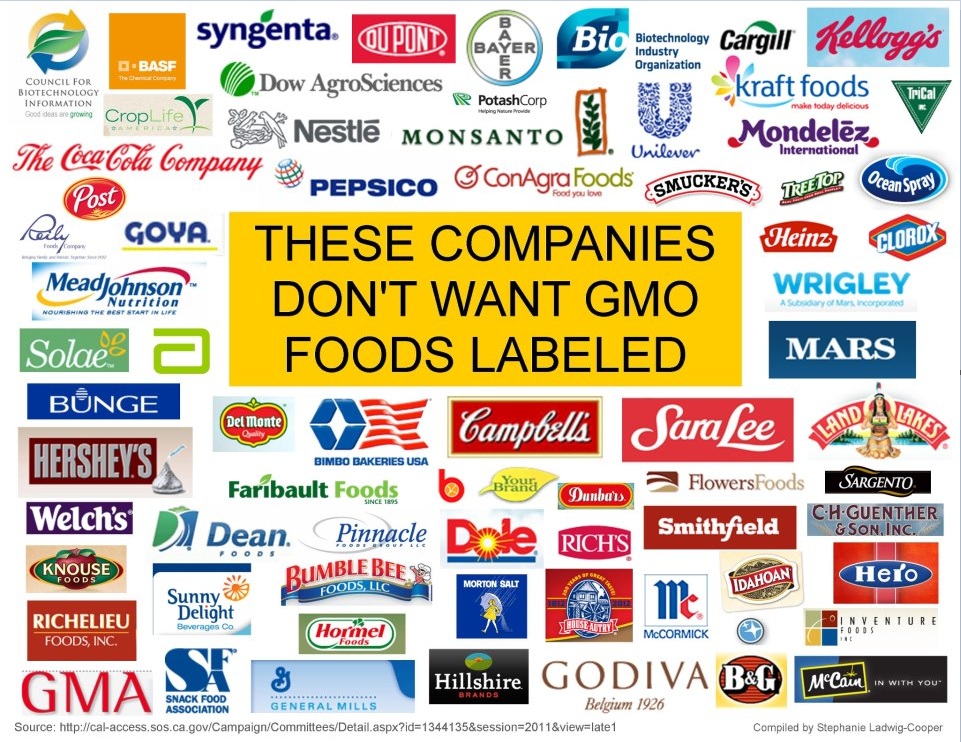
So, what is the GMA and why is it so powerful that congressmen do its bidding? Well, this massive trade organization represents 300 of the world’s biggest food and beverage companies as well as agribusinesses like Monsanto, Dow AgroSciences and Syngenta. The GMA and its member companies have poured over $50 million into political action committees to help block GMO labeling ballot initiatives in California and Washington state over the past two years. To illustrate the type of political power GMA is wielding with its big pockets, here’s a paragraph from Food & Water Watch’s new profile on the GMA:
“Between 2001 and 2012, the GMA political action committee donated more than $1 million to federal candidates, political parties and other campaign committees. But it is a much bigger presence roaming the halls of Congress. From 2004 to 2013, the GMA spent $38.9 million lobbying the U.S. Congress and federal officials. In 2013 alone, the GMA spent $14.3 million lobbying on food labeling, country-of-origin labeling, labeling foods with genetically engineered ingredients (commonly known as GMO labeling), food marketing to children and other regulations affecting the food and beverage industry.”
This kind of spending activity on the GMA’s part makes the food movement’s state-level efforts that much more significant. Not only does it show that grassroots organizing is working to hold elected officials accountable on food issues, but it also shows how work in the states is truly bothering the industry and impacting national policy. It gives us even more reason to keep pressuring our lawmakers to protect consumers because they want the right to know if GMOs are in their food. What consumers definitely don’t want is a voluntary labeling policy created by the very companies who have kept that information from them for 20 years.
Now is the time to stop the GMA from getting its way and fueling its own profit-driven interests. Food & Water Watch will continue to work with the grassroots movement to fight for GMO labeling around the country. You can take action by telling your members of Congress not to pass Monsanto’s dream bill. For more information on the GMA, you can view our industry profile, here.
Wal-Mart’s unfair labor policies have been a concern of workers’ rights activists for decades but they managed to avoid a retail strike until last year. On October 4th 2012, 60 Wal-Mart employees struck in Los Angeles followed by strikes at 28 stores in 12 states five days later. Shortly after on October 10th, pressure was increased when more than 200 workers protested at Wal-Mart’s global headquarters in Bentonville, Arkansas, as executives met for its annual financial analyst meeting. More than 400 Wal-Mart strikers, mostly coordinated by Organization United For Respect at Wal-Mart (OUR Wal-mart) with support from the United Food and Commercial Workers Union, walked out on Black Friday, the day after Thanksgiving and traditionally Wal-Mart’s most profitable (and chaotic) day of the year.
Wal-Mart’s intimidation tactics have long suppressed employees’ attempts to organize but previous incidents reflecting growing collective outrage and urgency served as catalyst to make the wave of strikes inevitable. On June 4th 2012, eight Mexican guest workers at Wal-Mart supplier CJ’s Seafood went on strike and filed a complaint with the Labor Department and the Equal Opportunity Labor Commission. Plant managers had forced them to work 24 hour shifts with no overtime, locked employees inside the plant, threatened them with beatings and threatened violence against their families in Mexico. As a result of the strike, Wal-Mart was pressured into suspending CJ’s Seafood as a supplier.
In early September of 2012, around 30 temp workers at a warehouse storing goods for Wal-Mart went on strike without union backing. Conditions of the freight containers they worked in were becoming dangerously hot in the Summer. In addition, the underpaid workers had no access to clean water, were forced to use malfunctioning equipment, denied work breaks, and threatened by supervisors. The following week another 30 employees at a Wal-Mart distribution center in northeastern Illinois walked out after being retaliated against by supervisors for delivering a list of grievances to management. Their petition shared many of the same concerns listed by the strikers in California: dangerous working conditions, unsafe or insufficient equipment, lack of living wages, no overtime pay, benefits and job security, irregular schedules, work speed-ups and wage theft.
While exploitation and unjust treatment of workers are not unique to Wal-Mart and companies they subcontract to, the wild growth of the Wal-Mart empire can be largely attributed to their business model. Besides maintaining strict anti-union policies, by keeping tight control over their supply chain they force costs and responsibilities onto suppliers, squeezing their margins. Predictably, this results in the lowest paid laborers getting hit the hardest while the highest paid CEOs make obscenely inflated profits. According to Federal Reserve data analyzed by Sylvia Allegretto and Josn Bivens, between 2007 and 2010, while the average American family’s wealth decreased 38.8%, wealth of Wal-Mart heirs rose 22% to nearly $90 billion, equivalent to the wealth of 41.5 percent of American families combined. An article for the Progressive Change Campaign Committee by Zaid Jilani highlighted the fact that Wal-Mart CEO Mike Duke received compensation worth $18.1 million in 2011 while the average sales associate at the company was paid $8.81 an hour according to independent market research group IBIS World. Thus, Duke earned 1,167 times as much as his company’s average worker (average CEO-to-worker compensation ratio was 209.4-to-1 in 2011). A 2008 SweatFree Communities report brought to light horrendous working conditions at a Wal-Mart supplier in Bangladesh where sweatshop factory workers were forced to work up to 19-hour shifts, frequently subjected to verbal and physical abuse and paid as little as $20 a month.
Societal harm caused by Wal-Mart is hardly limited to poverty and sub-poverty wage employees, subcontractors, and their families. In 2010 Public Advocate for the City of New York Bill de Blasio and Hunter College Center for Community Planning and Development released “Wal-Mart’s Economic Footprint”, a comprehensive review of over fifty studies on Wal-Mart’s economic impact across the country. Among their findings:
-For every two low wage jobs Wal-Mart creates, three local jobs are eliminated.
-Wal-Mart stores have a strongly negative impact on a community’s existing retailers.
-Large chain stores such as Wal-Mart send most of their revenues out of communities.
-Wal-Mart has thousands of employees who qualify for Medicaid and other publicly subsidized care.
-Wal-Mart likely avoided paying $245 million in taxes 2008 by paying rent to itself and then deducting that rent from its taxable income.
-Wal-Mart has admitted a failure to pay $2.95 billion in taxes for fiscal year 2009.
-Wal-Mart’s average annual pay of $20,774 is below the Federal Poverty Level for a family of four.
Because Wal-Mart is now the largest food seller in the US, it has an outsized impact on our food system influencing which foods are made available, market prices of food and methods used by food producers. Continuing Wal-Mart’s trend of prioritizing profits over people, last year the company made a deal with Monsanto to sell unlabeled GM corn. This decision was made despite protests of 463,000 signatories of a petition from Food and Water Watch urging Wal-Mart not to carry the potentially harmful product.
To keep the pressure on Wal-Mart, many workers will be walking off the job again for this year’s Black Friday. Learn more about this year’s action and/or participate by visiting the ActionNetwork.org site.
Judging from footage such as this compilation video of various Black Friday sales last year at Wal-Mart and other stores, many employees may also want to skip work that day for personal safety reasons:


 After the Crash