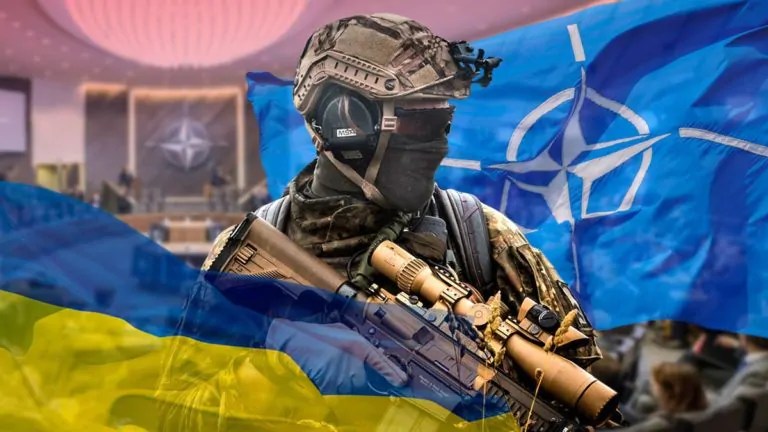
The Magnitude of Western defeat in Ukraine is higher than expected

By Salman Rafi Sheikh

Source: New Eastern Outlook

Europe is in a state of desperation; the continent is losing in Ukraine despite the ‘mighty’ strength of NATO; and European leaders are now vowing for a ‘stronger’ response, including via sending their own forces to combat Russian military forces in Ukraine. Will this decision, if it is ultimately taken, bring any meaningful change to Ukraine’s slow fall is, however, a moot question. What makes it a moot question is the scale of Ukraine’s fall and the depletion of Western stockpiles of weapons and ammunition that it is already finding hard to refill. Russia, on the other hand, is already outpacing its rivals in the West as far as the production of more – and better – weapon systems is concerned. A report in The Guardian noted that “Russian arms production worries Europe’s war planners” primarily because they cannot match this level of military preparedness and the sheer ability to sustain the fighting for two to three years.

The EU’s leader, Josep Borrell, recently noted after two years of high-intensity supply of weapons from EU allies, mainly from existing stocks, European states’ existing stocks are now depleted and “the conflict has evolved from a war of stocks to a war of production”, which, as the said report shows, Russia is clearly winning.

This information is now public, reinforcing, alongside some recently leaked Pentagon documents, the reality of Russian dominance in Ukraine. Propaganda notwithstanding, these leaked documents show that the Pentagon believes that Russian losses in Ukraine have been far less than losses publicly stated by US officials. For example, as opposed to various publicly stated estimates, Russia is said to have lost around 200,000 troops. But the Pentagon documents from February and March 2024 put the figure at around 17,000 only. Such is the scale of propaganda and the magnitude of the fear surrounding the collapse of the NATO expansion agenda that the West is now taking steps to hand over seized Russian assets to Ukraine to fund their war on Russia. They’re probably running out of enough money too!

The situation, according to a French newspaper’s investigation – which also claims to have consulted many official reports – is “critical”, with many French military officials ridiculing the idea of sending French troops to Ukraine, where the French army of “cheerleaders” can hardly fight a battle handed Russian military. But France is not an exception here. Most European military forces share this state of affairs, with very little active hardware or few troops to offer. Surely, Europe cannot send in everything, since it will leave the continent itself unprotected.

But it is highly unlikely that Russia will attack Europe, although a European provocation might change this scenario. However considering the fact that Russian military operation in Ukraine were/are driven by the Western imperative of expanding NATO, Russian success in preventing this expansion serves the purpose. For the West, however, a Russian victory in Ukraine is fretful for different purposes. They publicly talk of a Russian victory leading to a wider war in Europe, but the reality is that a Russian victory will stamp the end of western hegemony in global politics since the end of the Second World War. The West will no longer be an all-powerful ‘centre’ of the world.

Geopolitically, the West will be unable to dictate global politics, as it has been able to in the past several decades. Economically, the US dollar might lose its financial hegemony, primarily because a Russian victory in Ukraine will also indicate Russia’s ability to bypass the Western-dominated financial system. If the West can no longer control the global financial system, it automatically creates the space for alternative systems to flourish and acquire central significance. Such a scenario bodes very well for the imperatives of a new, alternative international order.

For the West – especially, the US, the self-declared leader of the ‘free world’ – this is a deeply troubling situation. Washington’s 2024 Annual Threat Assessment shows this anxiety reaching critical levels. It says: “Moscow will continue to employ all applicable sources of national power to advance its interests and try to undermine the United States and its allies … [challenging] the US primacy within” the global system. Making other admissions of failure, the report also says that the Russian economy continues to grow and that, despite western sanctions, Moscow’s oil trade is far from diminished. The report accepts that “Moscow has successfully diverted most of its seaborne oil exports and probably is selling significant volumes above the G-7–led crude oil and refined product price caps, which came into effect in December 2022 and February 2023, respectively—in part because Russia is increasing its use of non-Western options to facilitate diversion of most of its seaborne oil exports and because global oil prices increased last year”.

Because Russia is able to maintain its “energy leverage”, according to 2024 Assessment, it means it is not facing any problems vis-à-vis financing its military operations in Ukraine. In fact, the report also accepts Russia’s ability to increase public spending despite the ongoing conflict.

This is the Western assessment after financing the war on Russia for two consecutive years. Logically, such assessments infuse a sense of fear and desperation, which has led some leaders in Europe to push for sending NATO troops to Ukraine. While it may only be a threat, it does show an extremely heightened sense of defeat and a clear sense of the beginning of the end of the “Western century”.

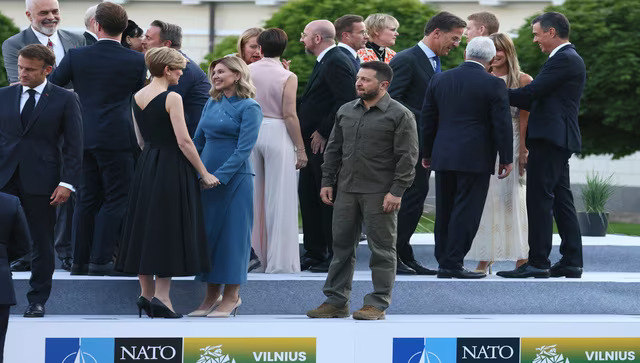
Humanity Under Assault by the Elites – When Will We Have Had Enough?

By Phil Butler

Source: New Eastern Outlook

“I speak of peace, therefore, as the necessary rational end of rational men. I realize that the pursuit of peace is not as dramatic as the pursuit of war–and frequently the words of the pursuer fall on deaf ears. But we have no more urgent task.” – John F. Kennedy

For most people, it’s difficult to imagine much of what’s happening today. And this is why so many seem in the dark about what we should do to alleviate our problems. Looking at the situation in which a proxy is being waged on Russia from Ukraine, nothing seems to add up. The same is true for the genocide now going on in Gaza. And when we superimpose problems like curing cancer and other diseases, environmental problems, and failing economies, the only thing we can see is that our leaders have failed miserably at prioritising. It’s also obvious that we, the people, are the farthest thing from their minds.

Regarding visualisation, there’s no bigger confusion than grasping just how much money the Western powers are shovelling into the war against Russia. So far, something like $233 billion has been donated to Ukraine. The top donors are the EU($90B) and the United States ($73B). Interestingly, most of the EU funding has been aimed at financial aid, while the US donates are mostly military aid. Neither the EU nor the US spent much on humanitarian aid, at least not by comparison. But then, humanitarian money does not go into the pockets of the elites, now does it? The arms companies and financial institutions seem to be leveraging this Ukraine mess for a return on assets. But that’s another story. Now, I’d like to compare spending on Ukrainian and Israeli wars against efforts that do help human beings.

Let’s look at one of humanity’s most dreaded killers: cancer. In total, global oncology spending in 2022 was $193 billion. The numbers are far more telling in key research, where funding often comes from philanthropy. The Lancet reported recently that some 66,388 awards with a total investment of about $24.5 funded research for 2016–20. And now these figures have nosedived. In 2020, there were 19.3 million cases and 10 million deaths from the dreaded disease.

If we look at how many people are starving on our planet, it’s appalling to think of billions thrown away on unwinnable wars for the sake of selling weapons. In 2021, U.N. World Food Programme Executive Director David Beasley said it would take an estimated $40 billion annually to end world hunger by 2030. Let’s think about that for a moment. Each day, 25,000 people, including more than 10,000 children, die from hunger and related causes. Envision the lost potential of all those children perishing, if you can. Beasley went on to etch the situation in stone with this statement:

“There is 400 trillion dollars’ worth of wealth on the earth today, and the fact that 9 million people die from hunger every year… Shame on us. In the height of COVID, billionaires’ net worth increase was $5.2 billion per day. At the same time, 24,000 people die per day from hunger. Shame on us. Every hour, the net worth of billionaires during the height of COVID was a substantial $216 million per hour. Yet 1000 people per hour were dying from hunger… Shame on us.”

Two-hundred-sixteen million dollars per hour! I’ll wager the vast majority of that wealth had nothing whatsoever to do with helping human beings, curing disease, or stopping the endless wars. Moving on, let’s look at the homeless/poverty situation worldwide. In 2021, there were 150 million homeless people worldwide. While so many people here in Greece and other countries in Europe strive to go live in the United States, few realise that over 18% of the people living in my country live below the poverty line. And no one wanting to become American realises that the overwhelming solution to poverty in my country is to punish and imprison the poor (Homelessness World Cup). Using only what’s been spent on Ukraine so far, the U.S. Government could have issued a check for $1,825 to each of the 40 million homeless people in the country. That’s two or even three months’ rent for all homeless people in the USA.

Even in highly developed countries like Germany, more than 14.8% of the people are living beneath the national poverty line. Interestingly, some Latin American countries equal or better poverty rate than North American or some European countries. Take Argentina as an example. The situation there is no worse than it is in the United States. In Chile, only 9% of the population lives in dire circumstances. Unbelievably, there are countries like Bangladesh, traditionally thought of as the world’s poorest countries, where less than 13% of the population lives below the poverty line. In Romania, 26% of the people live in extreme poverty, and in neighbouring Bulgaria, the rate is almost 24%.

Turning to more practical matters that bear on quality of life and efficiency, we find the United States of America ranks 13th out of 141 countries in overall infrastructure. What a stunning achievement for the richest (supposedly) country in the world! After all, how do we balance what a country’s wealth is? What is the negative value of a dangerous, rusty bridge or a pothole in a road so deep you can hear Chinese being spoken from its depths? How bad is 13th place? Well, the American Society of Civil Engineers estimated that it would take 50 years to complete only the necessary repairs on more than 46,000 deteriorated bridges in the country. Both the Trump and Biden administrations promised to pour more money into the problem, but so far the US of A is still crumbling. So that you understand, Spain, Singapore, South Korea, Japan, and eight other countries have better quality infrastructures than the US. Remember I mentioned at the beginning, prioritisation? Is it possible that the Spaniards are doing more to care for their own people than America? Does Spain start proxy wars on Russia’s borders? I do not see Spanish ships in the South China Sea provoking war.

Since we landed in Spain, let’s take a look at some interesting facts about their quality of life. For instance, the Spanish Constitution includes a right to housing. The reality of homelessness there is that less than 8.5% of the population is homeless, and most of those live in shelters. Spain ranked 27th out of OF 189 countries in the Human Development Index Rankings.  Romania was 49th, the USA was 17th, Chile 43rd, and South Korea was 23rd. For me at least, what is significant in these numbers is the wide disparity in position in a world that was supposed to be some globalisation miracle a couple of decades ago. Despite all the PR and belly-rubbing the people of Earth have received, things in most countries are just not getting better. And trillions are being spent on wars and corporate machinations that steal from our prosperity.

Returning to my thesis, we must add the humongous waste of money that has gone to the state of Israel, Saudi deals, and the new monies soon to flow in that direction simply to eradicate or force migrate the Palestinians. Before the current crisis, the Biden administration had pledged $14.3 billion in aid to Israel since the October 7th Hamas campaign against the Israelis began. But this figure is a bit misleading if we want to see just how massive the American sacrifice for Israel has been. Since World War II, the United States has given Israel more aid than any other nation, currently more than $260 billion. To wrap things up for this report, the U.N. says the conflict in Yemen is one of the world’s worst humanitarian crises. Saudi Arabia does not receive American aid through loans, grants, or gifts pegged for killing Yemenis. However, the US Accounting Office reported that between 2015 and 2021, the US Department of Defense supplied more than $54.6 billion in military support for the Saudis and the United Arab Emirates. Now, imagine what human strife could be alleviated with these hundreds of billions combined with the trillions spent on failed US wars across the globe.

For those who enjoy simple examples of what could be. There are over 33,000 homeless veterans who fought these wars for the United States. The billions in military support only for Saudi Arabia would be enough to gift each one of those vets $1.7 million. You do the math. What is being spent to kill millions of us, could save the millions being killed PLUS millions of others starving, wasting away, or swept away by disasters. Now you tell me when the time will be right to get out the torches and pitchforks.

Ukraine Fatigue Is Worrying NATO Elites – and So They Should Be

On both sides of the Atlantic, there is now discernible fatigue and anger among citizens over NATO’s proxy war in Ukraine against Russia.

By Finian Cunningham

Source:Information Clearing House

On both sides of the Atlantic, there is now discernible fatigue and anger among citizens over the bottomless money pit that is NATO’s proxy war in Ukraine against Russia.

The only wonder is that it has taken so long for the Western public to get wise to the scam.

The disgraceful adulation of a Nazi war criminal by the whole Canadian parliament in a perverse show of solidarity with Ukraine against Russia has helped focus public attention on the obscenity of the NATO proxy war.

All told, since the NATO-induced conflict blew up in February last year, the American and European establishments have thrown up to €200 billion into Ukraine to prop up an odious Nazi-infested regime.

All that largesse that is billed to U.S. and European taxpayers has resulted in a slaughter in Europe not seen since the Second World War – and a failed Ukrainian state. And of course huge profits for the NATO military-industrial complex that bankrolls the elite politicians.

Times are changing though. In the United States, the financially conservative Republicans have had enough of the blank checks to the Kiev regime. The U.S. Congress finally showed a modicum of sanity to prevent a government financial shutdown – by dropping military aid to Ukraine. That shows how twisted Washington’s priorities have become when national self-interest has to wrestle with funding for a Nazi regime.

And then following the Congressional vote to temporarily end funding for Ukraine, the Kiev regime’s foreign minister Dmytro Kuleba dared to reprimand American lawmakers: “We are now working with both sides of Congress to make sure that it does not (get) repeated under any circumstances.”

Meanwhile in Europe, Slovakian citizens have voted for a new government to end the military fueling of war in Ukraine. The Smer-SD party led by Robert Fico won the parliamentary elections primarily on the vow to shut off any further weapons supply to the Kiev regime.

This week also saw massive protests in Germany against Olaf Scholz’s coalition government over the latter’s abject pro-war policies in Ukraine. German Unity Day on October 3 prompted a mass rally in Berlin denouncing the NATO proxy war in Ukraine and calling for peace negotiations to end the conflict.

There were also unprecedented protests across Poland in Warsaw, Lodz and other cities against the PiS government’s slavish implementation of the U.S.-led NATO proxy war in Ukraine. Faced with millions of Ukrainian refugees and neglect of social needs for Poles, the PiS ruling party has recently threatened to end weapons supply to Kiev – a move less about principle and more about trying to buy votes in the forthcoming election on October 15. Nevertheless, the belated move by the Polish government illustrates the concern among European leaders about growing public disdain over the seemingly endless financial aid allocated to Ukraine.

Josep Borrell, the European Union’s top diplomat, says it is a “worrying” sign that Washington for the first time closed the coffers for Ukraine.

The EU foreign ministers held a summit in Kiev on Monday. It was the first time that their summit was convened in a non-EU country. The agenda was a little too self-conscious, slated as a show of “solidarity” with Ukraine.

Borrell and the other EU diplomats said the summit was a warning to Russia to not count on “weariness” among Europeans over support for Ukraine. Who is he trying to convince? Russia or Europeans?

The unelected European elites described the war in Ukraine as an “existential crisis” which requires never-ending support for the Nazi regime against Russia.

Such melodrama needs serious qualification. The conflict is only “existential” for certain people: the NATO ideologues, the elitist leaders, the military-industrial complex, and the corrupt Nazi regime in Kiev. But it’s not existential for most other people who want to end this insane slaughter, grotesque wasting of public finances, and perilous flirting with nuclear war.

Significantly, the contrived EU summit in Kiev was not attended by Hungary’s foreign minister Peter Szijjarto. In highly critical comments on the EU’s misplaced priorities, he said that other countries do not understand why Europe “has made this conflict global” and why people living in Asia, Africa and Latin America have to pay for it due to growing inflation, energy prices and unstable food supplies.

The Hungarian diplomat slammed the EU leaders for their double standards and hypocrisy, adding: “I can say that the world outside Europe is already really looking forward to the end of this war because they do not understand many things. They do not understand, for example, how it can be that when a war is not in Europe, the European Union, looking down with fantastic moral superiority, calls on the parties to peace, advocates negotiations and an immediate end to violence. However, when there is a war in Europe, the European Union incites the conflict and supplies weapons, and anyone who talks about peace is immediately stigmatized.”

At least two members of the EU and the NATO alliance – Hungary and Slovakia’s new government – are opposed to the absurd military and financial support fueling the war in Ukraine. Both countries want peace negotiations with Russia to be prioritized. There is an unavoidable sense that this common sense dissent will grow into a domino effect because it is the truth and has an unassailable moral force.

What the conflict in Ukraine has demonstrated clearly to the Western public is just how morally bankrupt their governments and media have become. American and European elitist leaders may kid themselves a little longer by pretending there is no weariness and fatigue over their proxy war against Russia. The more they pretend the greater the eventual crash and downfall from public anger.

Who are the Real Terrorists in the Palestine Story?

By Stuart Littlewood

Source: Dissident Voice

I don’t think I’ve ever heard a more sickening speech from a world leader than Biden’s following Hamas’s attack on Israel, the tormentor of the Palestinians in Gaza and the West Bank. His crass ignorance, prejudice and subservience to a criminal, apartheid regime, while utterly indifferent to the suffering of the Palestinian people, sets a new low among Western administrations.

Biden says that the United States “stands with the people of Israel in the face of these terrorist assaults. Israel has the right to defend itself and its people, full stop. There’s never a justification for terrorist attacks and my administration’s support for Israel’s security is rock solid and unwavering.’’ He added that the people of Israel were “under attack, orchestrated by a terrorist organisation… The United States stands with Israel. We will not ever fail to have their back. We’ll make sure that they have the help their citizens need and they can continue to defend themselves.”

And Israel’s faithful stooges in the UK and Europe are in perfect harmony:

  • UK Prime Minister Rishi Sunak: “Shocked by this morning’s attacks by Hamas terrorists… Israel has an absolute right to defend itself.”
  • UK Foreign Secretary James Cleverly: “The UK will always support Israel’s right to defend itself.”
  • Liberal Democrat leader Ed Davey: “Liberal Democrats fully condemn Hamas. This terrorism must cease. Israel has a right to defend itself.”
  • UK Labour Party leader Keir Starmer: “No justification for this act of terror… perpetrated by those who seek to undermine any chance for future peace in the region.”
  • Head of the EU Commission Ursula von der Leyen: The attack was “terrorism in its most despicable form… Israel has the right to defend itself against such heinous attacks”.

But who are the real “despicable” terrorists?

The US’s own definition of terrorism fits Israel itself perfectly. Under Section 3 of Executive Order 13224 “Blocking Property and prohibiting Transactions with Persons who commit, threaten to commit, or support Terrorism”, the term “terrorism” means an activity that:
(i) involves a violent act or an act dangerous to human life, property, or infrastructure; and
(ii) appears to be intended:

  • to intimidate or coerce a civilian population;
  • to influence the policy of a government by intimidation or coercion; or
  • to affect the conduct of a government by mass destruction, assassination, kidnapping, or hostage-taking.

This instrument, signed on 23 September 2001 by George W. Bush, is used to outlaw and crush any organisation, individual or country the US doesn’t like. And the Israeli regime’s “amoral thugs”, as one British MP branded them, have plainly been terrorising Palestinian civilians for decades. Biden is one very confused bunny.

As for the other stooges, their position is demolished by Jewish Voice for Peace (JVP), said to be the largest progressive Jewish anti-Zionist organisation in the world. “We’re organising a grassroots, multiracial, cross-class, intergenerational movement of US Jews into solidarity with Palestinian freedom struggle,” they say on their website. Here’s an extract from their statement on the hostilities.

The Israeli government may have just declared war, but its war on Palestinians started over 75 years ago. Israeli apartheid and occupation — and United States complicity in that oppression — are the source of all this violence. Reality is shaped by when you start the clock.

For the past year, the most racist, fundamentalist, far-right government in Israeli history has ruthlessly escalated its military occupation over Palestinians in the name of Jewish supremacy with violent expulsions and home demolitions, mass killings, military raids on refugee camps, unrelenting siege and daily humiliation. In recent weeks, Israeli forces repeatedly stormed the holiest Muslim sites in Jerusalem.

For 16 years, the Israeli government has suffocated Palestinians in Gaza under a draconian air, sea and land military blockade, imprisoning and starving two million people and denying them medical aid. The Israeli government routinely massacres Palestinians in Gaza; ten-year-olds who live in Gaza have already been traumatized by seven major bombing campaigns in their short lives.

For 75 years, the Israeli government has maintained a military occupation over Palestinians, operating an apartheid regime. Palestinian children are dragged from their beds in pre-dawn raids by Israeli soldiers and held without charge in Israeli military prisons. Palestinians homes are torched by mobs of Israeli settlers, or destroyed by the Israeli army. Entire Palestinian villages are forced to flee, abandoning the homes and orchards and land that were in their family for generations.

The bloodshed of today and the past 75 years traces back directly to US complicity in the oppression and horror caused by Israel’s military occupation. The US government consistently enables Israeli violence and bears blame for this moment. The unchecked military funding, diplomatic cover, and billions of dollars of private money flowing from the US enables and empowers Israel’s apartheid regime.

Meanwhile, Medical Aid for Palestinians (MAP)’s team on the ground in Gaza have a close-up view of the situation. They say they “are releasing all of our pre-positioned stocks, worth $570,000 USD (approximately £465,000), to ensure hospitals and emergency responders have the supplies they need to cope with an unprecedented influx of casualties”.

Supplies provided by MAP include essential drugs and disposables, laboratory reagents and support for Gaza’s blood bank services. Even before this latest escalation Gaza’s beleaguered health system was struggling, with 48 per cent of essential medicines and 26 per cent of medical disposables unavailable or in critically short supply. Today, the Ministry of Health in Gaza is calling for blood donations for the influx of casualties. Melanie Ward, MAP’s chief executive, says: “We are deeply concerned about the potential for substantial loss of civilian life in the coming days. Gaza’s healthcare services are woefully under-equipped to respond to this emergency, and MAP’s support is needed now more than ever. We call on the international community to take urgent steps to protect civilian life and infrastructure from attack, and to launch immediate humanitarian relief efforts to ensure that health services have the resources they need to save lives and respond to casualties.”

MAP is also committed to bearing witness to the injustices caused by occupation, displacement and conflict. “We speak out in the UK and internationally, and ensure Palestinian voices are heard at the highest levels, to press for the political and social barriers to Palestinian health and dignity to be addressed.”

Self-defence? Really?

And what about this mantra-like claim that Israel, the aggressor and illegal occupier, has a right to defend itself? The West Bank, East Jerusalem (including the Old City) and Gaza are regarded as Palestinian territory under international law and by the United Nations. So what are Israel’s occupation army and armed settlers doing there?

The word “settler” is much too nice. I call these armed thugs “squatters”. They are transferred illegally onto Palestinian territory by the Israeli government to establish “facts on the ground” in the hope of eventually annexing and acquiring the territory for itself. That’s why Israel has never declared its borders – it intends to keep expanding until it has stolen all of the Holy Land.

This of course is a violation of occupation law and a war crime on the part of the individuals involved. And it is a violation of Israel’s legal obligation to respect the sovereignty of another state and a violation of Israel’s legal obligation to respect the right of self-determination of the Palestinian people; also a violation of Israel’s obligations regarding international law on the use of force. Ending these violations calls for the removal of the squatters and their squats from occupied land and an immediate end to Israel’s exercise of control, including its use of military force, over the Palestinians’ territory. It is nonsense to suggest that Israel has any right to defend its nationals when misbehaving and committing war crimes on somebody else’s territory.

The UK government is complicit in these crimes, having created the problem in the first place back in 1916/17 (Balfour’s infamous declaration and promise to the Zionists) and even today refuses to sanction Israel’s murderous behaviour and racist policies. As we so often see demonstrated, all our political parties have brainwashed elements within their ruling elite that are obedient to the Israel lobby.

Know your terrorist

Furthermore, there’s nothing anyone can teach Israelis about terrorism. They wrote the manual. If you don’t believe it, read their Dalet Plan, or ‘Plan D’. This was the Zionists’ blueprint for the violent and bloody takeover of the Palestinian homeland – some call it the Palestinian holocaust – drawn up in early 1948 by the Jewish underground militia, the Haganah, at the behest of David Ben-Gurion, then boss of the Jewish Agency.

Plan D anticipated the British mandate government’s withdrawal and the Zionists’ declaration of Israeli statehood, and plotted the ethnic cleansing that was to follow. Here is a chilling extract setting out guidelines for besieging, occupying and controlling Arab cities:

1. By isolating them from transportation arteries by laying mines, blowing up bridges, and a system of fixed ambushes.
2. If necessary, by occupying high points which overlook transportation arteries leading to enemy cities, and the fortification of our units in these positions.
3. By disrupting vital services, such as electricity, water, and fuel, or by using economic resources available to us, or by sabotage.
4. By launching a naval operation against the cities that can receive supplies by sea, in order to destroy the vessels carrying the provisions, as well as by carrying out acts of sabotage against harbour facilities.

It is one of the vilest documents in history and shows why so many people question Israel’s legitimacy. Jewish terror gangs committed a massacre at Deir Yassin to set the tone and “soften up” the Arabs for expulsion. More atrocities followed the declaration of Israeli statehood on 14 May 1948. Some 750,000 Palestinians were put to flight as Israel’s forces obliterated hundreds of Arab town and villages. The village on which Sderot now stands was one of these. It was designate an Arab town in the UN Partition Plan but that made no difference. To this day its inhabitants have been denied the right to return and received no compensation. Thirty four massacres are said to have been committed in pursuit of the Jewish nation’s racist and territorial ambitions, which immediately overran the generous borders gifted to the Zionists in the Partition Plan.

Biden, put that in your pipe and smoke it.

Countering NATO’s Efforts to Destroy China

NATO’s efforts to destroy Russia’s Black Sea fleet is a practice run to destroy China’s, Declan Hayes writes.

By Declan Hayes

Source: Strategic Culture Foundation

NATO’s efforts to destroy Russia’s Black Sea fleet is a practice run to destroy China’s. Although some of the soldiers guiding those air and sea drones towards Crimea may be Ukrainians, most of them are undoubtedly British and American. As, of course, are the spy planes pinpointing their Russian targets.

Although Russia has adopted a softly softly approach to all this unprecedented aggression, our focus is on the longer game where NATO is trying to contain the Russian navy and coral the Russian army and air force. To NATO, Ukrainian sovereignty is of no account one way or the other. The main objective is to herd Russia’s Armed Forces into a strategic stockade from which they have no way to drive forward. That seems to be working a charm in this NATO naval guerilla campaign against Sevastopol where NATO has exploited the grain deal corridors in much the same way that the Israeli air force hides behind civilian planes to bomb civilian Syrian targets.

Having steadied their Russian front, NATO can then turn their attention to the Chinese front which they hope will play out in a similar fashion. Because the Chinese Army has no need to cross the Russian border, it is redundant to external calculations unless it once again crosses the Yalu River.

Should a token force of 100,000 crack CPLA advisors, with Pyongyang’s blessing, sweep southwards towards the 38th Parallel, that would considerably complicate matters for China’s American friends as more maritime waters than they could presently handle would then be in play. Given that North Korea has thrown its weight behind Russia, Pyongyang would undoubtedly welcome such military help as China could provide in upgrading their missile and related technologies.

As the war against China will undoubtedly be primarily a maritime war, the Korean peninsula may not be quite in the eye of the storm, which will zero in on breaking China’s main shipping routes. As things currently stand, North Korea is just a card China can keep in reserve until it is time to play it.

Josh Kozlov, the leader of the U.S. Army’s 350th Spectrum Warfare Wing, and the British Royal United Services Institute (RUSI) are amongst the NATO worthies who have opined on the crucial role advanced electronic warfare is playing in the Black Sea and will play in the South China Sea. Given that Hansard has British Defence Secretary Ben Wallace on record calling Ukraine a “battle lab”, a good try out for the best of British hardware and software, no doubt Wallace will enjoy a good stress test against Blighty’s North Korean and Chinese electronic warfare peers.

Unelected European Union dictator Ursula von der Leyen, meanwhile, is complaining that China produces cheap electric cars. Those Chinese cads! How dare they copy Japan’s economic growth tactics.

Japan, remember Japan, when the U.S. Occupation troops used to buy their imitation watches and battery radios as a joke during the Korean war. Seiko, Mitsubishi, Toshiba and Panasonic had the last laugh there.

As will the Chinese, unless von der Leyen’s American bosses implement a naval blockade on China and thereby cut China off from her shipping routes to protect obsolete European competitors and “the rules based order”.

Although the Yanks have proposed the alternative India-Middle East-Europe Economic Corridor (IMEC) with the backing of the United Arab Emirates, Saudi Arabia, Israel, and Jordan, the world and his mother know that is all hot air to pretend that NATO has a viable alternative to China’s various economic infrastructural initiatives and that all this shadow boxing is a repeat of the prelude to The Great War when the rise of the German Navy’s dreadnoughts and the proposed Berlin Baghdad railway were seen as fatal threats to the Royal Navy’s maritime dominance.

Saudi Arabia, the UAE and the CIA hub of Jordan, which are all signed up to Team BRIICS, can expect plenty of NATO threats to come their way if they do not play ball and abandon the Chinese and, in Saudi’s case, the Indians as well, who would also want to send cargo through Saudi waters as part of China’s BRI initiative.

And though therailroad infrastructure linking Greece with Central Europe is a part of the BRI and Pakistan’s Gwadar Port is part of the China-Pakistan Economic Corridor (CPEC), NATO would feel itself entitled to hijack them as part of their mercurial “rules-based order” just as, for the same Nordstream related reasons, the oil and gas pipes beneath the Black Sea are prime targets for NATO’s Ukrainian proxies.

This is no conjecture. Senator Tom Cotton’s report spells out in great detail that NATO need to decouple from China and the Cato Institute, the Bipartisan Policy Center and Australian nut job Dr Ross Babbage have all kindly informed us how this war with China will play out more or less as we previously outlined.

Writing for AsiaNikkei, Admiral James Stavridis, who was formerly the 16th Supreme Allied Commander of NATO, tells us that that, as in Ukraine, NATO’s key advantage is in its allies, in its Filipino, Taiwanese, Korean and Japanese cannon fodder, in other words, and Forbes tells us that the key to success would be, as we said, a naval blockade.

Assuming, of course, China was not bullied into making the same mistakes Admiral Yamamoto’s Imperial Japanese Navy were forced to make when they attacked Pearl Harbor and the American colony of the Philippines. All American bluster about their god-like omnipotence aside, the Chinese High Command has a full and comprehensive appreciation of the capabilities of America’s military industrial complex and how it has progressed since China defanged it during the Korean war.

But let’s also not forget the Indo China wars where the Viêt Minh had their HQ in a Hanoi ice cream bar and the Viêt Cong had their HQ in a Saigon noodle shop and where the great British travel writer Norman Lewis made some very pertinent comments about the Chinese, the Cambodians, the Laotians and particularly the Vietnamese when he documented his experiences in French Indo China at the start of the Second IndoChina war.

Advantage at Sea—Prevailing With Integrated All-Domain Naval Power spells out how the U.S. Navy, Marine Corps and Coast Guard will, like Britannia before Yamamoto showed up, rule the waves. Because NATO is making contingency plans to lace “the straits of Hormuz, Suez, Gibraltar, Malacca, Panama, and Dover” with mines to disrupt supply chains, so must China.

But, if we leave such primitively effective sabotage operations to one side, we can expect NATO to target the digital infrastructure which underwrites the movement of some six million containers transported in approximately 61,000 ships that comprise the world’s trade outside of oil, gas and raw materials. American puppet von der Leyen, as indicated above, has already hinted at that tactic which, given China’s disproportionate power over the infrastructure through which international trade flows, makes sense from the Pentagon’s viewpoint. As they have already run many such pilot programs in insurance and banking against Russia over Ukraine, such efforts must also be factored into China’s calculus which, given China’s geographic and economic size, will be monumentally global in nature.

But then, because all politics is local, China must entice rather than coerce North Korea and Vietnam into its orbit, leaving the Vietnamese in particular with as much ambiguity as those inscrutable masters of intrigue need to defend their own interests in the East (South China) Sea. And, after Vietnam comes the Philippines, which has suffered as much from the Americans as have the Vietnamese. As with Hanoi, so also must China quietly make major diplomatic and economic inroads with Manila, whilst going easy on the jingoism. More carrot, less stick, in other words.

As regards Taiwan, all major players know there is no Chinese hurry there and that it is America and America alone which is using Taiwan as a casus belli. Finally, as regards the long-suffering people of Okinawa and all of Japan Yamamoto, in case they have not heard, is dead, assassinated by the Yanks in 1943. Not only can Japan, with or without another Yamamoto, not prevail in another war but there is no need for Japan to engage in such adventurism as there are much easier ways to commit hara-kiri than picking an unwinnable war with China to the south and Russia to the north.

The Japanese, like the Chinese, should hone their diplomatic skills, perhaps with the help of their good friends in Hanoi and Bangkok and the good people of Taiwan, where Japan and the Japanese are both much admired.

The governments of China, Vietnam, Thailand, Korea, Japan, the Philippines and those close to them have much more important things to attend to than killing each other to enhance the bottom lines of Lockheed Martin, Northrop, and BAE Systems and ensure further kickbacks for the Capitol Hill war hawks those gangsters bribe. The way forward for all of them is to work together for mutual and mutually respectful economic development, to enhance their military capabilities as needed and to ignore, as much as they can, the tone deaf war drums the Yanks and their toadies are never done beating to death.

America’s Domestic Party Politics Fuel the Ukraine Catastrophe

The war can only end when it helps Biden reelection

By Philip Giraldi

Source: The Unz Review

I am surely not the only one who has noticed that the defensive propaganda lines that are flowing out the Democratic Administration have become more than ordinarily ridiculous of late. One is astonished at the melding of fact and fiction to create narratives that depict the White House and all that pertains to it as forging a new and more wonderful country. Wasn’t “Build Back Better” the battle cry, whatever that is supposed to mean? And the spin is endless, even when a clueless Joe Biden belatedly winds up in Maui to relate to the tragedy in which at least 1,000 died, only to be greeted by surviving local residents saluting the president with their middle fingers upraised. As the president looked out over the destruction of an entire city by fire he reminisced by recalling his long ago “almost” encounter with a fire in his kitchen. Locals who were screaming for help from government were, in fact, getting almost nothing while the nation’s Chief Executive was in the Oval Office gloating over sending another $23 billion to the arch crook Volodymyr Zelensky of Ukraine, money to fight a war that Biden encouraged and has blithely entered into.

Washington politicians characteristically have no morals and are driven only by their desire to perpetuate their party’s dominance so that the corruption that makes so many of those who adhere to the process rich, including Joe Biden. How do 500,000 dead Ukrainians and Russians matter if a myth about the United States and its values can be exploited to obtain electoral victory for Biden in 2024? As the greatly esteemed monster Madeleine Albright once put it, “I think it is worth it!”

I would suggest that our political class and the parasites that surround it are approaching depths not yet plumbed when I occasionally peruse articles or listen to speeches produced by the Washington DC spin machine. But even by that measure, I was appalled by a recent article that appeared in Politico and which immediately received considerable replay in other publications frequented by the inside-the-Beltway crowd.

Politico was acquired by Axel Springer, a German publisher in 2021, Europe’s largest newspaper and magazine conglomerate. Ideologically, some have described Springer publications’ political bias “as leaning left of center or moderate” but my personal exposure to the group since my army days in Germany has led me to believe that it is actually much more conservative than that. All employees at Springer, to include Politico, are expected to support the European Union, NATO, Israel, the war against Ukraine, the open society, and free market policies.

The article is entitled “Here Are 3 Ways to End the War in Ukraine. One Might Actually Work” with a subtitle “Putin has a veto over two endgames for Ukraine. But there’s a third that would bypass him.” The piece was penned by one Tom Malinowski, an assistant secretary of State for democracy, human rights and labor in the Obama administration before serving as a Democratic Party congressman from New Jersey’s 7th district between 2019 and 2023. He is currently under investigation by the Office of Congressional Ethics over “substantial reason to believe” that he had violated federal laws relating to conflicts of interest. He had reportedly traded and failed to disclose approximately $1 million of stock in medical and technical companies that would be receiving taxpayer assistance as part of the COVID-19 pandemic response, which would inevitably result in a large surge in stock values.

Malinowski is currently a senior fellow at the McCain Institute, one of those foundations funded by defense industries where politicians go to hide and get rich between terms in elected office. The Institute is a Washington DC based allegedly “nonpartisan think tank established in cooperation with Arizona State University.” Its declared mission is to “fight for democracy, human dignity, and security for a world that is free, safe, and just for all people.” Inevitably, it is rather selective in terms of who exactly benefits from its largesse and one might recall that its eponymous founder Senator John McCain hardly ever saw a war he didn’t like and once dismissed Vladimir Putin’s Russia as a “gasoline station pretending to be a real country.” McCain was also a major player in the “regime change” operation in Ukraine in 2014, suggesting that his judgement about America’s relationship with the rest of the world just might be a little flawed.

Malinowski is inevitably fully on board with the White House view of why the United States has gone whole hog in a proxy war against Russia that uses Ukraine as its instrument of choice He says in his first paragraph that “’Ukraine will never be a victory for Russia — never,’ President Joe Biden said in a speech in Poland this year, and rightly so. For the war in Ukraine to end on terms consistent with American interests and ideals, Ukraine must be seen to have won, and Russia’s invasion must go down in history as a decisive failure, enough to deter other authoritarian powers from launching similar wars of aggression in the future.”

Malinowski poses his “3 Ways” as follows: first, for “its armed forces to take back all the territory Russia has unlawfully seized since its first invasion in 2014 — including Crimea. This would be a fantastic outcome. It is still possible. And the United States should do everything possible to support it, including, if Congress approves more funding, by providing the more advanced weapons Ukraine has requested.”

If Malinowski thinks armed victory by Ukraine is “still possible” he is delusional, but he does not seriously expect that outcome, except for the “more funding” part. His Second Way, also a “red herring” to disguise where he really wants to go, would be “through a diplomatic agreement. Earlier this month, 40 countries, including China and the United States, met in Saudi Arabia to discuss President Volodymyr Zelensky’s 10-point plan for peace, which would require the withdrawal of all Russian troops from Ukraine, the return of abducted children and justice for war crimes. Any settlement based on that plan would, of course, be wonderful. But Russia under Putin has never ended its wars at the negotiating table; at best it has frozen them, keeping its options open. Russia has shown zero interest in making concessions that would come close to the minimal requirements of Ukraine and its allies. As long as his military avoids total collapse, and he believes there is a chance of political change in the West, Putin will likely keep sacrificing Russians to stay in the fight.”

So Malinowski’s Second Way is a deliberately designed dead end and he, of course, blames it all on Putin. His actual “solution” would be the Third Way: “So if Russia manages to stymie plans A and B, where would that leave us by, say this time next year? Should Ukraine and its allies simply carry on, hoping for a breakthrough in 2025 or beyond? Given what’s at stake — not just the survival of Ukraine but of the whole international order — that would be risky. It would make success dependent on events we cannot predict or control, including on the outcome of elections in Western countries, including the United States. And while we have no right to tell Ukrainians to stop fighting before their country is whole, we also have no right to expect them to keep fighting at any cost. Fortunately, there is a third possible way to satisfy the need for Ukrainian success and Russian failure, over which Putin would have no veto.”

Malinowski requires that “the United States would give the Ukrainian military whatever it needs to advance as far as possible in its counteroffensive. At an appropriate point next year, Ukraine would declare a pause in offensive military operations and shift its primary focus to defending and rebuilding liberated areas while integrating with Western institutions. Then, at its July, 2024 summit in Washington, NATO would invite Ukraine to join the Western alliance, guaranteeing the security of all territory controlled by the Ukrainian government at that point under Article 5 of the NATO treaty… This would be a defensive pact, but not a commitment to take direct part in any future offensive operations Ukraine might choose to undertake. Ukraine joining NATO could itself be how the war ends, consistent with Biden’s current policy — and at a time and on terms set by Ukraine and its allies, not by Russia. Gaining security within NATO as a strong, pluralistic, democratic state would absolutely count as a victory for Ukraine — arguably as big as quickly regaining Crimea. It might make it politically possible for Zelensky, if he so chooses, to emphasize nonmilitary strategies for reclaiming any parts of his country still under Russian occupation, which Ukraine’s allies would also continue to support — potentially including anything from diplomacy and sanctions to blockade and sabotage… Adding a democratic Ukraine in NATO would mark the utter and permanent defeat of Putin’s crusade to absorb it into a Russian empire… Yes, Russian forces could try to go on the offensive again, but the likely futility of attacking fortified Ukrainian positions now backed by the threat of NATO firepower would be a strong deterrent. Meanwhile, sanctions on Russia would remain; its economic and military strength would continue to erode; and Putin could only watch as his frozen assets abroad are drawn down to pay for Ukraine’s reconstruction.”

It is easy to see what is wrong with the Malinowski Third Way apart from it being an open door to initiating a nuclear World War III. And one might suggest that it is also possible to discern the US domestic politics that are driving it. How the war in Ukraine ends all depends on Zelensky behaving rationally, which he is not renowned for, and he is quite capable of joining NATO before using a false flag or otherwise provoking an incident with Russia that would require NATO Article 5 intervention. Also, all the other parties involved would have to act predictably and sanely, including the US, which is unlikely. Zelensky in particular is desperate to draw the US and NATO into his war and will do whatever it takes to arrive at that point and his non-negotiable demand for full restoration of all Ukrainian territory including Crimea, endorsed by Malinowski, is a deal breaker that in any event Russia could not accept.

Even the up-until-now supportive US mainstream media is beginning to see the light and is admitting both that the highly touted Ukrainian counteroffensive has been a failure and that Ukraine has no ability to defeat Russia no matter how many weapons are put in the pipeline at great cost to sustain it. And there is also the fraud from the Biden regime that is taking place with reports that even the normally biddable CIA has been warning to no avail that the war is unwinnable. The fact that as many as half a million Ukrainians and Russians have already been killed or wounded is starting to hit home with both Americans and Europeans and will increase demands to end the fighting as unconditionally as necessary.

A final but very important point that must be made is the deliberate timing of Malinowski’s “3rd Way” which very conveniently presents Joe Biden with a great military victory just before the US presidential election, erasing all memories of the disgraceful withdrawal from Afghanistan. It apparently matters not that in doing so it continues a bloody and pointless war and destroys Ukraine as a state and as a people. Online substack observer Simplicius the Thinker describes how “Democrats will need all the help they can get. If a plan could be designed and packaged in a way where it can be sold as a major ‘victory’ then certainly Democrats will attempt to drag it out until the eve of the election to try to use ‘Biden’s major Ukrainian victory’ as a huge final hour boost.” Joe and Malinowski apparently believe that victory in an election is more important that finding the sanity to take steps to save hundreds of thousands of lives and they will continue to do whatever it takes to “win.” Sickening.

France never stopped looting Africa, now the tables are turning

As developments in West Africa demonstrate, the francophone countries are no longer willing to accept French neo-colonialism. With the fear factor finally removed, Africa’s quest for genuine independence is steadily coming to fruition.

By Brad Pearce

Source: TheCradle.co

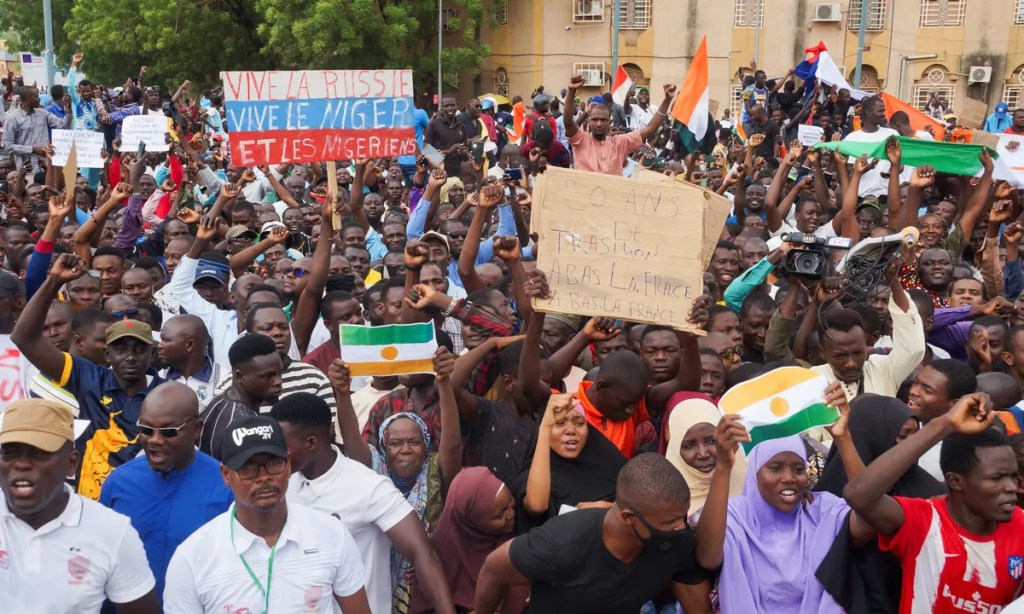
The 26 July coup in the West African nation of Niger, which threatens to undermine French and US military presence in the region, has shed light on the historical exploitation and continued practices of Francafrique – the term used to describe the persistent exploitation by the former French Empire in Africa.

France heavily relies on nuclear energy, with 68 percent of its power coming from nuclear plants. It obtains 19 percent of the uranium required to run these plants from Niger. Despite this significant contribution toward France’s energy needs, only 14.3 percent of Nigeriens have access to a power grid, and even that is often unreliable. This stark contrast highlights the disparities and ongoing exploitation by rapine foreign powers throughout the African continent. 

The Legacy of Francafrique

Francafrique has been known for its exploitative systems designed to profit from African resources, using pressure, capital, and frequently outright force to maintain control over its former empire. As a result, many African states, including Niger, continue to face poverty and underdevelopment.

Burkina Faso’s young, charismatic leader Ibrahim Traore recently spoke at the Russia-Africa summit in St. Petersburg and decried the fact that Africa is resource-rich, but its people are poor, and criticized African leaders seeking hand-outs from the west, as they perpetuate dependency and poverty. He also described what is being imposed on Africa as a form of slavery, stating:

“As far as what concerns Burkina Faso today, for more than eight years we’ve been confronted with the most barbaric, the most violent form of imperialist neo-colonialism. Slavery continues to impose itself on us. Our predecessors taught us one thing: a slave who cannot assume his own revolt does not deserve to be pitied. We do not feel sorry for ourselves, we do not ask anyone to feel sorry for us.”

France’s inability to justify its presence in Africa with a coherent narrative further complicates the situation. Paris cannot openly confess its greed, feign a “civilizing mission,” or admit to any responsibility due to its past crimes. This lack of purpose weakens French power on the continent, leading to violence and poverty in its wake.

West Africa’s drive for further independence has left Atlanticists concerned about the opening this leaves for Eurasian powers like Russia and China to increase their influence in Africa. The west’s reaction reflects a lack of respect for the sovereignty of African countries, viewing the continent merely as a theater to maintain global dominance.

Since the Ukraine war’s onset in early 2022, Atlanticists have expressed alarm over the unwillingness of Global South states to support the west’s anti-Russia policies, a trend further amplified by the shift to multipolarism everywhere. This weakening of western hegemony has opened a path for many nations to avidly explore their geopolitical options and diversify their economies.

A report from the Munich Security Conference held in February highlighted this very real schism with the west:

“Many countries in Africa, Asia, and Latin America have steadily lost faith in the legitimacy and fairness of an international system which has neither granted them an appropriate voice in global affairs, nor sufficiently addressed their core concerns. To many states, these failures are deeply tied to the west. They find that the western-led order has been characterized by post-colonial domination, double standards, and neglect for developing countries’ concerns.”

Fleeced by the CFA Franc

The aftermath of the Second World War marked a significant shift in global power dynamics, and the victorious powers sought to establish a new world order that would maintain peace and promote economic balance. 

In the context of African colonies, where colonial troops played a major role in the allied victory, the victorious powers, including France, aimed to retain economic control and benefit from their former colonies even as the world moved towards decolonization.

This included the establishment of new currency systems, with French leader Charles De Gaulle creating two currencies collectively known as the CFA Franc in 1945 for former colonies in the Western and Central zone.

As the push for political independence grew stronger in the late 1950s, France organized referendums in its African colonies to vote on accepting a constitution drafted by the French. 

Guinea, led by former trade unionist Sekou Toure, opposed accepting the French constitution and voted overwhelmingly against it. In a furious response, De Gaulle’s government withdrew all French administrators from Guinea and took action to sabotage the country’s infrastructure and resources. The harsh measures by Paris aimed to serve as an example of what would happen to any former French colony that resisted France’s agenda.

During the Cold War, the Communist states exploited such actions by presenting themselves as liberators and allies of African countries that sought independence from European influence. This stance has led to some Africans viewing countries like Russia as more equitable partners compared to France.

Over the years, France has demonstrated a pattern of intervening militarily – over 50 times since 1960 – in African countries to secure governments that remain compliant with French economic interests, particularly related to the continued use of the CFA Franc.

The system by which the CFA Franc operates has historically been one of a fixed exchange rate where the currency has unlimited convertibility but is permanently pegged to the French currency, previously the Franc and then the Euro. 

African currency under French control

This means that African countries cannot influence the value of their own currency, and the difference in value makes it so that France can buy African products artificially cheap while Africans are able to buy fewer goods with the money they exchange.

Worse yet, France had requirements to store, and thus profit from, the foreign reserves owned by its former colonies, though the requirement of holding 50 percent of their foreign exchange reserves in a French-ran bank was dropped for the western zone in 2019. 

Under this scheme, African states received a nominal amount of interest, but the bank benefited from lending that capital out at higher rates and attaining massive profits off of African resources and labor. This is despite the fact that many countries in Francophone Africa are major gold exporters and thus have a multitude of options for storing wealth to back a currency in alternative central banks.

While the CFA Franc system has provided some benefits in terms of stability and preventing Zimbabwean-style hyperinflation, it has also come under scrutiny for imposing requirements on African countries that are not placed on more powerful nations. The lack of control over their own currency has hindered economic growth and made these countries vulnerable to global economic shocks.

Northern African states such as Tunisia, Algeria, and Morocco chose to leave the CFA Franc upon gaining independence and have experienced relatively higher prosperity. Similarly, Botswana’s success with its own national currency demonstrates that proper management can lead to stable democracy and economic growth, even for less developed nations.

Exclusive rights and privileges

The CFA Franc system has been the geopolitical equivalent of one’s father insisting he manages their savings while leaving them out of his will. There are benefits to having a trade and currency zone, such as the current ECOWAS union that covers the Western part of the continent, but by design under the CFA Franc system, independence has been an illusion by which France has fleeced these countries. 

France has been dependent on Africa for its status as a world power for more than a century. Among other privileges it has carved out for itself in post-colonial treaties, France has had the exclusive right to sell military equipment to former colonies, and enjoys the first right to any natural resources discovered. Paris makes great use of these privileges: as just one example, 36.4 percent of France’s gas is sourced from the African continent.

Moreover, a vast network of French business interests, which include major multinational companies, dominate industries such as energy, communications, and transportation in many African countries. France’s government also supports French businesses in Africa in several ways, including through an enormous public company called COFACE which guarantees French exports into these underdeveloped markets. 

Towards independence and self-reliance

This economic dependence has contributed to the perpetuation of a system where African states remain weak, pliant, and reliant on resource exports, primarily benefiting French companies and interests. Additionally, African states are obligated to ally with France in any major conflict, further eroding their national sovereignty. 

The African continent suffers from many ailments, but perhaps the most persistent and nefarious are a lack of sovereignty and access to capital. Meanwhile, much of Europe’s prosperity has been derived from looting the Global South for centuries. 

The case of Brussels, built on the wealth derived from the brutal exploitation of the Congo under Belgian King Leopold II, is a stark reminder of the deep-rooted impact of colonialism. When the monarch’s crimes against humanity were discovered, he was ultimately forced to bequeath the majority of his fortune to the Belgian state upon his death. 

Not wanting to do so, he embarked on an enormous series of public works to spend his ill-gotten gains, creating modern Brussels. Now the EU and NATO meet there and audaciously give disingenuous lectures about universal human rights while surrounded by the profits of some of the most brutal cases of oppression in human history. 

While military governments often face challenges in achieving their stated goals, it is evident that western-backed “civil democracies” have also struggled to significantly improve the security and well-being of the African public. 

The path to solving Africa’s problems lies in transformative leaders who can shrug off the legacy and remaining shackles of colonialism and enable the continent to carve out a genuine, homegrown path to independence and self-reliance.

Ukraine and the great revival of American empire

By Andrew J. Bacevich

Source: Information Clearing House

Amidst the dross that clutters the New York Times op-ed page on most days, glimmers of enlightenment occasionally appear. A recent guest column by Grey Anderson and Thomas Meaney offers a case in point.

“NATO Isn’t What It Says It Is,” declares the headline. Contrary to the claims of its architects and defenders, Anderson and Meaney argue persuasively that the central purpose of the alliance from its founding was not to deter aggression from the East and certainly not to promote democracy, but to “bind Western Europe to a far vaster project of a U.S.-led world order.” In return for Cold War-era security guarantees, America’s European allies offered deference and concessions on issues like trade and monetary policy. “In that mission,” they write, NATO “has proved remarkably successful.” A plot of real estate especially valued by members of the American elite, Europe thereby became the centerpiece of the postwar American imperium.

The end of the Cold War called these arrangements into question. Desperate to preserve NATO’s viability, proponents claimed that the alliance needed to go “out of area or out of business.” NATO embraced an activist posture, leading to reckless state building interventions in Libya and Afghanistan. The results were not favorable. Acceding to U.S. pressure to venture out of area proved to be costly and served chiefly to undermine NATO’s credibility as a militarily capable enterprise.

Enter Vladimir Putin to save the day. Just as Russia’s invasion of Ukraine provided the U.S. with an excuse to forget its own post-9/11 military failures, so too it has enabled NATO to once more constitute itself as the chief instrument for defending the West—and, crucially, to do so without actually exacting a blood sacrifice from either Americans or Europeans.

In this context, the actual fate of Ukraine itself figures as something of an afterthought. The real issue centers on reviving damaged aspirations of American global primacy. With something like unanimity, the U.S. national security establishment is devoted to the proposition that the United States must remain the world’s sole superpower, even if this requires ignoring a vast accumulation of contrary evidence suggesting the emergence of a multipolar order. On that score, Putin’s recklessness came as an impeccably timed gift.

There is an element of genius at work here. Defeating Russia without having to do any actual fighting becomes the means to restore the image of American indispensability squandered during the decades that followed the fall of the Berlin Wall. For Washington, as Anderson and Meaney appreciate, the true stakes in Ukraine go far beyond the question of whose flag flies over Crimea. If Ukraine “wins” its war with Russia—however “winning” is defined and however great the price Ukrainians must pay—NATO itself (and the NATO lobby in Washington) will claim vindication.

Rest assured that major European nations will then quietly renege on promises to boost their military spending, with actual responsibility for European security once more falling to the United States. With the centennial of World War II now within hailing distance, U.S. troops will remain permanently garrisoned in Europe. This will serve as cause for celebration throughout the U.S. military industrial complex, which will prosper.

Flexing its muscles, the United States will inevitably prod a greatly expanded NATO into turning its attention to enforcing the “rules-based international order” in the Asia-Pacific, with China as the chosen adversary. Ukraine will thereby serve as a template of sorts as the U.S. and its allies throw their weight around many thousands of miles from Europe proper.

The U.S. global military footprint will expand. U.S. efforts to put its house in order domestically will founder. Pressing global problems like the climate crisis will be treated as afterthoughts. But the empire that has no name will persist, which ultimately is the purpose of the game.

President Biden is fond of saying that the world has arrived at an “inflection point,” implying the need to change directions. Yet the overarching theme of his approach to foreign policy is stasis. He clings to the geopolitical logic that prompted NATO’s founding in 1949.

Back then, when Europe was weak and Stalin ruled the Soviet Union, that logic may have possessed some merit. But today the importance attributed to NATO testifies chiefly to the bankruptcy of American strategic thought and an inability to prioritize actually existing U.S. national interests, both foreign and domestic.

A sound revision of U.S. national security strategy would begin with announcing a timeline for withdrawing from NATO, converting it into an arrangement wholly owned and operated by Europe. The near impossibility of even imagining such an action by the United States testifies to the dearth of imagination that prevails in Washington.