The Tenant by Roman Polanski, considered the last chapter of the Polish-French director’s notorious “apartment trilogy” (after Repulsion and Rosemary’s Baby), sketches a masterful adaptation of Roland Topor’s psychological horror novel on the screen and leads the unsuspicious viewer into the darkest corners of a paranoid person’s mind struggling with a myriad of social and community stereotypes in 1970’s Paris.
There’s no place like home
Polanski not only directed The Tenant but took on the main character’s costume to play the anxious character of Trelkovsky, a middle-aged Polish-born French-naturalized bureaucrat, who is planning to rent a tiny condo in a far from ordinary apartment house in Paris.
The former tenant committed suicide, the landlord is a grumpy old man, and the residential community is full of xenophobic prejudices. All the conditions are set for a surrealistic and dramatic experience.
Whether it is owned or rented, a house is arguably the most private place in anyone’s life, a space where individuals are entitled to live their undisturbed, non-public existence as they see fit.
In Trelkovsky’s case, there is no place for such privacy: instead, he becomes a constant victim of contemptuous comments from his neighbors targeting his Polish origins, his lifestyle and at some point is even asked to sign a petition to kick out other tenants from the apartment house.
In this sense, the residential community portrayed in The Tenant is a clear representation of a resentful and hypocritical society full of stigma and prejudices, where the individual is cornered with no place to thrive.
Polanski and the anti-hero
Trelkovsky can hardly cope with such a harsh environment and becomes convinced that his neighbors want to drive him to suicide, just as they allegedly did with the previous tenant.
Given the protagonist’s evident paranoid behavior and the tyrannical policy of the residential community, this duality and continuous tension bring out the hidden bisexuality, trans-sexuality, and paranoid fear that pave the way for the complete mental and sexual transformation of Trelkovsky.
Whatmakes this film absolutely unique is the portrayal of an utterly vulnerable character with no courage to stand up against any type of abnormality in his life, even forced to lie in the most trivial cases. Trelkovsky’s character is founded on the lack of the most basic norms of personality, an anti-hero whose identity can easily be shaped and transformed by his environment and surroundings.
The majestic peak of Polanski’s horror psychological drama is how it brings up the ruthless question of whether it is possible for an already paranoid and disturbed person to merge into a community, and what happens if he or she can’t.
And most importantly, how a group of bullies can light up latent psychological problems in an individual’s mind and bring these mental and social challenges to the surface in an irredeemable way.
This year I have started to explore a more cultural take on my favorite genre by experiencing China’s take on science fiction. Cixin Liu wrote a phenomenal trilogy, The Three-Body Problem, which will be adapted by David Benioff and DB Weis for Netflix in 2023. RF Kuang’s The Poppy War is a scary exploration of the Poppy Wars and the Boxer Rebellion. And now I’m here to tell you about director Neysan Sobhani’s wondrous Guidance. Set in the late 21st century, ten years after the ‘Great War,’ the film, written by Sobhani, Anders R. Fransson, and Wang Pei Yu, explores the sloppy, dishonest interpersonal relationships of people and how technology can throw a monkey wrench into an otherwise good relationship.
Three months after a bomb scare at the lab Su Jie (Francisco Chen) works, Mai Xi Zuan (Harry Song) is taking his girlfriend, Han Miao (Jia Sun), on an extended weekend to the heritage resort/museum. During the bomb scare, Han Miao was stuck in Su Jie’s safe room for six hours. What we see transpire during those six hours is Su Jie’s attempts to seduce Han Miao. She has purposefully left Mai Xi Zuan in the dark about it, but the secret is slowly creating a rift between these two young people.
“Containing a built-in lie detector, the app prevents both of them from being less than fully honest.”
And then they take the pill for NIS, an AI interface Su Jie has been developing. Eventually, NIS will permit humans to have all manner of apps, but for the first few weeks, they start with an app Su Jie’s departed father was working on during the Great War. This app, Guidance, is intended to improve people and help them develop into more empathic, honest human beings. Or at least that’s the sales pitch. As we learn through a cross-cutting interview with Su Jie, itmay have been initially intended as a weapon used to dig secrets out of captives.
Guidance explores all these topics through the weekend getaway of Mai Xi Zuan and Han Miao. Containing a built-in lie detector, the app prevents both of them from being less than fully honest. This scenario presents so many questions about the direction of Artificial Intelligence. Can a weapon be rehabilitated? How does complete honesty impact a relationship? Given the human impulse to subvert such candor and honesty, it should come as no surprise both main characters attempt to alter the app’s parameters.
While a slow and atmospheric exploration of Han Miao and Mai Xi Zuan’s relationship, Sobhani’s film does what great science fiction always does: deepen our understanding of each other through science and technology. Guidance is a stellar production, and I encourage you to seek it out if you wish to dip your proverbial toe into another culture’s sci-fi offerings. This is a fascinating extrapolation of China’s current endeavor to lead the world in Artificial Intelligence research. Equal parts relationship drama, science fiction, and mystery, the filmleaves you stunned by its conclusion. This is a once-in-a-lifetime, truly great film, and I’m very interested to know what the filmmakers will do next.
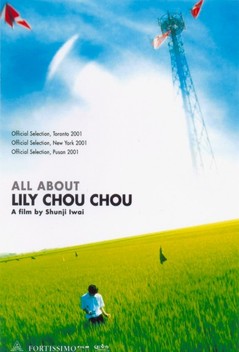
Released in 2001, writer and director Shunji Iwai’s “All About Lily Chou-Chou” 「リリイ• シュシュのすべて」is a masterclass in complex and powerful storytelling, cinematography, and meta-textual messaging that puts on display the formative, introspective, and oftentimes malicious enigma that is the life of youth in Japan.
Set in the town of Ashikaga, the story centers around the relationship of two young boys, Shusuke Hoshino and Yuichi Hasumi, as they progress through junior high school. Hoshino is known to be one of the top students in their school and is harassed and ostracized by his classmates as a result, a commonplace occurrence for those caught outside the boundaries of conformity while growing up in Japan. Yuichi, in contrast, is shy and submissive to the societal structures that surround him, only paying attention and devoting all his personal time to the singer and songwriter Lily Chou-Chou.
In his free time, Yuichi manages an online BBS chatroom titled “Lilyholic,” which is completely dedicated to Lily and her music, and the messages sent between users of this website overlay much of the film. The mystery surrounding this chatroom and the messages between its users acts as a crucial plot point that slowly unravels in conjunction with the film’s events.
At one point, Yuichi, Hoshino, and their friends manage to secure a trip to Okinawa, during which Hoshino has a near-death experience that serves as the foundation for the cruel and unusual monster that he becomes, changing his and Yuichi’s relationship forever as he usurps his way into being the school’s bully the following school year. Despite the title, this is not simply a story about a fictional songwriter and her music, but the disturbing and oftentimes glossed-over ways in which modern society corrupts the minds of youth, and the various ways those children attempt to cope against such odds.
Yuichi’s love and devotion for Lily Chou-Chou is the emotional epicenter of this film, as it displays the profound ability for music to save and give meaning to young people’s lives, especially when surrounded by ignorant adults and inhumane peers. While the musician herself is fictional, Lily Chou-Chou’s mythical music expands over the course of the film, overlaying its imagery of lonesomeness, isolation, and absurdity with luscious, calming, and poignant bits of melancholic bliss; a reflection of Yuichi’s character and perspective on the world around him.
Users of the chatroom “Lilyholic” continuously exclaim their love for Lily and her ability to channel the “Ether,” an invisible yet omni-present force that connects all fans of Lily Chou-Chou together in their existence through Lily’s music. The “Ether” is an intrinsic aspect of the power her music has on those who listen to her, serving as the connective thread that weaves its way through the fabric of a fragile reality, allowing those lost in the tribulations of life to hold onto something organic, warm, and personal, an oasis among a desert of expectations, conformity, and isolation.
It goes without saying that the music on display in this film is truly special and should be experienced firsthand, with the soundtrack growing organically as the audience learns more about Lily, her music, and the different characters in the film who become impacted by her compositions [for better or for worse].
Throughout the film, there are multiple references to the classical French composer Claude Debussy, whom users of Lilyholic cite as being one of Lily’s musical inspirations, as he was able to produce the “Ether” through his compositions. For example, the song that accompanies the opening scene of the film, titled 「アラベスク」[“Arabesuku”] is based off of Debussy’s “Arabesque No. 1.” Lily’s shrill yet comforting voice glides over synthesized piano chords, distanced hints of strained guitar, and a lo-fi drum beat that subjects the 19th-century classical work to a cybernetic restructuring – all of which results in one of the most captivating opening experiences in film.
Arranged and produced by Takeshi Kobayashi, the music of “All About Lily Chou-Chou” is a kaleidoscope of sonic captivity, melting between Lily’s somber yet grungy aesthetic as well as moments of clarity through the use of classical composers like Debussy, combining to create less of a soundtrack and more of an experience that will cling to you long after the credits have finished rolling.
The narrative direction and cinematography of “All About Lily Chou-Chou” are also aspects that cannot be ignored. The narrative’s timeline is fractured, starting chronologically from the middle of the story, eventually flashing back to the canonical beginning, and finally returning to the present to finish out the film. The script is adapted from an online novel that was written by director Shunji Iwai himself in the chatroom of a real-life version of the “Lilyholic” website, in which the director plays out the story of “All About Lily Chou-Chou” through the chat exchanges of two site users. A version of this website can still be accessed online today, and its existence is only the tip of the iceberg for the extensive material surrounding this film beyond its screen time. The narrative, in this sense, is multi-layered and meta-textual – an interactive and organic experience that not only goes beyond the medium of film but places a sense of participation and influence in the viewer, only to be powerless against the fierce, apathetic, and surreal scenes we witness.
The cinematography by Noboru Shinoda [“Hana and Alice,” “Love Letter”] is just as varied and complex as the film’s narrative, as it switches between ethereal, lush views of rice fields and angelic classroom settings in one shot, to the jarring use of hand-held cameras and disorienting angles in the next. Shinoda and Iwai were the first Japanese filmmakers to use the now discontinued Sony HDW-F900 digital video camera which was designed to reflect the look of 35mm film, further emphasizing the thematic imagery of nostalgia and dream-like isolation.
The camera work almost seems to be shot by a child at times, such as an unseen member of Yuichi’s friend group or class as they youthfully document the strange and disturbing events occurring in front of them, only focusing on the power a digital camera has without considering what they are actually recording. Or rather, Iwai may be intending for us, the viewer, to put ourselves behind the lens, acting as a silent observer to the events that unfold without the voice or power to do anything about it, which is strikingly similar to Yuichi’s character in the film itself. The combination of a fractal narrative structure and an abrasive yet realistic use of the camera encapsulates so much of the themes and messaging this film has to offer – mainly that being the confusing, frustrating, and unapologetic nature of growing up surrounded by unforgiving societal structures, while at the same time blindly attempting to hold onto and bask in the naiveté of youth.
The subject of youth is the eye of Iwai’s proverbial hurricane of emotion and turmoil that is “All About Lily Chou-Chou.” Made in 2001, this film was produced at a time in Japan that saw a sharp increase in teenage crime and suicide following the economic collapse of 1991. In a country so wrought with societal and familial expectations, the bursting of their economic bubble proved disastrous for Japan’s teenage and young-adult population, as they were now tasked with bearing said expectations and cultural conformity against a historically low employment rate.
Commonly referred to as the “Lost Decade,” the 1990s in Japan was filled with headlines detailing the effect of the recession on the country’s young population, as teenage crime doubled in frequency, and reports of bullying and assault within schools skyrocketed. The rise in crime and disillusionment among the country’s youth resulted in many Japanese filmmakers attempting to grasp this idea of “teenage rage” through their films in the late 90s and early 2000s, such as in Takashi Miike’s “Fudoh: The New Generation” [1996] and Kinji Fukasaku’s “Battle Royale” [2000]. While these films painted a more dystopian and fantastical perspective of the violent phenomenon, Shunji Iwai wanted to represent this general angst and discontent in a more realistic manner that would directly connect with the audience it sought to portray. In one interview from 1995, Iwai reflects on his perspective towards the children who will be watching his stories: “We have to make movies that appeal to them and reflect the world they live in.”
The characters within “All About Lily Chou-Chou” represent the cruel realities of the “Lost Decade.” They don’t conduct acts of headline-defining mass crime or comical absurdity, but instead are portrayed as unheard, misguided, and tragic children who are following in the steps of complicit adults as they attempt to find answers in a confusing world that they have no power in controlling. As shown in the film, some of these characters choose to find those answers in disturbing cruelty or abusive domination over their peers, while others try to be as passive or silent as humanly possible just to survive. And yet, while each character within this film leads a complex and difficult life that sometimes results in catastrophe, all of them are connected through the “Ether,” endlessly searching for a sense of comfort, acceptance, and understanding through the soundscape of Lily Chou-Chou. It could be said that the characters within this film are all living in, as Yuichi states in one monologue, “the age of Gray,” a liminal space of reality that seems to place their lives in a state of constant immobility and pain. Life is made void of color by the brutal violence and betrayal that these children either commit or fall victim to, and for some, Lily provides safety and guidance in that darkness, while she may also fuel the angry, merciless fire burning inside others.
“All About Lily Chou-Chou” is dark, disturbing, and cruel in its presentation, but manages to be something so much more intimate, profound, and human in its substance. It discusses themes surrounding the troubles of youth in Japan, who are constantly cornered by cultural and familial expectations, conformity, and a social hierarchy that can be detrimental to those caught in its jaws. It portrays the fragility of youth, how easily corruptible a young mind can be, and how one source of bliss can be enough to hold onto the hope of a better tomorrow. Today, in a world dominated by online interactions, superficial connections, and an uncertain future, this film is more relevant than ever before – a true cyber hymn that anyone and everyone can find meaning within.
We have attached the album that was released under the name “Lily Chou-Chou” after the movie was released so that you can get a better feel for the movie and the artist that is the titular character of the entire film. It features all of Lily’s music that is present in the film, and is titled “Kokyu” [or “Breathe” in English], which is in reference to the project that she released during the movie itself.
The entire thing can also be streamed on Spotify. In particular, the following songs are absolutely stunning and very representative of the movie itself:
Ask a hundred film buffs what their favorite cult film is, and you’ll get 500 answers.
Because nobody wants to limit that pick to the obvious — “The Rocky Horror Picture Show,” “Harold & Maude,” “Eraserhead” — to admit how many times they’ve watched “The Evil Dead,” or to interrupt their latest trip to Lebowski Fest to give the question more serious thought.
So it’s no wonder that Quiver and director Danny Wolf couldn’t limit themselves to a single documentary, rounding up stars, directors, academics and critics to swoon over and deconstruct their favorites.
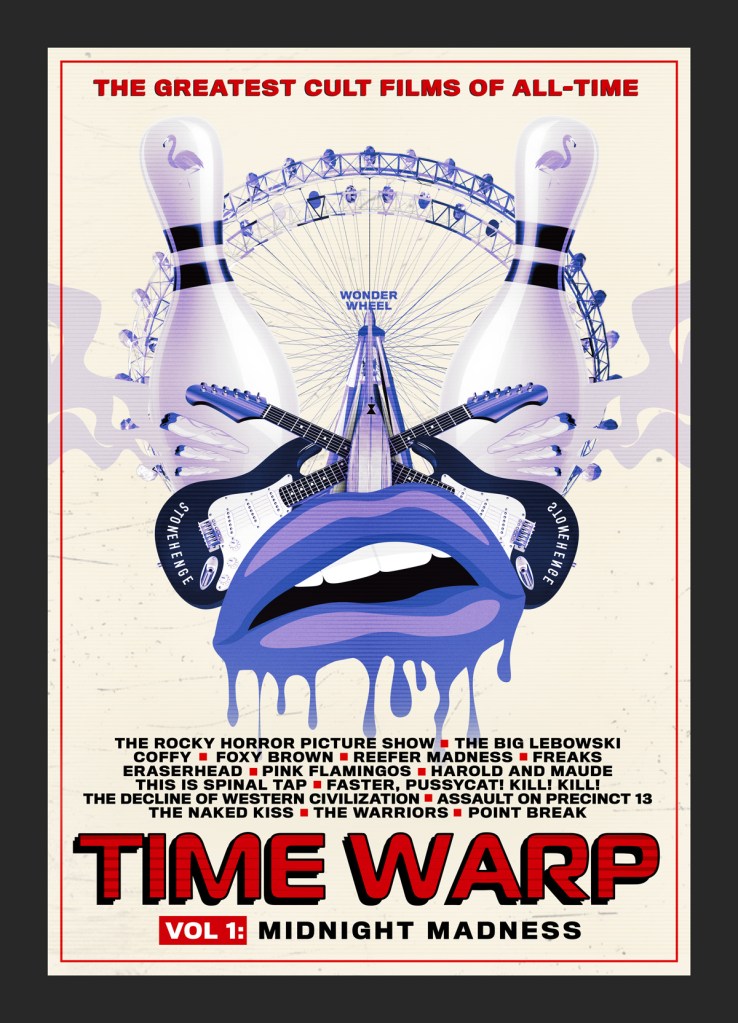
“Time Warp: The Greatest Cult Films of All Time” is a three-part mini-series, covering everything from “Freaks” to “The Warriors,” “Spinal Tap” to “Valley Girl.”
There are lots of opinions about the definition of a “cult” film, taking into account its “edge,” forbidden fruit “danger,” rejection by the mass movie audience (many were bonafide “flops” that found their audience over decades) and that ineffable “something” that makes you want to call your best friend and yell, “Friend, you have GOT to see this.”
I think John Cleese comes the closest to getting that definition right.
A cult film, Our Lord J.C. (of “Monty Python and the Holy Grail”) says, is one “that you think is much better than it is.”
“The Rocky Horror Picture Show (1975)” is celebrated as the greatest cult film of them all, a movie that opened to little notice, but which “never ever left the cinema,” as Patricia Quinn, one of several members of the cast speaking here, declares. Fans and critics and cult director John Waters (“Pink Flamingos”) talk of its impact on the culture, putting a “transvestite transexual” on screens where isolated, closeted fans could see someone that might be closer to their own sexuality than anything mainstream Hollywood was putting out.
Tod Browning’s still alarming “differently-abled” thriller “Freaks” (1932) is titled “the scariest movie ever made” by the likes of comic writer Bruce Vilanch and others.
Pam Grier talks of her glory days in Blaxploitation cinema like “Foxy Brown” and “Coffy.”
Gary Busey goes hyperbolic over “Point Break,” which has gained stature via a growing online fandom.
“Harold & Maude,” “The Decline of Western Civilization” punk documentaries, the films of the cleavage-cultist Russ Meyers and the down and dirty noir classics of Sam Fuller (“The Naked Kiss”), John Carpenter’s “Assault on Precinct 13” — a lot of ground is covered just in “Volume One: Midnight Madness.”
Everybody here is an enthusiast, and director Danny Wolf got Jeff Bridges and John Turturro to talk about “The Big Lebowski,” Rob Reiner and several others to speak about “Spinal Tap” and David Patrick Kelly to reminisce of the glory that was and remains “The Warriors.”
Those big names missing (Tim Curry, Keanu, Kathryn Bigelow, Tarantino, David Lynch, seen only in a ’70s interview) are barely missed.
Not all of it works. The conceit of having a “panel” consisting of directors Joe Dante (“Gremlins”) and John Waters, actress Ileana Douglas (?) and comic and actor Kevin Pollack (!?) could have left the hosting to Waters — the real authority, the Cult King.
There’s a whole subgenre of “revolting cult films” that aren’t so labeled but show up here. “Eraserhead” and any of the early warped Waters movies could turn your stomach.
Later installments will dwell on everything from masterpieces like “A Clockwork Orange” and “Blade Runner” to the obscure “Liquid Sky,” bonafide hits (no “cult” to them) like “Fast Times at Ridgemont High” to the zombie genre — “Living Dead” movies no longer having any cult appeal.
What, no “Stunt Man?” Well, they got to “Show Girls.” That’ll have to do.
But that’s the fun of it all, the arguments it starts. Because what really defines this sub-category of cinema is movies that have taken on a life of their own, taken over by fans.
And if the fans prefer “The Warriors” (popular, enduring, classic) to “Streets of Fire” (a lot more “cultish” for my money), they’re the arbiters.
“Time Warp,” in three installments, shows up via VOD and digital streaming, April 21 (ep. 1), May 19 (ep. 2) and June 23 (ep. 3).




 After the Crash