Melancholia Review
By Ewan Gleadow
Source: Cult Following
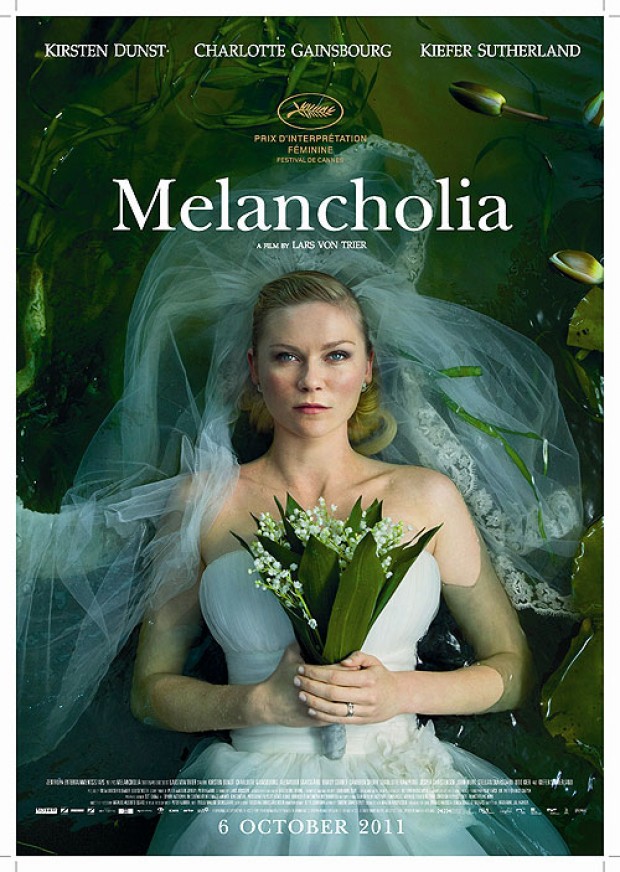
Uncomfortable productions are the forte of director Lars von Trier. The allusions to and disquieting effect of his features and their focus is something to be realised in the prime of his works. What that area is can be debated and pulled at, but Melancholia appears to be the poetry in motion Trier fans so often praise the director for. Musical accompaniments to still shots of paintings that slowly peel and ripple. It’s a delightful piece for those that love the artisan qualities of a world falling apart and the destruction that comes from character sleights. The immovable nothing that comes from it touches deeper and deeper as Melancholia, the finest Trier work, rages on.
That much comes from the absolute beauty of its structure, of its characters. Shaped and informed by destruction, moving paintings that take place on strange canvases that display torment and passion, family and love. Melancholia has all the time in the world for its visual chemistry and the representations it can bring. There is no tiring effect brought by Trier, who trusts in his lengthy segments of two worlds, quite literally, colliding. Audiences are placed right at the end and know what is to come, what fate the characters meet and how it all comes to a crashing bit of destruction. In identifying the hopelessness, Trier brings himself to the inevitable edge that comes from discussing finality. It feels a bit like what The Fountain tried and failed to comment on, but with much, much more scope than the Hugh Jackman-led piece.
Within Melancholia is the profound beauty of visual meaning. It is a piece that relies more on the slower motions and relationships told in flutters rather than a full-on narrative that demands and desires strict following of the story. There is a fast and loose layer to Trier’s work, where his direction provides beauty and colour with that fear. Kirsten Dunst delivers a phenomenal catalyst for life. It gives the happiest moments of life and the cursed afterthoughts. Trier mixes the palette well, he provides that to the cast and relies on them so frequently to engage with the emotion, rather than dialogue. It is the choreography, and the appeal of his directing style, that makes Melancholia such an intoxicating watch.
Senseless destruction with poetic twists and turns at their finest, Melancholia is a touching and spiritually charged look at the useless tirades and meaninglessness of it all. With Melancholia exposing itself to the raw elements, it does often focus on its imagery more than its characters. Trier’s style, the unfocused extremes of the close-up shot, the shot-reverse-shot simplicity, it all has its place but where that is can come across as unfounded. His fly-on-the-wall appeal has its moments throughout this piece, with a triple threat of Charlotte Rampling, John Hurt and Stellan Skarsgård making the most of that. There is no harm in stacking the cast so high, it adds texture and richness to an already broad-in-scope feature. Melancholia feels right at home biting off more than it can chew, both narratively and emotionally.
____________________
Watch Melancholia on Kanopy here: https://www.kanopy.com/de/product/69665
 After the Crash