
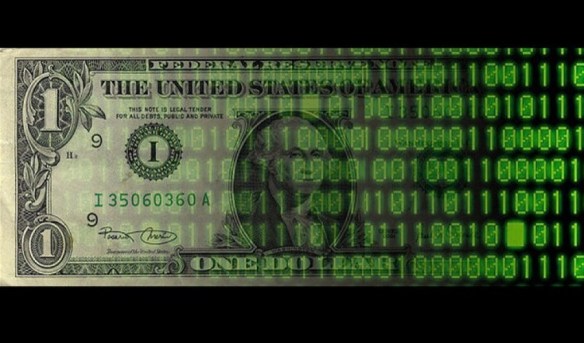
The State is at War — with the Future

By Thomas L. Knapp

Source: The Fifth Column

It’s turning into a long hot summer for the emerging global counter-economy.

In June and July, an international group of law enforcement agencies took down two of the largest “Dark Web” marketplaces, Hansa and Alphabay.

Then on July 25, the US Securities and Exchange Commission issued a weird, barely coherent, press release seemingly kinda sorta but not exactly declaring its own plenary authority over all things cryptocurrency.

On the heels of the SEC’s fit of apparent glossolalia, the US Department of Justice announced its indictment of cryptocurrency exchange BTC-e for “money laundering” even as one of the site’s admins, Alexander Vinnik, was arrested in Greece.

What we’re seeing is the latest bit of backlash from a political establishment scared witless by technologies which threaten to make it superfluous.

A friend of mine who writes under the pseudonym dL notes that “[t]he trajectory of technology follows a repeated path. When first introduced, it gives an asymmetric advantage to the individual. Over time, the state catches up and the asymmetric advantage shifts to the state.” Maybe he’s right. Maybe the political class will be able to nip a bright future in the bud and maintain its grip on power.

On the other hand, Victor Hugo seemed quite sure that “one withstands the invasion of armies; one does not withstand the invasion of ideas.”

We stand at the doorway of a future featuring money without borders, work and trade without permission. That future represents existential crisis for the political class: The end of the state as we know it. Absent the ability to tax and regulate its host, the parasite known as government starves and dies.

The situation is equally dire for the rest of us.

High-profile takedowns like the Silk Road, Alphabay, Hansa and BTC-e, large as they loom in the moment, are mere speed bumps. The road to the future remains open, and the only way to plausibly close that road off entirely is to essentially pull the plug on every technological development since the introduction of the personal computer. What would that look like? Think the Dark Ages, the Great Depression, and North Korea all rolled into one.

There’s no doubt that the American and global political classes are willing to go there. Any number of regimes have done so on a temporary and semi-effectual basis in times of unrest, and American politicians have seriously proposed ideas like an “Internet Kill Switch.” The excuse for such proposals is to protect us from terrorists and drug dealers, but make no mistake: Their real purpose is to protect our rulers  from us.

That’s what’s at stake, folks.  We can free ourselves or we can return to the caves. There is no third alternative.


Thomas L. Knapp (Twitter: @thomaslknapp) is director and senior news analyst at the William Lloyd Garrison Center for Libertarian Advocacy Journalism (thegarrisoncenter.org). He lives and works in north central Florida.
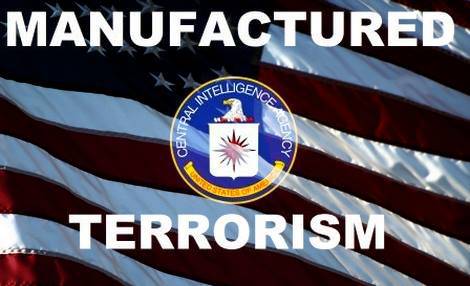
Uncle Sam’s Personal “Terror Factory”

manufactured-terror

• New book documents how FBI built vast informant network to infiltrate Muslim communities and cultivate phony terrorist plots.

By John Tiffany

Source: American Free Press

If someone believes that most, or all, “terrorists” are invented and created by government agents provocateurs, would, or should, they be considered a “conspiracy theorist”?

In fact, agencies such as the Federal Bureau of Investigation (FBI) have been busily creating terrorists out of what had been law-abiding individuals. The system features entrapment, sting operations, provocations and denial of due process, with anonymous juries, secret evidence and extensive pretrial detentions.

In the new book The Terror Factory: Inside the FBI’s Manufactured War on Terrorism, author Trevor Aaronson documents hundreds of Americans who have been hassled by the government as if they were terrorists. But how many actual terrorists have been caught by this grand effort? Aaronson was able to look at the data from 2001 to August 2011, a database of 508 defendants whom the government considered terrorists. Of the 508, 243 had been targeted due to an FBI informant. One hundred fifty-eight had been caught in sting operations, and 49 had been manipulated by an agent. The number of actual terrorists? Fewer than half a dozen.

In those scores of sting operations, almost every “terrorist” was uneducated, unsophisticated and economically strapped—hardly people likely to plan and launch terrorist operations without major help from the government. It’s called “creating crimes to solve crimes so they can claim a victory in the war on terror.”

The practice, started under President George W. Bush, has mushroomed under President Barack Hussein Obama, with more than 75 sting prosecutions in his first three years in office.

To catch a handful of dangerous hombres and a slew of patsies, the government has built the largest network of spies ever to exist in America, with 10 times as many “shoes on the street” today as during the heyday of J. Edgar Hoover. It spends $3 billion a year “fighting terrorism” and needs results to show to the media and Congress.

While the defendants may be broke, it’s not uncommon for informants to make $100,000 or more on a case—plus tens of thousands more if the case results in a conviction. Not surprisingly, the ranks of informants has grown explosively.

James J. Wedick, a retired FBI agent with 34 years of service, ventured to say that 90% of the cases seen in the last 10 years “are garbage,” and informants are unreliable sources and “the most dangerous individuals on the planet.”

He says it is not uncommon for the FBI to send well-heeled informants (with taxpayer money) into poor Muslim communities to try to trick cash-starved men into going along with their jihad-related entrapment schemes, knowing that these men are desperate for a job, a loan, free meals—anything that will help them support their families.

Writes Aaronson:

Congress allocates billions to the FBI to find terrorists and prevent the next attack. The FBI in turn focuses thousands of agents and informants on Muslim communities in sting operations that pull easily influenced fringe members of those communities into terrorist plots conceived and financed by the FBI. The Justice Department then labels those targets, who have no capacity on their own to commit terrorist acts and no connections to actual terrorists, as terrorists and includes them in data intended not only to justify how previous dollars were spent but also to justify the need for future counterterrorism funding.